Is Mostar Expensive?
Is Mostar expensive? A plain answer on prices in Mostar, from the free Old Bridge to Kravica waterfall's 20 KM entry, the currency, the tourist tax and day-trip costs.
Mostar, the main city of Herzegovina on the Neretva river, is not an expensive city by the standards of the region around it. The currency here is the convertible mark (KM), pegged to the euro at a fixed 1 EUR = 1.95583 KM, and the anchor sight of the whole visit, the Old Bridge, is a public pedestrian crossing that costs nothing at any hour. That said, "expensive" is a relative question, and the honest answer depends on which Croatia-facing costs you compare it against and how many paid day trips you stack onto a stay.
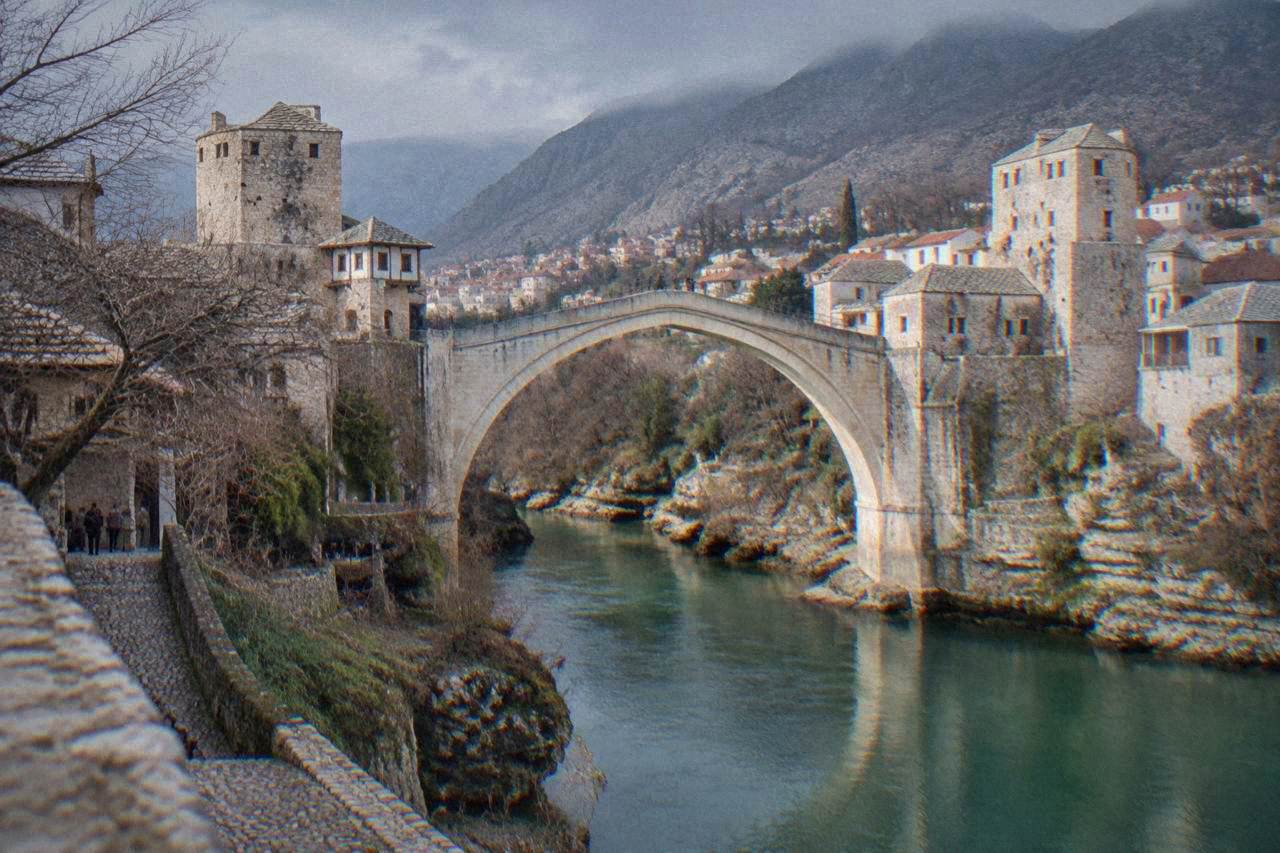
No, Mostar is not expensive as a city to be in. The Old Bridge Area, a UNESCO World Heritage property since 2005, is free to walk through, the bridge itself is a public crossing with no ticket, and the largest single entry fee inside the city is a small cash charge at a mosque or an Ottoman house museum. The costs that add up are the ones outside the city: day trips to Kravica waterfall at 20 KM entry, private guides and the reported 3 KM per-night tourist tax.
The frame matters. Mostar sits inland in the Herzegovina-Neretva Canton of Bosnia and Herzegovina, a short drive from the Croatian border, and its price level sits below the Croatian coast that many of its visitors come from. The country is not in the European Union, and the currency is not the euro: prices are set in the convertible mark, which is fixed at exactly 1.95583 to the euro under a currency board arrangement. Euro cash is often accepted in tourist areas, usually at a rounded 1 to 2 rate, but that rounding is a convenience, not an official rule, and the rate should be confirmed before paying. Cards work at hotels, larger restaurants and museums; small vendors and market stalls want cash, and cash means marks.
Where the money actually goes on a Mostar trip is predictable. Lodging and food take the daily baseline, neither of which carries published prices this page can quote, and then the variable part is activities. A walking tour, a food class, a kayaking morning or a full-day Herzegovina circuit each shift the daily total more than anything inside the Old Town does. For a fuller picture of what the city offers at all, see things to do in Mostar.
What Does A Day In Mostar Actually Cost?
A day in Mostar's Old Town can be walked almost entirely free, because the bridge, the Kujundžiluk bazaar street and Kriva ćuprija are public spaces with no admission. Add one mosque visit at a small cash fee and one Ottoman house museum at about 4 to 8 KM reported, plus the reported 3 KM per person per night tourist tax, and the sightseeing side of a day stays in the tens of marks, not the hundreds. Transport inside the compact centre costs nothing on foot.
The free layer of the city is bigger than many expect. Stari Most is open around the clock and crossing it is free. Kujundžiluk, the cobbled bazaar street, is an open public lane. Kriva ćuprija, the small crooked bridge a short walk upstream, is a public structure. The Partisan Memorial Cemetery, a 1965 monument by Bogdan Bogdanović, has no ticket and no staffed hours, though its neglected condition is documented by Europa Nostra, which listed it among Europe's most endangered heritage sites and reported over 700 of its stone markers destroyed in 2022.
The paid layer inside the city is thin and mostly small-cash:
| Sight in Mostar | Entry figure | Status |
|---|---|---|
| Koski Mehmed-pašina džamija | Small cash fee, more with the minaret climb, figures reported at roughly 10 to 18 KM | Reported, confirm on site |
| Bišćević House | About 4 KM reported | Reported |
| Muslibegović House | About 8 KM reported | Reported |
| Old Bridge Museum (Tara tower) | About 10 KM reported, daily 08:00-16:00 from 1 April to 1 November | Reported, confirm on site |
The one civic charge that touches every visitor is the tourist tax. A rate of 3 KM per person per night is reported for the Herzegovina-Neretva Canton from 1 January 2026, with a lower reported figure for day-trippers, and it is normally collected through accommodation. It is a reported figure rather than a published official one, so confirm at booking what your stay collects.
The general pattern is the same as the rest of the city: cash in marks at smaller places, cards accepted at larger ones, and prices set in KM rather than euro even where euro notes are taken. Whether one day is enough to see the city at all is a separate question, covered in how many days in Mostar is enough.
Where The Money Goes: Entry Fees Outside Mostar
The expensive half of a Mostar trip is the Herzegovina countryside, not the city. Kravica waterfall charges 20 KM for an adult all year round, Blagaj Tekke charges about 10 KM, Radimlja's stećci necropolis 8 KM, and the big-ticket item in the region is ARK D-0, Tito's bunker near Konjic, at 40 KM for foreign visitors, with a booking required. Drives are long: Kravica is 55.2 km and about 54 minutes from Stari Most, Konjic 69 km.
These are the figures a day-trip budget is actually built from, all from the parks' and operators' own published material where noted:
| Place | Road distance from Stari Most | Free-flow drive | Entry figure |
|---|---|---|---|
| Blagaj Tekke | 13.7 km | about 19 min | about 10 KM reported |
| Počitelj | 30.0 km | about 31 min | Village free, small optional fees reported |
| Radimlja necropolis (Stolac) | 33.5 km | about 42 min | 8 KM individual, 5 KM groups and BiH citizens |
| Kravica waterfall | 55.2 km | about 54 min | 20 KM adult all year, 10 KM BiH residents, under 7 free |
| Hutovo blato | 48.1 km | about 62 min | about 5 KM entry, boat trip about 20 KM reported |
| ARK D-0, Konjic | 77.0 km | about 93 min | 40 KM foreign visitors, 20 KM BiH citizens, booking required, closed Monday |
| Vjetrenica cave | 77.2 km | about 104 min | about 20 to 25 KM reported, guided, seasonal |
Two traps are worth flagging because they are repeated constantly. Kravica is not 10 euro in summer and free in winter: the park's own visitor page lists 20 KM for an adult all year, with monthly opening hours running from 07:00 to 17:00 in the depths of winter to 07:00 to 22:00 from June to September. And Kravica is not 15 minutes away: the drive from Stari Most is 55.2 km, about 54 minutes without traffic. Both myths make the trip look cheaper and closer than it is. The falls are also a swimming spot in summer, in the designated pool area, with no lifeguard reported, so check the park's rules on arrival.
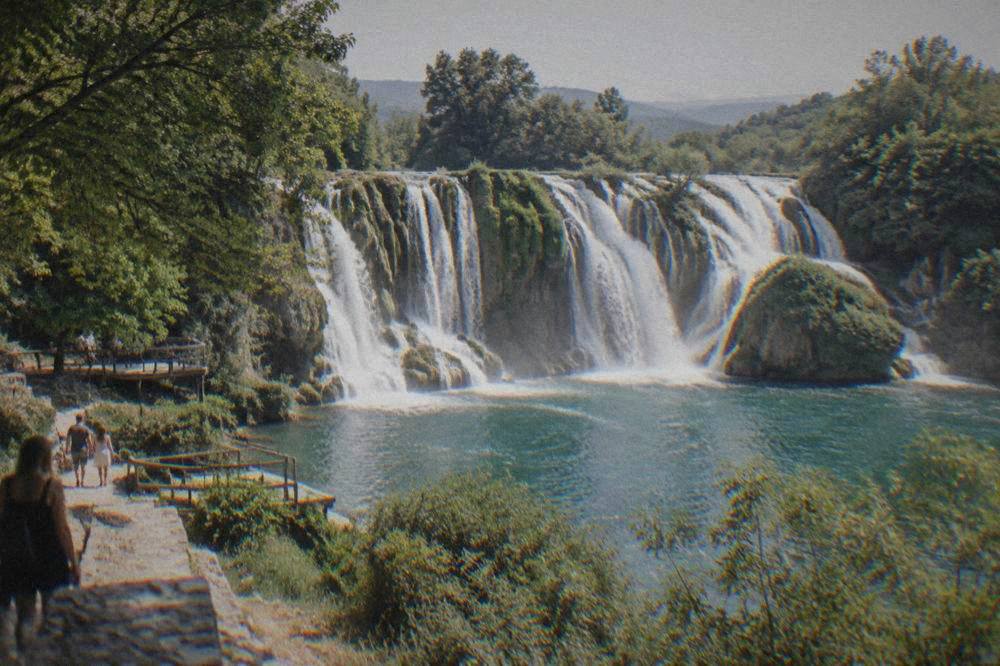
Because these sights are scattered, the practical choice is between a rental car, local buses or an organised day tour, and each carries a different cost shape. Tour prices and ratings are printed live by the operator listings on this site rather than typed here, but as a structural matter, a group day tour that bundles Blagaj, Počitelj and Kravica in one loop usually undercuts the arithmetic of a solo taxi day, while a private tour buys control of the stops. The classic one-day loop is mapped out in Kravice, Blagaj and Pocitelj in one day.
Is Mostar Expensive Compared To Dubrovnik Or Split?
As a place to stand in, Mostar is cheaper than the Croatian coast it is usually paired with, mainly because Bosnia and Herzegovina uses the convertible mark rather than the euro and sits outside the EU price zone. Crossing into Croatia is a Schengen external border with full checks since 1 January 2023, with reported waits up to about 30 minutes and longer at summer peaks, but the border itself costs nothing. The price gap narrows in the Old Town souvenir strip, where tourist-area pricing applies.
The comparison people are really making is Dubrovnik-and-Mostar or Split-and-Mostar, and the structure of that pair matters. Mostar day trips are sold as products from both Croatian cities, and the drive is substantial: Dubrovnik's Stradun is 145.5 km and about 150 minutes of free-flow driving from Stari Most, Split 174.1 km and about 131 minutes, before any border queue. A traveller who sleeps in Mostar and day-trips into the Croatian coast pays the reverse pattern of one who sleeps in Croatia and buses in, and the currency split means every crossing also means a wallet holding both KM and euro.
Inside Mostar itself, the equalisers are the free core and the short distances. The city is compact and walkable, a point expanded in is Mostar a walkable city, so a day without any transport spend is entirely normal. Taxis are best described as a short, inexpensive ride for the airport run: Mostar International Airport is 8.2 km and about 12 minutes from Stari Most by road, and no meter figure belongs on this page. The train to Sarajevo, resumed on 15 October 2026 after a suspension that began about 8 September, is another low-cost link, running twice a day each way; the fare of about 14 KM one way is reported, so confirm at the ticket office.
How To Keep A Mostar Trip Cheap
The cheap version of Mostar is built on three free layers: the bridge and bazaar, the walking-scale city, and the free day-trip destinations such as Počitelj village and the Međugorje sites. Pay for one or two anchors only, Kravica at 20 KM and one guided walk, carry marks in cash for small fees, and skip private transfers where a bus or the train does the same corridor. That keeps the paid side of a multi-day trip in the dozens of marks.
The free list is genuinely load-bearing. Međugorje's hills and church are free and open around the clock, 28.3 km from Stari Most. Počitelj's fortified village is free to wander. The west-bank and east-bank walks of Mostar, Spanish Square, and the viewpoints over the Neretva cost nothing. Even the region's UNESCO layer can be touched free: the Old Bridge Area property itself is a streetscape, not a ticketed site, a point explored in what are some UNESCO sites in Bosnia and Herzegovina.
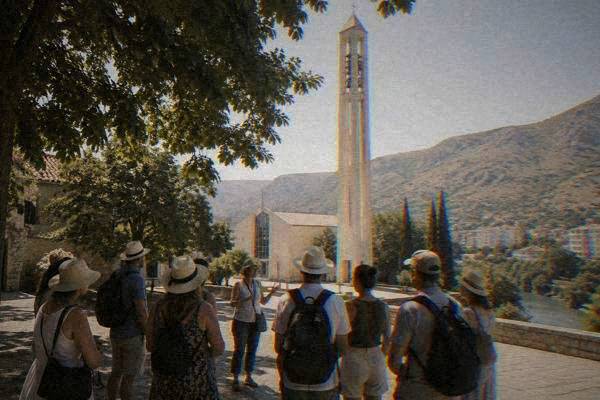
For the paid anchors, the efficient move is picking one deep experience instead of several shallow ones. A tailored private history walk is exactly that kind of spend: it covers the Old Town, the bridge and the story around them at your own pace, and it replaces three separate tickets with one informed walk.
Budget discipline in Herzegovina is mostly cash discipline. Small fees at mosques, houses and car parks want marks, the ATM advice is to choose charging in KM rather than euro to avoid poor conversion, and the fixed peg means there is no exchange-rate gamble in holding marks left over at the end of a trip, they convert back at a known rate. One practical warning that costs nothing to heed: in rural Herzegovina stay on marked paths because of suspected mine areas, the official advice of BHMAC, which also protects against the unplanned expense of a rescue. Whether the whole visit justifies the journey is a fair follow-up question, and is Mostar worth visiting takes it on directly.
Common Questions About Costs In Mostar
Is Mostar Expensive?
No. The city's core, including the Old Bridge and the Kujundžiluk bazaar, is free to walk, the currency is the convertible mark pegged at 1 EUR = 1.95583 KM, and the largest typical single fee inside the city is a small cash charge at a mosque or house museum. The bigger costs are day trips, with Kravica waterfall at 20 KM adult entry all year.
Do I need euro cash in Mostar?
No, the currency is the convertible mark (KM). Euro cash is often accepted in tourist areas, usually at a rounded 1 to 2 rate, but that is a convenience rather than an official rule, so confirm the rate and prefer marks from an ATM, choosing to be charged in KM.
What is the tourist tax in Mostar?
A tourist tax of 3 KM per person per night is reported for the Herzegovina-Neretva Canton from 1 January 2026, normally collected through accommodation, with a lower reported rate for day-trippers. Confirm at booking what your accommodation collects.
Is the Old Bridge free?
Yes. Stari Most is a public pedestrian crossing, free and open around the clock, with no ticket. The adjacent Old Bridge Museum in the Tara tower charges about 10 KM reported, with reported daily hours of 08:00 to 16:00 from 1 April to 1 November.
Are day trips from Mostar expensive?
They are the largest variable cost. Kravica waterfall is 20 KM adult entry all year and a 55.2 km drive, Blagaj Tekke about 10 KM reported, Radimlja 8 KM, and ARK D-0 near Konjic 40 KM for foreign visitors with advance booking required. Organised group tours spread these costs across a shared vehicle.
Is Mostar cheaper than Dubrovnik?
As a place to eat, sleep and walk, yes: Bosnia and Herzegovina is outside the EU and prices in the convertible mark rather than the euro. The gap narrows in Mostar's Old Town souvenir strip. Getting between the two is a 145.5 km drive with a Schengen external border crossing that has had full checks since 1 January 2023.