What Are Some UNESCO Sites In Bosnia And Herzegovina?
Bosnia and Herzegovina holds two World Heritage properties tied to Herzegovina: the Old Bridge Area of the Old City of Mostar and the stećci tombstones at Radimlja near Stolac. Here is what each one is and how to see both from Mostar.
Bosnia and Herzegovina's World Heritage presence is concentrated exactly where Mostar stands: in Herzegovina, the rocky southern half of the country on the Neretva river. The Old Bridge Area of the Old City of Mostar, property 946 on the World Heritage List, was inscribed in 2005 under criterion (vi) alone, and the Stećci Medieval Tombstone Graveyards, property 1504, followed in 2016 with the Radimlja necropolis near Stolac as one of its featured sites, 33.5 km and about 42 minutes by road from Stari Most. Both can be seen from a Mostar base, one inside the city on foot and the other on a straightforward half-day drive. This page lays out what each property is, why it was inscribed, and how to build a trip around them, the way Mostar Travel Guide treats every question about the city: plainly, with the dates and figures that are on record.
The two World Heritage properties that matter for a Mostar trip are the Old Bridge Area of the Old City of Mostar, inscribed in 2005 as property 946 under criterion (vi), and the Stećci Medieval Tombstone Graveyards, inscribed in 2016 as property 1504, whose Radimlja necropolis near Stolac sits 33.5 km and about 42 minutes by road from Stari Most. The first is walked in an afternoon, the second is a short drive south.
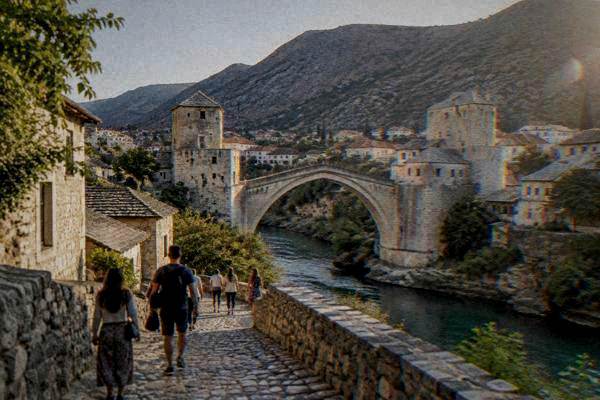
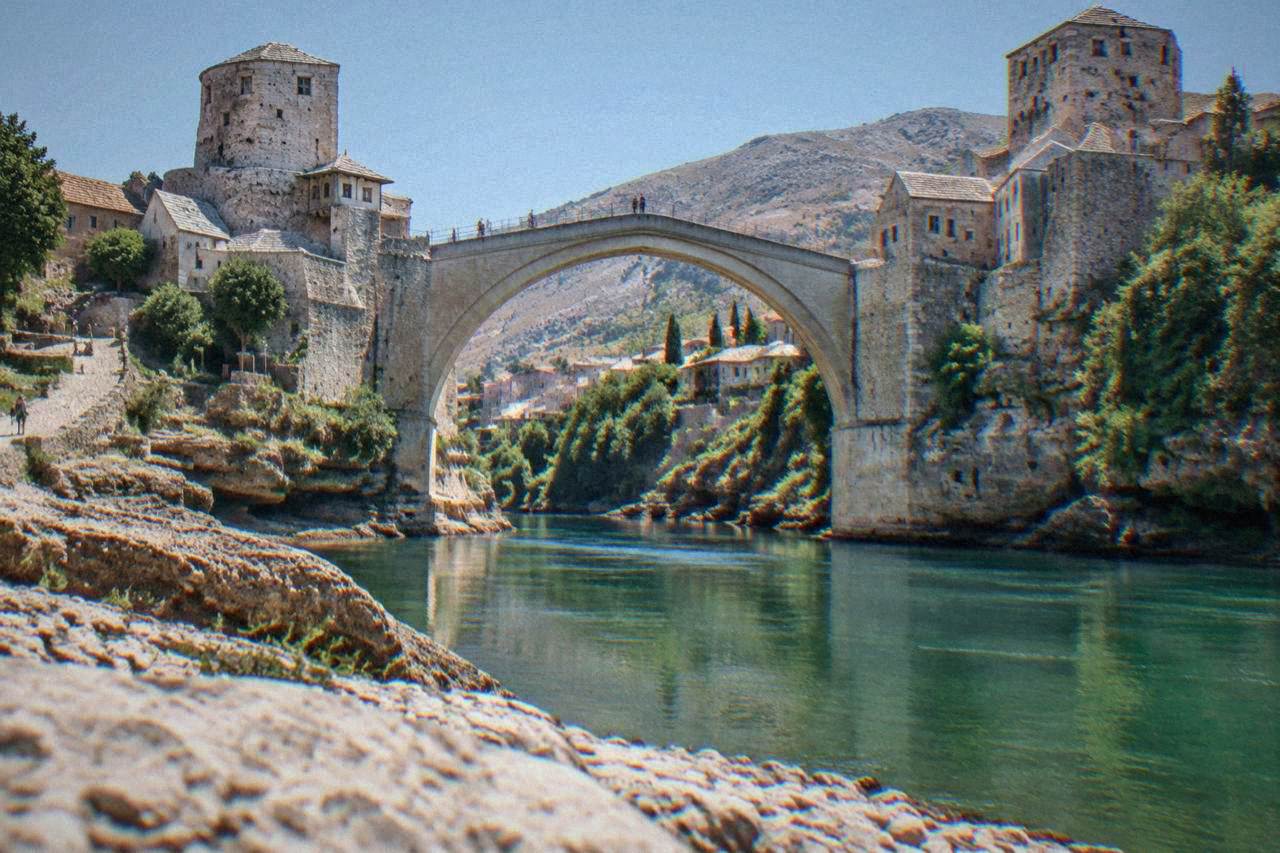
Start with the Old Bridge Area because it needs no car at all. The inscribed property covers the bridge itself, Stari Most, together with the surrounding Old City core on both banks, a compact area of 7.60 hectares with a 48-hectare buffer zone. The settlement grew around a river crossing whose keepers, the mostari, gave the city its name, first written down in 1474. The bridge was completed in 1566 under Suleiman the Magnificent, to the design tradition of the architect mimar Sinan, and rebuilt in 2004 after its destruction on 9 November 1993 during the war. The UNESCO inscription came the following year, recognising the area under criterion (vi) for its associations with multicultural coexistence and reconciliation.
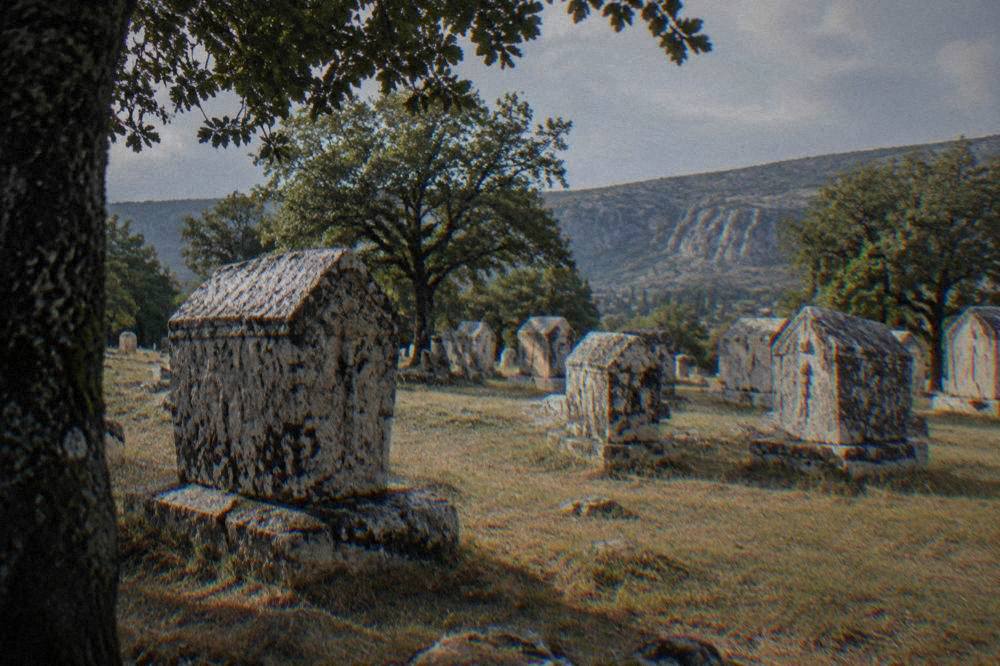
The stećci are the second property and the less crowded half of the pair. These are medieval limestone tombstones, carved with crosses, spirals, hunting scenes and crosses-within-circles, scattered across Bosnia and Herzegovina and neighbouring countries in the western Balkans. The World Heritage property 1504 covers a serial nomination of sites across the region, and Radimlja, near Stolac east of Mostar, is the necropolis most often named among them, both for the density of its carving and for the height of its chests and crosses. The site is 33.5 km by road from Stari Most, about 42 minutes free-flow, typically visited together with Stolac or on a longer Herzegovina loop.
| World Heritage property | Inscription | Basis | Position relative to Mostar |
|---|---|---|---|
| Old Bridge Area of the Old City of Mostar (property 946) | 2005 | Criterion (vi) only | In the city centre, walked on foot |
| Stećci Medieval Tombstone Graveyards (property 1504), Radimlja near Stolac | 2016 | Serial property across the region | 33.5 km by road, about 42 minutes from Stari Most |
Why Is The Old Bridge Area Of Mostar On The World Heritage List?
The Old Bridge Area was inscribed in 2005, in the decision recorded as 29 COM 8B.49, on the strength of criterion (vi) alone: the bridge and its surrounding Old City stand as a symbol of multicultural coexistence and of the international cooperation that rebuilt the bridge after it was destroyed on 9 November 1993. The single stone arch, completed in 1566, spans the Neretva about 21 to 24 metres above the river depending on its level.
The bridge itself is a single shallow arch of local tenelija limestone, with a span of about 29 metres, built for Suleiman the Magnificent and completed in 1566. It carried the crossing that had earlier been served by a wooden bridge, guarded by the mostari from whom the city takes its name. The Old City around it, including the Kujundžiluk bazaar street on the east bank, grew with the crossing, and the whole ensemble, bridge, towers and bazaar, is what the inscribed property protects rather than the arch alone.
The 1990s chapter is stated in dates and physical facts. The bridge was destroyed on 9 November 1993 during the war. Reconstruction followed using original materials and techniques, supported by UNESCO and World Bank partners, and the rebuilt bridge opened to the public in July 2004. UNESCO inscribed the Old Bridge Area of the Old City of Mostar in 2005, and the diving tradition of the Mostari club continues from the arch today: the 460th traditional competition ran on 26 July 2026, and the Red Bull Cliff Diving round followed from 30 July to 1 August 2026, with women diving from 21 m platforms and men from 27 m. Only club members dive from the bridge itself.
Crossing Stari Most costs nothing and needs no ticket; it is a public route open around the clock. The surrounding streets, Kriva ćuprija at their quiet end and Kujundžiluk at their busy end, are public too. For the deeper story of the arch itself, the separate page Why Is The Mostar Bridge So Famous? carries the history and the diving tradition in full, and Why Was The Mostar Bridge Destroyed? covers the 1993 destruction and 2004 reconstruction in detail.
What Are The Stećci At Radimlja Near Mostar?
Radimlja is a necropolis of stećci, carved medieval limestone tombstones, on the road between Čapljina and Stolac, 33.5 km and about 42 minutes by road from Stari Most. It forms part of the serial World Heritage property Stećci Medieval Tombstone Graveyards, property 1504, inscribed in 2016, and entry has been reported at 8 KM for an individual visitor, 5 KM for groups and citizens of Bosnia and Herzegovina.
The stones at Radimlja are the sculptural high point of the whole stećci phenomenon. Chests, sarcophagi and standing crosses stand in ranks on a slope above the road, many of them decorated with crosses in circles, rosettes, spiral bands and scenes of hunters on horseback, and several carry inscriptions naming the stonemasons who worked the site. The property as inscribed in 2016 is serial, spread across Bosnia and Herzegovina and neighbouring countries, but Radimlja is the site most often paired with a Mostar itinerary, both for the quality of the carving and for how easily it slots into a southern Herzegovina route: Stolac itself is 36.8 km from Stari Most, about 47 minutes, and Radimlja sits just before it at 33.5 km.
Reported practicalities are simple: a small entry fee in convertible marks, cash preferred, and open ground with no set circuit, so an hour on site is enough unless the carvings pull you in. The fee figures are reported rather than official, so confirm the current price at the site before travelling. What Radimlja adds to a Mostar trip is a second UNESCO register, a thousand-year-older register than the bridge, inside the same afternoon's drive as Blagaj, Počitelj and the Kravica waterfall.
How Do You Visit Both UNESCO Sites From Mostar In One Trip?
Yes, both properties fit into a single day from Mostar: the Old Bridge Area takes a morning on foot in the city centre, and Radimlja is 33.5 km away, about 42 minutes by road free-flow, usually combined with Stolac, Blagaj at 13.7 km and about 19 minutes, and Počitelj at 30.0 km and about 31 minutes on the same loop. A car or a guided day tour covers the second half comfortably.
The shape of the day writes itself. Start at Stari Most early, while the light is low and the arch photographs cleanly from the riverbank below the Kujundžiluk steps, then give the Old Bridge Museum a look if it is open, reported at around 10 KM with daily hours through the April-to-November season. After that, the drive south strings together the whole Herzegovina canon: Blagaj Tekke at the Buna spring, the fortified stone village of Počitelj, Radimlja, and, if the day stretches, the Kravica waterfall at 55.2 km and about 54 minutes from the bridge, where entry is 20 KM for an adult all year and swimming in the designated pool area is possible in summer with no lifeguard reported.
Whether to drive or join a tour comes down to the border question and the car question. Bosnia and Herzegovina is not in the European Union or in Schengen, so a hire car crossing to or from Croatia needs the rental company's permission in advance, and the Croatian land border carries full passport checks. Within the country the drives are short and the roads are signed. For travellers who would rather not plan the loop themselves, the Full-Day Tour in Herzegovina, Blagaj, Počitelj, and Kravice covers the same country with a guide and a vehicle: Check availability.
| Stop on the southern Herzegovina loop | Road distance from Stari Most | Free-flow driving time |
|---|---|---|
| Blagaj Tekke | 13.7 km | about 19 minutes |
| Počitelj | 30.0 km | about 31 minutes |
| Radimlja necropolis | 33.5 km | about 42 minutes |
| Stolac | 36.8 km | about 47 minutes |
| Kravica waterfall | 55.2 km | about 54 minutes |
Driving times exclude any border queues, but none of these stops involves a border at all; the whole loop stays inside Bosnia and Herzegovina. Times are free-flow road calculations, so allow more in the high season of July and August, when the FHMZ 1961-1990 station series puts Mostar's mean July temperature at 24.7 C and the ERA5 reanalysis for 1991-2020 puts the average daily high at 29.9 C, with the valley floor often running hotter.
Which Day Trips From Mostar Include UNESCO Sites?
Day trips from Mostar that touch World Heritage property fall into two groups: city walks that cover the Old Bridge Area itself, and southern Herzegovina circuits that reach Radimlja, usually alongside Blagaj, Počitelj and Kravica waterfall. Trips departing from Dubrovnik, Split or Sarajevo also route through the Old Bridge Area, since the bridge is the anchor sight of any Mostar stop.
From Mostar itself, the guided circuits all tell the same story in different wrappers: the bridge and the Old City in the morning, then the karst country south and east of the city. Some add the Skywalk above the Buna spring, some add the Fortica ridge above town, and the half-day options go to Kravica waterfall and back at 55.2 km each way. The variables worth checking at booking are whether entry fees are included, how long is spent at Radimlja if it appears on the route at all, and whether the group size suits a photography-heavy day.
From Dubrovnik or Split, the day is a border-crossing day. Croatia has been in Schengen since 1 January 2023, so the land border with Bosnia and Herzegovina is an external Schengen frontier with full checks, and waits have been reported at up to about 30 minutes, longer at summer peaks. From Sarajevo, the resumed train, two services a day each way since 15 October 2026, puts the Old Bridge Area within about two hours of the capital, and bus and tour options run alongside it. Whatever the starting point, the bridge is the common denominator: it is the reason the itineraries exist, and What Is So Special About Mostar? unpacks why the city earns that weight, while Things To Do In Mostar lists the full set of ways to spend the hours around it.
Common Questions About UNESCO Sites In Bosnia And Herzegovina
What Are Some UNESCO Sites In Bosnia And Herzegovina?
The Old Bridge Area of the Old City of Mostar, inscribed in 2005 under criterion (vi), and the Stećci Medieval Tombstone Graveyards, inscribed in 2016 with the Radimlja necropolis near Stolac among its featured locations. Both are reachable from Mostar, one on foot and one by a drive of about 42 minutes.
How Many UNESCO World Heritage Sites Are In Bosnia And Herzegovina?
The two properties recorded for a Mostar trip are the Old Bridge Area of the Old City of Mostar and the Stećci Medieval Tombstone Graveyards. This page covers both; the stećci property is serial and its full component list spans several countries.
Is The Old Bridge In Mostar A UNESCO Site?
Yes. The Old Bridge Area of the Old City of Mostar, which includes the bridge, its towers and the surrounding Old City, was inscribed on the World Heritage List in 2005 as property 946, under criterion (vi) alone.
Can You Visit Radimlja And The Old Bridge In One Day From Mostar?
Yes. The Old Bridge Area is in the city centre and needs no vehicle, and Radimlja is 33.5 km away, about 42 minutes by road free-flow, so the pair fits into one day with room for Stolac, Blagaj or Počitelj on the same loop.
Does It Cost Anything To See The UNESCO Sites Near Mostar?
Crossing Stari Most and walking the surrounding Old City streets are free. At Radimlja, entry has been reported at 8 KM for an individual and 5 KM for groups and citizens of Bosnia and Herzegovina; confirm the current price at the site before travelling.
When Was The Old Bridge Area Inscribed By UNESCO?
In 2005, in the decision recorded as 29 COM 8B.49, one year after the rebuilt bridge reopened in July 2004 following its destruction on 9 November 1993.
Two properties, one city, one easy loop: that is the UNESCO map of Bosnia and Herzegovina as a Mostar traveller meets it, and every kilometre of it sits inside a single day's drive of Stari Most.