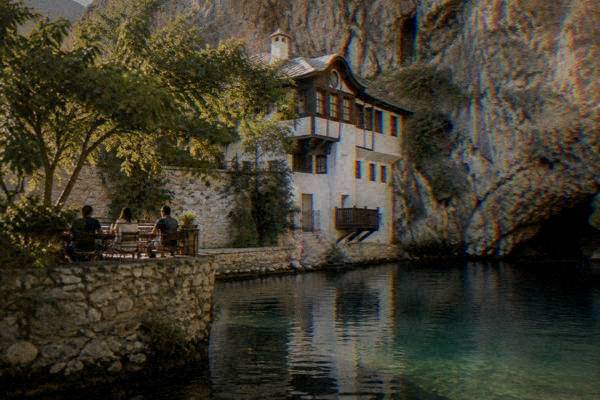
Stolac: Old Town, The Bregava And Radimlja
Stolac sits 36.8 km southeast of Mostar on the Bregava river, and its Old Town paired with the UNESCO-listed Radimlja necropolis makes one of the most rewarding half-day trips in Herzegovina.
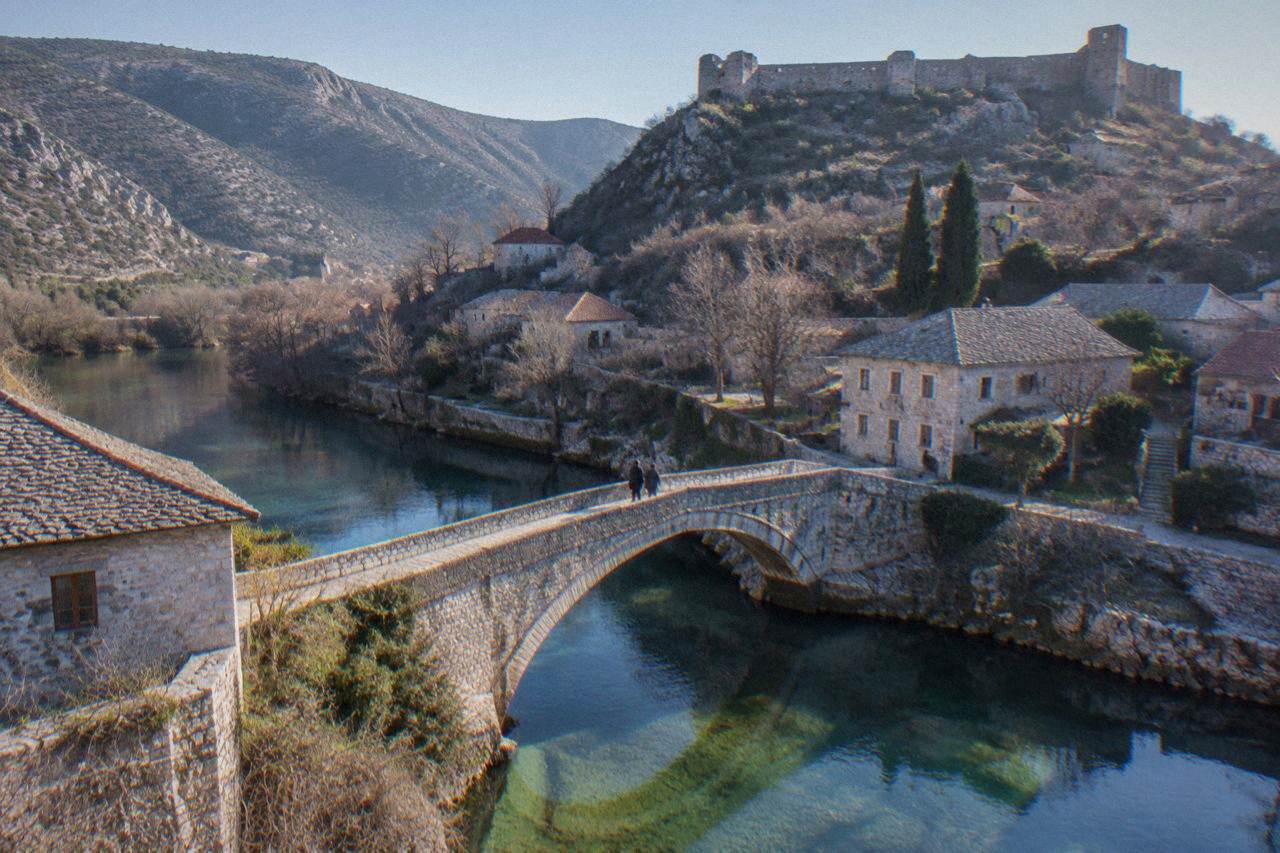
Stolac is 36.8 km and about 47 minutes by road from Stari Most in Mostar. Entry to the Radimlja stećci necropolis is reported at about 8 KM for an individual visitor, and the site is part of a UNESCO World Heritage property inscribed in 2016.
Stolac is a small town in Herzegovina, Bosnia and Herzegovina, 36.8 km southeast of Mostar by road, about 47 minutes of free-flow driving from Stari Most. The town wraps around the Bregava river, a cold karst tributary that runs clear through a compact Old Town of stone houses, mills and bridges, and a short drive further down the road lies Radimlja, one of the finest necropolises of medieval stećci tombstones anywhere in the Balkans. Together they make a day trip that pairs quiet river scenery with a UNESCO World Heritage inscription, and the route from Mostar passes Počitelj and close to Blagaj, so a full Herzegovina loop can be built around it.
This page on Mostar Travel Guide sets out what the trip involves: how far it is, what Radimlja is and why it carries UNESCO status, what the Old Town along the Bregava holds, how to combine Stolac with neighbouring sights, and what a guided alternative looks like for travellers who would rather not drive.
Where Is Stolac And How Far Is It From Mostar?
Stolac lies 36.8 km southeast of Mostar by road, about 47 minutes of free-flow driving from Stari Most, on the Bregava river in the eastern edge of Herzegovina. The route runs south through the Neretva valley towards Čapljina and then turns east, passing within reach of Počitelj and Radimlja on the way. The drive is on ordinary roads, not motorway, so allow extra time in summer traffic.
Those figures are door-to-door road calculations from Stari Most, with border-free driving the whole way: unlike trips to Dubrovnik or Neum, the Stolac run stays inside Bosnia and Herzegovina and crosses no border at all. That matters for planning, because every Croatian crossing near Mostar is now a Schengen external border with full passport checks since 1 January 2023, and queue time there is separate from anything on this route.
The Bregava itself is a karst river, spring-fed and cold, and it is the reason the town exists where it does: mills, bridges and garden plots line its banks through the Old Town. On a hot Herzegovina afternoon, when the ERA5 reanalysis for Mostar, 1991-2020, puts modelled August highs at 30.5 C, the river valley is noticeably cooler than the exposed slopes above it.
Distances from Stari Most to the main stops on a Stolac loop:
| Stop | Road distance from Stari Most | Free-flow time |
|---|---|---|
| Blagaj Tekke | 13.7 km | 19 min |
| Počitelj | 30.0 km | 31 min |
| Radimlja necropolis | 33.5 km | 42 min |
| Stolac | 36.8 km | 47 min |
| Hutovo blato | 48.1 km | 62 min |
| Kravica waterfall | 55.2 km | 54 min |
A natural loop from Mostar is Blagaj first, then Počitelj, then Radimlja and Stolac, and back either the same way or via Čapljina. Each of those stops has its own page: Blagaj and the Buna spring, the fortified village of Počitelj, and the Kravica waterfall.
What Is Radimlja And Why Is It UNESCO-Listed?
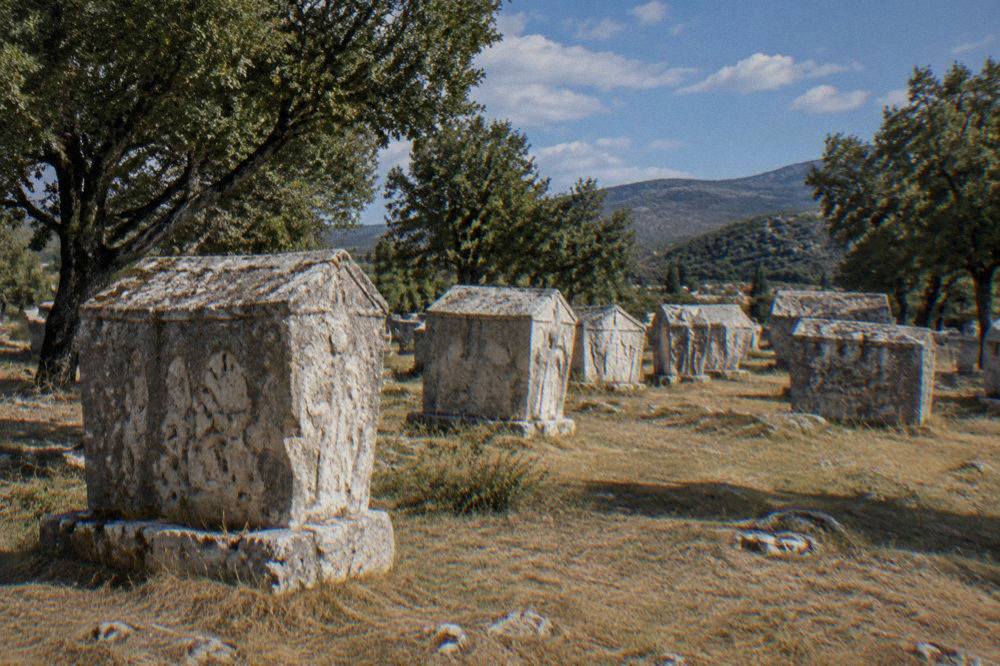
Radimlja is a medieval necropolis of stećci, carved stone tombstones, a short drive west of Stolac on the road towards Čapljina, and it forms part of the UNESCO World Heritage property "Stećci Medieval Tombstone Graveyards", property 1504, inscribed in 2016. Individual entry is reported at about 8 KM, with about 5 KM reported for groups and citizens of Bosnia and Herzegovina.
Stećci are monolithic tombstones carved between communities across Bosnia and Herzegovina and neighbouring lands, decorated with crosses, spirals, hunting scenes, dancing figures and epitaphs in Bosnian Cyrillic. Radimlja is one of the most decorated necropolises within the UNESCO serial property, with standing stones in several shapes, slabs, chests and crosses, and a range of motifs that make it a standard reference site for the whole tradition. The serial listing spreads across four countries, and Radimlja near Stolac is one of its flagship components.
The necropolis sits just off the main road, open ground with the stones arranged in rows, so a visit is a walk among the monuments rather than a museum stop. Allow an unhurried half hour to read the carvings. Because the figures above are reported rather than official, confirm the current ticket at the entrance, and carry some cash in convertible mark: the currency of Bosnia and Herzegovina is the KM, pegged at 1 EUR = 1.95583 KM, and small rural sites rarely take cards. A separate page on this site covers Radimlja and the stećci in detail.
Pairing Radimlja with the Stolac Old Town makes a coherent half-day: the necropolis explains the medieval layer of the region, and the town downstream carries its Ottoman and later layers along the Bregava. For travellers building a wider route, the monastery at Žitomislići sits conveniently between Mostar and Stolac on the eastern side of the Neretva valley.
If independent driving does not appeal, small-group day tours from Mostar cover Herzegovina's headline sights with a live guide, and the listings below show what is currently bookable.
What Does The Stolac Old Town Hold Along The Bregava?
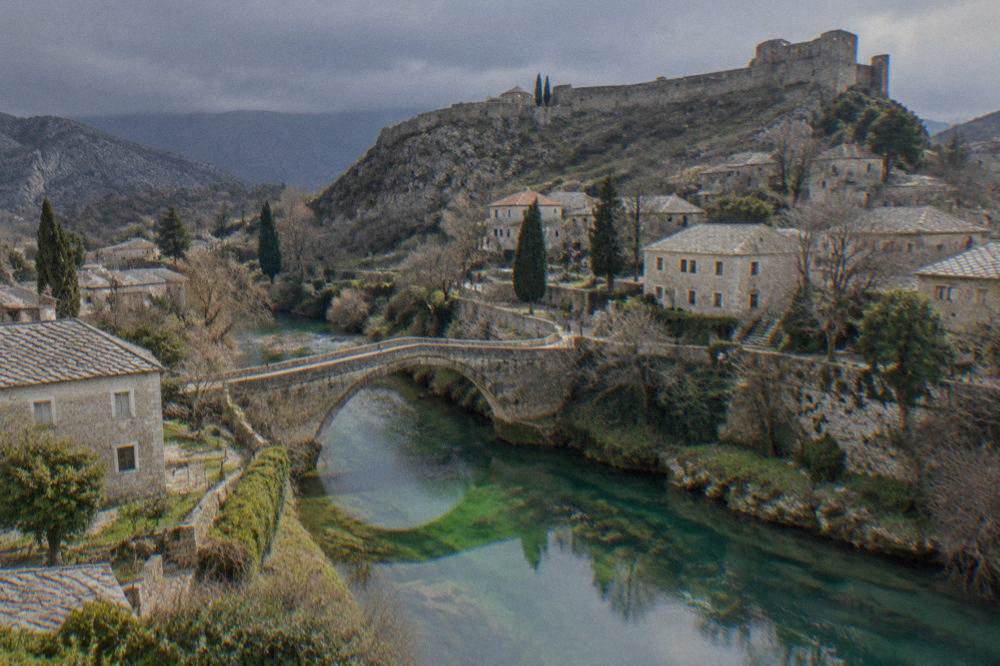
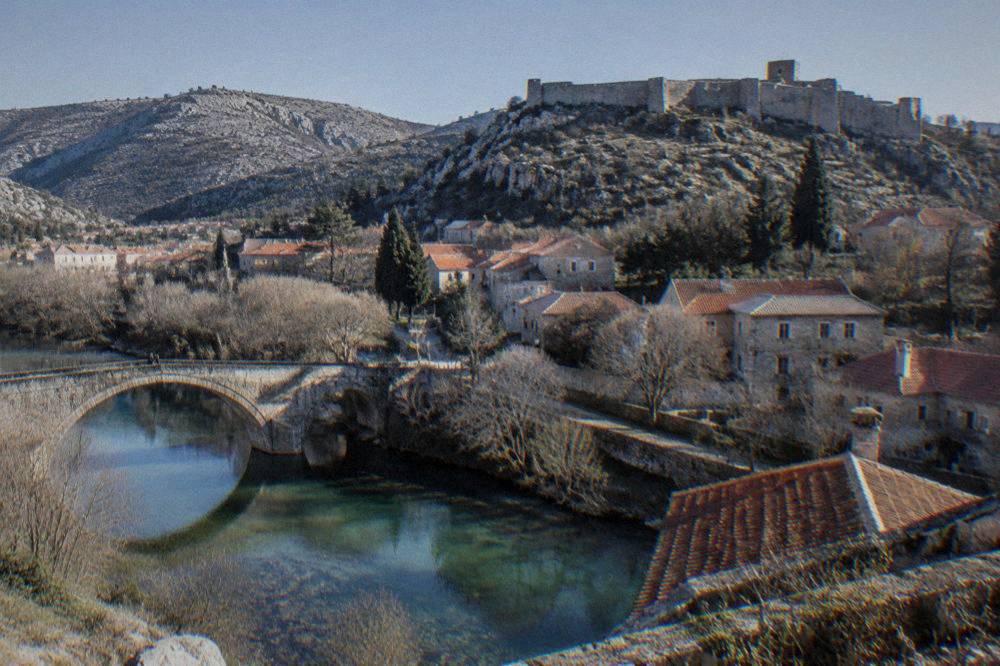
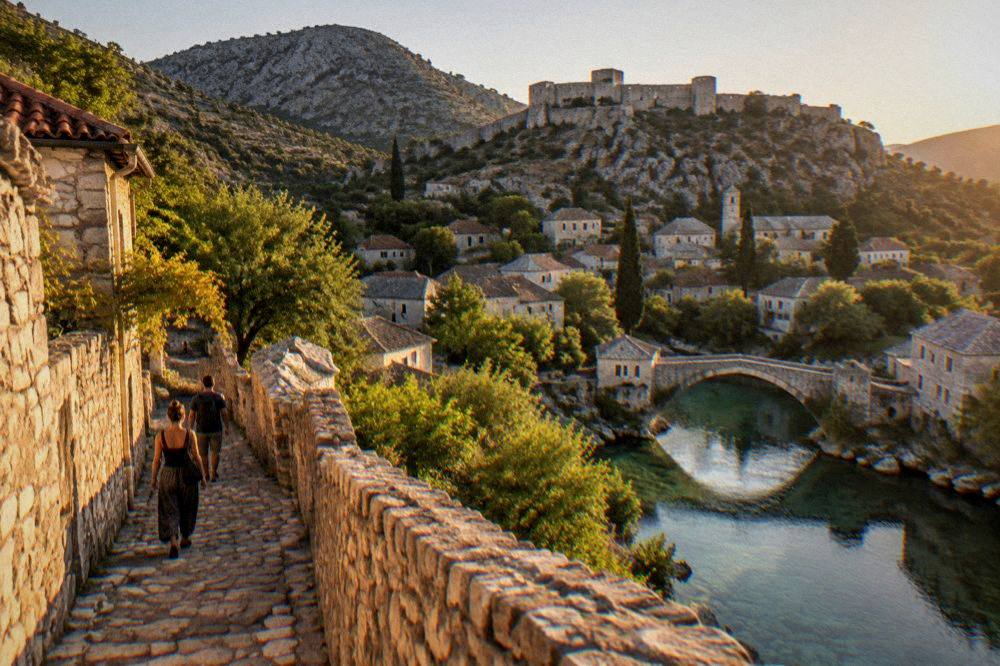
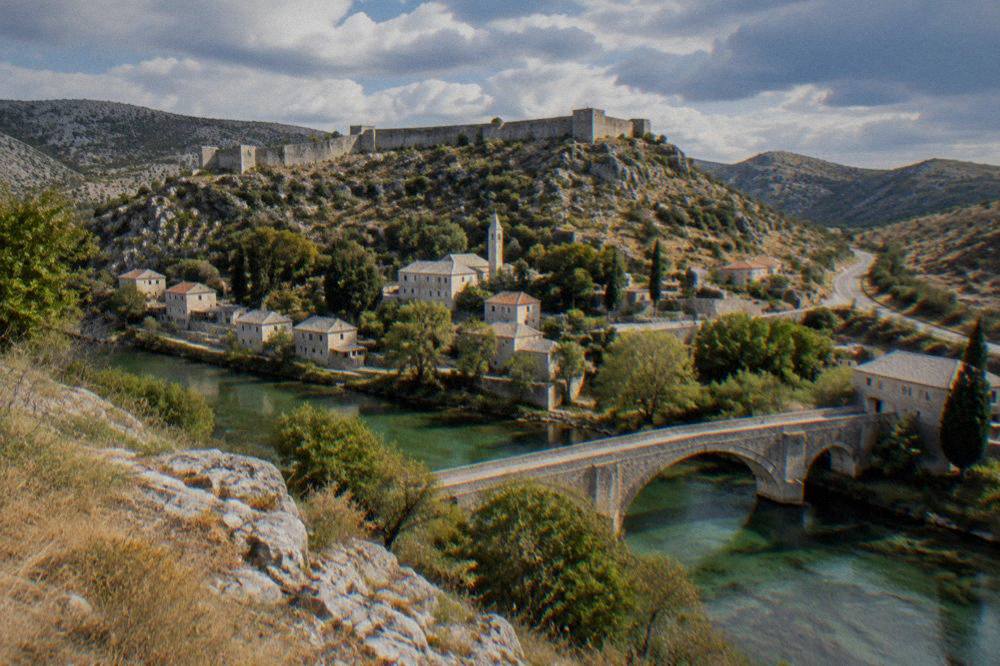
The Stolac Old Town is a compact riverside quarter of stone houses, Ottoman-era bridges and water mills strung along the Bregava, with a hilltop fortress above it, all walkable in a couple of hours and free to wander at street level. The river runs fast and cold through the centre, and shade along its banks makes the town a sensible stop in the warmest hours of a Herzegovina summer day.
The fortress above town is the landmark you see first from the road, walls climbing a rocky outcrop over the valley. Below it, the Old Town spreads along both banks, connected by small stone bridges, with gardens watered by mill channels running down to the river. The setting is the attraction: this is a town to walk slowly rather than a checklist of ticketed sights, and unlike Stari Most and Kujundžiluk in Mostar, the quarter sees a fraction of the foot traffic.
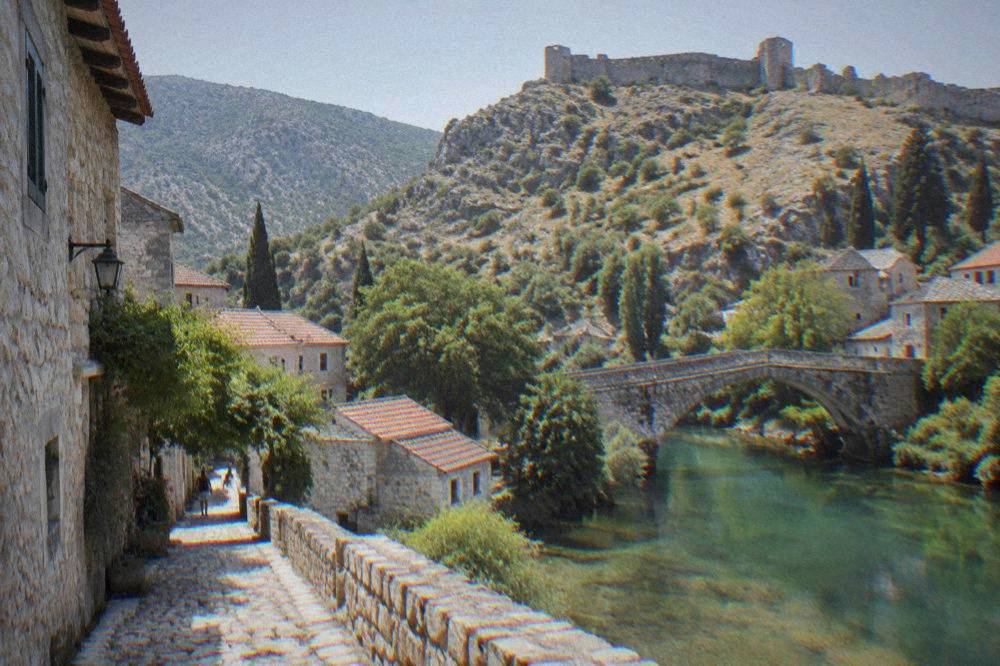
Practicalities are simple. Parking is on-street and informal around the Old Town; arrive early in high summer for a spot in the shade. There are no published opening hours for the quarter itself because it is a lived-in neighbourhood, so treat any specific site, the fortress above all, as confirm-on-arrival. Food and coffee in Stolac follow Herzegovina patterns: sit-down places around the river take cards more often than kiosks do, but cash in KM is the safe default everywhere outside Mostar's tourist core, and the food guide for Mostar explains the dishes you will see on menus across the region, from burek to grilled meats.
One planning note on the calendar: the region's summer festivals cluster around Mostar and Međugorje, with Mostarsko ljeto running 25 June to 7 August in 2026 and Mladifest in Međugorje from 1 to 6 August, so a trip in late July can be threaded around events rather than avoiding them.
How Do You Combine Stolac With Blagaj, Počitelj And Kravica In One Day?
A one-day Herzegovina loop from Mostar runs Blagaj Tekke at 13.7 km and 19 minutes, Počitelj at 30.0 km and 31 minutes, Radimlja at 33.5 km and 42 minutes, and Stolac at 36.8 km and 47 minutes, giving roughly two hours of total driving before any stops, all inside Bosnia and Herzegovina with no border crossing. Kravica waterfall adds a further leg at 55.2 km from Mostar, about 54 minutes.
The classic order is Blagaj in the morning while the light is still low on the Buna spring, Počitelj mid-morning to climb the fortress before the heat, Radimlja and Stolac either before or after lunch, and Kravica in the late afternoon if swimming is on the plan, since the falls' pool is open for swimming in summer in a designated area with no lifeguard reported. Entry at Kravica is 20 KM for an adult all year, 10 KM for residents of Bosnia and Herzegovina, and free for children under 7, and the park keeps monthly hours, 07:00 to 22:00 from June to September, closing earlier in the winter months.
Blagaj Tekke, the dervish lodge at the Buna spring, is a 10 KM reported entry with a dress code of covered shoulders and knees, wraps provided at the entrance. Počitelj's village and fortress are free to walk. So the full loop's paid entries are modest, but the small fees add up in cash, and rural sites prefer mark over euro; where euro notes are accepted, the rate is usually rounded to 2 KM per euro rather than the exact peg of 1.95583, so paying in KM is the better deal.
A sample day, with each stop measured from Stari Most so you can plan the legs yourself (stop time not included):
| Stop on the loop | Distance from Stari Most | Free-flow time | Reported entry |
|---|---|---|---|
| Blagaj Tekke | 13.7 km | 19 min | about 10 KM |
| Počitelj | 30.0 km | 31 min | village free |
| Radimlja | 33.5 km | 42 min | about 8 KM |
| Stolac centre | 36.8 km | 47 min | free to wander |
| Kravica waterfall | 55.2 km | 54 min | 20 KM adult, all year |
That is a big day, and travellers who want to slow down should cut Kravica and keep the eastern half: Mostar, Počitelj, Radimlja and Stolac are a natural four-stop route with under 90 minutes of driving in total. The paired page on Kravice, Blagaj and Počitelj in one day covers the southern loop in depth, and Hutovo blato is a birdlife alternative if the falls feel too busy.
Should You Visit Stolac On A Tour Or Under Your Own Steam?
Stolac is easiest under your own steam, since the 47-minute drive has no border and the Old Town needs no booking, but a guided day tour from Mostar suits travellers without a car, pairing Stolac's region with Blagaj, Počitelj and Kravica while someone else handles the driving and the roadside explanations. Both approaches reach the same ground; the choice turns on transport and appetite for self-direction.
Guided options from Mostar concentrate on the Herzegovina loop rather than Stolac alone, so expect the town or Radimlja as stops within a wider day rather than as a dedicated tour. Before committing to any booking, check the live listing for what a given day actually includes, since itineraries differ on whether Počitelj or a Kravica swim stop is built in. The listing also carries cancellation terms; free cancellation is common on day tours, which makes an early booking low-risk while you finalise the rest of the trip.
A walking tour is the other half of the equation: the Old Town of Mostar itself rewards a guide far more than Stolac does, and pairing a city walk on day one with a self-driven Stolac day on day two is a pattern that works well. The Mostar walking tour options are summarised on their own page.
For independent travellers, one caution applies across rural Herzegovina: suspected mine areas remain, and the standing advice is to stay on marked paths and paved or well-used routes, especially when cutting cross-country to viewpoints. Around Stolac, the Old Town paths and the main sites are ordinary public routes, but climbing off-trail onto hillsides is not worth the shortcut. The general number for emergencies anywhere in the country is 112.
When Is The Best Time Of Year For The Stolac Trip From Mostar?
Late spring and early autumn are the comfortable windows, with modelled May highs of 22.3 C and October highs of 19.5 C in the Mostar area according to the ERA5 reanalysis, 1991-2020, against 30.5 C modelled highs in August; November is the rain month to avoid, averaging 200.0 mm of precipitation in the FHMZ 1961-1990 station data against 42.9 mm in July.
Those two datasets answer different questions, so keep the labels straight: the FHMZ Mostar station table, 1961 to 1990, is the measured station record, and the ERA5 figures are modelled normals for the valley. Both point the same way for a Stolac day trip: July and August are hot and dry, winter is mild on paper, with a January mean of 4.8 C at the station, but the rain is concentrated from October through December, and the Bregava at high water changes the character of the riverside walk.
Summer has a compensating factor: the river. When the valley heats up, the Bregava stays cold, karst-fed the way the Neretva is, and the shade along its banks in the Stolac Old Town is one of the more reliable cool spots in the region. Morning light also photographs the necropolis at Radimlja better than flat midday sun, another argument for an early start.
| Month | Modelled high (ERA5 1991-2020) | Modelled low (ERA5 1991-2020) | Rain mm (ERA5 1991-2020) |
|---|---|---|---|
| April | 17.7 C | 7.0 C | 150.9 |
| May | 22.3 C | 11.4 C | 116.1 |
| June | 26.8 C | 15.3 C | 72.4 |
| July | 29.9 C | 17.7 C | 45.4 |
| August | 30.5 C | 18.1 C | 52.6 |
| September | 24.5 C | 14.0 C | 142.0 |
| October | 19.5 C | 9.8 C | 186.8 |
Late July brings an extra reason to be in the area: the traditional Old Bridge diving competition in Mostar ran its 460th edition on 26 July in 2026, and the Red Bull Cliff Diving round followed from 30 July to 1 August, so a summer trip can catch those events with Stolac as a quieter counterweight day.
What Should You Know About Money, Borders And Practicalities?
Bosnia and Herzegovina uses the convertible mark, pegged at 1 EUR = 1.95583 KM, is not in the EU and not in Schengen, and the Stolac trip crosses no international border at all from Mostar; a tourist tax reported at 3 KM per person per night applies in the canton from 1 January 2026, so confirm at your accommodation when booking.
Cash still matters outside the big cities. Cards are fine at hotels and larger restaurants in Mostar, but the entrance at Radimlja, stalls in Počitelj and small cafes in Stolac work best with mark in hand. Euro notes are often accepted in tourist areas, usually rounded to 2 KM per euro, which quietly costs you the difference against the peg, so withdraw KM for the day trip. Visa-exempt visitors may stay up to 90 days in a six-month period from first entry; the emergency number is 112, with 122 for police and 124 for ambulance.
If your wider itinerary continues into Croatia, whether to Dubrovnik or towards Neum and the coast, remember that the land border is now a Schengen external border with full checks, and reported waits run up to about 30 minutes, longer at summer peaks. ETIAS is not in operation, so no pre-authorisation is needed for visa-exempt travellers today, but passports are checked. None of that touches the Stolac run itself.
Practical checklist for the day:
| Item | Detail |
|---|---|
| Currency | Convertible mark (KM), pegged 1 EUR = 1.95583 KM |
| Radimlja entry | about 8 KM reported, confirm at the gate |
| Blagaj Tekke entry | about 10 KM reported, shoulders and knees covered |
| Kravica entry | 20 KM adult, all year; under 7 free |
| Day trip distance | 36.8 km each way from Stari Most |
| Emergency number | 112 |
| Tourist tax | reported 3 KM per person per night, confirm at booking |
Which Other Day Trips Sit Within Reach Of A Stolac Base?
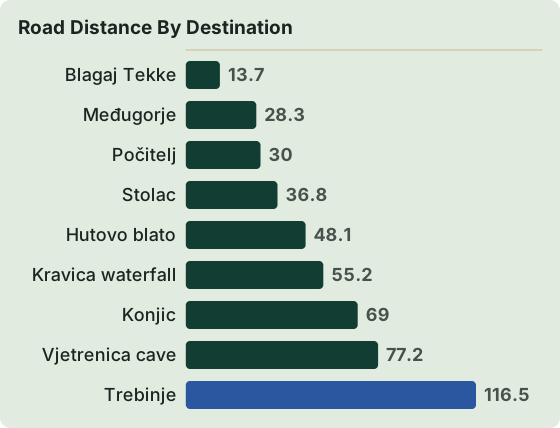
From Stolac the whole of southern Herzegovina opens up: Trebinje at 116.5 km and about 142 minutes from Mostar is the far option, while closer stops include the Vjetrenica cave at 77.2 km from Mostar and Hutovo blato at 48.1 km, both under 90 minutes from Stolac itself; Međugorje at 28.3 km from Mostar and Konjic at 69.0 km round out the region's day-trip network.
Travellers staying two or more nights could base in Stolac for its quiet and radiate outwards. Vjetrenica, the great wind cave of the Popovo polje, charges about 20 to 25 KM reported for a guided visit, runs seasonally, and pairs naturally with Trebinje's monasteries and old town to the southeast. Hutovo blato is a nature park of lakes and birdlife, about 5 KM reported entry, with boat trips on the water. To the north, Jablanica holds the ruins of the bridge on the Neretva and the Battle for the Wounded museum, and Konjic beyond it guards ARK D-0, Tito's atomic bunker, at 40 KM reported entry for foreign visitors with booking required and Monday closure.
Pilgrimage traffic is a regional constant: Međugorje's hills and church are free and open around the clock, and its youth festival, Mladifest, ran 1 to 6 August in 2026. Long-haul days to Sarajevo and Dubrovnik are better done from Mostar itself, and the capital is covered in its own guide on getting from Sarajevo to Mostar, where the train, two services a day each way after its 15 October 2026 resumption, is the scenic alternative to the road.
Regional day-trip distances from Stari Most:
| Destination | Road distance | Free-flow time |
|---|---|---|
| Blagaj Tekke | 13.7 km | 19 min |
| Međugorje | 28.3 km | 40 min |
| Počitelj | 30.0 km | 31 min |
| Stolac | 36.8 km | 47 min |
| Hutovo blato | 48.1 km | 62 min |
| Kravica waterfall | 55.2 km | 54 min |
| Konjic | 69.0 km | 80 min |
| Vjetrenica cave | 77.2 km | 104 min |
| Trebinje | 116.5 km | 142 min |
The through-line for anyone planning a first visit is on the site's things to do in Mostar page, which orders the region's sights by trip length, from one day in Mostar outwards.
For the guided route back in the capital of Herzegovina's tourism, these are the listings travellers compare.
Is Stolac Worth The Drive Compared With Počitelj Or Blagaj?
Stolac rewards travellers who have already seen Blagaj and Počitelj and want the region's next layer: a lived-in Old Town on a cold river plus a UNESCO stećci necropolis at Radimlja a short drive away, all at 47 minutes from Mostar without crowds; if the trip is your first and only day out of the city, the Blagaj, Počitelj and Kravica loop is the more conventional introduction, and Stolac is the connoisseur's second trip.
The comparison is a matter of texture rather than rank. Počitelj is a fortress village on a hill, dramatic and compact. Blagaj is a spring and a tekke, a single great sight in an extraordinary setting. Stolac is a working town with an old heart, less staged, with the Bregava running through it and a necropolis of carved medieval stones down the road that carries a UNESCO inscription in its own right. Each is free or nearly free at street level, and all three sit on one loop of road.
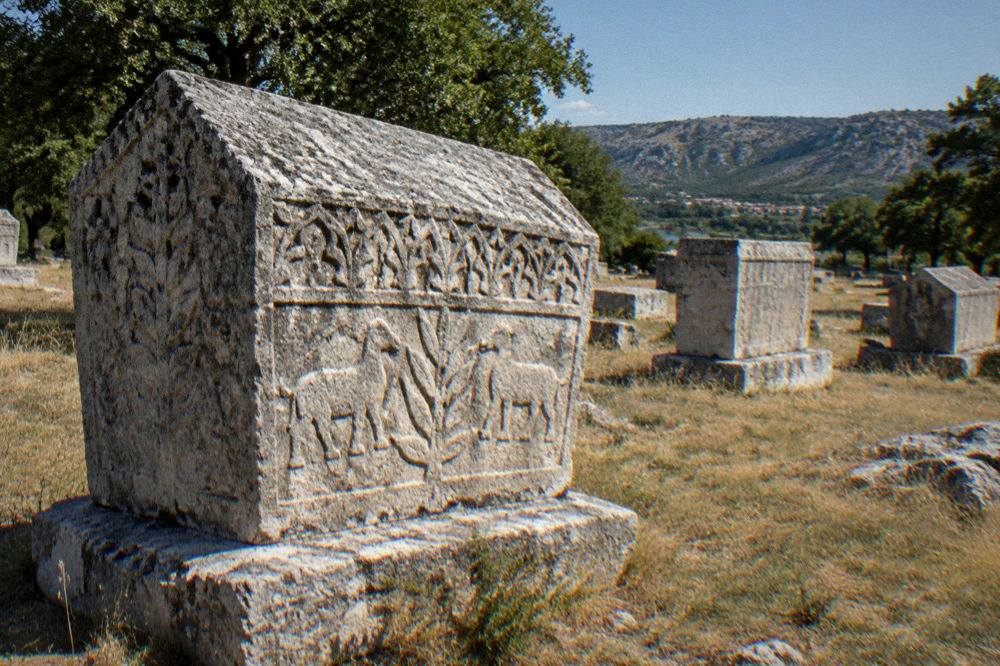
Photographers should note the light: Radimlja's stones read best in low morning or late afternoon sun, when the carvings throw shadow, and the fortress at Stolac catches evening light from the valley floor. The Mostar viewpoints guide applies the same logic to the city, where the terrace on Hum hill and the minaret of the Koski Mehmed-pašina džamija frame the Neretva from above.
Common Questions About Stolac And Radimlja From Mostar
How far is Stolac from Mostar?
Stolac is 36.8 km from Stari Most by road, about 47 minutes of free-flow driving, with no border crossing on the route. The Radimlja necropolis is slightly closer, at 33.5 km and about 42 minutes.
What is Radimlja near Stolac?
Radimlja is a medieval necropolis of stećci, carved stone tombstones, and one of the components of the UNESCO World Heritage property "Stećci Medieval Tombstone Graveyards", inscribed in 2016. Entry is reported at about 8 KM for an individual visitor; confirm the current price at the gate.
Can you combine Stolac, Počitelj and Blagaj in one day from Mostar?
Yes. The three stops plus Radimlja form a loop with roughly 90 minutes of total driving from Mostar: Blagaj Tekke at 13.7 km, Počitelj at 30.0 km, Radimlja at 33.5 km and Stolac at 36.8 km, each 19 to 47 minutes from Stari Most.
How much does it cost to visit Radimlja?
Entry is reported at about 8 KM for individuals, with about 5 KM reported for groups and citizens of Bosnia and Herzegovina. Bring cash in convertible mark; the currency is the KM, pegged at 1 EUR = 1.95583 KM.
Is Stolac worth visiting compared with other Herzegovina day trips?
Stolac suits a second or third day in the region, pairing a quiet riverside Old Town with the UNESCO-listed stećci at Radimlja. First-time visitors usually start with Blagaj, Počitelj and Kravica waterfall before adding Stolac.
Do you need a passport to travel from Mostar to Stolac?
No. Both towns are in Bosnia and Herzegovina and the route crosses no international border. A passport is only needed if your itinerary continues into Croatia, whose land border is a Schengen external border with full checks.
The short version: Stolac is a 47-minute drive from Stari Most, the Radimlja stones are a UNESCO inscription three kilometres down the road, and the two together make the best quiet half-day in reach of Mostar.