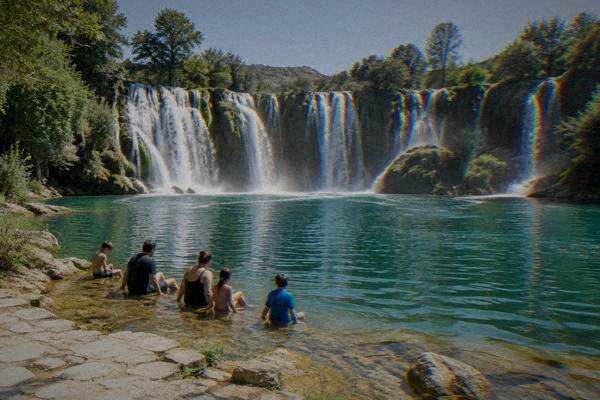
Kravice Waterfalls: Swimming Below The Falls Near Mostar
Kravica waterfall is a horseshoe of waterfalls on a karst river about 55 km from Mostar, open all year with swimming in the pool below in summer. Here is what entry costs, when the park opens, and how to fit it into a Herzegovina day.
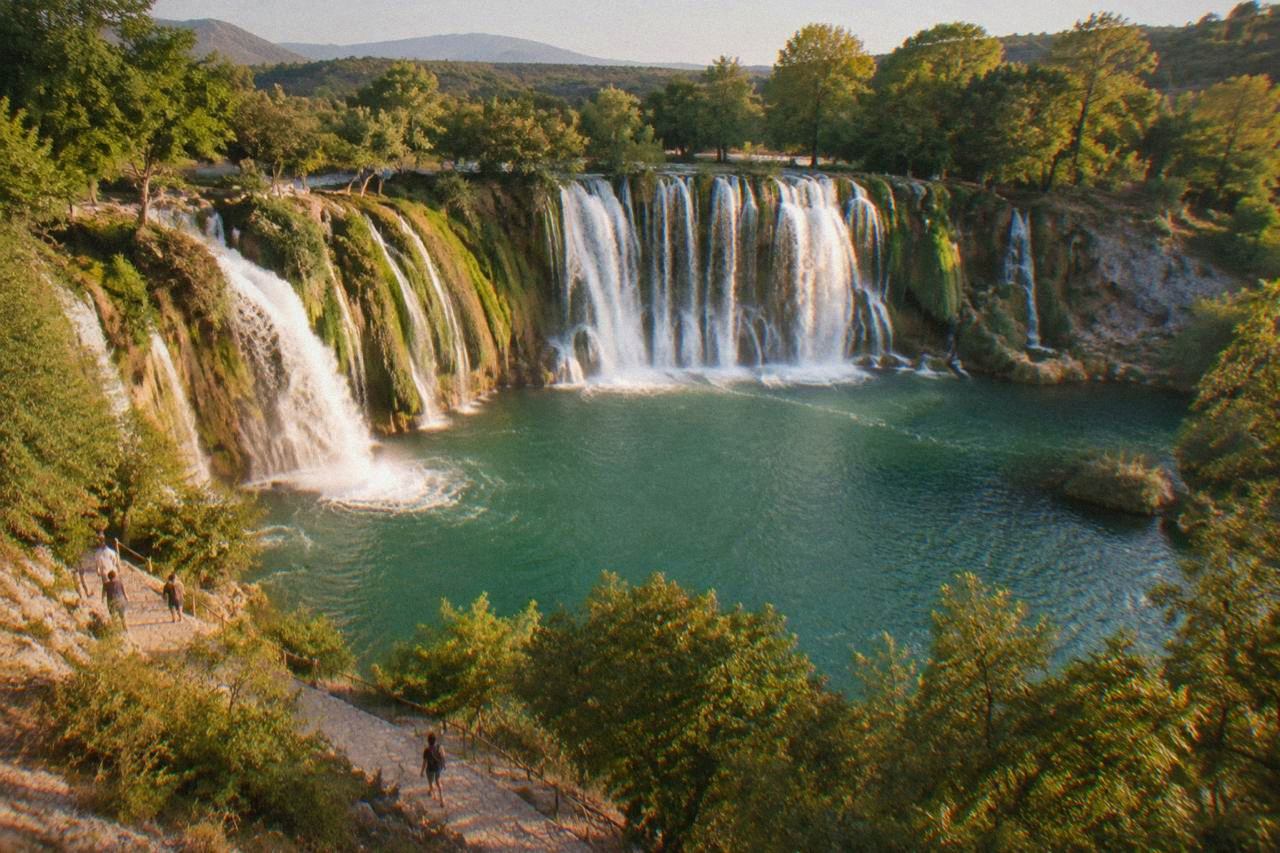
Kravica waterfall is 55.2 km and about 54 minutes by road from Stari Most in Mostar. Adult entry is 20 KM all year, children under 7 enter free, and the park is open every month with hours that stretch to 22:00 in summer.
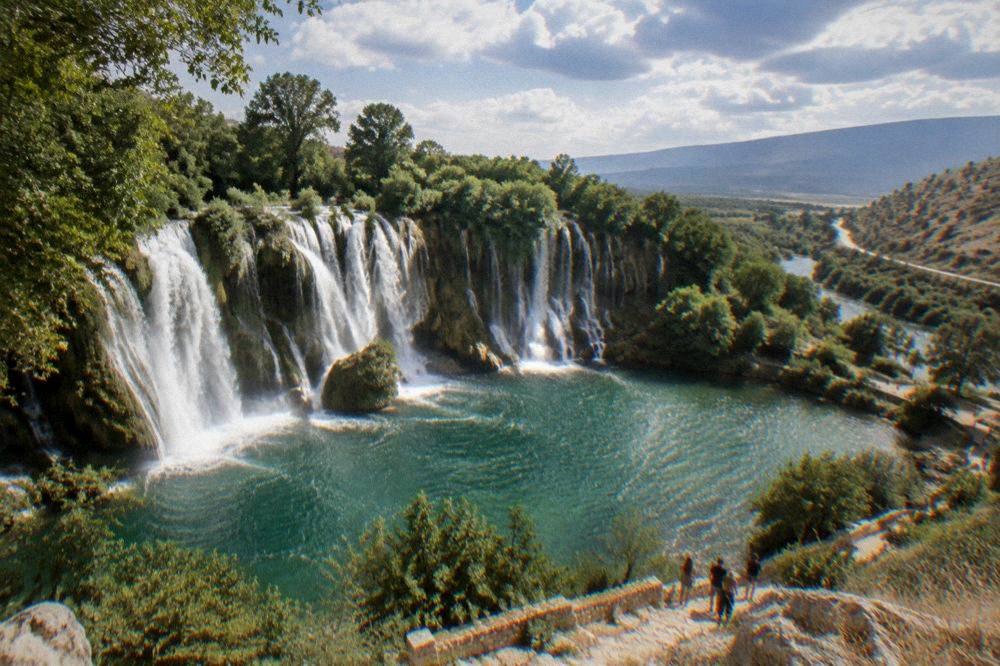
Kravica waterfall is the one Herzegovina day trip from Mostar that almost everyone photographs and half the internet misprices. The park sits about 55 km south of the city near Ljubuški, where a horseshoe of travertine cliffs spills a wide curtain of water into a cold green pool ringed by trees. The park's own visitor page sets one adult price for the whole year and lists opening hours for every month, which makes planning simpler than the conflicting blog posts suggest. This page from the Mostar Travel Guide desk lays out entry costs, hours, swimming, safety and how to combine the falls with Blagaj and Počitelj.
Where Is Kravica Waterfall And How Far From Mostar?
Kravica waterfall lies 55.2 km by road from Stari Most in Mostar, about 54 minutes of free-flow driving south towards Ljubuški, and it is not the 15-minute hop that some guides claim. The road runs down the Neretva valley and turns west before Čapljina, and there is no border to cross because the whole route stays inside Bosnia and Herzegovina.
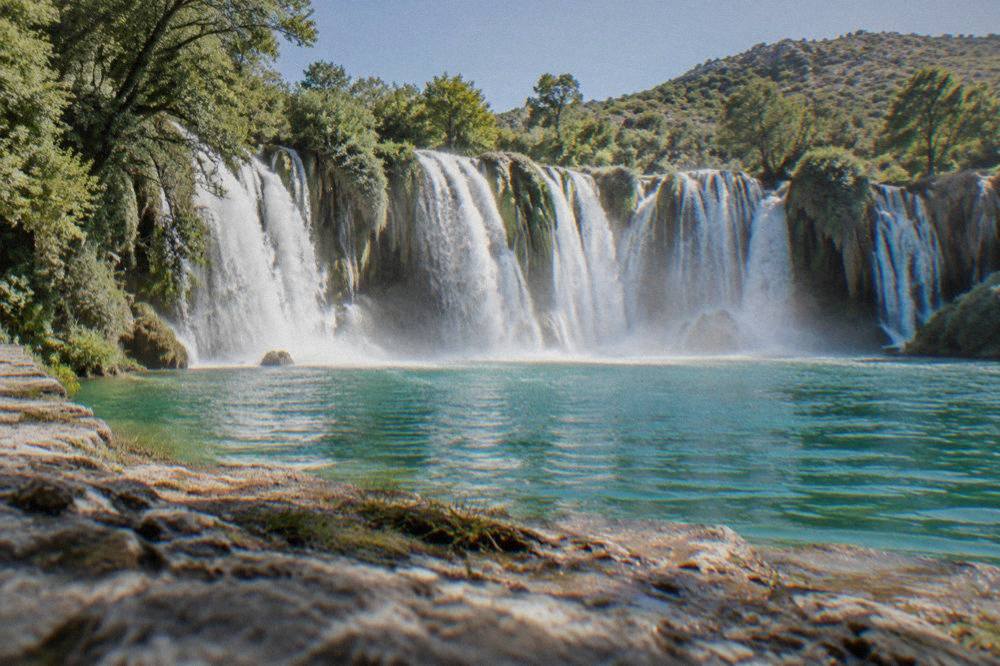
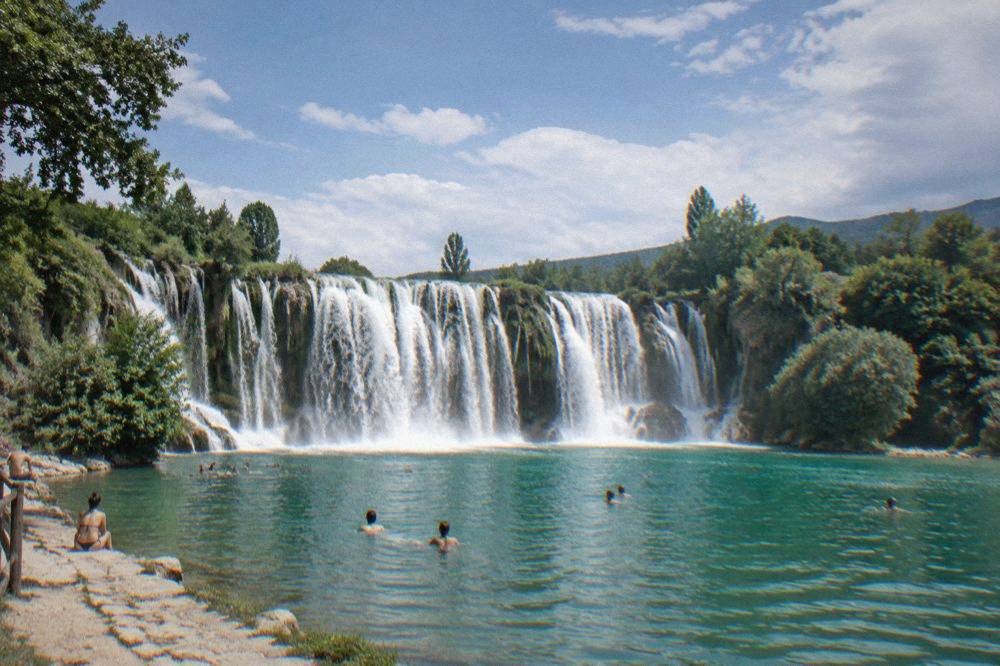
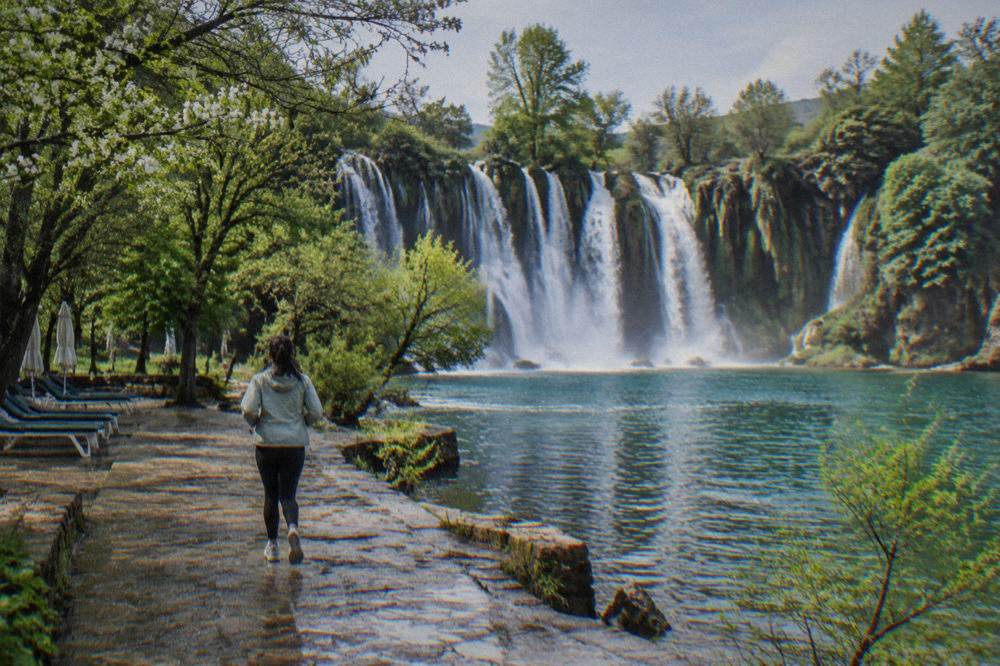
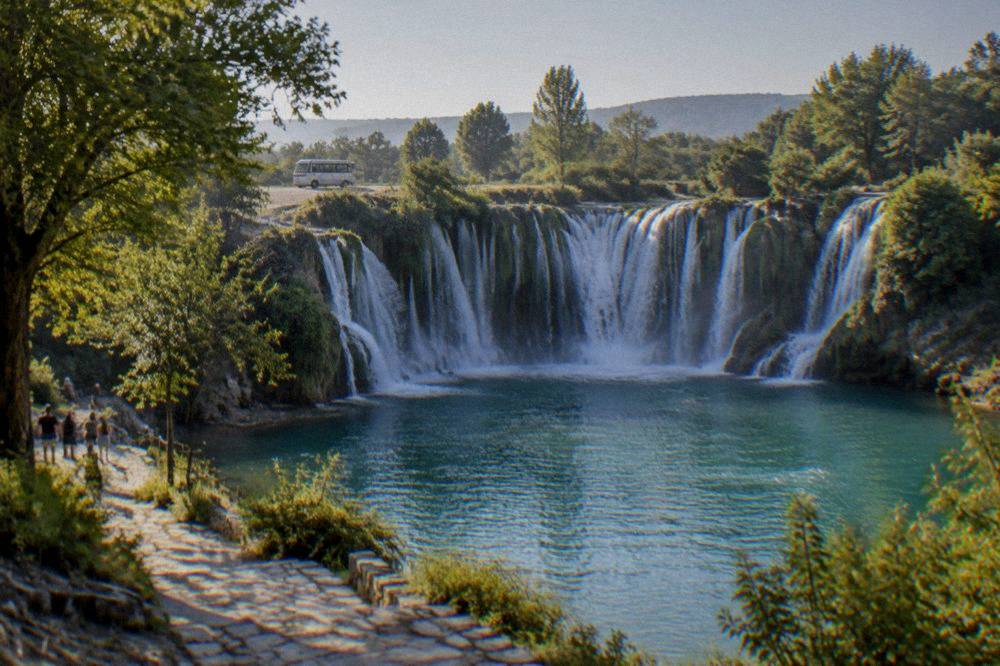
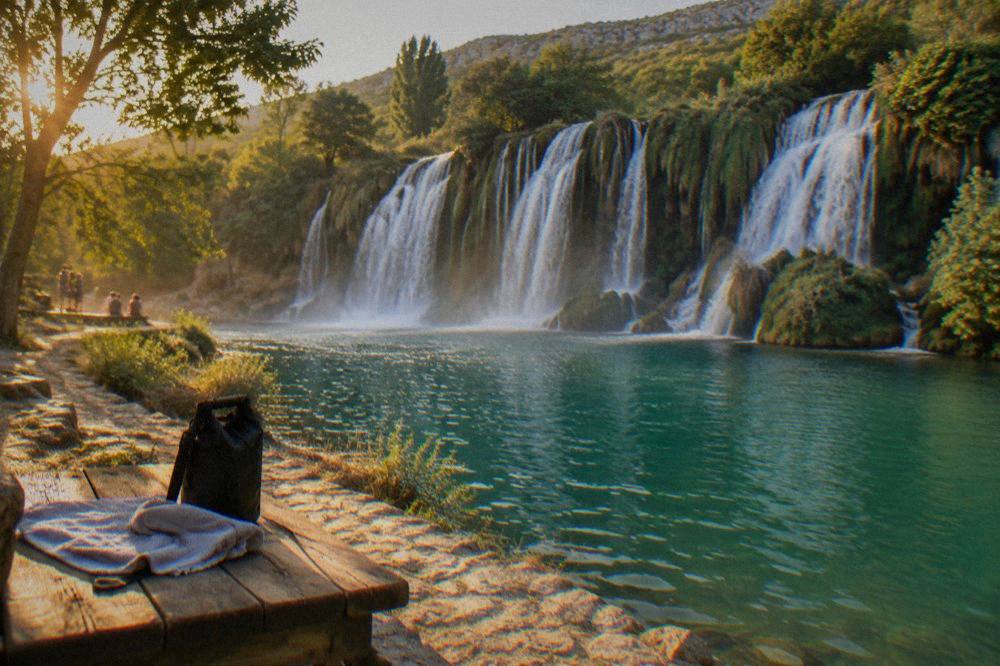
The waterfall is a karst formation: the river spreads across a limestone lip roughly 100 metres wide and drops into a natural pool at the base of the cliff. That pool is what people come for in summer, and the shape of the horseshoe means the spray keeps the immediate area cool even when the Herzegovina heat is at full strength. The surrounding land is wooded, with a small beach area and platforms at the water's edge. Parking sits a short walk above the falls, and the path down is stepped and maintained by the park.
Plenty of visitors tack the falls onto a loop rather than driving out and back. Blagaj and its Buna spring sit on a natural detour, and Počitelj hugs the route back towards the Neretva. The Kravice, Blagaj and Počitelj in one day itinerary covers that loop in detail, and the timings work in either direction. Going falls-first in summer means arriving before the midday heat; going falls-last means swimming at the end of the day when the crowds have thinned.
How Much Does Kravice Waterfall Cost And When Is It Open?
Adult entry to Kravica waterfall is 20 KM all year, with a reduced 10 KM rate for residents of Bosnia and Herzegovina and free entry for children under 7, per the park's own visitor page. The park never closes for winter: hours shift by month, from 07:00 to 17:00 in the depths of winter to 07:00 to 22:00 from June to September.
The single most repeated error about Kravica is the claim that it costs 10 euro in summer and is free in winter. It does not. The 20 KM adult ticket applies in January exactly as it does in July, and the convertible mark, not the euro, is the currency of Bosnia and Herzegovina. Prices beyond the base ticket, such as parking or sunbeds, shift year to year, so confirm anything extra on arrival. Cash in KM is the safe assumption at the gate.
| Ticket | Price |
|---|---|
| Adult, all year | 20 KM |
| Resident of Bosnia and Herzegovina | 10 KM |
| School groups aged 7 to 18 | 10 KM (5 KM resident rate) |
| Children under 7 | Free |
Opening hours follow the seasons closely, and the long summer evenings are the reason the June to September window runs to 22:00. Visiting at opening time in July means cool air, soft light for photographs and a quieter pool before the day-trip coaches arrive from the coast.
| Months | Opening hours |
|---|---|
| January and February | 07:00 to 17:00 |
| March and April | 07:00 to 18:00 |
| May | 07:00 to 20:00 |
| June to September | 07:00 to 22:00 |
| October | 07:00 to 19:00 |
| November and December | 07:00 to 17:00 |
A practical note on timing: the summer heat in the Herzegovina lowlands is real. The FHMZ station table for Mostar records an absolute maximum of 41.2 C in July, and the ERA5 reanalysis, 1991-2020, puts the mean daily high at 29.9 C in July and 30.5 C in August. Midday at the falls is hot on the steps and pleasant in the water. Arrive early or late.
Can You Swim At Kravice Waterfall Near Mostar?
Swimming is reported to be allowed in the designated pool below the falls in summer, in a marked area, with no lifeguard service reported, and the park's own rules section should be checked on arrival before you swim. The water is cold: the falls are fed by karst springs, and visitors should treat the pool as a short, bracing swim rather than a warm soak.
The swimming season tracks the warm months, roughly June through September, when the designated area is in use. Outside that window the pool is calm and the falls are at their most photogenic after autumn rain, but swimming is not the point of a winter visit. The rocks around the water are slippery, the current picks up close to the falling water, and the absence of a lifeguard means every swimmer is responsible for their own judgement. Children should stay within arm's reach.
What you do not need is special equipment beyond the ordinary. Towel, water shoes for the stony entry, and something dry for the drive back cover it. The pool is not deep in the designated swimming zone, and the beach area beside it is the natural base for a picnic. Food options at the park itself are limited and seasonal, so a packed lunch is the standard play for a full day out.
If you are coming from the coast rather than from Mostar, the drive changes character because it crosses the Bosnian-Croatian border. A guided day trip removes the parking hunt, the border paperwork and the timing guesswork in one move, and free cancellation keeps the plan flexible if the weather turns.
What Is The Best Month To Visit Kravice Waterfall From Mostar?
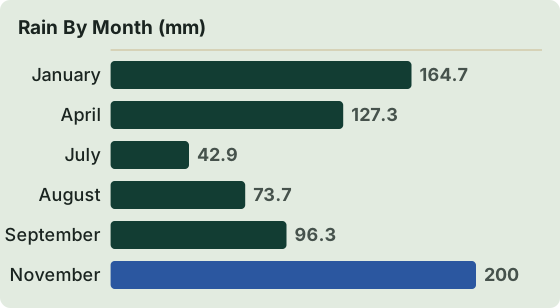
July and August give the longest hours, the warmest air and the fullest swimming season, with July averaging 42.9 mm of rain against November's 200.0 mm in the FHMZ 1961-1990 Mostar table, but May, June and September trade slightly cooler water for thinner crowds and greener surroundings. Winter visits are quiet, cheap on hassle and dramatic after rain, with no swimming.
Herzegovina's rainfall has a winter maximum, which is the exact opposite of what the swimming-season instinct suggests. The falls are at their fullest from November through March, when the Trebižat-basin karst aquifer is charged, and the curtain of water can look positively Alpine in volume. Summer, by contrast, is when the flow narrows, the pool warms marginally, and the green of the trees around the amphitheatre is at its deepest. Photographers tend to prefer spring; swimmers prefer August.
| Month | Mean temp (FHMZ 1961-1990, Mostar) | Rain (FHMZ 1961-1990, Mostar) | Mean daily high (ERA5 1991-2020) |
|---|---|---|---|
| January | 4.8 C | 164.7 mm | 8.4 C |
| April | 13.3 C | 127.3 mm | 17.7 C |
| July | 24.7 C | 42.9 mm | 29.9 C |
| August | 24.2 C | 73.7 mm | 30.5 C |
| September | 20.4 C | 96.3 mm | 24.5 C |
| November | 10.1 C | 200.0 mm | 14.1 C |
Which Tours From Mostar Reach Kravice Waterfall?
Day tours from Mostar to Kravica waterfall run year-round and bundle the falls with Blagaj, Počitelj or both in a single loop, with the drive handled and the stops timed, and the selection below covers the three routes travellers compare: the classic Blagaj and Počitelj loop, a Dubrovnik-coast semi-private option, and a long day from Split or Omiš.
The classic choice from Mostar is the loop that adds Blagaj's Buna spring and the fortified village of Počitelj, because all three sit on the same southbound road. The Blagaj day-trip guide and the Počitelj day-trip guide describe each stop on its own if you would rather self-drive. Tours from the coast, whether from Dubrovnik or from Split, are long days: Split sits 174.1 km from Stari Most, which is why those itineraries compress Mostar and the falls into a single swoop.
For travellers based in Mostar who want only the falls without a full loop, a half-day option exists as well:
And for the full Herzegovina loop with everything included in one ticket:
Can You Combine Kravica, Blagaj And Počitelj In One Day From Mostar?
Yes, and it is the standard Herzegovina loop: Blagaj Tekke is 13.7 km and about 19 minutes from Stari Most, Počitelj is 30.0 km and about 31 minutes, and Kravica waterfall is 55.2 km and about 54 minutes, so the three stops chain together into a comfortable day with under two and a half hours of total driving.
The geometry is what makes the loop work. Blagaj sits southeast of Mostar at the Buna spring, Počitelj hangs above the Neretva road further south, and the falls push west from there, so a Mostar to Blagaj to Počitelj to Kravica to Mostar circuit closes cleanly. Do it in that order and you reach the falls in the afternoon, swim, and drive home in the cool of the evening. Reverse it for a falls-first swim before the heat builds.
| Stop | Road distance from Stari Most | Free-flow drive time |
|---|---|---|
| Blagaj Tekke | 13.7 km | about 19 min |
| Stjepan-grad fortress above Blagaj | 13.9 km | about 20 min |
| Počitelj | 30.0 km | about 31 min |
| Kravica waterfall | 55.2 km | about 54 min |
| Hutovo blato nature park | 48.1 km | about 62 min |
| Radimlja necropolis near Stolac | 33.5 km | about 42 min |
Two extensions are worth knowing about. The Radimlja necropolis near Stolac, a UNESCO-listed stećci graveyard, branches east from the Blagaj road and pairs naturally with the loop. The Hutovo blato nature park sits south of Počitelj and suits birdwatchers with a spare morning. Both add driving, so treat them as alternatives rather than additions unless you are trimming a stop elsewhere.
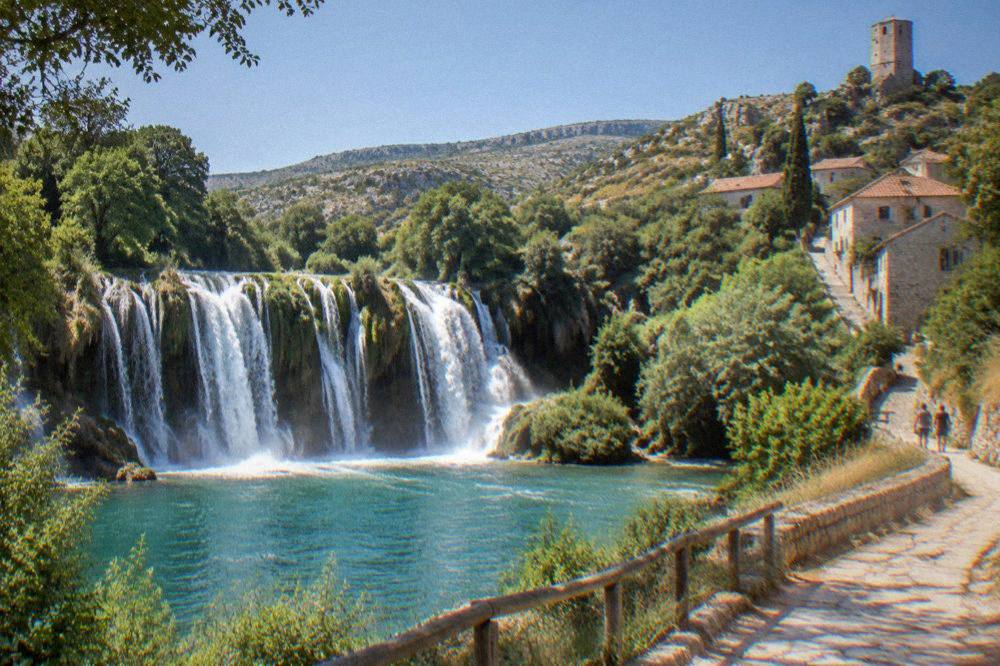
Blagaj itself deserves more than a photo stop. The Tekke, a Dervish lodge built at the mouth of the Buna Spring, charges a reported 10 KM entry with a dress code of covered shoulders and knees, wraps provided at the entrance. Počitelj is free to wander, a walled Ottoman village stacked up a hillside with a fortress at the top and a view over the Neretva valley. Neither stop needs long, which is precisely why the loop works.
What Should You Bring To Kravice Waterfall?
Bring cash in convertible marks for the 20 KM ticket, water shoes for the stony pool entry, a towel and swimwear in summer, sun protection for the exposed steps, and food and water if you plan a full day, because the on-site offer is limited and seasonal.
The essentials list is short because the site is compact. What catches people out is footwear: the path down is fine in sandals, but the pool edge and the riverbed are limestone cobbles, and wet rock is unforgiving. In high summer the amphitheatre holds the heat, so a hat and water matter more than they do on the shaded Kujundžiluk streets back in Mostar. In the cooler months the falls are a viewpoint visit, and the packing question answers itself.
| Season | Footwear | Swim kit | Extras |
|---|---|---|---|
| June to September | Water shoes plus sandals | Swimsuit and towel | Hat, sunscreen, water |
| May and October | Sturdy sandals | Wetsuit-optional, water is cold | Layer for the evening |
| November to April | Walking shoes | Not applicable | Rain layer after wet months |
One payment note worth repeating: Bosnia and Herzegovina uses the convertible mark, pegged at 1 EUR to 1.95583 KM. Euro cash is often accepted in tourist spots, usually rounded to 2 KM per euro, but the gate price is set in marks and paying in KM avoids the rounding. Cards are not something to rely on at a park gate. The two days in Mostar itinerary builds in a Kravica afternoon on day two if you are fitting the falls into a wider stay.
Is Kravice Waterfall Safe, And What About Children And The Water?
The pool is swim-at-your-own-risk in summer, with no lifeguard reported, slippery rock at the water's edge and a current close to the falls themselves, and in the rural land around the park visitors should stay on marked paths because parts of Herzegovina carry suspected-mine warnings maintained by BHMAC. Children swim here often, but always within arm's reach.
The mine warning deserves plain language. Decades of war left suspected areas across rural Bosnia and Herzegovina, and the national mine-action centre BHMAC maps them. None of that touches the maintained park, the car park or the loop to Blagaj and Počitelj. The rule that matters is simple: on any walk beyond a marked path, in woodland or along the river away from the developed area, do not wander. Marked routes are safe; scrubland off them is not for exploring.
The water itself is cold even in August, fed by karst springs. That is a feature on a 30 C afternoon and a shock for anyone expecting a warm swim. Cold water cramps arrive fast, so short dips, a warm layer afterwards and food in the bag are the sensible pattern. The emergency number in Bosnia and Herzegovina is 112, with 124 reaching an ambulance directly.
How Does Kravica Fit Into A Wider Herzegovina Trip From Mostar?
Kravica sits at the southern end of a day-trip web that runs from Blagaj and Počitelj at its doorstep out to Međugorje, Stolac and Hutovo blato, with Međugorje 28.3 km and about 40 minutes from Stari Most and Stolac 36.8 km and about 47 minutes, so two full days cover the whole south without ever repeating a road.
A first day takes the classic loop: Blagaj in the morning while the Tekke is quiet, Počitelj around midday, and the falls for an afternoon swim. A second day can push further: Međugorje's Apparition Hill, the stećci at Radimlja above Stolac, or the wetlands of Hutovo blato. From there the roads fork towards Trebinje in the east or the Croatian coast, and travellers heading to Dubrovnik often slot the falls into the departure day itself, though the border crossing makes that a morning start rather than an afternoon whim. The Međugorje day-trip guide covers the pilgrimage sites if the second day bends that way.
The border point matters for coast-bound plans. Bosnia and Herzegovina is not in the EU or Schengen, so crossing into Croatia means a passport check, with waits reported longer at summer peaks. The things to do in Mostar hub pulls the whole region together if you are still sketching the trip.
Common Questions About Kravice Waterfall From Mostar
How far is Kravice waterfall from Mostar?
The waterfall is 55.2 km by road from Stari Most, about 54 minutes of free-flow driving. Claims of a 15-minute hop confuse it with a nearer sight; nothing like it sits that close to the city.
How much does Kravice waterfall cost?
Adult entry is 20 KM all year, with 10 KM for residents of Bosnia and Herzegovina, 10 KM for school groups aged 7 to 18 and free entry for children under 7. The price does not drop in winter, and the park is not free in the off-season.
Is Kravice waterfall open in winter?
Yes, all year. January, February, November and December hours are 07:00 to 17:00, lengthening to 07:00 to 22:00 from June to September. The falls are often at their fullest after winter rain.
Can you swim at Kravice waterfall?
Swimming is reported allowed in the designated pool area in summer, with no lifeguard service reported. Check the park's rules on arrival, keep clear of the falling water where the current runs, and expect cold water even in August.
Is Kravica or Blagaj better for a day trip from Mostar?
They are different stops on the same road, not rivals. Blagaj is a spring, lodge and lunch spot 19 minutes out; Kravica is a waterfall and swimming park 54 minutes out. The standard loop does both, with Počitelj between them.
Do you need a tour for Kravica waterfall?
No. The park is a straightforward self-drive visit with parking on site. Tours earn their keep when you would rather not drive, when you are coming from the Croatian coast across the border, or when you want the Blagaj and Počitelj stops timed for you.
Pack the marks, the water shoes and the early start, and Kravica rewards the full loop: a morning at the Buna spring, a climb in Počitelj, and a cold green swim under the falls before the drive back to the Old Bridge.