Two Days In Mostar: The Bridge, Blagaj And Kravice
Two days cover Mostar's Old Bridge and old bazaar plus the Herzegovina countryside: Blagaj's Buna spring, the walled village of Počitelj and Kravica waterfall.
Two days in Mostar is enough for the Old Bridge, Kujundžiluk, the mosques and museums of the Old Town, plus one full day out to Blagaj, Počitelj and Kravica waterfall, all inside a 55 km radius of Stari Most.
Mostar sits inland on the Neretva river in Herzegovina, and two days is the realistic minimum for the city itself plus the Herzegovina highlights around it. The Old Bridge Area of the Old City of Mostar has been a UNESCO World Heritage property since 2005, and the bridge, the bazaar, the riverside mosques and a scattering of Ottoman houses are all within a ten minute walk of one another. Beyond the city, Blagaj, Počitelj and Kravica waterfall form a natural second day, all reachable inside an hour by road. This itinerary splits the two days exactly that way, with costs, distances and opening hours for each stop.
Is Two Days In Mostar Enough?
Two days in Mostar covers the entire walkable Old Town, the Old Bridge, at least one mosque interior and one Ottoman house, and one full day out to Blagaj, Počitelj and Kravica waterfall, which sit 13.7 to 55.2 km from Stari Most by road. Anyone wanting to add Konjic, Jablanica or Trebinje, or to slow the pace around the Old Town, should borrow the structure from the three day Mostar itinerary instead. The answer to the question how many days in Mostar is enough is genuinely two for the city plus one signature day trip.
The reason two days works is geography. Mostar is compact: Stari Most, Kujundžiluk, Kriva ćuprija, Koski Mehmed-pašina džamija and the Museum of the Old Bridge all sit within a few hundred metres of each other, and the whole Old Town is a public street area with no admission. The second day belongs to the countryside, and the three headline stops sit along one roughly southward loop with no border crossing involved.
What two days does not cover is everything. Konjic and the ARK D-0 bunker, Vjetrenica cave, Hutovo blato and Trebinje each demand most of a day. Treat those as arguments for a third day rather than as failures of the second, and see the section on stretching the trip below.
One more framing note before the plan itself. Two day itineraries fail most often not because the city is too big but because day one gets swallowed by travel. If you are arriving from Sarajevo or Dubrovnik on the first morning, count that as half a day gone and move the Ottoman houses to the evening or to day two's return leg. The schedule below assumes you wake up in Mostar on both mornings, which is the version that works.
What Should Day One In Mostar Look Like?
Day one stays on foot around the Old Bridge: start at Stari Most early in the morning, walk the Kujundžiluk bazaar, visit Koski Mehmed-pašina džamija and one Ottoman house in the afternoon, and finish from a viewpoint on the west bank before dinner. The bridge itself is free to cross and open around the clock, so the only sequencing that matters is beating the midday crowds and heat. In summer, modelled normals for Mostar, ERA5 reanalysis 1991 to 2020, put August mean daily highs at 30.5 C, so an early start is comfort as much as anything.
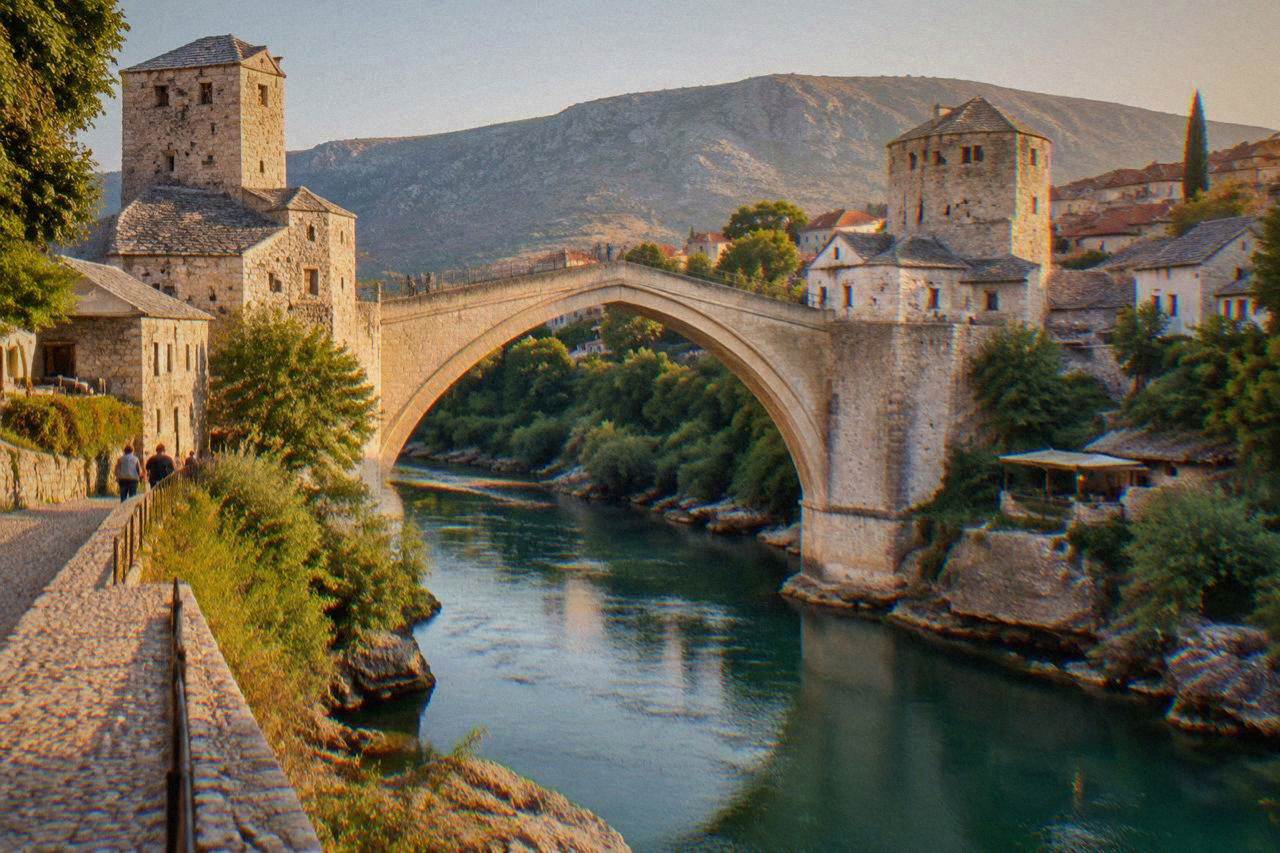
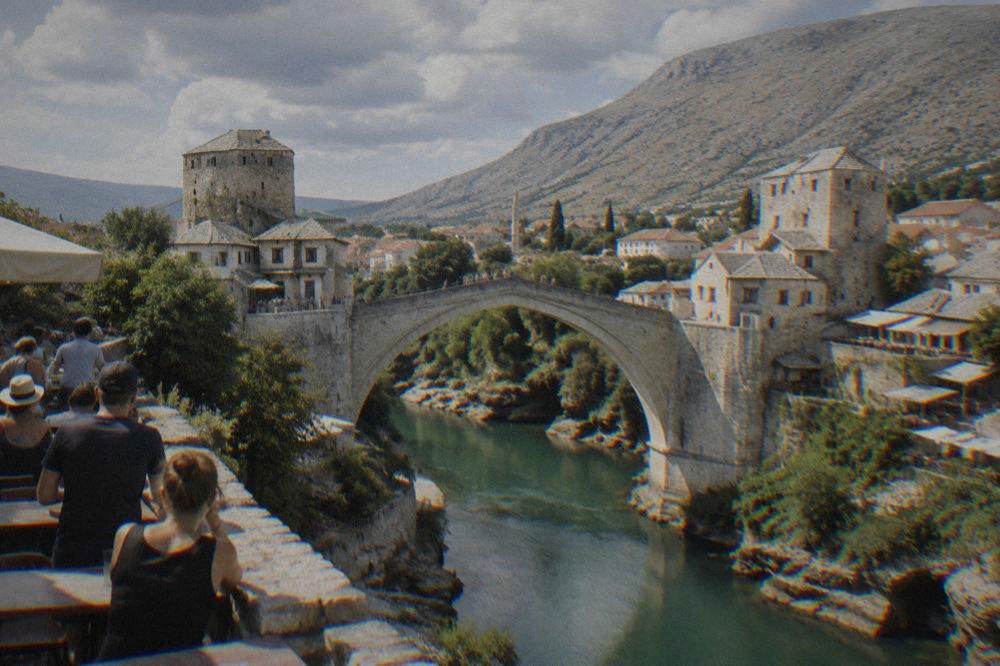
Begin at the bridge itself. Stari Most was completed in 1566 under Suleiman the Magnificent to the design of mimar Hajruddin, with a span of about 29 m and a height of about 21 to 24 metres above the Neretva depending on the river. It was destroyed on 9 November 1993 and rebuilt and reopened in July 2004. Crossing costs nothing. The story of why the Mostar bridge is so famous and why it was destroyed is told in the dedicated pages, and the reconstruction is covered under has the Mostar bridge been rebuilt.
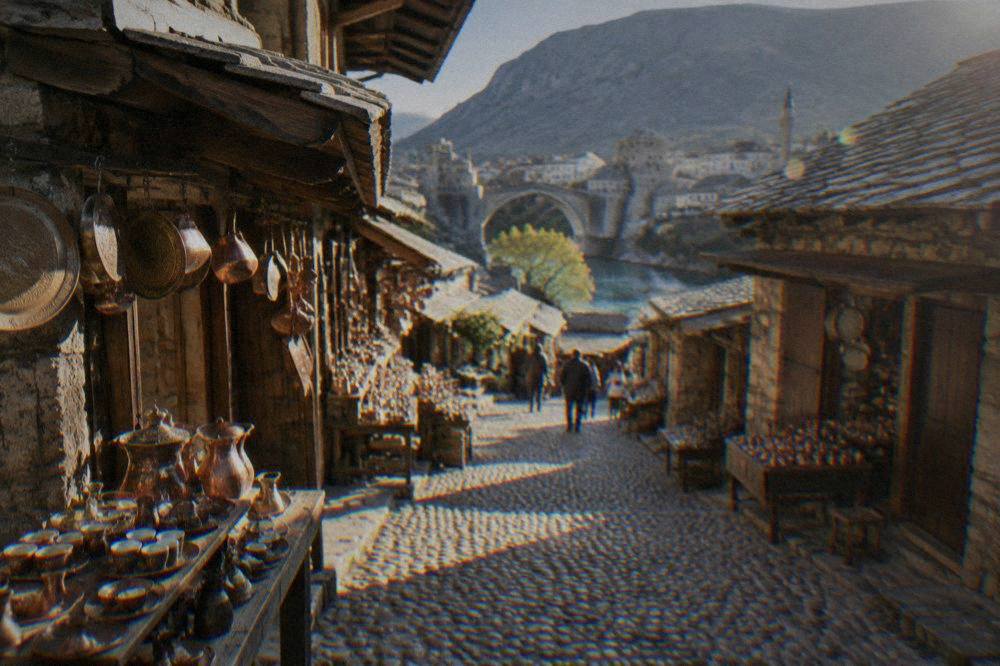
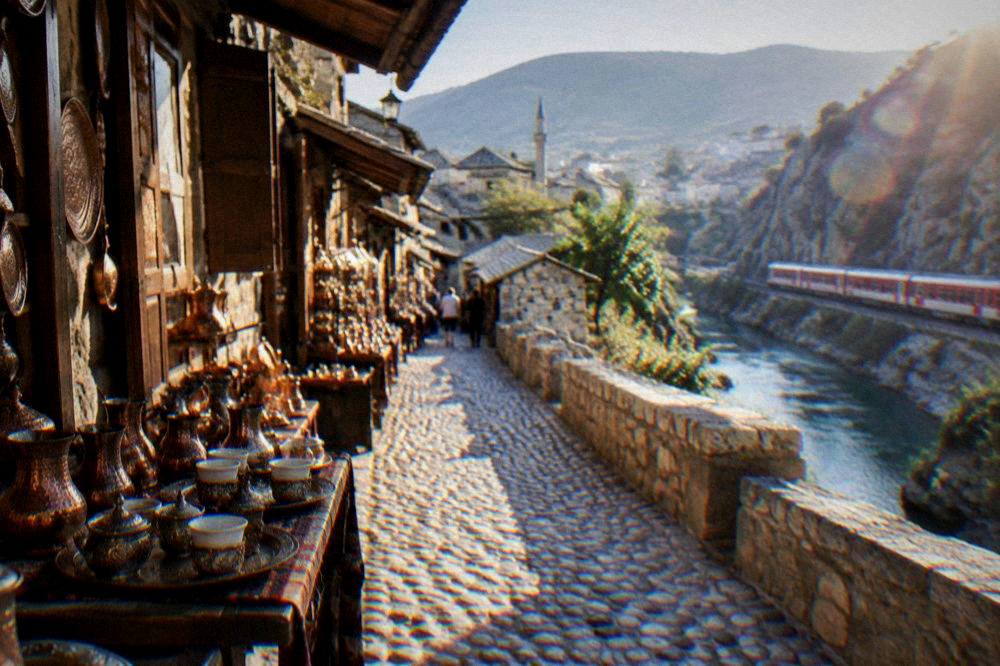
From the bridge, walk north into Kujundžiluk, the old bazaar street of coppersmiths and small shops running along the east bank. At its northern end sits Kriva ćuprija, the small single-arch stone bridge that predates its larger neighbour and makes a quiet photo stop before the day warms up. Both are public streets, free at any hour.
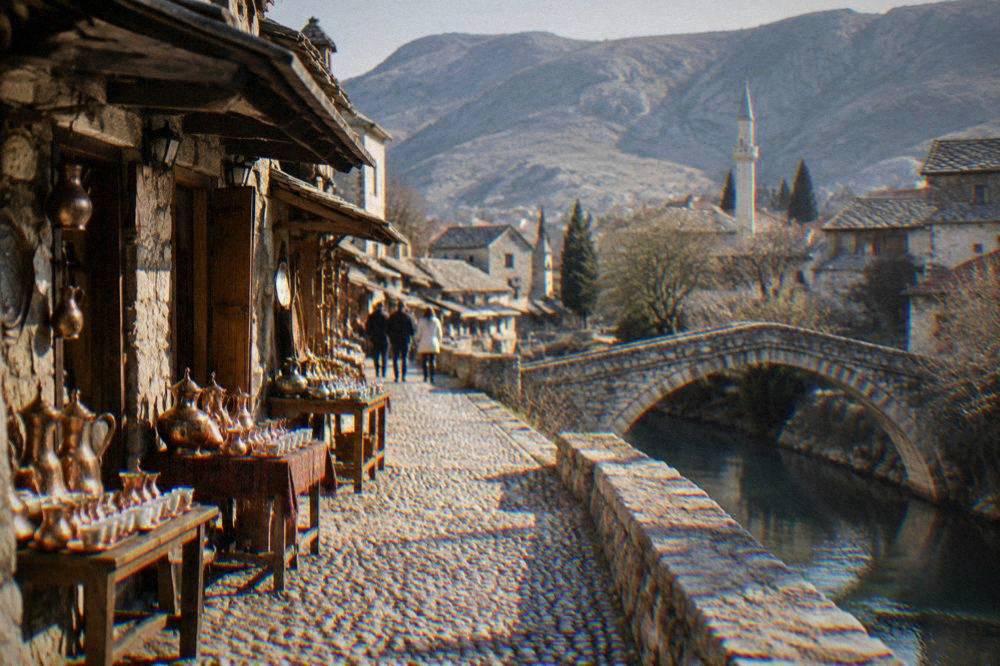
Afternoon belongs to interiors. Koski Mehmed-pašina džamija sits directly on the river below the bridge; a small cash fee covers the mosque and a higher one adds the minaret, with reports varying between 14 and 18 KM, so confirm the current price at the entrance. The Museum of the Old Bridge in the Tara tower charges a reported 10 KM and keeps daily hours from 08:00 to 16:00 between 1 April and 1 November. Both figures are reported rather than official, and the old bridge guide keeps the details.
Close the day from a viewpoint. The river banks below the bridge, the Mostar viewpoints guide lists several, give the classic downstream arch shot in late light, and the diving platform tradition means you may see a club member jump from the bridge itself. Jumps are performed by members of the Mostari diving club only, typically between 11:00 and 15:00 in the warmer months; there is no pay-to-jump option for visitors, and the bridge diving page explains the tradition.
A sample day one, timed for a summer visit:
| Time | Stop | Cost |
|---|---|---|
| 07:30 | Stari Most crossing and west bank photos | Free |
| 08:30 | Kujundžiluk bazaar and Kriva ćuprija | Free |
| 10:30 | Koski Mehmed-pašina džamija | Small cash fee, reported |
| 12:00 | Lunch break, Old Town | Varies |
| 14:00 | Museum of the Old Bridge, Tara tower | Reported 10 KM |
| 16:30 | Ottoman house visit, east or west bank | Reported 4 to 8 KM |
| 19:00 | Viewpoint below the bridge | Free |
What Should Day Two From Mostar Look Like?
Day two is the Herzegovina loop: Blagaj Tekke at the Buna spring 13.7 km from Stari Most, the walled village of Počitelj 30.0 km away, and Kravica waterfall 55.2 km away, about 54 minutes by road in free-flow traffic, with Kravica entry at 20 KM for an adult all year. The order matters less than the start time: Kravica is open until 22:00 from June to September but only until 17:00 from November to February, and Blagaj's tekke closes at 22:00 from April to October and 17:00 in winter.
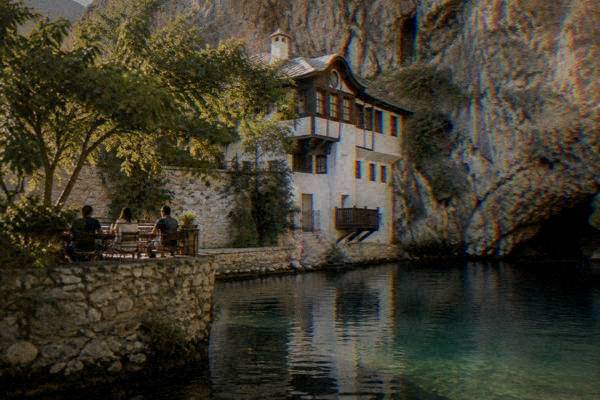
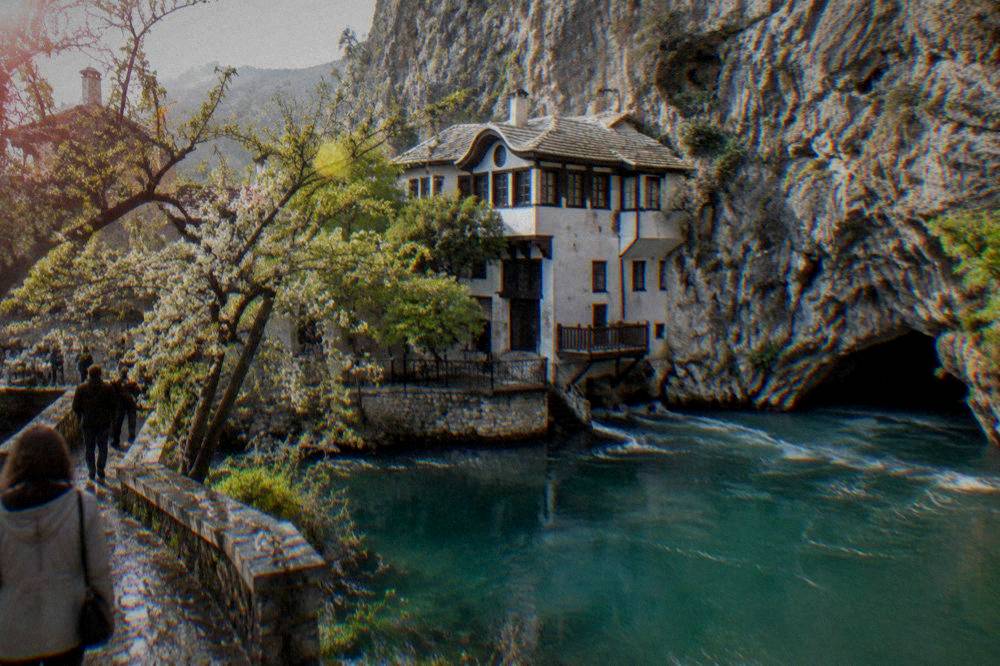
Blagaj comes first for good reason: it is the shortest drive, about 19 minutes, and the tekke, the Dervish lodge built against the cliff at the Buna spring, is at its calmest in the morning. Entry is a reported 10 KM, and a dress code applies: shoulders and knees covered, with wraps provided at the entrance. The Blagaj day trip guide covers the site, the fortress of Stjepan-grad above it, 13.9 km from Mostar, and the riverside lunch spots.
Počitelj is next, about 31 minutes further on. The village is free to wander: a stone fort, a mosque and a stack of houses climbing a hillside above the Neretva, with only small optional donation fees reported. Give it an hour and a half, more in the cool of late afternoon when the light moves across the valley.
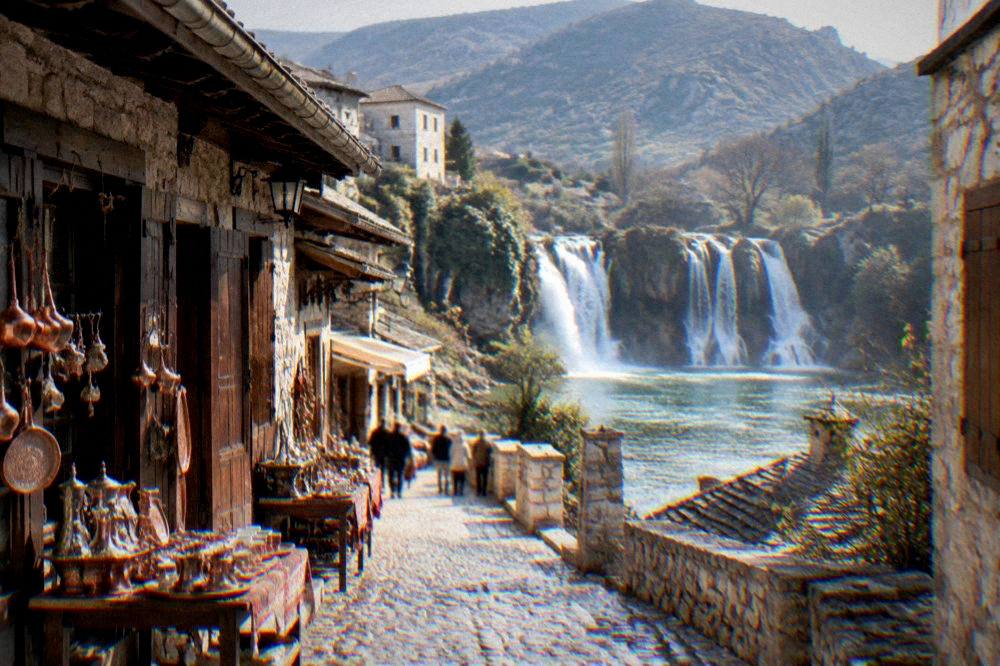
Kravica waterfall is the finale. Adult entry is 20 KM all year, 10 KM for residents of Bosnia and Herzegovina, with children under 7 free; the falls are not a summer-only site, and the hours change by month rather than closing for winter. Swimming is reported to be allowed in the designated pool below the falls in summer, with no lifeguard reported, so check the park's rules on arrival. The Kravica waterfall guide has the full breakdown, and the one day version of this same loop is laid out in Kravica, Blagaj and Počitelj in one day.
| Stop | Road distance | Drive time, free flow | Entry |
|---|---|---|---|
| Blagaj Tekke | 13.7 km | about 19 min | Reported 10 KM |
| Stjepan-grad fortress | 13.9 km | about 20 min | Free |
| Počitelj | 30.0 km | about 31 min | Free, donations optional |
| Kravica waterfall | 55.2 km | about 54 min | 20 KM adult, all year |
If you would rather not drive it, the featured day tour from Mostar covers exactly these three stops with a guide, and you can Check availability alongside the full tour page.
How Much Do Two Days In Mostar Cost?
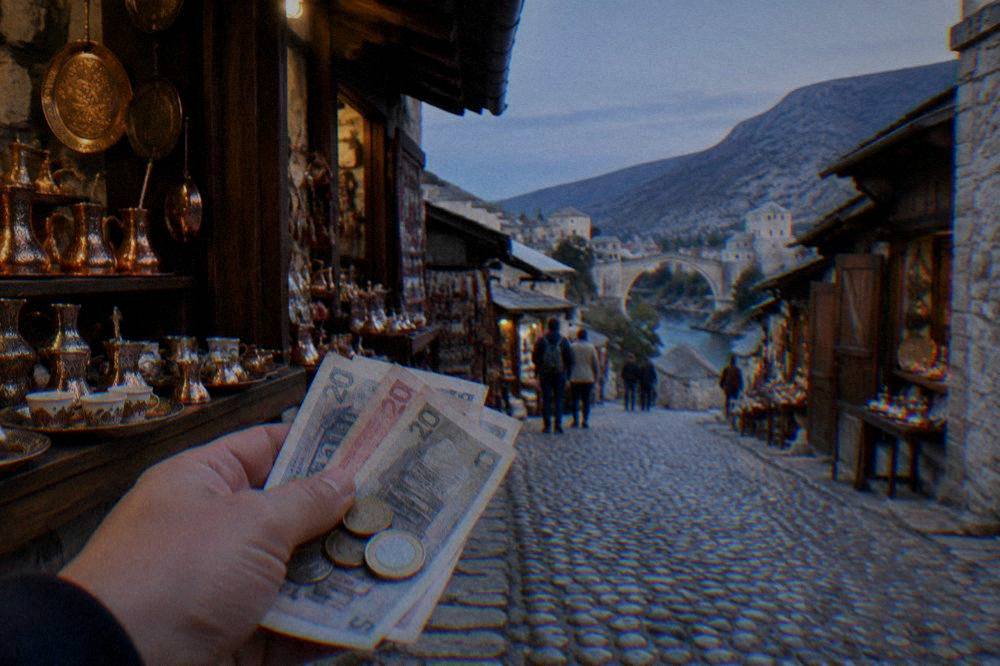
The fixed, figure-backed costs of two days in Mostar are modest: the Old Bridge, Kujundžiluk, Kriva ćuprija and Počitelj are free, Kravica waterfall is 20 KM per adult, Blagaj Tekke a reported 10 KM, and a reported tourist tax of 3 KM per person per night applies in the canton from 1 January 2026. In euro terms the convertible mark is pegged at 1 EUR to 1.95583 KM, so 20 KM is close to 10 EUR. Bring KM rather than euros where you can; euros are often accepted in tourist areas at a rounded rate, but that is a courtesy, not an official rule, and you should confirm the rate before paying.
Museum fees are the variable. The reported figures for the city's indoor sights run from about 4 KM at Bišćević House to about 10 KM at the Old Bridge Museum, and several sights have no published fee at all. Confirm prices at the desk before you commit. A realistic sightseeing budget for two days, excluding food and beds:
| Item | Figure | Basis |
|---|---|---|
| Stari Most crossing | Free | Public route, 24/7 |
| Kujundžiluk and Kriva ćuprija | Free | Public streets |
| Koski Mehmed-pašina džamija | Reported 10 to 18 KM | Varies with minaret access |
| Old Bridge Museum | Reported 10 KM | 1 Apr to 1 Nov, 08:00 to 16:00 |
| Bišćević House | Reported 4 KM | Ottoman house museum |
| Muslibegović House | Reported 8 KM | Ottoman house museum |
| Blagaj Tekke | Reported 10 KM | Apr to Oct 08:00 to 22:00 |
| Počitelj village | Free | Small donations optional |
| Kravica waterfall | 20 KM adult | All year, 10 KM residents |
| Tourist tax | Reported 3 KM per night | From 1 Jan 2026, confirm at booking |
One more cost note: the currency is the convertible mark everywhere in Bosnia and Herzegovina, and the country is not in the EU or Schengen. Cards are fine at hotels and larger restaurants, but the tekke, the mosque boxes and Kravica's gate are cash situations. The Mostar money guide context on this site's homepage covers currency practicalities in more depth.
Food sits outside these tables because prices vary by dish and establishment, but two practical notes hold. Portions in Mostar are generous and lunch for two in the Old Town rarely needs three courses. And coffee is a ritual here rather than a takeaway transaction, so budget twenty unhurried minutes for it rather than the five a paper cup implies. Everything else covered here is indexed on Mostar Travel Guide.
When Is The Best Time For Two Days In Mostar?
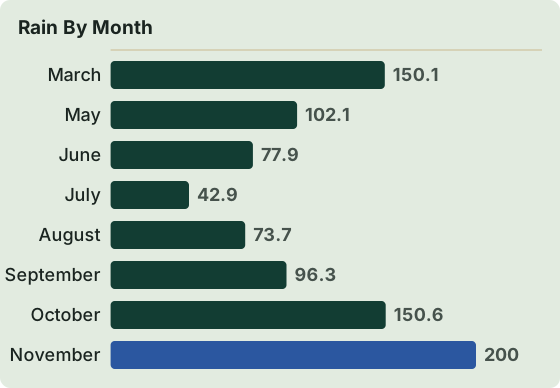
The comfortable window for this itinerary is May, June and September: FHMZ 1961 to 1990 data puts July mean temperature at 24.7 C and November rainfall at 200.0 mm against July's 42.9 mm, so late spring and early autumn trade the July heat for smaller crowds and greener water. The FHMZ station series for Mostar records an absolute maximum of 41.2 C in July, and ERA5 reanalysis for 1991 to 2020 puts August mean daily highs at 30.5 C, which is a lot of stone and heat for a walking day.
Rain, not cold, is the real constraint. November is the rainiest month in the 1961 to 1990 station series at 200.0 mm, and October follows at 150.6 mm. July, at 42.9 mm, is the driest, with about 5 days of more than 1 mm across the month. Two days is a short enough window that a wet forecast matters: the Mostar in the rain page has an indoor plan, and the Mostar weather and best time to visit pages carry the full tables.
| Month | Mean temp C, FHMZ 1961-1990 | Rain mm | Mean daily high C, ERA5 1991-2020 |
|---|---|---|---|
| March | 9.6 | 150.1 | 13.4 |
| May | 17.9 | 102.1 | 22.3 |
| June | 21.5 | 77.9 | 26.8 |
| July | 24.7 | 42.9 | 29.9 |
| August | 24.2 | 73.7 | 30.5 |
| September | 20.4 | 96.3 | 24.5 |
| October | 15.3 | 150.6 | 19.5 |
| November | 10.1 | 200.0 | 14.1 |
Winter two day trips are entirely workable, with a caveat: Kravica closes at 17:00 from November to February, and the Neretva water is cold even in August, so swimming is a summer idea only. The Mostar in winter page adapts this same plan for the cold months.
How Do You Get To Mostar For A Two Day Trip?
Mostar International Airport is 8.2 km and about 12 minutes by road from Stari Most, with reported routes to Zagreb and Stuttgart, but the main gateways are Sarajevo airport at 120.4 km and about 125 minutes and Dubrovnik airport at 163.4 km and about 172 minutes free flow, before any border queue. Train service between Sarajevo and Čapljina via Mostar runs twice a day each way and resumed on 15 October 2026 after a suspension that began in early September 2026; the fare is a reported 14 KM one way. Buses run several times daily from Sarajevo, Dubrovnik and Split.
The Croatian border deserves a line of planning. Bosnia and Herzegovina is not in the EU or Schengen, and the land border with Croatia has carried full checks since 1 January 2023, with reported waits of up to about 30 minutes and longer at summer peaks. ETIAS is not in operation. If you are driving in from Dubrovnik, budget the queue into day one rather than assuming the free-flow figure. The how to get to Mostar, Dubrovnik to Mostar and Sarajevo to Mostar pages carry the detail.
Within the city itself you will rarely need transport at all. The Old Town is pedestrian, and the airport is a short, inexpensive taxi ride away. Save the planning effort for day two's loop, where the distances above are the ones that matter.
What Can You Add With A Third Day In Mostar?
With a third day, the strongest additions are Konjic and the ARK D-0 bunker 69.0 km away, Jablanica 47.4 km away on the same road, or Trebinje 116.5 km to the southeast, each a half or full day by car or tour. ARK D-0 charges a reported 40 KM for foreign visitors, requires advance booking and is closed on Mondays, so it rewards planning rather than improvisation. The Konjic and Trebinje pages cover both.
Closer to town, the east bank's Donja mahala district, the Partisan Memorial Cemetery and a deeper read of the city's past on the Mostar history page fill a slower day without any driving. For a full country framework, the Herzegovina road trip and Bosnia and Herzegovina itinerary pages stretch the same route into a week.
Common Questions About Two Days In Mostar
These are the questions that come up again and again when a two day Mostar plan is being assembled, answered with the same figures used throughout this itinerary: the Old Bridge is free to cross, Kravica waterfall costs 20 KM for an adult all year, Blagaj Tekke a reported 10 KM.
Is 2 days in Mostar enough?
Yes for the city and one Herzegovina day trip. The Old Town sights are all within a short walk of Stari Most, and Blagaj, Počitelj and Kravica waterfall sit 13.7 to 55.2 km away by road, doable in a single day with an early start.
Can you do Blagaj, Počitelj and Kravica in one day from Mostar?
Yes. The three stops total roughly 100 km of driving in a loop, with free-flow times of about 19, 31 and 54 minutes from Stari Most respectively. Start early, keep the tekke for the morning and Kravica for the afternoon.
How much is Kravica waterfall?
Entry is 20 KM for an adult all year, 10 KM for residents of Bosnia and Herzegovina, and free for children under 7. The park is open every month, with hours from 07:00 to 22:00 in June to September and 07:00 to 17:00 in November to February.
Do you need a car for two days in Mostar?
Not for day one, which is entirely on foot. For day two a car helps, but guided day tours from Mostar cover Blagaj, Počitelj and Kravica with transport and a guide included, and city buses and taxis cover the airport run of 8.2 km.
Is the Old Bridge free?
Yes, crossing Stari Most is free and the bridge is a public route at any hour. The Old Bridge Museum in the Tara tower charges a reported 10 KM and keeps daily hours from 08:00 to 16:00 between 1 April and 1 November.
Two days in Mostar, done in this order, leaves nothing essential unseen inside the city and sends you home with the Neretva valley, a cliff-face tekke and a horseshoe of waterfalls in the same short break.