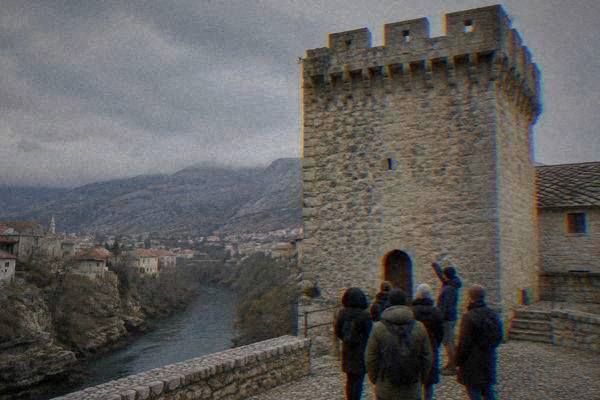
Has The Mostar Bridge Been Rebuilt?
Yes, Mostar's Old Bridge has been rebuilt. The full story of the 1993 destruction, the 2004 reopening and what stands over the Neretva today.
The Old Bridge of Mostar, Stari Most, stands again over the Neretva river in Herzegovina, in Bosnia and Herzegovina. The original Ottoman stone bridge, completed in 1566, was destroyed on 9 November 1993 during the war, and the bridge that crosses the river today is a reconstruction, rebuilt and reopened in July 2004. The surrounding Old Bridge Area of the Old City of Mostar was inscribed on the UNESCO World Heritage List in 2005, in part because of the international effort behind the reconstruction. Crossing it is free and it is open at any hour, day or night.
The question sounds simple and the answer is simple, but the story behind it is not. What stands over the Neretva now is neither a ruin nor a replica in fibreglass or steel: it is a stone arch rebuilt largely the way the first one was raised, on the same spot, in a project that drew on recovered material from the riverbed and on crafts skills that had to be relearned for the job. This page walks through the timeline, the rebuilding itself and what a visitor actually meets on the banks today.
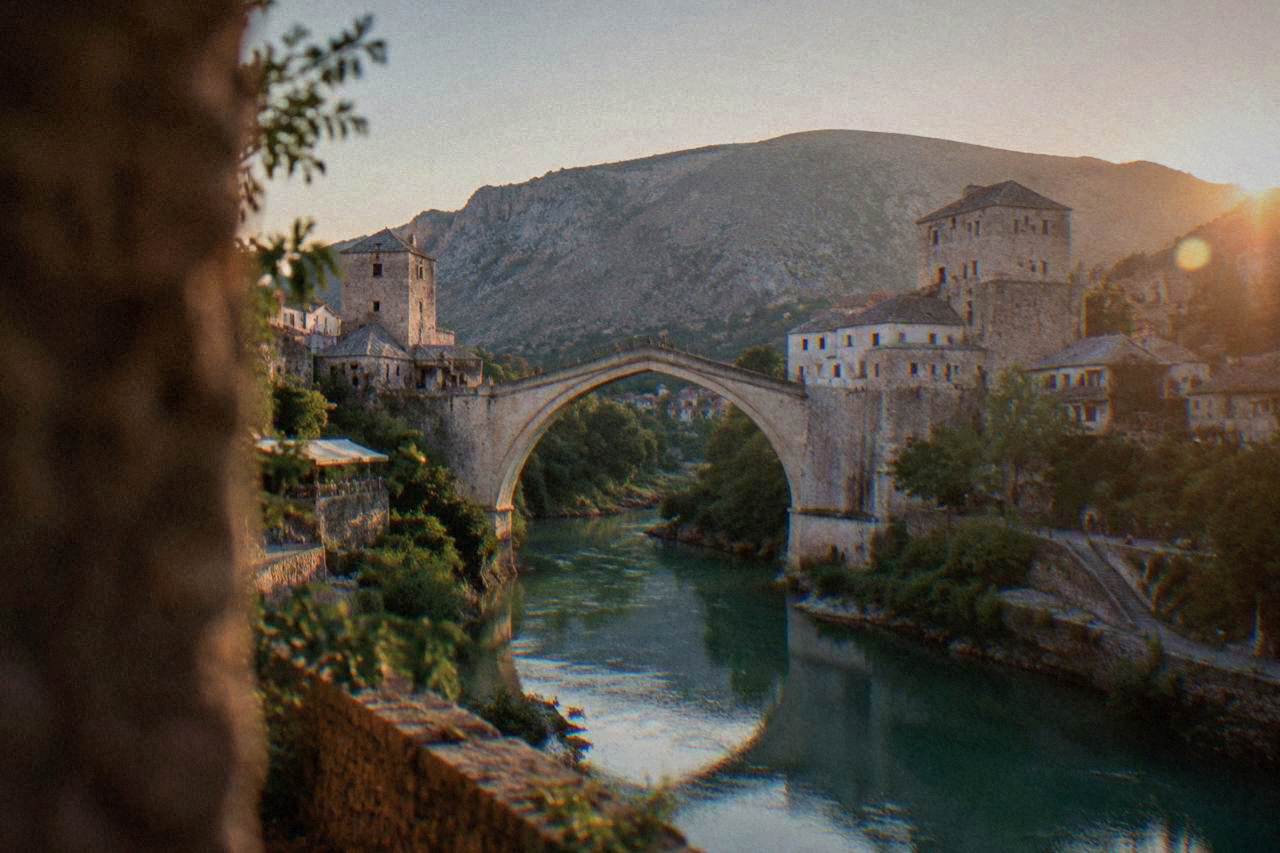
Yes, the Mostar bridge has been rebuilt. Stari Most was destroyed on 9 November 1993 during the war and a full reconstruction was completed and reopened in July 2004, crossing the Neretva on the same alignment as the 1566 original. The rebuilt bridge and its surrounding old city quarter were added to the UNESCO World Heritage List in 2005, and crossing it today is free, at any hour.
The reconstruction was not a modern substitute. It used the single-arch stone form of the original, local tenelija limestone, and traditional building methods, and many recovered blocks from the riverbed were incorporated back into the structure. The project was supported by UNESCO and World Bank partners, and the reopening in July 2004 returned the bridge to the skyline it had defined for more than four centuries before 1993.
The rebuilding effort mattered as much as the result. Divers lifted original stone from the bed of the Neretva, each recovered block catalogued, and masons worked the replacement tenelija limestone by hand to match the old coursing. UNESCO's inscription of the Old Bridge Area in 2005, under criterion (vi), recognised exactly that: not just an arch over a river, but a symbol of reconciliation and international cooperation after the destruction. The property itself is compact, about 7.6 hectares of old city around the bridge with a buffer zone around it, so the whole inscribed quarter can be walked in an hour or two.
For the fuller story of why the arch matters so much to the city, see why the Mostar bridge is so famous, and for the destruction itself, why the Mostar bridge was destroyed.
When Was The Mostar Bridge Destroyed And Rebuilt?
The original bridge was completed in 1566, commissioned under Suleiman the Magnificent and built by mimar Hajruddin, whose design followed that of his master, the architect mimar Sinan. It was destroyed on 9 November 1993 during the war, and the reconstruction reopened in July 2004. The Old Bridge Area entered the UNESCO World Heritage List in 2005.
The dates are worth holding in order, because the gaps between them carry the whole story. A wooden crossing with bridge keepers, the "mostari" who gave the city its name, stood on the Neretva long before stone; the first written mention of the name Mostar appears in a Dubrovnik Republic document of 1474. The stone arch finished in 1566 served the city for over four centuries, carrying foot traffic between the bazaar quarter and the far bank through Ottoman, Austro-Hungarian and Yugoslav periods alike. After the destruction in 1993, divers recovered limestone blocks from the riverbed, the reconstruction was assembled over several years, and the reopening ceremony in July 2004 drew international attention back to Mostar.
| Date | What Happened At The Bridge |
|---|---|
| 1474 | First written mention of the name Mostar, in a Dubrovnik Republic document |
| 1566 | Original stone bridge completed under Suleiman the Magnificent, by mimar Hajruddin |
| 9 November 1993 | The bridge destroyed during the war |
| July 2004 | Reconstruction completed and the bridge reopened |
| 2005 | Old Bridge Area of the Old City of Mostar inscribed by UNESCO |
The span of the arch is about 29 metres, and the height above the water is about 21 to 24 metres depending on the river level. Those proportions survive in the rebuilt bridge exactly as they were recorded for the original, because the reconstruction worked from the surviving abutments, the recovered stones and the historical surveys of the arch.
A detail that surprises many first-time readers is that the bridge never carried carts or cars. It was built as a pedestrian crossing and it remains one, which is why the approaches are stepped rather than ramped, and why the crossing still moves at the pace of people on foot.
If standing on the bridge with someone who can put each of these dates against the stones around you appeals, the private group city tour of Mostar and the Old Bridge makes the bridge itself the spine of the walk. Check availability
What Does The Rebuilt Mostar Bridge Look Like Today?
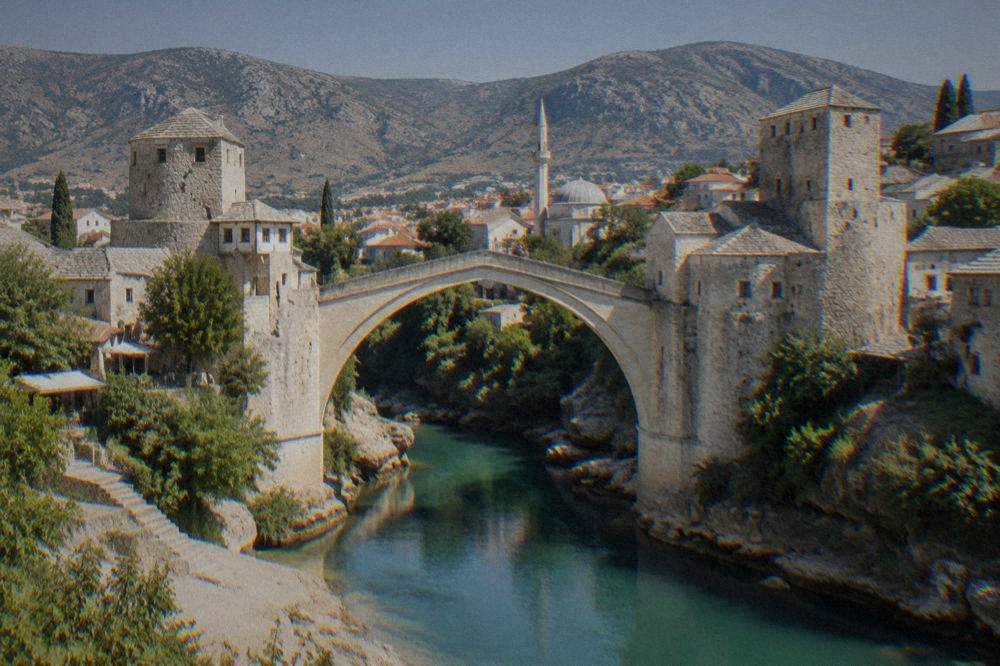
Today Stari Most is a pale stone single arch springing from steep abutments on both banks, about 29 metres across and roughly 21 to 24 metres above the Neretva depending on the river level. It is a pedestrian bridge, free to cross and open around the clock, forming the centrepiece of the UNESCO-inscribed old city area.
The approach from the west side runs down through the Kujundžiluk bazaar, a lane of coppersmiths' shops that slopes to the bridge, and the crooked bridge, Kriva ćuprija, a smaller single-arch crossing that is often read as a rehearsal for the great one. On the east bank the Koski Mehmed-pašina džamija sits a short walk downstream, its garden giving one of the closest side-on views of the arch. The Tara tower beside the bridge houses the Museum of the Old Bridge, which tells the reconstruction story in exhibits. Across the river, the Donja Mahala quarter spreads uphill from the east abutment, its steep lanes lined with houses that look straight down on the arch.
Two habits reward anyone photographing the rebuilt bridge. Early and late light warms the pale limestone and the river below runs a deep green in the shadow of the arch. And the classic full-arch photograph comes from the terraces on the east bank, where the river bends and the whole silhouette fits in frame. The Neretva's colour is not a trick of the light: the river is fed by karst springs and stays cold even in August, which is part of why diving from the top is a trained club affair rather than a visitor activity.
Do People Still Dive From The Rebuilt Mostar Bridge?
Yes, members of the Mostari diving club still jump from the rebuilt bridge, a tradition that continued after 2004 and is marked by an annual competition, the 460th edition of which ran on 26 July 2026. The Red Bull Cliff Diving World Series also stopped in Mostar in 2026, from 30 July to 1 August, using platforms of 21 metres for women and 27 metres for men.
The daily jumps belong to trained club members only. There is no pay-to-jump arrangement for untrained visitors, and the club trains its own divers for years before a solo jump from the top. The height above the water, about 21 to 24 metres depending on the river, plus a river that stays cold even in August, is why. Watching from the banks costs nothing, and the divers usually jump in the middle of the day when spectators gather.
The annual calendar makes the bridge a stage as much as a crossing. The 460th traditional competition on 26 July 2026 drew dozens of divers from across the region, with head dives and feet dives judged separately. Days later, from 30 July to 1 August 2026, the Red Bull Cliff Diving World Series held its Mostar stop for the tenth time, opening with traditional jumps from the bridge itself before moving to the added platforms. The full tradition, and the practical etiquette of watching it, is covered in the guide to Mostar bridge diving.
How Does The Rebuilt Bridge Fit Into A Visit To Mostar?
The rebuilt bridge anchors a compact, walkable old city: Kujundžiluk on one bank, Donja Mahala on the other, viewpoints on the surrounding hills and the museum in the Tara tower beside the arch. Two days is a comfortable stay that leaves time for the bridge at different hours plus a day trip into Herzegovina, and the old town guide covers the quarter street by street.
Mostar sits inland on the Neretva, and the bridge is the natural centre of any route through the city. A first loop can run from the bridge along Kujundžiluk to Kriva ćuprija and back across the river to the mosque terraces. A second can climb toward the viewpoints above the city for the arch in its river-bend setting, described in the Mostar viewpoints guide companion page on the best viewpoints around Mostar. Beyond the city, Blagaj, Počitelj and Kravica waterfall all sit within about an hour's drive, and the Herzegovina day tours carded above reach them in a single loop from Mostar.
A simple shape for a first visit:
| Stop Around The Bridge | What It Gives You |
|---|---|
| Kujundžiluk bazaar | The coppersmiths' lane sloping to the west abutment |
| Tara tower / Museum of the Old Bridge | The reconstruction story beside the arch |
| Koski Mehmed-pašina džamija garden | The closest side-on view of the bridge |
| East bank terraces, Donja Mahala | The classic full-arch photograph across the bend |
Planning help lives in the answers on how many days in Mostar is enough and whether it is worth staying the night in Mostar. The wider things to do in Mostar page carries the full site round-up, and Mostar Travel Guide covers the region beyond the bridge.
Common Questions About The Rebuilt Mostar Bridge
Has The Mostar Bridge Been Rebuilt?
Yes. The original bridge was destroyed on 9 November 1993, and a full reconstruction was completed and reopened in July 2004. The bridge standing over the Neretva today is that reconstruction, and the Old Bridge Area around it has been a UNESCO World Heritage property since 2005.
Is The Rebuilt Bridge The Same As The Original?
It is a faithful reconstruction on the same alignment, using the single stone arch, local tenelija limestone and traditional techniques of the 1566 original, with recovered blocks from the riverbed built back into the structure. It is a new build, not a repair, and it reproduces the recorded proportions, including a span of about 29 metres.
Can You Walk Across The Rebuilt Mostar Bridge?
Yes. The bridge is a public pedestrian route, free to cross and open at any hour. The stone steps on both approaches are worn and polished, so steady footwear helps, and the surface can be slippery in rain.
How High Is The Rebuilt Mostar Bridge?
About 21 to 24 metres above the Neretva, depending on the river level, with a span of about 29 metres. Diving platforms added for the Red Bull Cliff Diving World Series sit at 21 metres for women and 27 metres for men, and those are separate structures, not the bridge itself.
When Was The Original Mostar Bridge Built?
The original stone bridge was completed in 1566, commissioned under Suleiman the Magnificent and built by the architect mimar Hajruddin, following the design approach of his master, mimar Sinan. It served the city for more than four centuries before its destruction in 1993.
Why Is The Rebuilt Bridge A UNESCO Site?
The Old Bridge Area of the Old City of Mostar was inscribed on the World Heritage List in 2005 under criterion (vi), which recognises its association with multicultural coexistence, reconciliation and international cooperation after the bridge's destruction and reconstruction. The inscribed property covers the bridge and the old city quarter around it.
The short answer to the question this page carries is yes, and the longer answer is that the bridge standing today is itself a piece of the city's story: destroyed in 1993, reopened in July 2004, and UNESCO-inscribed with its old city quarter in 2005.