Why Is Mostar Bridge So Famous?
Why Stari Most in Mostar became world famous: its 1566 Ottoman engineering, the 1993 destruction and 2004 rebuilding, the diving tradition, and UNESCO listing explained.
Stari Most, the Old Bridge of Mostar in Herzegovina, Bosnia and Herzegovina, carries a fame that far outweighs the size of the city below it, about 105,000 people at the 2013 census. It is a single stone arch, a span of about 29 m, thrown across the cold Neretva river by the Ottoman architect mimar Hajruddin and completed in 1566 under Suleiman the Magnificent. It stood for four centuries, was destroyed on 9 November 1993 during the war, and was rebuilt and reopened in July 2004. The Old Bridge Area of the Old City of Mostar has been a UNESCO World Heritage property since 2005. Four stories explain the fame: the engineering, the destruction and rebuilding, the divers, and the city that grew around it.
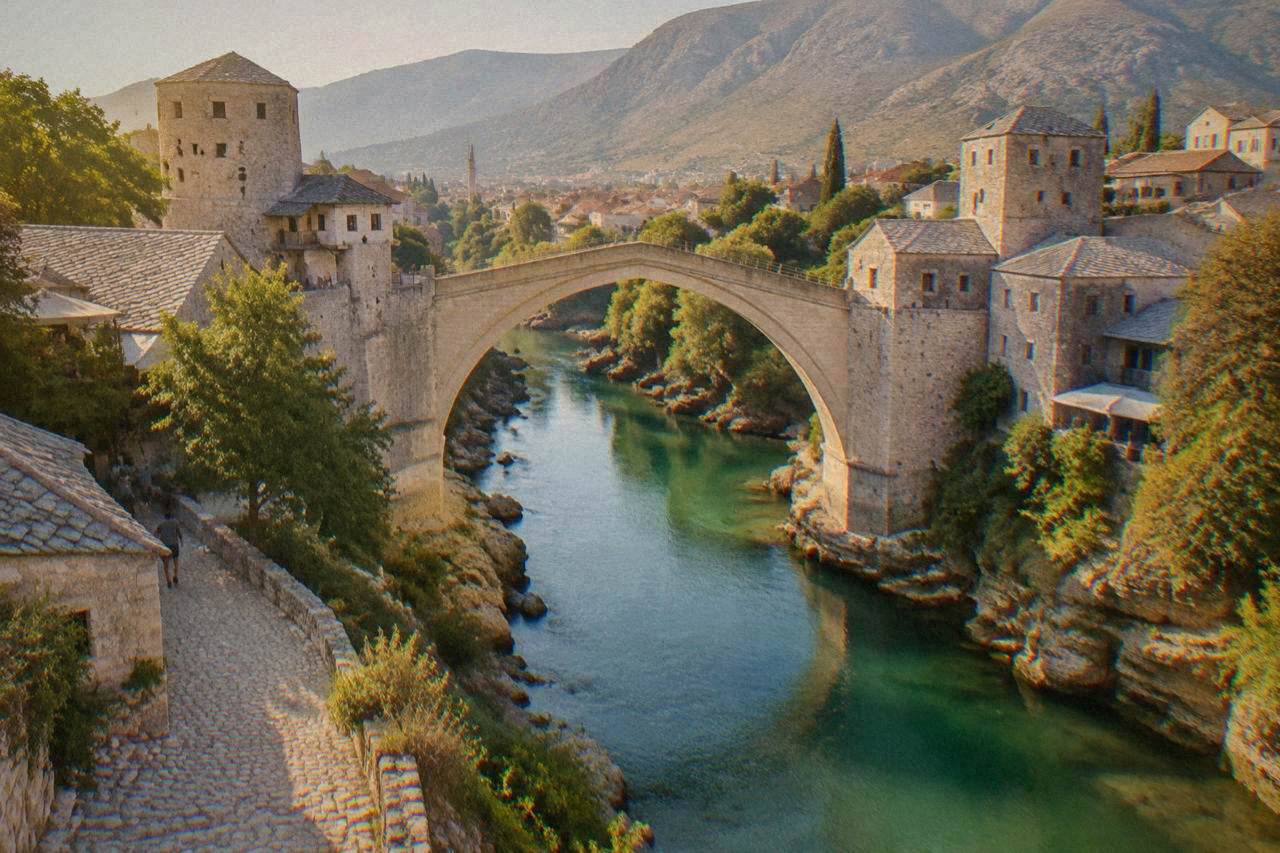
Stari Most is famous because the architect Hajruddin succeeded where others feared to try, throwing a single wide stone arch about 29 m across the Neretva with no scaffold of the kind later builders would use, and because that arch became a symbol powerful enough that its destruction in 1993 and its painstaking rebuilding by 2004 drew international attention. UNESCO inscribed the Old Bridge Area in 2005. The diving tradition from its ledge adds a living spectacle few monuments can match.
The engineering story comes first. The bridge was commissioned under Suleiman the Magnificent and built by mimar Hajruddin, whose design, as UNESCO's own description records, follows the teaching of his master, the architect mimar Sinan. A span of about 29 m carried on a slender stone arch was an audacious piece of work in 1566. The bridge sits about 21 to 24 metres above the river, the exact height depending on the water level, which the upstream dams on the Neretva influence.
The second story is harder and is told with dates and physical facts. The bridge was destroyed on 9 November 1993 during the war. Reconstruction used original materials and techniques where possible, supported by UNESCO and World Bank partners, and the rebuilt bridge reopened in July 2004. A year later, in 2005, the surrounding Old Bridge Area of the Old City of Mostar entered the World Heritage List as property 946, inscribed under criterion (vi) as a symbol of multicultural coexistence, reconciliation and international cooperation. That inscription is the formal recognition of what the rebuilding had already come to mean.
The third story is the diving club. Members of the Mostari club jump from the bridge's ledge into the cold Neretva, a tradition formalised in an annual competition that reached its 460th edition on 26 July 2026. The water stays cold even in August, fed by karst springs, and only trained club members jump; there is no pay-to-jump option for visitors. The Mostar bridge diving tradition is a spectacle with centuries behind it, and the bridge's fame rides on it in part because the divers keep the monument a living place rather than a ruin to photograph.
A private group city tour of Mostar and the Old Bridge is one natural way to have the bridge's stories laid out in order, from the Ottoman engineering to the rebuilding, and the tour card above carries the live details. The Herzegovina day trips carded alongside it cover the wider region the bridge anchors.
What Made The 1566 Arch Such An Engineering Feat?
The feat was the width of a single stone arch, about 29 m, raised about 21 to 24 metres above the Neretva in an era without modern scaffolding calculations, built from local tenelija limestone by mimar Hajruddin. That endurance is the credential.
Hajruddin worked within the school of mimar Sinan, and UNESCO's listing credits the design to that lineage. The bridge's humpback profile, rising to a central ledge wide enough to walk and, later, to dive from, gives it a shape recognisable in outline anywhere. The stone is local tenelija limestone, a soft material that had to be laid with precision to carry the load across the void. Before the stone bridge, a wooden bridge stood on the same crossing, guarded by the mostari, the bridge keepers who gave the city its name, first recorded in written form in 1474.
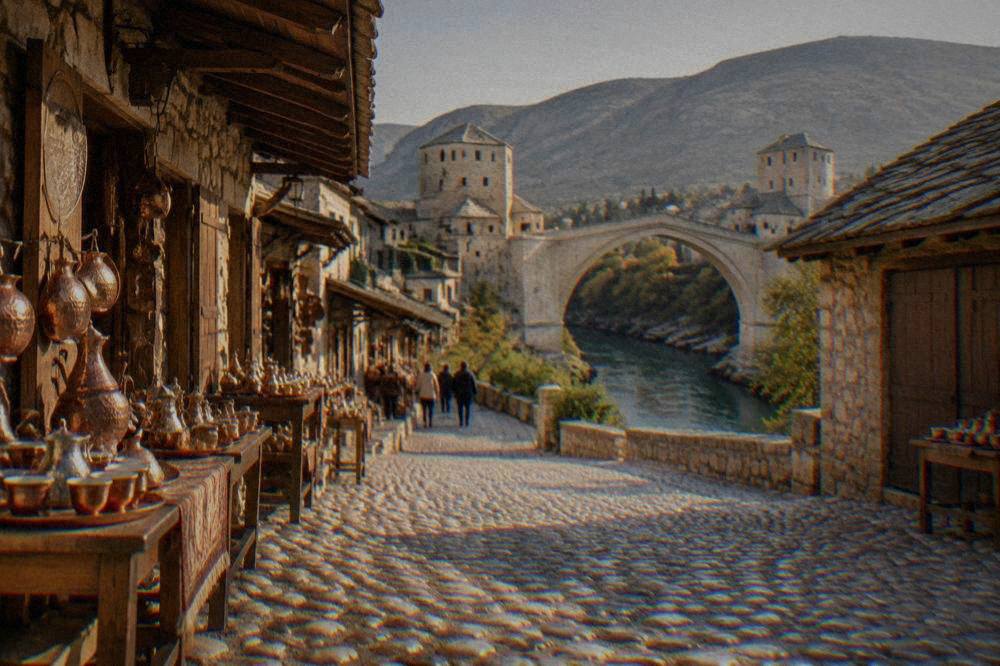
What is easy to miss is that the bridge made the city, not the other way round. The Ottoman settlement grew around the crossing and the tolls and trade it carried, and the Old Town of Mostar still follows that logic today: the bridge at the centre, the bazaar street of Kujundžiluk running off it, the mosques placed to serve the quarters on both banks. The fame of the arch and the fame of the city have been inseparable since 1566.
Why Did The Bridge's Destruction Make It More Famous Still?
The bridge was destroyed on 9 November 1993 during the war, and images of the empty gap where the arch had stood travelled worldwide. The rebuilding, using original techniques and recovered stone where possible with support from UNESCO and World Bank partners, ended with the reopened bridge in July 2004, and UNESCO's 2005 inscription followed, turning a local monument into an international symbol of reconciliation.
The physical facts are these: the arch fell into the Neretva on 9 November 1993. Reconstruction drew on dive recovery of original stone from the riverbed, and the rebuilt bridge was reopened in July 2004. In 2005 the World Heritage Committee inscribed the Old Bridge Area of the Old City of Mostar under criterion (vi), the register's language centred on the bridge as a symbol of multicultural coexistence and of international cooperation in reconstruction. The full story of why the Mostar bridge was destroyed and the account of whether the Mostar bridge has been rebuilt are covered in their own pages.
Fame of this kind is double-edged: the bridge is known partly because a global audience watched it fall. What the destruction undeniably did was make the rebuilding itself an event, and the 2004 reopening restored not just a crossing but the silhouette the city is known by.
How Do The Divers Keep The Bridge Famous Today?
The diving club Mostari keeps Stari Most in the world's news each summer: members jump from about 21 to 24 metres into river water that stays cold even in August, the traditional competition reached its 460th edition on 26 July 2026, and the Red Bull Cliff Diving World Series ran its Mostar round from 30 July to 1 August 2026 from platforms at 21 m for women and 27 m for men. Only trained club members jump.
The annual competition is organised by the diving club Mostari, and the 2026 edition crowned winners in both head-first and feet-first categories, drawing competitors from across the region. The Red Bull round is separate: its first day uses the traditional bridge jumps, then the added platforms go up, higher than the bridge itself for the men's event. An estimated crowd in the tens of thousands lines the banks for it.
For a visitor, the practical fact is that there is no pay-to-jump arrangement for tourists; jumps belong to club members who train for years before a solo leap. Watching costs nothing: crossing the bridge itself is free and it is a public route at any hour. The divers typically gather in the warm months around midday, collecting contributions from the crowd before each jump, a routine that has run for generations.
What Should You See Around The Bridge To Understand Its Fame?
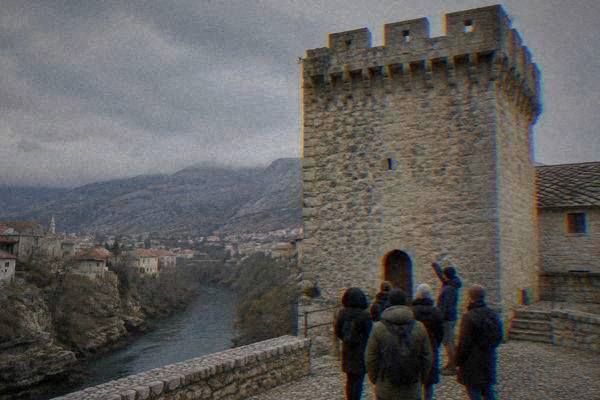
The bridge explains itself best through its surroundings: the Tara tower housing the Museum of the Old Bridge, the Koski Mehmed-pašina džamija on the west bank with a minaret view over the arch, the smaller Kriva ćuprija upstream as a quiet dress rehearsal for the great arch, and the bazaar street of Kujundžiluk, all inside a UNESCO inscribed area of 7.60 hectares with a 48 hectare buffer zone.
The Museum of the Old Bridge in the Tara tower tells the construction and reconstruction story, and reported opening runs daily from April into November with a modest cash admission; confirm the current figure on site. The Crooked Bridge, a miniature single arch over a side channel a short walk upstream, is often described as the workshop version of its larger neighbour and is free to see at any hour. The mosque terraces on both banks give the elevated views the postcards borrow, and Koski Mehmed-pašina džamija has the most photographed one of all.
The viewing distances that frame the arch are short, which is why a two days in Mostar stay rewards the second morning: the light on the stone changes through the day, and the river-side benches below the mills catch the arch from underneath. A brief guide to what is so special about Mostar beyond the bridge rounds out the picture.
| Bridge fact | Figure | Note |
|---|---|---|
| Completed | 1566 | Under Suleiman the Magnificent, mimar Hajruddin |
| Span | about 29 m | Single stone arch |
| Height above the Neretva | about 21 to 24 m | Varies with river level |
| Destroyed | 9 November 1993 | Fell during the war |
| Reopened | July 2004 | Rebuilt with UNESCO and World Bank partners |
| UNESCO inscription | 2005 | Property 946, criterion (vi) |
| Crossing the bridge | Free | Public route, open around the clock |
| 460th diving competition | 26 July 2026 | Organised by diving club Mostari |
Can You Visit The Bridge Without A Tour, And Is A Tour Worth Adding?
Yes, and easily: the bridge is a free public crossing, open around the clock, and every viewpoint around it is a public street or terrace. A tour adds context rather than access, and the choice is about depth. A private group city tour built around the Old Bridge lays out the Ottoman engineering, the 1993 destruction, the 2004 rebuilding and the diving tradition in one ordered walk, with a guide to answer what the stones cannot.
Independent visitors can see the arch, the towers, the bazaar and both mosque terraces in a half day of walking, and the Mostar Travel Guide sightseeing pages cover each stop. The case for a tour is interpretation: the bridge's fame rests on history that signage covers thinly, from the Sinan lineage of the design to the reconstruction years. That is exactly the ground a private walk covers, and the card below carries the live listing for the tour this site features alongside its Old Bridge itinerary.
The pairing that suits many travellers is a city walk on day one and a Herzegovina day trip on day two, since the bridge sits at the head of a route that runs to Blagaj, Počitelj and Kravica waterfall. The tours carded below cover that route with the bridge stories built in.
Common Questions About The Mostar Bridge
Why Is Mostar Bridge So Famous?
Because a single stone arch of about 29 m, completed in 1566 by mimar Hajruddin under Suleiman the Magnificent, stood for over four centuries, was destroyed in 1993, was rebuilt and reopened in July 2004, and was inscribed with its old city on the UNESCO World Heritage List in 2005. The annual diving tradition from its ledge keeps it in the world's view each summer.
How high is the Mostar bridge?
About 21 to 24 metres above the Neretva, the exact height depending on the river level. The Red Bull Cliff Diving platforms are separate structures: 21 m for the women's event and 27 m for the men's.
Can tourists jump off the Mostar bridge?
No. Jumps are made by members of the Mostari diving club, who train for years. No pay-to-jump option for visitors exists. Watching the club divers is free from the banks and the bridge itself.
Is the Mostar bridge the original?
The bridge standing today was rebuilt using original materials and techniques where possible, supported by UNESCO and World Bank partners, and reopened in July 2004 after the destruction of 9 November 1993. The form and stone follow the 1566 original.
Does it cost anything to cross the Mostar bridge?
No. Stari Most is a public pedestrian crossing, free and open at any hour. Fees apply only to the surrounding sights such as the Museum of the Old Bridge in the Tara tower, where a modest cash admission is reported; confirm the current price on site.