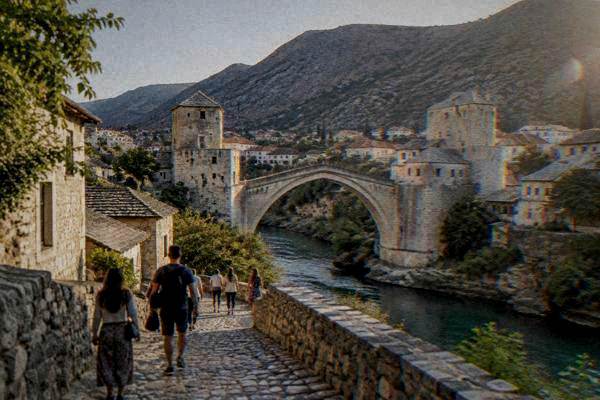
Museum Of The Old Bridge: Tara Tower And The Excavations
The Museum of the Old Bridge sits inside the Tara tower at the western end of Stari Most in Mostar, Herzegovina, and tells the story of the 1566 bridge, its destruction in 1993 and its reconstruction, supported by finds raised from the Neretva riverbed.
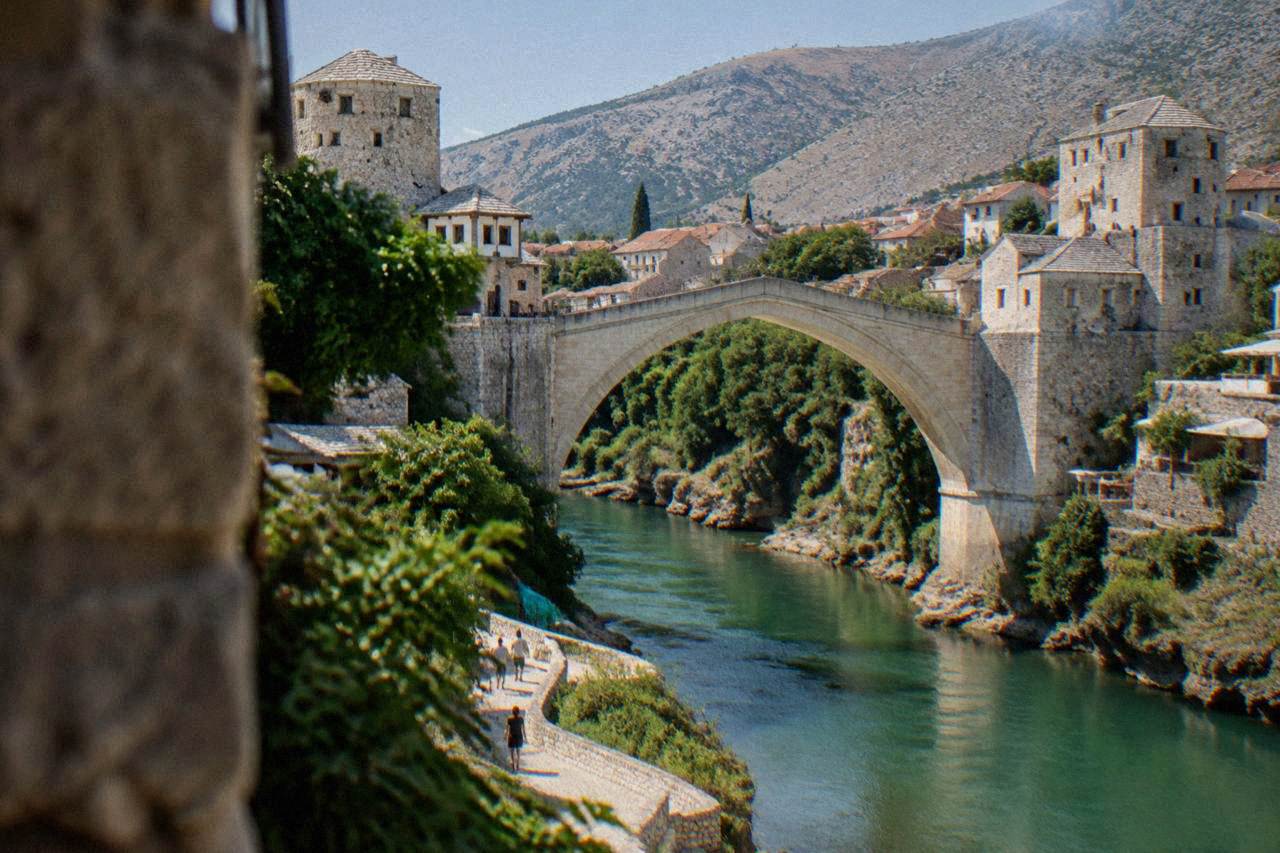
The Museum of the Old Bridge occupies the Tara tower at the western end of Stari Most in Mostar. It covers the Ottoman construction of 1566, the destruction of 9 November 1993 and the reconstruction completed in 2004, and displays stone fragments and archaeological material recovered from the river below. A reported adult entry is about 10 KM, with reported daily opening from 08:00 to 16:00 between 1 April and 1 November; confirm both locally before a visit.
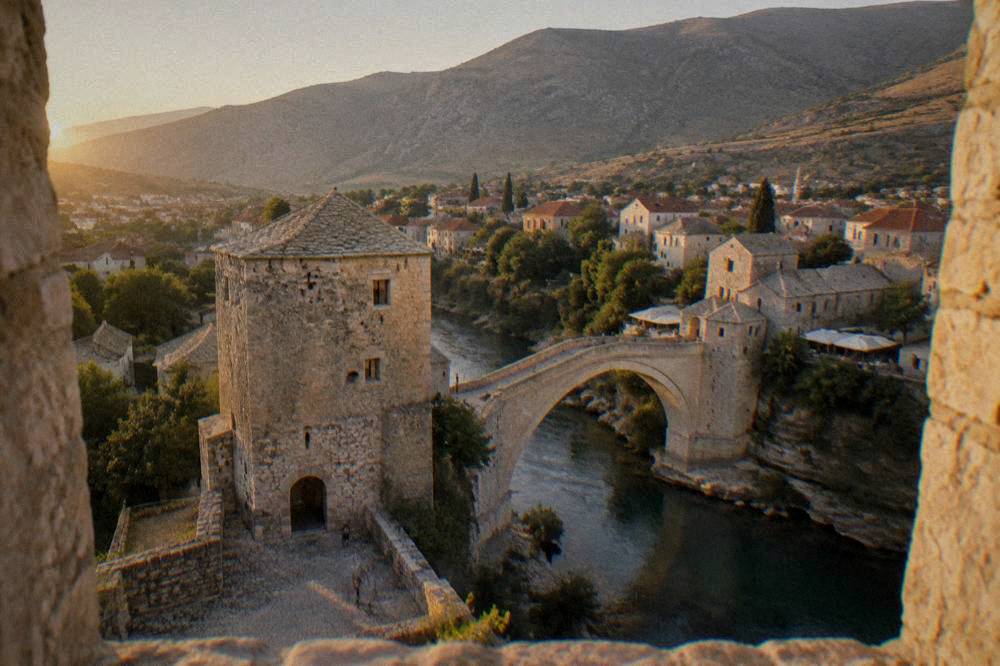
The Museum of the Old Bridge stands inside the Tara tower at the western end of Stari Most, the single-arch stone bridge that carries pedestrians over the Neretva river in Mostar, the main city of Herzegovina in Bosnia and Herzegovina. The tower is part of the UNESCO World Heritage property inscribed in 2005 as the Old Bridge Area of the Old City of Mostar, and the museum inside it exists to explain one structure: a bridge completed in 1566 under Suleiman the Magnificent, built by mimar Hajruddin according to a design that follows his master, the architect mimar Sinan. The bridge was destroyed on 9 November 1993 and rebuilt and reopened in July 2004. The museum holds the material record of all three chapters, including stone recovered from the riverbed during the reconstruction works.
This page from the Mostar Travel Guide editorial desk sets out what the museum covers, where it sits in the Old Town, what the reported entry arrangements are, and how to fit it into a day built around Stari Most and the Kujundžiluk bazaar streets on the east bank. The practical facts are short and the history is long, which is roughly the shape of a visit too.
What Is The Museum Of The Old Bridge In Mostar?
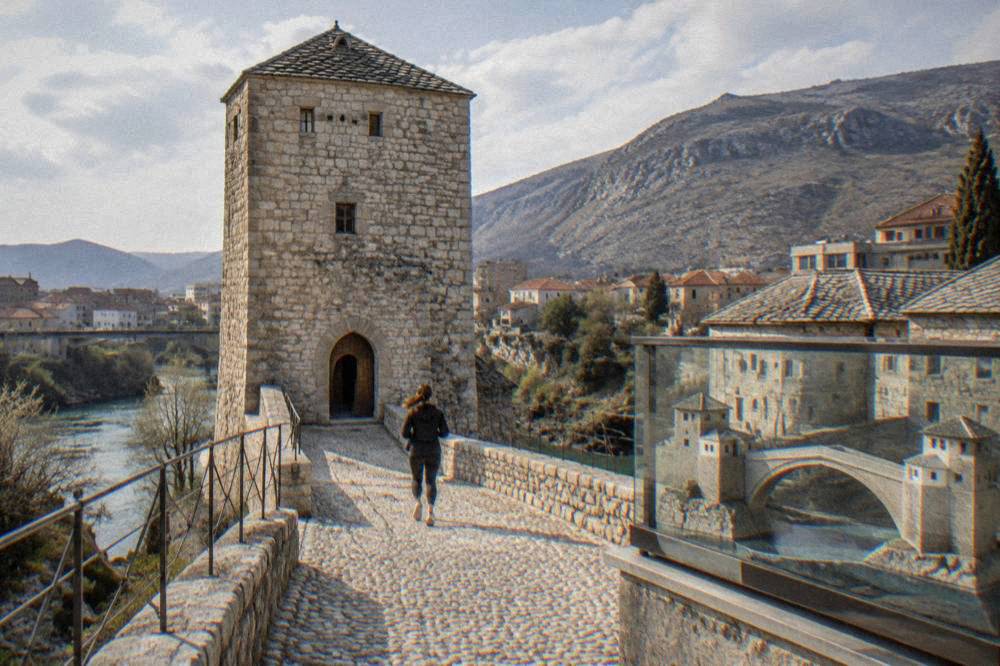
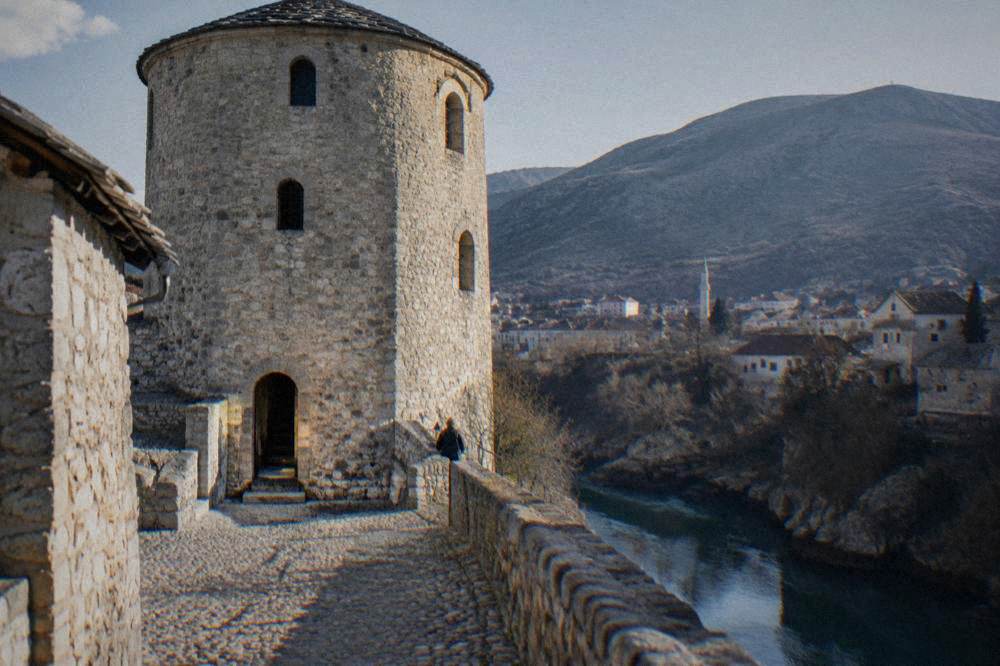
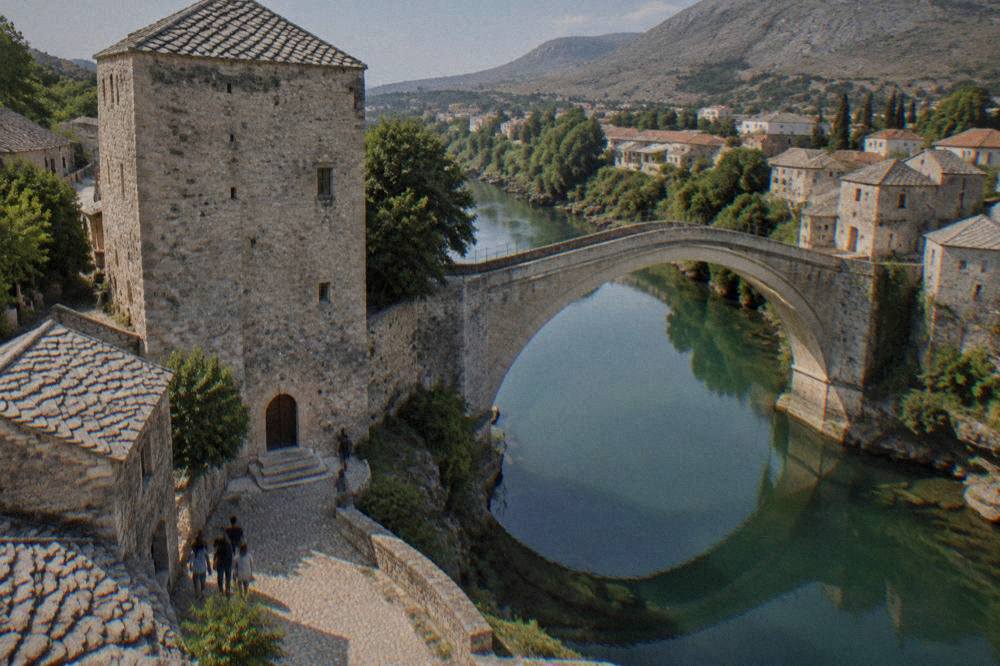
The Museum of the Old Bridge is a small exhibition inside the Tara tower, the fortified stone tower at the western approach to Stari Most in Mostar, dedicated to the bridge's construction in 1566, its destruction on 9 November 1993 and its reconstruction, which finished with the reopening in July 2004. Its displays combine models, photographs and archaeological material, including stone elements and finds recovered from the Neretva riverbed during the post-war rebuilding works. The tower itself is one of the two towers flanking the bridge; the other, the Halebinovka tower, stands at the eastern end above the bazaar.
The Tara tower is not just a container for the museum. It is part of the defensive system built around the crossing, and walking up through it puts you at the level of the bridge's crown, with windows over the Neretva and the steep banks on both sides. The museum's core narrative follows the bridge's life cycle. The original arch was built of local tenelija limestone with a span of about 29 m and a height of about 21 to 24 metres above the river depending on the water level. The reconstruction after 1993 reused original material recovered from the river wherever possible, working with international partners including UNESCO and World Bank support, and the museum reports that arc of destruction and rebuilding in dates and physical facts.
Two neighbouring sights complete the same walk. The Koski Mehmed-pašina džamija sits a minute downstream on the east bank, and the Crooked Bridge, Kriva ćuprija, a small single-arch stone bridge over a side channel, is a short stroll further into the Old Town. Both are covered by the Mostar walking tour route descriptions that centre on the bridge area.
What Does The Museum Of The Old Bridge Display?
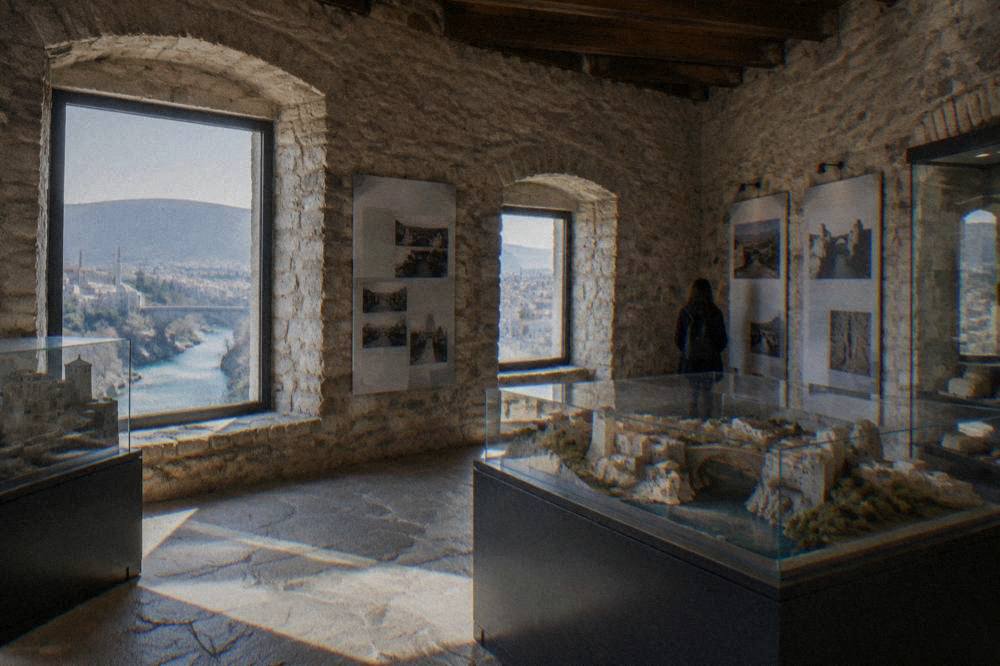
The displays cover three phases of the bridge: the Ottoman construction finished in 1566 under Suleiman the Magnificent, the destruction of 9 November 1993 during the war, and the reconstruction that returned the bridge on 23 July 2004, presented through scale models, period photographs, drawings and original stone fragments. Archaeological material raised from the Neretva during the rebuilding is central to the collection, since the recovery of original blocks from the riverbed is what allowed the new arch to follow the old geometry rather than replace it with a modern design.
The exhibition is compact, and its strongest material is physical. Stone elements from the original bridge, together with finds from the excavations in and beside the river, give the tower's rooms a direct connection to the structure outside the windows. Models show how the arch was built and how the reconstruction assembled recovered original pieces with new stone cut to match. Photographic material documents the bridge as it stood before 1993, its absence afterwards, and the rebuilding works, which is the register the UNESCO inscription of 2005 recognised under criterion (vi): the bridge as a symbol of reconciliation and international cooperation.
For readers who want the longer arc of the city rather than the bridge alone, the companion pages on why the Mostar bridge is so famous, why the Mostar bridge was destroyed and whether the Mostar bridge has been rebuilt carry the fuller story. The museum keeps to dates and objects, and this page follows the same rule: the bridge fell on 9 November 1993, and the rebuilt bridge opened in July 2004.
The table below gathers the dated facts a visitor will meet inside the museum.
| Fact | Detail |
|---|---|
| Bridge completed | 1566, under Suleiman the Magnificent |
| Architect | Mimar Hajruddin, after a design following mimar Sinan |
| Span | About 29 m |
| Height above the Neretva | About 21 to 24 metres depending on the river |
| Destroyed | 9 November 1993 |
| Rebuilt and reopened | July 2004 |
| UNESCO inscription | 2005, Old Bridge Area of the Old City of Mostar, property 946 |
| Basis for inscription | Criterion (vi) only |
How Much Does The Museum Of The Old Bridge Cost, And When Is It Open?
A reported adult ticket for the Museum of the Old Bridge is about 10 KM, with reported daily opening from 08:00 to 16:00 between 1 April and 1 November, and visits outside that window reported to be by organised arrangement, so confirm the current price and hours locally or at your hotel before setting out. The convertible mark (KM, BAM) is the currency of Bosnia and Herzegovina, pegged at 1 EUR = 1.95583 KM, and small cash in KM is the practical way to pay small museum fees in the Old Town.
These are reported figures rather than an official published tariff, and the practical lesson is to treat them as planning ranges. The museum is a short walk from anywhere in the Old Bridge Area, so a closed door costs minutes rather than a morning. Crossing the bridge itself is free and open around the clock, so the tower visit slots into the same visit as the bridge, the bazaar streets and the mosque terraces.
Nearby paid sights follow the same small-cash pattern. The table below lists what is reported for the cluster around the bridge, so a day's budget can be planned in one place.
| Sight Near Stari Most | Reported Entry | Notes |
|---|---|---|
| Museum of the Old Bridge (Tara tower) | About 10 KM adult | Reported 08:00 to 16:00 daily, 1 April to 1 November |
| Koski Mehmed-pašina džamija | A small cash fee, more with the minaret | Reports vary; worship can pause access |
| Muslibegović House | About 8 KM | Ottoman house museum |
| Bišćević House | About 4 KM | Ottoman house museum |
| Stari Most itself | Free | Public crossing, open around the clock |
A practical aside that belongs on any Mostar money page: tourist tax in Herzegovina-Neretva Canton is reported at 3 KM per person per night from 1 January 2026, collected through accommodation, and it is worth confirming at booking. Cash machines are easy to find around the Old Town, and paying in KM rather than euro cash avoids rounded exchange rates.
How Long Does A Visit To The Tara Tower Museum Take?
A visit to the Museum of the Old Bridge is a short one: the tower is small, the exhibition occupies a handful of rooms, and the visit, including the climb and the windows over the Neretva, fits comfortably inside an hour, leaving the rest of the morning for the bridge, the bazaar and the viewpoints on both banks. The value of the visit is concentration rather than scale, since the whole story of the bridge sits within a few metres of the bridge itself.
The tower's position makes it a natural mid-point of an Old Town circuit. A sensible order is to arrive at the east bank through Kujundžiluk, cross Stari Most from east to west, enter the Tara tower at the western end, then descend and continue along the west bank, where the Spanish Square and the broader city open out. Visitors with more time can climb toward the Hum hill side or ride up to Fortica for the panorama, and the Mostar viewpoints page lists the outlooks that frame the bridge from above.
A private guided walk is the alternative to reading the panels alone, and the private group city tour of Mostar and the Old Bridge makes the tower and the bridge its focus. Check availability if a guide-led version appeals.
For a compact self-guided plan, two days in Mostar assigns the bridge area and its museums to the first day and the wider city to the second. The table below suggests how the Tara tower visit splits across a half-day in the Old Town.
| Stop | What It Adds | Order |
|---|---|---|
| Kujundžiluk bazaar streets | Approach through the cobbled craft quarter | 1 |
| Stari Most crossing | The bridge itself, free, open around the clock | 2 |
| Museum of the Old Bridge, Tara tower | The 1566, 1993 and 2004 story in one place | 3 |
| Koski Mehmed-pašina džamija terrace | River-level view back at the arch | 4 |
| Kriva ćuprija | A small stone bridge over a side channel | 5 |
What Was Found In The Neretva Beneath The Old Bridge?
The reconstruction works after 1993 recovered original stone blocks of the 1566 bridge from the Neretva riverbed below the crossing, and that recovered material is the archaeological heart of the museum: fragments of the arch and its structure, raised from the river, catalogued, and reused in the rebuilt bridge wherever their condition allowed, with the remainder held as evidence of the original construction. The recovery operation is the reason the rebuilt bridge of July 2004 could follow the old geometry rather than replace it with a modern span.
The excavation beneath and beside the bridge also documented the earlier history of the crossing. The name Mostar first appears in a written document of 1474, before the stone bridge existed, and the name itself comes from "mostari", the bridge keepers who guarded the wooden crossing that preceded the stone arch. Settlement of the old city is described by UNESCO as established in the 15th century, which the museum's archaeological displays support with material from the layers under and around the bridge towers.
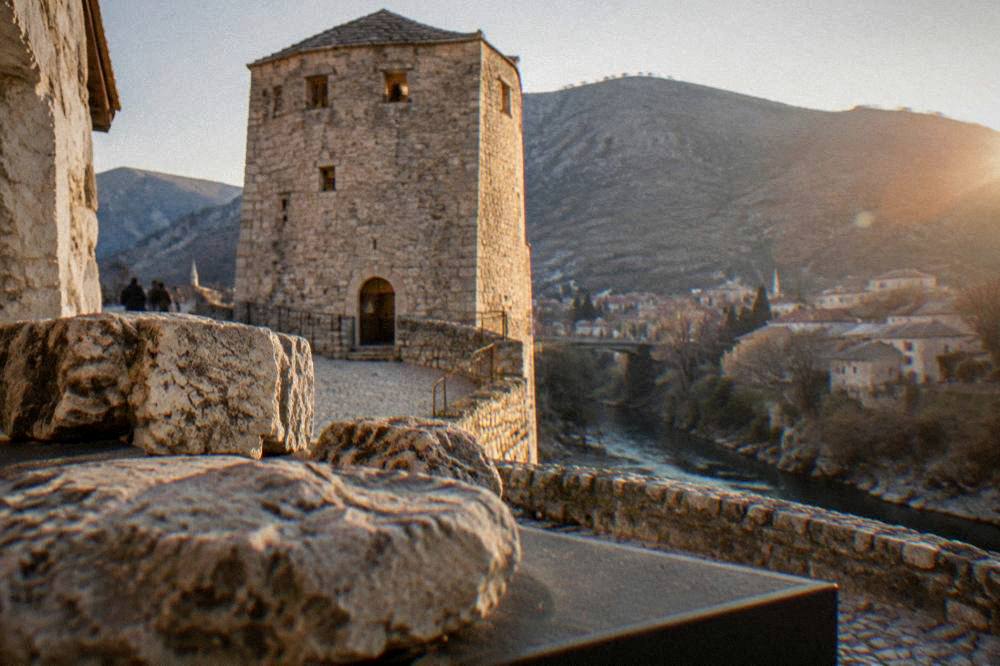
This is the part of the collection that rewards a slow look. A model of the arch, a photograph of the empty river after 1993, and a recovered block of tenelija limestone tell one continuous story in three objects. The reconstruction, supported by UNESCO and World Bank partners among others, treated the fallen stone as building stock and archive at once, and the tower exhibition is where the archive half is shown.
How Do You Fit The Museum Into A Day Trip To Mostar?
Day trippers reach the Tara tower most easily by walking straight from the drop-off points on the west bank or the bus station side toward the Neretva, crossing into the Old Bridge Area, and making the museum the mid-point stop of a circuit over Stari Most and back through Kujundžiluk, which keeps the whole bridge cluster within an easy stroll of wherever a tour bus parks. The museum's reported hours, 08:00 to 16:00 daily from 1 April to 1 November, suit day trips arriving in the morning, and the reported fee of about 10 KM is small enough to be an impulse rather than a decision.
Arriving from Dubrovnik or Split, the bridge is the anchor stop, and the tower adds the context the bridge alone cannot carry. Arriving from Sarajevo, the same applies, with the train now running twice a day each way between Sarajevo and Čapljina via Mostar after the service resumed on 15 October 2026. Independent travellers can also reach Blagaj, Počitelj and Kravica waterfall from Mostar in an afternoon, with Kravica 55.2 km and about 54 minutes by road, though day tours often bundle those stops into a single circuit.
The tour options below all include Mostar's Old Bridge Area in their itineraries, with the two day-trip options continuing into Herzegovina's headline sights.
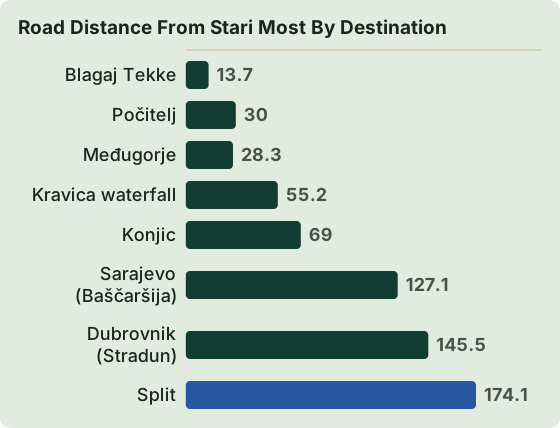
The distance table below places the Tara tower's city in its regional context, measured from Stari Most by road, free-flow, with no border queues included.
| Destination | Road Distance From Stari Most | Free-Flow Time |
|---|---|---|
| Blagaj Tekke | 13.7 km | About 19 min |
| Počitelj | 30.0 km | About 31 min |
| Međugorje | 28.3 km | About 40 min |
| Kravica waterfall | 55.2 km | About 54 min |
| Konjic | 69.0 km | About 80 min |
| Sarajevo (Baščaršija) | 127.1 km | About 134 min |
| Dubrovnik (Stradun) | 145.5 km | About 150 min |
| Split | 174.1 km | About 131 min |
Day tours that continue to Kravica waterfall stop at a park that charges 20 KM for an adult all year, with children under 7 free, and is open year-round with hours that run to 22:00 in the June to September months. Those figures come from the park's own visitor page, and they hold in winter too, so the museum's small fee is not the only entrance line worth budgeting on a Herzegovina circuit. The paired tours below show the two shapes that circuit takes.
What Else Should You See Around The Tara Tower In Mostar?
The sights within a few minutes of the Tara tower are Stari Most itself, the Kujundžiluk bazaar, the Koski Mehmed-pašina džamija with its terrace over the river, Kriva ćuprija, and the Ottoman house museums of Bišćević House and Muslibegović House, which together fill a half-day on foot without transport of any kind. The Old Bridge Area is small, pedestrian, and free to wander, with the tower museum and the mosque terrace the only stops that ask for a fee.
Beyond the Ottoman core, the city's later memorial sites sit within walking distance uphill. The Partisan Memorial Cemetery, inaugurated in 1965 to a design by Bogdan Bogdanović, stands above the west bank; Europa Nostra reports that over 700 of its stone memorial markers were destroyed in 2022 and lists the site among Europe's most endangered heritage, so the visit is a sobering one and access is unstaffed. The Museum of War and Genocide Victims and the Sniper Tower address the war years from other angles, while the Herzegovina Museum holds the regional collection. The Mostar war history tour pages on this site map how these fit a single walking line.
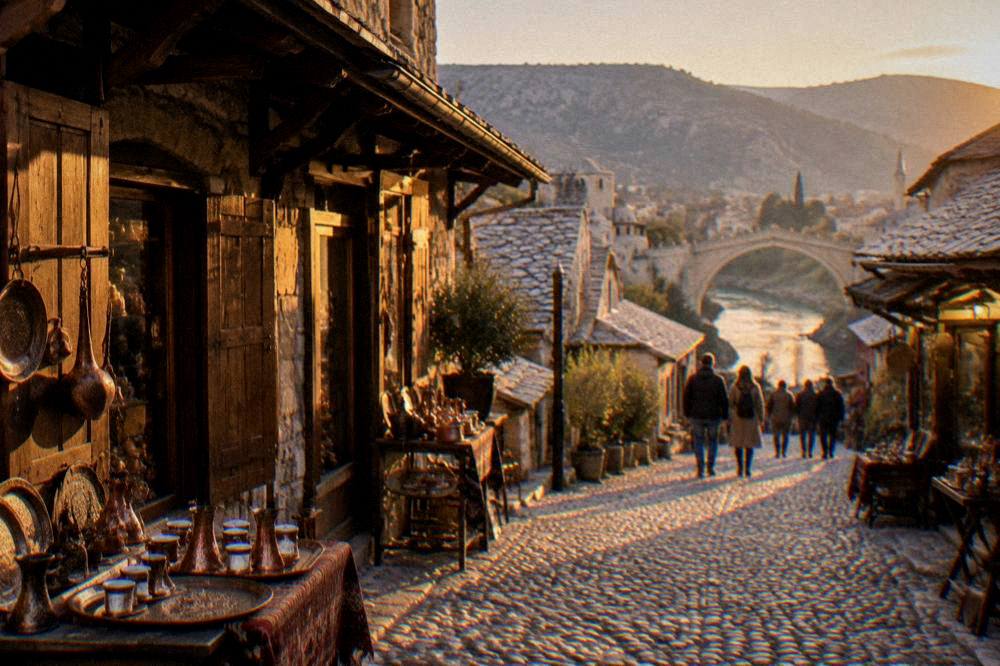
For food and coffee after the circuit, the restaurants of Mostar cluster around the Old Town, and Bosnian coffee is its own small ceremony, worth the stop on the bazaar side. If a visit lands in late July, the bridge divers of the Mostari diving club hold their traditional competition from the bridge; the 460th edition ran on 26 July 2026, and the Red Bull Cliff Diving round followed from 30 July to 1 August 2026, with added platforms at 21 m for women and 27 m for men. Those are annual events, and the next edition's dates are announced closer to the summer; the Mostar bridge diving page covers the tradition. Jumps are made by club members only, not by visitors, and the bridge height is about 21 to 24 metres depending on the river.
Common Questions About The Museum Of The Old Bridge In Mostar
What is the Museum of the Old Bridge?
It is a small museum inside the Tara tower, the stone tower at the western end of Stari Most in Mostar, covering the bridge's construction in 1566, its destruction on 9 November 1993, and its rebuilding, which ended with the reopening in July 2004, together with finds recovered from the Neretva riverbed.
How much does the Old Bridge Museum cost?
A reported adult ticket is about 10 KM. The figure is reported rather than officially published, so carry some cash in KM and confirm the current price on arrival.
What are the opening hours of the Old Bridge Museum?
Reported hours are 08:00 to 16:00 daily from 1 April to 1 November, with visits outside that period by organised arrangement. Confirm locally before a visit outside the summer half of the year.
Is the Old Bridge Museum the same as the Museum of Herzegovina?
No. The Old Bridge Museum is in the Tara tower beside Stari Most and covers the bridge. The Museum of Herzegovina is a separate regional museum elsewhere in the city, and no fee or hours are on file for it.
Do you need a ticket to cross the Old Bridge itself?
No. Stari Most is a public pedestrian crossing, free and open around the clock. Only the tower museum and the nearby house and mosque visits carry fees.
How long should you allow for the museum?
Under an hour covers the tower, the displays and the windows over the Neretva, which leaves the rest of a morning for the bridge, the bazaar and the mosque terrace.
The Tara tower compresses the whole biography of Stari Most into a single stone stairway: the Ottoman arch of 1566, the empty river after 9 November 1993, and the rebuilt bridge that reopened in July 2004 and earned the surrounding quarter its UNESCO inscription in 2005. Cross the bridge first, climb the tower second, and the city outside the windows will read differently on the way down.