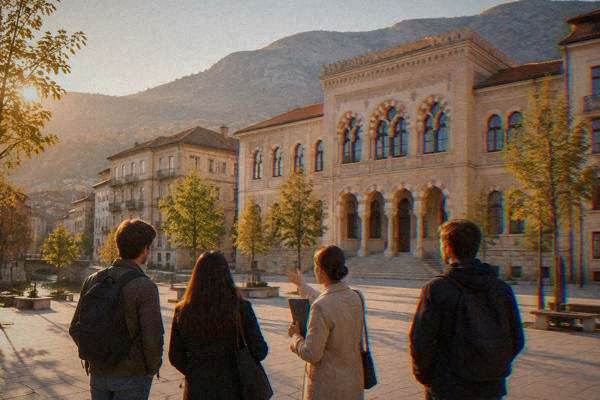
Museum Of War And Genocide Victims 1992-1995
The Museum of War and Genocide Victims 1992-1995 in Mostar documents the civilian experience of the war in Bosnia and Herzegovina through personal objects, photographs and testimony, and this guide explains what to expect, how to plan a visit and what to see around it.
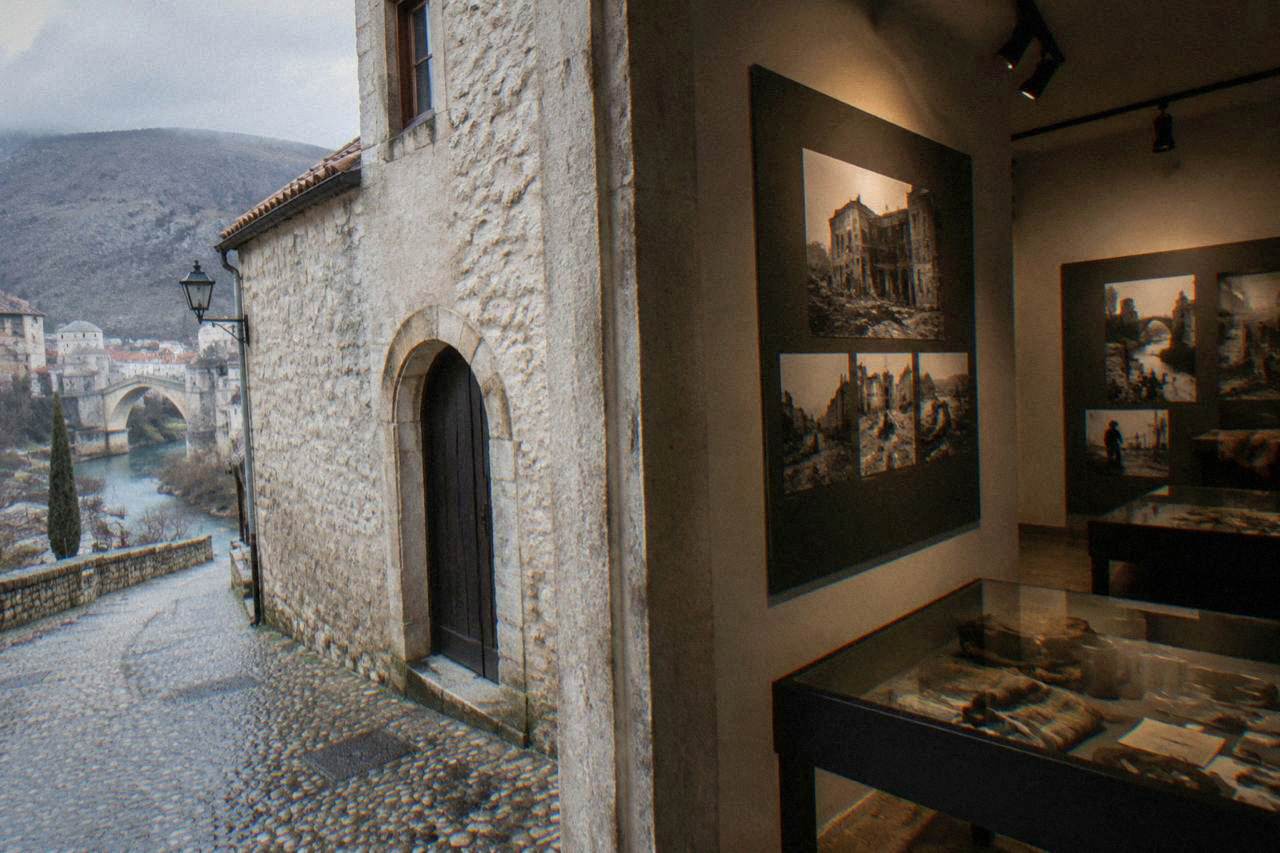
The Museum of War and Genocide Victims 1992-1995 is a small documentation museum in Mostar covering the war years through personal belongings, photographs and testimony. Plan a focused visit of an hour or two, confirm the current ticket price and opening hours locally before you go, and pair it with Mostar's other memory sites.
The Museum of War and Genocide Victims 1992-1995 in Mostar, an inland city on the Neretva river in Herzegovina, Bosnia and Herzegovina, documents the civilian cost of the war through personal belongings, photographs and written testimony rather than weapons and hardware. It is a deliberately small, quiet institution, and it sits within walking reach of the streets where the events it describes took place. This guide from Mostar Travel Guide covers what the museum presents, how a visit fits into a day in the city, which other Mostar memory sites belong on the same itinerary, and the practical facts worth knowing before you set out.
What Is The Museum Of War And Genocide Victims In Mostar?
The Museum of War and Genocide Victims 1992-1995 is a documentation museum in Mostar that presents the civilian experience of the war in Bosnia and Herzegovina between 1992 and 1995, using personal objects, photographs, letters and recorded testimony rather than a conventional military collection. Its subject is memory: detention camps, displaced families and the everyday lives interrupted by the conflict.
The museum's approach is intimate rather than encyclopaedic. Where a national history museum would chart campaigns and front lines, this one concentrates on a shoe, a suitcase, a ration card or a handwritten note, and lets the object carry the story. Displays are mounted with explanatory text, and the naming of victims and the framing of events follow the museum's own documentation.
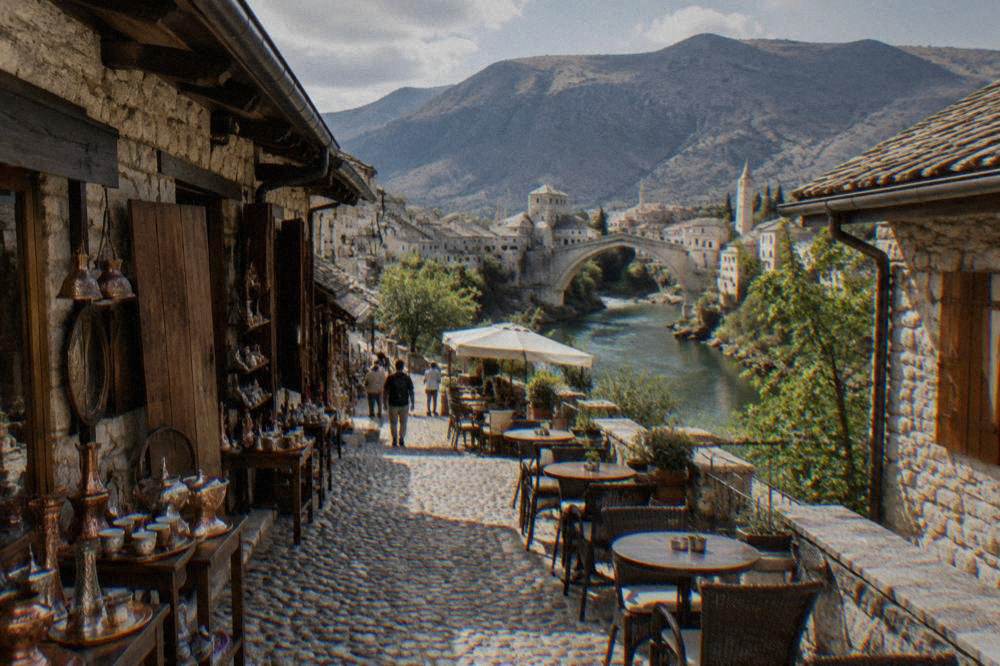
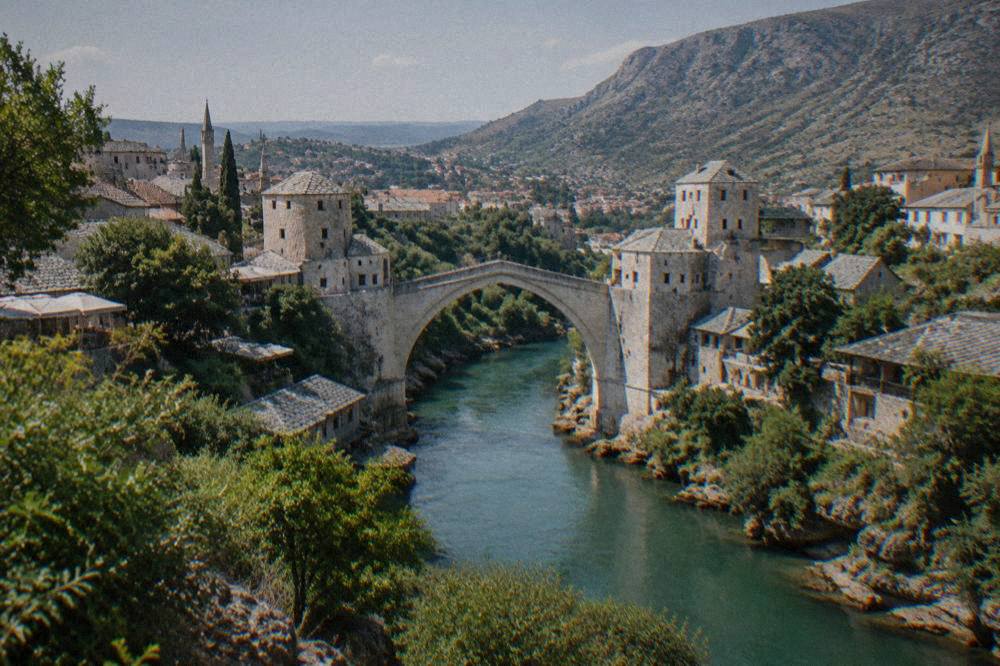
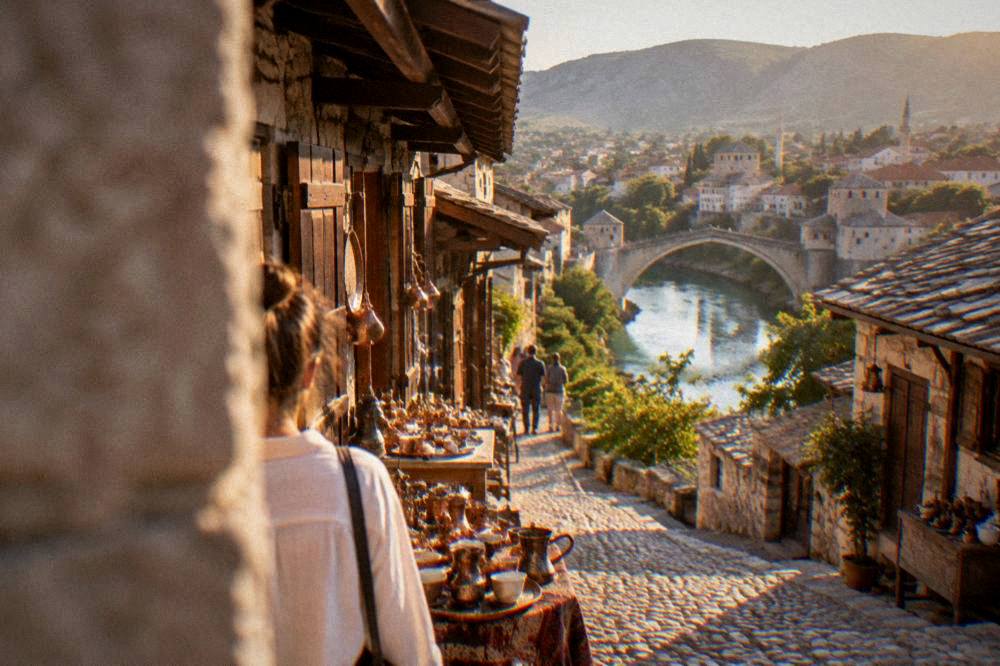
The period it covers is fixed by its title. The war in Bosnia and Herzegovina ran from 1992 to 1995, and the museum treats those years as a closed chapter presented through evidence. For Mostar specifically, the destruction of Stari Most on 9 November 1993 and its rebuilding and reopening in July 2004 bracket the physical story the city tells elsewhere; this museum keeps its focus on people rather than architecture. Treat the visit as the counterweight to the postcard Mostar of the Old Bridge and the Kujundžiluk bazaar: the two halves of the city's recent history sit a short walk apart, and each explains the other.
Where Is The Museum In Mostar And How Do You Reach It?
The museum stands in central Mostar, within the belt of streets around the Old Town core, so a visit needs no transport: from Stari Most the walk crosses the pedestrian heart of the city in a few minutes on flat ground, and the surrounding district mixes cafes, administrative buildings and other small museums. Confirm the exact entrance and current opening hours locally before setting out.
Mostar is a compact city built along the Neretva, and its sightseeing core runs from Spanish Square on one end down through the bazaar streets to the bridge. The museum sits inside that walkable band, which means it pairs naturally with the Old Bridge Area of the Old City of Mostar, the UNESCO World Heritage property inscribed in 2005. You do not need a bus, and a taxi is unnecessary unless the weather turns; for orientation, the guide to getting around Mostar on this site maps the walkable districts in detail.
Public transport in Mostar matters mainly for the day trips: local bus lines run outward to Blagaj and the airport while the train connects toward Sarajevo, with two trains a day each way between Sarajevo and Čapljina via Mostar after service resumed on 15 October 2026. None of that is needed here. Plan the museum as a stop on foot between the Old Town and the city-centre squares, and check the posted hours at the door, since small museums in Herzegovina adjust their schedules seasonally.
| Walking pairing in central Mostar | Distance character | What the pairing adds |
|---|---|---|
| Stari Most and the museum | A short central walk | Architecture of 1566 beside the story of 1992 to 1995 |
| Kujundžiluk bazaar and the museum | Adjacent districts | The commercial street life the war interrupted |
| Spanish Square and the museum | One continuous central axis | The administrative and social heart of the modern city |
| War Photo Exhibition and the museum | Both in the central belt | Two visual registers of the same period |
What Can You See Inside The Museum Of War And Genocide Victims?
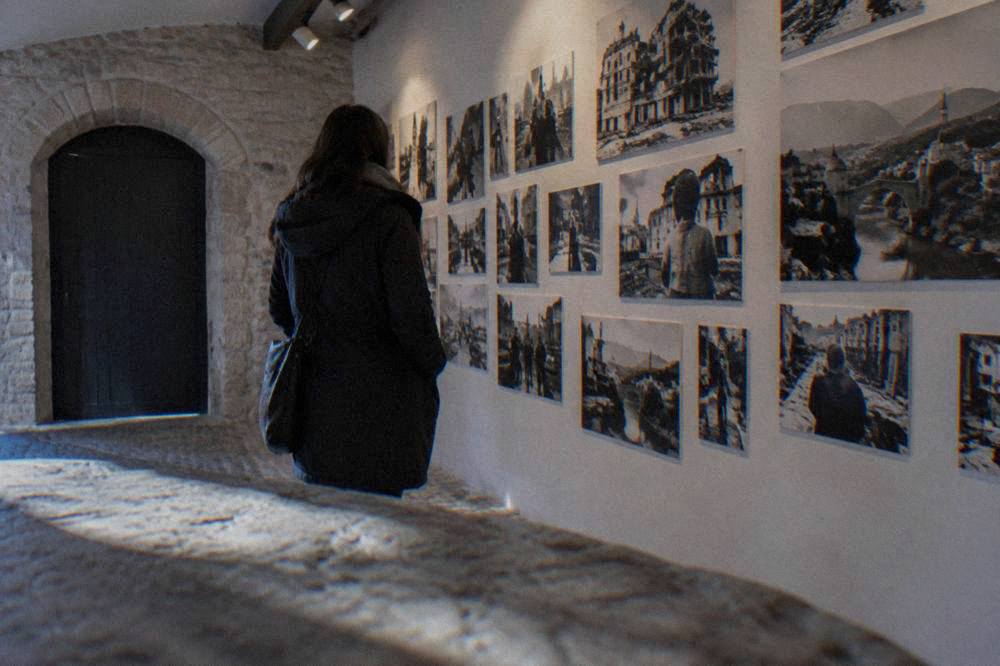
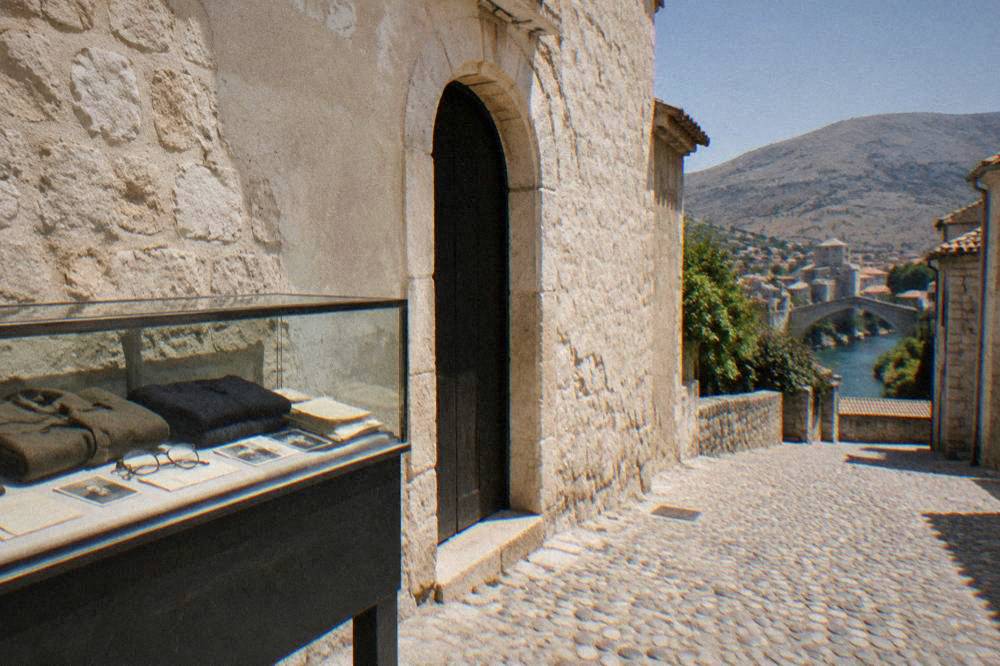
Inside, the museum presents themed rooms built around personal items recovered from the war years, alongside photographs, documents and testimony from survivors, with material on detention camps, displacement and the fate of civilians in Herzegovina and across Bosnia and Herzegovina between 1992 and 1995. The exhibits are captioned, and the tone is documentary rather than interactive or multimedia-heavy.
Expect restraint. The display method is the object-and-label format of a documentation centre: cases, panels and framed photographs, arranged so a visitor moves chronologically or thematically through the period. Personal belongings carry the weight of the rooms, and the museum's own captions and materials set the framing of every event described. Because the content deals with detention, loss and displacement, the pace is necessarily slow; this is a museum to read rather than rush.
The institution belongs to a wider landscape of memory in Mostar. The War Photo Exhibition elsewhere in the city centre presents the same years through photojournalism, while the Partisan Memorial Cemetery, inaugurated in 1965 to a design by Bogdan Bogdanović and listed among Europe's endangered heritage after over 700 of its stone markers were destroyed in 2022, commemorates an earlier conflict in a completely different register. The museum's own subject remains the 1992 to 1995 war and its victims, and that tight scope is its strength: a visitor leaves with a documented, human-scale account rather than a sweeping narrative.
How Long Should You Spend At The Museum Of War And Genocide Victims?
A single unhurried pass through the Museum of War and Genocide Victims 1992-1995 suits its size: allow roughly an hour to two hours, reading the captions fully, with more time if you read the testimony panels in depth. It is not a half-day institution, and its format rewards slow reading over coverage, so build it into a morning or afternoon in central Mostar rather than dedicating a day.
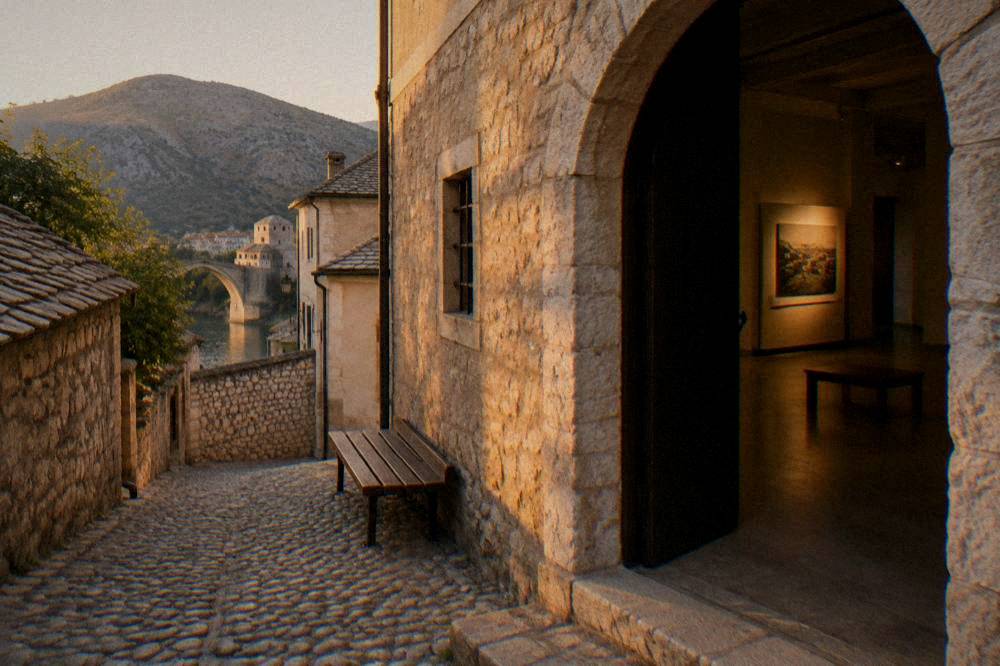
The honest planning frame is the surrounding city. Mostar's core sights, from the bridge to the bazaar, the Koski Mehmed-pašina džamija and the Ottoman houses, fit into one full day of walking, and the museum slots into that day as the reflective hour. If you are working from a one-day itinerary, place the museum either first, so the war context colours everything after, or last, so the sights you have seen acquire their recent history. Visitors with two or three days can slow the sequence and add day trips to Blagaj, Počitelj and Kravica waterfall.
A useful divider is what each Mostar institution asks of you. The table below groups the central sights by the kind of attention they demand.
| Central Mostar sight | Register | Time character |
|---|---|---|
| Stari Most and the river banks | Landmark and viewpoint | A slow walk and photographs |
| Kujundžiluk bazaar | Craft and commerce | Browsing at your own pace |
| Museum of War and Genocide Victims 1992-1995 | Documentation and testimony | Quiet reading, an hour or more |
| War Photo Exhibition | Photojournalism | A shorter visual visit |
| Museum of the Old Bridge | Architecture and reconstruction | A focused museum stop |
How Does The Museum Compare With Mostar's Other Memory Sites?
Mostar holds its war memory in several distinct places: the Museum of War and Genocide Victims 1992-1995 documents civilians through objects and testimony, the War Photo Exhibition shows the same years through photojournalism, the Partisan Memorial Cemetery commemorates the Second World War in a monumental landscape, and ruined or rebuilt buildings across the city carry the physical record. Each asks a different question, and a complete visit samples more than one.
The museum and the photo exhibition are the closest pairing, and they complement rather than repeat each other. One works through accumulated personal detail, the other through the framed single image; together they give a visitor both the breadth and the intimacy of the period. The Partisan Memorial Cemetery is the outlier in time and mood: a hillside monument landscape from 1965, now endangered and unstaffed, which rewards a visit with its design and its condition alike.
Between them sit the physical witnesses. Stari Most, completed in 1566 and rebuilt after its destruction on 9 November 1993, reopened in July 2004 and anchors the UNESCO-inscribed Old Bridge Area. The story of that reconstruction, funded through an international partnership led by UNESCO and the World Bank, is told at the Museum of the Old Bridge. Walking these sites in sequence, museum to cemetery to bridge, turns a day in Mostar into a guided argument about what a city keeps, rebuilds and mourns.
| Mostar memory site | Period covered | Form |
|---|---|---|
| Museum of War and Genocide Victims 1992-1995 | 1992 to 1995 | Objects, documents, testimony |
| War Photo Exhibition | 1992 to 1995 | Photographs |
| Museum of the Old Bridge | Ottoman era to 2004 | Architecture and reconstruction |
| Partisan Memorial Cemetery | Second World War | Monument landscape, 1965 |
Is The Museum Suitable For Children And Sensitive Visitors?
The museum is a serious, sombre space, and its material on detention camps, displacement and civilian loss is presented plainly, so it suits teenagers and adults far better than young children; families should preview the content and decide, and any visitor who finds such material distressing should treat the visit as optional and short. There is no sensational staging, but the subject itself carries weight.
The displays avoid dramatic effects, which paradoxically makes them more, not less, affecting. Captions describe events in factual language, and personal items stand in cases with minimal interpretation beyond their labels. For a school-age visitor studying the period, the museum is an unusually direct teaching resource; for a distressed traveller, the small size of the institution means an exit is never far away. Pacing a visit with a break afterwards, ideally somewhere quiet near the river, is a sound plan.
Context helps before you go. The war history guide on this site sets out the dated, factual outline of the period as Mostar's own institutions present it, with the physical record of destruction and rebuilding. A visitor who arrives with that chronology in mind reads the museum's objects against a timeline rather than encountering them cold.
What Should You Know Practically Before Visiting The Museum In Mostar?
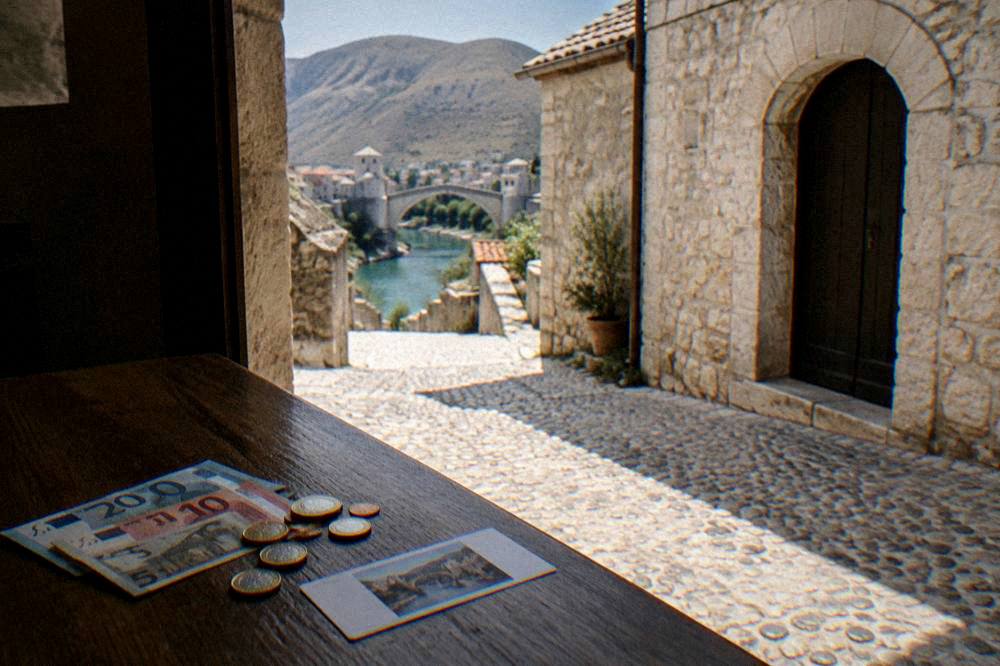
Confirm the current opening hours and ticket price at the entrance or through your accommodation before visiting, since small museums in Mostar adjust both seasonally, and carry cash in convertible marks (KM): the currency of Bosnia and Herzegovina is the mark, pegged at 1 EUR = 1.95583 KM, not the euro, and small institutions here work on cash tickets. Bosnia and Herzegovina is not in the EU or Schengen.
Money first, because it catches visitors out. Prices across Herzegovina are set in KM, and while euro cash is often accepted in tourist areas, usually at a rounded rate, paying in marks is the dependable option for a museum counter. Cards are reliable at hotels and larger businesses but not everywhere, so a small amount of cash covers tickets, coffee and any donation box. A tourist tax reported at 3 KM per person per night applies in the canton from 1 January 2026; confirm at booking how your accommodation handles it.
Cross-border visitors have two further facts to hold. Croatia has been in Schengen since 1 January 2023, so the land border with Bosnia and Herzegovina is an external Schengen border with full checks, and waits of up to about 30 minutes, longer at summer peaks, are reported; ETIAS is not in operation. The emergency number is 112. None of this touches a museum visit directly, but it shapes the trip around it.
| Practical item | The fact for Mostar |
|---|---|
| Currency | Convertible mark (KM, BAM), pegged 1 EUR = 1.95583 KM |
| Cash need | High at small museums and vendors |
| Tourist tax | Reported 3 KM per person per night from 1 January 2026, confirm at booking |
| Border status | Not EU, not Schengen; Croatian border has full checks |
| Emergency number | 112 |
What Should You Pair With The Museum For A Full Day In Mostar?
A satisfying full day pairs the museum with the walkable core: the bridge and the Neretva banks in the early light, the bazaar and an Ottoman house through the morning, the museum as the reflective midday or afternoon hour, and a viewpoint such as the Fortica area or Hum hill at sunset, with everything reachable on foot or by a short ride. Two days add Blagaj, Počitelj and Kravica waterfall.
The morning belongs to the Old Town. Cross Stari Most early, walk Kujundžiluk while the stalls are opening, and step into one of the Ottoman houses, Bišćević House or Muslibegović House, whose reported entry fees of about 4 KM and 8 KM respectively keep the stop inexpensive; confirm at the door. The Koski Mehmed-pašina džamija charges a small cash fee, more with the minaret climb, and the view from its minaret platform is one of the definitional Mostar photographs.
Afternoon is the museum's natural slot, followed by air. The Fortica area above the city and the slopes of Hum hill give the panorama that puts the river's course and the city's layout into a single frame. If a second day exists, Herzegovina opens outward: Blagaj Tekke sits 13.7 km and about 19 minutes by road from Stari Most, Počitelj 30.0 km and about 31 minutes, and Kravica waterfall 55.2 km and about 54 minutes, with Kravica's entry at 20 KM for an adult all year and its summer hours running 07:00 to 22:00 from June to September.
| Day-trip stop from Stari Most | Road distance | Free-flow time |
|---|---|---|
| Blagaj Tekke | 13.7 km | about 19 min |
| Počitelj | 30.0 km | about 31 min |
| Kravica waterfall | 55.2 km | about 54 min |
When Is The Best Time Of Year To Visit Mostar For This Itinerary?
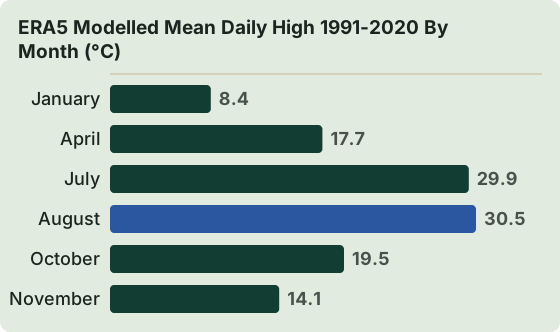
Late spring and early autumn give Mostar the most workable balance for a walking itinerary that includes the museum and the outdoor stops: the FHMZ 1961-1990 station data shows July means of 24.7 C with an absolute maximum of 41.2 C, while ERA5 reanalysis 1991-2020 models August mean daily highs at 30.5 C, so midsummer afternoons are better spent indoors, and the museum is an ideal hot-hour refuge.
The rainfall pattern matters less than the heat. The FHMZ table for Mostar shows November at 200.0 mm of rain against July at 42.9 mm, so the November visitor trades heat for wet days and shorter light, and winter visits are quiet, cool and atmospheric, with January means of 4.8 C. Summer visitors should simply invert the day: outdoors before noon, museum or another interior stop such as the Koski Mehmed-pašina džamija through the warmest hours, and the riverside again in the evening.
Event calendars shape the mood too. The traditional Old Bridge diving competition held its 460th edition on 26 July 2026, and the Red Bull Cliff Diving World Series round ran 30 July to 1 August 2026, so late July fills the riverbanks; Mostarsko ljeto ran 25 June to 7 August in 2026 and the Mostar Jazz Fest 23 to 25 August. Treat those as the shape of a recent season rather than a fixed annual promise, and check current listings when you book.
| Month | FHMZ mean temperature 1961-1990 | ERA5 modelled mean daily high 1991-2020 |
|---|---|---|
| January | 4.8 C | 8.4 C |
| April | 13.3 C | 17.7 C |
| July | 24.7 C | 29.9 C |
| August | 24.2 C | 30.5 C |
| October | 15.3 C | 19.5 C |
| November | 10.1 C | 14.1 C |
Common Questions About The Museum Of War And Genocide Victims In Mostar
What is the Museum of War and Genocide Victims Mostar?
It is a documentation museum in central Mostar presenting the civilian experience of the 1992 to 1995 war in Bosnia and Herzegovina through personal objects, photographs, documents and testimony, with the war years as its fixed subject.
How long does a visit to the Museum of War and Genocide Victims take?
Roughly one to two unhurried hours. The museum is small and text-led, so the time depends on how much of the captioned testimony you read rather than on covering ground.
How much does the Museum of War and Genocide Victims cost?
Confirm the current ticket price at the entrance or through your accommodation before visiting, and carry cash in convertible marks, the currency of Bosnia and Herzegovina, since small museums here sell tickets at a counter rather than online.
Is the Museum of War and Genocide Victims suitable for children?
Its material on detention camps, displacement and civilian loss is presented plainly and suits teenagers and adults better than young children. Families should preview the content and decide; there is no sensational staging, but the subject itself is heavy.
Can you walk to the museum from the Old Bridge?
Yes. The museum sits within central Mostar's walkable belt, a few minutes on flat ground from Stari Most and the bazaar streets, so no bus or taxi is needed for a visit combined with the Old Town.
What other war-related sites should you see in Mostar?
The War Photo Exhibition covers the same years through photojournalism, the Museum of the Old Bridge tells the reconstruction story of the bridge destroyed on 9 November 1993 and reopened in July 2004, and the Partisan Memorial Cemetery commemorates the Second World War in a monumental hillside setting.