Fortica Skywalk: Glass Viewpoint And Zipline Above Mostar
Fortica is the rocky plateau that stands over Mostar, reached from the Old Town by road or on foot, and it has become the city's main spot for a viewpoint stop, a glass Skywalk and an optional zipline.
Fortica sits above Mostar, a short drive or a steady climb from the Old Town. The plateau carries a Skywalk viewpoint and an optional zipline, both offered through guided tours from the city. Entry to the hill itself is on open ground; guided products render their own price and booking details.
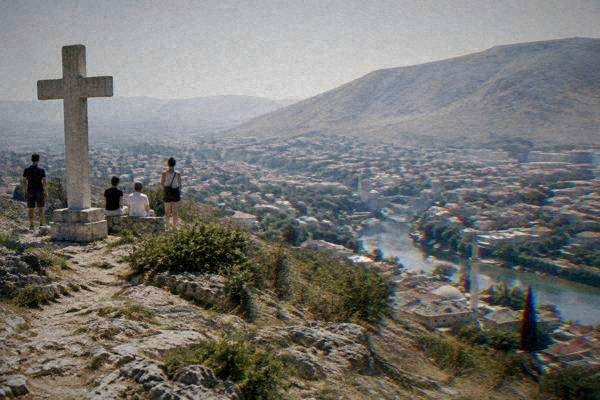
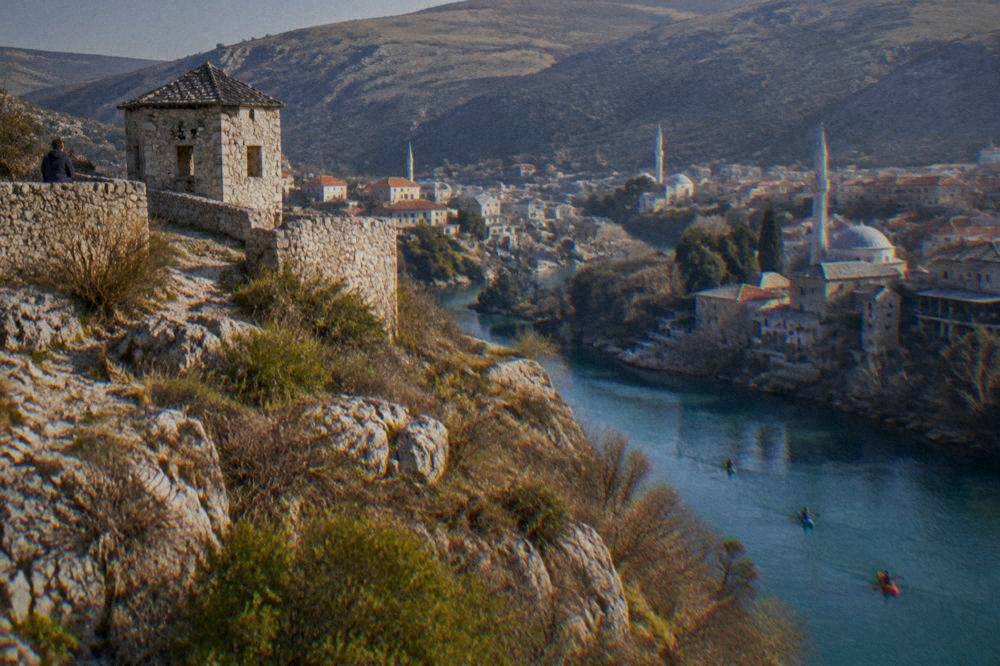
Fortica is the hill plateau that looks straight down on Mostar, the inland city on the Neretva river in Herzegovina, Bosnia and Herzegovina. From the Old Bridge it is the high ground you see behind the western streets, and the whole point of going up is the reversed view: the Ottoman Old Town, the bend of the Neretva and the Herzegovinian hills laid out below. This page from the Mostar Travel Guide covers what the plateau is, how the guided Skywalk and zipline products work, what climbing the Via Ferrata Hum route involves, and how to fit it all into a visit.
What Is Fortica And Where Does It Sit Above Mostar?
Fortica is the developed plateau above Mostar, and it serves as the city's main elevated viewpoint and activity base. The Old Bridge Area of the Old City of Mostar, visible in full from the top, has been a UNESCO World Heritage property since 2005, and Fortica is one of the few places where the whole property and its Neretva bend can be read at a glance.
The hill itself is open ground with no ticket gate at its base.
Hum is the long hill that frames almost every west-facing photograph of the city, topped by a large cross. The Fortica plateau occupies its upper slopes, and over the years it has been fitted out as a recreation spot rather than left as bare hillside: there is a viewing structure, a glass Skywalk section, and zipline infrastructure used by guided operators. Nothing about the hill is fenced off at the bottom, so walkers do climb it under their own steam, but the structured activities on top are sold as products with guides and equipment.
What that means in practice is a division of labour. The view is free to anyone who makes the climb. The Skywalk platform, the zipline runs and the Via Ferrata Hum route are guided experiences, and the safest way to do any of them is through a listed tour rather than by arriving and hoping equipment is available. The site's own featured product for the hill, the Mostar: Skywalk Fortica & Street Art Tour with optional zipline, combines the ride up, viewpoint time and a street art walk in the city below.
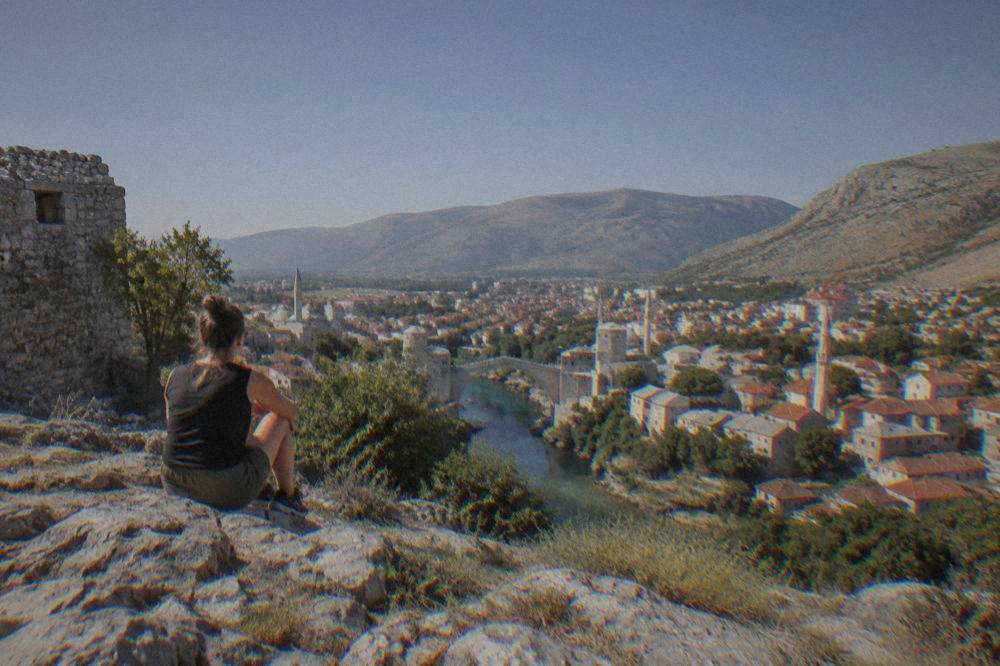
The hill also matters for orientation. Standing on the plateau, the geography of Herzegovina becomes simple: Mostar sits in a valley carved by the Neretva, the Old Town hugging the river, the newer districts climbing the valley sides, and the limestone ridges of the hinterland running off towards Blagaj, Počitelj and the Kravica waterfall country to the south. Anyone planning day trips after a day in the city will find the map in their head is better after an hour on Fortica.
How Do You Get To The Fortica Plateau From Central Mostar?
The Fortica plateau is reached from central Mostar by a winding road, and visitors arrive three ways: on a guided tour vehicle, by their own car or taxi, or on foot along the uphill track from the city below. The Old Bridge Area is compact and walkable, but Fortica is a genuine hill, so the guided option that includes transport is the one that removes all the planning.
The hill's open ground means there is no gate, no queue and no fixed arrival time for walkers.
For anyone weighing the choice, the trade is effort against convenience. Climbing on foot from the Old Town side is free and needs only water, shoes with grip and daylight, but the gain in elevation is real, and in summer the afternoon heat on exposed limestone is the main hazard, not the terrain. The FHMZ Mostar station table, 1961 to 1990, puts the July mean temperature at 24.7 C, and the absolute maximum recorded in July is 41.2 C, so mornings are the sane climbing window.
The tour route is the simplest. The featured Skywalk and street art product picks up in the city, includes the Skywalk visit, and offers the zipline as an optional add-on for those who want it, before returning to street art spots below. Booking is through the operator's live listing:
A useful pattern for a fuller day is to pair the hill with the flat walking morning. Start with the Old Town, the Old Bridge itself, the Kujundžiluk bazaar and the Crooked Bridge, then go up to Fortica when the valley heat builds, since the plateau catches more breeze than the streets below. The things to do in Mostar overview page carries the full sequencing for one, two and three day stays.
What Can You See From The Fortica Skywalk In Mostar?
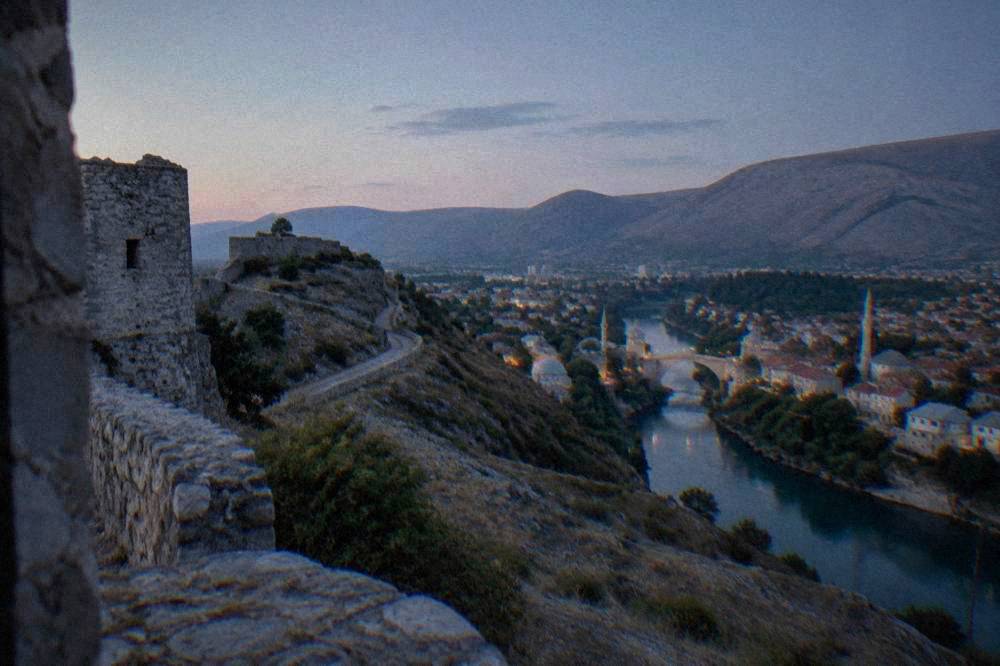
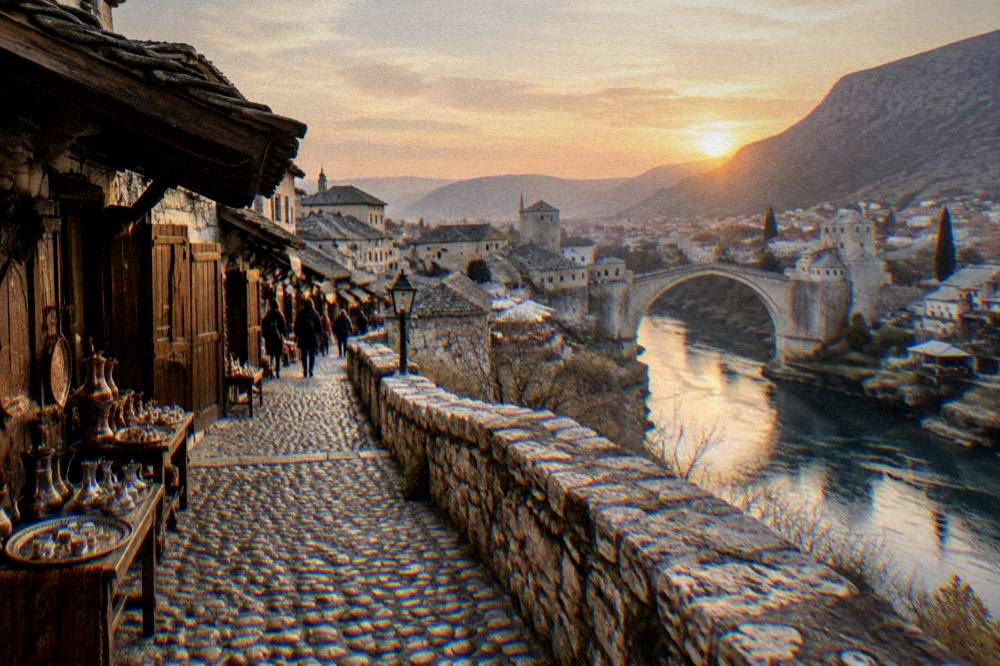
The Skywalk is a glass-floored viewing structure on the Fortica plateau that puts visitors directly over the drop with the whole of Mostar below: the Neretva river's bend, the towers and domes of the Old Town including Stari Most and the minarets around it, the residential districts climbing the valley sides, and the ridgelines of Herzegovina beyond. It is the single best fixed vantage point over the UNESCO inscribed Old Bridge Area, and it is visited on guided tours that include the transport up.
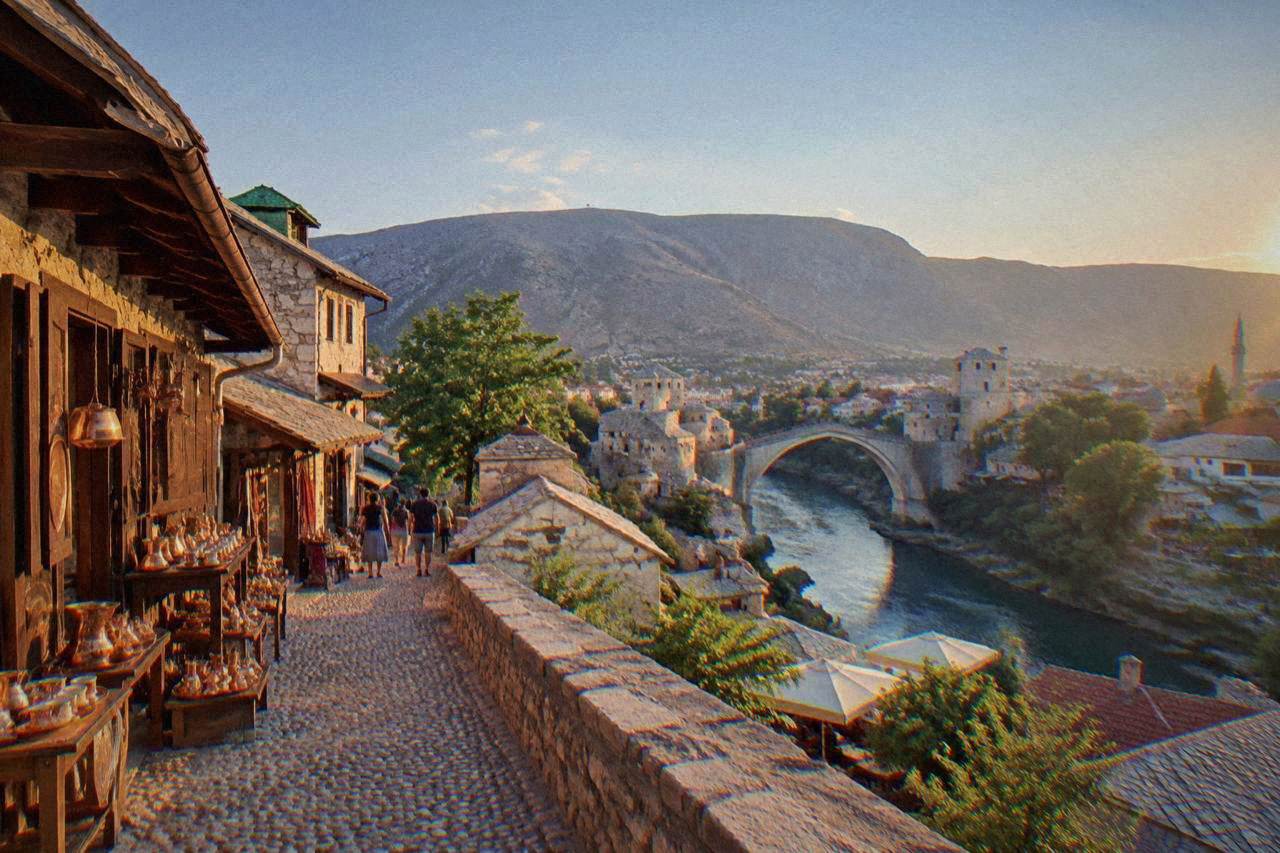
Photographically the plateau rewards the hour either side of sunset, when the limestone goes warm and the river reads dark against it. Looking down, the layout of the Ottoman core is unusually legible from this height: the bridge at the narrowest crossing point, the bazaar street running off it, and the mosque courtyards set back from the water. To the north the Neretva continues towards Jablanica, to the south towards Blagaj and the Buna spring country, and on clear days the line of hills runs all the way to the horizon.
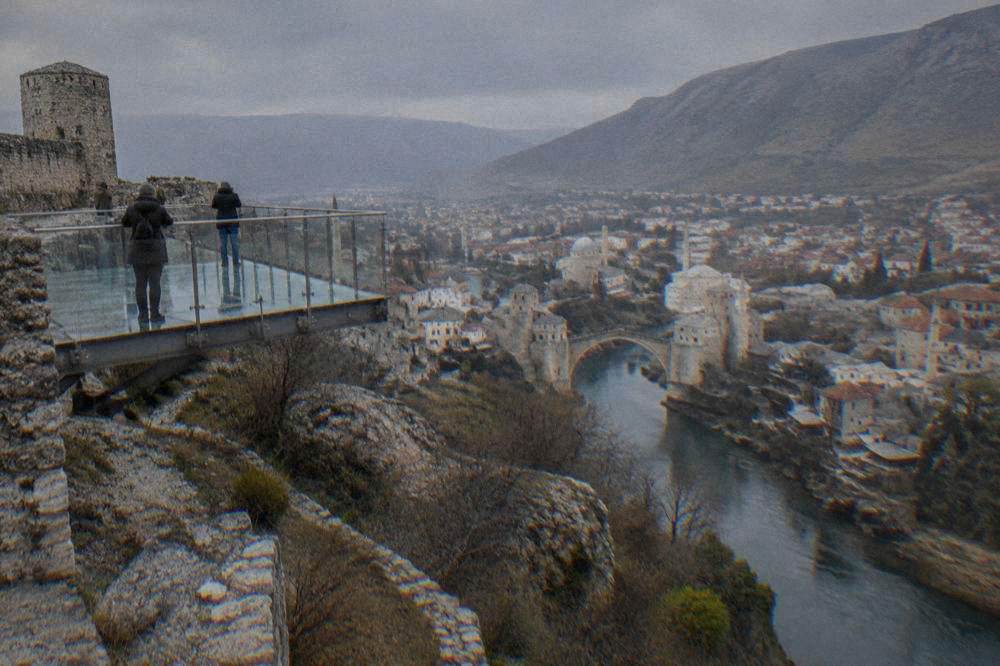
For visitors who want the viewpoint without any self-drive logistics, the guided combo is the efficient answer, and it can be reserved with free cancellation.
One honest note on expectations: the Skywalk is a modern structure on a recreation plateau, not a heritage site. Its value is the view and the photograph, and the view genuinely delivers. Visitors who care mainly about Ottoman interiors should balance the hill with the Koski Mehmed-pašina džamija and the Bišćević House in the valley below.
Is The Fortica Zipline Worth Adding To The Day?
The zipline on Fortica is an optional add-on sold alongside the Skywalk visit, run from the plateau over the hillside with the valley in view, and it suits visitors who want a short adrenaline element rather than a full adventure day. It is operated through the guided products that list it as optional, it needs no prior experience, and booking it in advance through the operator's live listing is the way to guarantee a slot in the busy summer months.
The decision is usually about the shape of the day. A visitor with two nights in Mostar can afford a leisurely morning, an afternoon on the hill, and an evening back in the Old Town, and in that frame the zipline slots in neatly. A visitor on a single packed day may prefer to spend the hill time on photographs and save adrenaline for something else entirely. Herzegovina has no shortage of the latter, as the next sections show.
What the zipline does not require is any special fitness beyond being comfortable with height. The equipment, briefing and launch are handled by the operator's staff, and the ride itself is over the hillside rather than over the town, so the exposure is real but controlled. Families with older children generally find it the easiest introduction to heights the area offers, far easier than committing to a climbing route.
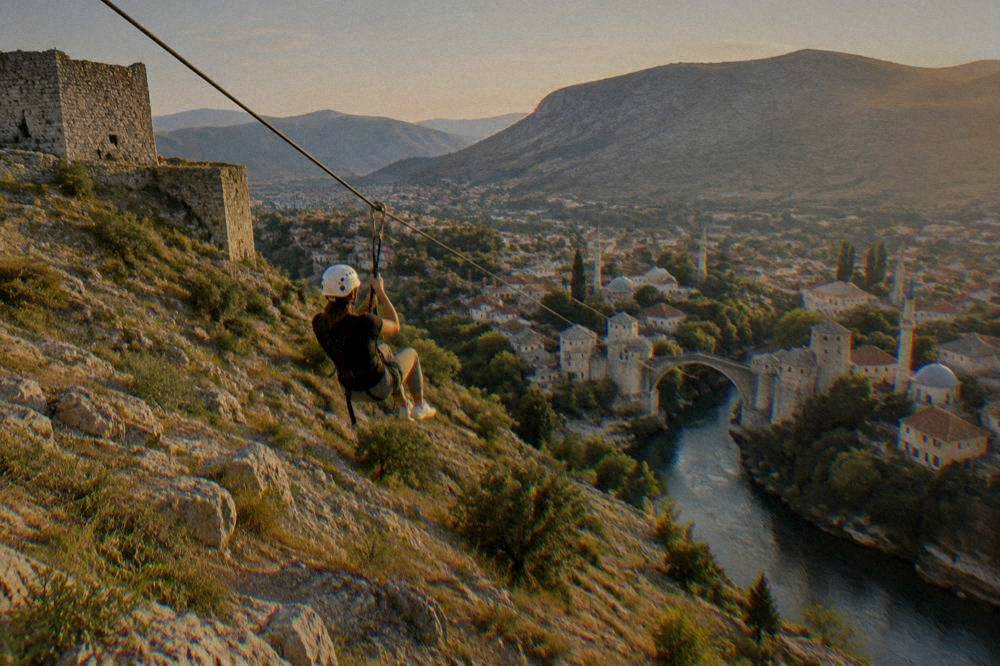
It is also worth being clear about what the zipline is not. It is not the bridge jumping tradition. The dives from Stari Most are performed by members of the Mostari diving club, who train for years before jumping from roughly 21 to 24 metres depending on the river, and there is no pay-to-jump option for untrained visitors. The zipline is the visitor-facing adrenaline product, and a perfectly good one.
What Is The Via Ferrata Hum Climbing Route Like Near Mostar?
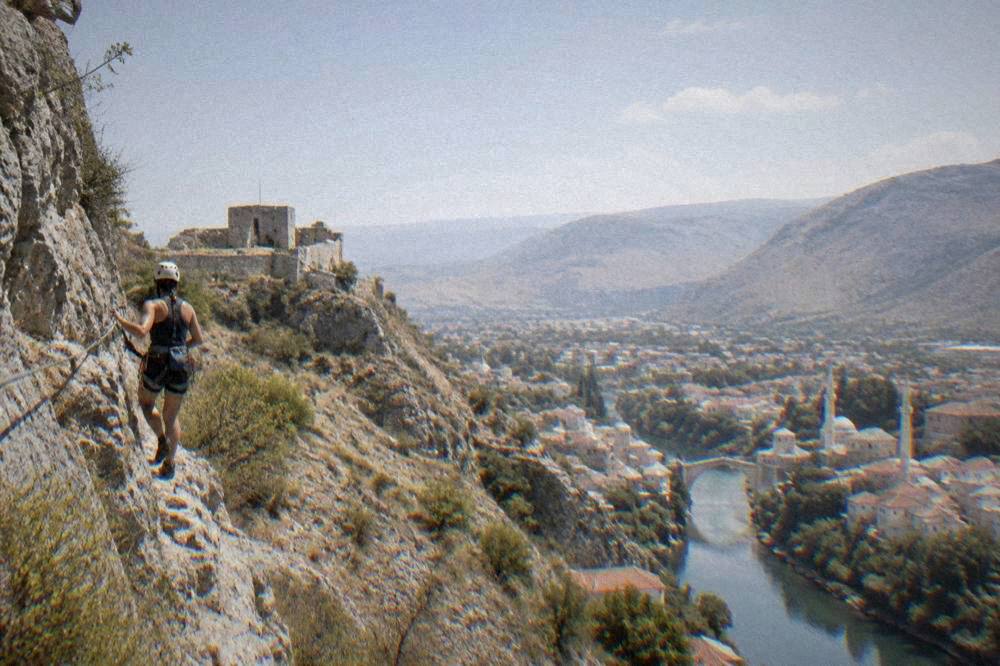
The Via Ferrata Hum climbing experience is a guided, cable-protected route, using fixed steel cables, rungs and harnesses so that climbers without rope skills can move over real limestone terrain. It is sold as a listed product with guide and equipment included, it runs roughly half a day door to door, and it is the most physically demanding of the hill's three visitor activities, sitting a level above both the Skywalk viewpoint and the zipline.
A via ferrata, for anyone who has not done one, is a middle category between hiking and climbing. You wear a harness clipped to a steel cable bolted into the rock, and you climb attached the whole way. The protection is permanent, the guide handles the route and the pacing, and the physical demand is genuine: arms, legs and grip all get used. Hum's route fits the profile of a first-time ferrata, but fitness and a head for exposure still matter.
The reward is the same ridge from the inside rather than from a platform. The route's view angles shift as you climb, the drop opens up, and the city appears in slices between rock bands. For visitors whose main memory of Mostar risks becoming one crowded bridge photograph, a ferrata morning is the strongest available antidote, and it happens on the same hill you were photographing the day before.
Practical preparation is simple: sturdy shoes, water, and clothing that allows movement. The same summer heat logic applies as everywhere in the Herzegovina valley, with the ERA5 reanalysis for 1991 to 2020 putting modelled July mean daily highs at 29.9 C and August at 30.5 C for the Mostar grid cell, so morning starts are the standard. Confirm the meeting arrangement and any age or fitness requirements on the live listing before booking, since the operator sets those terms.
Which Other Active Tours Start From Mostar?
Beyond the hill, Mostar's active options centre on the Neretva river and the Herzegovinan karst, and the two strongest complements to a Fortica day are a kayak safari on the Neretva and the classic guided day trips to Blagaj, Počitelj and the Kravica waterfall. The kayak safari runs from the city itself, the day trips fan out 14 to 55 km down the valley by road, and all of them are booked products whose prices and times render on their listings rather than on this page.
The river is the natural companion to the ridge. The Neretva is karst-fed and stays cold even in August, which makes a paddling morning a rational pairing with an afternoon on hot limestone. The listed kayak safari covers the river from the water level, with equipment and guide included, and it is bookable here:
| Destination from Stari Most | Road km | About (min) |
|---|---|---|
| Blagaj Tekke | 13.7 | 19 |
| Međugorje (St James church) | 28.3 | 40 |
| Počitelj | 30.0 | 31 |
| Jablanica | 47.4 | 57 |
| Hutovo blato | 48.1 | 62 |
| Kravica waterfall | 55.2 | 54 |
| Konjic | 69.0 | 80 |
| Trebinje | 116.5 | 142 |
Two comparisons help frame the choice. The Kravica waterfall is 55.2 km and about 54 minutes by road from Stari Most, not the fifteen minutes some summaries imply, and its park entry is 20 KM for an adult all year, per the park's own visitor page, with children under 7 free and hours running from 07:00 to 22:00 in the June to September window. The Boračko jezero lake district near Konjic is 89.9 km away and a different, quieter day again.
When Is The Best Time Of Year To Visit Fortica In Mostar?
The best window for Fortica is late spring through early autumn, with May, June and September offering the most comfortable balance of long daylight, warm valley temperatures and manageable heat on the exposed plateau, according to the FHMZ Mostar station table for 1961 to 1990 and the ERA5 reanalysis for 1991 to 2020. July and August bring the biggest crowds below and the strongest afternoon heat, making early starts the standard, while winter clears the hill of people but shortens the days.
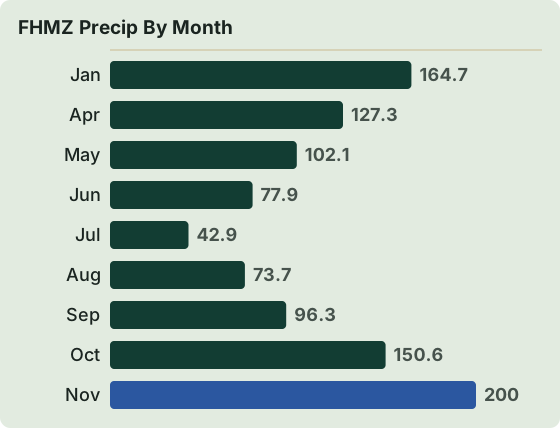
The station numbers tell the story plainly. The FHMZ table, 1961 to 1990, gives Mostar a July mean of 24.7 C against a January mean of 4.8 C, with an absolute maximum of 41.2 C recorded in July. The reanalysis adds modelled daily highs: 29.9 C in July and 30.5 C in August, against 8.4 C in January. Rain runs to a winter maximum, with November averaging 200.0 mm against July's 42.9 mm, so summer is both the warmest and the driest stretch.
| Month | FHMZ mean temp C (1961-1990) | ERA5 modelled daily high C (1991-2020) | FHMZ precip mm |
|---|---|---|---|
| Jan | 4.8 | 8.4 | 164.7 |
| Apr | 13.3 | 17.7 | 127.3 |
| May | 17.9 | 22.3 | 102.1 |
| Jun | 21.5 | 26.8 | 77.9 |
| Jul | 24.7 | 29.9 | 42.9 |
| Aug | 24.2 | 30.5 | 73.7 |
| Sep | 20.4 | 24.5 | 96.3 |
| Oct | 15.3 | 19.5 | 150.6 |
| Nov | 10.1 | 14.1 | 200.0 |
Two seasonal notes earn their space. First, the zipline and ferrata products run on the operator's calendars, so availability in the shoulder months is a booking question rather than a weather fact; check the live listing. Second, summer in the city also brings the events season: in 2026 Mostarsko ljeto ran 25 June to 7 August, the traditional Old Bridge diving competition held its 460th edition on 26 July 2026, and the Red Bull Cliff Diving round ran 30 July to 1 August 2026, so late July pairs a hill sunset with the year's loudest weekend below.
What Else To Combine With Fortica Around Mostar?
The strongest combinations put Fortica opposite a flat half day, either the free Old Town circuit of Stari Most, Kujundžiluk and Kriva ćuprija in the morning, or a guided sight south of the city in the afternoon, with the hill used as the heat-of-the-day or sunset slot. The Old Bridge crossing and the bazaar streets are public and free at any hour, the Muslibegović House charges about 8 KM, and the whole valley circuit between the hill and the river fits inside a single full day.
The free core is genuinely free. Crossing Stari Most, browsing Kujundžiluk and finding the Crooked Bridge cost nothing, and together they make the morning that Fortica then overlooks. Add the Spanish Square and the Hum hill approach roads and the city's full spread is covered between two halves of one day.
For paid sights inside the city, here is what the current figures support:
| Sight in central Mostar | Admission | Notes |
|---|---|---|
| Stari Most | Free | Public crossing, open at all hours |
| Kujundžiluk bazaar | Free | Public street |
| Muslibegović House | About 8 KM | Ottoman house museum |
| Bišćević House | About 4 KM | Ottoman house museum |
| Partisan Memorial Cemetery | No ticket | Unstaffed; condition flagged by Europa Nostra |
Confirm current hours and fees on arrival for the house museums, since their figures move between seasons. A deeper history day can continue with the Mostar walking tour products or the museums under the Old Bridge towers, and the Museum of the Old Bridge rounds out the bridge story after you have seen it from above.
One more combination worth naming: Fortica plus a Herzegovina day trip makes a natural two-day pattern, with the hill and the Old Town on day one and Blagaj, Počitelj and Kravica on day two. The guided combos listed through this page bundle those valleys with transport and a guide, which matters for visitors without a car, since Bosnia and Herzegovina is outside the EU and Schengen and any Croatia extension, most often to Dubrovnik, 145.5 km and about 150 minutes away by road, crosses a border with full checks.
Common Questions About Fortica In Mostar
Is Fortica in Mostar free to visit?
The hillside and plateau are open ground with no ticket gate at the base, so climbing on foot costs nothing. The Skywalk structure, the zipline and the Via Ferrata Hum route are guided products sold through their listings, and their prices render on those listings.
How do you get to the Fortica Skywalk from the Mostar Old Town?
Three ways: a guided tour vehicle that includes the transport, your own car or a taxi up the winding road, or on foot along the uphill track from the city. Guided tours are the option that removes all the logistics.
Can you zipline at Fortica in Mostar?
Yes, the zipline is offered as an optional add-on with the guided Skywalk products on the plateau. No prior experience is needed, and slots are best reserved in advance through the operator's live listing in summer.
Is the Via Ferrata Hum route suitable for beginners?
It is sold as a guided product with equipment and guide included, built on fixed cables, and it suits fit first-timers comfortable with exposure. Confirm any age or fitness requirements on the live listing before booking.
When is the best time of day for Fortica?
Morning for climbing heat, and the hour around sunset for photography. The FHMZ station table puts the July mean at 24.7 C with an absolute maximum of 41.2 C, so exposed afternoon limestone in midsummer is the one window to avoid.
Can you jump off the Old Bridge instead?
No. The bridge dives are performed by members of the Mostari diving club, who train for years, from about 21 to 24 metres depending on the river. There is no pay-to-jump option for visitors; the zipline on Fortica is the visitor-facing adrenaline product.