Jablanica: The Broken Bridge On The Neretva
Jablanica sits 47.4 km north of Mostar on the Neretva, where a destroyed bridge still stands in the river as a monument, with a museum, a lake and a kayak route nearby.
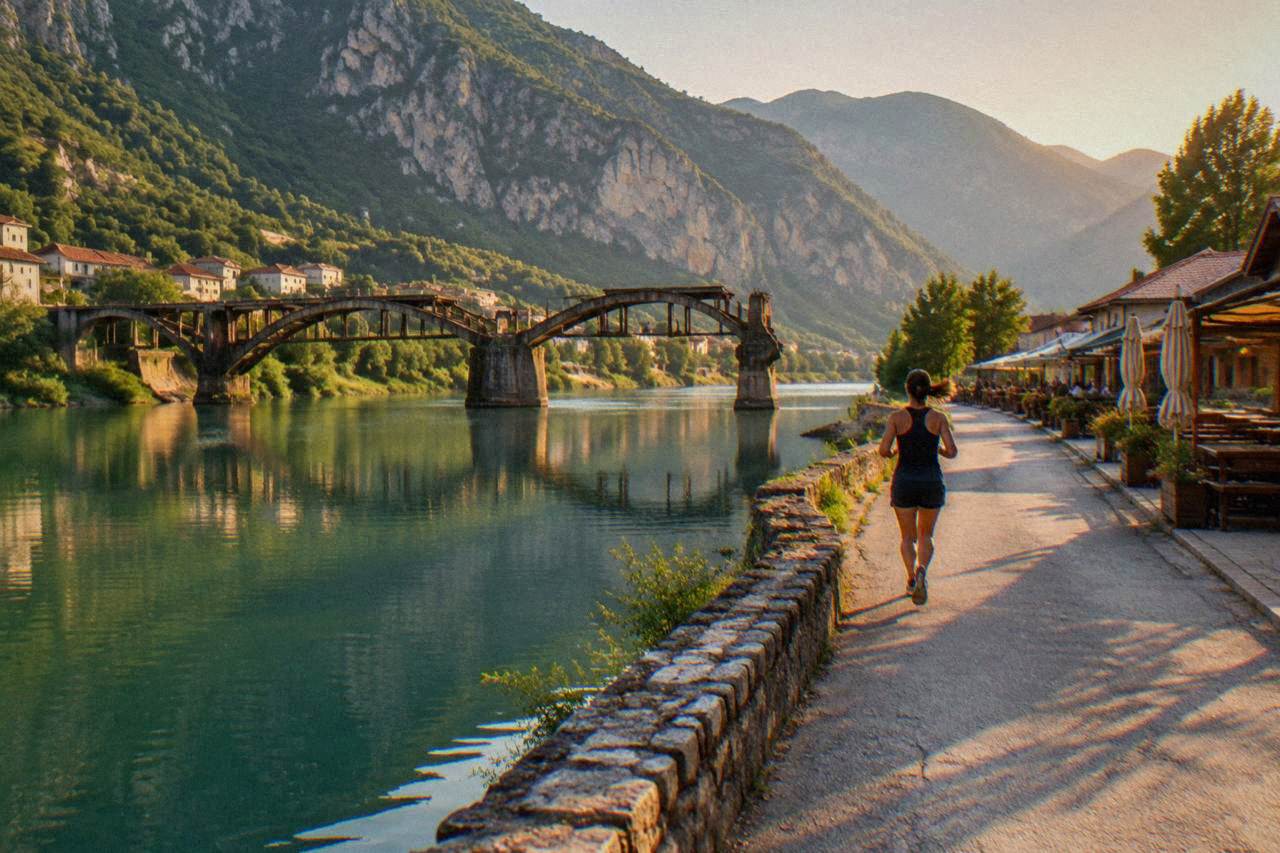
Jablanica is about 57 minutes by road from Stari Most in Mostar, Herzegovina. The broken bridge over the Neretva is free to view at any hour, the Museum of the Battle for the Wounded on the Neretva charges a few KM, and the town pairs naturally with Konjic and Boračko jezero on a loop north.
Halfway between Mostar and Konjic, the Neretva narrows into a canyon and runs under a bridge that has not carried traffic since the Second World War. This is Jablanica, a small town in Herzegovina, in Bosnia and Herzegovina, 47.4 km north of Stari Most by road, and its broken iron arches are among the most photographed river scenes in the country. Day-trippers from Mostar come for the view from the bank, stay for the museum that explains it, and increasingly take to the water itself, because the Neretva here runs through a canyon that kayak tours run out of Mostar. This guide sets out what is at the site, how to get there, what it costs and how to fold it into a wider loop through northern Herzegovina.
What Is The Jablanica Bridge And Why Is It Broken?
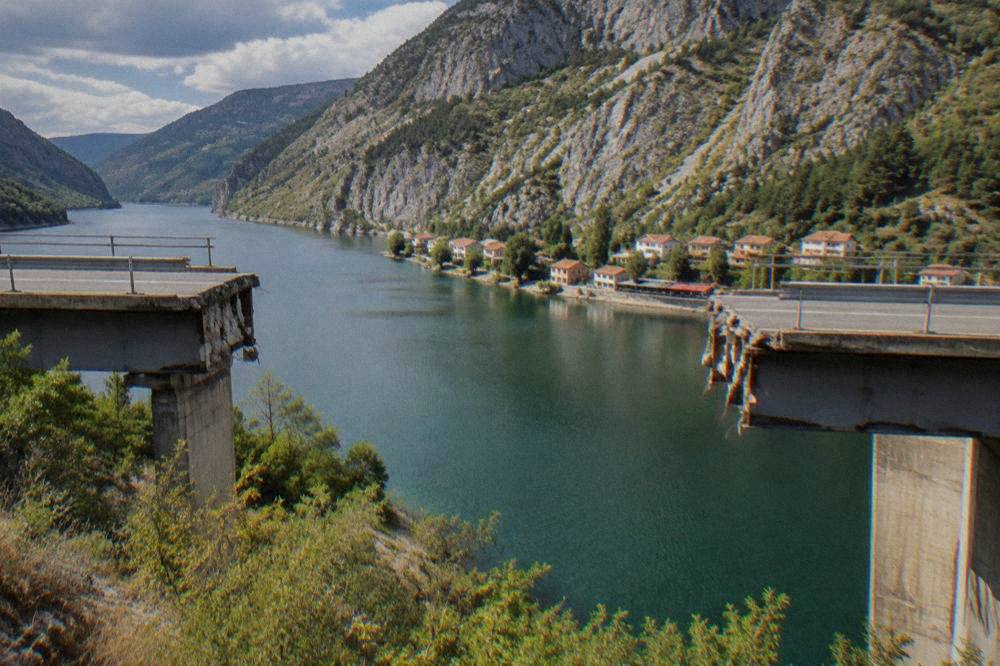
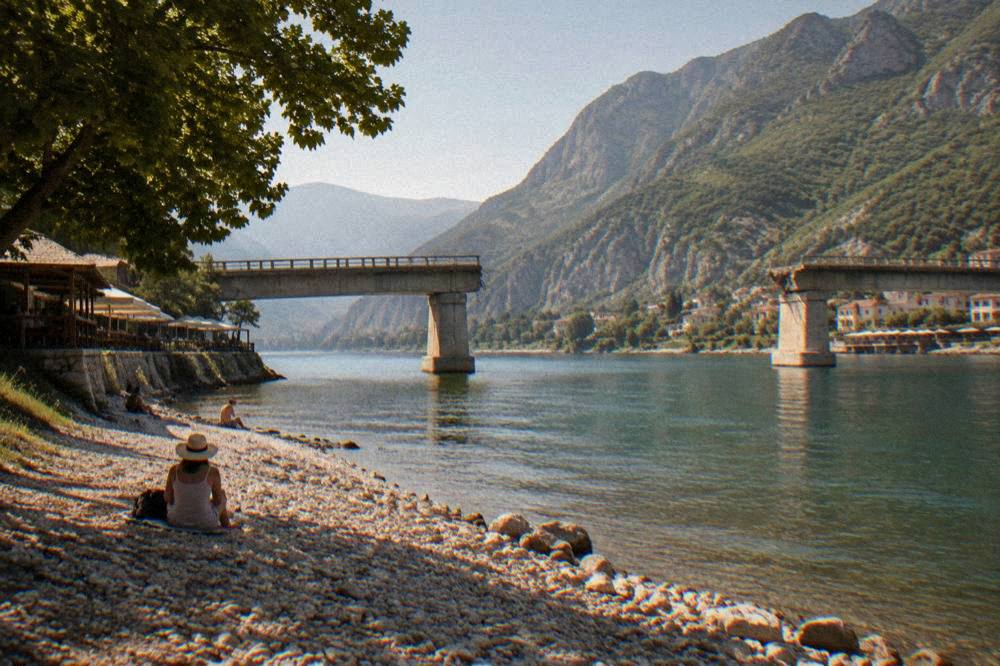
The Jablanica bridge is a destroyed steel road bridge over the Neretva, whose broken arches still stand mid-river as a permanent monument, and its story belongs to the Second World War rather than to the war that damaged Mostar itself. The structure was put out of use during the Battle of the Neretva, the campaign that gave the museum above the town its name, when Partisan forces destroyed their own crossing to slow the Axis offensive pushing them against the river. The twisted spans were never removed and never rebuilt. Today the site is a protected memorial, free to view from the banks at any hour, and the town around it grew on the strength of the river, the railway and later an aluminium industry and hydroelectric dam.
The bridge is not a ruin in the neglected sense. It is deliberately preserved, and the broken profile against the canyon wall is the point: the structure reads as a monument exactly because it stops in the middle of the air. The Neretva below runs the deep green that characterises the whole river, fed by karst springs that keep it cold even in August. Visitors view the bridge from the road bank and from the river pebbles below, and there is no ticket, fence or gate for the outdoor site itself.
The indoor counterpart is the Museum of the Battle for the Wounded on the Neretva, on the hillside above the bridge, and its exhibitions walk through the campaign with maps, photographs and personal objects. The official museum page prints hours that run seasonally: from April to October it opens 08:00 to 18:00 on weekdays and 10:00 to 18:00 on weekends, and from November to March 08:00 to 16:00 on weekdays. Admission is a few KM; confirm the current figure at the desk.
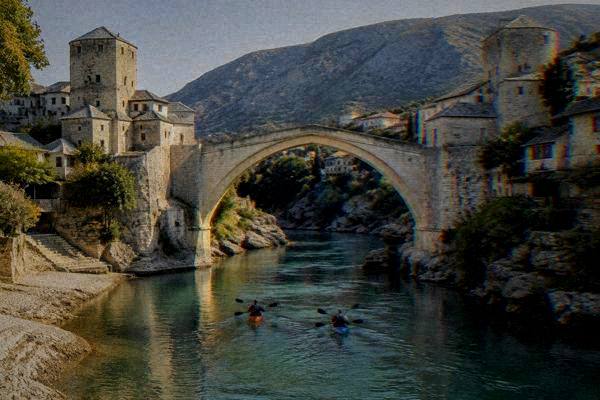
Readers who know Mostar's own Old Bridge story should keep the two events separate. Stari Most was destroyed on 9 November 1993 and rebuilt, reopening in July 2004. The Jablanica bridge belongs to an earlier war entirely, and its destroyed state is the memorial, not a wound awaiting reconstruction. That distinction shapes the whole visit: at Stari Most you stand on a reconstruction and read about a loss, while at Jablanica you stand opposite the loss itself, preserved on purpose.
How Far Is Jablanica From Mostar And How Do You Get There?
Jablanica is 47.4 km by road from Stari Most in Mostar, about 57 minutes of free-flow driving north on the M17 along the Neretva, and the same corridor carries the railway line that runs between Sarajevo and Mostar. The road is the main artery of the Neretva valley: it leaves Mostar, passes through the gorge sections near Bijelo Polje, and follows the river almost the whole way, so the drive itself is part of the excursion. These are computed free-flow times, with no allowance for the roadworks that periodically affect the corridor, so add buffer in busy months.
Public transport exists but is thin. The Sarajevo to Mostar railway was suspended in early September 2026 after a fire along the corridor near Konjic and regular service resumed on 15 October 2026, with two trains a day each way between Sarajevo and Čapljina via Mostar; check the timetable for the day you travel, because the Jablanica station sits on this line. Buses between Mostar and Sarajevo also use the M17 and stop at Jablanica. For timing freedom, a hired car or a booked tour is the practical choice, and the Sarajevo to Mostar guide covers the corridor in detail for anyone planning the full route.
What Else Is There To See Around Jablanica?
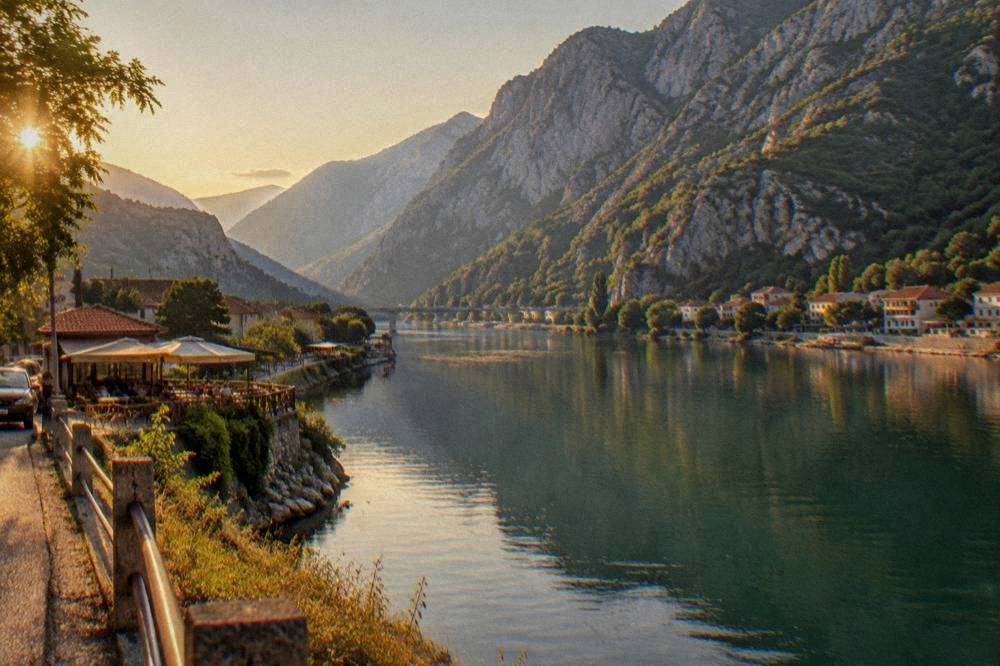
Beyond the broken bridge and the museum, Jablanica offers the shores of its artificial lake, the pebble banks of the Neretva, and a cluster of memorials on the surrounding hillsides, all within a short drive of the town centre and none of them ticketed. The dam that created Jablanica lake sits at the north end of town, and the reservoir stretches back upstream toward the canyon. It is a quiet landscape rather than a curated attraction: swimming spots, viewpoints and walking tracks exist, with none of the ticketing or signage infrastructure of a formal park. The lake water, like the river, stays cold.
For a fuller day, Jablanica works as the hinge of a northern loop.
| Stop | Road distance from Stari Most | Free-flow time |
|---|---|---|
| Jablanica broken bridge | 47.4 km | about 57 min |
| Konjic old town | 69.0 km | about 80 min |
| Boračko jezero | 89.9 km | about 113 min |
| Počitelj | 30.0 km | about 31 min |
| Hutovo blato | 48.1 km | about 62 min |
Two natural pairings stand out. Konjic, further up the same road, holds an Ottoman old town and its own celebrated bridge over the Neretva, plus the ARK D-0 bunker, which charges about 40 KM for foreign visitors, requires advance booking and closes on Mondays; our Konjic day-trip guide covers it in full. Boračko jezero, a mountain lake above Konjic at 89.9 km from Mostar, adds a cooler, alpine register to the same drive. Going the other way, Počitelj and Hutovo blato sit south of Mostar and belong to a different day, as does the quiet Žitomišići Monastery on the western side of the valley.
The Neretva between Mostar and Jablanica is also the corridor used by Neretva rafting operators running out of the Mostar end of the valley, so adrenaline options are not limited to the flat water at the bridge.
Can You Kayak The Neretva Canyon Near Jablanica?
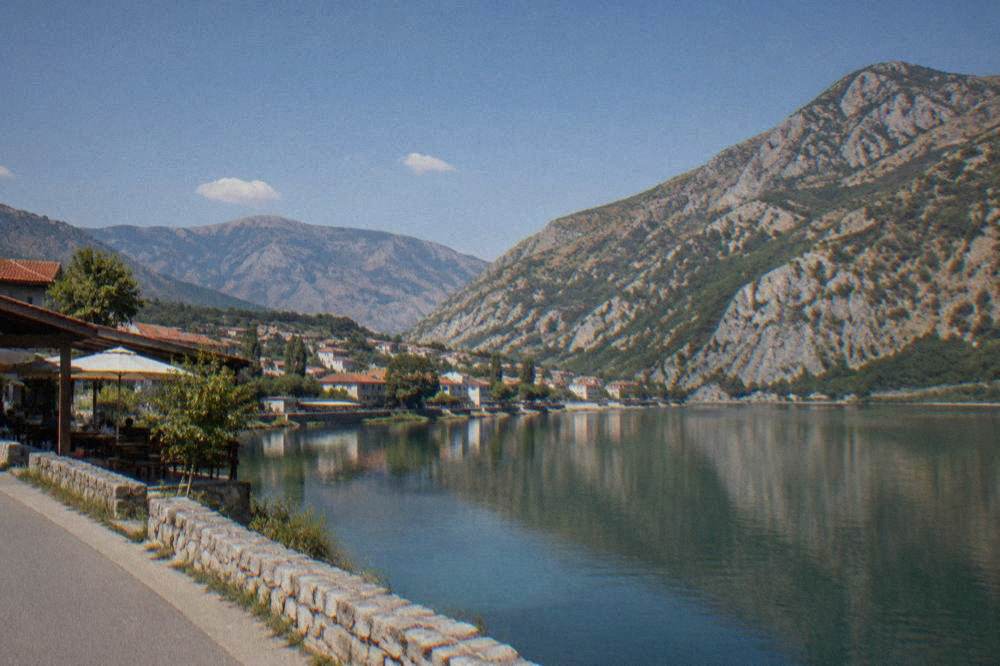
Yes, the Neretva canyon between Jablanica and Mostar is an established kayaking stretch, run as a guided tour out of Mostar with equipment and instruction included and no experience assumed. The river alternates calm green sections with short canyon passages, and the water is cold year-round because the flow is karst-fed, so expect a wetsuit or at minimum quick-drying clothing. Tours handle the logistics, which matters here because rental infrastructure in Jablanica itself is thin. Guides also read the water, which shifts with dam releases upstream.
The featured operator on this site runs a canyon kayaking tour with a live guide, and the listing covers all gear.
You can also Check availability directly on the operator's live listing before committing to a date, since water levels and weather shift the plan.
Independent paddling is possible but demands preparation. There is no shuttle service along the M17 riverbank, no hire kiosk at the broken bridge, and no lifeguard presence anywhere on the free-flowing Neretva. Anyone bringing their own boat should plan two vehicles or a taxi return, and should treat the river with respect: cold water, current and limited access points are the reality, not hazards invented by cautious guidebooks.
When Is The Best Time Of Year To Visit Jablanica From Mostar?
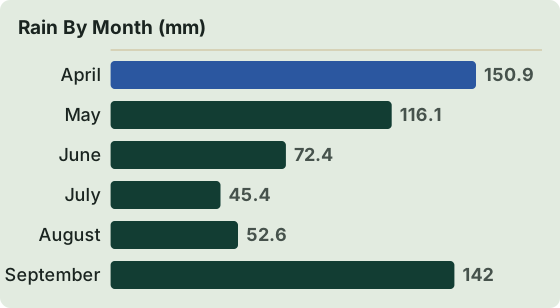
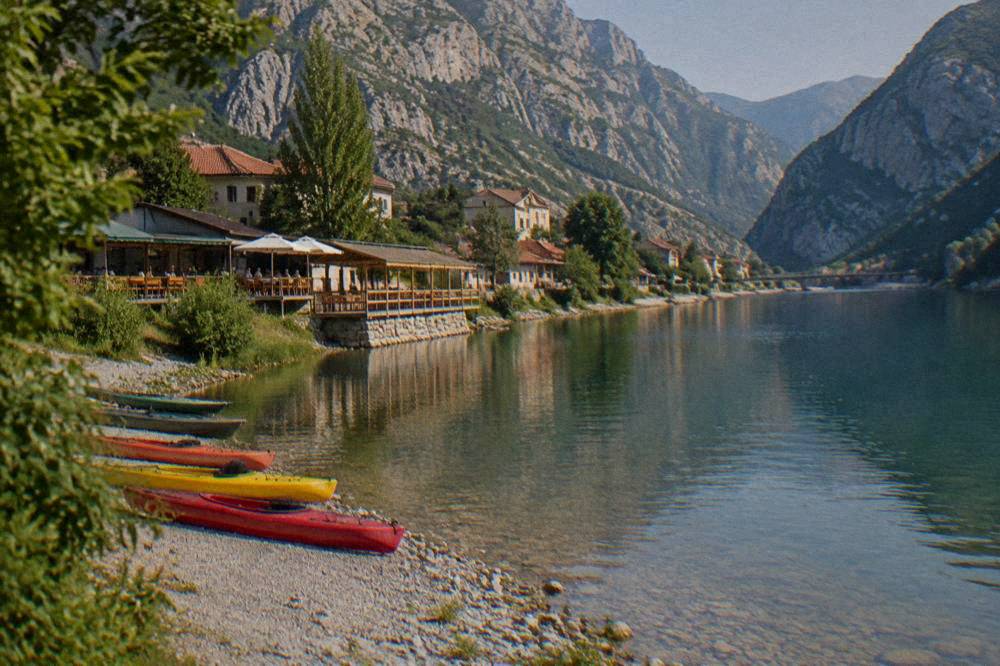
Late spring to early autumn is the practical window for a Jablanica trip: modelled daily highs run from 22.3 C in May to 30.5 C in August in the Mostar valley (ERA5 reanalysis, 1991 to 2020), and winter brings short days, cold mornings and reduced museum hours. The museum's weekend hours tighten in the November to March period and weekday opening shortens, which matters if the indoor exhibition is part of your plan. The river bank is pleasant in every season, but kayaking realistically belongs to the warmer half of the year.
| Month | Modelled mean daily high (ERA5, 1991 to 2020) | Modelled mean daily low | Rain |
|---|---|---|---|
| April | 17.7 C | 7.0 C | 150.9 mm |
| May | 22.3 C | 11.4 C | 116.1 mm |
| June | 26.8 C | 15.3 C | 72.4 mm |
| July | 29.9 C | 17.7 C | 45.4 mm |
| August | 30.5 C | 18.1 C | 52.6 mm |
| September | 24.5 C | 14.0 C | 142.0 mm |
The FHMZ Mostar station table for 1961 to 1990 adds the station-record perspective: July averages 24.7 C as a monthly mean with an absolute recorded maximum of 41.2 C, and rainfall is strongly seasonal, with November at 200.0 mm against July's 42.9 mm. Autumn, in other words, is rainier than the guidebook image of Herzegovina suggests, and a September or October visitor should pack for showers even on a day that starts clear in Mostar. Winter visits are perfectly feasible for the bridge itself, which stands in the river whatever the weather.
How Much Does A Jablanica Day Trip Cost?
The outdoor broken bridge site is free, the museum charges a few KM at the desk, and the two big variables are transport and whether you add the kayak tour, so a self-drive day can be run on fuel and one small admission while a guided day costs the tour price plus lunch. Bosnia and Herzegovina uses the convertible mark (KM, BAM), pegged at 1 EUR = 1.95583 KM, and euro cash is often accepted in tourist areas at a rounded rate, though carrying KM is the better value. Cards are fine at larger restaurants and the museum; keep cash for small vendors along the valley road.
| Item | Figure | Notes |
|---|---|---|
| Broken bridge site | Free | Outdoor memorial, open at any hour |
| Museum of the Battle for the Wounded | A few KM | Confirm the current ticket at the desk |
| ARK D-0 bunker (Konjic extension) | about 40 KM, foreign visitors | Booking required, closed Monday |
| Počitelj village (southern add-on) | Free | Optional small fees at interior sites |
| Tourist tax (Herzegovina-Neretva Canton) | Reported at 3 KM per person per night | Confirm at booking |
One planning note for overnighters: the canton's tourist tax is reported at 3 KM per person per night from 1 January 2026, and accommodation should state it clearly at booking. Day visitors from Mostar are not affected. Budget restaurant meals along the Neretva are inexpensive by regional standards, and the valley between Mostar and Jablanica is lined with riverside trout establishments; specifics change often enough that asking locally beats any list.
How Do You Combine Jablanica With Konjic And Boračko Jezero In One Day?
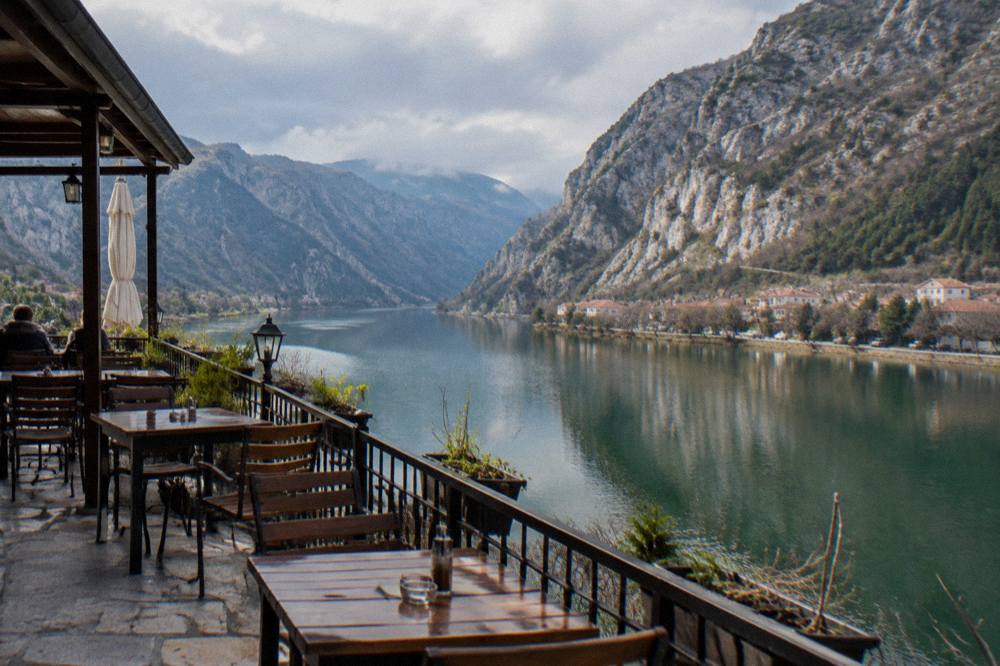
A same-day loop of Jablanica, Konjic and Boračko jezero is realistic: Jablanica sits at 47.4 km and about 57 minutes from Mostar, Konjic at 69.0 km and about 80 minutes, and Boračko jezero at 89.9 km and about 113 minutes, all computed free-flow on the same northern corridor. The classic order is Mostar to Jablanica first, then the drive north to Konjic for lunch and its old bridge, then the climb to the lake, returning on the same road in the evening. Allow a full day, roughly nine hours door to door at an unhurried pace.
The shape of the day depends on the ARK D-0 bunker. Because bunker tours require advance booking and the site closes on Mondays, a bunker day fixes itself around a pre-booked time slot, and the rest of the loop flexes around it. Without the bunker, the day is loose: the broken bridge and museum in Jablanica take a relaxed morning, Konjic's old town rewards an unhurried lunch stop, and the lake is a late-afternoon swim or viewpoint. Our two-day Mostar itinerary shows where such a loop fits if Mostar itself only has a weekend.
Two cautions apply to the rural sections. First, suspected mine areas persist in parts of rural Herzegovina: stay on marked paths and paved or well-used tracks, and take local signage seriously. Second, driving times above exclude the roadworks that periodically affect the M17 corridor, where motorway construction around Mostar continues; add buffer time in peak months. Emergency numbers country-wide are 112 for general use, 122 police, 123 fire and 124 ambulance.
What Should You Know Before Driving The Neretva Valley Road?
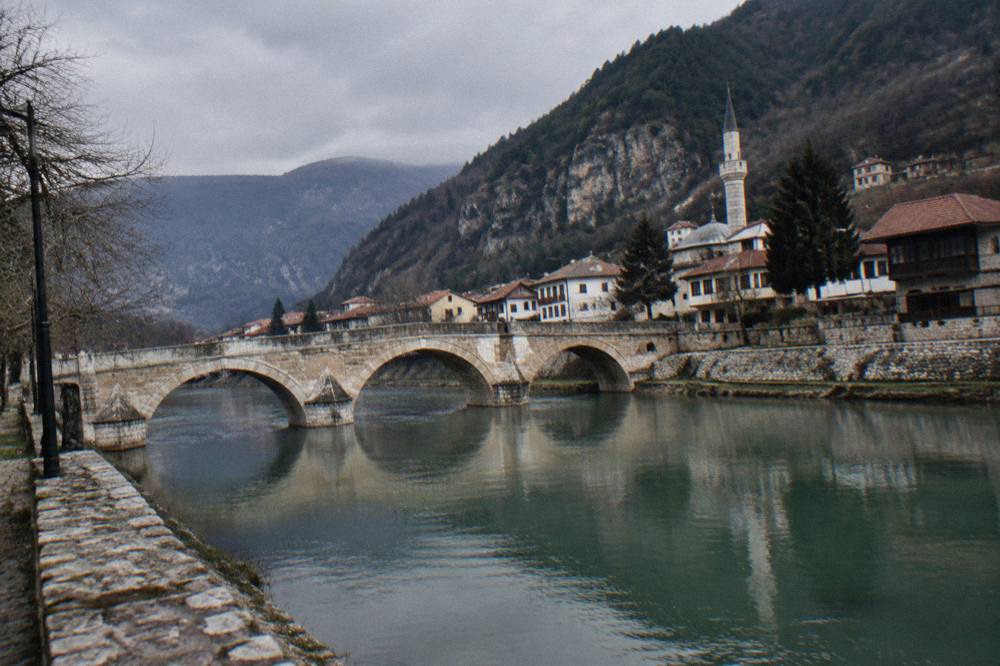
The M17 between Mostar and Jablanica is a well-surfaced main road that hugs the river through a canyon, and it demands attention rather than courage: keep fuel topped up in Mostar, carry cash for small stops, and expect the light to change fast as the road turns through the gorge. Traffic is light to moderate outside peak weekends, and heavy vehicles use the corridor because it is the main freight route between the coast and Sarajevo. Overtaking space appears on the straighter valley sections and disappears in the gorges, so patience is the faster strategy.
Fuel stations exist in Mostar and again in Jablanica town, but the intervening gorge stretch runs long without services, so a full tank from Mostar covers the whole loop comfortably. Phone signal dips in the deeper canyon sections. In rain, the canyon walls shed water onto the road and the temperature drops several degrees from the Mostar valley, so a jacket belongs in the car even on a day that feels like summer at Kujundžiluk. Parking in Jablanica near the bridge is informal and found on the spot; arrive before midday in high summer for the closest spots.
The road is also the reason the railway is worth a second look. The Sarajevo to Mostar line reopened on 15 October 2026 and runs two trains a day each way, and the track shadows the road through the same canyon, so a rail-and-hike combination, taking the train up and walking the river bank at the Jablanica end, is a genuinely pleasant way to visit without a car.
Common Questions About Jablanica And The Broken Bridge
How far is Jablanica from Mostar?
Jablanica is 47.4 km by road from Stari Most, about 57 minutes of free-flow driving north along the Neretva on the M17. The railway on the same corridor resumed regular Sarajevo to Mostar service on 15 October 2026, and buses between Mostar and Sarajevo also serve the town.
Does it cost anything to see the broken bridge at Jablanica?
No. The broken bridge stands in the Neretva as an outdoor memorial and is free to view from the banks at any hour, with no ticket or gate. The Museum of the Battle for the Wounded on the hillside above charges a few KM; confirm the current figure at the desk.
Why is the Jablanica bridge broken?
The steel road bridge was put out of use during the Second World War, when Partisan forces destroyed their own crossing to slow the Axis offensive known as the Battle of the Neretva. The spans were never rebuilt or removed, and the ruined structure is preserved deliberately as a monument.
Can you kayak on the Neretva near Jablanica?
Yes. Guided kayaking tours run the canyon stretch from the Mostar end of the valley, with equipment and instruction included. The water is cold year-round because the river is karst-fed, so dress for the water temperature, not the air temperature.
Is Jablanica worth visiting in winter?
The bridge itself stands in the river in every season and the bank is quiet in winter. The museum's hours shorten from November to March, opening 08:00 to 16:00 on weekdays, so check that indoor plans fit the timetable before committing to a cold-day drive.
Can you visit Jablanica and Konjic on the same day?
Yes. Konjic is 69.0 km and about 80 minutes from Mostar on the same M17 corridor, further up the same road beyond Jablanica. Add Boračko jezero above Konjic for a full northern loop of about nine unhurried hours from Mostar.
Jablanica rewards exactly the kind of traveller who likes a story fixed in steel: a bridge that ends mid-air, a museum that explains why, a cold green river running underneath, and a road north that leads on to Konjic and the mountains. Plan the drive, book the museum day around its seasonal hours, and the broken bridge does the rest. More on the wider region sits in our Mostar history guide, and the team at Mostar Travel Guide keeps the valley itineraries current.