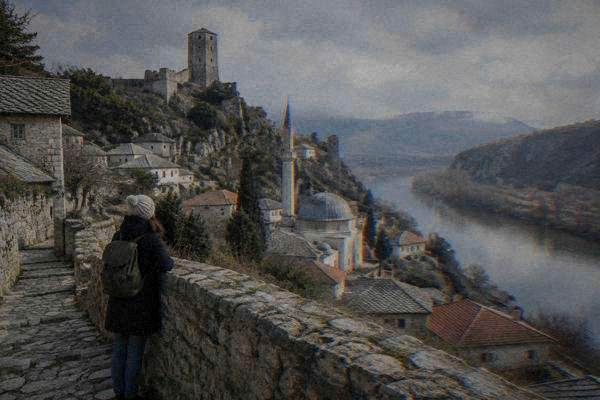
Žitomislići Monastery: The Orthodox Monastery On The Neretva
Žitomislići Monastery is a Serbian Orthodox monastery in the Neretva valley south of Mostar, reached by the same road that continues to Čitluk and Međugorje, and it pairs naturally with Počitelj, Blagaj and Kravica waterfall on a Herzegovina day trip.
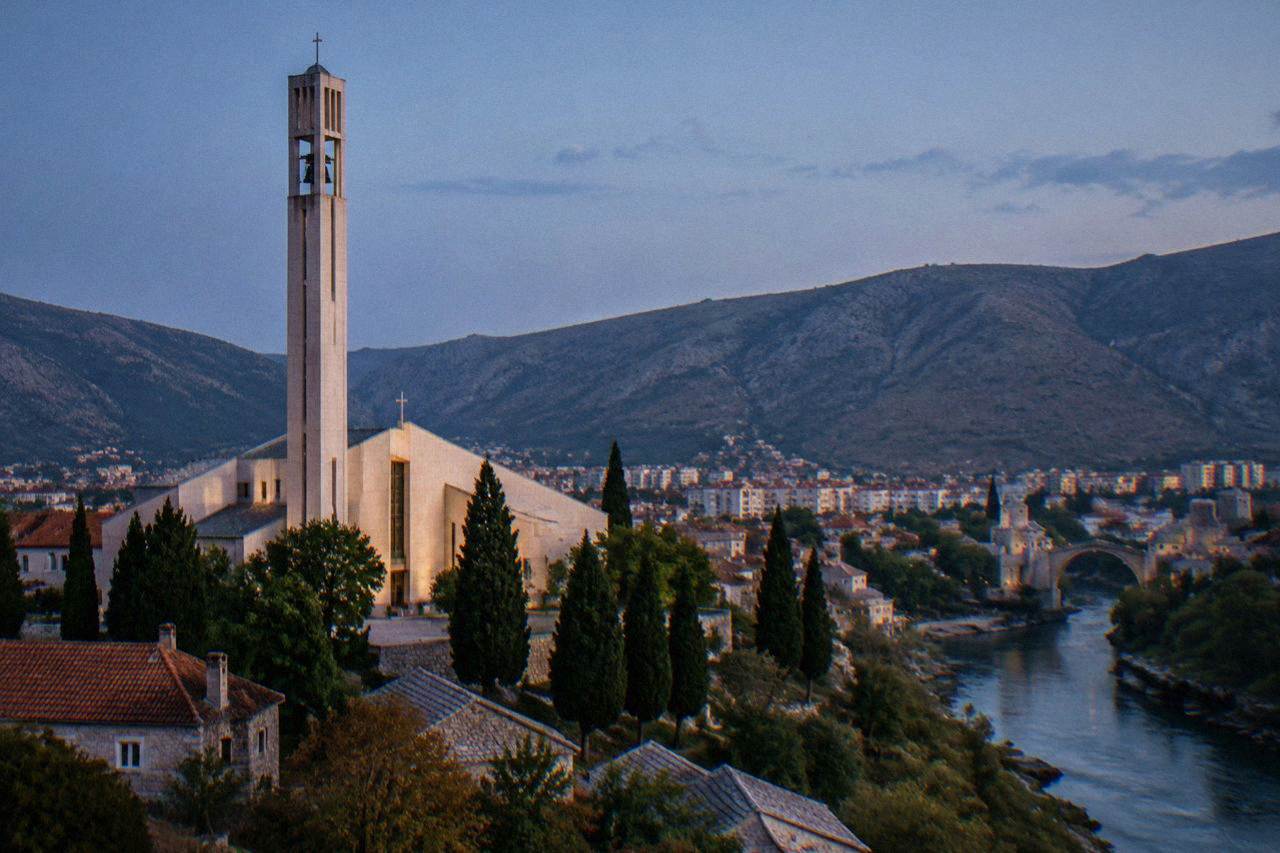
Žitomislići Monastery is a Serbian Orthodox monastery in the Neretva valley south of Mostar, in Herzegovina, Bosnia and Herzegovina. It sits on the route toward Čitluk, 22.9 km and about 31 minutes by road from Stari Most, and Međugorje, 28.3 km and about 40 minutes. Confirm opening arrangements locally before visiting, as no fixed visitor hours or fees are published for it.
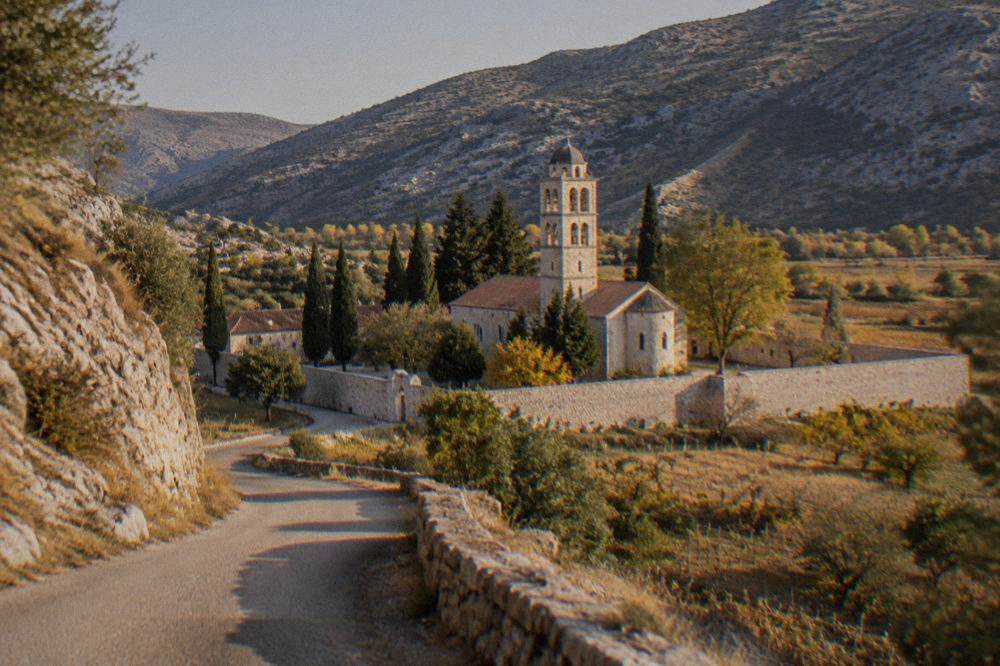
Žitomislići Monastery is a Serbian Orthodox monastery in the Neretva valley south of Mostar, in Herzegovina, Bosnia and Herzegovina, an inland city on the Neretva river with no sea coast. The monastery stands in the hill country between the Neretva and the road corridor that runs from Mostar toward Čitluk and Međugorje, and it is usually visited as a quiet stop on a wider circuit of Herzegovina rather than as a destination in itself. The surrounding region is karst: dry limestone ridges, vineyards on the lower slopes, and small settlements threaded along the river valleys. This page on Mostar Travel Guide sets out what a visit involves, how to fold the monastery into a day trip from Mostar, and what the planning figures for the region around it look like.
What Is Žitomislići Monastery And Why Does It Matter Near Mostar?
Žitomislići is a Serbian Orthodox monastery set in the countryside of the Neretva basin south of Mostar, one of several monastic houses of the Serbian Orthodox Church scattered through Herzegovina, a region better known for its Ottoman old towns and pilgrimage sites. It matters to a Mostar itinerary because it is quiet, walkable in a short stop, and sits directly on the corridor that connects Mostar with Međugorje, 28.3 km and about 40 minutes by road from Stari Most.
The monastery belongs to the Serbian Orthodox tradition, whose presence in Herzegovina runs alongside the region's Catholic and Muslim heritage. Mostar itself is a mixed city, and the wider canton holds Catholic parishes around Čitluk and Međugorje, Orthodox communities toward Stolac and Trebinje, and the Ottoman-era core around Stari Most, the Old Bridge, inscribed with its old city area on the UNESCO World Heritage list in 2005. A day spent moving between these worlds is the clearest way to understand what Herzegovina actually is: a small, densely layered region where a mosque, a Franciscan parish and an Orthodox monastery can sit within a few kilometres of one another.
Practically, Žitomislići functions as a contemplative stop. There is no ticket infrastructure of the kind Kravica waterfall has, where the park's own visitor page lists 20 KM adult entry all year, and there are no fixed visitor hours published for the monastery. A visit is short and unhurried: the church, the grounds, the shade of the trees, and the silence of the karst valley. Dress modestly, as at any functioning monastery or mosque in the region, and keep noise down if a service is in progress.
How Do You Get From Mostar To Žitomislići Monastery?
The monastery is reached by road south of Mostar on the corridor that serves Čitluk, 22.9 km and about 31 minutes of free-flow driving from Stari Most, and Međugorje, 28.3 km and about 40 minutes, with the final approach on local roads through the hills, so a car, a taxi or a guided tour is the realistic way to visit. Regional buses run from Mostar toward Čitluk and Međugorje, but the monastery itself is off the direct bus corridor.
Driving gives the most control. The route leaves Mostar on the main southern road, follows the Neretva basin toward Čitluk, and then branches onto local lanes for the monastery itself. Free-flow times in Herzegovina are only part of the picture in summer, when the road corridor toward Međugorje carries heavy pilgrimage and excursion traffic; build in slack between stops rather than planning back-to-back arrivals. If you are combining Žitomislići with anything else in the region, sequence it geographically rather than bouncing between valleys.
Without a car, the practical answer is a guided day tour. The Herzegovina day tour from Mostar is one option among several in the region, but the monastery's most natural vehicle is a private or small-group Herzegovina circuit, which the featured tour on this page covers: Check availability. That tour runs the classic Blagaj, Počitelj and Kravica waterfall loop, and private versions of Herzegovina circuits can often add a Žitomislići stop on request; ask the operator before booking rather than assuming.
A taxi round trip is a third option: the run to Čitluk is a short, inexpensive taxi ride by regional standards, and agreeing the return with the driver avoids relying on local availability in the hills. Confirm the fare before setting off.
What Do You See At The Monastery And How Long Does A Visit Take?
A visit to Žitomislići takes a short, unhurried stop, typically a fraction of an hour walking the walled grounds and the church, with no published ticket or fixed opening hours to plan around, which makes it flexible: it slots between two bigger stops, such as Blagaj Tekke, 13.7 km and about 19 minutes from Stari Most, and Međugorje at about 40 minutes.
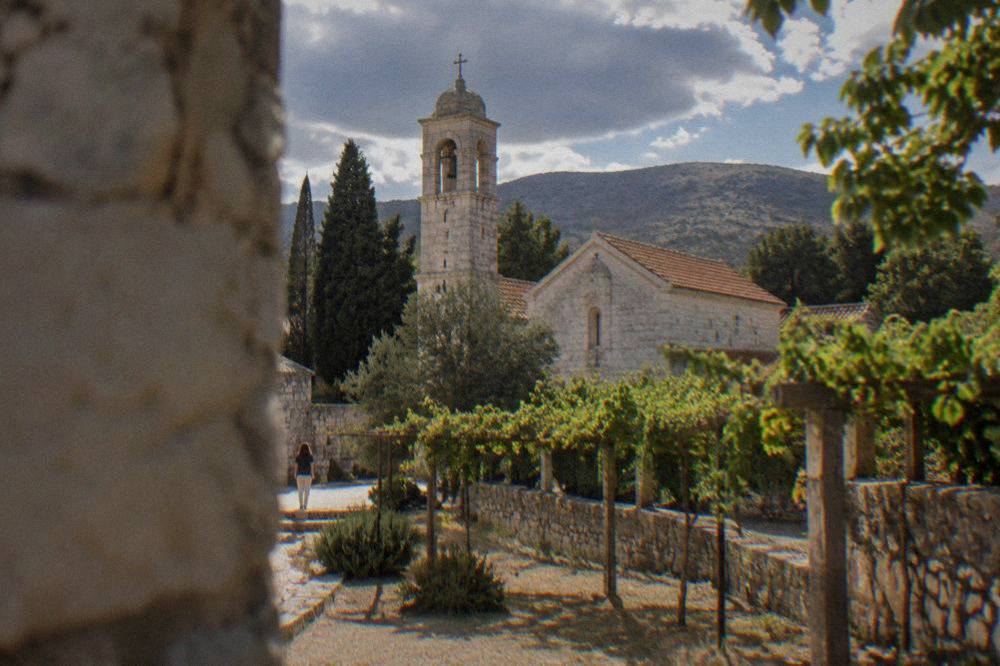
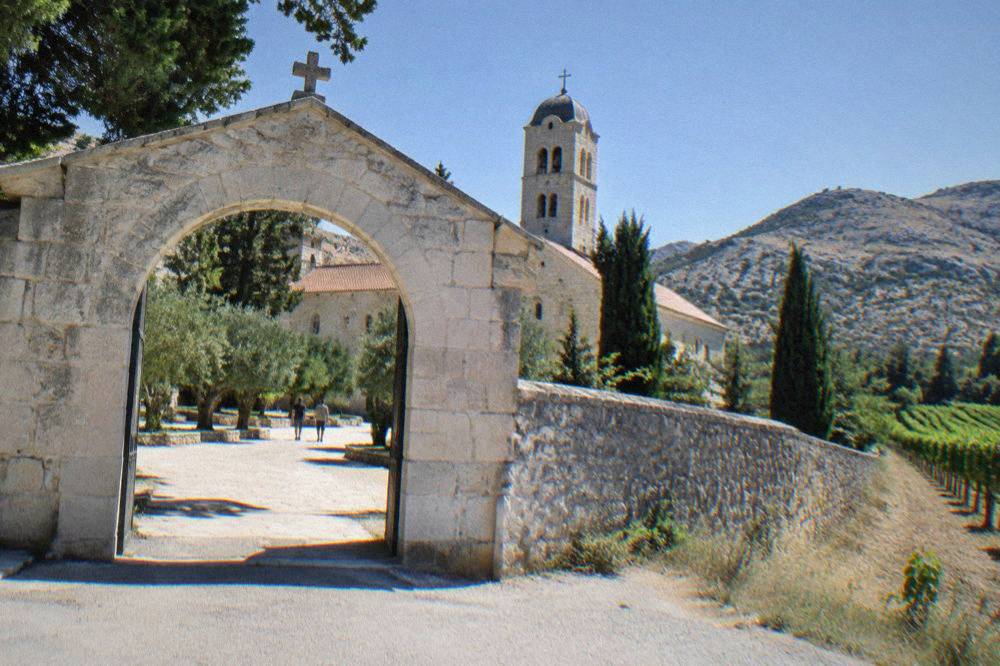
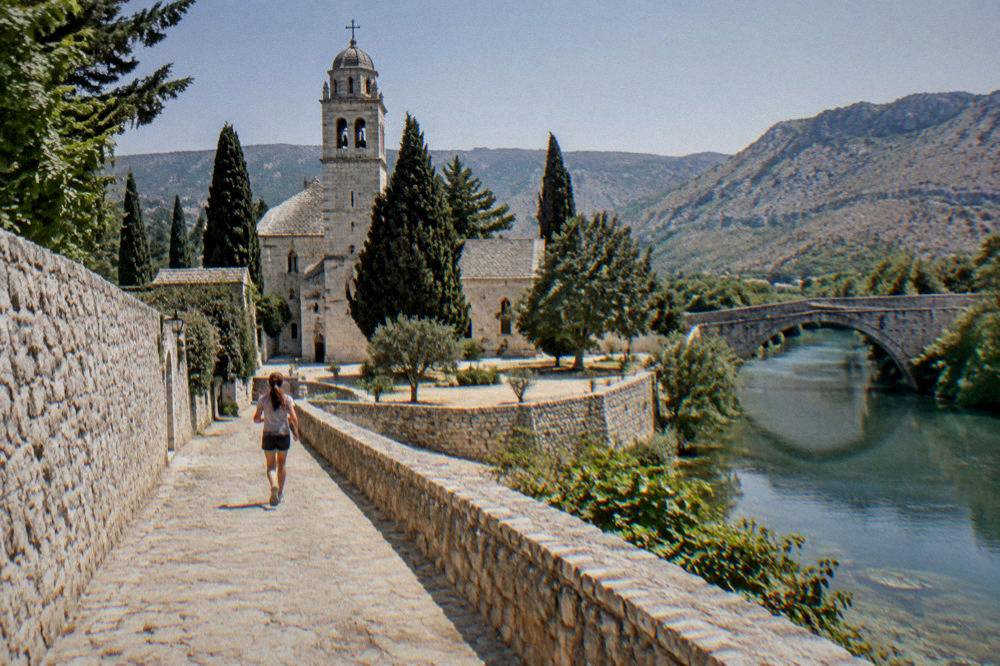
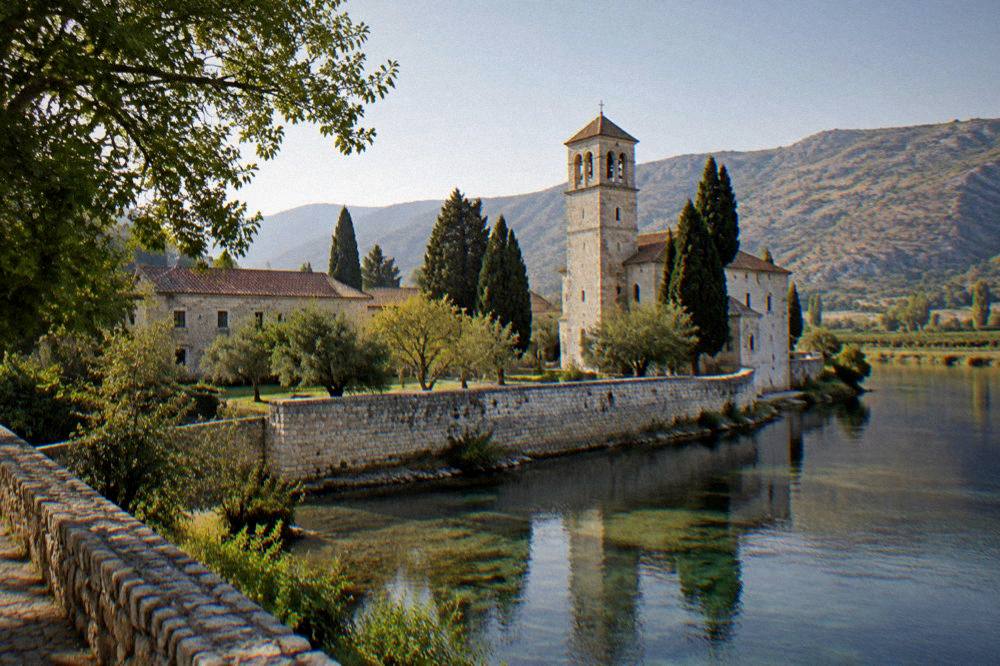
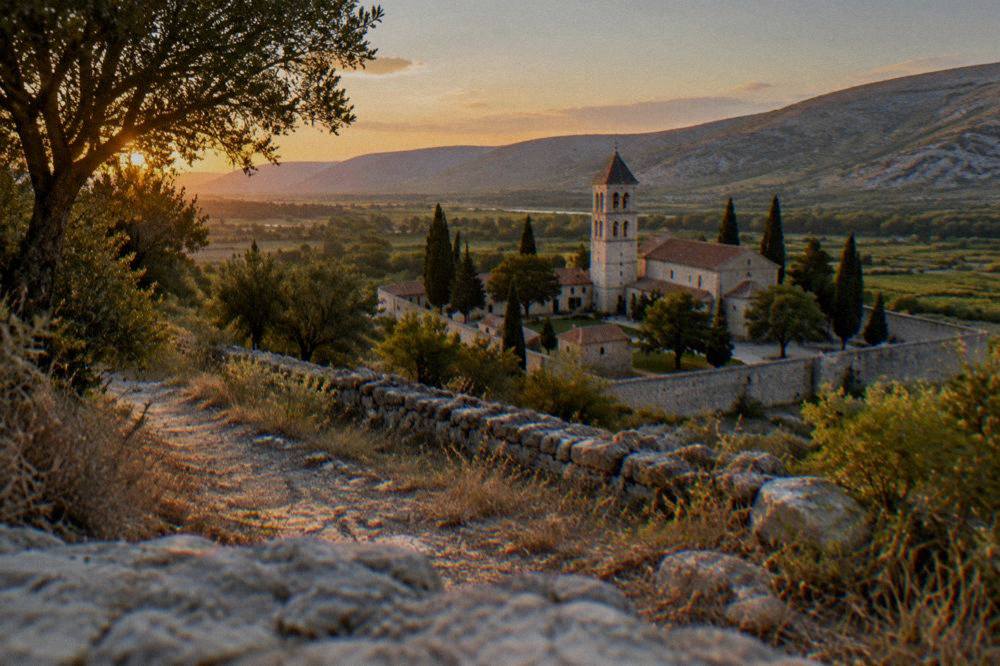
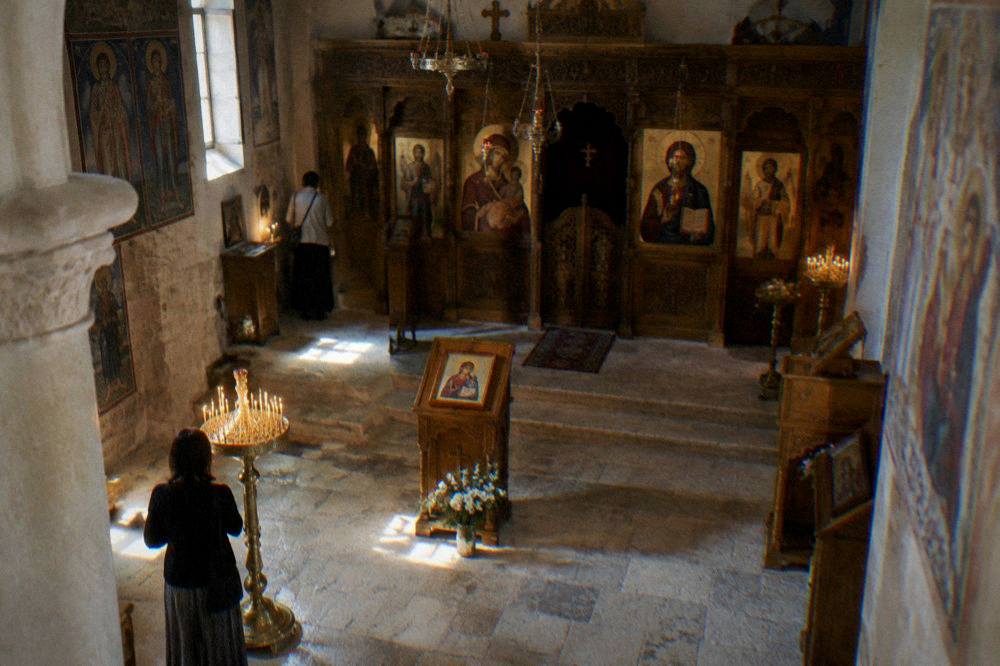
The core of any Orthodox monastery is its church, and here that means a modest stone building with a bell tower, set inside walls that enclose a courtyard of trees and vines. Photography etiquette follows the pattern of religious sites across the region: exteriors are generally fine, ask before photographing interiors or people at prayer, and never photograph a service in progress. There is no shop infrastructure to rely on, so carry water, especially between June and September, when the modelled daily high in Mostar runs from 26.8 C to 30.5 C, ERA5 reanalysis, 1991-2020.
Because the visit is short, the value of Žitomislići lies in what it adds to the shape of a day. Herzegovina's headline stops, Blagaj, Počitelj, Kravica waterfall and Međugorje, are busy and arrival-focused; a monastery courtyard is the counterweight. Build the day so the monastery sits either early, before the crowds thicken at the bigger sites, or late, as the final decompression before the drive back over the ridge to the Neretva valley and Mostar.
Which Day-Trip Combinations Work Best With Žitomislići From Mostar?
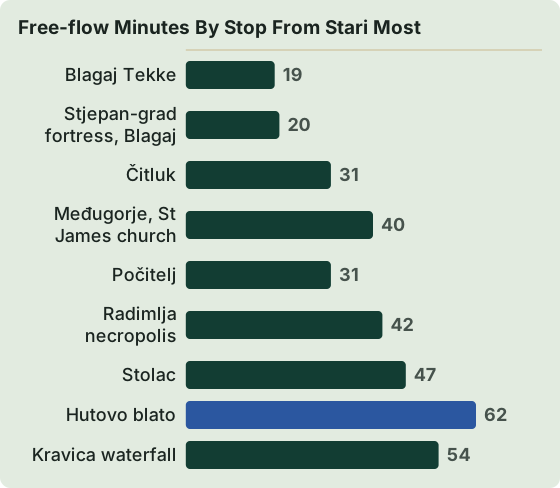
The natural pairing is Žitomislići with Međugorje and Čitluk, all on the same southern corridor within roughly 23 to 28 km of Stari Most, while a longer day folds in Počitelj at 30.0 km and about 31 minutes, Stolac at 36.8 km and 47 minutes, or Kravica waterfall at 55.2 km and about 54 minutes of free-flow driving.
Border queues are excluded, and none of these routes crosses a border.
| Stop from Stari Most | Road km | Free-flow minutes |
|---|---|---|
| Blagaj Tekke | 13.7 | 19 |
| Stjepan-grad fortress, Blagaj | 13.9 | 20 |
| Čitluk | 22.9 | 31 |
| Međugorje, St James church | 28.3 | 40 |
| Počitelj | 30.0 | 31 |
| Radimlja necropolis | 33.5 | 42 |
| Stolac | 36.8 | 47 |
| Hutovo blato | 48.1 | 62 |
| Kravica waterfall | 55.2 | 54 |
Two shapes of day work well. The first is the southern pilgrimage loop: Mostar to Žitomislići, on to Međugorje, whose hill and church sites are free and open around the clock, and back, with a total driving time of well under two hours. The second is the full Herzegovina circuit: Mostar, Blagaj, Žitomislići or Međugorje, Počitelj and Kravica waterfall, which is the loop the region's guided day tours follow and the one to choose if you have a single day and no car.
If you have two days, split the region: the Blagaj, Počitelj, Kravica circuit on one day, and the monastery plus Međugorje plus Hutovo blato, the nature park 48.1 km out, on the other. That keeps each day's driving within a comfortable range and gives the karst country east of the Neretva its own stretch of time.
What Does A Herzegovina Day Trip Cost From Mostar?
The fixed, published cost at the region's sights is Kravica waterfall, 20 KM for an adult all year, with children under 7 free, while most other stops are free or carry small reported fees, and Žitomislići itself has no published ticket, so a day's budget is dominated by transport, entry at Kravica if included, and meals, with the convertible mark, not the euro, as the currency.
The figures below are the region's known entry costs. Where a figure is reported rather than officially published, it is marked, and you should confirm on arrival.
| Sight | Entry | Status |
|---|---|---|
| Međugorje sites | Free, open around the clock | Reported |
| Počitelj village | Free, small optional fees reported | Reported |
| Blagaj Tekke | 10 KM reported, wraps provided for dress | Reported |
| Radimlja necropolis | 8 KM individual, 5 KM groups and BiH citizens | Reported |
| Žitomislići Monastery | No published ticket or hours | Confirm locally |
Two money rules make the day simpler. First, carry cash in KM: the convertible mark is pegged at exactly 1 EUR to 1.95583 KM under a currency board, and while euro cash is often accepted in tourist areas, the rounding is usually unfavourable and it is not an official rule. Second, cards work at hotels, larger restaurants, museums and supermarkets, but small vendors, market stalls and some entry kiosks want cash, and an ATM withdrawal in KM at a bank machine avoids poor conversion prompts.
A tourist tax is reported at 3 KM per person per night in Herzegovina-Neretva Canton from 1 January 2026; it is charged through accommodation, confirm at booking.
When Is The Best Time Of Year To Visit Žitomislići And Herzegovina?
Late spring and early autumn are the comfortable windows: July and August bring modelled daily highs of 29.9 C and 30.5 C respectively, ERA5 reanalysis, 1991-2020, with the FHMZ 1961-1990 record for Mostar reaching 41.2 C in July, while rain concentrates in the cold months, November averaging 200.0 mm against July's 42.9 mm, so summer days are hot but reliably dry.
Herzegovina's climate is the reason the day-trip calendar matters. The valley around Mostar is hot in summer, and the monastery's shaded courtyard is forgiving in a way the open terraces of Počitelj or the pool basin at Kravica are not: plan the monastery and Blagaj's shaded river source for the middle of the day in July and August, and put the exposed climbs early. The Neretva itself stays cold even in August, fed by karst springs, which is why swimmers at Kravica treat the water as bracing rather than warm.
| Month | Mean daily high C, ERA5 1991-2020 | Mean daily low C | Rain mm |
|---|---|---|---|
| April | 17.7 | 7.0 | 150.9 |
| May | 22.3 | 11.4 | 116.1 |
| June | 26.8 | 15.3 | 72.4 |
| July | 29.9 | 17.7 | 45.4 |
| August | 30.5 | 18.1 | 52.6 |
| September | 24.5 | 14.0 | 142.0 |
| October | 19.5 | 9.8 | 186.8 |
Spring deserves a second look for the landscape alone: the karst hills are green only briefly before the summer heat bleaches them, and the monastery's setting is at its softest then. Winter visits are possible, the region keeps running, and the Neretva river and Mostar's old town are quiet, but days are short, around 9 hours of daylight in December, and some seasonal facilities close. Whatever the season, one line of caution applies across rural Herzegovina: stay on marked paths and roads, because suspected mine areas remain in parts of the countryside and the national authority BHMAC maintains the affected-area data.
What Practical Facts Should You Know Before A Day Trip From Mostar?
Bosnia and Herzegovina uses the convertible mark, is not in the EU and not in Schengen, so a drive that hops into Croatia, toward Dubrovnik or Neum on the coast, crosses a full external border with passport checks in place since 1 January 2023, the emergency number is 112, and visa-exempt visitors may stay up to 90 days in a six-month period from first entry.
The border point matters for the itineraries that touch Croatia. Dubrovnik is 145.5 km and about 150 free-flow minutes from Stari Most, and the main crossings near Mostar are Doljani-Metković and Bijača-Nova Sela, where waits of up to about 30 minutes are typical and summer peaks run longer; the Pelješac Bridge, opened 2022, lets Dubrovnik traffic bypass the Neum corridor. If you rent a car, tell the company you will cross into Bosnia and Herzegovina or out of it in advance, since permission and insurance documents are involved.
Everyday practicalities are simple. Plugs are type C and F at 230 V. Tipping is appreciated, roughly ten percent or a rounding at restaurants. The emergency numbers are 112 general, 122 police, 123 fire and 124 ambulance. Tap water is treated and generally safe, though bottled water is cheap and everywhere. Language is not a barrier in the tourist corridor: Bosnian, Croatian and Serbian are the country's languages, and English is common among younger people in tourism.
Should You Visit Žitomislići On A Tour Or On Your Own?
A self-drive or taxi day gives full control and suits the short, flexible stop that Žitomislići is, while a guided Herzegovina tour suits travellers who want the Blagaj, Počitelj and Kravica loop handled end to end from Mostar, and the monastery is best folded into a private version of such a tour, agreed with the operator in advance, since the standard group circuits do not advertise it as a scheduled stop.
The trade-off is control against friction. Independent travel in Herzegovina is genuinely easy in the main corridor: distances are short, roads are in reasonable condition, and the region's headline sights are close together. What a tour buys is pacing, parking and narrative, and on a single day the difference between a smooth loop and a rushed one is often just someone who knows the sequence. For visitors arriving on the big cross-border day trips from Dubrovnik or Split, the itinerary is fixed around Mostar and Kravica, and the monastery is not part of that picture; it is a stop for people based in or near Mostar.
Whichever way you go, treat the monastery as the quiet hinge of the day rather than its headline. The loud, photogenic moments of Herzegovina, the bridge divers of Stari Most, the waterfall pool at Kravica, the fortress stairs of Počitelj, sit better in memory next to an hour of stillness in a walled courtyard among cypress trees. Confirm locally that the monastery is open on the day you intend to visit, dress modestly, and give the rest of the valley the time it deserves.
Common Questions About Žitomislići Monastery Near Mostar
What is Žitomislići Monastery?
A Serbian Orthodox monastery in the Neretva valley south of Mostar, in Herzegovina, Bosnia and Herzegovina, set in walled grounds with a church and bell tower in the karst hill country between Mostar and the Čitluk and Međugorje corridor.
How far is Žitomislići Monastery from Mostar?
The monastery sits on the southern corridor from Mostar: Čitluk is 22.9 km and about 31 minutes of free-flow driving from Stari Most, and Međugorje is 28.3 km and about 40 minutes, with the final approach to the monastery on local roads. Confirm the exact routing with your map or driver.
Is there an entry fee for Žitomislići Monastery?
No ticket or fixed visitor hours are published for the monastery. Plan for a free, quiet visit, dress modestly, and confirm locally that it is open on the day you intend to stop.
Can you combine Žitomislići with Međugorje and Počitelj in one day?
Yes. All three sit on the southern corridor from Mostar, with Međugorje at 28.3 km and Počitelj at 30.0 km from Stari Most, and the combination works by car, taxi or a private version of a Herzegovina day tour.
What currency do you need for a day trip around Mostar?
The convertible mark, KM, pegged at 1 EUR to 1.95583 KM. Euro cash is often accepted in tourist areas at roughly 1 to 2, but that is a convenience, not an official rate, so carry KM for entry fees and small purchases.
When is the best time of year to visit Herzegovina's monasteries?
May, June and September balance warmth against heat: July and August carry modelled daily highs of 29.9 C and 30.5 C, ERA5 reanalysis 1991-2020, and the FHMZ 1961-1990 record for July reaches 41.2 C, while summer rain is at its lowest, July averaging 42.9 mm.