Neum: Bosnia's Only Stretch Of Coast, A Day Trip From Mostar
Mostar sits inland on the Neretva river, and Neum is the nearest place to swap that river valley for the sea: the only town on Bosnia and Herzegovina's short coastline, about 75 km and roughly an hour and a quarter by road from Stari Most.
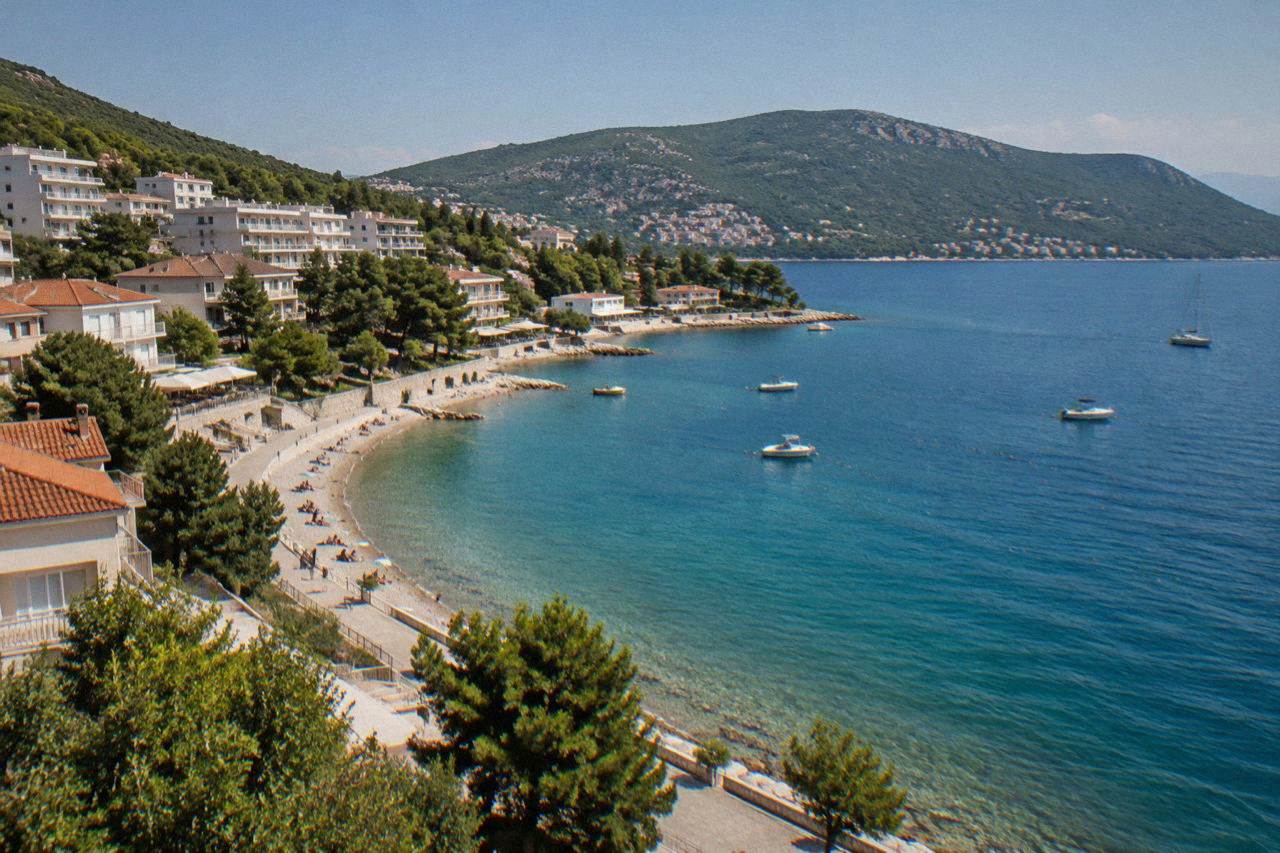
Neum is Bosnia and Herzegovina's only coastal municipality, reached from Mostar by a drive of about 75 km that crosses no border until the Croatian line at either end of the corridor. It is a beach-and-border stop, not a heritage one, and it pairs naturally with Počitelj or the Kravica waterfall on a loop from Mostar.
Mostar is an inland city on the Neretva river in Herzegovina, with no sea coast of its own, and that single fact explains why Neum exists in the Bosnian imagination at all. Neum is the only municipality of Bosnia and Herzegovina that touches the Adriatic, a corridor of coast wedged between two arms of Croatia, and from Stari Most it sits 75.3 km away by road, about 82 minutes of free-flow driving through the hills of the Neretva's lower valley. It is not a Dubrovnik or a Split: it is a modest, practical seaside strip whose whole identity comes from being the one place this country meets the sea.
Why Does Bosnia And Herzegovina Only Have Coast At Neum?
Bosnia and Herzegovina holds a single short corridor of Adriatic coast around the town of Neum, because the historical border between the Ottoman province of Herzegovina and the Republic of Ragusa was drawn inland along this line, and that border survived into modern Croatia. The result is that Croatia's Dalmatian coast is pinched in two at the Neretva delta, and the country around Mostar reaches the sea only through this one corridor, 75.3 km and about 82 minutes by road from Stari Most.
The geography is easier to grasp on the map than in words. Driving from Mostar down the Neretva valley toward the delta around Metković and Opuzen, Opuzen itself 54.2 km away, you arrive at Croatian territory that runs to the sea, and then, a few kilometres further, the line bends back and you re-enter Bosnia and Herzegovina for the Neum corridor. On the far side of Neum the Croatian border returns, and the road climbs toward the Pelješac peninsula and, eventually, Dubrovnik, 145.5 km and about 150 minutes from Stari Most before any border queue.
The corridor has a practical consequence that every traveller feels. Croatia has been in the Schengen area since 1 January 2023, so its land borders with Bosnia and Herzegovina are now Schengen external borders with full checks, and a simple Mostar to Dubrovnik drive that passes through Neum means entering and exiting Croatia twice. The two crossings nearest this route are Doljani-Metković on the northern side and Bijača-Nova Sela on the southern side, with waits typically up to about 30 minutes and longer at summer peaks, so plan the day around that.
How Do You Get From Mostar To Neum?
Driving is the practical answer: 75.3 km from Stari Most, about 82 minutes free-flow, first through the Neretva valley past Čapljina and the delta plain around Opuzen, then a short crossing back into Bosnia and Herzegovina at the northern end of the Neum corridor. Cross-border buses link Mostar with Dubrovnik several times a day and pass through Neum; a rental car gives you the freedom to loop the coast with Počitelj or the Kravica waterfall on the way home.
The road out of Mostar drops through the lower Neretva valley, and the geography rewards the slow route. Čapljina sits near the delta, Hutovo blato's wetlands are 48.1 km from Mostar, and the walled village of Počitelj, 30.0 km and about 31 minutes out, is the natural first stop before the valley flattens toward Croatia. Once past the Doljani-Metković crossing the road hugs the delta and then climbs over the coastal ridge into Neum itself.
Two things matter for the drive back into Bosnia and Herzegovina at Neum. First, the currency: Bosnia and Herzegovina uses the convertible mark (KM, BAM), pegged at 1 EUR = 1.95583 KM, while Croatia uses the euro, so you cross a currency line as well as a border. Euro cash is often accepted in Neum's tourist spots, but confirm the rate before paying. Second, paperwork: if you are in a Croatian rental car, cross-border permission from the rental company is required in advance, and a Green Card insurance document is often provided, sometimes for a fee, so settle it when you pick the car up.
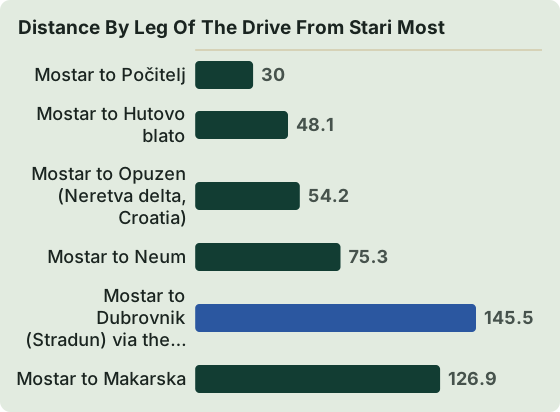
| Leg of the drive from Stari Most | Distance | Free-flow time |
|---|---|---|
| Mostar to Počitelj | 30.0 km | about 31 min |
| Mostar to Hutovo blato | 48.1 km | about 62 min |
| Mostar to Opuzen (Neretva delta, Croatia) | 54.2 km | about 56 min |
| Mostar to Neum | 75.3 km | about 82 min |
| Mostar to Dubrovnik (Stradun) via the corridor | 145.5 km | about 150 min |
| Mostar to Makarska | 126.9 km | about 105 min |
Border timing deserves its own sentence in your plan. The waits at Doljani-Metković and Bijača-Nova Sela are reported at up to about 30 minutes in normal conditions and longer at summer peaks, and a Neum round trip from Mostar means two passport checks each way at a Schengen external border, so an early start beats the mid-morning queues. The Klek and Zaton Doli crossings also serve the corridor for traffic heading toward the Pelješac bridge.
If you would rather leave the border logistics and the valley driving to someone else, guided trips from Mostar cover the Herzegovina hinterland in a single day, and some combine the region's signature sights with a coach seat and an operator who knows the crossings.
What Is There To Actually Do In Neum?
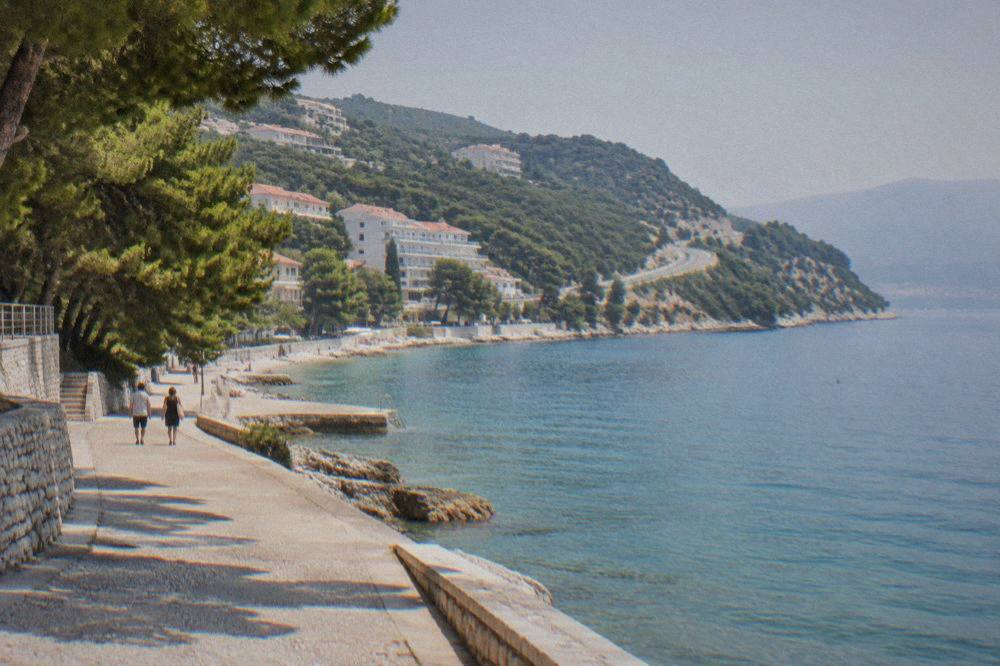
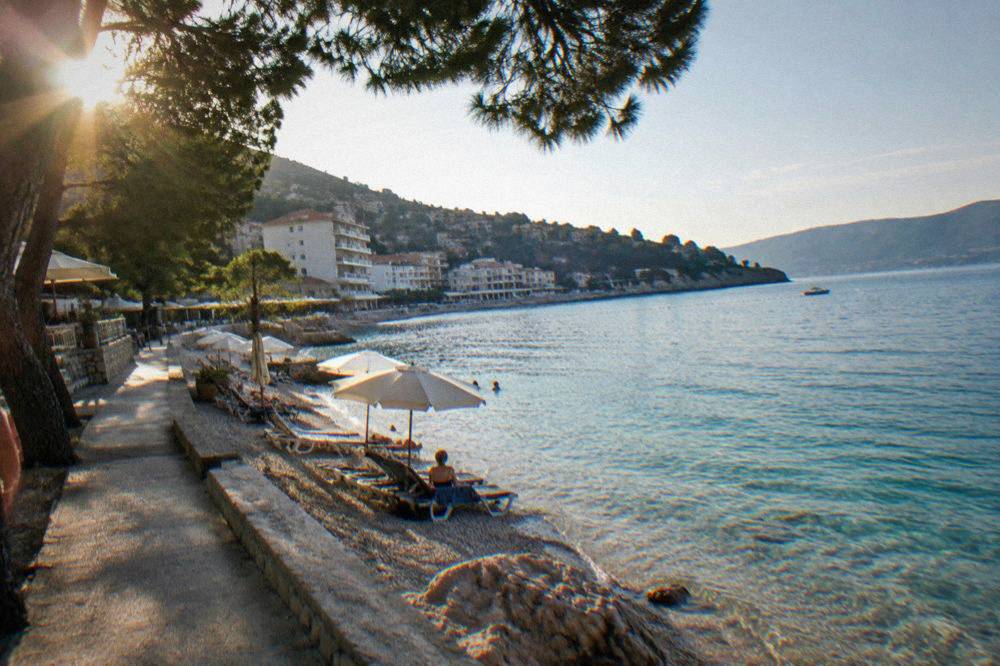
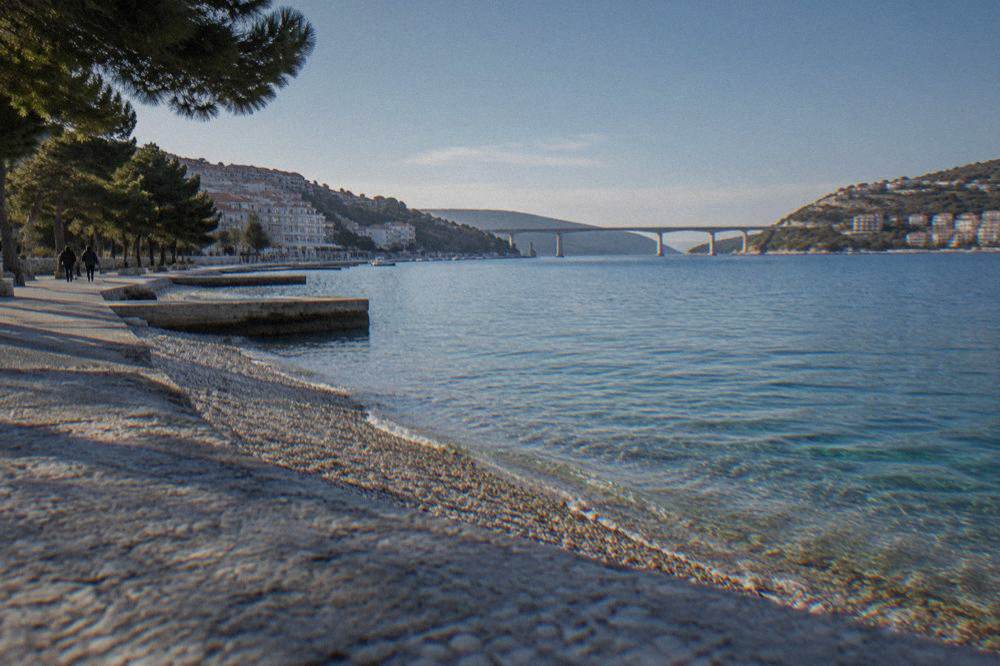
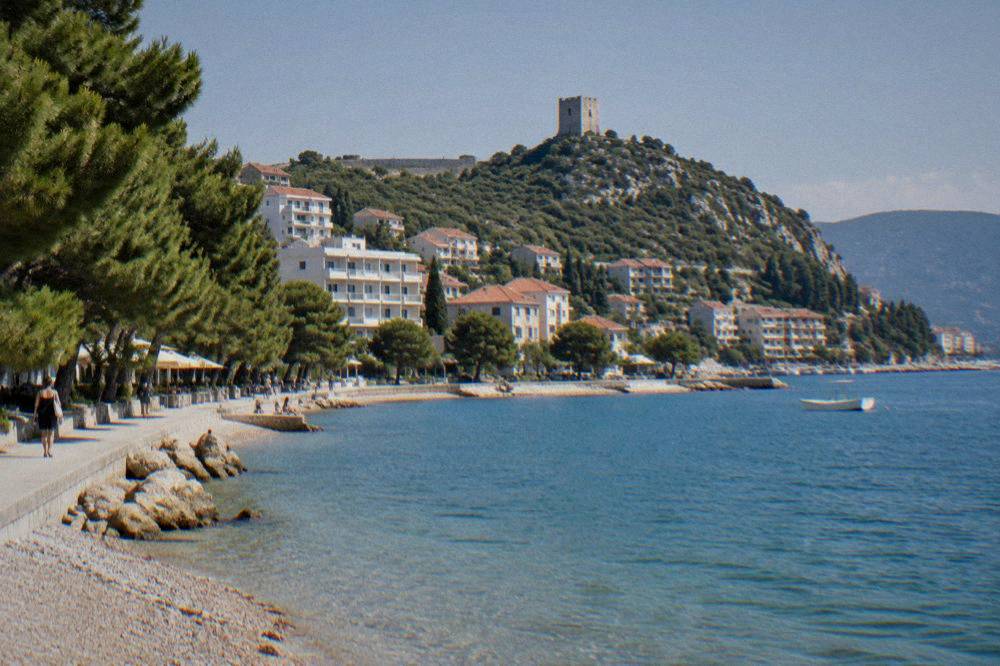
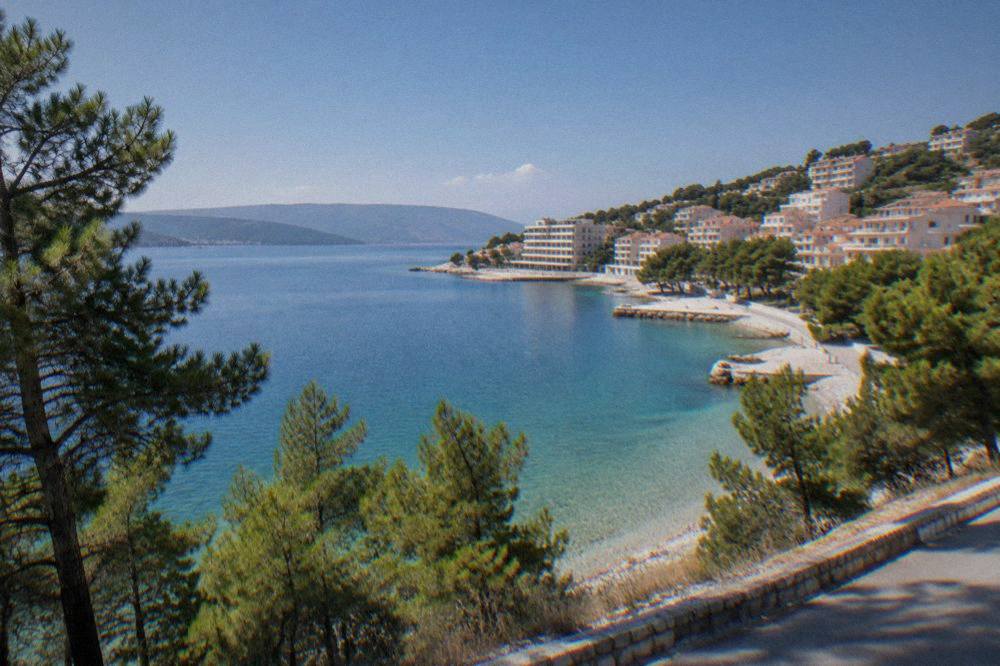
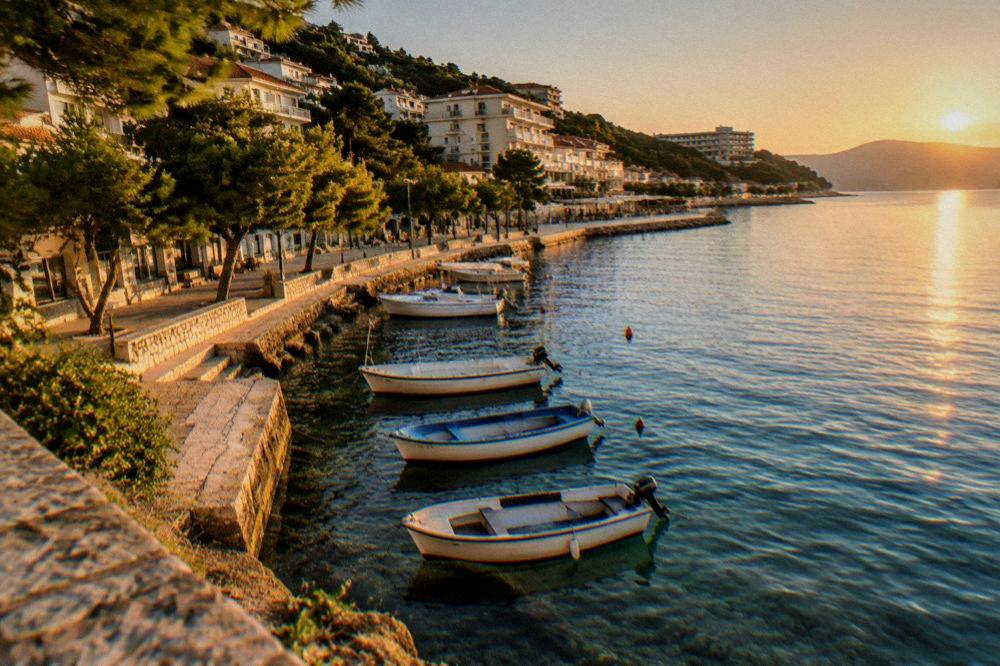
Neum is a beach town, full stop: pebble and concrete swimming spots along a sheltered bay, cafés and ice cream at the water's edge, and boat trips along the coast, with none of the museums, Ottoman houses or fortresses that fill a day in Mostar itself. The appeal is simple and cheap relative to Croatia's coast across the border, the water is the same Adriatic, and the setting is a bay framed by wooded hills about an hour and a quarter's drive from Stari Most.
Be honest with the itinerary. Nobody crosses Herzegovina for Neum's architecture; they come to swim, eat fish and let children play in shallow water. The bay is sheltered, so swimming conditions are usually calm, and summer in this region is reliably hot: the FHMZ Mostar station, 1961 to 1990, records a July mean of 24.7 C with an absolute maximum of 41.2 C, while the ERA5 reanalysis, 1991 to 2020, puts modelled mean daily highs at 29.9 C in July and 30.5 C in August. The sea is the escape from that heat.
The contrast with Mostar's own swimming options is worth spelling out, because the Neretva near the city is a mountain river that stays cold even in August, fed by karst springs. Neum's bay warms through the summer in the way an enclosed Adriatic inlet does. For anyone based in Mostar through a heatwave, that difference is the entire argument for the drive.
What Neum does not offer is a heritage core. A day here is short on sights and long on idle time, which is exactly why the standard plan from Mostar pairs it with stops on the way: Počitelj's fortress walls above the Neretva, the Blagaj Tekke at the Buna spring 13.7 km from Mostar, or the Kravica waterfall 55.2 km out, where entry is 20 KM for an adult all year, 10 KM for residents of Bosnia and Herzegovina, and free for children under 7, with summer hours from 07:00 to 22:00 between June and September. Deeper coverage of each stop lives on the site's pages for Blagaj from Mostar, Počitelj and the Kravica waterfall.
Is Neum Still Worth The Drive Now The Pelješac Bridge Exists?
For a beach day, yes: the bridge changed transit traffic, not the coastline, and Neum remains the nearest sea to Mostar at 75.3 km. For Croatia-bound through traffic, no: since the Pelješac bridge opened in 2022, drivers heading from Mostar or the delta to Dubrovnik can stay inside Croatia and skip the two border crossings of the Neum corridor entirely, which is why Neum now works best as a destination rather than a shortcut.
Before 2022, every vehicle between Split and Dubrovnik squeezed through the corridor, and Neum lived off that flow, fuel stops and a quick passport stamp on the way past. The bridge ended that. The town's economy is now about staying rather than passing, which for a Mostar visitor is arguably an improvement: the bay is calmer, and the trip has to be chosen on its own merits.
That reframes the decision. If your holiday base is Mostar and you want one sea day, Neum is the closest and simplest option, and a full loop with Počitelj on the outbound leg makes a genuinely varied day. If your actual goal is Dubrovnik, the Dubrovnik day trip from Mostar runs 145.5 km each way and the bridge route now dominates, so treat Neum as a stop on a Herzegovina day, not as a waypoint to somewhere else.
How Does Neum Fit Into A One-Day Loop From Mostar?
The classic loop runs Mostar to Počitelj (30.0 km, about 31 minutes), on through the Doljani-Metković crossing and the delta to Neum for a late-morning swim and lunch, then either straight back over the ridge or, with energy to spare, down to the Kravica waterfall (55.2 km from Mostar, about 54 minutes) before the evening return, making a full but doable circle of roughly four hours of driving plus border time.
The order matters less than the timing. Summer border queues build late in the morning, so an 08:00 start from Mostar puts you at Počitelj before the tour coaches, at the crossing before the worst of the line, and on a Neum beach before the midday heat peaks. The FHMZ Mostar station table, 1961 to 1990, shows July rainfall averaging just 42.9 mm against November's 200.0 mm, so from June through September the plan is more likely to survive intact than in the wetter half of the year. Everything else covered here is indexed on Mostar Travel Guide.
A swim stop changes what you carry. Towels and something dry for the drive back, water for the valley heat, and cash: the convertible mark is the currency of Bosnia and Herzegovina, the euro of Croatia, and while cards work at larger venues on both sides, small beach kiosks prefer notes. Change a little of each before you leave Mostar rather than gambling on an ATM at the corridor.
| Loop option from Mostar | Stops | Driving shape |
|---|---|---|
| Sea and fortress | Počitelj, Neum | Out via the valley, back the same way, two crossings each way |
| Sea and waterfall | Neum, Kravica waterfall | Valley out, ridge road back via Ljubuški, one crossing pair |
| Full Herzegovina day | Blagaj, Počitelj, Neum | Long day, swim last, two crossings each way |
| Croatia-bound | Neum pause, Pelješac bridge, Dubrovnik | One-way corridor transit plus the southern crossing |
Guided versions of the same idea exist for travellers without a car, and a private Herzegovina tour that covers the waterfall, Blagaj and Počitelj in one booked day is the closest match to the loop above, with the operator handling the border timings.
What Should You Know About Money, Borders And Practicalities At Neum?
Three practical rules cover the trip: pay in convertible marks on the Bosnian side of the line and euros on the Croatian side, at the fixed peg of 1 EUR = 1.95583 KM, expect full passport checks at both corridor crossings because Croatia is in Schengen and Bosnia and Herzegovina is not, and carry both currencies in cash for beach kiosks and small vendors where cards are not taken. A tourist tax reported at 3 KM per person per night applies in this canton, worth confirming at booking.
The currency board peg means the arithmetic never moves: one euro is 1.95583 KM, always, so a rounded two-km-for-one-euro rate at a Neum café is a small premium for convenience, not a scam, but paying in the local currency is the fairer deal. ATMs are common in Neum's tourist strip. Choose to be charged in KM on the Bosnian side to avoid unfavourable conversion.
On documents: Bosnia and Herzegovina is in neither the EU nor Schengen, so a passport, not just a national ID for non-EU visitors, is the safe document at Doljani-Metković and Bijača-Nova Sela. Visa-exempt travellers may stay up to 90 days in any six-month period from first entry. The EU Entry/Exit System is reported operational since about April 2026 and records crossings biometrically, replacing passport stamps. Croatia-bound drivers with a Croatian rental should confirm cross-border permission and Green Card insurance with the rental company before setting out.
Rural Herzegovina carries one standing safety note that applies to any detour off the main roads on this route: stay on marked paths in the countryside because of suspected mine areas, the national authority BHMAC maps them, and hikers heading deeper inland for that reason should also read the site's Konjic day-trip page. The emergency number across Bosnia and Herzegovina is 112.
| Practical item | At Neum and the corridor |
|---|---|
| Currency, Bosnian side | Convertible mark (KM), pegged 1 EUR = 1.95583 KM |
| Currency, Croatian side | Euro |
| Border crossings on the route | Doljani-Metković, Bijača-Nova Sela, also Klek and Zaton Doli |
| Typical border wait | Up to about 30 minutes, longer at summer peaks |
| Visa-free stay in Bosnia and Herzegovina | Up to 90 days over six months from first entry |
| Tourist tax, Herzegovina-Neretva Canton | Reported at 3 KM per person per night, confirm at booking |
When Is The Best Time Of Year For A Neum Day Trip From Mostar?
June through September is the swimming window, when the bay is warm, the FHMZ Mostar station's 1961 to 1990 record shows rainfall bottoming out in July at 42.9 mm, and the Kravica waterfall park runs its longest hours, 07:00 to 22:00. May and October suit the loop without the swim, with milder modelled highs of 22.3 C and 19.5 C (ERA5 reanalysis, 1991 to 2020) and far shorter border queues than the summer peaks.
Summer's appeal is obvious and so is its cost: the two Schengen-border crossings each way are at their slowest when coastal traffic peaks, and the valley back to Mostar is at its warmest, with modelled August highs of 30.5 C and the station's absolute record at 41.2 C. A July or August day works best started early and finished with a late-afternoon waterfall swim rather than a midday one.
The shoulder months trade water temperature for everything else. Rain rises steeply from October, 150.6 mm on the station record and 186.8 mm modelled for the month, and November averages 200.0 mm, so the loop is really a March-to-October proposition, with winter better spent on Mostar's own museums, from the Old Bridge story on the Mostar things to do page to the Partisan Memorial Cemetery and the Herzegovina Museum.
Is Neum A Good Stop For Families Travelling From Mostar?
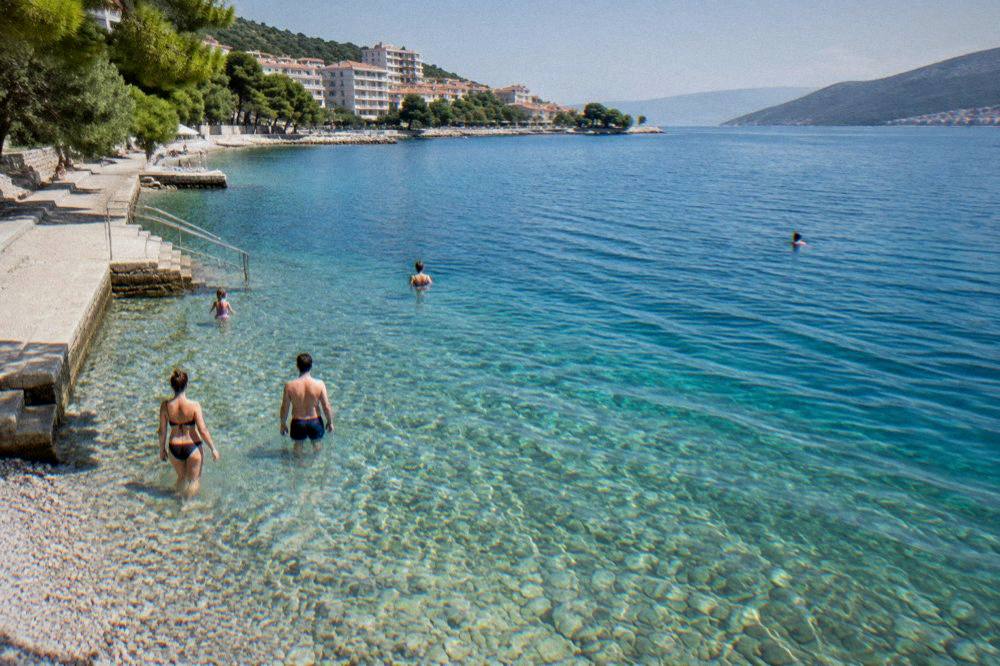
Yes, within its limits: the bay's shelving shallows are the kind of water children can stand in for hours, the whole strip is compact and walkable, and the drive is short enough at about 82 minutes each way that it does not devour the day. What families should not expect is variety; there is no aquarium, fortress or old bazaar to break up a beach afternoon, so the day's success depends on pairing the swim with one engaging stop such as Počitelj's climbable fortress or the Kravica waterfall.
The pairing logic is what makes the trip work for children of reading-and-climbing age. Počitelj, half an hour out of Mostar, has walls and towers to scramble, and the waterfall has a pool you can swim in in summer in the designated area, with no lifeguard reported, so an adult stays in the water with weaker swimmers and the park's rules are worth checking on arrival. Entry pricing helps a family budget: 20 KM per adult at Kravica, 10 KM for school-age children aged 7 to 18, and free under 7.
For toddlers the calculation is simpler still: Neum alone, one crossing each way, towels and shade, and back before the afternoon heat. The sheltered bay means no waves to fight, and the strip of cafés behind the beach handles lunch without a car move. In either case, the practical limits on this page, two currencies, two border checks and a full passport each time, apply doubly with children in the back seat.
Neum Or The Other Day Trips From Mostar: Which One Deserves Your Day?
Choose Neum only if the sea is the point; every other headline day trip from Mostar, Blagaj's Buna spring at 13.7 km, Počitelj at 30.0 km, Međugorje at 28.3 km or the Kravica waterfall at 55.2 km, delivers more per minute of driving and no border at all.
Neum earns its slot as a second or third outing, after the inland classics, when heat or a beach craving calls, or as a swim stop bolted onto a Croatia-bound day toward Dubrovnik or the Pelješac peninsula.
The ranking is not really about quality, it is about fit. A first-time visitor with two days should spend both on Mostar and its near valley, following a plan like the site's one day in Mostar outline and a Herzegovina loop. A visitor through a whole week in high summer, though, will hit a 35 C afternoon when the Neretva's cold water stops sounding like fun and the bay at Neum starts sounding exactly right.
There is also a purely logistical case for Neum as a midpoint. Travellers moving between Mostar and the Croatian coast, whether toward Dubrovnik, the Sarajevo direction in reverse, or the delta roads around Opuzen, pass within minutes of the corridor, and a two-hour beach and lunch stop turns a transfer day into a holiday day. That is the version of Neum that fits most itineraries best.
| If your day-trip priority is... | Better than Neum | Distance from Stari Most |
|---|---|---|
| History and views | Počitelj | 30.0 km, about 31 min |
| A dervish lodge and river spring | Blagaj | 13.7 km, about 19 min |
| Swimming under a waterfall | Kravica waterfall | 55.2 km, about 54 min |
| Wetlands and birdlife | Hutovo blato | 48.1 km, about 62 min |
| Pilgrimage sites | Međugorje | 28.3 km, about 40 min |
| A walled Adriatic old city | Dubrovnik | 145.5 km, about 150 min |
Common Questions About Neum And The Mostar Coast
Does Bosnia and Herzegovina really have a coastline?
Yes, a short one. The corridor around Neum is the country's only stretch of Adriatic coast, sitting between two sections of Croatia, 75.3 km and about 82 minutes by road from Stari Most in Mostar.
Do you cross a border between Mostar and Neum?
Yes. The road runs through Croatia's Neretva delta before re-entering Bosnia and Herzegovina at the northern end of the Neum corridor, so you exit and re-enter at the Doljani-Metković crossing, with full checks because Croatia is in Schengen and Bosnia and Herzegovina is not. Typical waits are up to about 30 minutes, longer at summer peaks.
What currency do you use in Neum?
The convertible mark (KM, BAM), the currency of Bosnia and Herzegovina, pegged at 1 EUR = 1.95583 KM. Croatia across the line uses the euro. Euro cash is often accepted around Neum's tourist strip, but confirm the rate, and paying in KM is the fairer deal.
Is Neum good for swimming?
Yes, in summer. The bay is sheltered with shelving shallows, and the town is a straightforward beach destination rather than a sightseeing one. July and August bring modelled mean daily highs of 29.9 C and 30.5 C (ERA5 reanalysis, 1991 to 2020) to the region.
Can you combine Neum with the Kravica waterfall in one day from Mostar?
Yes. The waterfall is 55.2 km from Stari Most and Neum 75.3 km, and a loop via Počitelj and the delta fits both into a full day with two border crossings each way. Kravica entry is 20 KM for an adult all year, and summer hours run 07:00 to 22:00 from June to September.
Do you still have to drive through Neum to reach Dubrovnik from Mostar?
No. Since the Pelješac bridge opened in 2022, drivers can stay inside Croatia and bypass the Neum corridor completely, avoiding two of the border crossings on the 145.5 km run from Stari Most to Dubrovnik.
Neum will never be the reason you come to Herzegovina, but as the region's single taste of the Adriatic it earns a place on the itinerary: one bay, two border stamps, and a swim that no stretch of the cold Neretva can match in August.
