One Day In Mostar: A Walkable Plan
Mostar in one day is enough for the Old Bridge, the bazaar, a riverside lunch and a viewpoint, because the whole historic core is a compact walk along the Neretva.
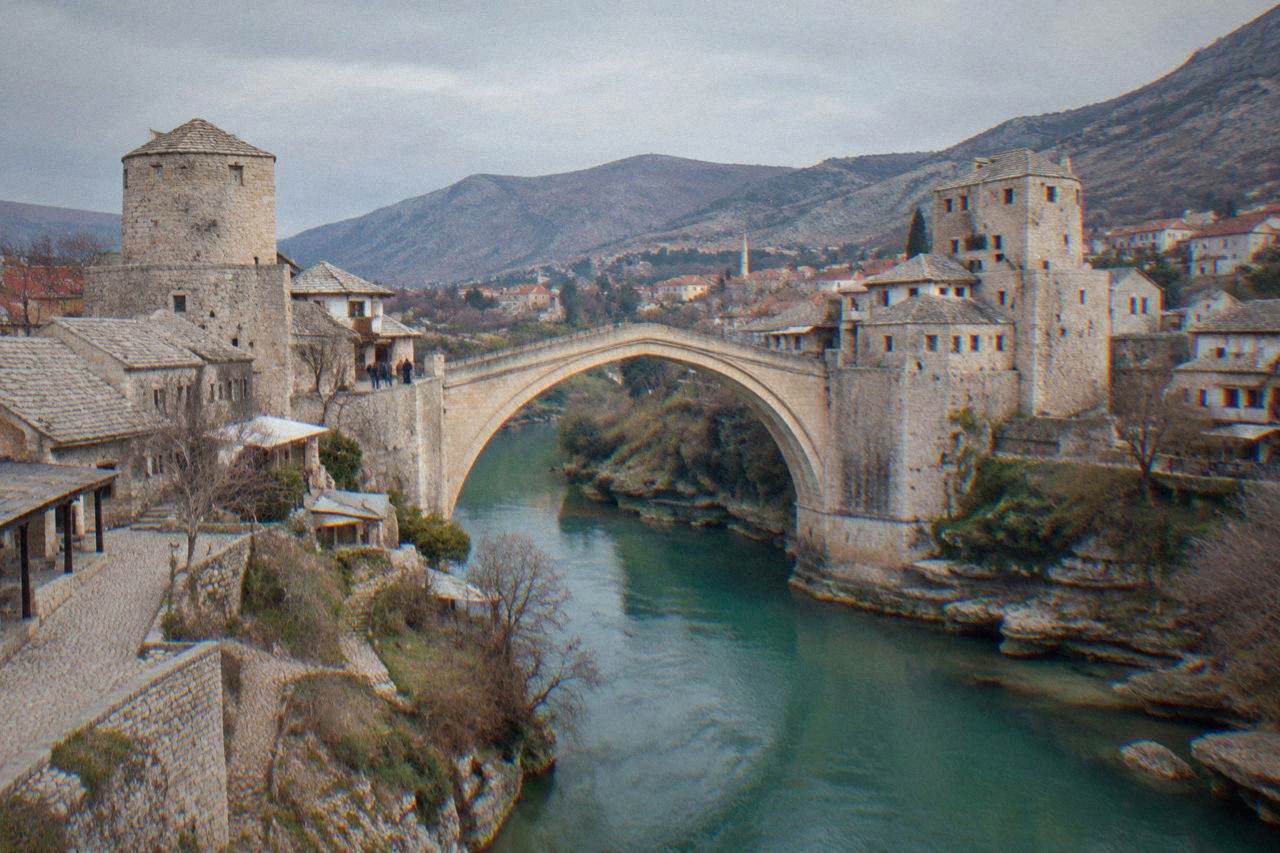
Spend the morning on Stari Most and Kujundžiluk, walk to a viewpoint over the Neretva after lunch, and give the late afternoon either to the Ottoman houses or to a guided Herzegovina trip if the city itself is only a stop on a longer route.
Mostar in one day works because the city's historic core is small and flat along the river: the Old Bridge, the bazaar, the riverside mosques and the viewpoints on either bank sit within a walk of roughly twenty minutes end to end. Mostar is an inland city on the Neretva river in Herzegovina, in Bosnia and Herzegovina, and the Old Bridge Area of the Old City has been a UNESCO World Heritage property since 2005. One day covers the core well; it does not cover Blagaj, Počitelj and Kravica waterfall unless you hand the afternoon to a guided trip, which this plan gives you an honest way to decide on.
Can You See Mostar In One Day?
Yes, one day is enough for the historic core of Mostar, because Stari Most, the Kujundžiluk bazaar, Kriva ćuprija and the riverside mosques all stand inside a walkable stretch of the Neretva banks, roughly twenty minutes from end to end. One day is not enough for the wider region: Blagaj is 13.7 km away, Počitelj 30 km and Kravica waterfall 55.2 km by road.
The distinction matters more here than in larger cities. Mostar's sights cluster tightly around the river: the Old Bridge, the bazaar street below it, the Crooked Bridge a few minutes east, and the Ottoman houses on the south bank. A visitor who starts at the bridge at 09:00 will have crossed all of these before lunch without hurrying.
What a single day cannot absorb is Herzegovina itself. The day-trip circuit of Blagaj, Počitelj and Kravica waterfall is the reason many people are in Mostar at all, and it takes a full day of its own. So the honest plan forks: either give the whole day to the city and its viewpoints, or give the morning to the city and the afternoon to a guided trip. Both forks are laid out below.
For a fuller breakdown of the core itself, the things to do in Mostar page carries the complete sight-by-sight list, and the Mostar walking tour product page covers a guided version of the same ground.
What Should The Morning Look Like In Mostar?
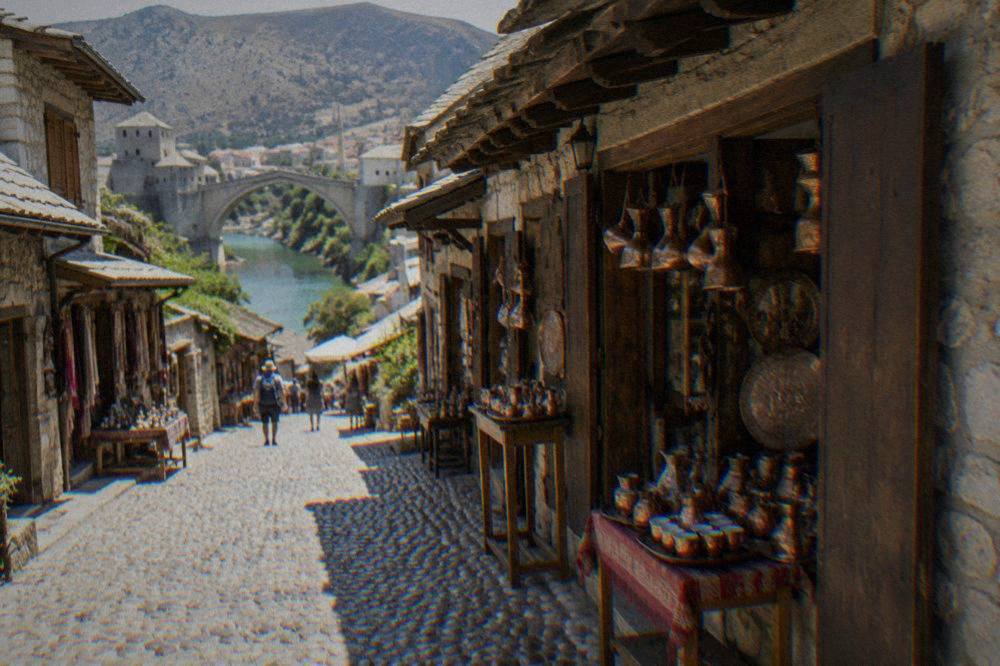
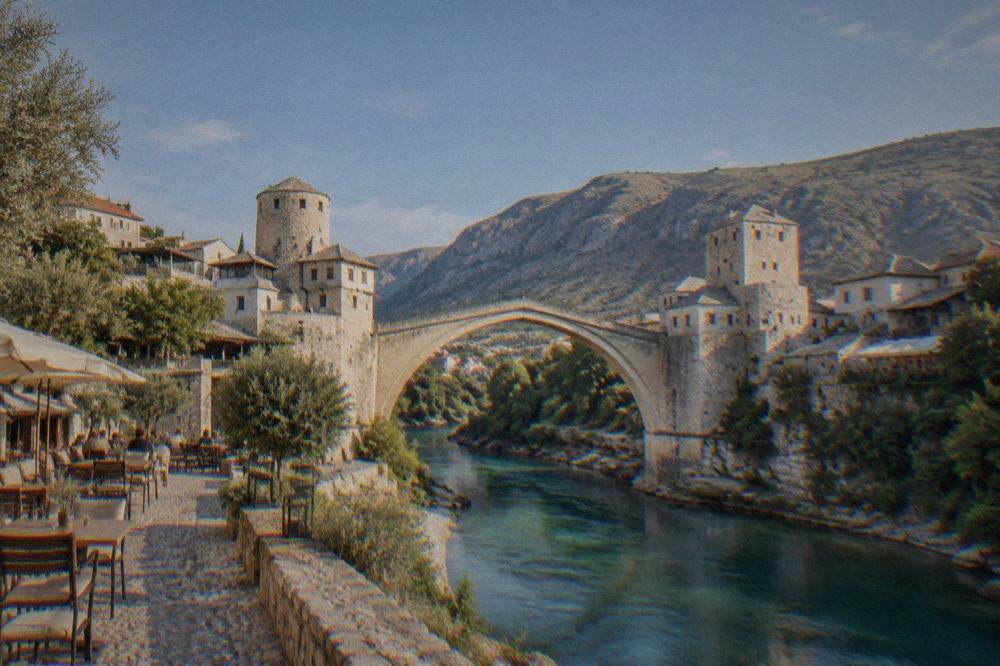
Start at Stari Most around 09:00, before the day-trip buses arrive, cross to the south bank through the Kujundžiluk bazaar, then walk east along the Neretva to Kriva ćuprija, the Crooked Bridge, and loop back through the Old Town. The Old Bridge crossing is free and open at any hour, and the bazaar and the Crooked Bridge are public streets with no admission.
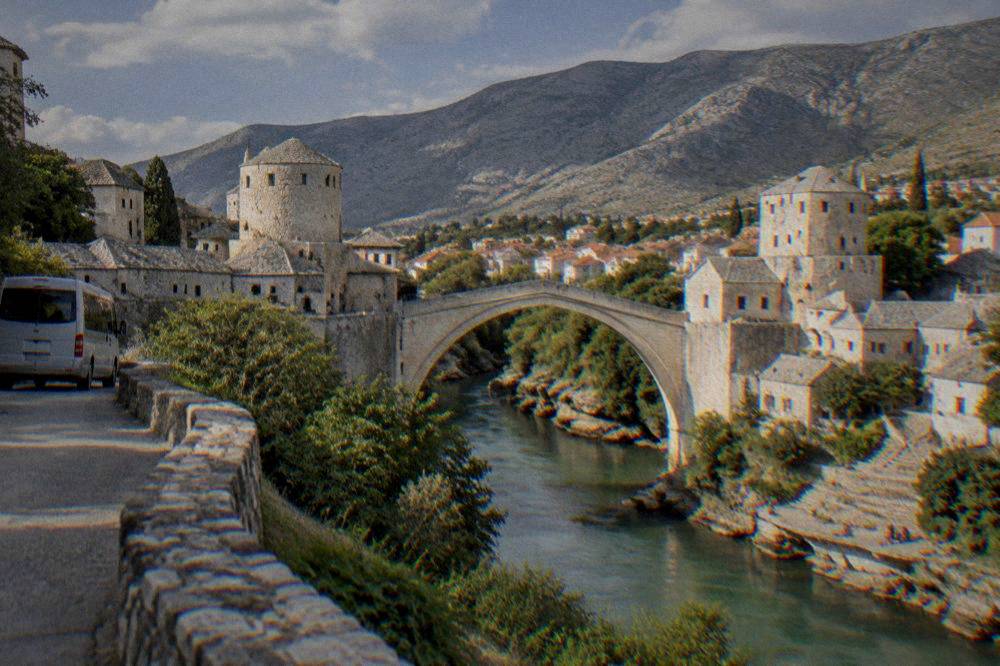
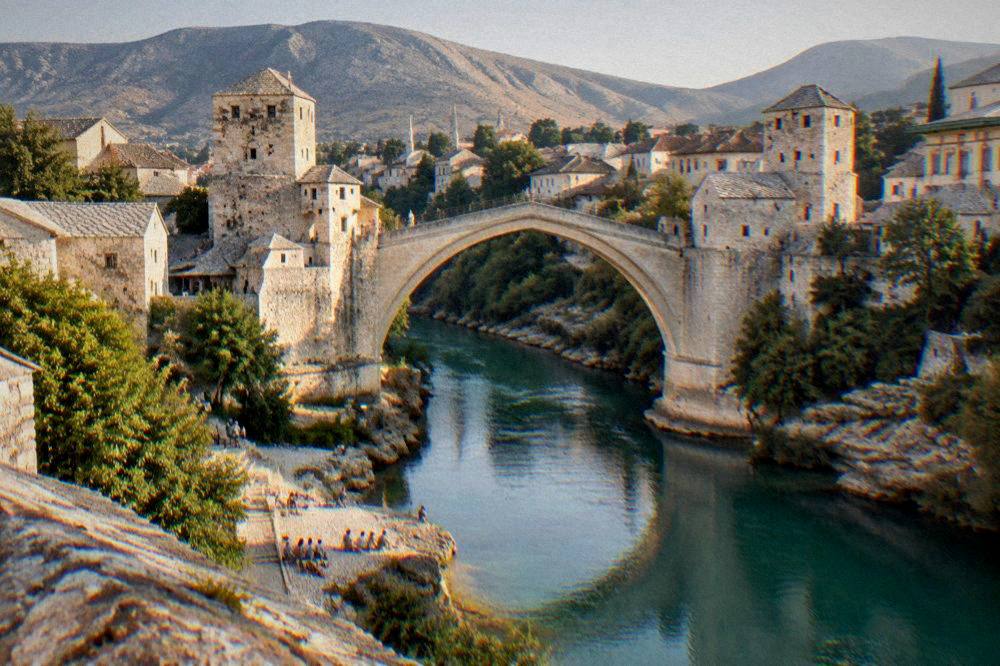
The Old Bridge itself deserves unhurried time. It was completed in 1566 under Suleiman the Magnificent, destroyed on 9 November 1993 during the war, and rebuilt and reopened in July 2004. It stands about 21 to 24 metres above the river depending on the water level. Members of the Mostari diving club jump from it through the warmer months; there is no pay-to-jump option for untrained visitors, so watch rather than plan on leaping.
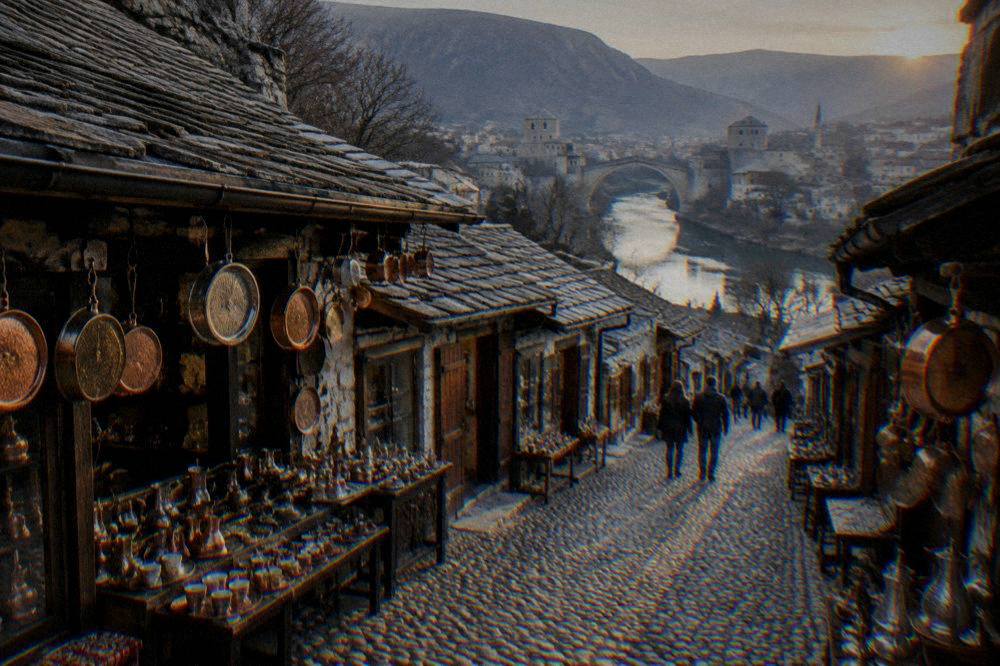
From the bridge, the Kujundžiluk bazaar runs downhill along the north bank, a lane of coppersmiths and small shops. Koski Mehmed-pašina džamija sits at the end near the river, with a small cash fee for the mosque and more with the minaret; the minaret terrace is one of the few raised viewpoints directly over the bridge. Details are on the Koski Mehmed Pasha Mosque page.
A quiet loop finishes the morning: east along the river past the Crooked Bridge, then back through the Old Town lanes. The Crooked Bridge page covers the small single-arch stone bridge that predates its famous neighbour as a design, and the Kujundžiluk page covers the bazaar street in depth.
| Morning stop | What it is | Cost |
|---|---|---|
| Stari Most | The bridge completed in 1566 and rebuilt in 2004, free to cross at any hour | Free |
| Kujundžiluk bazaar | Historic coppersmith street on the north bank | Free, public street |
| Koski Mehmed-pašina džamija | Riverside mosque with a minaret viewpoint | Small cash fee, more with the minaret |
| Kriva ćuprija | Small stone "Crooked Bridge" east of the centre | Free |
| Bišćević House | Ottoman courtyard house on the south bank | Small reported fee, confirm on site |
Where Should You Eat Lunch In Mostar?
Lunch on a one-day visit is best kept inside the Old Town or on the north bank near the bazaar, so the walking loop is not broken, with the river terrace tables around the bridge and the grill houses just off Kujundžiluk as the practical picks. The convertible mark (KM) is the currency, pegged at 1 EUR = 1.95583 KM, and euro cash is often accepted in tourist spots at a rounded rate, so confirm before paying.
Timing matters more than the venue. The bridge terraces fill when the day-trip buses land, so a table taken shortly before noon is calmer than one hunted at 13:00. Bosnian café food moves quickly: ćevapi, burek and salad plates are lunch-speed dishes rather than long sittings, which suits a one-day plan. The burek and ćevapi pages explain what each dish actually is, and the Bosnian food guide covers the rest of the menu.
One practical note on money: cards are accepted at hotels, larger restaurants and museums, but cash is preferred or required at small vendors, so carry some KM. The Mostar money guide covers the currency in full, including the peg and the euro question. The full index of guides sits on Mostar Travel Guide.
Is The Old Bridge Worth More Than One Look?
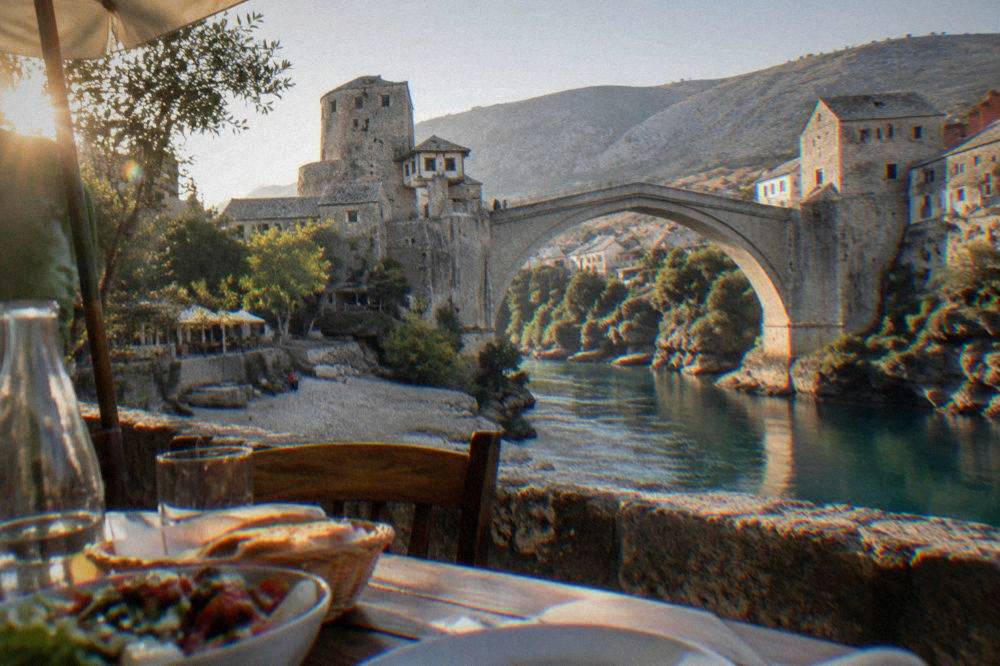
Yes, because Stari Most changes completely with the light and the viewing bank, and the five best looks at it, from the bazaar steps, the Koski Mehmed-pašina džamija terrace, the riverbank below, the bridge itself and the downstream curve of the Neretva, are all within a ten-minute walk. Crossing is free and the bridge is a public path at any hour.
The morning crossing is one bridge; the afternoon is another. Midday sun flattens the stone, while late afternoon warms the tenelija limestone and puts the divers in silhouette. The viewpoint list on the Mostar viewpoints page gives the full set, but the mosque terrace is the pick that needs planning, since it carries a fee and opening depends on prayer times.
The bridge's story is short and factual: completed in 1566, destroyed on 9 November 1993, rebuilt with original techniques and materials and reopened in July 2004, inscribed with the surrounding Old City on the UNESCO World Heritage list in 2005 under criterion (vi). The Stari Most page carries the full history, and the free things to do in Mostar round-up places it in context.
What About The Afternoon: City Or Herzegovina?
Give the afternoon to a guided Herzegovina trip if this is your only day in the region, because Blagaj, Počitelj and Kravica waterfall are 13.7 km, 30 km and 55.2 km from Stari Most by road and a self-drive loop eats hours; keep the afternoon in the city if you are staying overnight or returning, and spend it on the Ottoman houses and the Partisan Memorial Cemetery.
This is the real decision of a one-day plan, and it hinges on whether Mostar is a destination or a stop. A visitor passing through on a Dubrovnik or Split route gets one shot at Herzegovina's signature circuit, and the guided version of it, Blagaj Tekke, Počitelj and Kravica waterfall, is the standard answer. Blagaj Tekke carries a reported 10 KM entry and a dress code of covered shoulders and knees; Kravica waterfall charges 20 KM for an adult all year, with children under 7 free, and is open 07:00 to 22:00 from June to September. The Kravice, Blagaj, Počitelj in one day page breaks that circuit down stop by stop.
Visitors with a second night in hand can take the opposite fork. The Ottoman courtyard houses, Bišćević House and Muslibegović House, are quiet afternoon sights on the south bank, each with a small reported fee to confirm on site. The Partisan Memorial Cemetery on the hill west of the centre, designed by Bogdan Bogdanović and inaugurated in 1965, has no ticket and no staffed hours; its condition has drawn an Europa Nostra endangered-listing call for revitalisation, and over 700 of its stone markers were destroyed in 2022. Go in daylight, and read the Partisan Memorial Cemetery page first.
| Afternoon fork | What it covers | Time needed | Key cost |
|---|---|---|---|
| Guided Herzegovina trip | Blagaj Tekke, Počitelj, Kravica waterfall | A booked day-tour slot | Kravica entry 20 KM adult, all year |
| Self-drive Herzegovina loop | Same three stops, own car | About 55.2 km each way to Kravica | Petrol and parking, confirm locally |
| Slow city afternoon | Ottoman houses, cemetery, viewpoints | Three to four hours on foot | Small reported house fees |
| River afternoon | Neretva kayak safari or riverbank walk | Booked tour slot or one hour | Tour fee |
How Much Walking Is Involved In A Day In Mostar?
The full city loop described here, bridge to bazaar to Crooked Bridge, across to the south bank houses, up to the Partisan Memorial Cemetery and back down, is a few kilometres of mostly flat river walking with one real hill at the cemetery, and the Old Town itself is pedestrianised stone and cobbles, so comfortable shoes matter more than stamina. Mostar is a genuinely walkable city for a day visitor.
The compactness is the city's main gift to short visits. The is Mostar a walkable city answer page covers the terrain in detail, but the short version is that everything in this plan except the cemetery and Fortica is on the flat. Taxis are a short, inexpensive ride when needed, and the city bus network covers Blagaj and the airport line for anyone extending beyond the centre, as the getting-around guide explains.
Weather should shape the walking order. The FHMZ 1961-1990 station series gives Mostar a July mean of 24.7 C and an absolute maximum of 41.2 C, and ERA5 reanalysis 1991-2020 models mean daily highs of 30.5 C in August, so in summer the bridge looks belong to early morning and late afternoon, with the middle of the day given to shade, a museum or a bus seat. If rain arrives instead, the Mostar in the rain plan reorders the same day around indoor stops.
What Does One Day In Mostar Cost?
A day in Mostar's core is close to free: crossing Stari Most, walking Kujundžiluk and Kriva ćuprija and sitting by the Neretva cost nothing, the paid items are a small cash fee at Koski Mehmed-pašina džamija, small reported fees at the Ottoman houses, food, and an optional guided trip, while a reported 3 KM per person per night tourist tax applies in the canton, confirm at booking.
Budget planning here is about the paid layer sitting on top of a free base. The Mostar budget page expands on daily costs.
| Item | Figure | Status |
|---|---|---|
| Stari Most crossing | Free, public path | Stated plainly |
| Kujundžiluk and Kriva ćuprija | Free public streets | Stated plainly |
| Koski Mehmed-pašina džamija | Small cash fee, more with the minaret | Reported, confirm on site |
| Bišćević House | About 4 KM | Reported, confirm on site |
| Muslibegović House | About 8 KM | Reported, confirm on site |
| Kravica waterfall (if added) | 20 KM adult, all year | Stated plainly |
| Blagaj Tekke (if added) | 10 KM | Reported, confirm on site |
| Tourist tax | Reported 3 KM per person per night | Reported, confirm at booking |
Should You Arrive From Dubrovnik, Split Or Sarajevo For The Day?
A one-day visit to Mostar from Dubrovnik means 145.5 km and about 150 minutes of driving each way before border queues, from Split 174.1 km and about 131 minutes, and from Sarajevo 127.1 km and about 134 minutes, so all three are long days that give you a few hours in the city rather than a full day, and each is better done as a guided trip than as a self-drive there-and-back.
The border is the hidden cost of the Dubrovnik and Split routes. Bosnia and Herzegovina is not in the EU or Schengen, so the Croatian land border is a full external checkpoint with passport checks, and reported waits run up to about 30 minutes, longer at summer peaks. The dedicated Croatia-Bosnia border crossing guide covers the crossings near Mostar, and the route pages, Dubrovnik to Mostar, Split to Mostar and Sarajevo to Mostar, compare bus, train and car option by option.
Guided day trips solve the logistics by carrying the border and the parking. The itinerary pages for the Mostar day trip from Dubrovnik and the Mostar day trip from Split spell out what a one-day visit realistically covers from each base, including the Kravica waterfall stop that fits naturally on the approach road.
What If You Have A Second Day?
With a second day, keep day one entirely in the city and give day two to Herzegovina: Blagaj, Počitelj and Kravica waterfall in one loop, or Konjic and Jablanica north along the Neretva, which turns a rushed one-day visit into a relaxed two-day one and moves the guided day trip off the same day as the Old Town walk.
The two days in Mostar and three days in Mostar plans do the splitting for you. The second day also unlocks the farther stops, Trebinje at 116.5 km and the Vjetrenica cave at 77.2 km, which no one-day visitor should attempt. Travellers building a wider route can move on to the Herzegovina road trip, the Bosnia and Herzegovina itinerary or the Balkans itinerary plans, which place Mostar in sequence with Sarajevo, Dubrovnik and Kotor.
What Time Of Year Suits A One-Day Visit Best?
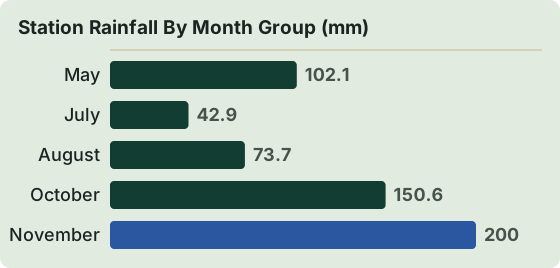
Late spring and early autumn suit a one-day Mostar visit best, because ERA5 reanalysis 1991-2020 models mean daily highs of 29.9 C in July and 30.5 C in August against 22.3 C in May, and the FHMZ 1961-1990 series gives November 200.0 mm of rain against July 42.9 mm, so summer brings heat and winter brings rain, with the walking core fully usable in between.
The numbers deserve a straight read rather than superlatives. July's absolute maximum on the station series is 41.2 C, and the Neretva water stays cold even in August, so riverside afternoons are pleasant while midday stone is not. November is the high-rainfall month at 200.0 mm and July the low at 42.9 mm, roughly 4.7 times apart. Winter visits work, with the bridge and bazaar open year-round and Kravica waterfall on 07:00 to 17:00 hours in January and February, but daylight is short and the terraces close. The best time to visit Mostar and Mostar weather pages carry the full tables.
| Month group | Modelled mean daily high (ERA5 1991-2020) | Station rainfall (FHMZ 1961-1990) | One-day verdict |
|---|---|---|---|
| May | 22.3 C | 102.1 mm | Comfortable walking weather |
| July | 29.9 C | 42.9 mm | Early starts, shaded middays |
| August | 30.5 C | 73.7 mm | Same as July, warmest nights |
| October | 19.5 C | 150.6 mm | Mild, rain more likely |
| November | 14.1 C | 200.0 mm | Quietest, wettest month |
What Are The Practical Rules For A Day In Mostar?
Carry convertible marks in cash for small fees, vendors and the mosque, remember Bosnia and Herzegovina is not in the EU or Schengen so a passport is needed at the Croatian border, use 112 as the emergency number, and if you wander beyond town into rural Herzegovina, stay on marked paths because of suspected mine areas, while the city core itself is ordinary tourist ground.
A few habits carry the day. Plug sockets are type C and F at 230 V. Visa-exempt visitors may stay up to 90 days in a six-month period from first entry. Tipping is appreciated, roughly 10 percent or a round-up at restaurants, but never mandatory. Cards work at hotels, bigger restaurants, supermarkets and museums; cash rules the bazaar stalls and small café tables. The Bosnia and Herzegovina travel tips page collects all of this, and the Mostar car rental guide covers driving in, including the cross-border permission rental firms require before you take a Croatian-plated car into the country.
If the day ends late, the evening question is answered on the is it safe to walk around Mostar at night page, and family-specific timing is on the Mostar with kids plan.
Common Questions About One Day In Mostar
Is one day enough for Mostar?
One day is enough for the historic core, Stari Most, Kujundžiluk, Kriva ćuprija, the riverside mosques and a viewpoint, all within a short walk. It is not enough to add Blagaj, Počitelj and Kravica waterfall unless the afternoon goes to a guided trip.
Can you walk everywhere in Mostar in one day?
Yes. The Old Town core is pedestrianised and flat, and the loop in this plan is a few kilometres of walking, with the Partisan Memorial Cemetery hill as the only real climb. A full walkability breakdown is on the is Mostar a walkable city answer page.
Does it cost anything to see the Old Bridge?
No. Stari Most is a public pedestrian crossing, free and open at any hour, with no ticket. Paid sights nearby include Koski Mehmed-pašina džamija for a small cash fee and the Ottoman houses for small reported fees.
Can you do Blagaj and Kravica waterfall on the same day as Mostar?
Only as a fast loop or a guided trip. Blagaj Tekke is 13.7 km and about 19 minutes by road from Stari Most, Počitelj 30 km, and Kravica waterfall 55.2 km and about 54 minutes, so the three-stop circuit is a full-day outing on its own.
What currency do you need in Mostar?
The convertible mark, KM, pegged at 1 EUR = 1.95583 KM. Euro cash is often accepted in tourist areas at a rounded rate, but the mark is the official currency and cash is needed at small vendors, so confirm rates before paying in euro.
Is Mostar too hot for a one-day summer visit?
It is hot but manageable. ERA5 reanalysis 1991-2020 models mean daily highs of 29.9 C in July and 30.5 C in August, and the station absolute maximum is 41.2 C, so cross the bridge early, take the middle of the day in shade, and return to the river in the late afternoon.
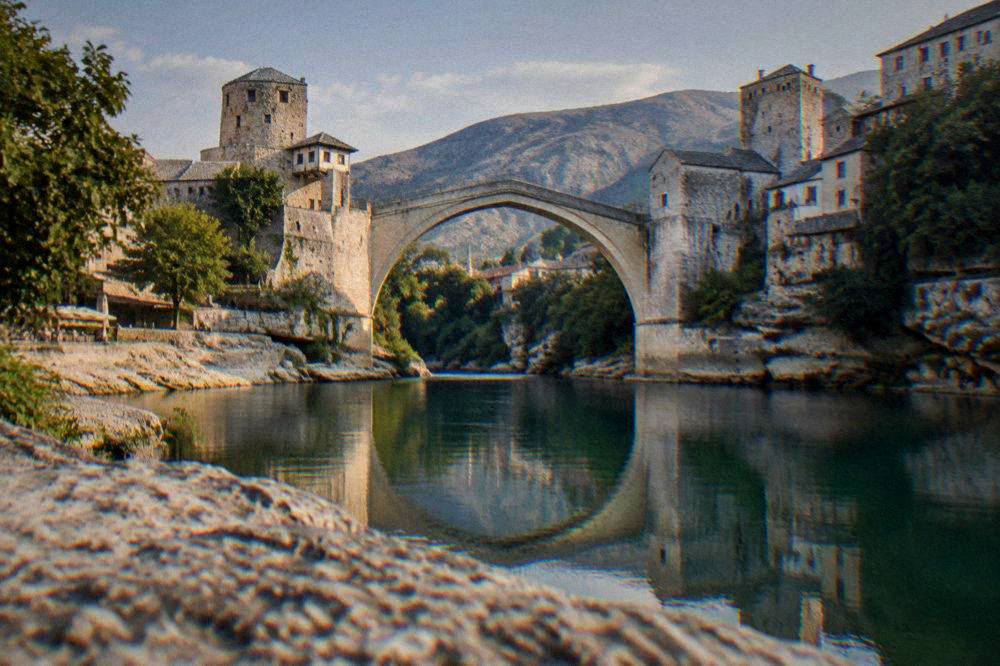
The shape of the day, in one line: bridge and bazaar before the crowds, a riverside lunch, then the fork between a guided Herzegovina afternoon and a slow city one, closed out with a final look at Stari Most in the late light. That final look is the part worth protecting, because the bridge that survived 1993 and reopened in July 2004 earns it.
