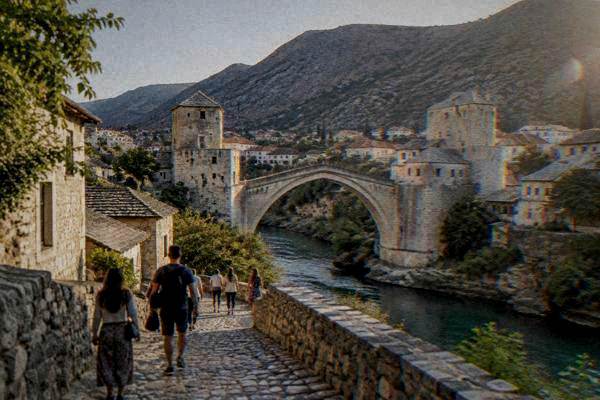
Best Viewpoints Of The Old Bridge
The Old Bridge of Mostar is one of the most photographed spans in the Balkans, and the angles that make it famous are all within a short walk of the Old Town. This guide lists the viewpoints, which are free, what each one shows, and when the light cooperates.
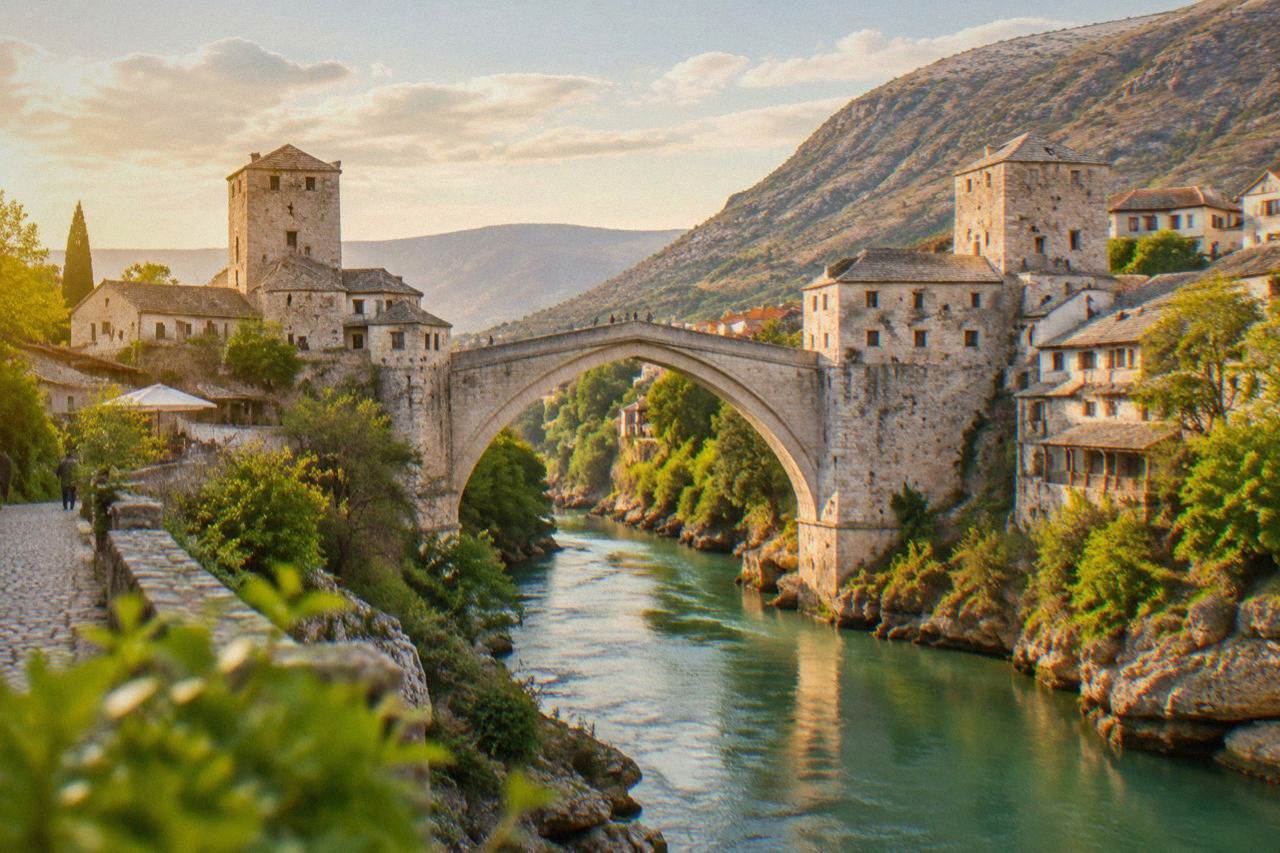
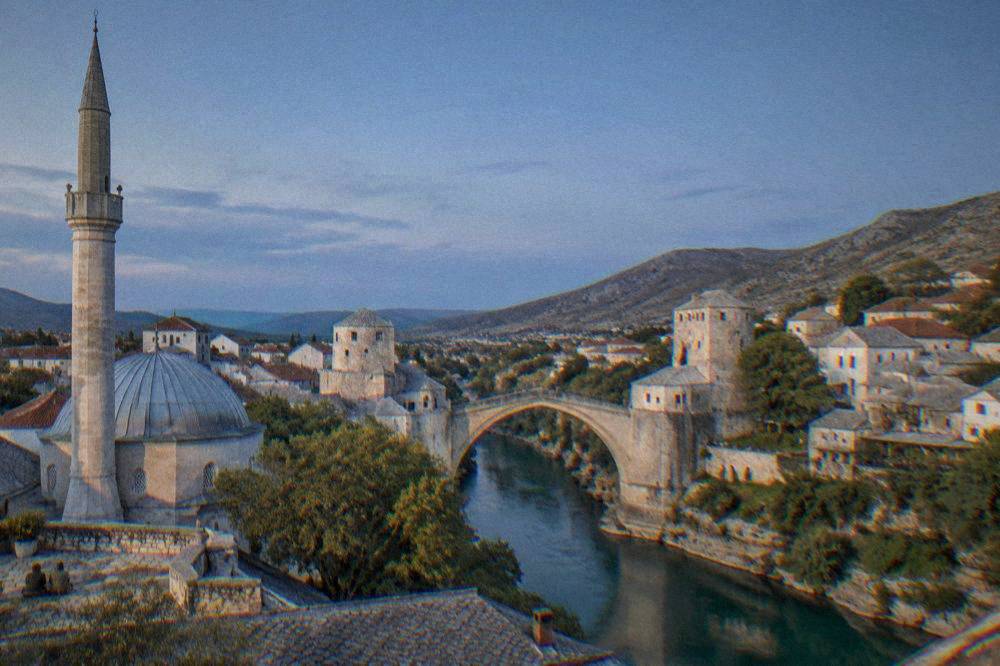
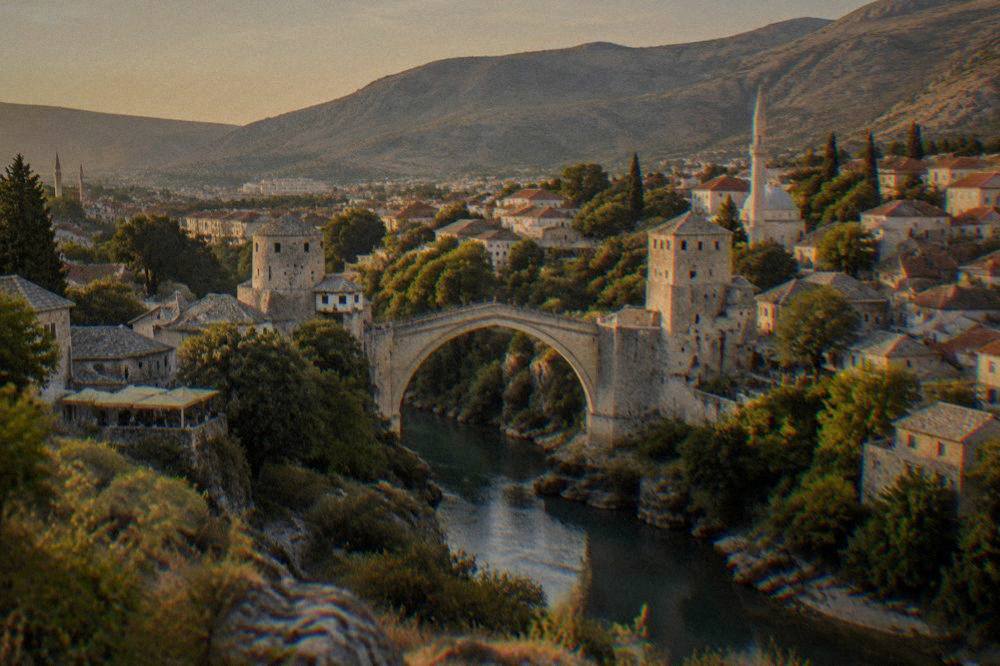
The classic Mostar old bridge photopoint is the rocky riverbank just downstream of Stari Most on the Kujundžiluk side, reached by stairs beside the bridge, where the full arch reflects in the Neretva. The minaret terrace of Koski Mehmed-pašina džamija gives a raised view over the bridge and rooftops, and the staircase streets below Hum give the wide panorama. All three are within ten minutes on foot of each other.
The Old Bridge, Stari Most, carries its single stone arch over the Neretva in the centre of Mostar, an inland city in Herzegovina, Bosnia and Herzegovina, and every viewpoint worth standing at sits within a short walk of it. The bridge was completed in 1566 under Suleiman the Magnificent by the architect mimar Hajruddin, destroyed on 9 November 1993 during the war, and rebuilt and reopened in July 2004. The Old Bridge Area of the Old City is a UNESCO World Heritage property, inscribed in 2005. Photographers come for the arch, the cold green river and the white stone of Kujundžiluk, and the good news is that the standard postcard views cost nothing: the bridge is free to cross and open around the clock, and the riverside spots below it are public. This page from Mostar Travel Guide walks through each angle, what it shows, when the light works and which raised terraces carry a small fee.
Where Are The Best Views Of Stari Most In Mostar?
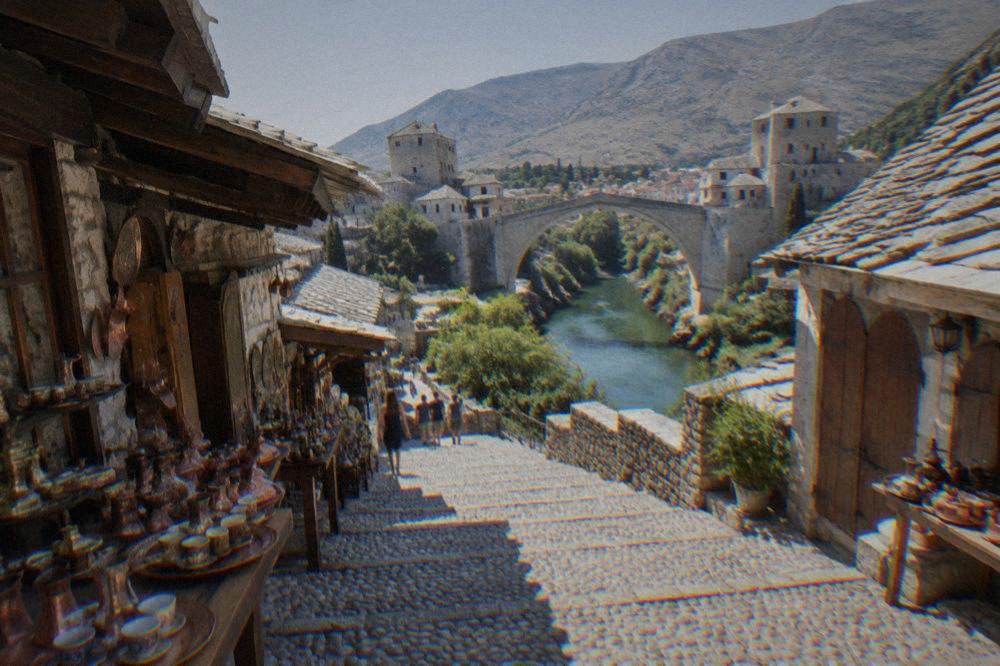
The essential Mostar old bridge photopoint is the rocky east-bank riverbed just downstream of Stari Most, reached by the stone stairs that drop from the Kujundžiluk bazaar side, where you stand at water level with the full arch and its reflection in the Neretva. The raised terrace of Koski Mehmed-pašina džamija gives the overhead view, the staircases below Hum give the wide city panorama, and each spot is within a few minutes on foot of the Old Town.
The riverbank spot is the one on the postcards. The stairs beside the bridge descend from the bazaar street to a ledge of smooth white rock where the Neretva runs shallow enough in summer to expose flat standing room. From there the bridge fills the frame edge to edge, with the mill houses on the far bank behind it. The stone is slick where the spray lands, so flat shoes with grip matter more than anywhere else in the city. If you want the classic reflection, still air and morning light help, and the Neretva's colour, a cold green in every season, does the rest.
Two other angles complete the set. From the west bank, along the path that runs below the Old Town terraces, the bridge sits against the minaret of Koski Mehmed-pašina džamija rather than against the bazaar roofline, which suits tighter, vertical compositions. And from the bridge deck itself, looking along the spine of the arch toward Kujundžiluk, you get the view the bridge keepers, the mostari who gave the city its name, would have known: the roofs stacked up the hillside and the river bending away north. Members of the Mostari diving club jump from the bridge in the middle of the day in the warmer months, and if one is collecting for a jump, the riverbank is the place to wait with the camera ready, since jumps from the roughly 21 to 24 metre height, depending on the river, happen in seconds.
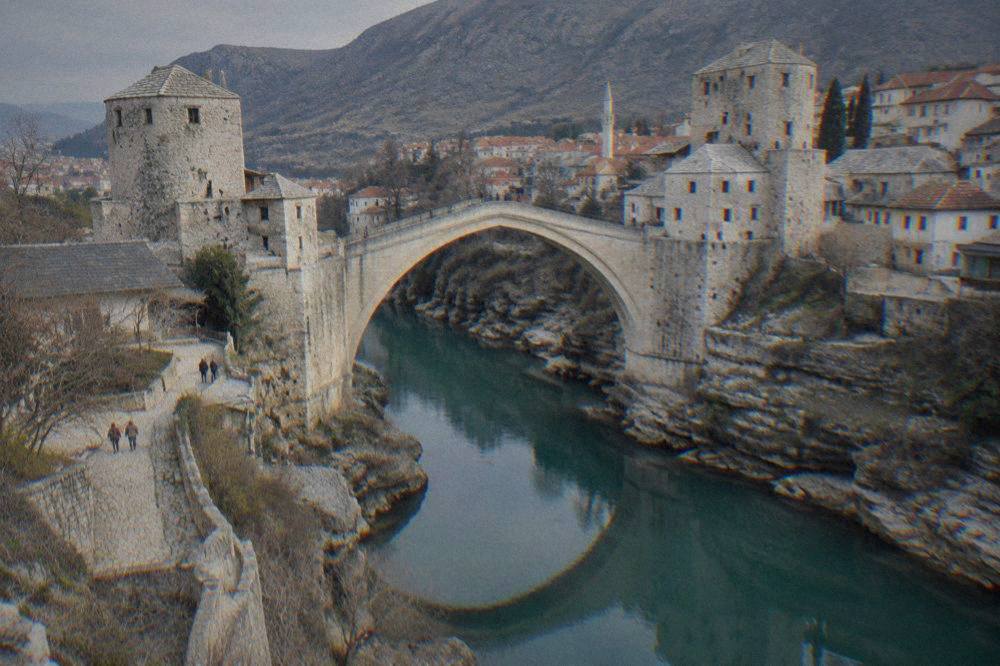
For the full picture of what the city holds beyond the bridge itself, the root guide to things to do in Mostar covers the Old Town, the museums and the day trips, and the story of the span itself is in why the Mostar bridge is so famous.
| Viewpoint | Position | What it shows | Access |
|---|---|---|---|
| East-bank riverbed | Downstream of Stari Most, below Kujundžiluk | Full arch at water level, reflection, divers | Stone stairs, free, slippery rock |
| Bridge deck | On Stari Most itself | Bazaar roofline, river bend, terrace houses | Free, open around the clock |
| West-bank path | Below the Old Town terraces | Arch against the mosque minaret | Free, level gravel path |
| Koski Mehmed-pašina džamija terrace | Minaret platform | Raised view over bridge and river bend | Small cash fee, reported |
| Staircase streets below Hum | East side of the valley | Wide panorama of bridge, city and hills | Free, many steps |
| Crooked Bridge, Kriva ćuprija | North of the Old Town | Small stone arch over a side channel | Free, level |
A guided walk is the efficient way to find these spots on a first visit, and a private option such as the private group city tour of Mostar and the Old Bridge pairs the riverside angles with the history of the span. For readers who want company on the climb to the hillside benches, the general Mostar walking tour covers the same ground.
Which Side Of The Neretva Gives The Best Photos Of The Old Bridge?
The east, Kujundžiluk side gives the signature photo of Stari Most, because the riverbank there sits low and downstream, so the arch reads whole against the west-bank houses and the Neretva carries its reflection. The west side answers with a different picture: from below the Old Town terraces, and higher up from the minaret terrace of Koski Mehmed-pašina džamija, the bridge is framed against the bazaar roofline and the hillside, with the mosque tower rising above the stone.
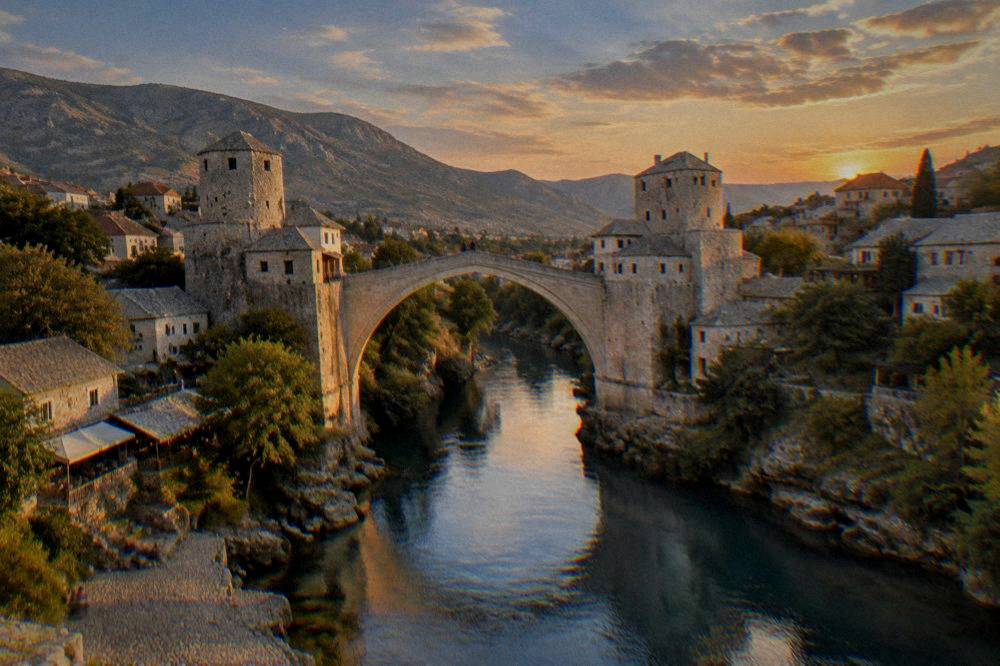
Neither side wins outright, because they photograph different things. The east bank is about the arch as a single object: clean silhouette, water, reflection. Morning is when the light strikes the west face of the bridge from this side, and by late afternoon the arch backlights, which is the golden-hour look with the sky behind the stone. The west bank is about the bridge in its setting: minaret, roofs, the terraced gardens that climb toward Spanish Square. This side faces east, so it takes its best light in the afternoon, when the low sun warms the bazaar stone on the far side of the river.
The practical difference is footing. The east bank means stairs and slick rock at water level; the west bank path is gentler, and it connects to the terrace of the Koski Mehmed-pašina mosque, where a reported small cash fee buys the raised platform, and more with the minaret climb. The terrace height changes the geometry completely: from above, the bridge reads as a thin crescent over the river and the Old Town roofs spread out behind it, a composition that simply does not exist from the banks. Confirm the current fee on arrival, since reported figures vary and worship pauses access at prayer times.
| Angle | Side | Best light | Suited to |
|---|---|---|---|
| Water-level arch and reflection | East, riverbed | Morning to midday | Wide and long-lens shots of the arch |
| Diver in mid-air | East, riverbed | Midday, warmer months | Action frames of club jumps |
| Bridge against the minaret | West, river path | Afternoon | Vertical and tight compositions |
| Bridge as a crescent from above | Mosque terrace | Late afternoon | Panorama of roofs, river and arch |
| Bazaar spine view | Bridge deck | Any daylight | Street scene along the arch |
Which Mostar Viewpoints Can You Reach On Foot From The Old Town?
Every core viewpoint in Mostar sits within a short walk of Stari Most: the riverbed photopoint is directly below the bridge, the west-bank path starts at the bridge's west abutment, the Koski Mehmed-pašina džamija terrace stands a couple of minutes along the same bank, and the staircase streets that climb below Hum toward the panoramic benches take a steady but short ascent from the Kujundžiluk end. No transport is needed for any of them, and the whole circuit is walkable in an unhurried loop.
The loop works best anticlockwise. Start at the bridge, descend the east-bank stairs for the water-level arch, come back up through Kujundžiluk, cross to the west side, and take the river path to the mosque terrace. From there the staircases behind the Old Town rise to the benches that look back over the whole valley: bridge, minarets, the Neretva bending north and the hill of Hum closing the frame. The climb is the only real effort in the circuit, and the stairs are old stone, so take them slowly in the heat of the afternoon.
The Crooked Bridge, Kriva ćuprija, makes a quiet final stop. It is a small single-arch stone bridge over a side channel a few minutes north of the bazaar, free to visit at any hour, and it reads as a miniature of the Old Bridge without a crowd in front of it. Early morning is when the lanes around it are empty, and the same is true of the main bridge: the arch is public and free around the clock, so the hours either side of sunrise belong to whoever sets an alarm.
Between the morning and golden-hour sessions there is time for the interiors, and the small Museum of the Old Bridge in the Tara tower at the bridge's east abutment adds the archaeological layer to the view outside. The longer historical arc, from the first written mention of Mostar in 1474 to the reconstruction completed in 2004, is laid out in the site's Mostar history guide.
| Stop on the loop | Position | Effort | Cost |
|---|---|---|---|
| East-bank riverbed | Below the bridge | Steps down, slick rock | Free |
| Bridge deck | Stari Most | Level crossing | Free |
| West-bank river path | Along the Neretva | Level | Free |
| Mosque terrace | West bank | One flight | Small cash fee, reported |
| Hillside benches below Hum | East side above the town | Staircase climb | Free |
| Kriva ćuprija | North of the bazaar | Level | Free |
What Time Of Day Has The Best Light At The Old Bridge Photopoint?
Morning light hits the west face of Stari Most from the east-bank riverbed, which is the side the classic Mostar old bridge photopoint photographs, while late afternoon backlights the arch from the same spot and turns the bazaar stone warm from the west-bank side; midday is flat but it is when the Mostari diving club members jump, so the day splits into a light schedule and an action schedule.
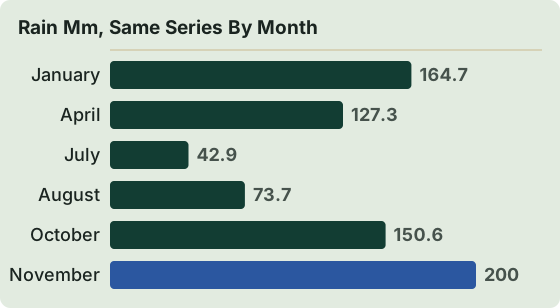
November averages 200.0 mm of rain against July's 42.9 mm, FHMZ 1961-1990, so summer months are the reliable ones for a planned shoot.
The geography is simple: the valley runs roughly north to south, the bridge spans it east to west, so the east face of the arch takes the morning sun and the west face takes the evening. For the reflection shot, still air matters as much as direction, and the river is at its calmest early. By late morning in summer the light is already high and hard; the ERA5 reanalysis, 1991-2020, puts the modelled mean daily high at 30.5 C in August, so the middle of the day is better spent in shade with a long lens trained on the bridge deck, waiting for a jump.
Golden hour reverses the morning. The west-bank path and the mosque terrace take the warm sidelight on the bazaar, and the arch silhouettes cleanly from the riverbed with the sky behind it. Blue hour, the minutes after sunset, is the quiet bonus: the bridge and the mill houses are lit, the river holds colour, and the crowds thin. Rain risk is a winter consideration more than a summer one, and the station record shows why: FHMZ Mostar, 1961 to 1990, counts 11 days with more than 1 mm of rain in both November and December against 5 in July.
| Month | Mean temp C, FHMZ 1961-1990 | Rain mm, same series | Rain days over 1 mm |
|---|---|---|---|
| January | 4.8 | 164.7 | 11 |
| April | 13.3 | 127.3 | 11 |
| July | 24.7 | 42.9 | 5 |
| August | 24.2 | 73.7 | 6 |
| October | 15.3 | 150.6 | 8 |
| November | 10.1 | 200.0 | 11 |
The diving schedule is the other clock. Club members jump around the middle of the day in the warmer months, and the sport's big dates are fixed points of the summer: the 460th traditional competition ran on 26 July in 2026, and the Red Bull Cliff Diving World Series stop ran 30 July to 1 August 2026, with the women diving from 21 m platforms and the men from 27 m. The background to the jumping tradition is covered in the Mostar bridge diving guide.
Which Mostar Viewpoints Cost Money, And Which Are Free?
Crossing Stari Most is free and open around the clock, the Kujundžiluk bazaar and the Crooked Bridge are public streets with no admission, the riverside photopoints and the hillside staircases cost nothing, and the only raised terrace among the core viewpoints, the minaret platform of Koski Mehmed-pašina džamija, carries a small reported cash fee, more if you climb the minaret itself; confirm the current figures on arrival, since reported amounts vary between sources.
The free list is long, and it covers every ground-level angle in the city. The bridge deck, both riverbanks, the west path, the staircases below Hum and Kriva ćuprija are all public. The paid list is short: the mosque terrace, plus, further out on day trips, the sights with published entry. Kravica waterfall charges 20 KM for an adult all year, 10 KM for residents of Bosnia and Herzegovina, with children under 7 free, per the park's own visitor page, and the park keeps monthly hours, 07:00 to 22:00 from June to September, 07:00 to 17:00 in November, December, January and February.
The mosque figures deserve the caveat twice, because reports range roughly from the mosque-only amount to nearly double with the minaret, and none of it is an official posted tariff. Treat the fee as a few marks in cash, carry small notes, and check at the entrance. Modest dress applies inside the mosque, and access pauses for worship. For anything not on this list, such as the terraces of private houses or cafes along the west bank, seating with a drink is the usual arrangement, and prices there are confirmed at the table.
| Viewpoint or sight | Admission | Notes |
|---|---|---|
| Stari Most, bridge deck | Free | Public, open around the clock |
| East-bank riverbed photopoint | Free | Stone stairs, slick rock |
| Koski Mehmed-pašina džamija terrace | Small cash fee, reported | More with the minaret, confirm on arrival |
| Hillside benches below Hum | Free | Staircase climb |
| Kriva ćuprija | Free | Public street |
| Kravica waterfall | 20 KM adult all year | 10 KM residents, under 7 free |
For planning a stay around these mornings and evenings, the neighbourhood breakdown in where to stay in Mostar explains which parts of the city put you within minutes of the bridge, and the food guide to restaurants in Mostar lists the tables worth booking after the blue hour.
What Does The Old Bridge Look Like From Above?
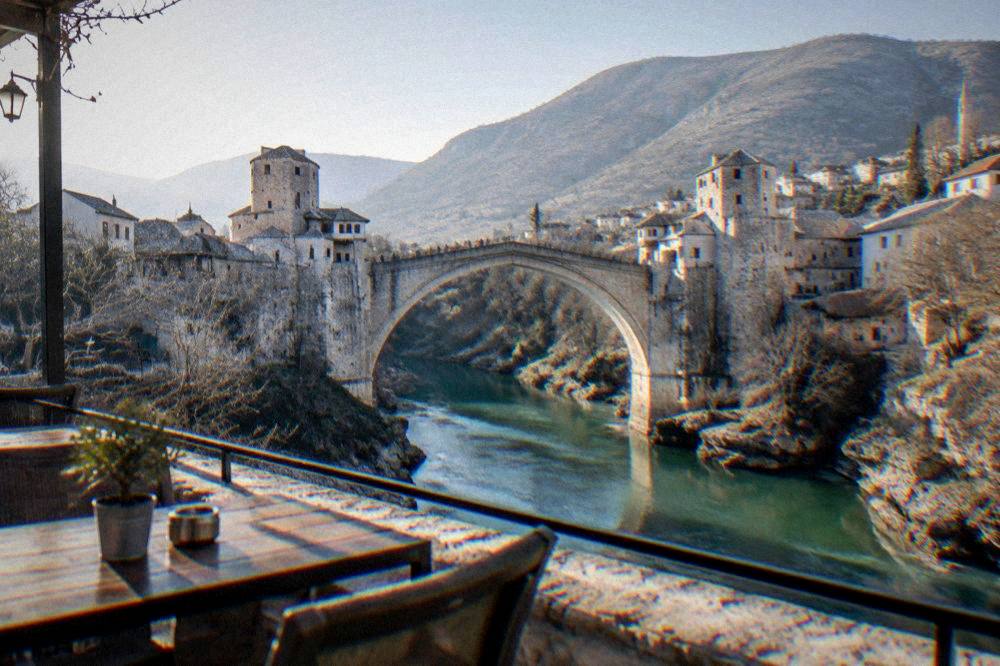
From above, Stari Most reads as a thin stone crescent over the Neretva rather than an arch, and the raised views come from three directions: the minaret terrace of Koski Mehmed-pašina džamija directly west of the span, the hillside staircase streets east of the valley below Hum, and the ridge paths and zipline area around Fortica higher on the west side, where the whole city, the river's bend and the surrounding hills fit in one frame.
The mosque terrace is the closest overhead angle and the easiest, one flight up from the river path. The hillside benches are the middle option, a staircase climb from the bazaar end that trades effort for the classic panorama: bridge in the lower third, minarets and roofs in the middle, Hum behind. Go in the late afternoon and the whole west-facing stack of the Old Town takes the warm light.
Fortica, on the hill above the west bank, is the high option, and the site's combination tour of the Fortica skywalk and street art is the structured way up, with a zipline optional for anyone who wants the descent to be faster than the climb. From that height the bridge is a detail in the valley, which is the point: it is the view that shows why the city sits where it does, on the narrowest strong crossing of the Neretva between the hills. The view also explains the name, since mostari, the bridge keepers, gave the settlement its identity well before the first written mention of Mostar in 1474.
Which Day Trips From Mostar Add The Best Views?
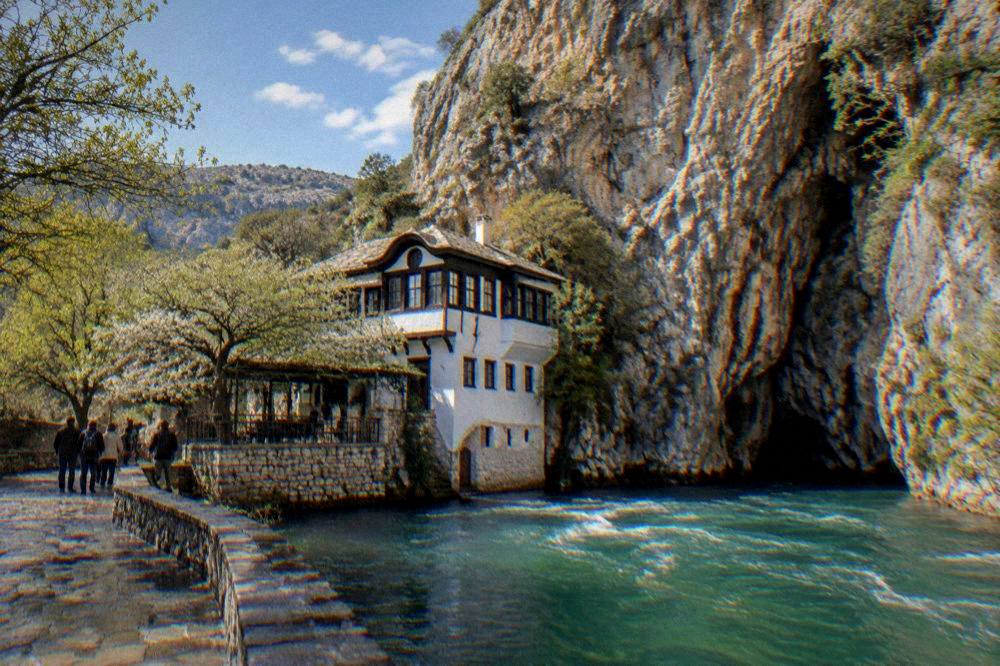
The three signature day-trip views from Mostar are the Buna spring at Blagaj, where a Dervish tekke stands beside a cliff-face river source 13.7 km and about 19 minutes by road from Stari Most; the fortified stone village of Počitelj stacked on its hillside 30.0 km and about 31 minutes away; and Kravica waterfall, a wide limestone curtain on the Trebižat 55.2 km and about 54 minutes out, all three of them regularly combined into a single Herzegovina loop from the city.
Blagaj is the closest and the most photogenic per minute driven. The Blagaj Tekke sits at the base of a sheer cliff where the Buna emerges as a full river, and the viewpoint across the water, with the white house and the rock wall behind it, is one of the most published images of Herzegovina. Entry to the tekke is a reported 10 KM, with the house open 08:00 to 22:00 from April to October and 09:00 to 17:00 from November to March, and shoulders and knees covered inside, with wraps provided. The ruined fortress of Stjepan-grad above the village adds the raised view over the whole Buna valley, 13.9 km and about 20 minutes by road from Stari Most.
Počitelj is the hillside composition. The stone houses, mosque and tower climb a cone above the Neretva, and the short ascent to the fortress walls gives the view down over the village roofs and the river plain. Entry to the village itself is free, with small optional fees reported for the mosque and tower. Kravica is the natural finale, a roughly 25 m high arc of falls with a pool below where swimming is allowed in summer in the designated area, with no lifeguard reported, so check the park's rules on arrival. Its 20 KM adult ticket applies all year, and the June-to-September hours run to 22:00, which makes a late-afternoon arrival both cooler and quieter.
| Day trip from Stari Most | Road km | About minutes, free-flow | Signature view |
|---|---|---|---|
| Blagaj Tekke | 13.7 | 19 | Tekke below the cliff at the Buna spring |
| Stjepan-grad fortress | 13.9 | 20 | Buna valley from the ruin above Blagaj |
| Počitelj | 30.0 | 31 | Stone village stacked on its hillside |
| Radimlja necropolis | 33.5 | 42 | Stećci tombstones, UNESCO property since 2016 |
| Kravica waterfall | 55.2 | 54 | Wide limestone falls and swimming pool |
| Jablanica | 47.4 | 57 | Neretva lake and the ruined bridge |
The half-day option to the falls suits a visit built around city mornings, and the half-day trip to the Kravica waterfall covers the single long drive of the set. The full loop is better served by the day tour to Blagaj, Počitelj and Kravica, which strings all three views into one circuit with the driving handled.
Further afield, the stećci tombstones of Radimlja near Stolac form part of a UNESCO property inscribed in 2016, and the Stolac and Trebinje guides cover the eastern loop, while Konjic and Jablanica cover the northern one along the Neretva lake.
How Do You Photograph The Bridge Without The Crowds?
Stand on Stari Most or the riverbed before about 08:00 and the arch is yours, because the bridge is free and open around the clock, so the emptiest frames come in the first and last hour of daylight; mid-morning through afternoon is when the tour groups from Dubrovnik and Split move through, and the middle of the day is best given over to the raised terraces, the interiors or a long lens trained on the diving club jumps from a shady spot on the west bank.
The morning session is the discipline that pays. The riverbed steps take two minutes from the bazaar, the light on the west face is soft until mid-morning, and the still air before the city wakes up gives the cleanest reflection. After that, work with the crowd instead of against it: the crowds are on the bridge and the two nearest streets, while the west-bank path, the mosque terrace and the staircases above the bazaar thin out within a couple of minutes' walk. The hillside benches below Hum are the most reliable empty frame of all, because the climb filters for intent.
Two practical notes finish the kit list. The riverbed rock is polished and wet near the water, so grip beats style, and the Neretva is cold even in August, fed from karst sources, which matters if a slip ends in the river rather than near it. And the bridge itself is a protected monument in a UNESCO property, so the standard etiquette applies: keep the diving club members their space, and do not treat the parapet as a tripod platform when the deck is busy. A first-timer's route through the city, viewpoints included, is laid out in the two days in Mostar itinerary.
Common Questions About Mostar Viewpoints
Where is the classic Mostar Old Bridge photopoint?
The classic shot is taken from the rocky east-bank riverbed just downstream of Stari Most, reached by the stone stairs that drop from the Kujundžiluk bazaar side of the bridge. The spot is free, public and at water level, with the full arch reflected in the Neretva behind you.
Can you see the Old Bridge without paying?
Yes. Crossing Stari Most is free and open around the clock, both riverbanks are public, and the hillside staircases and the Crooked Bridge cost nothing. The only paid viewpoint among the core set is the terrace of Koski Mehmed-pašina džamija, which carries a small reported cash fee.
Which viewpoint is best at sunset?
The west-bank river path and the mosque terrace take the warm late light on the bazaar and the bridge's west face, while the east-bank riverbed turns the arch into a silhouette against the sky. Blue hour afterwards adds lit bridge and mill houses over still water.
How high is the Old Bridge above the river?
About 21 to 24 metres depending on the river level, with a span of about 29 m. The Red Bull Cliff Diving platforms are separate structures: 21 m for the women and 27 m for the men. Only members of the Mostari diving club jump from the bridge.
Which day trip has the best views near Mostar?
Blagaj, 13.7 km and about 19 minutes by road, for the tekke below the cliff at the Buna spring; Počitelj, 30.0 km and about 31 minutes, for the hillside village; and Kravica waterfall, 55.2 km and about 54 minutes, for the wide falls with summer swimming. All three combine into one Herzegovina loop.
Is the riverbank photopoint safe to stand on?
The rock below the bridge is smooth and slick where spray lands, so flat shoes with grip are advised. The Neretva is cold even in August. In rural Herzegovina beyond the city, stay on marked paths because of suspected mine areas.
The viewpoints of Mostar are generous with their subject and cheap with their access: one free arch, one cold green river, and a ring of terraces, staircases and hillside benches that ask for nothing but a climb. Pick the side that matches the hour, carry small cash for the one raised terrace, and save the middle of the day for the divers.