Where To Stay In Mostar: Areas And Hotels
Mostar is small enough that almost any bed in the city puts you within a short walk of Stari Most, but the side of the river you choose changes the price, the noise and the rhythm of your stay.
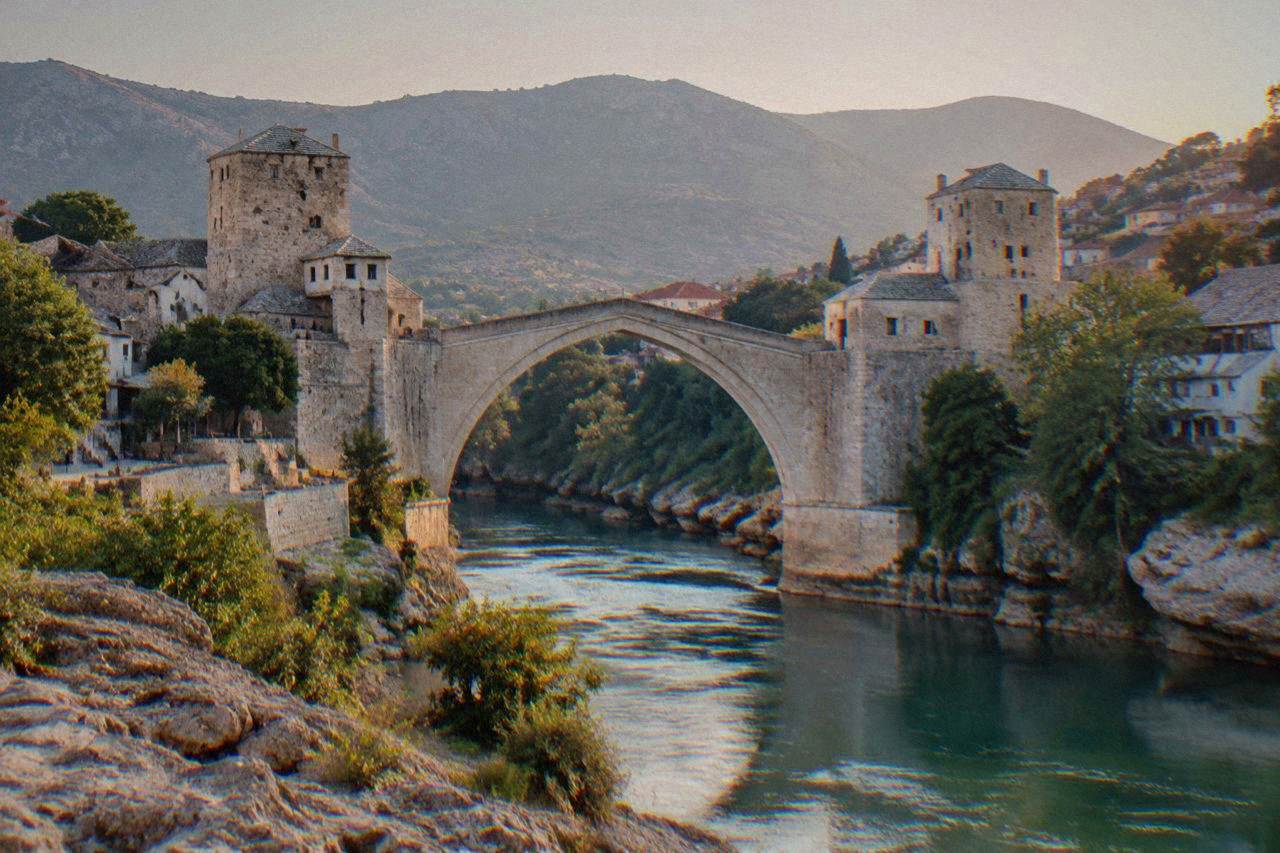
Stay in or beside the Old Town for a first visit, on the west side around the Rondo and Bulevar for quiet and space, or in Donja Mahala across the river for a local, lower-key base. A tourist tax reported at 3 KM per person per night applies in the canton from 1 January 2026.
Mostar is a compact city of about 105,000 people (2013 census) built on both banks of the Neretva river, and its whole tourist core fits within a fifteen-minute walk end to end. That compactness is the single biggest fact behind any hotel decision here: unlike Dubrovnik or Split, where a wrong suburb can cost you an hour a day, in Mostar even the outer neighbourhoods sit close to the stone streets of Kujundžiluk. The choice that actually matters is between atmosphere and convenience, between the cobblestones of the Old Bridge Area and the calmer residential streets of West Mostar. The Old Bridge Area of the Old City is a UNESCO World Heritage property, inscribed in 2005, and staying inside it means sleeping inside a heritage site, with everything that implies for noise, luggage and crowds in July.
Which Area Of Mostar Should You Stay In?
The practical answer is that first-time visitors stay in or on the edge of the Old Town, walkers and families base themselves in West Mostar around the Bulevar, and travellers who want a local pace cross the river into Donja Mahala. All three areas share the same small city: the Old Bridge is the fixed point, Spanish Square is a few minutes' level walk from it, and everything in between is pedestrian-friendly pavement. Herzegovina's climate plays a part too. July means average around 24.7 C on the FHMZ 1961-1990 station record, with modelled ERA5 1991-2020 daily highs of 29.9 C, so an air-conditioned room matters more in summer than a prestigious address.
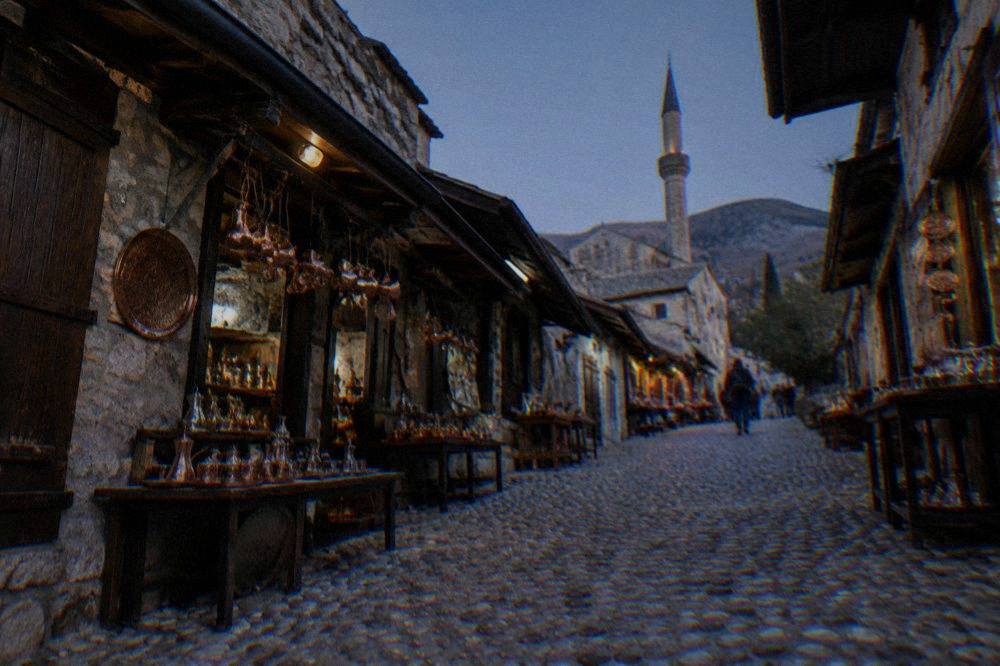
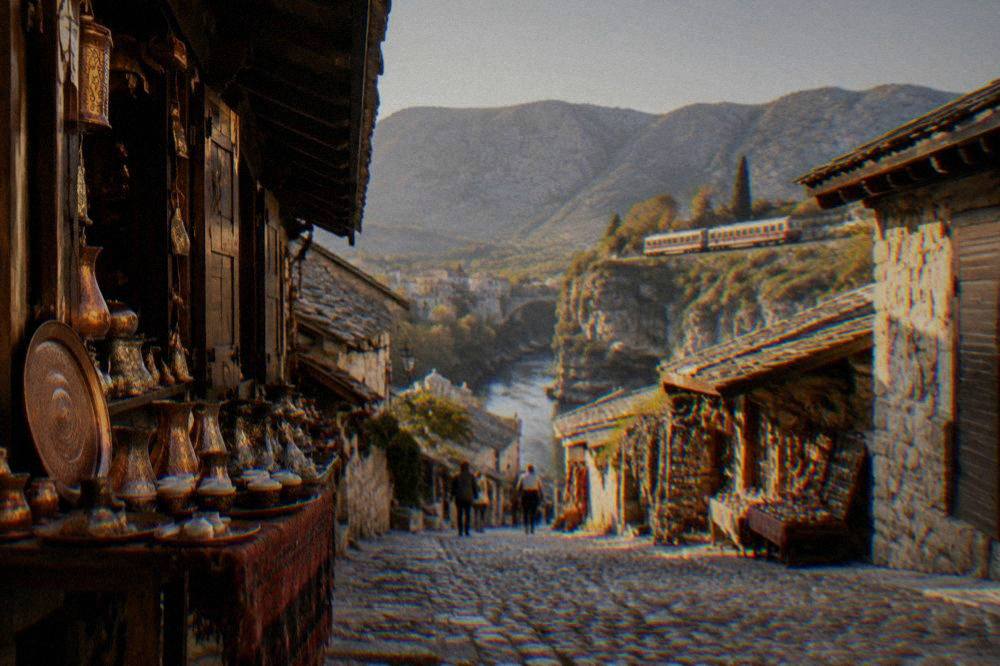
The Old Town means Kujundžiluk, the cobbled Ottoman bazaar street that runs along the Neretva below Stari Most, plus the lanes climbing away from it. Beds here are mostly small guesthouses, converted Ottoman houses such as Bišćević House and Muslibegović House (both museums you can visit even if you do not sleep in them), and family-run hotels tucked into narrow streets. You step out of the door directly into the postcard.
West Mostar is the administrative and commercial half of the city: the Bulevar, the Rondo, Spanish Square and the shopping streets around them. Hotels here are larger, newer and often quieter at night, and the walk to the bridge is short and flat along the Musala and then down through the Old Town gates.
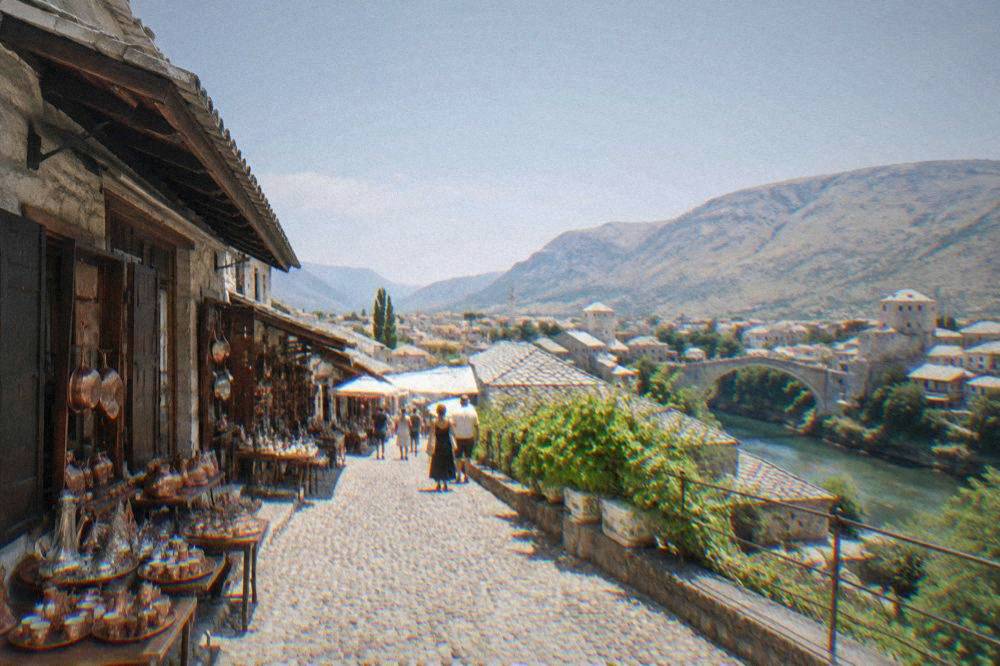
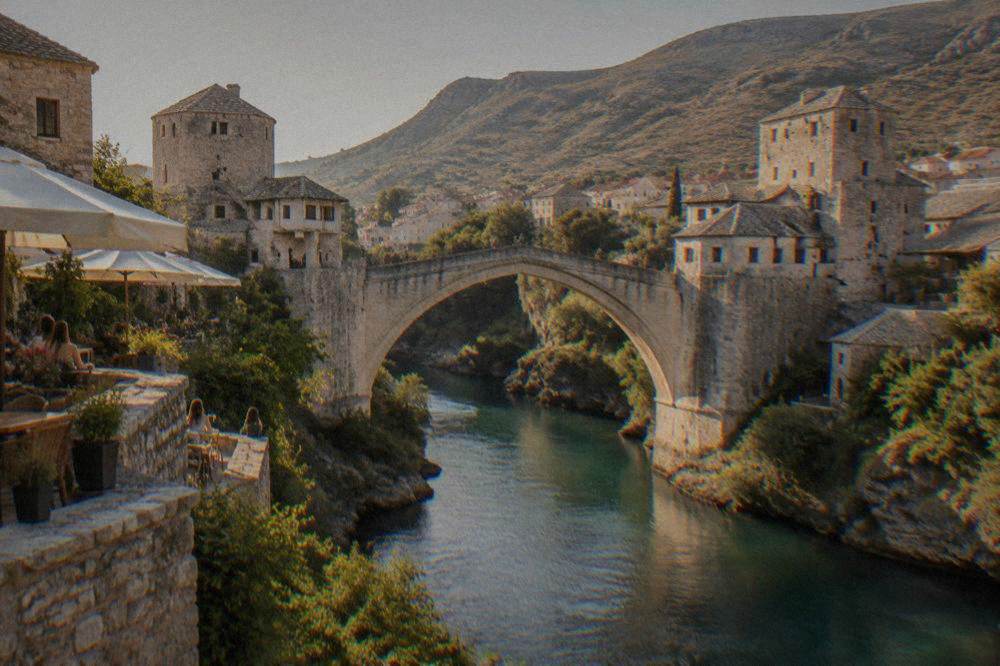
Donja Mahala is the east-bank neighbourhood across the bridge, traditionally the more residential side, with guesthouses and apartments spreading up the hill toward Hum. The views back over the Old Bridge from this bank are excellent, and the climb back up after dinner is the only real price you pay.
| Area | Character | Best For | Trade-Off |
|---|---|---|---|
| Old Town (Kujundžiluk and lanes) | Cobbled heritage streets, guesthouses | First visit, short stays, atmosphere | Street noise, luggage on cobbles, summer crowds |
| Around Spanish Square | Level streets between old and new | Mixed trip, easy walking everywhere | Less character than the Old Town |
| West Mostar (Bulevar, Rondo) | Larger hotels, cafes, offices | Families, drivers, longer stays | A walk to the bridge each time |
| Donja Mahala (east bank) | Residential lanes, river views | Views, local pace, value | A hill between you and dinner |
Is The Old Town The Best Base For A First Visit In Mostar?
Yes, for a first visit of one to three nights the Old Town or its immediate edge is the strongest base, because Stari Most, Kujundžiluk, Koski Mehmed-pašina džamija, Kriva ćuprija and the Old Bridge Museum are all within a couple of minutes' walk, and the evening light on the Neretva is the reason people come. The bridge itself is free to cross at any hour as a public pedestrian route. The Old Town is small, though, and in July and August the bazaar street is busy from late morning until early evening, which is worth weighing if you sleep lightly. The old town guide and the walking tour guide cover the streets themselves.
Guesthouses in Ottoman houses put you under stone walls and wooden ceilings, sometimes with a terrace over the river. The trade-offs are practical rather than dramatic: cobbles are hostile to wheeled luggage, parking is not inside the heritage streets, and church and mosque calls carry in the early morning. A room on the third floor of a converted house with river air is a different product from a purpose-built hotel out west, and the two are priced accordingly.
For orientation on day one, a private walk is an efficient use of a first morning. The private group city tour of Mostar and the Old Bridge covers the core sights with a guide, and you can Check availability before you finalise the hotel.
A short walk from the bridge also connects you to the free walks the city has two of, both on GuruWalk and both pay-what-you-want: "Mostar All in One, Free Tour" and "From the Spanish Square to the Old Bridge: Mostar Uncovered". Details are on the GuruWalk free walk page. Never pay up front for either one; the platform model is tipping at the end.
Where Should You Stay In West Mostar For A Quieter Base?
West Mostar around the Bulevar, the Rondo and Spanish Square is the quiet, practical base: larger hotels with parking, level pavements, cafes and bakeries within a block, and a flat ten-to-fifteen-minute walk down Musala to the Old Town gates. Spanish Square sits between the two halves of the city, so a room near it gives you the new town on one side and the heritage core on the other. The west Mostar guide walks the neighbourhood street by street, and the Spanish Square guide covers the square itself.
This side suits anyone with a car. The Corridor Vc motorway works around the city are ongoing, with a south bypass under construction, but the existing road network already makes the west side the natural arrival point if you are driving in from Sarajevo, Split or Dubrovnik. Parking in the Old Town itself is limited, so a hotel with its own spaces out west removes a daily headache.
Families and longer-stay travellers also do better here. Apartments are larger, kitchens are more common, and the evening streets are residential rather than touristic. The walk home after dinner along the river is one of the nicer daily routines the city offers.
| Need | Old Town | Spanish Square Area | West Mostar | Donja Mahala |
|---|---|---|---|---|
| Walk to Stari Most | 1-3 min | 5-8 min | 10-15 min | 3-6 min plus the bridge |
| Quiet at night | Variable | Good | Good | Good |
| Parking | Poor | Limited | Good | Limited |
| Suited to one night | Yes | Yes | Less so | Yes |
Where Should You Stay In Donja Mahala Across The River?
Donja Mahala, the east-bank quarter you reach by crossing Stari Most or the downstream bridges, is the local, lower-key base: guesthouses and apartments set among houses and gardens, with direct views back at the bridge and the Old Town skyline. The Donja Mahala guide covers it in depth. The neighbourhood climbs toward Hum hill, which means some streets are steep, and the payoff is the angle of light on the Old Bridge in the late afternoon from this side of the Neretva.
The east bank also puts you closer to the staircases that lead up to viewpoints over the city, and to the Partisan Memorial Cemetery on its hill, a monument by Bogdan Bogdanović inaugurated in 1965, damaged with over 700 of its stone markers destroyed in 2022 and now on Europa Nostra's endangered list. It is unstaffed and unticketed; approach it as a monument in poor condition, not a managed attraction.
Koski Mehmed-pašina džamija sits at the top of the Old Town facing the river on this side, with a small cash fee to enter and a higher combined fee including the minaret, reported rather than official, so confirm on arrival. From its garden the whole river bend opens up.
How Many Days Should You Stay In Mostar?
Two nights is the honest minimum and three is comfortable: one full day for the Old Town, the bridge, Kujundžiluk and a viewpoint, and a second day for a Herzegovina loop taking in Blagaj, Počitelj and Kravica waterfall, each of which is under an hour away by road. The two days in Mostar itinerary and the three days in Mostar itinerary break the days down hour by hour, and the one day in Mostar guide covers the compressed version for transit travellers.
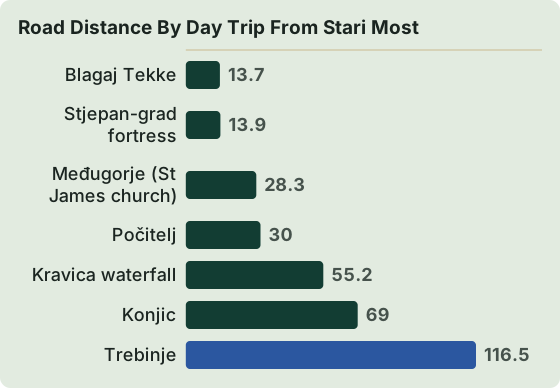
The reason three nights beats two is the day-trip geography. Herzegovina's headline sights ring the city in a tight radius: Blagaj Tekke is 13.7 km and about 19 minutes from Stari Most, Počitelj 30.0 km and about 31 minutes, Kravica waterfall 55.2 km and about 54 minutes. Doing them in one rented day with a tour or a car is standard; splitting them across two unhurried days is better. The wider set of guides lives on Mostar Travel Guide.
| Day Trip From Stari Most | Road Distance | Free-Flow Time |
|---|---|---|
| Blagaj Tekke | 13.7 km | about 19 min |
| Stjepan-grad fortress | 13.9 km | about 20 min |
| Međugorje (St James church) | 28.3 km | about 40 min |
| Počitelj | 30.0 km | about 31 min |
| Kravica waterfall | 55.2 km | about 54 min |
| Konjic | 69.0 km | about 80 min |
| Trebinje | 116.5 km | about 142 min |
Times are free-flow road estimates and exclude any border queue, which only matters for the Croatian destinations further out. A full day out with a guide handles the driving and the parking in one move; the Kravice, Blagaj and Počitelj in one day guide compares the options, and the Herzegovina road trip guide is the reference if you would rather drive yourself.
When Is The Best Time Of Year To Book A Stay In Mostar?
Summer brings the crowds, the diving competitions and the heat, while May, June, September and October bring comfortable walking weather and thinner streets; the FHMZ 1961-1990 station record puts July's mean at 24.7 C against May's 17.9 C, and November is the month with the rain, 200 mm against July's 42.9 mm. The best time to visit guide and the Mostar weather guide carry the full breakdown; the short version for a hotel decision is that July and August are peak, and rooms in the Old Town are worth booking well ahead for them.
Summer is also the season of the bridge divers. The traditional Old Bridge diving competition run by the Mostari diving club held its 460th edition on 26 July 2026, and the Red Bull Cliff Diving World Series stopped in the city from 30 July to 1 August 2026, the tenth Mostar round, with women diving from 21 m platforms and men from 27 m. If a diving weekend is your reason to come, book months ahead, because the riverbank fills up. The bridge diving guide covers the tradition, and the Mostar events guide lists the festivals.
| Month | Mean Temp (FHMZ 1961-1990) | Rain (FHMZ 1961-1990) | Modelled Daily High (ERA5 1991-2020) |
|---|---|---|---|
| January | 4.8 C | 164.7 mm | 8.4 C |
| April | 13.3 C | 127.3 mm | 17.7 C |
| July | 24.7 C | 42.9 mm | 29.9 C |
| August | 24.2 C | 73.7 mm | 30.5 C |
| September | 20.4 C | 96.3 mm | 24.5 C |
| November | 10.1 C | 200.0 mm | 14.1 C |
Winter stays are a real option and rarely discussed. The Mostar in winter guide covers the season: the city stays walkable, the Old Bridge stands empty of crowds, and snow is occasional, with the FHMZ record showing a maximum snow cover of 31 cm in January against zero from May to October.
What About The Tourist Tax And Paying For Your Stay In Mostar?
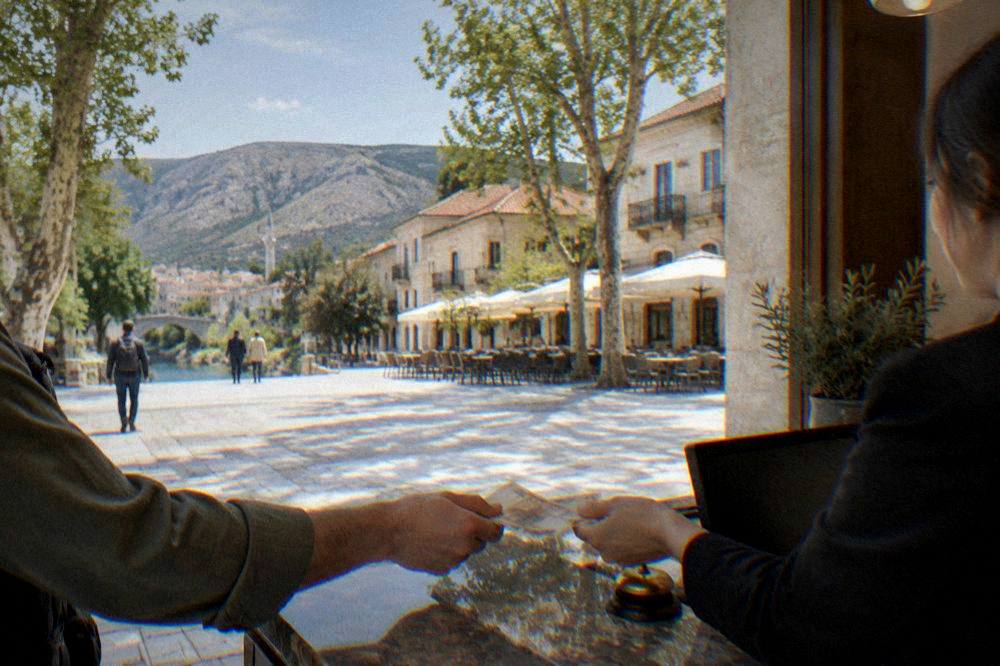
A tourist tax reported at 3 KM per person per night applies in Herzegovina-Neretva Canton from 1 January 2026, and it is normally collected by your accommodation at check-in or check-out, so keep a little cash for it; the currency is the convertible mark (KM, BAM), pegged at 1 EUR = 1.95583 KM. Confirm the current amount with your host when booking. Euro cash is often accepted in tourist areas at roughly 1 to 2, but that is a rounded convention rather than an official rule, so paying in KM is the cleaner habit. The Mostar money guide covers cards, cash machines and exchange in detail.
Do not expect euro pricing anywhere official. Bosnia and Herzegovina is not in the EU and not in Schengen, and the Croatian land border is a Schengen external border with full passport checks since 1 January 2023, with waits reported up to about 30 minutes and longer at summer peaks. If you are combining a Croatian coast stay with Mostar, the Croatia-Bosnia border crossing guide explains the crossings at Doljani-Metković and Bijača-Nova Sela.
How Do You Get From The Airport Or The Border To Your Hotel?
Mostar International Airport (OMO) is 8.2 km and about 12 minutes by road from Stari Most, making an Old Town transfer a short, inexpensive taxi ride, and the city bus network runs lines toward the airport; travellers arriving at Sarajevo or Dubrovnik airports should budget roughly two and a half to three hours of road time plus any border queue. The Mostar airport guide and the getting around guide cover the options, including the reported routes to Zagreb with Croatia Airlines and Stuttgart with Eurowings.
From Sarajevo there is also the train. Two trains a day run each way between Sarajevo and Čapljina via Mostar, a journey of about two hours, with a one-way fare of about 14 KM; services resumed on 15 October 2026 after the September suspension. The Sarajevo to Mostar guide, the Dubrovnik to Mostar guide and the Split to Mostar guide compare train, bus and car for each corridor.
Drivers should read the Mostar car rental guide before crossing any border with a rental car, since permission and insurance for taking the vehicle into Bosnia and Herzegovina must be arranged with the company in advance. Once in the city, a hotel with parking on the west side is the simplest combination.
What Should You Do From Your Hotel Once You Are Settled?
The core walk is the river itself: from Spanish Square down through the Old Town gates, along Kujundžiluk to Stari Most, up past Koski Mehmed-pašina džamija and Kriva ćuprija, and back over the bridge into Donja Mahala, and everything on that loop is free except the two mosque and museum fees. The things to do overview and the free things to do in Mostar guide list the full set, and the Mostar viewpoints guide names the spots for the classic bridge photograph.
Food anchors the stay too. The Bosnian food guide, the ćevapi guide and the burek guide explain what to order within walking distance of any bed in the city, and the restaurants guide covers the streets where the kitchens cluster. A cooking class is a way to turn a dinner into an activity without leaving the city centre.
History sits under all of it. The bridge was completed in 1566, destroyed on 9 November 1993 during the war, and rebuilt and reopened in July 2004, with the surrounding Old City inscribed by UNESCO in 2005. The Mostar history guide, the war history guide and the Stari Most guide tell that story at full length; a guided walk of the same ground is the compressed version.
Common Questions About Staying In Mostar
Is it better to stay in the Old Town or outside it in Mostar?
The Old Town gives atmosphere and a two-minute walk to Stari Most, at the cost of cobbles, summer crowds and street noise. The streets around Spanish Square and West Mostar give quieter, larger rooms and easy parking, with a flat walk of ten to fifteen minutes to the bridge. Both work; the choice is between sleeping inside the heritage site and sleeping beside it.
How many nights should I book in Mostar?
Two nights is the minimum that lets you see the Old Town properly and take one day trip. Three nights is comfortable, adding Blagaj, Počitelj and Kravica waterfall without rushing. A single night works for transit travellers but compresses the city into an evening and a morning.
What is the tourist tax in Mostar?
A tourist tax reported at 3 KM per person per night applies in Herzegovina-Neretva Canton from 1 January 2026, normally collected by your accommodation. The figure is reported rather than official, so confirm the amount with your host when booking.
Can I pay in euros for my hotel in Mostar?
The currency is the convertible mark (KM, BAM), pegged at 1 EUR = 1.95583 KM. Euro cash is often accepted in tourist areas at a rounded rate of about 1 to 2, but that is a convention rather than a rule, so paying in KM avoids the rounding.
Do I need air conditioning in summer in Mostar?
Yes for July and August. The FHMZ 1961-1990 station record puts the July mean at 24.7 C with an absolute maximum of 41.2 C, and the ERA5 1991-2020 modelled daily high for August is 30.5 C. Older Ottoman houses can be naturally cool, but a room with cooling is the safer booking in peak summer.
Is it safe to walk back to a hotel in Donja Mahala at night?
The core of Mostar is a walkable city and the bridges between the banks are lit and used in the evening. Standard city precautions apply. In rural Herzegovina outside town, stay on marked paths because of suspected mine areas, per the national mine-action authority's standing advice.
Wherever you end up sleeping, the geography does half the work for you: one river, one bridge, and a city small enough that a wrong choice of neighbourhood costs a few minutes rather than an hour. Pick the side that matches your pace, keep a little cash in KM for the tourist tax, and book the Old Town early if your dates fall on a diving weekend in late July.