Herzegovina Road Trip: Five Days From Mostar
Mostar sits in the middle of Herzegovina with almost every headline sight of the region within a two-hour drive, which makes it the natural base for a five-day Herzegovina road trip.
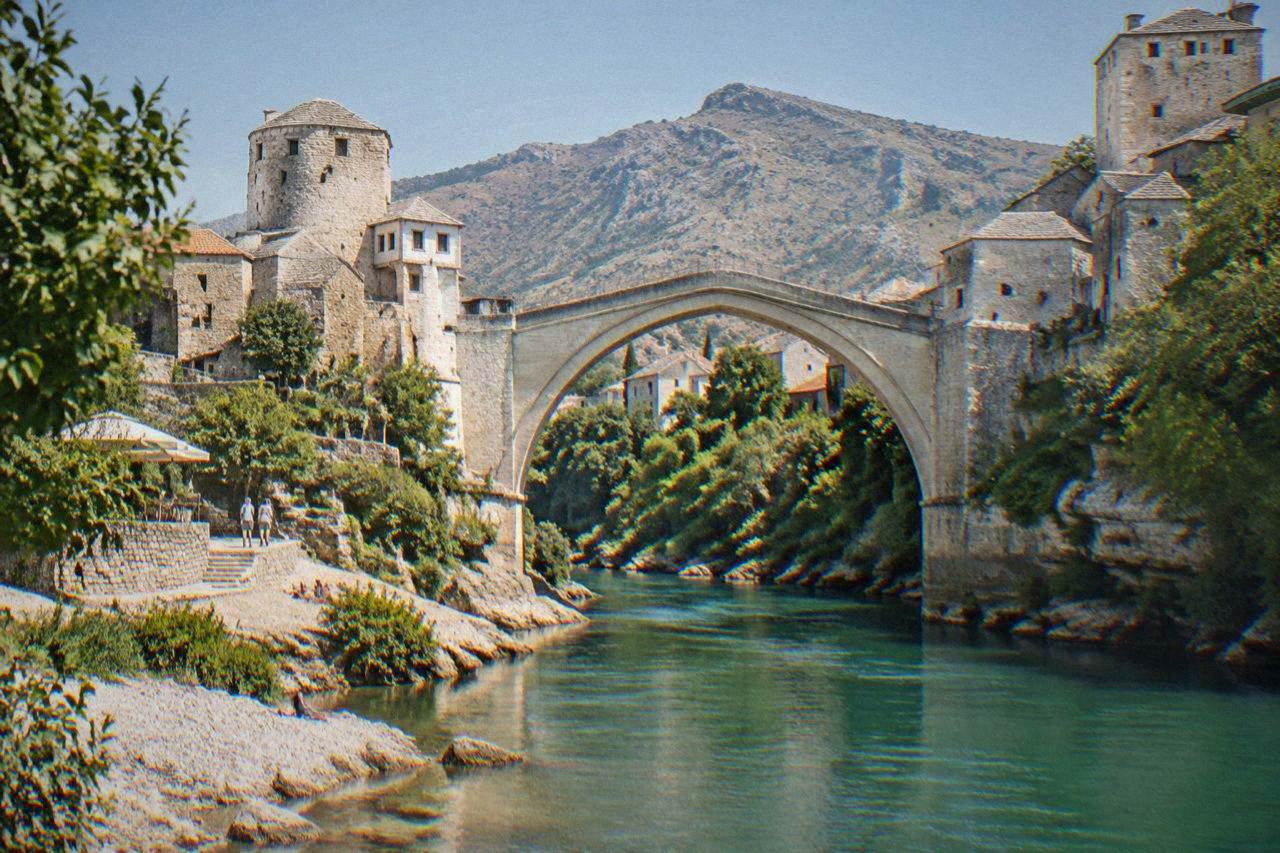
Base yourself in Mostar for five days. Drive loops to Blagaj and Počitelj, Kravica waterfall, Stolac and Radimlja, Jablanica and Konjic, and Trebinje, all under two and a half hours each way by road. The convertible mark is the currency, Bosnia and Herzegovina is not in the EU or Schengen, and entry to Kravica waterfall is 20 KM for an adult all year.
Mostar is an inland city on the Neretva river in Herzegovina, the southern half of Bosnia and Herzegovina, and almost every place that makes this region worth a slow loop sits within two hours of its Old Bridge. A five-day Herzegovina road trip from Mostar works because the geography cooperates: the karst valleys line up north to south, the distances are short, and the roads, while narrow in places, connect everything on this list without a single long transit day. This plan keeps Mostar as the single base, which saves repacking a bag four times, and spreads the driving across four loops of 30 minutes to two and a half hours each way.
One planning note before the itinerary: the currency here is the convertible mark (KM, BAM), pegged to the euro at 1 EUR = 1.95583 KM. Bosnia and Herzegovina is not in the EU and not in Schengen, so if your loop dips into Croatia, the land border carries full passport checks. Those two facts shape more of a Herzegovina road trip than any guidebook timetable.
What Does A Five-Day Herzegovina Road Trip From Mostar Look Like?
The shape of the trip is four driving loops plus one city day: Blagaj and Počitelj on day two, Kravica waterfall on day three, Stolac and Radimlja on day four, and a long loop to Jablanica, Konjic or Trebinje on day five, with Mostar itself on day one. Each loop starts and ends at Stari Most, and the longest single drive on the plan is Trebinje at about 116.5 km and two hours 22 minutes each way. Nothing here needs an early alarm except the border days, and even those only by an hour or so.
Day one belongs to Mostar itself. The Old Bridge Area of the Old City of Mostar has been a UNESCO World Heritage property since 2005, and the bridge, Stari Most, was completed in 1566, destroyed on 9 November 1993 during the war, and rebuilt and reopened in July 2004. Crossing it is free and possible at any hour. Kujundžiluk, the Old Bazaar street below the bridge, and Kriva ćuprija, the small crooked bridge upstream, are both public and free. The Mostar walking tour options cover this ground well if you want the history narrated rather than read off plaques, and the one day in Mostar plan breaks the city down hour by hour.
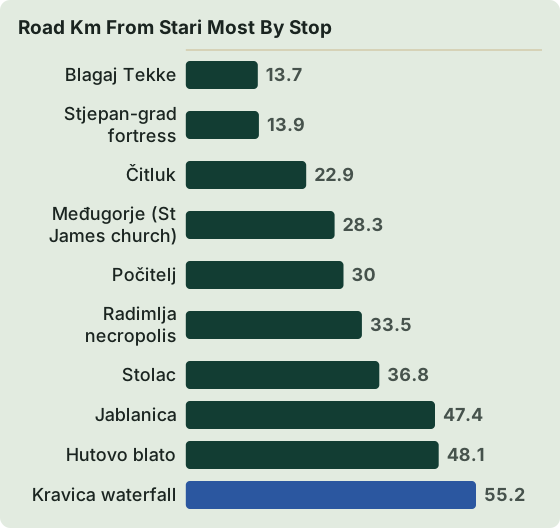
The rest of the week fans out from there. Distances below are road kilometres and free-flow minutes from Stari Most, computed without border queues, so treat them as the floor of what a drive takes, not the ceiling.
| Stop | Road km from Stari Most | Free-flow time |
|---|---|---|
| Blagaj Tekke | 13.7 | about 19 min |
| Stjepan-grad fortress | 13.9 | about 20 min |
| Čitluk | 22.9 | about 31 min |
| Međugorje (St James church) | 28.3 | about 40 min |
| Počitelj | 30.0 | about 31 min |
| Radimlja necropolis | 33.5 | about 42 min |
| Stolac | 36.8 | about 47 min |
| Jablanica | 47.4 | about 57 min |
| Hutovo blato | 48.1 | about 62 min |
| Kravica waterfall | 55.2 | about 54 min |
| Konjic | 69.0 | about 80 min |
| Vjetrenica cave | 77.2 | about 104 min |
| Trebinje | 116.5 | about 142 min |
If five days feels generous, the answer to how many days in Mostar is enough is shorter, and the two days in Mostar plan compresses the city and one loop. With a car, though, five days is the first length at which nothing on this list gets cut.
Where Should You Drive On Day Two Around Blagaj And Počitelj?
Day two is the shortest loop and the best warm-up: Blagaj Tekke at 13.7 km and about 19 minutes from Stari Most, then Počitelj at 30 km and about 31 minutes, with Međugorje an optional 28.3 km spur. The Blagaj Tekke, the dervish lodge built into the cliff at the Buna spring, charges a reported 10 KM entry and asks that shoulders and knees be covered, with wraps provided at the entrance.
Blagaj is close enough to Mostar that the drive is over before the coffee wears off. The tekke sits at the mouth of the Buna spring, where the river exits the cliff face, and above it on the hill stands Stjepan-grad, the old fortress, another 13.9 km and 20 minutes from the bridge. Stjepan-grad has no ticketed entry listed, so treat access as open ground and walk the paths rather than the scrub.
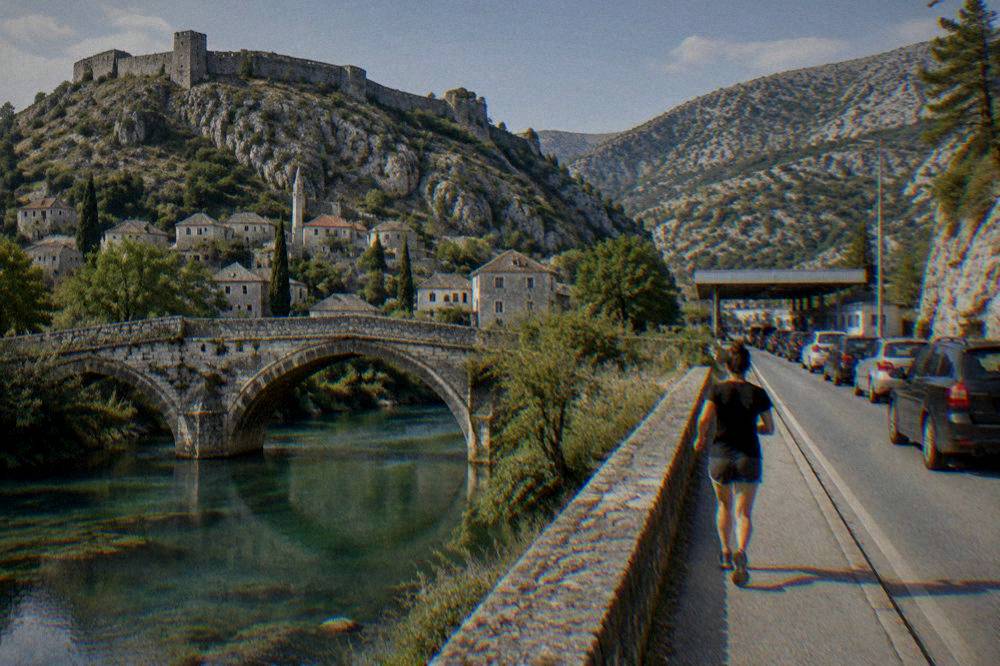
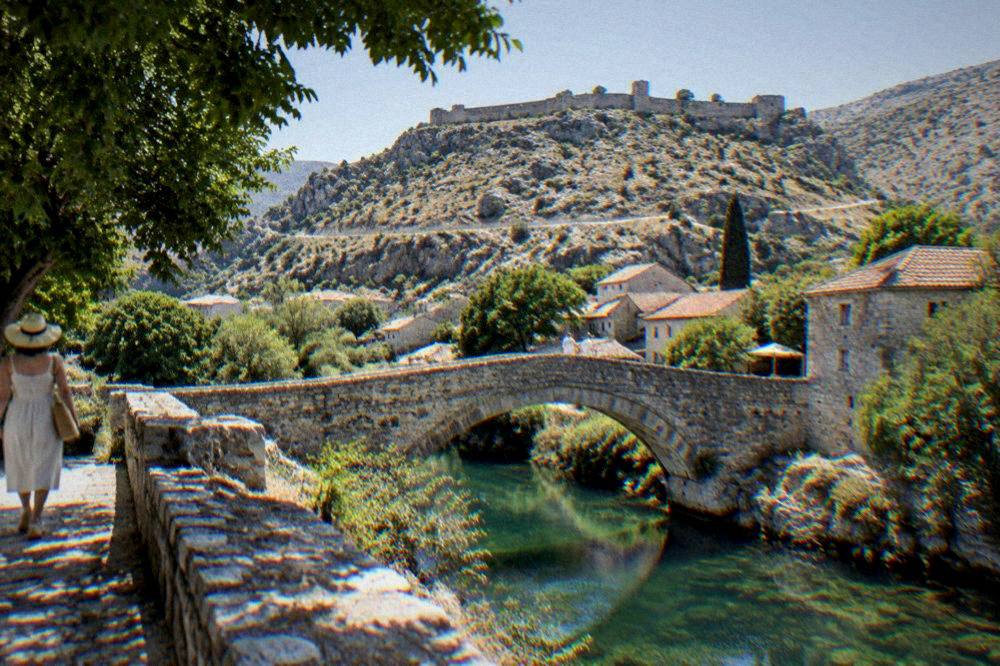
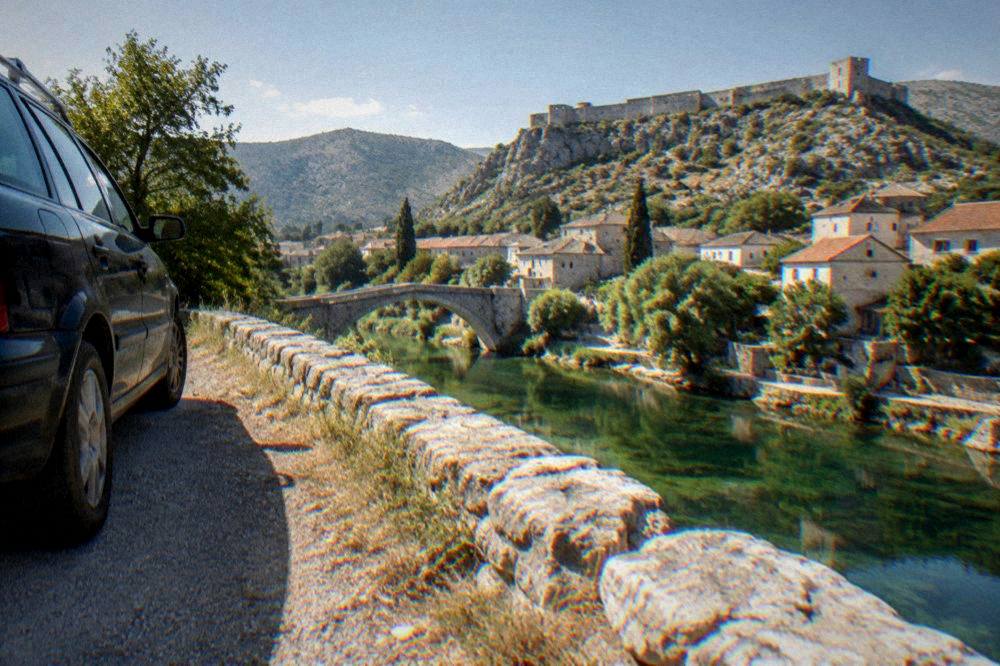
Počitelj, further down the Neretva valley, is a stone village stacked against a hillside with a fortress tower at the top. The village itself is free to wander; small optional fees are reported for entering the mosque. It is the single most photographed non-Mostar place in Herzegovina, and the climb to the tower takes less than half an hour at a stroll. Međugorje, if you add it, is a pilgrimage town: the St James church and the hills around it are free and open around the clock, with modest dress expected at the church.
For a first taste of driving Herzegovina's two-lane roads, this loop is forgiving. Traffic is light outside the summer midday, the signage is clear, and every stop has somewhere to park. The Blagaj guide and the Počitelj guide go deeper on both, and the Kravica, Blagaj and Počitelj in one day plan shows how the same triangle works compressed.
If the idea of driving Počitelj's single approach road on a busy day does not appeal, the guided versions of this exact triangle exist for a reason. The half-day Kravica trip that this site features, From Mostar: Half-Day Trip to the Kravica Waterfall, handles the waterfall leg entirely, and you can Check availability alongside the driving you plan to keep for yourself.
How Do You Plan Day Three At Kravica Waterfall?
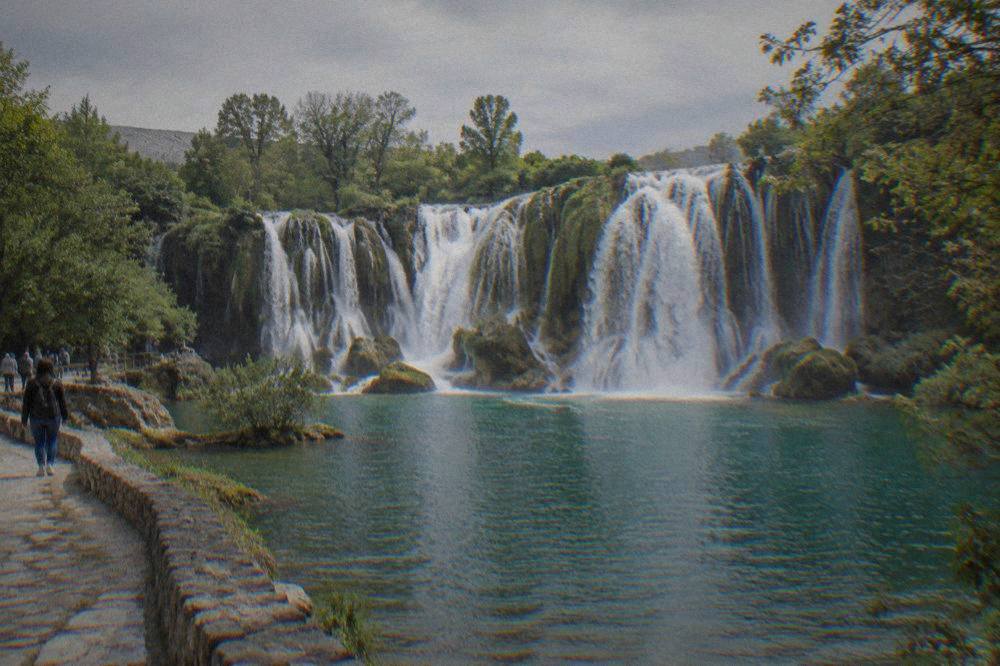
Kravica waterfall is 55.2 km from Stari Most, about 54 minutes by road free-flow, and entry is 20 KM for an adult all year, with 10 KM for residents of Bosnia and Herzegovina and children under 7 free, per the park's own visitor page. The park opens every month of the year, with hours from 07:00 to 22:00 in June through September and 07:00 to 17:00 in November, December, January and February.
The two numbers worth fixing in your head are 20 KM and 54 minutes. A lot of pages claim Kravica is a 15-minute hop from Mostar or free in winter; both claims are wrong. The drive runs south past Ljubuški on decent road, and the payback is a 25-metre-high curtain of water falling into a natural swimming pool. Swimming is allowed in summer in the designated area of the pool below the falls, with no lifeguard reported, so read the park's rules on arrival and swim inside the marked zone. The water coming off the karst is cold, and the Neretva basin's rivers stay cold even in August.
Pair the waterfall with something on the road back. Čitluk sits on the route and the wine country of Herzegovina spreads out from there; the Herzegovina wine guide maps the tasting rooms. Hutovo blato nature park, a bird reserve with boat trips, is 48.1 km and about 62 minutes from Mostar in the same southern direction, with entry reported at about 5 KM.
| Month | Kravica opening hours |
|---|---|
| January, February | 07:00 to 17:00 |
| March, April | 07:00 to 18:00 |
| May | 07:00 to 20:00 |
| June to September | 07:00 to 22:00 |
| October | 07:00 to 19:00 |
| November, December | 07:00 to 17:00 |
If day three lands on a forecast of rain instead, the Mostar in the rain plan swaps the outdoor day for museums and coffee houses, and the waterfall shifts to whichever day the sky clears.
What Are The Entry Fees Across The Herzegovina Loop?
The fixed, publicly listed fees on this route are Kravica at 20 KM for an adult all year, Radimlja necropolis at 8 KM for an individual, ARK D-0 in Konjic at 40 KM for foreign visitors on a guided tour, and the Blagaj Tekke at a reported 10 KM. Ottoman house museums in Mostar report about 4 KM at Bišćević House and about 8 KM at Muslibegović House. Where a figure is reported rather than official, confirm it at the ticket point before you budget.
One honest caveat: several sights on this route publish no reliable price list online at all, including Karađoz-begova džamija, the Franciscan bell tower and the Museum of Herzegovina in Mostar. Bring a cushion of small KM notes for those, and treat the table below as the confirmed floor of your sightseeing budget, not its ceiling.
| Sight | Entry | Status |
|---|---|---|
| Kravica waterfall | 20 KM adult, all year | park's own visitor page |
| Blagaj Tekke | 10 KM | reported |
| Radimlja necropolis | 8 KM individual, 5 KM groups and BiH citizens | reported |
| ARK D-0, Konjic | 40 KM foreign visitors, 20 KM BiH citizens | reported, booking required, closed Monday |
| Bišćević House, Mostar | about 4 KM | reported |
| Muslibegović House, Mostar | about 8 KM | reported |
| Vjetrenica cave | about 20 to 25 KM, guided | reported, seasonal |
| Hutovo blato | about 5 KM, boat trip about 20 KM | reported |
A tourist tax of 3 KM per person per night is reported across Herzegovina-Neretva Canton from 1 January 2026, usually folded into your accommodation bill; confirm the amount at booking rather than at checkout.
How Do Days Four And Five Work, Stolac To Trebinje?
Day four heads east: Stolac at 36.8 km and about 47 minutes, the Radimlja stećci necropolis at 33.5 km and about 42 minutes, and optionally Vjetrenica cave at 77.2 km and about 104 minutes. Day five is the long loop, either north to Jablanica at 47.4 km and about 57 minutes and Konjic at 69 km and about 80 minutes, or southeast to Trebinje at 116.5 km and about 142 minutes. Both days end back in Mostar the same evening.
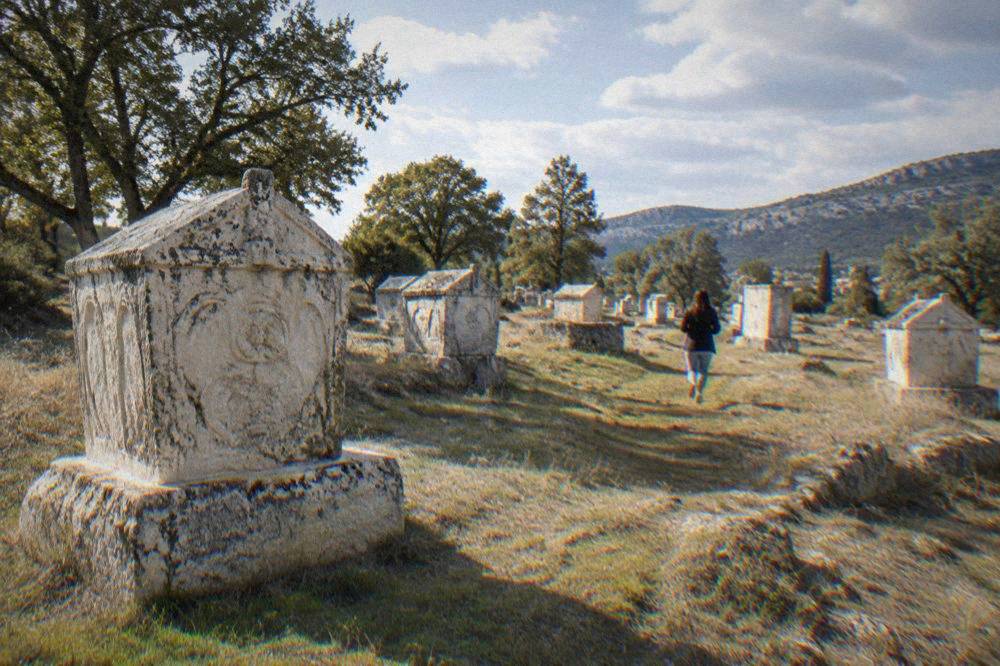
The eastern loop is the quietest driving of the week. Stolac is a small town on the Bregava river with an old quarter worth an hour, and Radimlja beside it holds one of the finest stećci fields in the country: medieval carved tombstones that joined the UNESCO World Heritage list in 2016 as part of the cross-border stećci serial property. The stone lies in open ground off the main road, and an hour covers it at a walk. Vjetrenica cave, the great wind cave of Popovo polja, sits past Stolac toward the Trebinje side; it runs guided visits seasonally, roughly April through November, so check before committing the extra hour of driving.
Day five north runs up the Neretva to Jablanica, where the ruined bridge over the river marks the World War Two operation remembered as the Battle for the Wounded, and the museum on the hill above charges a few KM. Konjic, further on, is a rafting town below the Tito-era bunker ARK D-0, which requires advance booking and runs no tours on Mondays. The Jablanica museum's own page prints two different price lists, so expect a small cash fee and nothing more precise.
Day five south, the Trebinje option, trades wartime history for old-town squares, river mills and the Hercegovačka Gračanica church on the hill above the town. It is the longest single drive of the itinerary in each direction, so leave early, and read the Trebinje guide for the stop list. The three days in Mostar plan covers shorter versions of both northern loops if the week tightens up.
Should Your Herzegovina Road Trip Cross Into Croatia?
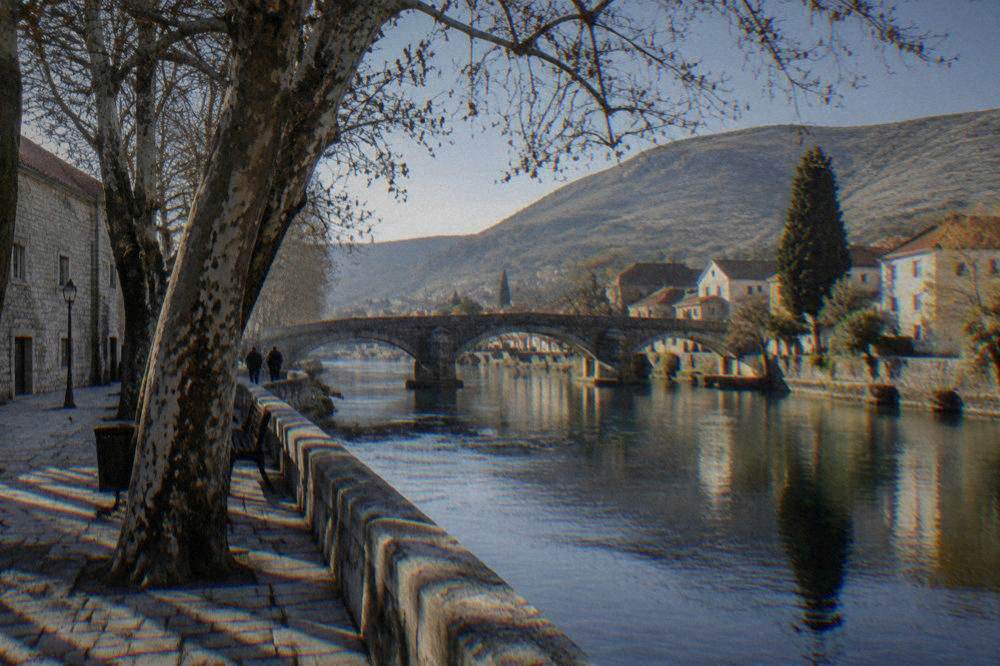
A Herzegovina loop can cross into Croatia for Dubrovnik, at 145.5 km and about 150 minutes of free-flow driving from Stari Most, or Split at 174.1 km and about 131 minutes, but the Croatian land border is a Schengen external border with full passport checks since 1 January 2023, with reported waits up to about 30 minutes, longer at summer peaks. Bosnia and Herzegovina is not in the EU and not in Schengen, and ETIAS is not in operation.
The crossing choice matters. The two main points near Mostar are Doljani-Metković and Bijača-Nova Sela, and since the Pelješac Bridge opened in 2022, traffic bound for Dubrovnik can stay in Croatia and skip the Neum corridor transit entirely. If you are renting a car in Bosnia or bringing one across, confirm with the rental company that cross-border travel is permitted and that the insurance green card is included; contracts differ and some charge for the paperwork.
For a five-day trip based in Mostar, the honest advice is that Croatia deserves its own days rather than a squeezed detour. The Mostar day trip from Dubrovnik and Mostar day trip from Split pages reverse the direction for readers starting on the coast, and the Dubrovnik guide covers the city itself.
When Is The Best Time Of Year For This Herzegovina Road Trip?
Late May, June, September and early October are the sweet spots: the FHMZ 1961-1990 station data for Mostar shows July averaging 24.7 C with an absolute maximum of 41.2 C, while May averages 17.9 C and October 15.3 C, and rainfall bottoms out at 42.9 mm in July against 200.0 mm in November. The ERA5 reanalysis for 1991-2020 puts modelled mean daily highs at 30.5 C in August and 8.4 C in January.
In plain terms: Herzegovina is hot in deep summer and wet in deep winter. July and August are the swim months at Kravica, and the two big bridge events land in late July, the traditional diving competition on 26 July in 2026 and the Red Bull cliff diving round from 30 July to 1 August 2026, but that is also when the valley floor bakes and when the border queues stretch. November is the rain month at 200 mm; January and February bring occasional snow cover, with the station record showing a maximum snow depth of 37 cm. Winter driving on the valley roads is usually fine, but the Konjic and Trebinje climbs deserve daylight.
| Month | Mean temp (FHMZ 1961-1990) | Rain mm | Modelled daily high (ERA5 1991-2020) |
|---|---|---|---|
| January | 4.8 C | 164.7 | 8.4 C |
| April | 13.3 C | 127.3 | 17.7 C |
| May | 17.9 C | 102.1 | 22.3 C |
| July | 24.7 C | 42.9 | 29.9 C |
| August | 24.2 C | 73.7 | 30.5 C |
| September | 20.4 C | 96.3 | 24.5 C |
| October | 15.3 C | 150.6 | 19.5 C |
| November | 10.1 C | 200.0 | 14.1 C |
The best time to visit Mostar page unpacks the seasons month by month if your dates are flexible.
What Should You Know About Money, Fuel And Safety On Herzegovina Roads?
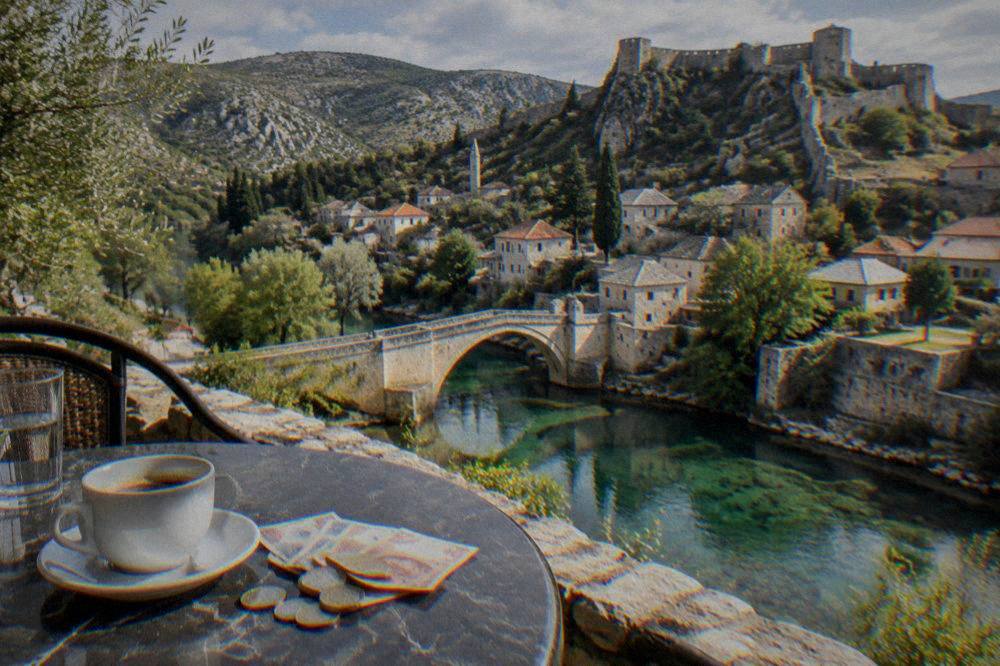
Carry convertible marks, not euros, as your working cash: the KM is the currency, pegged at 1 EUR = 1.95583 KM, and euro notes are often accepted in tourist spots at a rounded rate that you should confirm before handing them over. The emergency number is 112, with 122 police, 123 fire and 124 ambulance, and in rural Herzegovina you should stay on marked paths and roads because suspected mine areas from the war remain, tracked by BHMAC.
Cards work at hotels, bigger restaurants and supermarkets; small vendors, markets and some car parks want cash. ATMs are common in Mostar and thin on the country roads, so top up in the city each morning. Fuel stations line the M17 and the main valley routes, but the eastern loop toward Vjetrenica and the Trebinje road have long gaps, so fill up in Stolac or Mostar accordingly. A detailed primer sits in the Bosnia and Herzegovina travel tips guide and the Mostar money page.
On safety, the mine warning deserves its own sentence: this is not a reason to skip Herzegovina, it is a reason not to wander off paths in unfrequented ground, exactly as the BHMAC guidance states. Road behaviour is Balkan-normal, meaning overtake decisively or not at all, expect tractors on valley roads, and park where locals park at viewpoints.
How Much Driving Is Involved Each Day?
No single day on this plan runs long behind the wheel: day two is the Blagaj and Počitelj triangle, all of it under half an hour each leg; day three is the 55.2 km run to Kravica and back the same way; day four stays within 36.8 km of Mostar unless you add Vjetrenica at 77.2 km; and day five is either the Jablanica and Konjic run north or the long Trebinje loop southeast at 116.5 km each way. Every night is back in the same Mostar bed.
That distribution is the point of basing yourself in one place. You never check out, never drag luggage over cobblestones, and never lose a morning to a hotel move. The trade-off is that you drive some roads twice, the Mostar to Čapljina stretch above all, and that is a fair price for five unpacked nights.
| Day | Route | Driving shape | Key stops |
|---|---|---|---|
| 1 | Mostar on foot | none | Stari Most, Kujundžiluk, Kriva ćuprija |
| 2 | Mostar, Blagaj, Počitelj | short legs, each under about 31 min each way | Blagaj Tekke, Stjepan-grad, Počitelj fortress |
| 3 | Mostar, Kravica waterfall | the 55.2 km run there and back | Kravica, Čitluk, optional Hutovo blato |
| 4 | Mostar, Stolac, Radimlja | about 47 min each way, plus Vjetrenica if added | Radimlja stećci, Stolac old town |
| 5 | Mostar, Jablanica and Konjic, or Trebinje | up to 116.5 km each way | ARK D-0, Neretva bridge ruins, or Trebinje old town |
Common Questions About A Herzegovina Road Trip From Mostar
Is Mostar a good base for a Herzegovina road trip?
Yes. Every major sight in the region sits within about two and a half hours of Stari Most by road, from Blagaj at 13.7 km to Trebinje at 116.5 km, and the city itself deserves a full day of the itinerary.
Do I need a car for Herzegovina?
A car gives you the full loop, including Vjetrenica, Stolac and Trebinje, which public transport serves slowly or not at all. Guided day tours from Mostar cover the Blagaj, Počitelj and Kravica triangle well if you would rather not drive.
Can I pay in euros on a Herzegovina road trip?
The currency is the convertible mark, pegged at 1 EUR = 1.95583 KM. Euros are often accepted in tourist areas at a rounded rate; confirm the rate before paying and expect cash-only stops on country roads.
How far is Kravica waterfall from Mostar?
Kravica waterfall is 55.2 km from Stari Most, about 54 minutes by road free-flow. Entry is 20 KM for an adult all year, and the park is open every month with longer summer hours.
Do I need a passport to cross from Herzegovina into Croatia?
Yes. Bosnia and Herzegovina is not in Schengen, so the Croatian land border carries full checks; reported waits run up to about 30 minutes, longer at summer peaks. ETIAS is not in operation.
What is the best month for a Herzegovina road trip?
Late May, June, September and early October balance the FHMZ station data well: milder temperatures than the July mean of 24.7 C and far less rain than November's 200 mm, with Kravica still warm enough for swimming in June and September.
For readers with more than five days, the Bosnia and Herzegovina itinerary stretches this loop north to Sarajevo and the Balkans itinerary chains it onward to Montenegro and the coast, and Mostar Travel Guide carries the full set of city and day-trip plans behind them. Drive the valley roads in daylight, keep KM cash in the glovebox, and Herzegovina repays every one of the five days.