Museum Of Herzegovina: The City's History Museum
The Museum of Herzegovina is Mostar's regional history museum, sitting minutes from the Old Bridge and the Old Bazaar in the UNESCO-listed old city core.
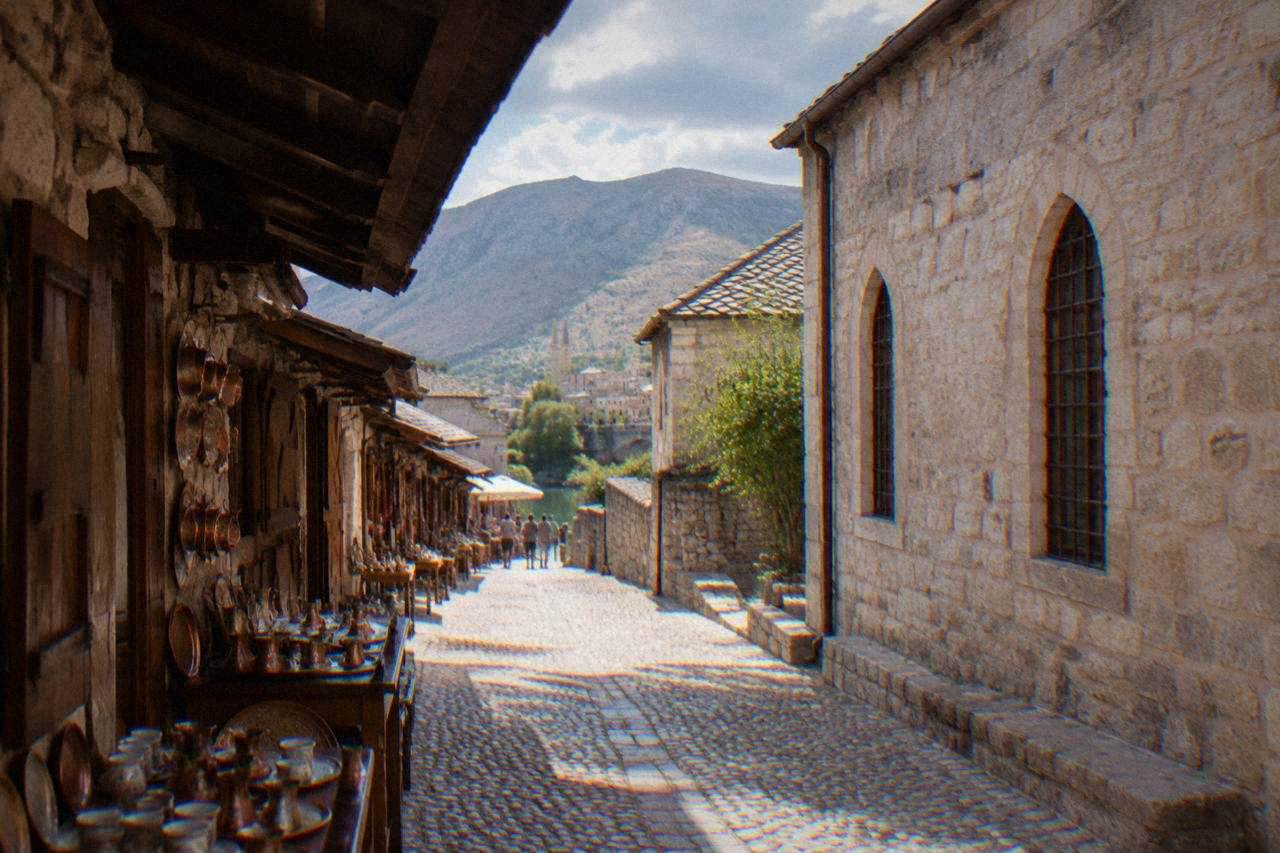
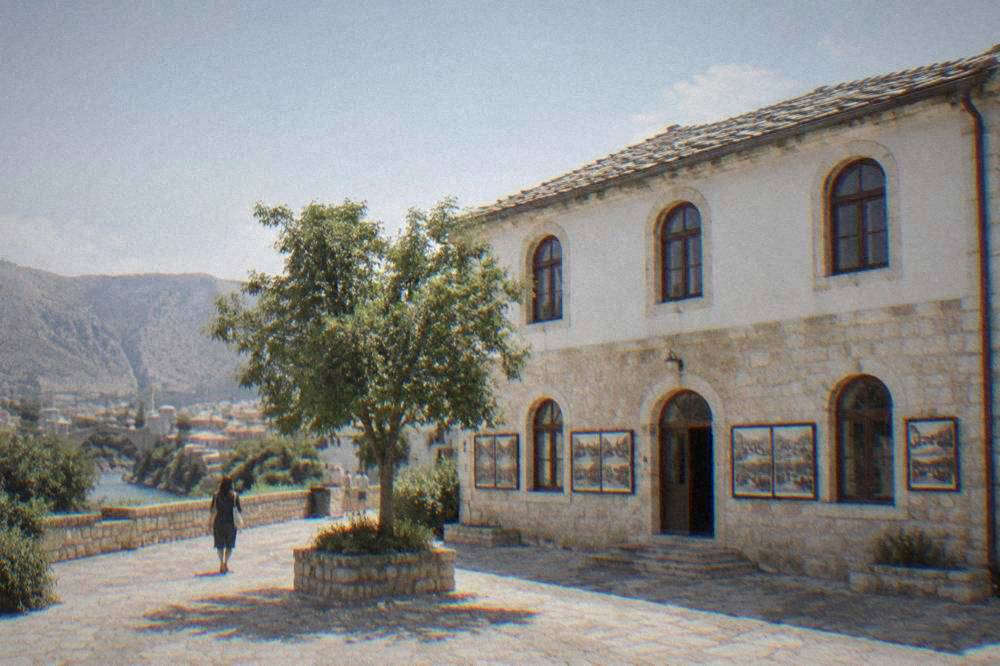
The Museum of Herzegovina in Mostar is a small regional history museum a short walk from Stari Most, covering the heritage of Herzegovina from Ottoman times onward. No ticket price or hours are published, so confirm on arrival; pair it with the Old Bridge and Kujundžiluk in one loop.
The Museum of Herzegovina is the regional history museum of Mostar, the main city of Herzegovina, in Bosnia and Herzegovina, and it stands only a few minutes on foot from Stari Most, the Old Bridge, inside the wider area inscribed on the UNESCO World Heritage list in 2005 as the Old Bridge Area of the Old City of Mostar. The city itself is inland, built on the Neretva river, with no sea coast, and its recorded story runs from a first written mention of the name in 1474, through the Ottoman bridge-building era that produced the Old Bridge in 1566, into the Austro-Hungarian period and onward to the modern city. This page sets out plainly what the museum is, what a visit involves, what to confirm on arrival, and how to fold it into a day in Mostar alongside the Old Bridge, the Kujundžiluk bazaar, the Ottoman houses and the other museum sites of the old core.
Treat every ticket and timetable question below as something to confirm on arrival or at your hotel, and plan the surrounding stops, which are well documented, around the museum rather than the other way round.
What Is The Museum Of Herzegovina In Mostar?
The Museum of Herzegovina is a small regional history museum in central Mostar, the administrative and cultural centre of Herzegovina, a city of about 105,000 people at the 2013 census, devoted to the documented past of the Herzegovina region: its Ottoman-era monuments, its craft and trade traditions, its archaeological material and its gallery of notable figures. It is a museum of a region as much as of a city, and that is its point. Where the Old Bridge Museum at the Tara tower tells the story of one monument, and the Museum of War and Genocide Victims covers the war years, the Museum of Herzegovina takes the long view of the whole southern half of Bosnia and Herzegovina.
The city it sits in carries a documented history that makes such a collection natural. The name Mostar first appears in writing in 1474, in a Dubrovnik Republic document, and the UNESCO citation for the old city states that a settlement was established there in the 15th century, with the name derived from "mostari", the bridge keepers who guarded the earlier wooden crossing over the Neretva. The stone bridge, commissioned under Suleiman the Magnificent and built by mimar Hajruddin, whose design followed that of his master, the architect mimar Sinan, was completed in 1566 with a single stone arch spanning about 29 m. A museum of the region inevitably orbits that monument.
The wider frame matters too. Herzegovina, the southern region of the country, holds two of the UNESCO World Heritage properties of Bosnia and Herzegovina: the Old Bridge Area of the Old City of Mostar, inscribed in 2005 under criterion (vi), and the Stećci Medieval Tombstone Graveyards, a serial property inscribed in 2016 that includes the Radimlja necropolis near Stolac, about 33.5 km and 42 minutes by road from Stari Most. A regional museum in this city has a great deal of ground to cover, and it covers it compactly.
A useful way to place the museum's content is the timeline it rests on:
| Period | Documented fact |
|---|---|
| 1474 | First written mention of the name Mostar |
| 1566 | Stari Most completed under Suleiman the Magnificent by mimar Hajruddin |
| 1878-1918 | Austro-Hungarian administration; Mostar develops as an administrative and educational centre |
| 9 November 1993 | The Old Bridge destroyed during the war |
| July 2004 | The rebuilt Old Bridge reopened, reconstructed with the support of UNESCO and World Bank partners |
| 2005 | The Old Bridge Area of the Old City of Mostar inscribed on the World Heritage list (property 946) |
| 2016 | The stećci graveyards, including Radimlja, inscribed (property 1504) |
| May 2025 | The Museum of the Holy Trinity Orthodox Cathedral opened in Mostar |
For background on the city's documented past, the site's longer survey at Mostar history: the full timeline walks the same centuries in more detail.
What Can You See Inside The Museum Of Herzegovina In Mostar?
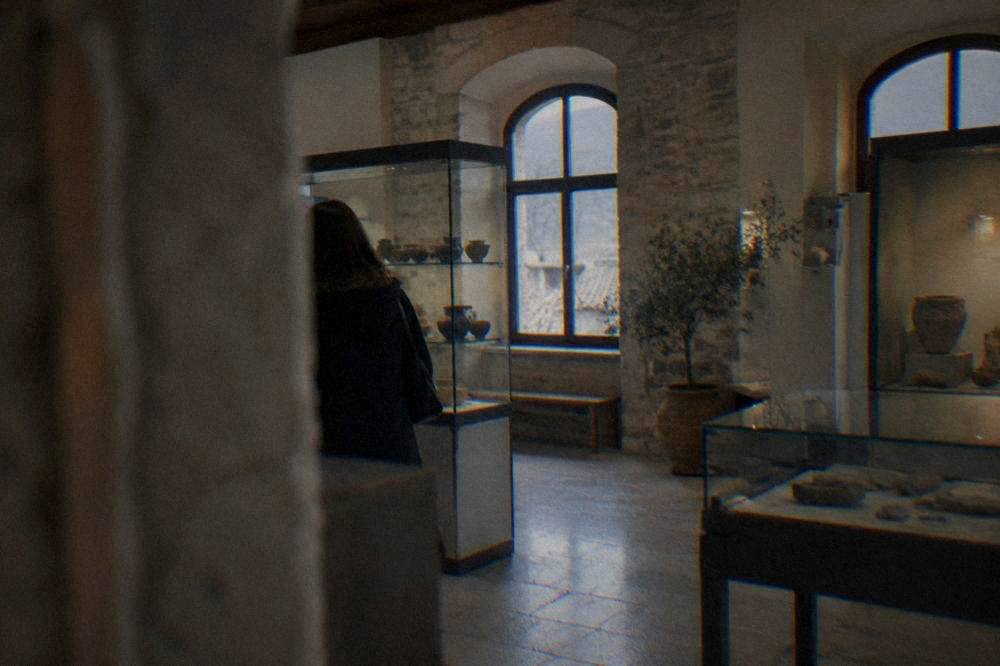
The collection is organised around the documented heritage of Herzegovina: Ottoman-era material connected to the bridge and the bazaar economy, archaeological and ethnographic holdings, archival photography and printed material, and portraits and personal effects of writers, painters and public figures of the region, presented in a compact traditional gallery format rather than a large modern museum build. It is the kind of museum a history-minded traveller finishes in well under an hour unless a particular display holds them, and its strength is context: after walking across Stari Most and through Kujundžiluk, the museum is where those stones acquire their paperwork.
The Ottoman layer of the city, which supplies the core of any Herzegovina collection, is unusually rich. Within a few hundred metres of the museum stand the Old Bridge of 1566, the Koski Mehmed-pašina džamija by the river, the Karađoz-begova džamija inland, the Crooked Bridge, Kriva ćuprija, and the surviving Ottoman courtyard houses such as the Bišćević House and the Muslibegović House. The craft economy that paid for all of it, the coppersmiths of Kujundžiluk, gave the region its commercial character, and museum displays of tools, metalwork and trade documents tell that side of the story. The site's overview of the bazaar quarter, Kujundžiluk: Mostar's Old Bazaar explained, sets the scene.
The more recent record forms the other pole of the collection. The war in Bosnia and Herzegovina left physical marks across Mostar, and the museum tradition in the city now includes several institutions that treat that period directly. The Old Bridge was destroyed on 9 November 1993 and reopened in July 2004 after a reconstruction using original materials and techniques, supported by UNESCO and World Bank partners; that reconstruction is itself part of the museum story, and the UNESCO inscription a year later cited the property under criterion (vi), as a symbol of multicultural coexistence and reconciliation. This page, like the site's war-history coverage at Mostar war history: what happened and what remains, keeps to dates and physical facts.
Beyond its own walls, the museum belongs to a cluster of small institutions within walking distance, each holding one piece of the city's record:
| Nearby sight | Walking distance theme | Documented ticket figure |
|---|---|---|
| Old Bridge Museum (Tara tower) | The bridge itself, its 1566 build and 2004 rebuilding | about 10 KM adult, reported |
| Koski Mehmed-pašina džamija | Ottoman religious architecture with river terrace | a small cash fee, more with the minaret |
| Muslibegović House | Ottoman domestic architecture | about 8 KM, reported |
| Bišćević House | Ottoman courtyard house on the Neretva | about 4 KM, reported |
| Partisan Memorial Cemetery | Bogdan Bogdanović memorial of 1965 | no ticket, no staffed hours |
Reported figures shift; confirm the current price at the desk before paying, and treat the museum quarter as an afternoon's walking circuit rather than a set of bookings.
How Long Should You Spend, And How Do The Mostar Museum Visits Stack Up?
Plan on roughly half a day to combine the Museum of Herzegovina with the Old Bridge, the bazaar and one or two of the nearby house museums, and a full day if you add the wartime sites and the viewpoints; the museum itself is a short stop, and the old core of Mostar is compact enough that everything listed on this page sits within a 15-minute walk of Stari Most. That compactness is the practical gift of this city. There is no transit to plan between the museum, the bridge, the mosques and the bazaar; it is one continuous walk.
Depth is another matter, and it is where a guide earns the fee. A tailored private history walk can take the same streets and attach the documented record to each of them, and the listing Check availability covers exactly that format. For travellers who prefer a fixed group format, a city walk with a licensed guide covers the same core quarter. You can compare both against the day-trip options further down this page.
For context, here is how the documented walkable cluster sits relative to Stari Most, with road distances to the day-trip sights that start where the walking ends:
| Sight | Road distance from Stari Most | Free-flow time |
|---|---|---|
| Blagaj Tekke | 13.7 km | about 19 min |
| Počitelj | 30.0 km | about 31 min |
| Kravica waterfall | 55.2 km | about 54 min |
| Konjic | 69.0 km | about 80 min |
| Sarajevo (Baščaršija) | 127.1 km | about 134 min |
| Dubrovnik (Stradun) | 145.5 km | about 150 min |
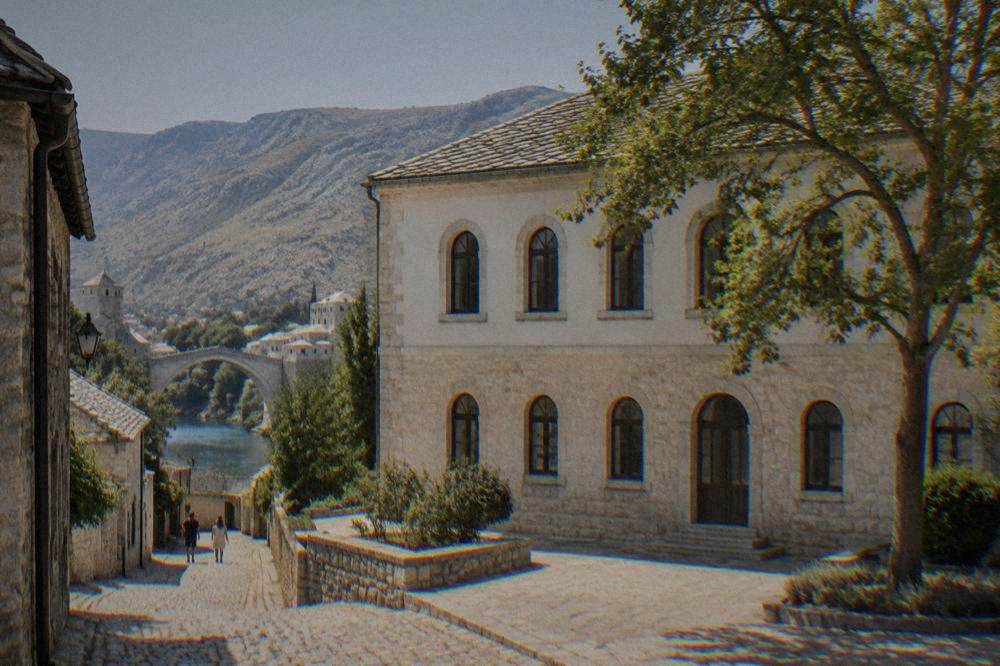
The old core rewards slow walking. Kriva ćuprija, the smaller single-arch bridge that prefigures Stari Most, sits quietly a few streets from the main drag, and the courtyard houses open their rooms to visitors for a small cash fee. For orientation, the site's one-day route at One day in Mostar: the working itinerary sequences all of these stops.
Where Exactly Is The Museum Of Herzegovina Located In Mostar?
The museum sits in the central city core of Mostar, on the same side of the Neretva as the main approach to the Old Bridge, within the network of streets that connect the Kujundžiluk bazaar, the Tara tower and the Ottoman house museums, so the practical answer for a visitor is: walk downhill toward the river from Spanish Square and you are in its neighbourhood within minutes. Spanish Square itself is the modern centre of the city and the standard reference point; from there the whole old core unrolls toward the river.
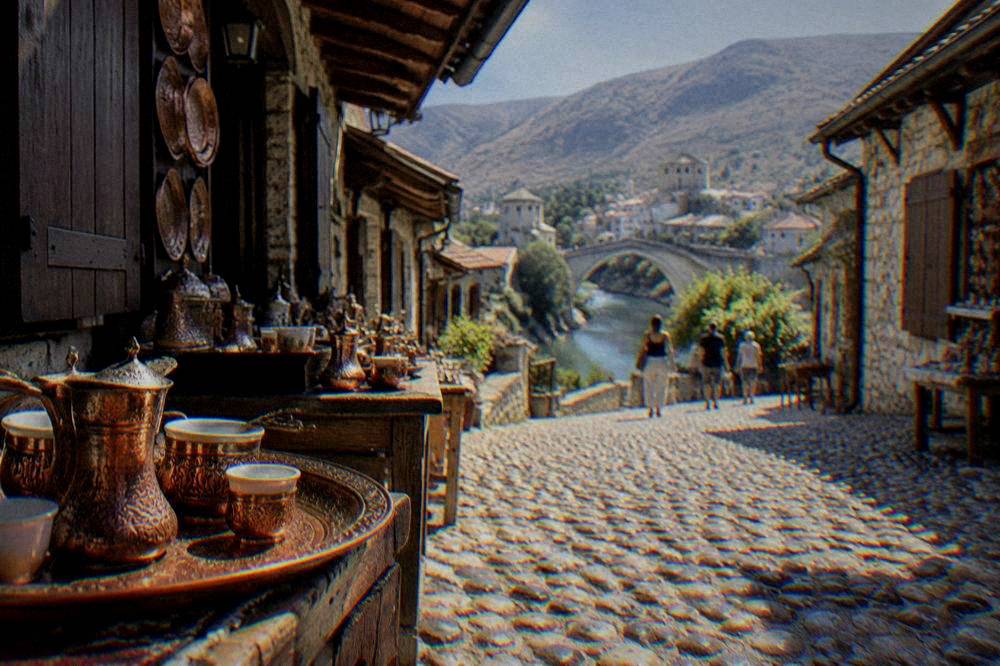
Mostar as a whole is a walkable, low-rise city, and the question of transport hardly arises inside it. Taxis are inexpensive, and the practical rule for the museum quarter is simply to arrive on foot. The city's geography is simple: the Neretva runs through the middle, the old core hugs the bridge on both banks, and the modern boulevards, Spanish Square and the surrounding neighbourhoods sit a short distance uphill. The site's practical survey at Spanish Square and central Mostar covers the modern centre, and the overview of the pedestrian core at Mostar Old Town: the complete guide does the same for the river banks.
One geographic note that travellers regularly get wrong: Mostar has no sea coast. It is an inland river city. The nearest coastal town is Neum, Bosnia and Herzegovina's short strip of Adriatic shore, 75.3 km and about 82 minutes by road from Stari Most, and the Croatian coast around Dubrovnik begins beyond the border. A museum visit and a beach day do not combine naturally; a museum visit and a river or waterfall day do. Other pages covering the same trip are gathered on Mostar Travel Guide.
What Do Hours, Tickets And Practicalities Look Like For The Museum Of Herzegovina In Mostar?
No official opening hours or admission prices for the Museum of Herzegovina are published in any form this desk can rely on, so the working advice is to confirm both on arrival, at your accommodation or at the city's visitor information point, and to keep cash in convertible marks on you for museum desks in Mostar generally, where small institutions often take cash only. The currency of Bosnia and Herzegovina is the convertible mark (KM, BAM), pegged to the euro at exactly 1 EUR = 1.95583 KM under a currency board arrangement. Euro cash is often accepted in tourist areas at a rounded rate of about 2 KM to the euro, but that rounding is a courtesy, not an official rule; confirm the rate before paying.
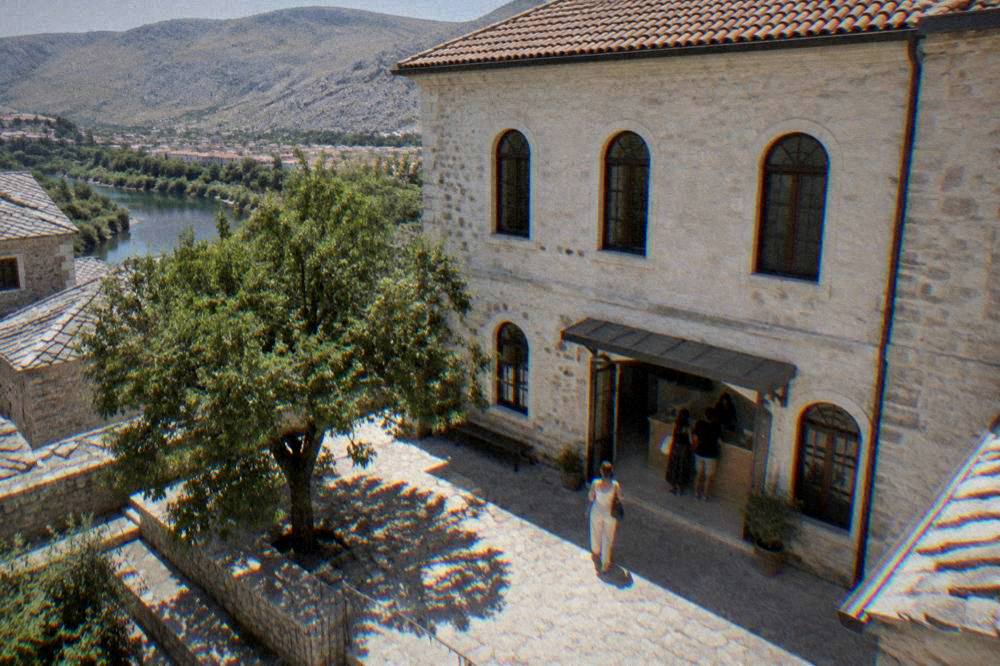
Two further practicalities are worth knowing for the canton. A tourist tax is reported at 3 KM per person per night in Herzegovina-Neretva Canton from 1 January 2026; confirm at booking how your accommodation applies it. And Bosnia and Herzegovina is not in the European Union and not in Schengen; the land border with Croatia, which every Dubrovnik or Split arrival crosses, is a Schengen external border with full passport checks, and reported waits run up to about 30 minutes, longer at summer peaks. Visa-exempt visitors may stay up to 90 days in a six-month period from first entry.
The pattern across Mostar's small museums, for planning, looks like this, with every figure below being a reported figure to confirm at the desk:
| Institution | Reported admission | Reported hours |
|---|---|---|
| Old Bridge Museum | about 10 KM adult | 08:00-16:00 daily, 1 April to 1 November |
| Kravica waterfall park (for comparison) | 20 KM adult, all year | 07:00-22:00 June to September |
| Blagaj Tekke (for comparison) | 10 KM | 08:00-22:00 April to October |
| Museum of Herzegovina | confirm on arrival | confirm on arrival |
The Kravica row is there deliberately: it is the one figure in this whole cluster that is stated by the park's own visitor page, 20 KM for an adult all year round, with children under 7 free, and it shows the standard of documentation a traveller can expect elsewhere once official pages exist. Until the museum publishes its own, a confirmed-at-the-door answer is the honest one.
When Is The Best Time Of Year To Visit Mostar For A Museum Day?
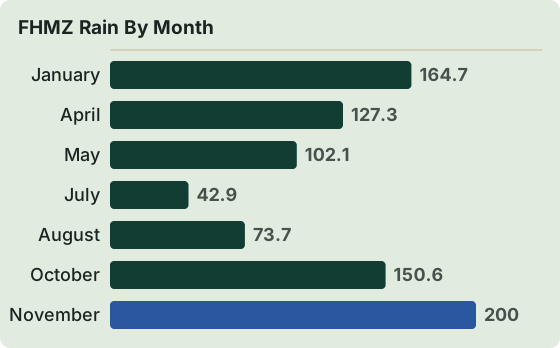
Late spring and early autumn give the most comfortable conditions for a day that mixes museum time with outdoor walking: the FHMZ Mostar station table for 1961 to 1990 shows a July mean temperature of 24.7 C against 17.9 C in May and 15.3 C in October, and the ERA5 reanalysis for 1991 to 2020 puts the mean daily high at 30.5 C in August, so summer afternoons in this valley are hot and indoor stops earn their keep. Rain is a winter phenomenon here: November averages 200.0 mm against July's 42.9 mm on the same FHMZ series, with a winter maximum across the cold months.
| Month | FHMZ mean temp (1961-1990) | FHMZ rain mm | ERA5 mean daily high (1991-2020) |
|---|---|---|---|
| January | 4.8 C | 164.7 | 8.4 C |
| April | 13.3 C | 127.3 | 17.7 C |
| May | 17.9 C | 102.1 | 22.3 C |
| July | 24.7 C | 42.9 | 29.9 C |
| August | 24.2 C | 73.7 | 30.5 C |
| October | 15.3 C | 150.6 | 19.5 C |
| November | 10.1 C | 200.0 | 14.1 C |
A rainy November day, in other words, is a good museum day in Mostar, and a July afternoon is best split: bridge and viewpoints in the morning, museum and the Ottoman houses, which stay cool behind their stone walls, at midday. The Neretva itself stays cold even in August, fed by karst springs, so river swimming is a bracing idea rather than a cooling one. The site's seasonal breakdowns at Mostar in summer carry this further.
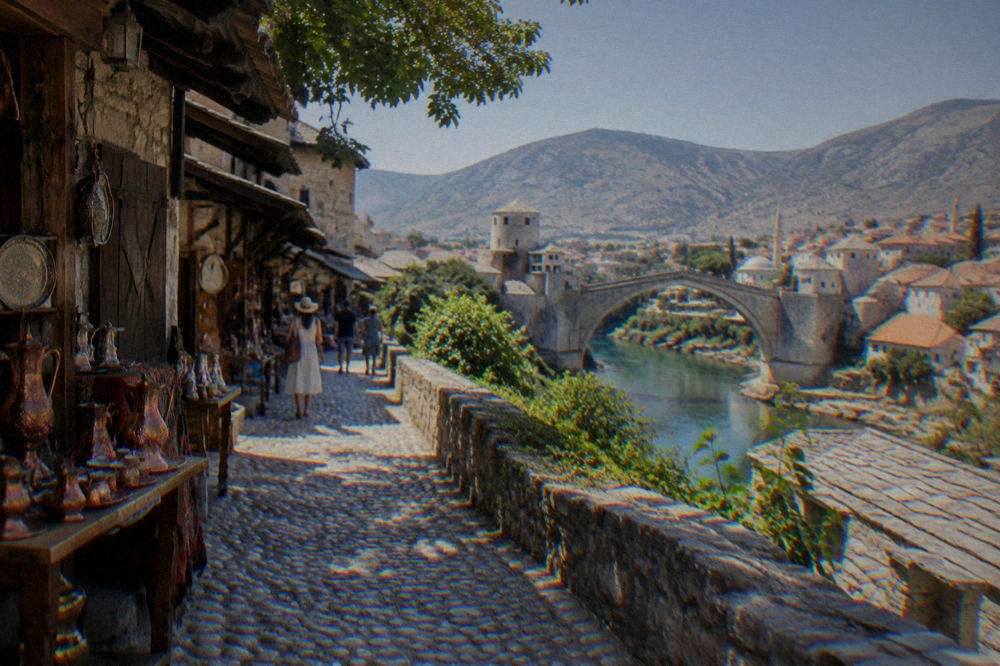
The calendar offers one more reason to time a visit: the city's event summer. In 2026, Mostarsko ljeto ran from 25 June to 7 August, the Mostar Summer Fest ran 2 to 4 July, the traditional Old Bridge diving competition held its 460th edition on 26 July, the Red Bull Cliff Diving World Series stop ran 30 July to 1 August, and the Mostar Jazz Fest ran 23 to 25 August. Late July puts you in the middle of all of it, at the cost of heat and crowds at the bridge itself. The museum, one street back, is the quiet counterweight.
How Does The Museum Of Herzegovina Fit Into A Wider Herzegovina Day Trip?
The museum works as the morning anchor of a Mostar day before a Herzegovina circuit: spend the morning on the old core, the museum and the bridge, then take an afternoon trip to Blagaj, Počitelj and Kravica waterfall, which lie 13.7, 30.0 and 55.2 km by road from Stari Most, or roughly 19, 31 and 54 minutes of free-flow driving respectively. Many visitors arrive on exactly that pattern from Dubrovnik or Split on a day trip, and many others base themselves in Mostar and take a Herzegovina loop from the city.
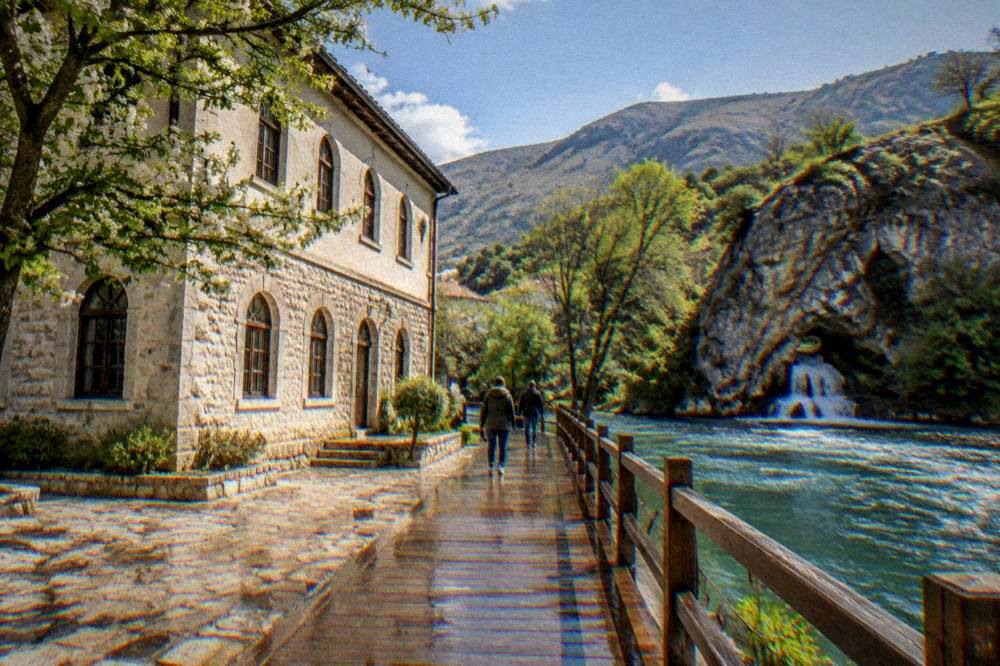
Organised options cover both directions. From Mostar itself, guided Herzegovina circuits reach the Blagaj Tekke at the Buna spring, the fortified village of Počitelj and the Kravica waterfall in a single day. From Dubrovnik and Split, day trips cross the border, visit the museum quarter's neighbours, the bridge and the bazaar, and often add the waterfall. The trio below compares the strongest listings in each direction.
For deeper context before or after, the site's regional pages cover the same ground at your own pace: Konjic and the Neretva north for the river upstream and the ARK D-0 bunker, and Neum and the coast question for what Bosnia and Herzegovina's tiny shoreline actually is. Inside the city, the Ottoman religious architecture is surveyed at Mostar's mosques: a visitor's guide, and the wartime record at the sites that carry it.
Common Questions About The Museum Of Herzegovina In Mostar
How much does the Museum of Herzegovina in Mostar cost?
Figures quoted on aggregator sites vary, so confirm the current price at the desk on arrival. Bring cash in convertible marks (KM); small museums in Mostar often take cash only.
What are the opening hours of the Museum of Herzegovina?
No official hours are published. Confirm on arrival, at your accommodation or at the city visitor information point. Reported hours on third-party sites vary, and museum departments in the city have been known to keep different schedules.
How far is the Museum of Herzegovina from the Old Bridge?
The museum stands in the central core of Mostar a few minutes' walk from Stari Most, within the same network of streets as the Kujundžiluk bazaar, the Tara tower and the Ottoman house museums. No transit is needed; the whole museum quarter is walkable.
Is the Museum of Herzegovina worth visiting?
It is worth it for travellers who want the documented context behind the stones they have just walked past: the Ottoman-era material, the craft and trade record of Herzegovina, and the gallery of regional figures. It is a compact, traditional museum, not a large modern institution, and pairs naturally with a guided history walk, for which check availability on the tailored private option.
What currency do I need for museums in Mostar?
The convertible mark (KM, BAM), pegged at exactly 1 EUR = 1.95583 KM. Euro cash is often accepted in tourist areas at a rounded rate of about 2 KM to the euro, but that is a courtesy rather than a rule; confirm the rate before paying, and prefer marks at museum desks and small vendors.
Can you combine the Museum of Herzegovina with other sights in one day?
Yes, easily. The Old Bridge, the Kujundžiluk bazaar, the Koski Mehmed-pašina džamija, the Old Bridge Museum and the Ottoman courtyard houses all sit within a short walk of each other, and an afternoon trip to Blagaj, Počitelj or Kravica waterfall can follow, with road distances of 13.7, 30.0 and 55.2 km from Stari Most respectively.
The Museum of Herzegovina will not take the largest share of your day in Mostar, but it supplies what the stones cannot: the paperwork, the portraits and the region-wide frame in which a 1566 bridge, a 1474 name and a 2004 reconstruction all belong to one documented story. Confirm the door price and hours when you arrive, carry marks, and give the old core the slow loop it deserves.
