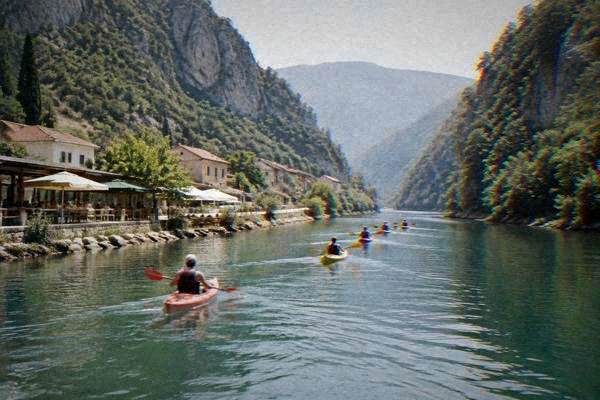
Konjic: The Old Bridge Town And Tito's Bunker
Konjic sits 69.0 km and about 80 minutes by road north of Mostar, on the upper Neretva, and pairs a six-arched Ottoman stone bridge with ARK D-0, the underground bunker built for Josip Broz Tito that is now the town's headline sight.
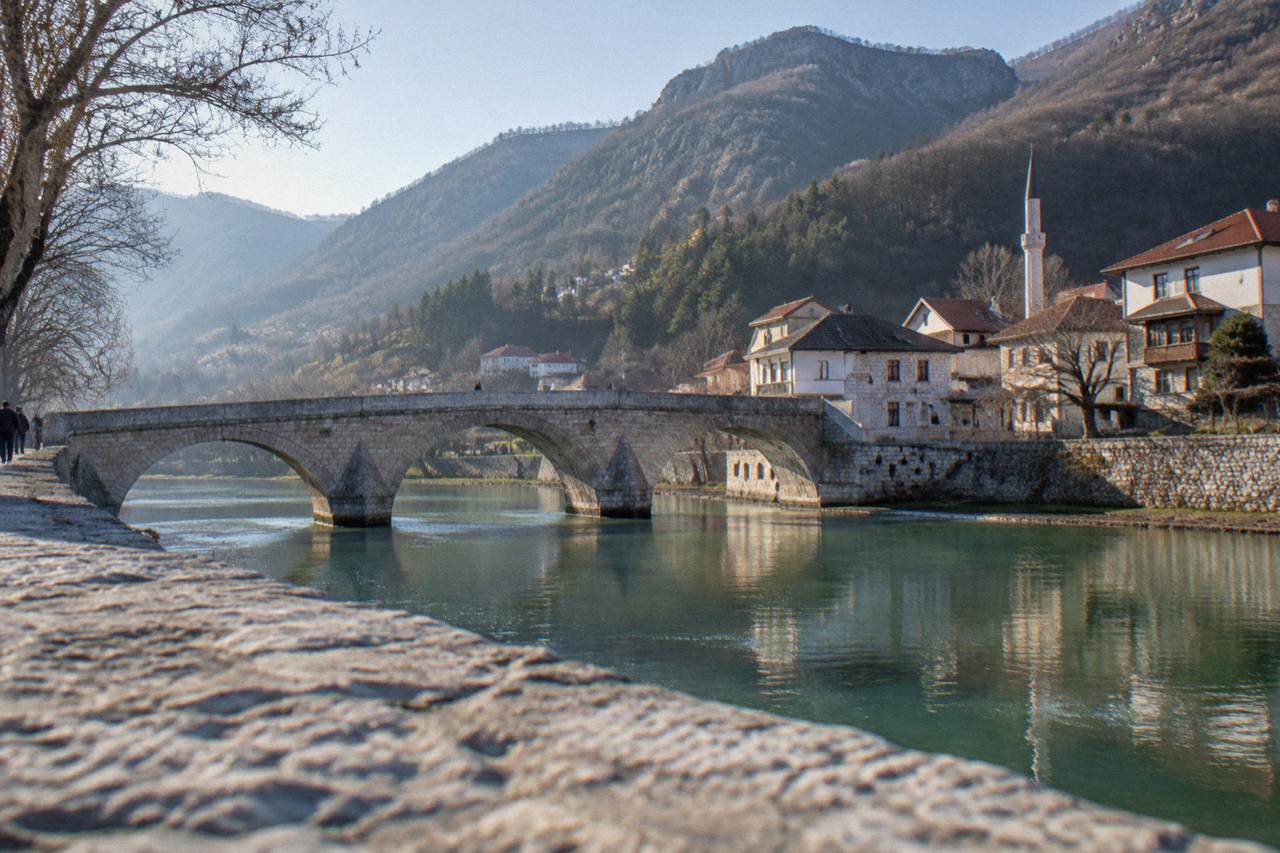
Konjic is about 80 minutes from Mostar by road (69.0 km, free-flow) and also sits on the Sarajevo to Mostar railway. ARK D-0 bunker tours cost about 40 KM for foreign visitors, run Tuesday to Sunday at set times and require advance booking; the town's Old Bridge and riverside are free to wander.
Konjic is a town on the upper Neretva river in Bosnia and Herzegovina, 69.0 km and about 80 minutes by road north of Mostar, and it gives a Herzegovina itinerary two things Mostar cannot: a second, very different Ottoman stone bridge, and ARK D-0, the Cold War-era underground bunker built to shelter the Yugoslav leadership, now open for guided tours. The town sits where the Neretva leaves the mountains, on the main road and rail line that connect Sarajevo with Mostar, which makes it one of the easier northern day trips from the Mostar side of Herzegovina. This guide lays out what a Konjic day actually contains, what the bunker visit involves, and how the drive north strings together with Jablanica and the Neretva canyon.
Where Is Konjic And How Far Is It From Mostar?
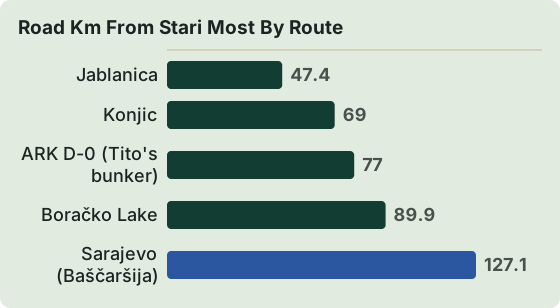
Konjic lies 69.0 km from Stari Most by road, about 80 minutes of free-flow driving north on the M17 corridor through the Neretva canyon, past Jablanica and its lake. The whole journey stays inside Bosnia and Herzegovina, so there is no border to cross, and the canyon stretch between Jablanica and Konjic is the scenic core of the drive. The route follows the river for nearly the whole way. There is no border to cross, since the whole journey stays inside Bosnia and Herzegovina. Sarajevo lies beyond Konjic, 127.1 km and about 134 minutes from Stari Most, so the town works either as a destination in itself or as a stop on a longer day toward the capital.
The drive breaks naturally at Jablanica, 47.4 km and about 57 minutes out of Mostar, where the ruined bridge over the Neretva and the Battle for the Wounded museum sit beside the main road. Fuel, food and a leg stretch are easy there. Beyond Jablanica the canyon narrows, the railway hugs the opposite bank in places, and the road climbs gently into the Konjic basin. Allow extra time in both directions for slow traffic in the canyon section, which is single carriageway for long stretches even where motorway works continue on the Corridor Vc project around Mostar.
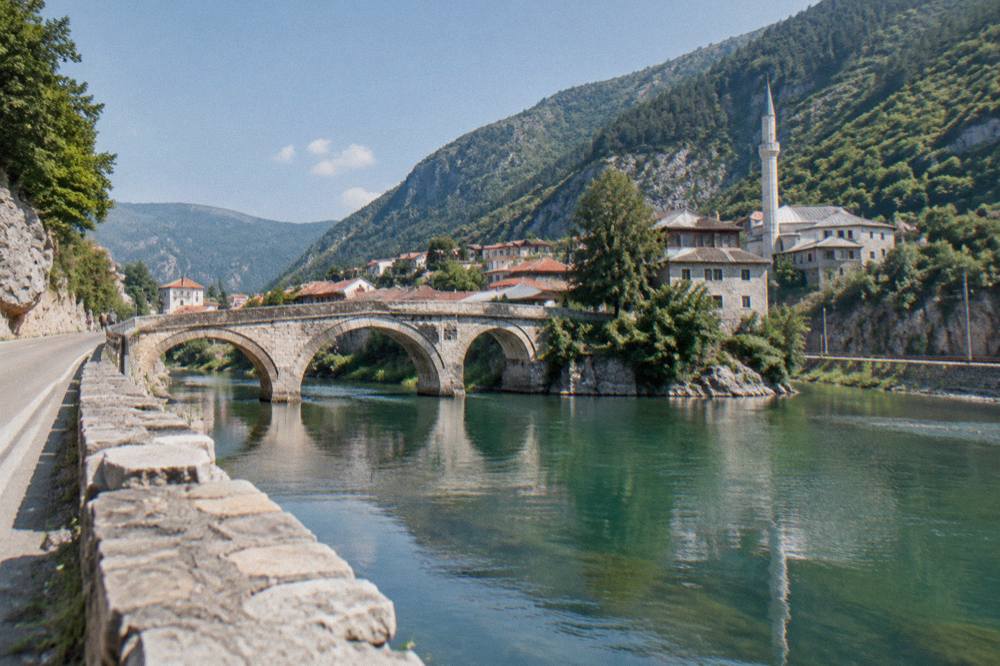
The railway is a genuine alternative. Konjic is on the Sarajevo to Čapljina line via Mostar, with two trains a day each way, and the Sarajevo departure times are 07:15 and 16:46 with arrival in Mostar about two hours later. Regular passenger service resumed on 15 October 2026 after a suspension that began on about 8 September 2026 following a fire along the corridor, including the area around Konjic station. A one-way Sarajevo to Mostar fare is reported at about 14 KM; confirm times and fares before committing a day to the train.
| Route | Road km from Stari Most | Free-flow time |
|---|---|---|
| Jablanica | 47.4 | 57 min |
| Konjic | 69.0 | 80 min |
| ARK D-0 (Tito's bunker) | 77.0 | 93 min |
| Boračko jezero | 89.9 | 113 min |
| Sarajevo (Baščaršija) | 127.1 | 134 min |
What Is There To See In Konjic On A Day Trip From Mostar?
The town's core sights are its six-arched Ottoman stone bridge over the Neretva, the riverside old town around it, and ARK D-0, the atomic shelter carved into a hillside near Konjic that ran as a secret state project and now takes visitors on guided tours. The bridge and the old town cost nothing and need no booking; the bunker is the opposite, a ticketed, timed, guided visit that has to be arranged in advance. Together they fill a comfortable day, with the canyon drive between Mostar and Konjic doing half the scenic work.
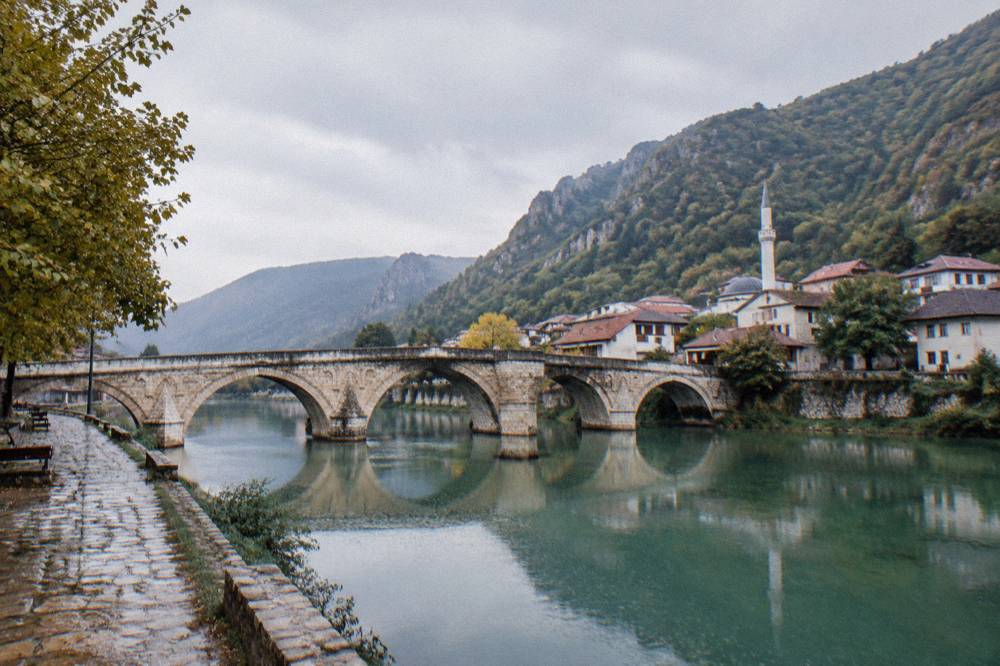
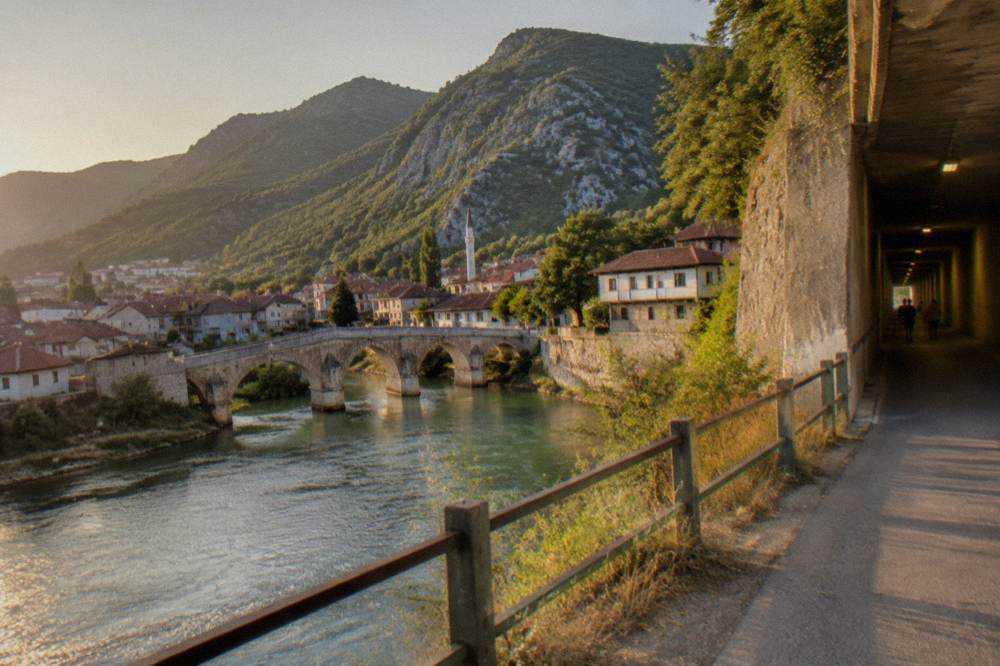
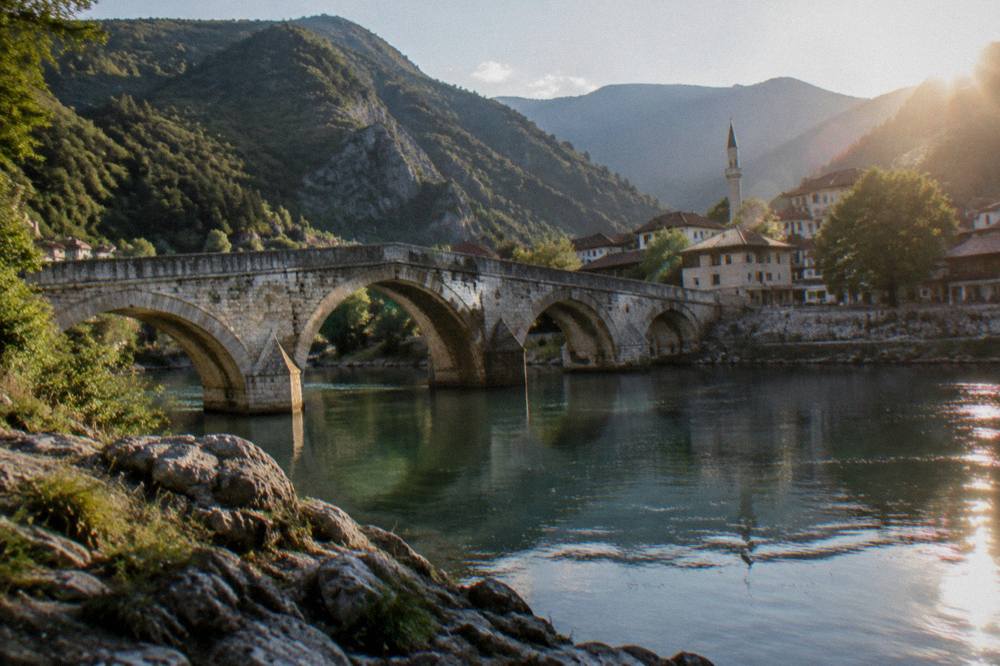
The stone bridge is Konjic's answer to Mostar's Stari Most, smaller and with multiple arches rather than a single span, but set against the same startling green water. Unlike Mostar's bridge, which was destroyed on 9 November 1993 and rebuilt and reopened in July 2004, Konjic's bridge was damaged in the war and repaired as well, so both crossings carry reconstruction stories. The comparison rewards travellers who know both: Mostar's is a single stone arch of about 29 m completed in 1566, while Konjic's is a broader, multi-arched structure built for everyday traffic. Riverside walks on both banks take under an hour at a stroll.
ARK D-0 is the reason many people make the trip at all. Built in secret over decades for the Yugoslav political and military leadership, the bunker sits several hundred metres into a hill near Konjic and is visited only with a guide. The tour covers the residential blocks, command rooms and machinery spaces of the complex. The reported tour times are about 09:00, 12:00 and 15:00, Tuesday to Sunday, with the complex closed on Monday, and a tour runs about 90 minutes. Booking is required, and advance notice of 24 hours or more is recommended. Beyond the bridge and the bunker, Boračko jezero, a mountain lake 89.9 km and about 113 minutes from Mostar, extends the day for anyone with a car and energy left.
| Konjic sight | What it is | Entry |
|---|---|---|
| Stone bridge over the Neretva | Multi-arched Ottoman-era crossing in the town centre | Free, public |
| Old town riverside | Streets and cafes on both banks around the bridge | Free, public |
| ARK D-0 (Tito's bunker) | Guided underground complex, about 90 minutes | About 40 KM foreign visitors, about 20 KM BiH citizens |
| Boračko jezero | Mountain lake north of Konjic | Reachable by road, 89.9 km from Mostar |
Before or after a Konjic day, Mostar's own Old Town rewards a guided pass: the private group city tour of Mostar and the Old Bridge covers the bridge quarter with a guide, and you can Check availability for the day you return.
How Much Does ARK D-0 Cost And How Do You Book A Tour?
ARK D-0 is reported at about 40 KM for foreign visitors and about 20 KM for citizens of Bosnia and Herzegovina, cash only, with guided tours at roughly 09:00, 12:00 and 15:00 from Tuesday to Sunday and the site closed on Monday. Children under 10 are reported free in some accounts. Booking is required, with a day or more of advance notice recommended, because the complex cannot be entered without a guide and group sizes are managed. The tour inside lasts about 90 minutes.
Two practical points shape the plan. First, cash: the reported arrangement is cash only, and the convertible mark (KM) is the currency of Bosnia and Herzegovina, pegged at 1 EUR = 1.95583 KM, so arrive with marks rather than assuming a card or euros will settle it. Second, timing: because tours run at set hours and not continuously, the rest of the day has to be built around the slot. A 12:00 tour, for instance, pairs well with a morning drive up the canyon from Mostar and an afternoon in the bridge quarter of Konjic. Confirm the current price and your tour time at booking, since both are reported figures rather than a published tariff on a live official page.
The bunker's distance from Stari Most is 77.0 km by road, about 93 minutes free-flow, a little beyond Konjic town itself. That extra stretch up the Neretva valley is part of the appeal: the road leaves the canyon and opens into the wider basin where the bunker complex hides in a hillside. Visitors staying several days in Herzegovina sometimes pair Konjic with Jablanica on the way up, giving one day two very different layers of Yugoslav-era history, the bunker and the bridge-on-the-Neretva story.
Can You Visit Konjic From Mostar By Train Or Bus?
Yes, Konjic sits on the Sarajevo to Mostar to Čapljina railway, with two trains a day each way, and Sarajevo departures at 07:15 and 16:46 that reach Mostar about two hours later; buses also run the corridor several times a day. The train is the scenic option, tracing the Neretva canyon that the road only partly follows, and Konjic is a named stop between Sarajevo and Mostar. Service resumed on 15 October 2026 after the suspension that began on about 8 September 2026 following a fire along the line, including near Konjic station.
| Train | From | Departure | To | Arrival |
|---|---|---|---|---|
| 723 | Sarajevo | 07:15 | Čapljina | 09:40 |
| 721 | Sarajevo | 16:46 | Čapljina | 19:18 |
| 720 | Čapljina | 06:03 | Sarajevo | 08:35 |
| 722 | Čapljina | 16:42 | Sarajevo | 19:07 |
For a day trip from Mostar, the timings need care. The trains pass through Mostar in both directions, with arrival from Sarajevo at roughly 09:13 and 18:48, but a day built around a set-hour bunker tour and a return train the same evening leaves little margin, and the timetable's seasonal variations on some services mean the day should be checked against the live schedule before it is fixed. Buses are the flexible fallback, with several daily departures toward Sarajevo that stop at or near Konjic, and the road journey from Mostar to Sarajevo by bus takes roughly 2 h 20 to 2 h 40 in total. Whichever way you go, the fare is paid in KM, not euros.
The practical verdict for a relaxed day: drive or take an organised day trip up the M17, and keep the train for a Sarajevo-to-Mostar journey where the schedule works in your favour. Anyone planning a wider loop through Herzegovina can fold Konjic into a route that also takes in Trebinje or the coast at Neum, though those lie in different directions and belong on separate days.
What Does The Drive From Mostar To Konjic Look Like?
The M17 route runs 69.0 km up the Neretva canyon from Stari Most, about 80 minutes without stops, passing Jablanica at the halfway point, 57 minutes out, and running beside the river and the railway almost continuously, with no border formalities anywhere since it lies entirely within Bosnia and Herzegovina. South of Jablanica the road tracks the canyon rim and the shores of the reservoir; north of it the valley widens before narrowing again on the final approach to Konjic. There are no border formalities anywhere on the route, since it lies entirely within Bosnia and Herzegovina.
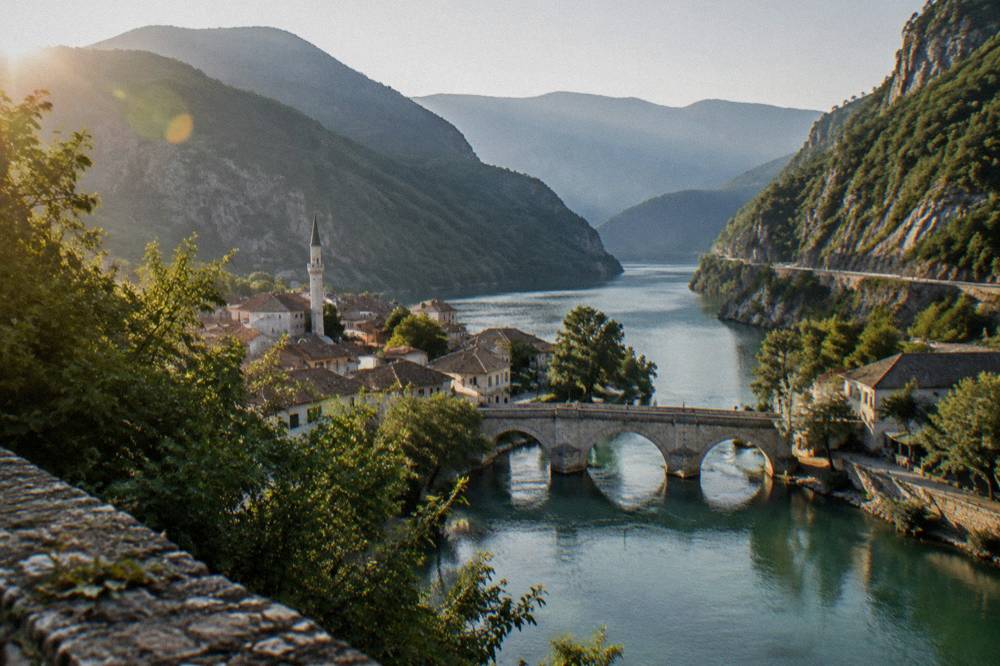
Jablanica is the natural stop, 57 minutes out. The ruined bridge over the Neretva stands beside the town as an open-air sight, free to view, and the Museum of the Battle for the Wounded on the Neretva sits a short walk away, with admission of a few KM and hours that run longer in summer than winter. Continuing north, the canyon section between Jablanica and Konjic is the part photographers remember: cliffs, tunnels and the emerald river below the road edge. Take it steadily, keep to marked viewpoints for stops, and treat the kilometres as part of the outing rather than a transfer to be endured. The wider set of guides lives on Mostar Travel Guide.
Beyond Konjic the valley opens toward Boračko jezero, 89.9 km and about 113 minutes from Mostar, a mountain lake used for swimming and rowing in summer. Drivers with a full day can loop Konjic town in the morning, the bunker around midday, and still reach the lake before the return drive, though winter daylight shortens that arithmetic. As anywhere in rural Herzegovina, stay on marked paths and roads when exploring off the tarmac, because suspected mine areas remain marked by official warning signs in parts of the countryside.
How Does Konjic Compare With Mostar's Old Bridge And Old Town?
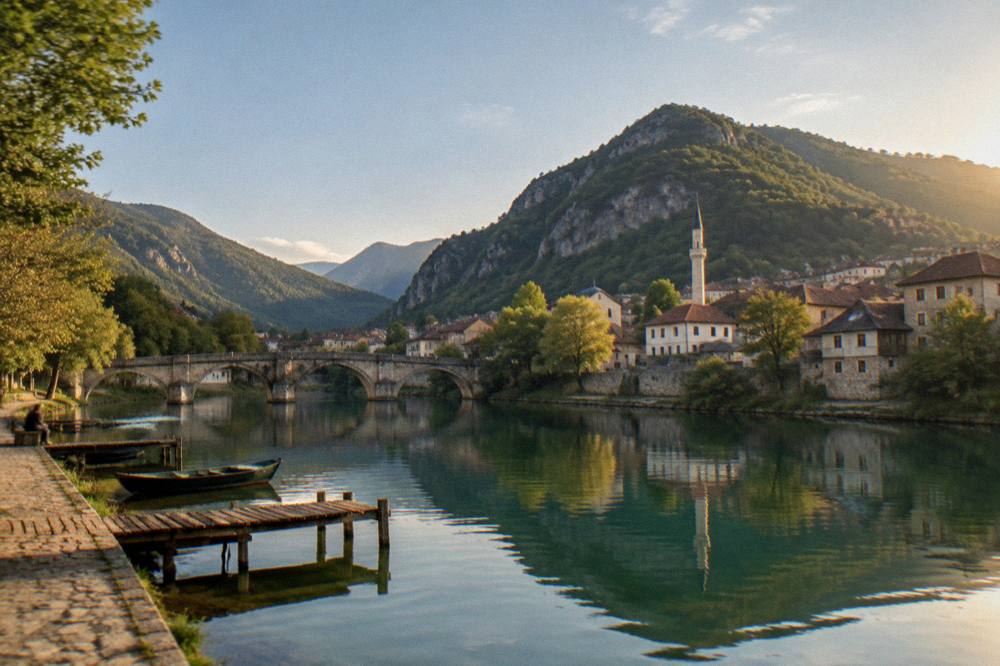
Konjic's bridge is a multi-arched working crossing over the Neretva, free and unfenced, while Mostar's Stari Most is a single 29 m stone arch completed in 1566, about 21 to 24 metres above the river depending on its level, and the centrepiece of a UNESCO World Heritage property inscribed in 2005. The two are complements, not rivals. Konjic gives quiet, water-level views and a town that sees a fraction of the foot traffic around Kujundžiluk; Mostar gives the monumental single arch, the diving tradition, and the bazaar streets around it.
The differences are physical and historical. Mostar's bridge was destroyed on 9 November 1993 and rebuilt with original techniques and materials, reopening in July 2004 as part of a reconstruction supported by UNESCO and World Bank partners, and the surrounding Old Bridge Area was inscribed on the World Heritage List in 2005 under criterion (vi). Konjic's bridge was also war-damaged and repaired, but its setting is a lived-in town square rather than a heritage stage. For the story of the Mostar bridge itself, the guides on why the bridge is so famous and why it was destroyed carry the detail.
A realistic pairing is one day in each town. Give Mostar the Old Town, the bridge viewpoints and a walk with a guide, and give Konjic the bunker and the river. Anyone with only a single day who wants both feelings, canyon and bridge, can drive up through the Neretva gorge, stop at Jablanica, see Konjic's bridge, and be back under Stari Most for the evening, since the whole round trip is under three hours of driving plus stops. The viewpoint guide for Mostar lists the spots that make the evening return worthwhile.
When Is The Best Time Of Year For A Konjic Day Trip From Mostar?
Late spring through early autumn is the practical window: July and August bring modelled daily highs of 29.9 C and 30.5 C in the Mostar basin (ERA5 reanalysis, 1991-2020), while the FHMZ station series for Mostar (1961-1990) shows the rain concentrated from October to January, with November averaging 200.0 mm against July's 42.9 mm. The bunker, being underground, is temperature-stable year round, but the drive and the riverside walk are the parts the weather controls.
Summer visits suit the lake extension at Boračko jezero and long daylight, at the cost of heat in the canyon and the year's thinnest rain margin. Autumn colours the canyon hardwoods and drops the temperatures, but the rain statistics tilt quickly: October averages 150.6 mm in the FHMZ 1961-1990 series and November doubles the July figure several times over, so an autumn day needs a wet-weather fallback, and the bunker is exactly that. Winter keeps the road open in normal conditions, though mountain sections north of Konjic toward the lake can hold snow; the FHMZ series records a maximum snow cover of 37 cm in the Mostar record. Spring is the compromise most itineraries land on, with the river high and the canyon at its greenest.
What Should A One-Day Konjic Itinerary From Mostar Look Like?
Leave Mostar in the morning, break the drive at Jablanica after about 57 minutes, reach Konjic's bridge quarter around midday, take a booked ARK D-0 tour in the early afternoon, and return down the canyon to Mostar by evening, a day of roughly three hours' total driving. That shape keeps the bunker booking safe, gives the bridge and riverside their unhurried hour, and still lands you back under Stari Most before dark outside deep winter.
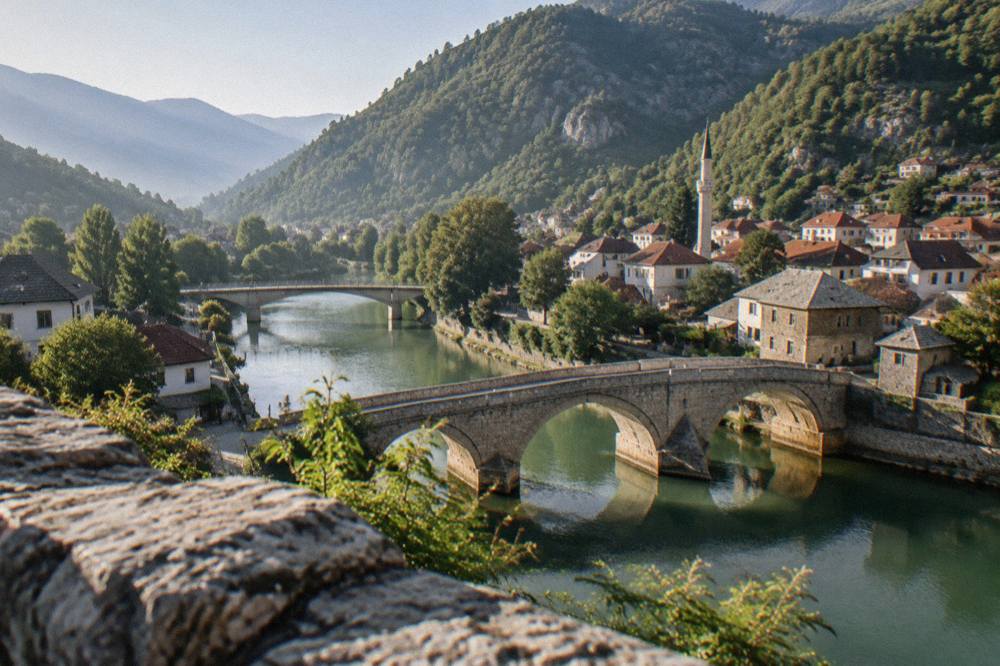
A sample frame: depart by 09:00, coffee in Jablanica by 10:00 with a look at the ruined bridge, Konjic's old bridge by 11:00, a 12:00 bunker tour, and lunch in Konjic after it. The afternoon return can detour to Boračko jezero between June and September, or come straight down the canyon with a stop at the Museum of the Battle for the Wounded if the morning skipped it. In Mostar, the evening belongs to the Old Town: cross Stari Most at dusk, when the tour groups have gone and the bridge is lit, and end at a viewpoint above the Neretva. Anyone stretching to a second day can follow the two-day Mostar itinerary and treat Konjic as its northern chapter.
Bring KM in cash for the bunker and small stops, water and shade for the canyon in summer, and confirm the bunker slot the day before. The emergency number in Bosnia and Herzegovina is 112. And if the day ends with an appetite, the guide to ćevapi in Mostar points the way to the city's default dinner after a long drive.
Common Questions About Konjic
How far is Konjic from Mostar?
Konjic is 69.0 km from Stari Most by road, about 80 minutes of free-flow driving, with the ARK D-0 bunker site a little beyond the town at 77.0 km and about 93 minutes.
Do you need to book ARK D-0 in advance?
Yes. The bunker is visited only on guided tours at reported set times, Tuesday to Sunday, and booking is required, with advance notice of about 24 hours recommended. It is closed on Monday.
How much does Tito's bunker in Konjic cost?
Entry is reported at about 40 KM for foreign visitors and about 20 KM for citizens of Bosnia and Herzegovina, cash only, with children under 10 reported free in some accounts. Confirm the current price at booking.
Can you get to Konjic from Mostar by train?
Yes. Konjic is a stop on the Sarajevo to Mostar to Čapljina line, with two trains a day each way. Service resumed on 15 October 2026 after a suspension that began in early September 2026.
Is Konjic worth a day trip from Mostar?
For the combination of a repaired multi-arched Ottoman stone bridge, a quiet riverside old town and the ARK D-0 bunker, yes: it is the closest full-day northern option from Mostar and breaks naturally at Jablanica each way.
What currency do you need in Konjic?
The convertible mark (KM, BAM), pegged at 1 EUR = 1.95583 KM. Euros are often accepted in tourist areas of the region at a rounded rate, but the bunker fee is reported as cash only, so carry marks.