Things To Do In Mostar
Mostar packs a UNESCO-listed Old Town, a legendary stone bridge, cold-river swimming and a whole stack of day trips into a city you can cross on foot in half an hour.
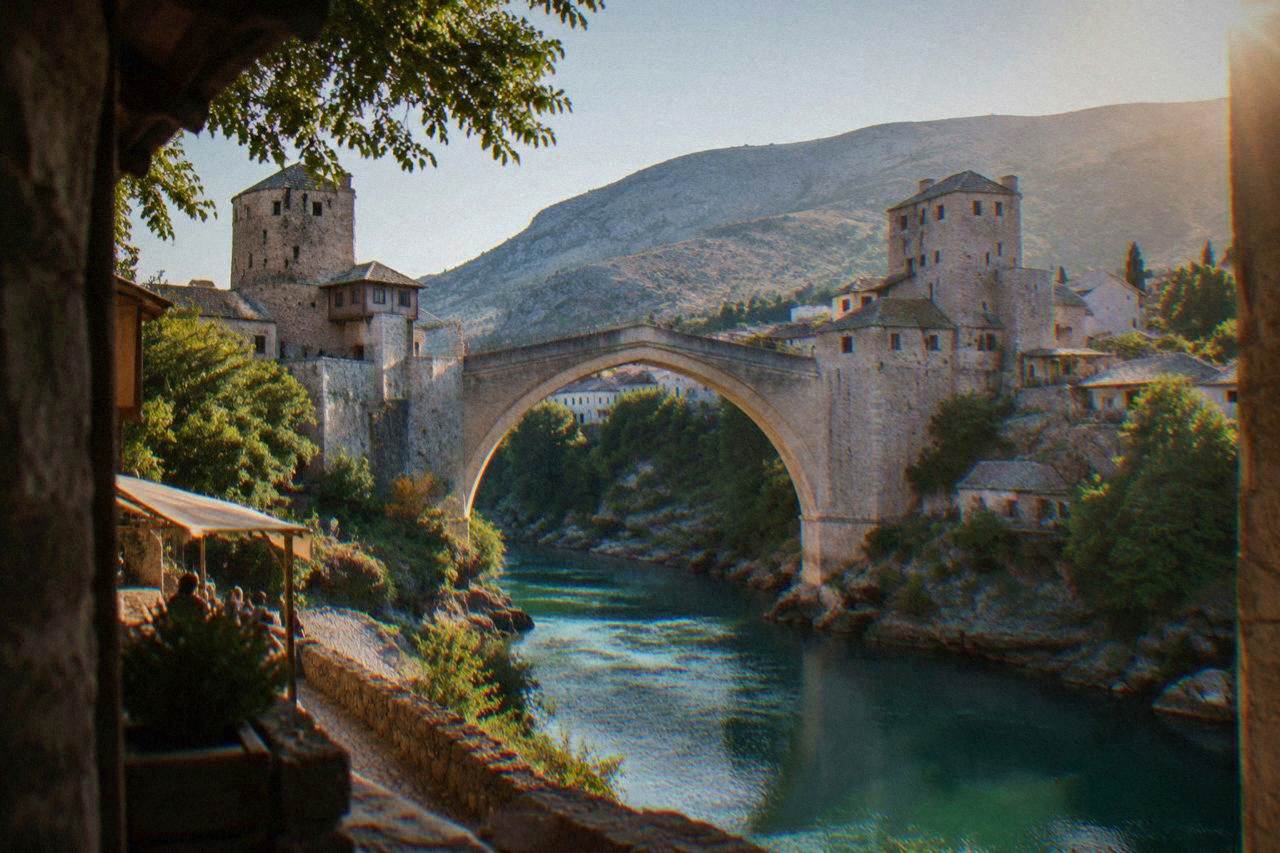
Mostar's essentials are Stari Most and the Kujundžiluk bazaar (both free), a climb up a minaret or bell tower for the view, the Neretva riverbanks, and at least one day trip to Blagaj, Počitelj and Kravica waterfall.
Mostar is an inland city on the Neretva river in Herzegovina, the southern region of Bosnia and Herzegovina, and its centre of gravity is a single stone arch: Stari Most, the Old Bridge, around which the whole Old Bridge Area of the Old City of Mostar was inscribed on the UNESCO World Heritage List in 2005. The city is compact, walkable and cheap by regional standards, with the convertible mark (KM) as its currency and a horizon of limestone hills that turn white in July. What follows is the full menu, from the free lanes of Kujundžiluk to the cold spray of Kravica waterfall, laid out so you can build two or three days without guessing. For where to sleep, start with where to stay in Mostar, and for timing, the best time to visit Mostar.
Things To Do In Mostar On Your First Day
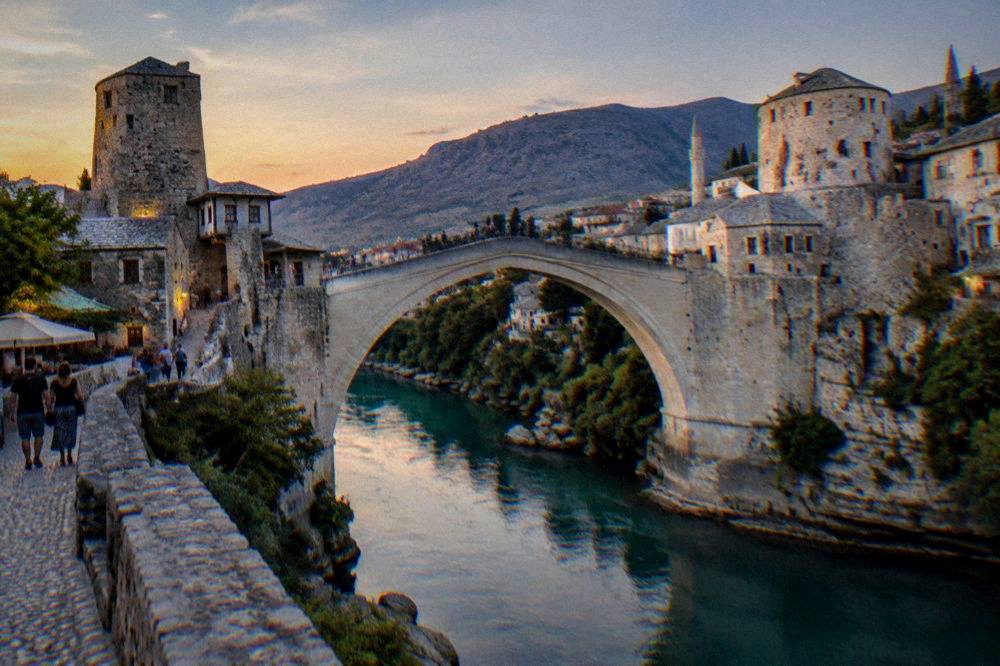
Start at Stari Most at opening light, cross it, then work the east bank down through Kujundžiluk to Kriva ćuprija, climb the Koski Mehmed-pašina džamija minaret for the roofline view, and finish on the west bank terraces by mid-afternoon: that single loop covers the UNESCO property's core in about three unhurried hours and costs nothing at street level. The bridge is a free public crossing, open around the clock, roughly 21 to 24 metres above the river depending on its level.
The bridge itself rewards patience. Jumps from the parapet are made by members of the Mostari diving club, who train for years before a solo leap; there is no pay-to-jump arrangement for visitors, and the 460th traditional competition ran on 26 July in 2026, with the Red Bull Cliff Diving round following from 30 July to 1 August. Watching a club diver drop into the cold green water is the city's free theatre, and the story of the bridge, destroyed on 9 November 1993 and rebuilt and reopened in July 2004, is covered in detail on why was the Mostar bridge destroyed.
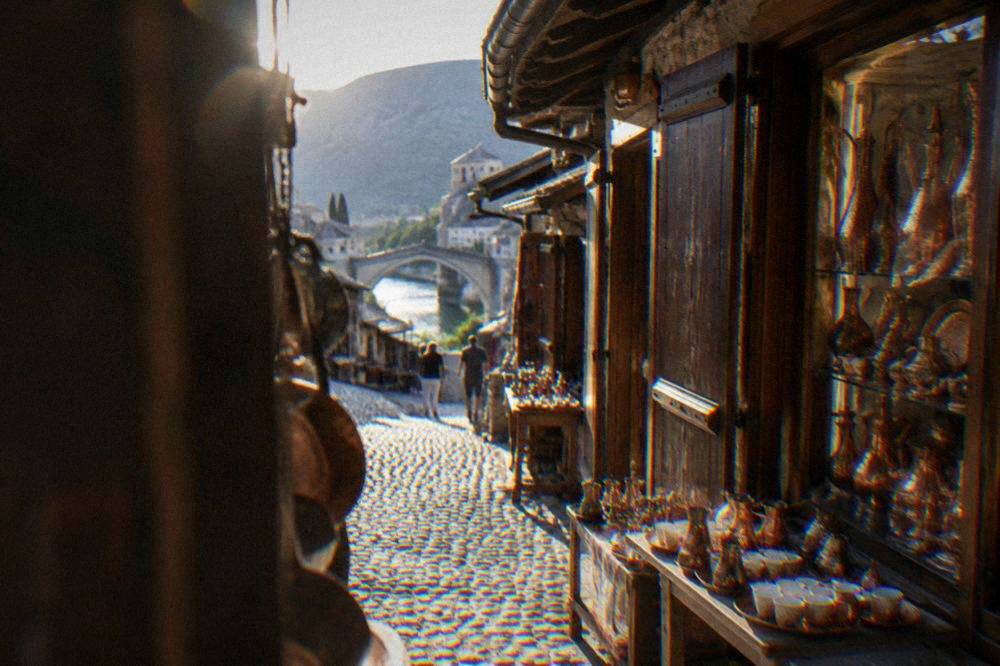
From the bridge steps, Kujundžiluk, the old coppersmith bazaar, runs downhill along the river: coppers, rugs, overpriced magnets, and workshops where you can still hear a hammer. At its lower end sits Kriva ćuprija, the Crooked Bridge, a small single-arch test piece for its larger sibling, then the riverbank path. Cross back over, take the tiny lane to the Koski Mehmed-pašina džamija, whose minaret staircase gives the classic arch-and-river shot. Its entry fee is a small cash amount, more with the minaret climb; the figures on aggregator listings vary, so confirm the price at the door.
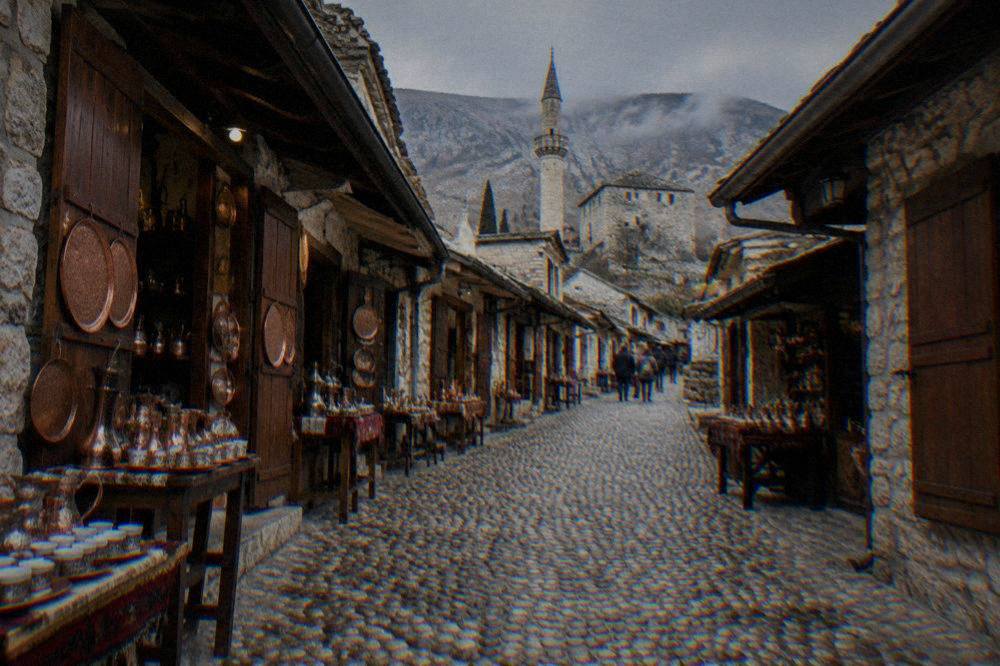
Give the last hours of the day to the Ottoman courtyard houses. Bišćević House charges a reported 4 KM and Muslibegović House a reported 8 KM, both small prices for rooms, costumes and river-facing divans preserved from the Ottoman period. The full checklist of lanes, towers and museums, with what each one actually is, is on mostar walking tour and old town.
| Stop on the first-day loop | What it is | Cost |
|---|---|---|
| Stari Most | The 1566 stone arch, free public crossing | Free |
| Kujundžiluk | Ottoman bazaar street along the Neretva | Free |
| Kriva ćuprija | Small crooked single-arch bridge | Free |
| Koski Mehmed-pašina džamija | Ottoman mosque with climbable minaret | Small cash fee, confirm on site |
| Bišćević House | Ottoman courtyard house museum | About 4 KM, reported |
| Muslibegović House | Ottoman house museum | About 8 KM, reported |
What Do Mostar Tours And Tickets Cost?
Entry to Mostar's sights is modest and largely cash-based: the bridge and bazaar are free, Ottoman house museums run a reported 4 to 8 KM, and the big spend is the guided product, where walking tours, food experiences and Herzegovina day trips from the city start in the tens of dollars per person on the operator listings, with prices and ratings rendering live on each tour card below. A reported tourist tax of 3 KM per person per night applies in the canton from 1 January 2026; confirm it at booking.
For sight entries, carry marks. Cards work at hotels and larger restaurants, but small museums, mosque entries and market stalls expect cash, and the fixed peg of 1 EUR = 1.95583 KM makes conversion trivial: euro cash is often accepted in tourist streets, usually at a rounded 1 to 2 rate, so ask what rate applies before you hand over notes. The money mechanics, ATMs and card acceptance are broken down on mostar money.
| Sight or experience | Price basis | Notes |
|---|---|---|
| Stari Most crossing | Free | Public route, any hour |
| Bišćević House | About 4 KM | Reported, confirm on site |
| Muslibegović House | About 8 KM | Reported, confirm on site |
| Koski Mehmed-pašina džamija | Small cash fee, more with minaret | Reports vary, confirm at the door |
| Kravica waterfall | 20 KM adult, all year | Official park page; children under 7 free |
| Blagaj Tekke | About 10 KM | Reported; shoulders and knees covered |
| Tourist tax | Reported 3 KM per person per night | From 1 January 2026, confirm at booking |
The guided layer is where the budget decision sits. A paid walking tour covers the lanes above with a local explaining them; a history walk goes deeper into the war years; a food session teaches you to roll burek; and the Herzegovina day trip bundles Blagaj, Počitelj and Kravica waterfall into one loop from the city. These three are the formats that consistently earn their price on this route:
Whatever you book, the cancellation terms are on the operator's live listing: check them before you pay, and recheck entry prices at the door, since the museum figures above are reported rather than official.
Free Things To Do In Mostar
A full day in Mostar can cost nothing at the sights: crossing Stari Most, wandering Kujundžiluk, photographing Kriva ćuprija, walking both Neretva banks, climbing to viewpoints above the Old Town, and visiting the Partisan Memorial Cemetery, designed by Bogdan Bogdanović and inaugurated in 1965, are all free, and the bridge diving tradition is watched from the bank at no charge. The full list of no-cost stops is on free things to do in Mostar.
Start with the bridge loop described above, then add the parts day-trippers miss. The west bank upstream path gives the arch in silhouette against the Hum hill. Spanish Square, the city's main public space, sits a short walk north of the bazaar and costs nothing to wander; the story behind the streets around it, including the Bruce Lee statue, one of the odder public monuments in the Balkans, is on Spanish Square and Bruce Lee statue.
The Partisan Memorial Cemetery deserves honesty rather than a glossy recommendation. It is a national monument, unstaffed, with no ticket or posted hours, and Europa Nostra reports that over 700 of its stone memorial markers were destroyed in 2022 and has called for urgent revitalisation. Go in daylight, treat it as a place of memory rather than an attraction, and read the background on partisan memorial cemetery first.
Things To Do In Mostar When It Rains
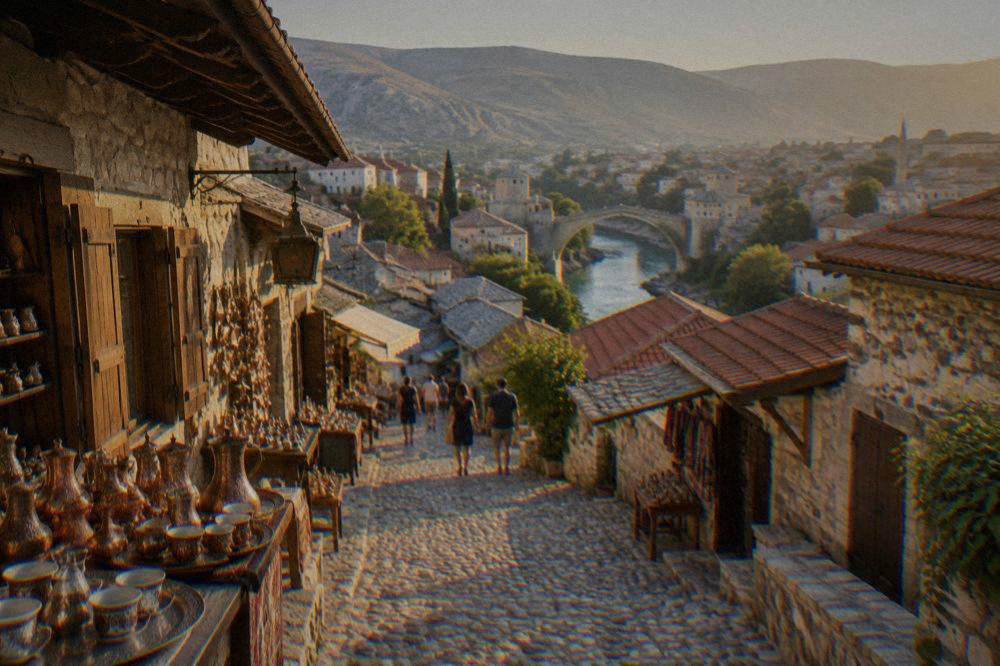
Mostar's rain concentrates hard in late autumn, with the FHMZ 1961-1990 station table showing November at 200.0 mm against July's 42.9 mm, so a wet day is a planning reality, and the indoor answers are the Museum of the Old Bridge in the Tara tower, the Ottoman courtyard houses, the Museum of Herzegovina, and a long, slow session of Bosnian coffee with burek somewhere under a stone vault. A reported 10 KM covers the Old Bridge Museum during its April-to-November daily season.
The Tara tower museum sits at the bridge's east end and tells the reconstruction story with recovered stone and drawings; its reported season runs 1 April to 1 November, 08:00 to 16:00, with organised visits outside that window, so confirm before counting on it in winter. The Ottoman houses, Bišćević and Muslibegović, are roofed, intimate and dry. Beyond the Old Town, the wider museum shelf is on Herzegovina museum and the war years indoors on mostar war history.
| Month | Mean rain, mm (FHMZ 1961-1990) | Days with more than 1 mm |
|---|---|---|
| July | 42.9 | 5 |
| August | 73.7 | 6 |
| September | 96.3 | 6 |
| October | 150.6 | 8 |
| November | 200.0 | 11 |
| December | 178.7 | 11 |
A grey afternoon is also the right moment for a guided history walk, since the route runs whatever the sky does and the story is the point. The siege-history walk through the 1992 to 1995 years, bunkers included, is the one that changes how the empty buildings read:
Pay-later and free-cancellation terms are on the operator's live listing; check them, then book the wet afternoon with a clear conscience.
Things To Do In Mostar With Children
Mostar works well with children because the core sights are short, outdoor and free: crossing the bridge, watching the divers, eating burek straight from the oven and standing in the shallows of the Buna at Blagaj, 13.7 km and about 19 minutes away by road, are all low-cost, low-attention-span wins, while the Kravica waterfall pool, with children under 7 entering free, is the guaranteed highlight of any family trip. The family-angle detail is on mostar with kids.
Keep city blocks short. The bazaar is a sensory run: copper shapes, river noise, ice cream. The minaret climb at the Koski Mehmed-pašina džamija is a stone spiral staircase, fine for steady walkers but think twice with toddlers. Diving club members jump from the bridge most reliably in the middle of the day in the warm months; the river below is cold, and swimming from the city banks is not the plan, as can you swim in the river at Mostar explains.
The hands-on food angle is the best indoor option with children. Rolling and baking burek, then eating the result, holds attention in a way a museum case does not, and the session is short enough for a morning:
Beyond the city, Počitelj's stone tower staircases are a castle-climb by any child's definition, and the whole stack of family day options is laid out on kravice blagaj pocitelj in one day.
Things To Do In Mostar At Night
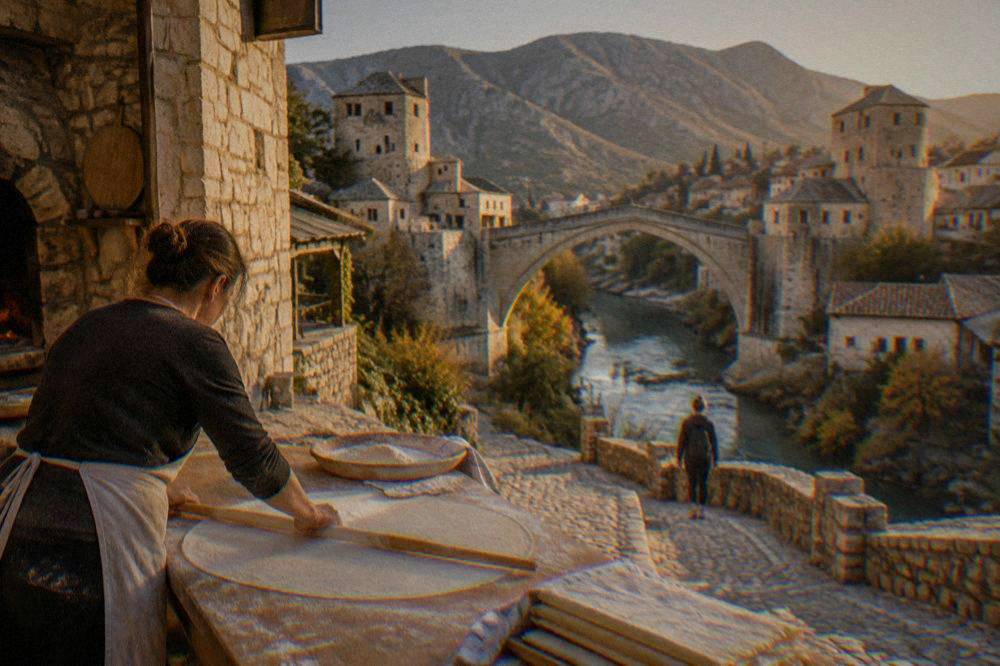
Mostar after dark is a river-and-terrace city rather than a club city: the Old Bridge floodlit over black water, the west bank terraces above the Neretva, café life around Spanish Square, and a summer festival calendar, with Mostarsko ljeto running 25 June to 7 August in 2026 and the Jazz Fest from 23 to 25 August, give the evenings their shape, and the bridge area's streets stay public and walkable at any hour. Safety at night is a common question, answered plainly on is it safe to walk around Mostar at night.
The classic move is the viewpoint terrace on the west bank at dusk, when the arch lights up and the divers have gone home. Below the bridge, riverside tables fill the Kujundžiluk end of town; higher up, the café strip around Spanish Square runs later. Rakija, the region's fruit brandy, deserves one honest tasting, covered with the food context on rakija and mostar nightlife. The rest of the planning pages sit on Mostar Travel Guide.
In late July the calendar takes over: the traditional bridge competition ran on 26 July in 2026 and the Red Bull Cliff Diving World Series stop from 30 July to 1 August, so an evening in that window means crowds on both banks and a carnival on the bridges. The full dated list is on mostar events.
Day Trips From Mostar To Kravice And Blagaj
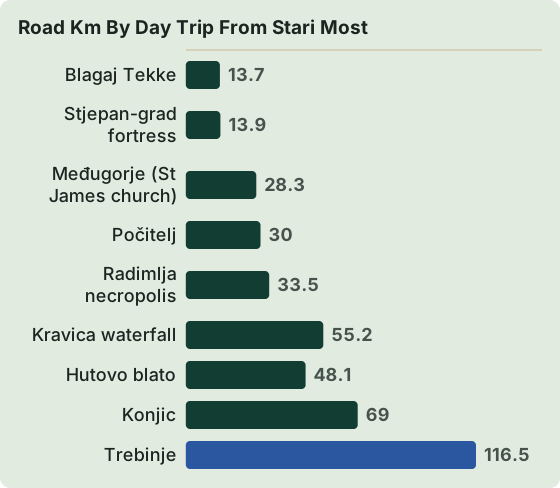
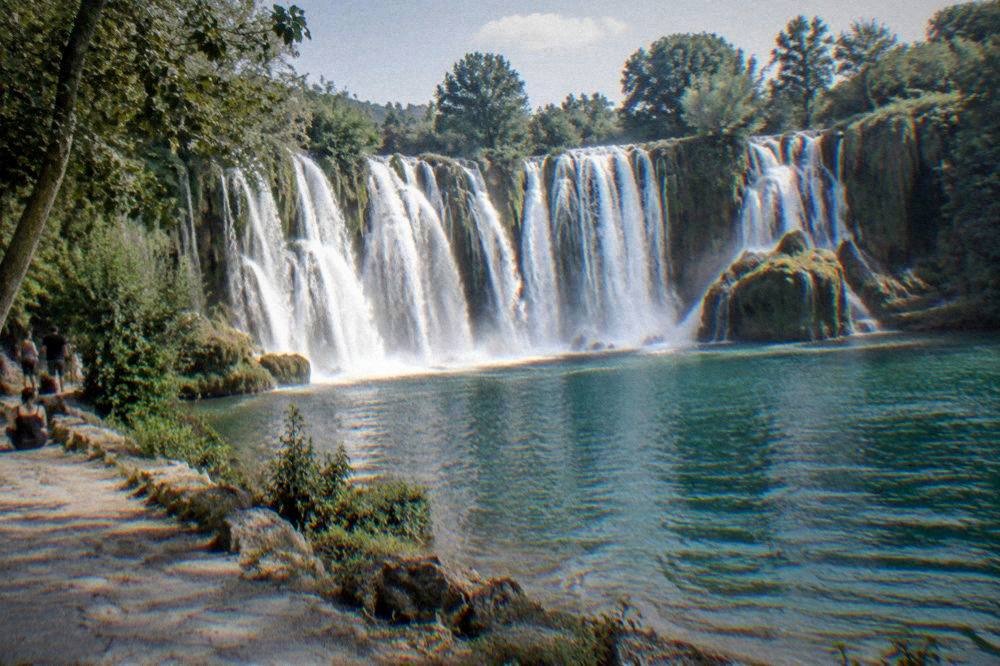
The classic Herzegovina loop is Blagaj Tekke at the Buna spring, 13.7 km and about 19 minutes from Stari Most, the fortified village of Počitelj at 30.0 km and about 31 minutes, and Kravica waterfall at 55.2 km and about 54 minutes free-flow, with entry to the waterfall at 20 KM for an adult all year and children under 7 free, according to the park's own visitor page. Those are road figures without border or traffic time.
Blagaj is a river-source spectacle: the Buna erupts from a cliff cave beneath Stjepan-grad fortress, and the Blagaj Tekke, the dervish lodge at the water's edge, charges a reported 10 KM, with shoulders and knees covered and wraps provided. Počitelj is a free stone village of staircases and a hilltop tower. Kravica is a 25-metre arc of water falling into a swimmable pool, open all year with hours that stretch to 22:00 from June to September and close at 17:00 in the winter months. Swimming runs in the designated summer area, with no lifeguard reported, so watch children yourself. The depth guide is on kravice waterfalls.
| Day trip from Stari Most | Road km | Free-flow minutes |
|---|---|---|
| Blagaj Tekke | 13.7 | 19 |
| Stjepan-grad fortress | 13.9 | 20 |
| Međugorje (St James church) | 28.3 | 40 |
| Počitelj | 30.0 | 31 |
| Radimlja necropolis | 33.5 | 42 |
| Kravica waterfall | 55.2 | 54 |
| Hutovo blato | 48.1 | 62 |
| Konjic | 69.0 | 80 |
| Trebinje | 116.5 | 142 |
Driving it yourself is straightforward, and the border-free geography means no passport stop on this loop, though rural Herzegovina carries mine-suspect areas off the marked paths, so stay on roads and marked trails per BHMAC guidance. If you would rather not drive, the joined-up guided version covers all three stops in one loop from the city:
A half-day variant reaches only the waterfall, and the cross-border angle, for readers based in Dubrovnik or Split rather than in Mostar itself, is on mostar day trip from Dubrovnik and mostar day trip from Split. Note that Bosnia and Herzegovina is not in the EU or Schengen, and the Croatian land border, a Schengen external border with full checks since 1 January 2023, can add real queue time in summer; the mechanics are on croatia bosnia border crossing.
Things To Do In Mostar Along The Neretva
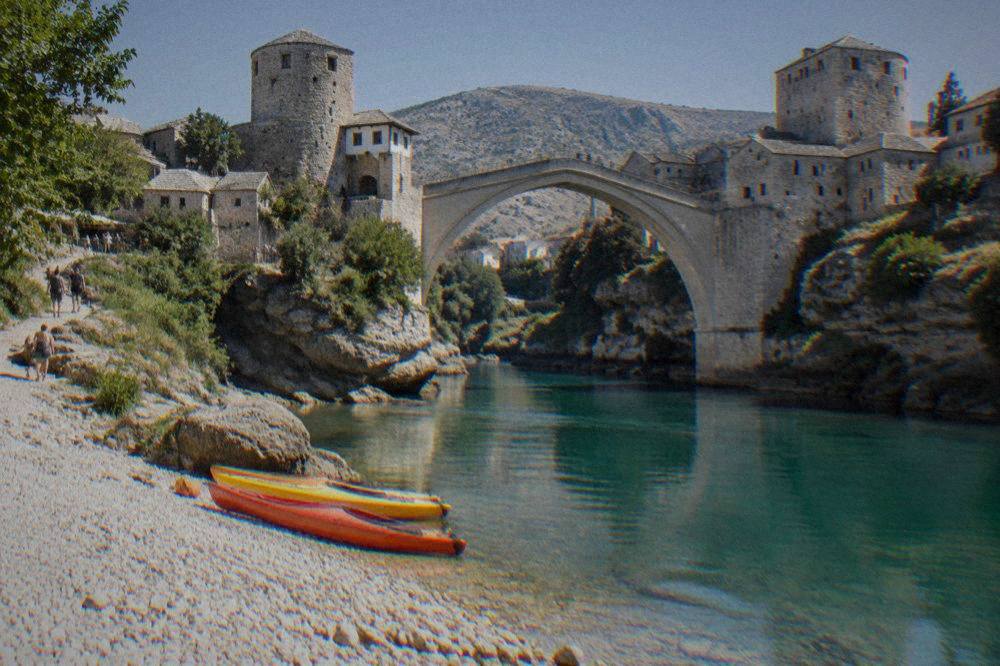
The Neretva is Mostar's second attraction after the bridge: an emerald, karst-fed river that stays cold even in August, runnable on a guided kayak safari, walkable along both banks through the city, and reachable upstream at the Buna confluence area and the dam lakes toward Jablanica, 47.4 km and about 57 minutes up the valley by road. The river's character and swim-safety questions are covered on Neretva river and Neretva rafting.
In the city the river is a walking corridor: the banks below Kujundžiluk, the weir noise under the bridge, the rowing stretch upstream toward the Musala side. The water is cold enough that swimming in the city stretch is not the done thing, and the honest answer to that question is on can you swim in the river at Mostar. What the river does offer in town is the kayak angle, a guided flat-water paddle with the Old Bridge as the turnaround landmark:
Upstream, the valley climbs toward Jablanica and its ruined bridge over the Neretva, with the Museum Battle for the Wounded on the Neretva beside it; the museum's official page prints inconsistent price lists, so expect a few KM. Further still lie Boračko jezero and Konjic, where ARK D-0, Tito's atomic bunker, takes guided visits at a reported 40 KM for foreign visitors, booking required, closed Mondays. The route logic for all of it is on herzegovina road trip.
The summer heat is the reason the river matters. The ERA5 reanalysis, 1991-2020, puts modelled mean daily highs at 29.9 C in July and 30.5 C in August, the FHMZ station table records an absolute maximum of 41.2 C, and the valley floor runs hotter than the modelled grid. Plan the bridge for morning, the water for afternoon. The month-by-month picture is on mostar weather and mostar in summer.
How To Get Around Mostar On Foot
Mostar is genuinely walkable: the UNESCO core from Spanish Square to the far end of Kujundžiluk is a flat 15-minute stroll, every sight in the first-day loop above is reachable on foot, and the hills of Hum and Fortica above the city are the only climbs, so a visitor based anywhere near the Old Town needs no car inside the city at all. The full transport picture, buses, taxis and car logic, is on getting around Mostar.
The walkable frame is simple. Spanish Square anchors the north end, the pedestrian Rondo-to-Old-Town axis runs south past the Gymnasium, and the bridge is the hinge. West of the river, Donja Mahala's quieter lanes hold cafés and the riverbank path; east, the bazaar climbs back to the square. The street-by-street breakdown is on old town, west mostar and donja mahala. Hills above change the maths: the Fortica zip-line and Skywalk area and the Hum cross both need uphill legs or a lift, and the options are on Hum hill and Fortica.
Two practical footnotes. In summer, walk early: the ERA5 reanalysis, 1991-2020, gives January a modelled mean daily high of 8.4 C against August's 30.5 C, and the afternoon sun off the limestone is real. And carry water and marks for small purchases, since the bazaar's cash preference holds. Arrival logistics, train, bus and airport, are covered on how to get to Mostar, mostar airport and Sarajevo to Mostar; the Sarajevo train service, suspended after a September 2026 fire along the corridor, resumed on 15 October 2026 with two trains a day each way to Čapljina via Mostar.
Whatever the season, the city rewards the slow loop: bridge, bazaar, minaret, riverbank, and a plate of ćevapi or a slice of burek before the next climb. Two or three days covers the city and one valley loop; a week lets you add Konjic, Trebinje and the coast at Neum, 75.3 km and about 82 minutes away, the country's only sea outlet. Build it from the lists above, confirm the small fees at the doors, and the city does the rest.
Common Questions About Things To Do In Mostar
What are the best things to do in Mostar?
Cross Stari Most, walk Kujundžiluk and Kriva ćuprija, climb the Koski Mehmed-pašina džamija minaret, tour an Ottoman courtyard house, watch the diving club jump from the bridge, and take one day trip to Blagaj, Počitelj and Kravica waterfall.
Is Mostar walkable?
Yes. The UNESCO core, from Spanish Square to the end of the bazaar, is a flat stroll of about 15 minutes end to end, and every core sight is reachable on foot; only Hum and Fortica above the city need a climb.
How much do things cost in Mostar?
The bridge, bazaar and riverbanks are free; house museums run a reported 4 to 8 KM; Kravica waterfall is 20 KM for an adult all year; and guided tours start in the tens of dollars per person on the operator listings, with live prices shown on each tour card.
Can you do a day trip to Kravica waterfall and Blagaj from Mostar?
Yes. Blagaj is 13.7 km and about 19 minutes from Stari Most, Počitelj 30.0 km and about 31 minutes, and Kravica waterfall 55.2 km and about 54 minutes free-flow, so the full loop fits comfortably in a day by car or guided tour.
What is free in Mostar?
Crossing Stari Most, Kujundžiluk, Kriva ćuprija, both Neretva banks, Spanish Square, the city viewpoints, and watching the Mostari diving club jump from the bridge all cost nothing.
When is the bridge diving in Mostar?
Club members jump year-round, with peak activity in the May to October stretch; the 460th traditional competition ran on 26 July in 2026, followed by the Red Bull Cliff Diving stop from 30 July to 1 August.