Mostar With Kids: A Family Plan
Mostar, an inland city on the Neretva river in Herzegovina, Bosnia and Herzegovina, works surprisingly well with children: the Old Bridge and the bazaar are compact and walkable, the Kravica waterfall has a summer swimming pool an hour down the road, and entry prices are low. Here is how to plan the days.
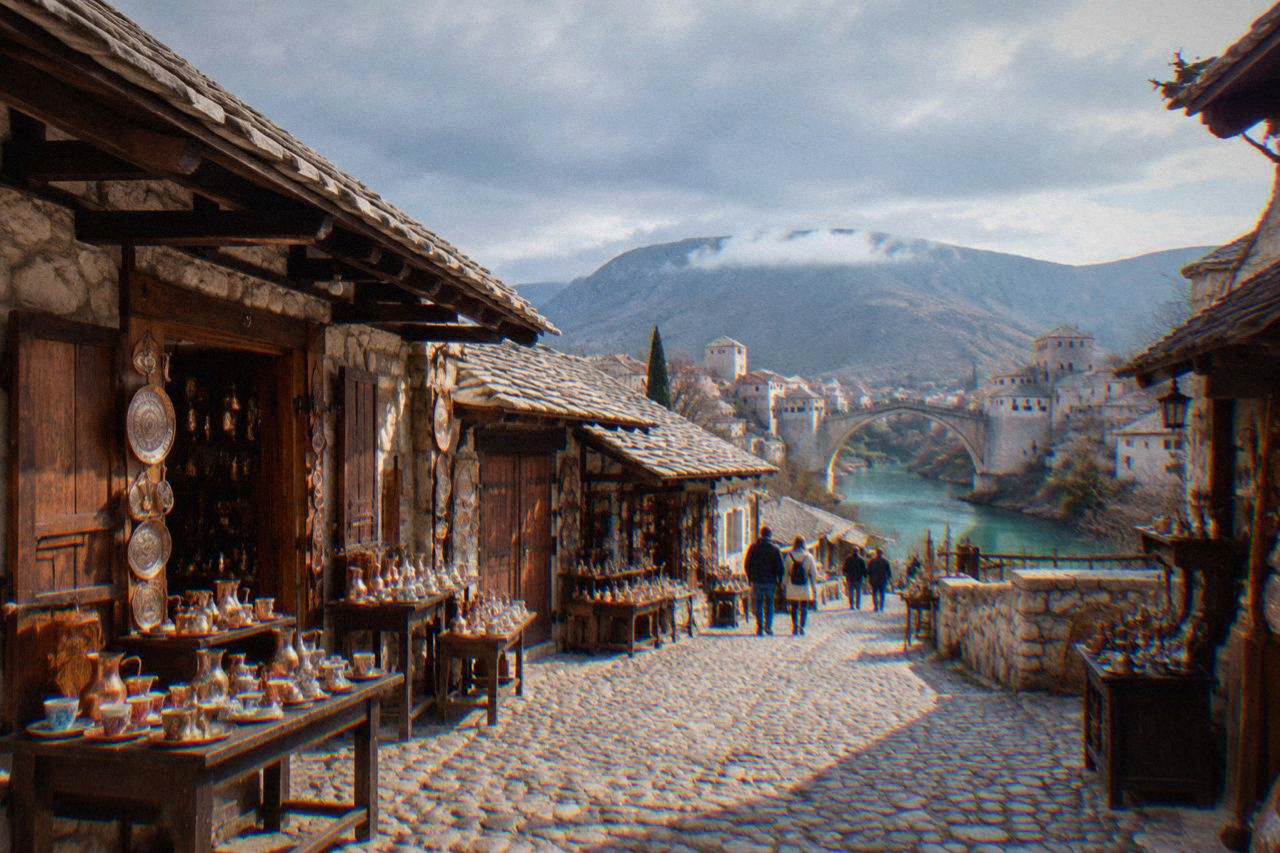
Yes, Mostar suits families. The Old Town is small, the Stari Most crossing is free, the Neretva promenade is flat, and Kravica waterfall, 55.2 km away, charges 20 KM for an adult and nothing for children under 7.
Mostar, an inland city on the Neretva river in Herzegovina, Bosnia and Herzegovina, is a city parents can realistically do with children. The whole protected core, the Old Bridge Area of the Old City of Mostar, a UNESCO World Heritage property since 2005, fits within a ten-minute walk end to end. Ice cream, river views and the famous bridge are all in one place, and the big family excursion of the region, Kravica waterfall with its summer swimming pool, is 55.2 km and about 54 minutes away by road. The currency is the convertible mark (KM), not the euro, and children under 7 get into the waterfall park free.
This plan lays out how to spend one, two or three days here with kids, which side trips actually work with children in the car, what the water and the heat do in summer, and what the entry prices are. The starting point for anything in the city centre is Stari Most itself, and the wider list of sights is on the site's things to do in Mostar page.
Is Mostar Good For Families With Kids?
Yes, Mostar works well with children, because the sights are close together and cheap to enter. The Old Bridge is free to cross at any hour, the bazaar streets around it are pedestrian, the river promenade below the bridge is flat, and Kravica waterfall charges 20 KM for an adult with children under 7 free, per the park's own visitor page. Most of a family day here costs almost nothing beyond food.
Three things shape a family visit more than the sights do. The first is heat: the FHMZ 1961-1990 station series for Mostar puts July's mean at 24.7 C with an absolute maximum of 41.2 C, and the ERA5 reanalysis, 1991-2020, models mean daily highs of 30.5 C in August. Plan bridge photos and bazaar wandering for the morning, then shade or water for the afternoon. The second is money: Bosnia and Herzegovina uses the convertible mark, pegged at 1 EUR = 1.95583 KM. Euro cash is often accepted in tourist spots, usually at a rounded 2 KM to 1 EUR, but paying in KM is the cleaner option and the exchange rate is fixed, so there is no guessing. The third is scale: the Old Town is small, stairs are steep on the bridge itself, and the Neretva below runs cold, so the classic parent briefing is hold hands on the bridge and stay off the rocks.
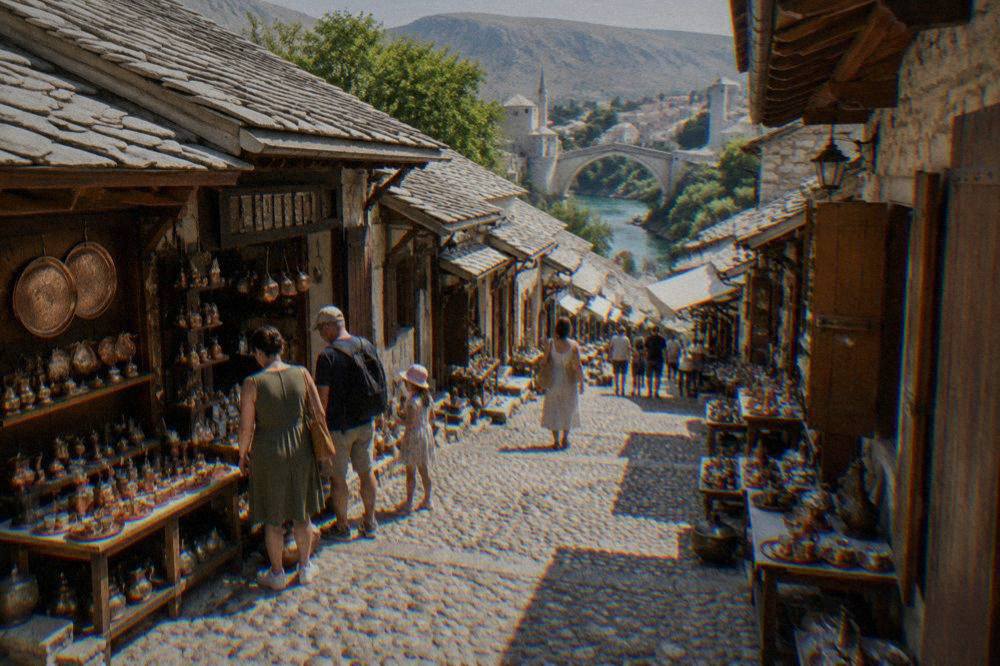
The city is also, for a heritage destination, unusually forgiving on price. Crossing Stari Most costs nothing. The Kujundžiluk bazaar is a public street. Kriva ćuprija, the Crooked Bridge, is a public structure, and the pathways along the Radobolja stream behind it are a pleasant, low-stakes place to let small children run. For a longer city orientation, the Mostar walking tour page covers the guided options.
What Can You Do In Mostar With Kids In One Day?
A realistic one-day family plan is the bridge and bazaar in the morning, a river-side lunch, an Ottoman courtyard house or the museum tower in the afternoon, and the divers off Stari Most around midday if a club member is jumping. The Old Bridge Museum in the Tara tower charges a reported 10 KM, Bišćević House a reported 4 KM, and the bridge crossing itself is free.
Morning is the golden window. The light on the bridge is at its best before noon, the stone is not yet hot underfoot, and the bazaar shops open as you walk. Walk across Stari Most, down the stairs on the far side, and along the river path to the viewpoint benches where everyone photographs the arch. The bridge stands about 21 to 24 metres above the river depending on the water level; the jumps you may see are made by members of the Mostari diving club, who train for years before diving from the top, and there is no visitor jump option. Watch from the bank, and if a diver is collecting for a jump, that is the local custom, not an official ticket.
For the midday hours, an interior helps. Bišćević House, an Ottoman courtyard house on the Neretva, is reported to charge about 4 KM, and Muslibegović House about 8 KM, with both figures reported rather than official, so carry cash and confirm at the door. The Old Bridge Museum in the Tara tower is reported at 10 KM with daily hours from 08:00 to 16:00 between 1 April and 1 November. Koski Mehmed-pašina džamija sits right on the river beside the bridge; a small cash fee is reported for the mosque and more including the minaret, and worship pauses access, so check the entrance on arrival.
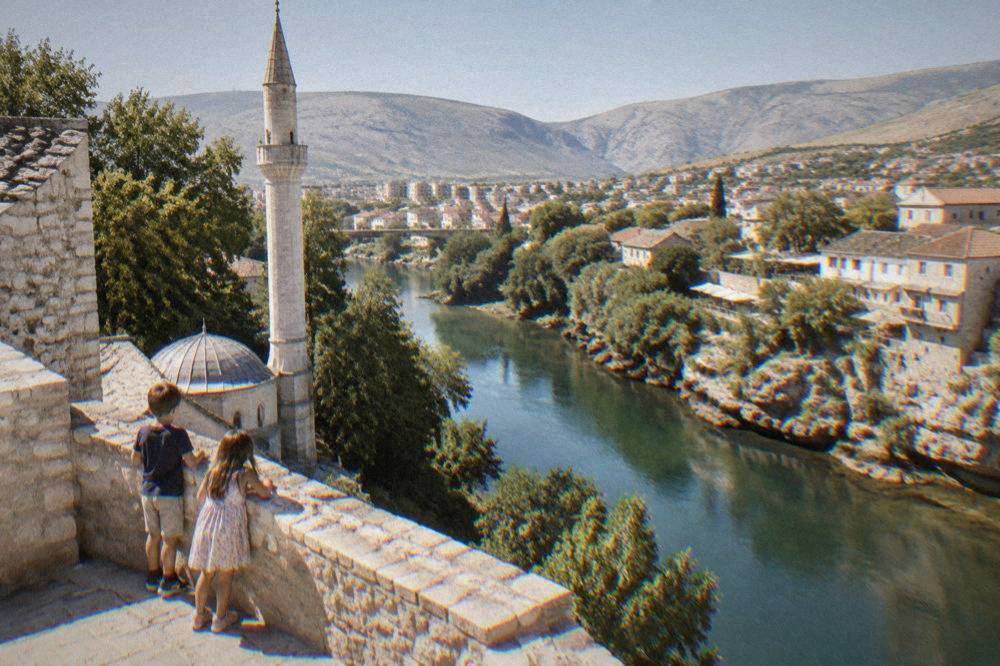
Late afternoon belongs to the flat river promenade on the west bank and the ice cream loop through Kujundžiluk. If the sky turns, the site's Mostar in the rain plan swaps the outdoor hours for covered stops without wasting the day, and the one day in Mostar itinerary shows the adult-paced version of the same day. Families staying longer can stretch across the two days in Mostar plan.
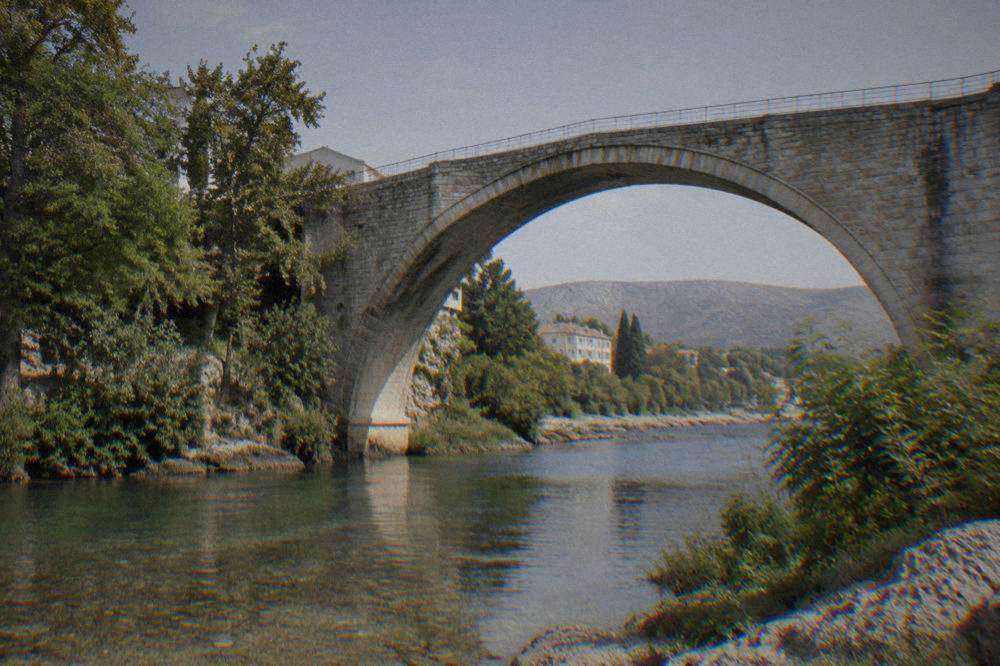
A fee table for the city-centre stops, with figures to confirm on arrival:
| Stop | Entry | Notes |
|---|---|---|
| Stari Most crossing | Free | Public path, open at any hour |
| Old Bridge Museum (Tara tower) | Reported 10 KM adult | Reported hours 08:00-16:00, 1 Apr to 1 Nov |
| Bišćević House | Reported 4 KM | Ottoman courtyard house on the Neretva |
| Muslibegović House | Reported 8 KM | Ottoman house museum |
| Koski Mehmed-pašina džamija | Reported small cash fee, more with the minaret | Worship pauses access |
| Kriva ćuprija and Kujundžiluk | Free | Public street and bridge |
Which Day Trips From Mostar Work With Children?
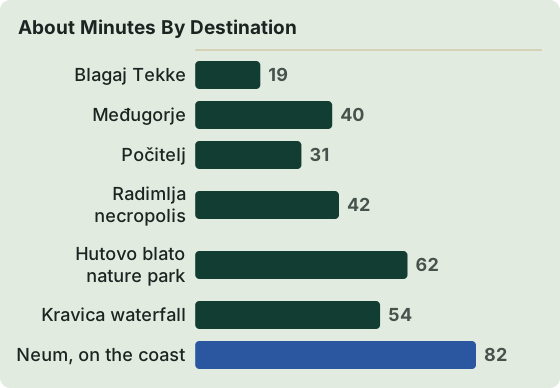
The three easiest day trips from Mostar with kids are Blagaj Tekke at 13.7 km and about 19 minutes by road, Počitelj at 30.0 km and about 31 minutes, and Kravica waterfall at 55.2 km and about 54 minutes, all computed free-flow times with no border queues. Blagaj has a riverside spring, Počitelj has a climbable fortress wall, and Kravica has summer swimming.
Blagaj is the closest and the most relaxed. The tekke, a dervish lodge built at the mouth of the Buna spring, is reported to charge 10 KM with hours from 08:00 to 22:00 between April and October and 09:00 to 17:00 in winter, and shoulders and knees are covered inside, with wraps provided at the entrance. The river terrace below the cliff is where children enjoy watching the water burst out of the rock face; the site's Blagaj guide covers the practical details, and Stjepan-grad fortress above the village is a 20-minute drive for families who want the view.
Počitelj is the one children remember, because it is a hill town with walls to climb. The village itself is free, a small optional donation or mosque entry of about 2 EUR is reported, and the tower stairs are open air with drops, so toddlers go up in arms or not at all. Kravica, the headline stop, is a wide travertine cascade with a pool in front that is open for swimming in summer in a designated area, with no lifeguard reported, so swimming is a parental judgement. The full loop over all three is sketched in the Kravice, Blagaj and Počitelj in one day plan, and the wider circuit is in the Herzegovina road trip itinerary.
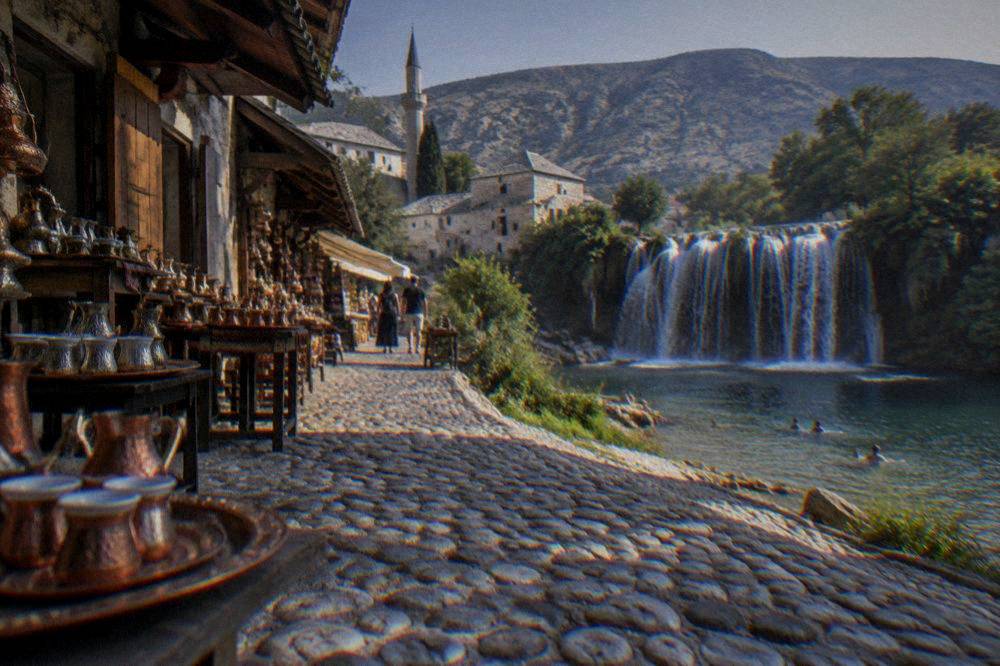
Driving all three stops yourself is straightforward, the roads are main routes south, but the total loop with stops adds up to a full day. If the family would rather not drive it, the tour that matches this exact loop runs from Mostar and covers Blagaj, Počitelj and Kravica:
For a shorter outing with younger children, a half-day option to the waterfall alone also runs from the city, which keeps the drive short and leaves the afternoon free.
Where Can Kids Swim Near Mostar?
The main family swim spot is the pool below Kravica waterfall, open for swimming in summer in a designated area, with no lifeguard reported, about 54 minutes by road from the city. The Neretva in Mostar itself is cold even in August, being karst spring fed, and it is a river with current, so the waterfall pool is the safe family choice.
The Neretva looks tropical in photographs and swims like a mountain river. Reports from the river near Mostar put summer water at roughly 7 to 11 C, which is the kind of cold that empties a child's lungs on contact. Locals swim in it, from the banks away from the bridge, but for a family the waterfall is the better plan: the pool at Kravica is wide, the swimming zone is marked in summer, and the water is still cold but the setting is far more forgiving. The park's own rules section governs what is allowed, so check the rules on arrival; no swimming ban was reported for 2026.
Timing matters more than the swimming itself. The park is open all year with long summer hours, 07:00 to 22:00 from June to September, and mornings are quieter and cooler both on the road and in the water. Bring water shoes, the rocks and the travertine edges are smooth but hard, and bring cash for entry, since the ticket operation at a park gate in rural Herzegovina should never be assumed to take a card.
What Does A Family Day At Kravica Waterfall Cost?
Entry to Kravica waterfall is 20 KM for an adult all year, 10 KM for residents of Bosnia and Herzegovina, 10 KM for school groups aged 7 to 18, and free for children under 7, per the park's own visitor page. A two-parent family with two children under 7 pays 40 KM in total, about the price of one museum ticket in a western European capital.
The price does not drop in the off-season, and the park does not close in winter; the hours simply shorten. That makes Kravica an all-year stop, and in the colder months the walk to the falls without crowds is a different and quieter experience, with no swimming. The park's monthly hours:
| Months | Opening hours |
|---|---|
| January, February | 07:00 to 17:00 |
| March, April | 07:00 to 18:00 |
| May | 07:00 to 20:00 |
| June to September | 07:00 to 22:00 |
| October | 07:00 to 19:00 |
| November, December | 07:00 to 17:00 |
Two costs sit outside the ticket. Parking at the park is charged separately, and the amounts are not published in a form worth printing here, so carry some KM cash and check the gate. And if the day is run as a tour instead of a self-drive, the product's own page carries the live price; the waterfall, Blagaj and Počitelj combination from Mostar is the one that matches this itinerary, with entry fees and transport handled:
For reference, the distances that define a family day out from Stari Most, computed road distances in free-flow conditions:
| Destination | Road km | About minutes |
|---|---|---|
| Blagaj Tekke | 13.7 | 19 |
| Međugorje | 28.3 | 40 |
| Počitelj | 30.0 | 31 |
| Radimlja necropolis | 33.5 | 42 |
| Hutovo blato nature park | 48.1 | 62 |
| Kravica waterfall | 55.2 | 54 |
| Neum, on the coast | 75.3 | 82 |
Neum belongs on that list because it is the nearest sea coast, and Mostar itself has none: this is an inland river city. A sea-and-waterfalls combination across two days is a classic Herzegovina family split. Other pages covering the same trip are gathered on Mostar Travel Guide.
Is Mostar Too Hot For Kids In Summer?
Mostar is one of the warmer cities in the region in summer, so yes, plan around the heat. The FHMZ 1961-1990 station table for Mostar puts the July mean at 24.7 C with an absolute record of 41.2 C, and the ERA5 reanalysis, 1991-2020, models mean daily highs of 29.9 C in July and 30.5 C in August, so mornings and evenings are the working hours for families.
The saving grace is that the heat is dry rather than humid, and the evenings stay usable, which is why the terrace culture here runs late. Rain, when it comes, is a winter story: the FHMZ 1961-1990 table shows November at 200.0 mm against July at 42.9 mm, and the ERA5 1991-2020 modelled totals agree in shape, with November the heavier month at 235.8 mm. Summer days are also long in daylight terms, roughly 15 hours in June, so a 07:00 start at the bridge before the crowds and the heat costs nothing but an alarm clock.
A family rhythm that works: bridge and bazaar before 10:00, museum or courtyard house through the peak hours, long shaded lunch, then either the river bank, a pool, or the drive out to Kravica for late-afternoon swimming, where the water is cold enough to reset everyone. On the hardest afternoons, the zip line and skywalk option above the city is one way to spend two cooler hours, and it runs as a guided outing:
The monthly picture from the FHMZ 1961-1990 station series:
| Month | Mean temp C | Precip mm |
|---|---|---|
| January | 4.8 | 164.7 |
| April | 13.3 | 127.3 |
| July | 24.7 | 42.9 |
| August | 24.2 | 73.7 |
| October | 15.3 | 150.6 |
| November | 10.1 | 200.0 |
How Do You Get Around Mostar With A Stroller Or Small Children?
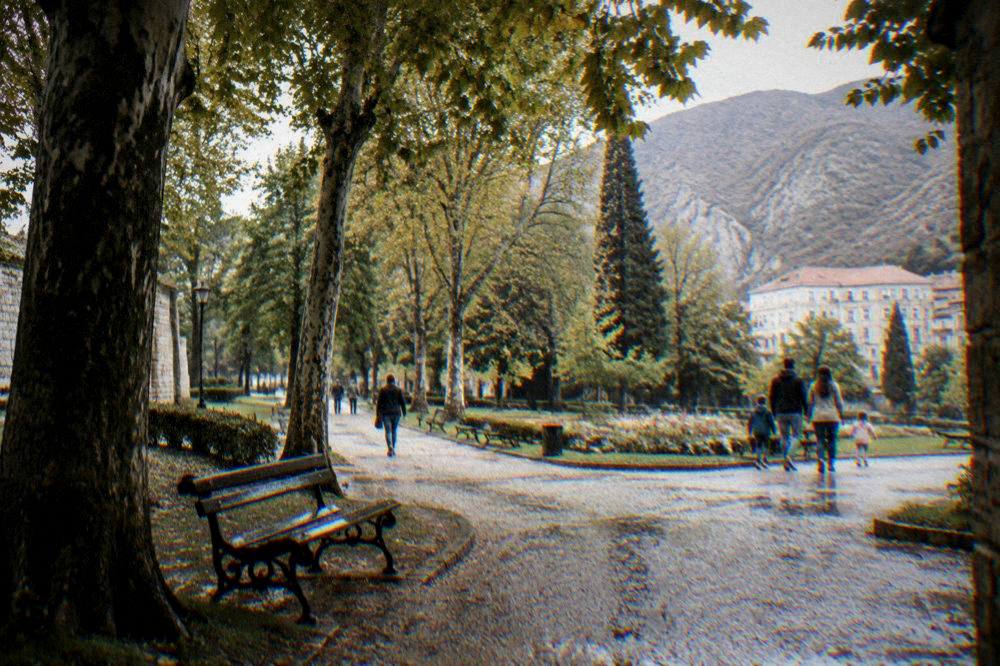
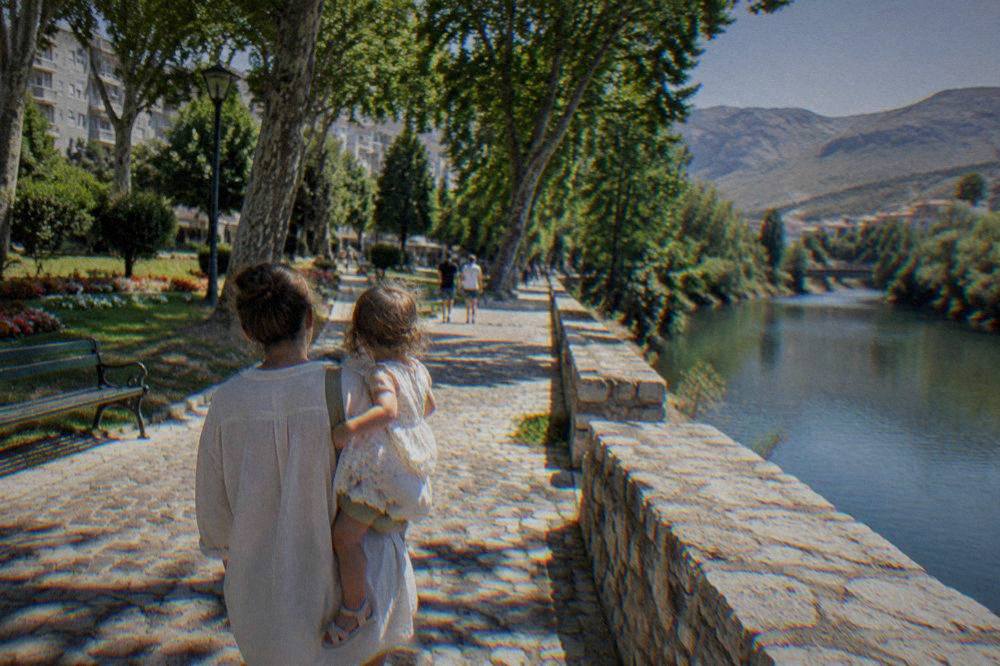
The Old Town core of Mostar is walkable and pedestrian, but it is cobbled and stepped, so a baby carrier beats a stroller on the bridge stairs, and the flat river promenade on the west bank is the stroller-friendly stretch. Mostar International Airport is 8.2 km and about 12 minutes by road from Stari Most, and a taxi from the airport is a short, inexpensive ride.
The airport route list is small: Croatia Airlines serves Zagreb and Eurowings serves Stuttgart, kept through the 2026/27 winter, with seasonal additions, so families flying in commonly use Sarajevo airport at 120.4 km and about 2 hours by road, or Dubrovnik airport at 163.4 km and about 2 hours 50 in free-flow, plus border time. Bosnia and Herzegovina is not in the EU or Schengen, and since 1 January 2023 the Croatian land border has been a Schengen external border with full checks, so a Dubrovnik arrival means passports for the whole family at the crossing; reported waits run up to about 30 minutes, longer at summer peaks. The site's croatia-bosnia border crossing page covers the crossings in detail.
Inside the city, everything a family needs day to day is inside a walking triangle between Spanish Square, the bridge and the west bank promenade. City and suburban buses run the wider lines, including routes toward Blagaj and the airport, and taxis start around 2 to 2.5 KM plus about 1 KM per kilometre on aggregator figures, so short hops with tired children are cheap; confirm the meter or the price before setting off. For the day trips, a rental car is the flexible family option and the Mostar car rental guide covers it, though for the big loop south many families prefer a seat on a small-group tour over three separate parking hunts.
One rural rule matters here more than any city advice: in the countryside around Mostar, stay on marked paths and roads, because suspected mine areas remain in rural Herzegovina and the national authority BHMAC maps them. This is a stick-to-the-signposted-path region, not a free-roaming one, and every established sight listed on this page is fine.
What Should A Family Budget For Mostar Look Like?
A family budget for Mostar is built almost entirely on food and the waterfall, because the city's core sights are free or a few KM each: the bridge costs nothing, entry at Kravica is 20 KM per adult with under 7s free, and the reported tourist tax is 3 KM per person per night in the canton from 1 January 2026, a figure to confirm at booking. Prices for meals and hotels are not fixed figures to print, they move with the season.
The tourist tax is the line item families most often miss, because it is per person, per night, including children as charged by the accommodation. It is reported at 3 KM per person per night from 1 January 2026, and day visitors are charged a lower reported rate, so confirm how your accommodation applies it when booking. Everything else in the budget behaves like anywhere in the Balkans: cash for small vendors and market stalls, cards accepted at hotels, larger restaurants, supermarkets and museums, and ATMs easy to find around the Old Bazaar and the Bulevar, where you should choose to be charged in KM rather than euro to avoid a poor conversion.
Money facts that matter to a family wallet:
| Item | Figure | Status |
|---|---|---|
| Currency | Convertible mark (KM, BAM) | Official |
| Euro peg | 1 EUR = 1.95583 KM | Fixed, currency board |
| Euro cash acceptance | Often accepted in tourist areas, usually at a rounded 2 KM per 1 EUR | Reported, confirm the rate |
| Kravica entry, adult | 20 KM all year | Park visitor page |
| Kravica entry, child under 7 | Free | Park visitor page |
| Tourist tax | 3 KM per person per night, from 1 Jan 2026 | Reported, confirm at booking |
| Visa-exempt stay | Up to 90 days within six months of first entry | Official |
If the trip is anchored elsewhere, Mostar also works as an excursion rather than a base. Families staying on the Croatian coast can run the city and the waterfall as a single long day out, and the Mostar day trip from Dubrovnik and Mostar day trip from Split pages cover those versions, border included. Families coming from the capital can use the Sarajevo to Mostar guide, where the train line, two trains a day each way between Sarajevo and Čapljina via Mostar after its 15 October 2026 resumption, is itself a hit with children.
Common Questions About Visiting Mostar With Kids
Is Mostar safe for families with children?
The city core around Stari Most, Kujundžiluk and the west bank promenade is a normal, busy pedestrian heritage area, and the standard family precautions apply. In rural Herzegovina, stay on marked paths and roads because of suspected mine areas, mapped by the national authority BHMAC. The general emergency number is 112, with 122 for police and 124 for an ambulance.
Can children jump off the Old Bridge in Mostar?
No. The jumps from Stari Most are made by members of the Mostari diving club, who train for one to three years before diving from the top, and no pay-to-jump option for visitors is offered. The bridge stands about 21 to 24 metres above the river depending on the water level, and the Neretva below is cold even in August.
Is the Kravica waterfall suitable for small children?
Yes, with supervision. Entry is free for children under 7, the swimming pool below the falls is open in summer in a designated area, and no lifeguard is reported, so swimming is a parental call. The park is open all year, with hours from 07:00 to 22:00 in the June to September period.
Do kids need to pay the tourist tax in Mostar?
The tourist tax in Herzegovina-Neretva Canton is reported at 3 KM per person per night from 1 January 2026, applied through accommodation, with a lower reported day-visitor rate. How children are charged depends on the accommodation's practice, so confirm at booking.
How many days should a family spend in Mostar?
Two days is the comfortable family pace: day one for the Old Bridge, the bazaar and a courtyard house, day two for Kravica waterfall with Blagaj and Počitelj on the way. One day works if the waterfall is skipped, and three lets the family add Međugorje or Hutovo blato.
A family trip to Mostar rewards an early start, cash in KM, and one big waterfall day, and the rest of the city takes care of itself.
