A Day Trip To Mostar From Split: Route And Timings
Split to Mostar is about 174 km by road, roughly two and a quarter hours of free-flow driving plus a border check, and it is one of the longest day trips on the Croatian coast that still works. Here is how the route, the timings and the sights fit together.
Mostar is 174.1 km from Split by road, about 131 minutes of driving without the border, and Bosnia and Herzegovina is outside the EU and Schengen, so passport checks at the Bijača crossing add time. An organized day tour from Split handles the border and pairs Mostar with Kravica waterfall and Počitelj.
Mostar, the main city of Herzegovina in Bosnia and Herzegovina, sits inland on the Neretva river, 174.1 km by road from Split and about 131 minutes of free-flow driving away, before any time at the border. That distance makes it one of the longest same-day round trips on the Dalmatian coast that still genuinely works, and it is the reason almost every organized version of the trip bundles the city with countryside stops such as Kravica waterfall and Počitelj rather than the bridge alone. This guide lays out the route, the border, the timings and the sights in the order a driver or a tour passenger actually meets them.
How Far Is Mostar From Split, And How Long Does The Drive Take?
The road distance from Split to Stari Most, the Old Bridge in central Mostar, is 174.1 km, and the free-flow driving time is about 131 minutes, roughly two hours and ten minutes, with no border queue counted. The route leaves Croatia on the A1 motorway, crosses into Bosnia and Herzegovina near Metković, and follows the M17 and M6 roads to Mostar. Border checks sit in the middle of that drive and are not included in the figure.
Those numbers come from route computation for the Stari Most endpoint, so they describe the drive to the Old Town itself rather than to a city edge. The A1 stretch from Split down to the Neretva valley is fast motorway, and the slower part comes after the border, where the road narrows through the valley toward Mostar. Traffic in July and August, when the coast is at its fullest, can stretch both halves.
The border is the single biggest variable in the day. Bosnia and Herzegovina is not in the European Union and not in Schengen, and since 1 January 2023 the Croatian land border has been a Schengen external border with full checks in both directions. Reported waits at the crossings on this route run up to about 30 minutes, and longer at summer peaks. A day plan that assumes the free-flow figure plus an hour of buffer for both crossings is a realistic one.
| Leg of the route | Road distance | Free-flow time |
|---|---|---|
| Split to the border area near Metković (motorway) | most of the 174.1 km total | about 90 minutes |
| Border check at Bijača or Doljani | included in total | reported up to about 30 min, longer at peaks |
| Border to Stari Most, Mostar | remainder of the 174.1 km | about 40 minutes |
| Mostar to Počitelj (if added) | 30.0 km | about 31 minutes |
| Mostar to Kravica waterfall (if added) | 55.2 km | about 54 minutes |
| Mostar to Blagaj Tekke (if added) | 13.7 km | about 19 minutes |
For the fuller version of this journey, with train and bus options, see the Split to Mostar transport guide, and for the wider picture of the country, Bosnia and Herzegovina travel tips cover currency, entry rules and practicalities in one place.
What Does A Split To Mostar Day Trip Look Like Hour By Hour?
A workable day shape leaves Split early, reaches Mostar late morning after about two and a quarter hours of driving plus the border, spends three to four hours in the Old Town and the bazaar, and returns after dark if Kravica waterfall or Počitelj is added. The free-flow drive alone is 131 minutes each way, so the city visit competes for time with every extra stop. Tours from Split solve this by pairing the bridge with two short countryside stops.
The logic of the itinerary is simple arithmetic. Five hours of driving plus two border checks consume more than half a summer day. That leaves either a relaxed half-day in Mostar with an early return, or a tighter circuit that adds Počitelj, which is only 31 minutes from Mostar by road, and Kravica waterfall, 54 minutes away on the same southwestern line. Blagaj is the outlier, just 19 minutes from Mostar, and suits a schedule that wants one short stop rather than two long ones.
An early start matters for the border as much as for the light. The queue at Bijača builds through the morning in peak season, and an arrival in Mostar before noon gives the Old Town a couple of quieter hours before day-trip groups from Dubrovnik and Split converge on the bridge. The Neretva valley light in the afternoon, low over the hills above the Old Bazaar, is the photographic argument for a later return instead.
For the city portion itself, one day in Mostar maps a full day, and two days in Mostar makes the case for sleeping over if the day-trip arithmetic feels rushed. This site's editorial line, set out plainly by Mostar Travel Guide, is that Mostar rewards the night hours once the coaches leave.
The tour below is the site's featured pick for this exact route, covering Mostar with the Kravica waterfall and Počitelj stops and handling both border crossings. Read the full listing for the Split, Trogir and Omiš departure tour, or check live dates and prices directly.
Other departures from the same coast, and the Sarajevo alternative, sit in the comparison band below.
What Do You Need At The Croatia To Bosnia Border?
You need a valid passport, because Bosnia and Herzegovina is outside the EU and outside Schengen, and the Croatian land border has carried full checks since 1 January 2023. Visa-exempt visitors may stay up to 90 days within a six-month period from first entry. ETIAS is not in operation, so no electronic travel authorisation is collected at this border. Reported vehicle queues reach about 30 minutes, longer at summer peaks.
ID cards are not the safe assumption here even for EU citizens driving a hire car; passports make the crossing frictionless. If the car is rented, the rental contract must permit taking the vehicle into Bosnia and Herzegovina, a permission that should be arranged with the company in advance rather than discovered at the booth. Insurance documents travel with the car.
The Entry/Exit System, the EU's biometric entry registry, is reported operational since about April 2026, and it is gradually replacing stamping at the Croatian side. The practical effect for a day tripper is minimal: hold a valid document, answer the standard questions, and expect the whole check to take minutes rather than the reported worst-case half hour. The dedicated Croatia to Bosnia border crossing guide covers the crossings in more depth.
| Border fact for the Split to Mostar trip | What applies |
|---|---|
| Bosnia and Herzegovina in the EU or Schengen | Neither; full checks apply |
| Schengen external border since | 1 January 2023 |
| ETIAS | Not in operation |
| Visa-exempt stay | Up to 90 days within six months from first entry |
| Typical vehicle queue | Reported up to about 30 minutes, longer at summer peaks |
| Main crossings on this route | Bijača to Nova Sela and Doljani to Metković |
Should You Drive Yourself Or Take An Organized Tour From Split?
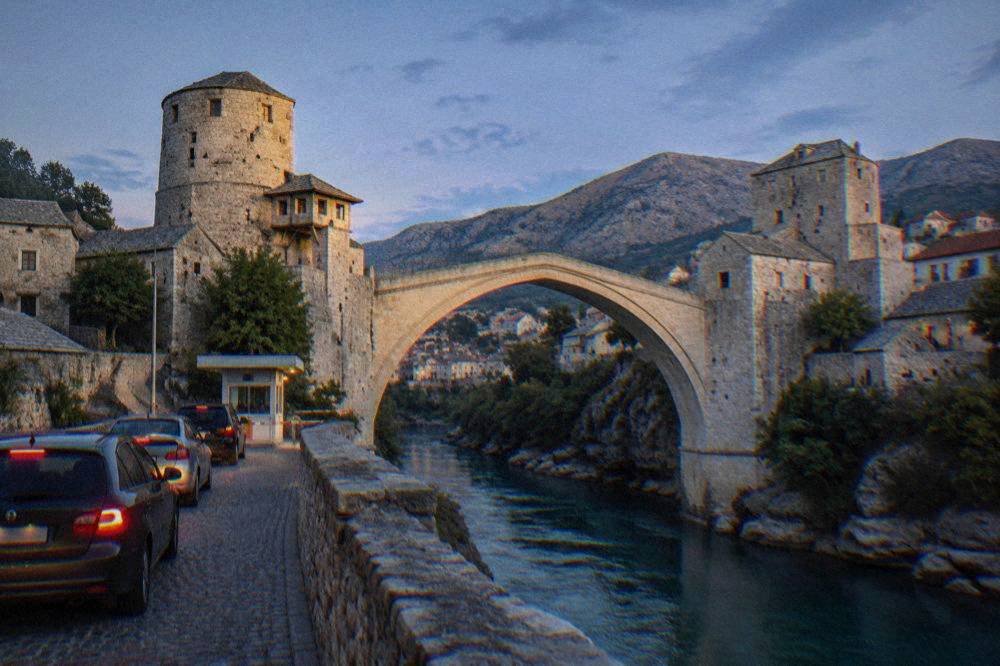
Driving yourself gives full control of the schedule and costs only fuel, parking and the entry fees at the stops, against about 131 minutes each way of driving plus two border crossings you handle alone. An organized tour from Split converts the same day into a seat, a driver who knows the queue patterns, and a fixed circuit that usually includes Kravica waterfall and Počitelj alongside Mostar. The trade is flexibility against effort.
The self-drive case is strongest outside July and August, when the border moves quickly and the Old Town has space. It weakens in peak weeks, when a bus-size vehicle in the tour lane and a guide who times the Kravica arrival against the crowds saves an hour of standing. It also weakens for anyone who would rather not read a foreign road network at the end of a long day.
The tour case is strongest for the combined itinerary. The Herzegovina trio of Mostar, Kravica and Počitelj is 100 km of valley driving between stops, and the tour version runs it daily in both directions. The band below shows the site's three featured options for this route family: the featured Split departure, the Dubrovnik equivalent, and the Sarajevo version for anyone based in the capital.
What Should You Actually See In Mostar In A Few Hours?
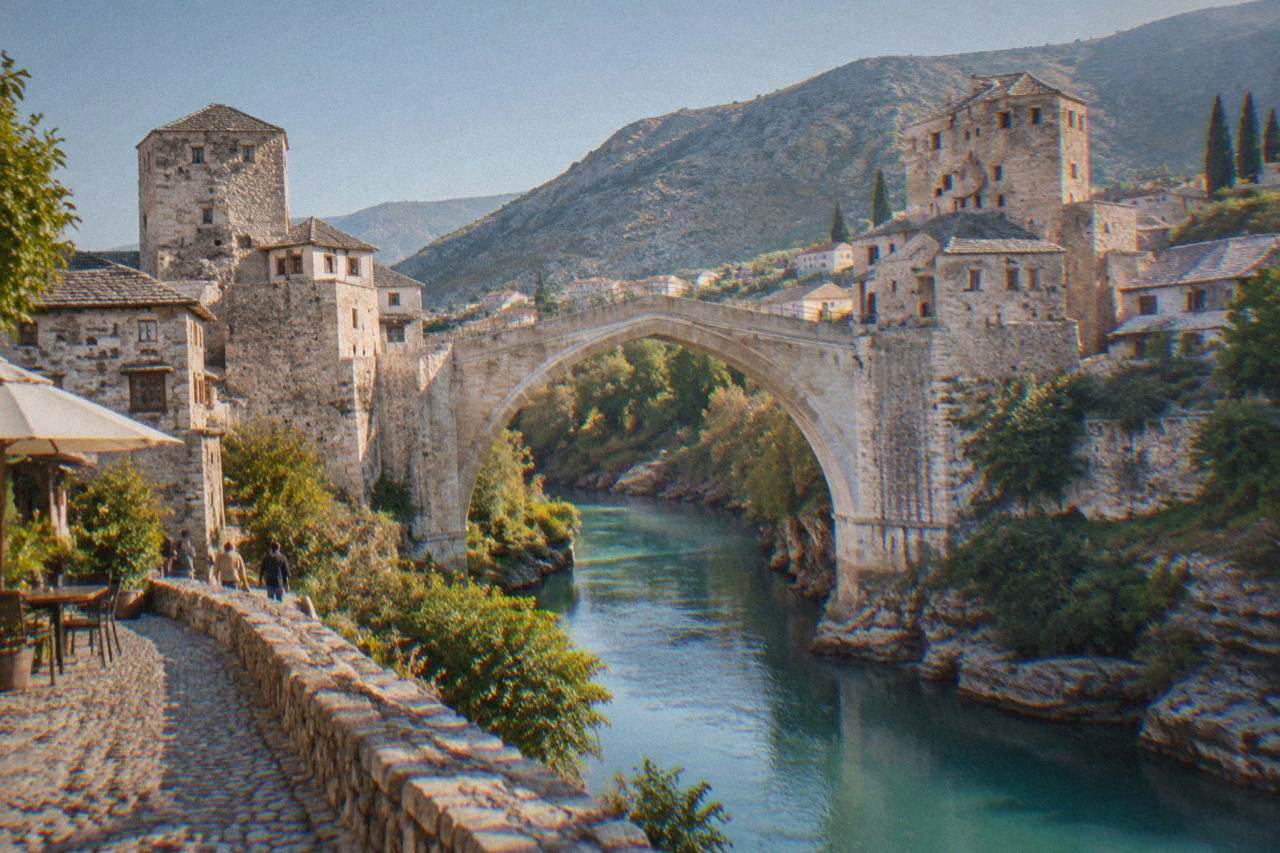
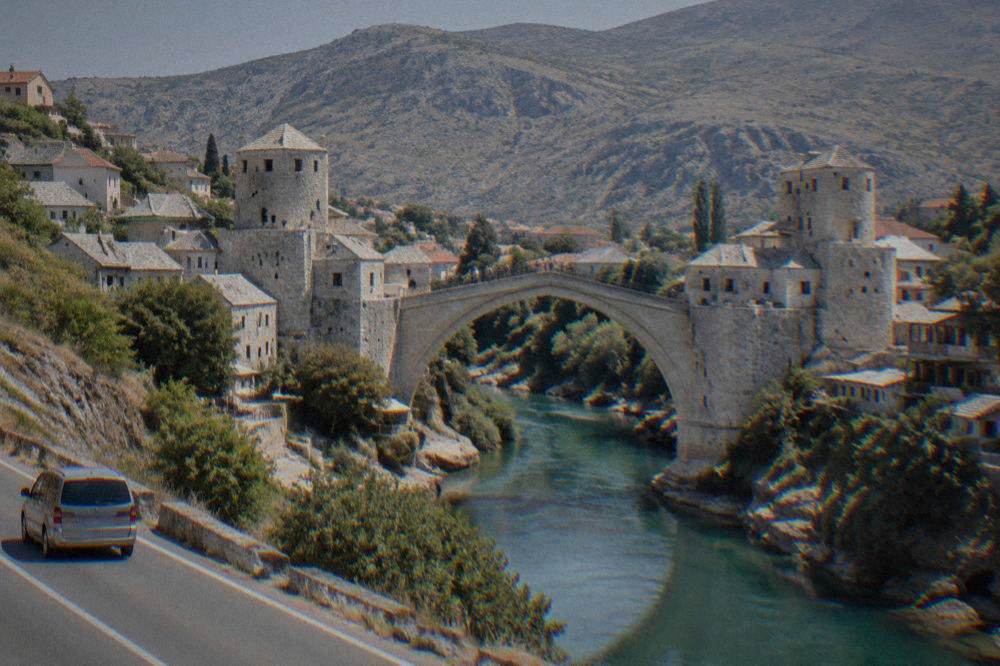
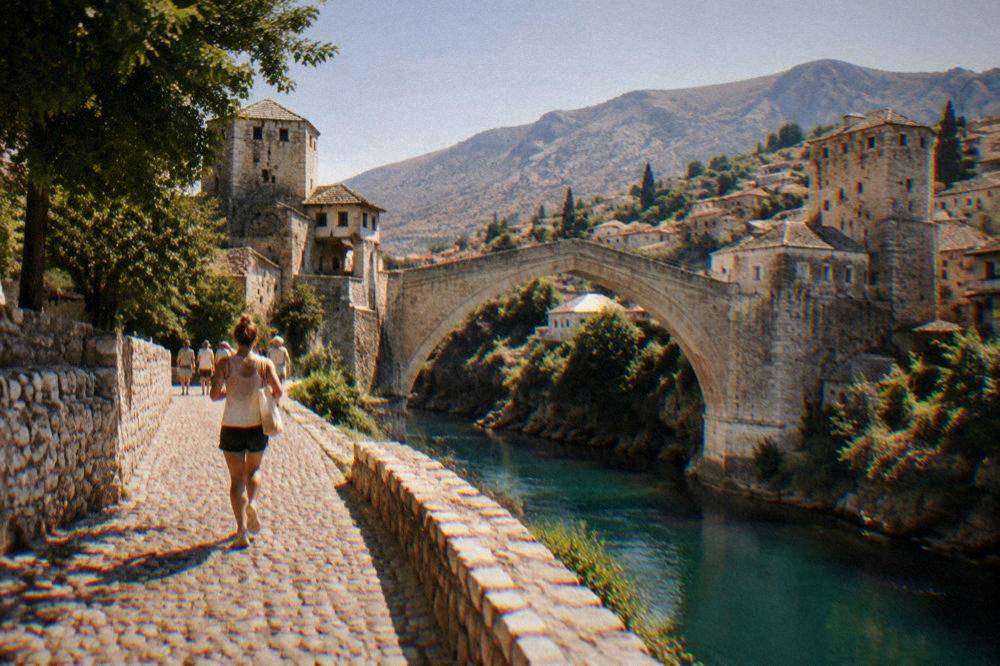
Stari Most, the Old Bridge, is the anchor: free to cross at any hour, about 21 to 24 metres above the Neretva depending on the river, and the centrepiece of a UNESCO World Heritage property inscribed in 2005. Around it sit the Kujundžiluk bazaar, the Crooked Bridge, and Koski Mehmed-pašina džamija with its minaret view over the valley, all within a five-minute walk of one another. Three hours covers them at a walk.
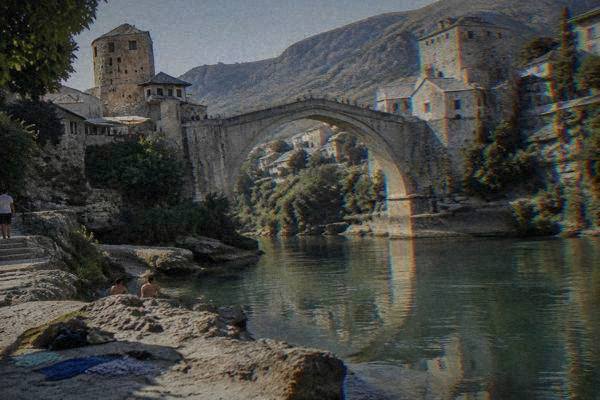
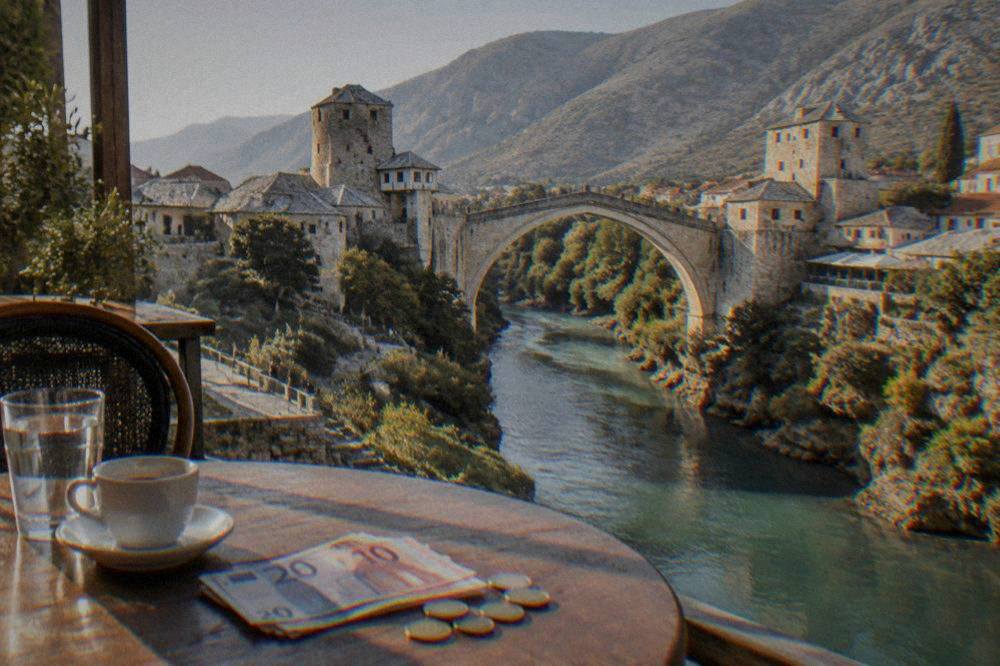
The bridge rewards time rather than a quick photo. It was completed in 1566, destroyed on 9 November 1993 during the war, and rebuilt and reopened in July 2004, and its stone arc over the green river is the image that draws the day traffic from the coast. Members of the Mostari diving club jump from it through the warmer months, and the 460th traditional competition ran on 26 July 2026. Visitors do not jump; the club's members train for years before diving from the bridge.
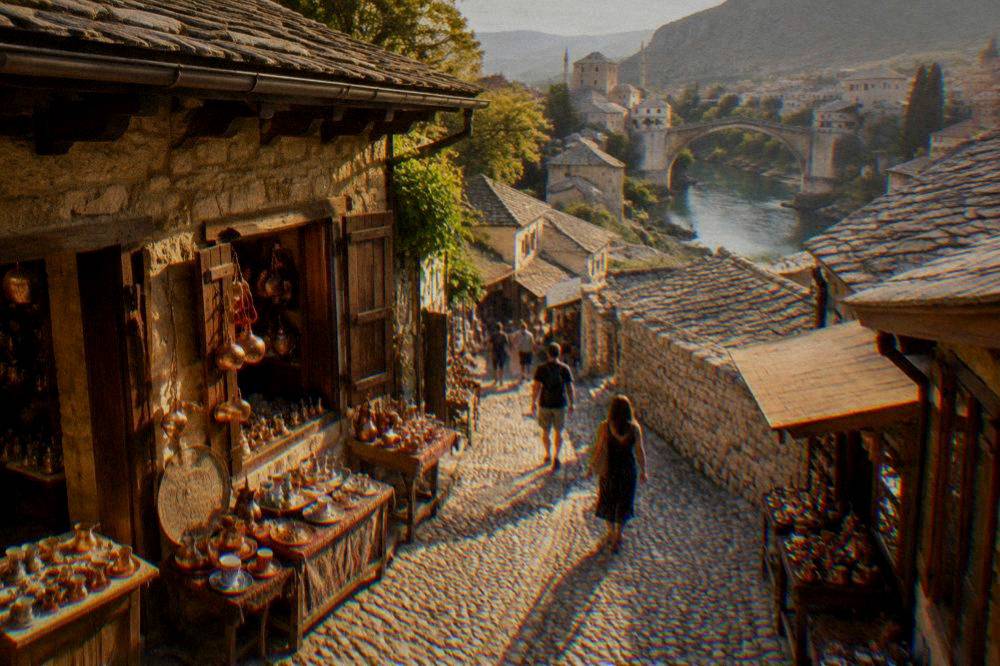
From the bridge, the walk is compact. Kujundžiluk, the cobbled Old Bazaar street, runs along the north bank with coppersmiths' shops. Kriva ćuprija, the Crooked Bridge, is a smaller single-arch stone bridge a few minutes upstream, free and public. Koski Mehmed-pašina džamija sits at the end of the bazaar; a small cash fee covers the mosque, more with the minaret climb, and the courtyard terrace is the classic river-level view of Stari Most.
Deeper pages on each sight exist on this site: the Old Bridge, Kujundžiluk, Koski Mehmed-pašina džamija and the Crooked Bridge. For a fuller checklist, things to do in Mostar is the site's root guide to the city.
| Sight in central Mostar | Distance from Stari Most | Entry |
|---|---|---|
| Kujundžiluk bazaar | at the bridge | Free, public street |
| Koski Mehmed-pašina džamija | about 5 minutes on foot | Small cash fee reported, more with the minaret |
| Kriva ćuprija (Crooked Bridge) | about 5 minutes on foot | Free, public structure |
| Old Bridge Museum, Tara tower | at the bridge | About 10 KM reported |
| Blagaj Tekke | 13.7 km by road | About 10 KM reported, shoulders and knees covered |
Should You Add Kravica Waterfall, Blagaj Or Počitelj To The Trip?
Kravica waterfall is 55.2 km and about 54 minutes by road from Stari Most, entry is 20 KM for an adult all year with children under 7 free, and swimming is allowed in summer in the designated pool area. Počitelj is 30.0 km and about 31 minutes, and the village itself is free. Blagaj Tekke at the Buna spring is 13.7 km and about 19 minutes, about 10 KM to enter, with shoulders and knees covered.
Kravica is the stop that changes the shape of the day, because it sits on the far side of the region from Split and adds real distance to the return. The park is open all year with hours by month: 07:00 to 22:00 from June to September, 07:00 to 20:00 in May, and shorter windows either side. The 20 KM adult price applies in every month, 10 KM for residents of Bosnia and Herzegovina, and the fee schedule comes from the park's own visitor page. Swimming in the pool below the falls runs through the summer season in the designated area, with no lifeguard reported, so check the park's rules on arrival.
Počitelj is the cheap add-on in every sense: a walled Ottoman village on a hillside above the Neretva, half an hour from Mostar, free to wander, with a fortress climb and a mosque at its core. It pairs naturally with the drive because it sits close to the border route back toward Metković. Blagaj, the dervish tekke built into the cliff at the Buna spring, is the opposite direction, south of Mostar, and suits a schedule with an hour to spare rather than two.
The full version of this triangle, with timings for doing all three from Mostar itself, is mapped in Kravica, Blagaj and Počitelj in one day, and the wider driving version in the Herzegovina road trip. A short Kravica-only option from Mostar also exists as a half-day tour.
What Does A Day Trip To Mostar From Split Cost?
The border and the bridge cost nothing: crossing Stari Most is free and the street around it is public. The priced items are Kravica waterfall at 20 KM per adult all year, Blagaj Tekke at about 10 KM reported, the Old Bridge Museum at about 10 KM reported, and the Koski Mehmed-pašina džamija fee at a few KM in cash. The currency is the convertible mark, pegged at 1 EUR = 1.95583 KM, not the euro.
That currency point matters more here than almost anywhere in the region, because a day visitor from Croatia arrives with kuna-free euro expectations into a country that prices in KM. Euro cash is often accepted in the tourist streets, usually at a rounded rate, so confirm before handing it over. Cards work at hotels and larger venues, but the bazaar, the mosque fee and the smaller car parks run on cash. The site's Mostar budget guide breaks down a full daily spend.
Product prices for the tours themselves render from the listings and are never typed on this page. What can be tabulated is the destination-side entry list, which is stable and printed by the venues themselves.
| Item on the itinerary | Fee | Notes |
|---|---|---|
| Stari Most crossing | Free | Public route, open around the clock |
| Kujundžiluk and Kriva ćuprija | Free | Public streets and bridge |
| Kravica waterfall | 20 KM adult, all year | 10 KM residents, under 7 free, per the park's visitor page |
| Blagaj Tekke | About 10 KM, reported | Shoulders and knees covered, wraps provided |
| Old Bridge Museum | About 10 KM, reported | Tara tower, daily through the April to November season |
| Koski Mehmed-pašina džamija | Small cash fee, reported | More with the minaret climb |
| Tourist tax, canton | 3 KM per person per night, reported | From 1 January 2026, confirm at booking |
When Is The Best Time Of Year For A Split To Mostar Day Trip?
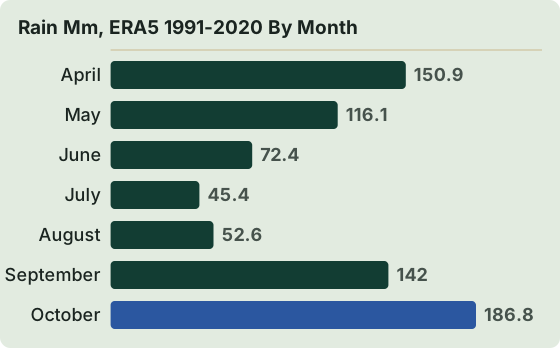
Mostar is a hot valley city: ERA5 reanalysis for 1991 to 2020 puts the mean daily high at 30.5 C in August and 29.9 C in July, and the FHMZ 1961 to 1990 station record logs an absolute maximum of 41.2 C. July is also the driest month on that record, 42.9 mm against November's 200.0 mm. Late spring and early autumn trade a little warmth for comfortable walking and lighter border queues.
The rain side of the record argues its own case. November carries 200.0 mm of precipitation in the FHMZ 1961 to 1990 table and December 178.7 mm, while July carries 42.9 mm and June 77.9 mm. A wet-day count tells the same story, 11 days over 1 mm in November against 5 in July. Winter day trips do run, and the Mostar in winter page covers the rainy-day version of the city, but they are a different product.
Summer brings the calendar as well as the heat. The traditional bridge diving competition held its 460th edition on 26 July 2026, and the Red Bull Cliff Diving World Series followed from 30 July to 1 August 2026. Anyone planning around those late-July days gets a spectacle with the crowds that come with it.
| Month | Mean daily high, ERA5 1991-2020 | Rain mm, ERA5 1991-2020 | FHMZ 1961-1990 rain mm |
|---|---|---|---|
| April | 17.7 | 150.9 | 127.3 |
| May | 22.3 | 116.1 | 102.1 |
| June | 26.8 | 72.4 | 77.9 |
| July | 29.9 | 45.4 | 42.9 |
| August | 30.5 | 52.6 | 73.7 |
| September | 24.5 | 142.0 | 96.3 |
| October | 19.5 | 186.8 | 150.6 |
Is A Split To Mostar Day Trip Worth It, Or Should You Stay Overnight?
As a day trip it works: the drive is about 131 minutes each way, the Old Town core is small enough for a three-hour visit, and a tour stitches in Kravica and Počitelj without any planning burden. As an overnight it improves sharply, because the evening and early morning around Stari Most, after the day coaches have gone, are when the Old Town shows a different register. The honest answer is that both are correct on their own terms.
The day-trip version suits a coast-based holiday that cannot move. The overnight version, or a two-night base in Mostar with day trips out, opens Blagaj at dawn, Kravica before the crowds, and the wider region: Stolac at 36.8 km, Jablanica at 47.4 km, and the Sarajevo direction at 127.1 km from the bridge. Three days in Mostar and the Bosnia and Herzegovina itinerary cover that scaling, and the Balkans itinerary places the city in a longer regional route.
For families weighing the long day in a car, Mostar with kids has the child-paced version of the city. For the parallel question from the other direction, the Dubrovnik day trip guide covers the shorter coast run, and the Sarajevo day trips overview covers the northern one.
A second Split-departure option with tickets included sits below, for anyone comparing the featured tour against a like-for-like alternative.
Common Questions About A Split To Mostar Day Trip
How far is Split from Mostar?
Split is 174.1 km by road from Stari Most in Mostar, about 131 minutes of free-flow driving, with border checks at the Croatia to Bosnia and Herzegovina crossing adding reported waits of up to about 30 minutes, longer at summer peaks.
Do you need a passport for the Split to Mostar day trip?
Yes. Bosnia and Herzegovina is not in the EU and not in Schengen, and the Croatian land border has carried full checks since 1 January 2023. A valid passport is the document to carry; ETIAS is not in operation.
Can you visit Kravica waterfall on a day trip from Split?
Yes, and the organized tours from Split combine it with Mostar. Kravica is 55.2 km and about 54 minutes by road from Stari Most, entry is 20 KM for an adult all year with children under 7 free, and the park is open every month with hours that extend to 22:00 from June to September.
What currency does Mostar use on this trip?
The convertible mark, KM or BAM, pegged at 1 EUR = 1.95583 KM. Euro cash is often accepted in the tourist areas at a rounded rate, but the official currency is the mark, and cash in KM is what the bazaar and small fees expect.
How many hours do you get in Mostar on an organized day trip from Split?
The arithmetic of the route, 131 minutes each way plus the border, means a shared trip typically gives the city a solid block of the middle day, split between the Old Town and the countryside stops.
Is the border queue long going from Split to Mostar?
Reported waits at the main crossings on this route, Bijača to Nova Sela and Doljani to Metković, run up to about 30 minutes for cars, with longer queues at summer peaks. Early morning crossings in both directions are the calm ones.
The route is long but it is honest arithmetic: two hours of driving, one border, one UNESCO bridge, and a valley that looks nothing like the coast you left in the morning. Plan the clock around the queue, not around the map distance, and the day fits.