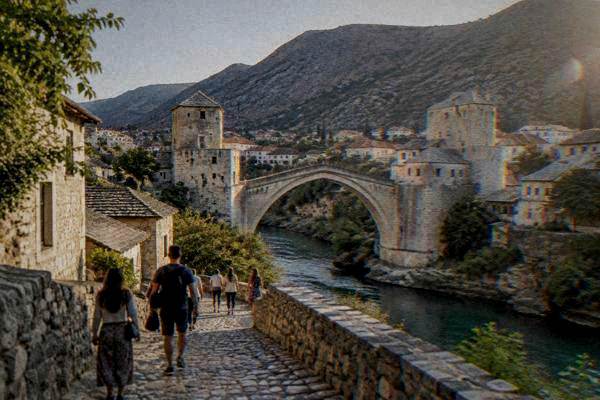
Kujundžiluk: The Old Bazaar Street To The Bridge
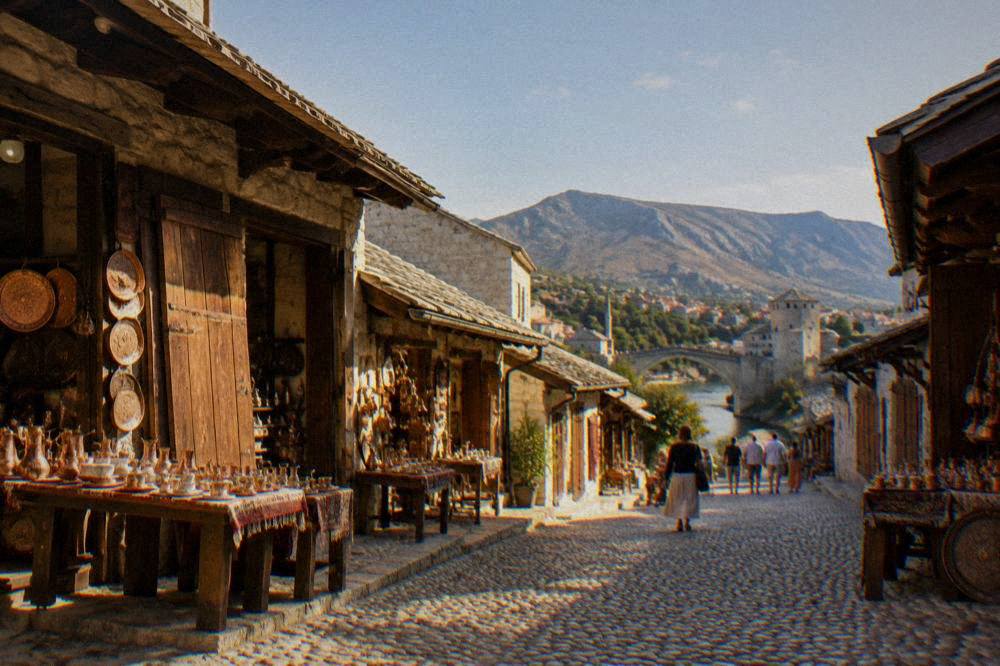
Kujundžiluk is the old bazaar street of Mostar, Herzegovina, a cobbled lane of stone shops that runs through the Old Town down to the Neretva river and ends at Stari Most, the Old Bridge, in the city's UNESCO-inscribed Old Bridge Area.
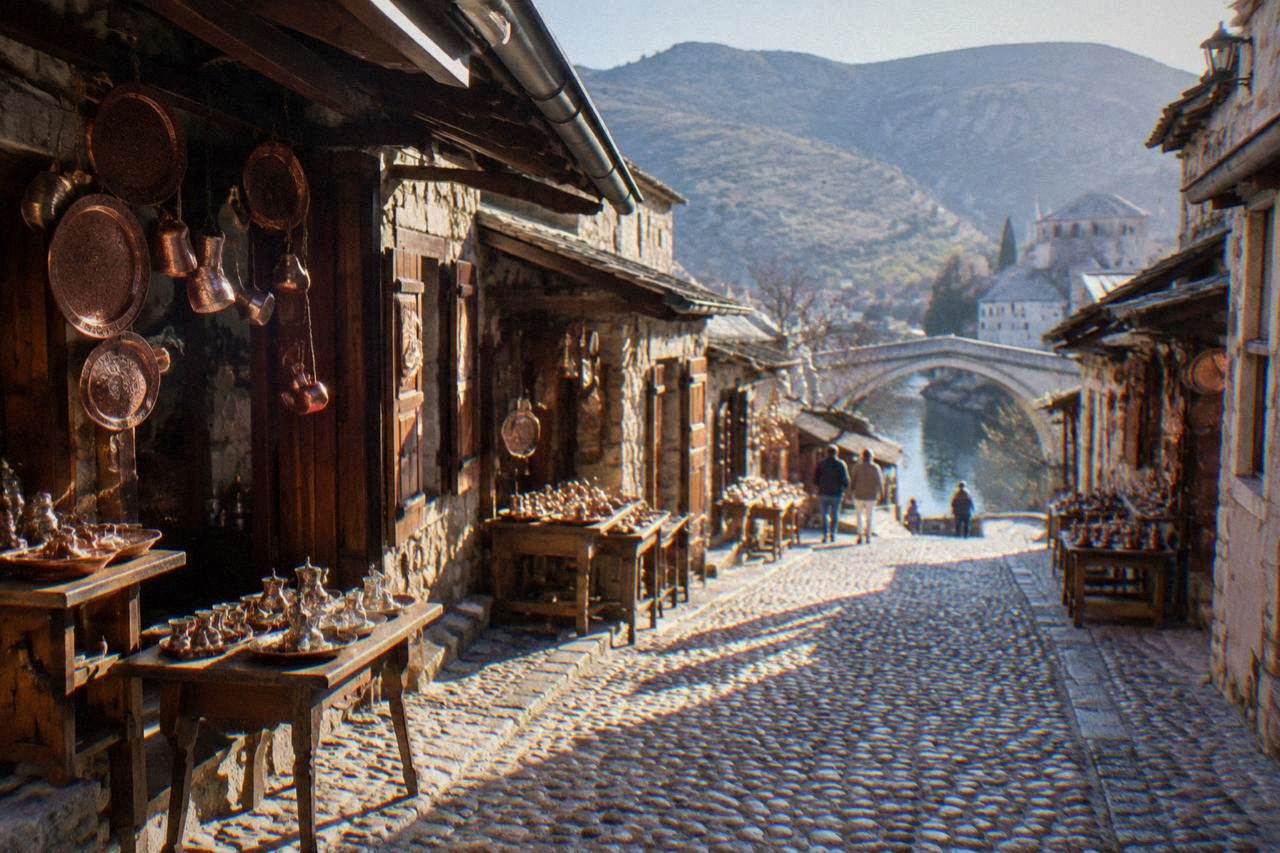
Kujundžiluk is the Ottoman-era bazaar street in central Mostar, running roughly from the Old Town's upper end down to Stari Most. It is a public street, free to walk at any hour, lined with coppersmiths' shops, souvenir stalls, cafes and small boutiques, and it forms the pedestrian spine of the Old Bridge Area of the Old City of Mostar, a UNESCO World Heritage property since 2005.
Kujundžiluk is the old bazaar street of Mostar, a city in Herzegovina, Bosnia and Herzegovina, an inland town on the Neretva river with no sea coast. The lane runs through the heart of the Old Town and ends at the water's edge beside Stari Most, the Old Bridge, whose surroundings were inscribed as a UNESCO World Heritage property in 2005. The name refers to the coppersmiths who worked here, and their trade still gives the street its character: hammered pans, coffee sets and small copper souvenirs hang outside shopfronts cut into stone walls that have stood through centuries of commerce. This guide covers what the bazaar is, its history, what sells there today, the sights along and beside it, and how to plan a walk from end to end.
What Is Kujundžiluk In Mostar?
Kujundžiluk is the old bazaar street of Mostar, a public cobbled lane of stone shops that forms the pedestrian core of the city's Old Town and runs downhill to the Neretva river beside Stari Most. It is free to enter and open at any hour, it sits inside the Old Bridge Area of the Old City of Mostar, a UNESCO World Heritage property inscribed in 2005, and it is the street that carries nearly every visitor from the town to the bridge.
The word itself comes from the Turkish for coppersmiths, the trade that defined the street when the bazaar served the bridge town that grew around the river crossing. The settlement's name, Mostar, first appears in a written document in 1474, and it derives from "mostari", the keepers of the bridge, the guards of the wooden crossing that preceded the stone one. The bazaar and the bridge belong to the same story: a river crossing, a market street feeding it, and a town that grew where the two met. UNESCO's inscription in 2005 under criterion (vi) covers the Old Bridge Area of the Old City, and Kujundžiluk is the living commercial strip inside that protected zone.
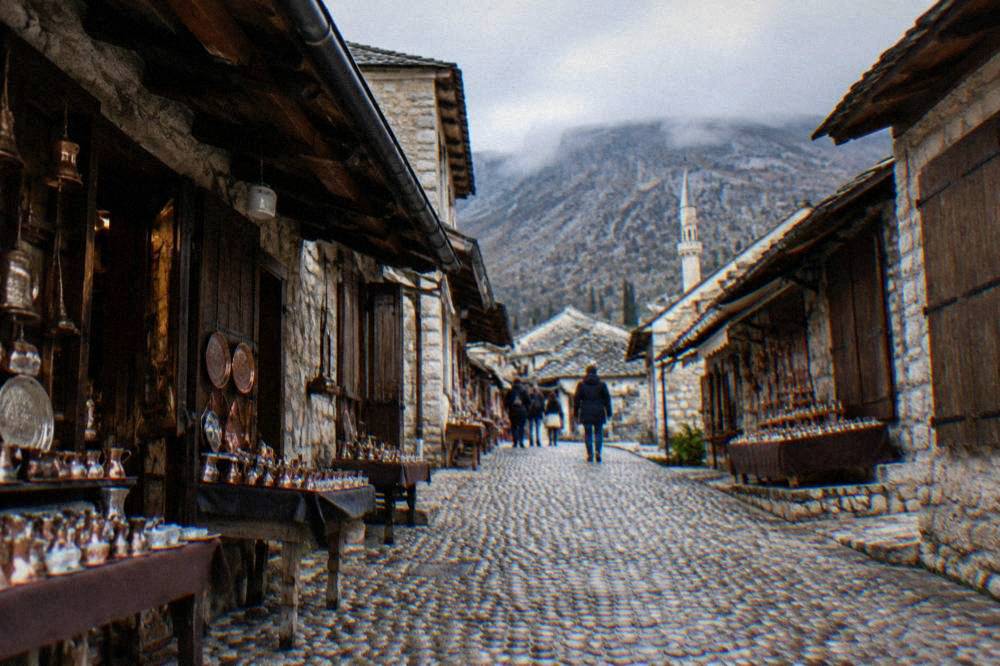
Today the street is pedestrianised, paved with rounded cobbles, and lined on both sides with small shops occupying old stone premises. The Upper reaches connect toward the modern town around Spanish Square, while the lower end opens onto the river embankment directly under the arch of Stari Most. It is short enough to walk in minutes and dense enough to fill an hour or two with browsing, and it functions as the address for a large share of the Old Town's shops, cafes and restaurants. For orientation on a first visit, the Mostar Travel Guide overview of the city's layout pairs well with this page.
How Old Is The Kujundžiluk Bazaar In Mostar?
The bazaar dates to Mostar's Ottoman period, when the town grew around the river crossing whose keepers gave the city its name, first recorded in 1474. The stone bridge the bazaar served was completed in 1566 under Suleiman the Magnificent by the architect mimar Hajruddin, and the Old Bridge Area of the Old City, including the bazaar street, was inscribed by UNESCO in 2005.
UNESCO's own description states that the settlement was established in the 15th century and that the bridge follows the design tradition of Hajruddin's master, the architect mimar Sinan. The bridge's single stone arch spans about 29 m, and its height above the Neretva varies with the river level, about 21 to 24 metres depending on conditions. The bazaar would have served the bridge traffic from the start: caravans, traders and the town's own households buying metalwork, cloth and food. Coppersmithing gave the street its name, and the kujundžija, the coppersmith, was the artisan at its centre.
The street's later history is the bridge's history. The Old Bridge was destroyed on 9 November 1993 during the war, and it was rebuilt and reopened in July 2004, a reconstruction supported by UNESCO and World Bank partners that used original materials and techniques. The bazaar shops around it were rebuilt in the same period, and the whole ensemble, bridge, bazaar, towers and surrounding monuments, entered the World Heritage List the following year. The full story of the bridge itself is covered in the guide to Stari Most, and the war years, in dates and physical facts only, in the site's Mostar history pages.
What Can You Buy On Kujundžiluk Street In Mostar?
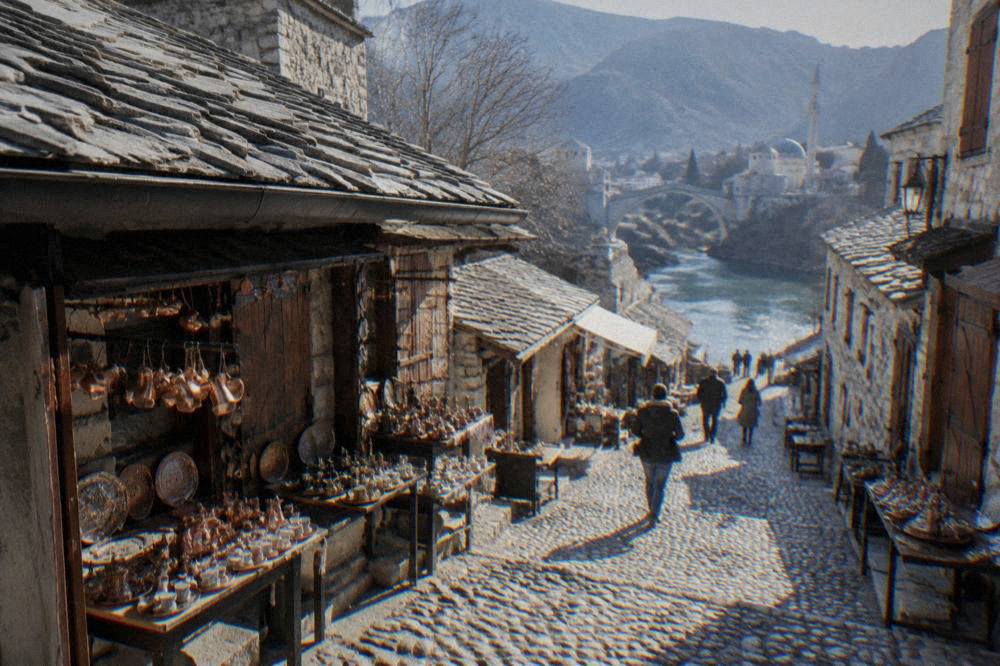
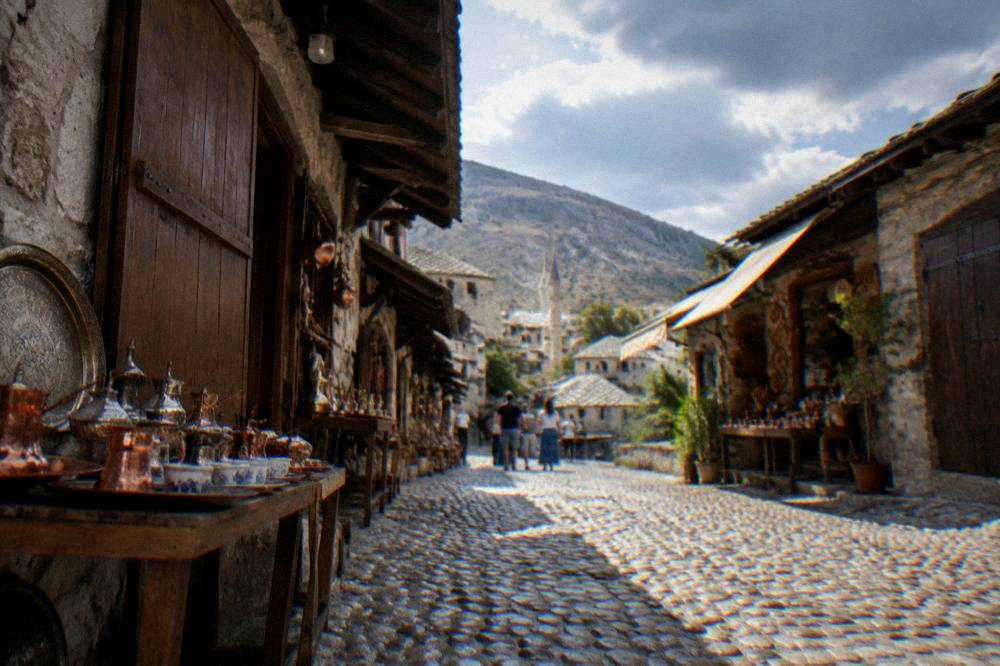
The bazaar today sells copperware and metalwork above all, from hammered coffee sets and pans to engraved plates, alongside Bosnian coffee grinders, textiles, rugs, jewellery, painted souvenirs, handmade leather goods and antiques, with a dense layer of cafes, sweet shops and restaurants between the retail premises. Prices are quoted in convertible marks, the currency of Bosnia and Herzegovina, though euro cash is often accepted in tourist areas at a rounded rate, so confirm before paying.
The coppersmith tradition remains the street's signature. Workshops display džezva coffee pots, the small long-handled pots used to brew Bosnian coffee, together with trays, cups and ornamental pieces. Quality varies, from thin decorative souvenirs to heavier hand-beaten work, and examining the thickness of the metal and the regularity of the hammer marks is a fair test. Textiles come next: wool rugs, scarves and embroidered cloth, often sold from the same crowded storefronts. The site's page on Bosnian coffee explains the brewing culture that the copper pots belong to, and the burek page covers the pastry you will smell from the bazaar's bakeries.
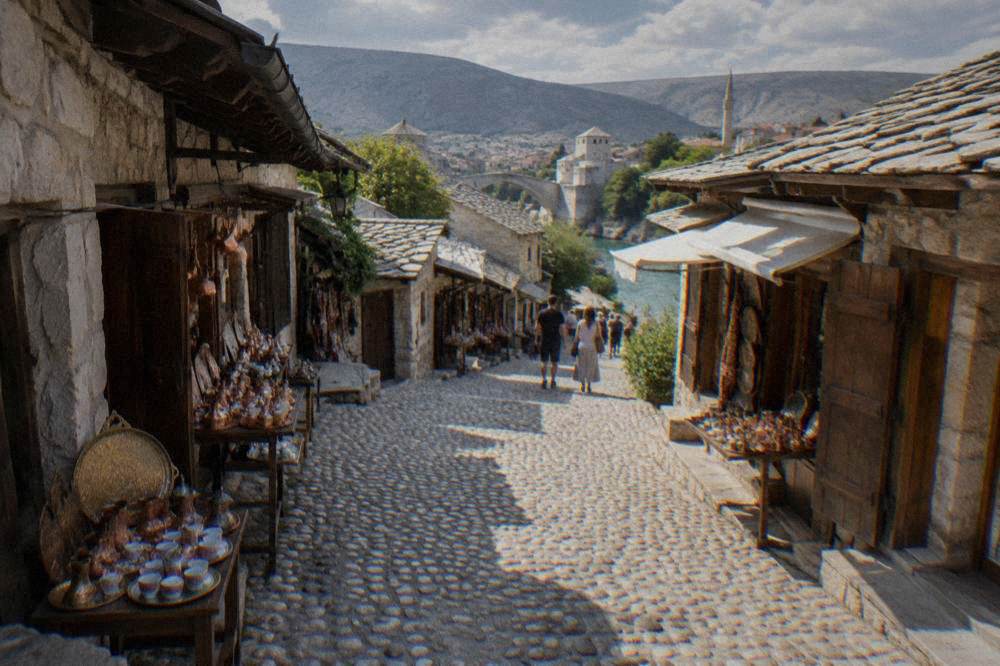
A few practical notes make shopping here smoother. The convertible mark (KM, BAM) is pegged to the euro at 1 EUR = 1.95583 KM, a fixed currency-board rate, so converting is simple. Cards are accepted at many shops but cash is preferred at small stalls, and ATMs sit within a short walk of the bazaar. Bargaining is not the fixed ritual of some larger bazaars; polite asking on multiple items is normal, but posted prices in shops are generally firm. A reported tourist tax of 3 KM per person per night applies in the canton from 1 January 2026, charged through accommodation, not shops, and you should confirm it at booking rather than on the street.
If you would rather have the street explained than decoded alone, a small-group guided walk of the Old Town spends its time precisely here, in the bazaar, on the bridge and among the lanes off it.
Where Does Kujundžiluk Start And End In Mostar?
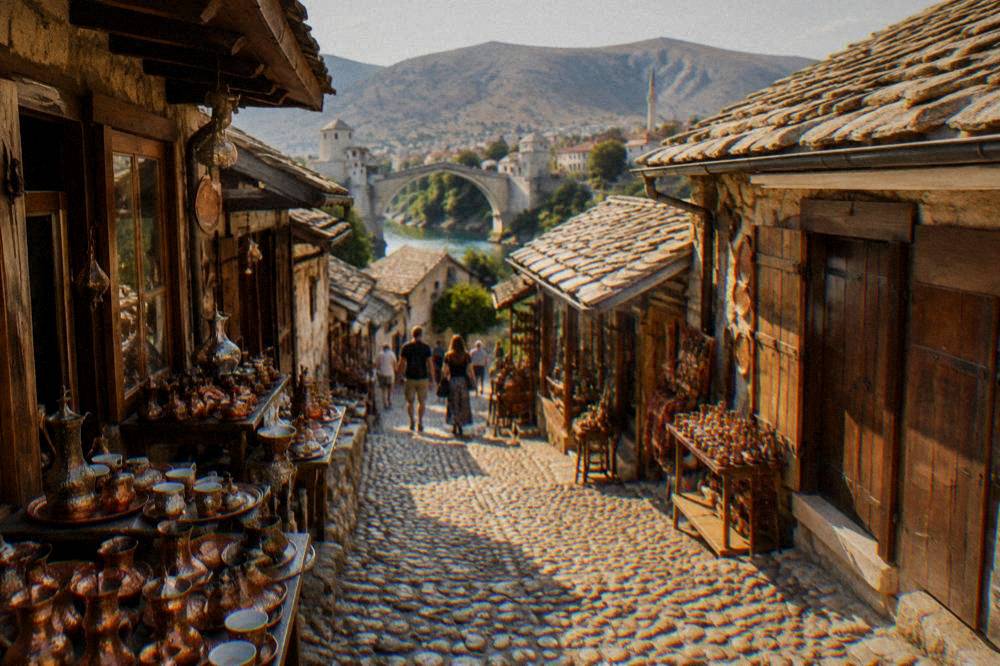
The bazaar street runs from its upper end near the Tabacica mosque and the mouth of the Old Town, where the lanes drop away from the modern city around Spanish Square, downhill through the shopfronts to the Neretva embankment at the foot of Stari Most, a walk of a few hundred metres on foot through the pedestrian zone. The whole street is public, free and open around the clock, and the bridge it ends at is likewise free to cross at any hour.
In practice, the street is easiest to follow as a single downhill line. From the upper end, cobbles carry you between stone premises that press close on both sides, with side lanes peeling off toward the two Ottoman houses open as museums, Bišćević House on the river side and Muslibegović House a short climb above. The gradient is gentle but real, and the surface is worn stone, so shoes with grip serve better than smooth soles. At the bottom, the lane opens into the river square under the bridge, where divers from the Mostari club perform in the high season and the banks on both sides fill with cafe tables.
Two structures bracket the street's lower end. The Tara tower on the east side houses the Museum of the Old Bridge, with an interior viewing platform over the arch, reported at about 10 KM entry. On the same side stands Koski Mehmed-pašina džamija, the mosque whose minaret gives one of the most direct views down onto the bridge and the bazaar roofline, with a small cash fee for the mosque and more for the minaret, reports vary between about 14 and 18 KM, so confirm on site. The Koski Mehmed-pašina džamija page carries the details.
| Stop along or beside the bazaar | What it is | Access |
|---|---|---|
| Kujundžiluk street itself | Ottoman bazaar lane, shops and cafes | Public, free, at any hour |
| Stari Most at the lower end | Stone arch bridge completed 1566, rebuilt and reopened July 2004 | Free to cross, open around the clock |
| Tara tower / Museum of the Old Bridge | Bridge museum with an interior platform | Reported about 10 KM, confirm on site |
| Koski Mehmed-pašina džamija | Ottoman mosque beside the bridge with minaret viewing | Small cash fee reported, more with the minaret |
| Kriva ćuprija | Small stone "Crooked Bridge" on a side lane above the bazaar | Public, free |
| Bišćević House on the river side | Ottoman courtyard house open as a museum | Reported about 4 KM |
What Sights Sit On Or Beside Kujundžiluk In Mostar?
The bazaar's own sights are Stari Most at its foot, the Tara tower museum and Koski Mehmed-pašina džamija beside it, and Kriva ćuprija, the Crooked Bridge, on a side lane above, all inside the UNESCO property. A few minutes further sit the Ottoman courtyard houses and, across the river, the Donja Mahala quarter, while the dive platform tradition at the bridge runs from the street's end itself.
Kriva ćuprija, the Crooked Bridge, is a miniature single-arch stone bridge over a small side channel a short walk above the bazaar, public, free and usually quieter than the main street. It is commonly described as a forerunner or scale model for the great arch, and it makes a calm first or last stop on a bazaar walk. Down at the river, the bridge diving tradition belongs to the Mostari diving club, whose members jump from about 21 to 24 metres above the water depending on the river. Visitors cannot pay to jump; the jumps are performed by trained club members only. The 460th traditional competition ran on 26 July in 2026, and the Red Bull Cliff Diving World Series stop ran 30 July to 1 August 2026, with platforms at 21 m for women and 27 m for men.
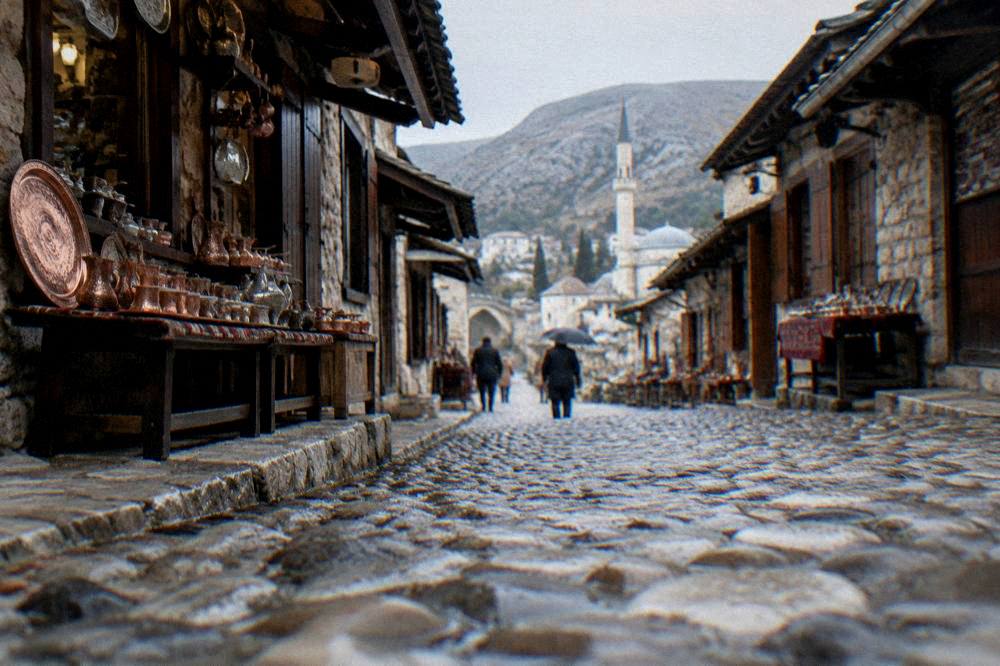
The views from the street and its ends reward a slow pace. The viewpoints guide maps the platforms above the river valley. For a structured walk that ties the bazaar to the bridge, the towers and the river banks, a private group city tour of Mostar and the Old Bridge covers exactly this circuit with a guide.
| Sight on or beside the bazaar | Relation to the street | Notes |
|---|---|---|
| Stari Most | At the lower end | Free to cross, open around the clock |
| Museum of the Old Bridge (Tara tower) | Beside the lower end | Reported about 10 KM |
| Koski Mehmed-pašina džamija | Beside the lower end | Fee reported, confirm on site |
| Kriva ćuprija | Side lane above the bazaar | Public and free |
| Bišćević House | Short walk off the river side | Reported about 4 KM |
| Muslibegović House | Short climb above the bazaar | Reported about 8 KM |
When Should You Walk Kujundžiluk In Mostar?
Early morning and late afternoon are the calmest hours on the bazaar, with the street fully shaded by its stone walls in the first hours after sunrise and the shops reopening after the midday heat in summer. Mostar's July mean temperature is 24.7 C (FHMZ 1961 to 1990) and modelled July highs average 29.9 C (ERA5 reanalysis, 1991 to 2020), with an absolute record of 41.2 C, so summer afternoons are the hours to avoid on worn cobbles.
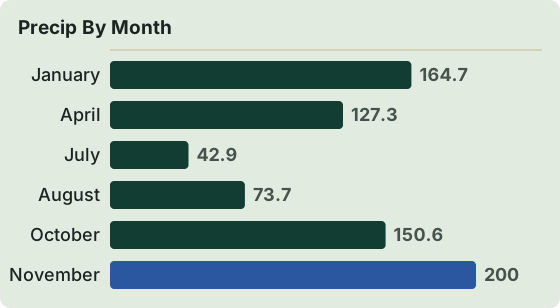
The climate table tells the planning story plainly. Rain is a winter phenomenon here: November averages 200.0 mm against July's 42.9 mm (FHMZ Mostar station, 1961 to 1990), so the bazaar's dry season is long and its wet days cluster between October and April. In the warmest weeks, the Neretva stays cold even in August, fed by karst springs, and the river banks under the bridge are the natural cool-down after a walk down the lane. The site's best time to visit Mostar page carries the month-by-month detail, and the Mostar in summer page the heat tactics.
| Month | Mean temp C (FHMZ 1961-1990) | Mean daily high C (ERA5 1991-2020) | Precip mm (FHMZ 1961-1990) |
|---|---|---|---|
| January | 4.8 | 8.4 | 164.7 |
| April | 13.3 | 17.7 | 127.3 |
| July | 24.7 | 29.9 | 42.9 |
| August | 24.2 | 30.5 | 73.7 |
| October | 15.3 | 19.5 | 150.6 |
| November | 10.1 | 14.1 | 200.0 |
Crowd patterns follow the day-trip rhythm rather than the weather alone: the street is busiest through the middle of the day, especially in the peak weeks around the July bridge events, and empties toward evening, when the cafes on the embankment take over. Anyone photographing the bridge from the bazaar's end will find the light on the arch in the late afternoon, and the things to do in Mostar overview places the bazaar walk among the city's other options for filling a morning or a whole day.
How Much Time Do You Need For Kujundžiluk In Mostar?
A straight walk down the bazaar to the bridge takes minutes, but an unhurried visit with the shops, the bridge, the Tara tower museum and the mosque runs to about two hours, and a full Old Town circuit that adds the courtyard houses, Kriva ćuprija and both river banks fills a half day. Two days in Mostar is enough to walk the bazaar twice, once early and once at dusk, and still reach Blagaj and Počitelj.
The bazaar rewards repetition more than endurance. An early pass catches the shopkeepers setting out the copper and the cobbles almost empty; a dusk pass catches the stone glowing and the bridge divers, when the club members perform, collecting their audience before the jump. The two days in Mostar itinerary sequences exactly this, bazaar and bridge on the first afternoon, courtyard houses and viewpoints on the second day, with the food stops listed in the guide to the best restaurants in Mostar clustered within a few lanes of the street itself.
For visitors using Mostar as a base, the bazaar doubles as the departure point for the Herzegovina countryside: Blagaj Tekke sits 13.7 km and about 19 minutes by road from Stari Most, Počitelj 30.0 km and about 31 minutes, and Kravica waterfall 55.2 km and about 54 minutes free-flow, all computed road distances without border queues.
| Day trip from Stari Most | Road km | Free-flow minutes |
|---|---|---|
| Blagaj Tekke | 13.7 | about 19 |
| Počitelj | 30.0 | about 31 |
| Kravica waterfall | 55.2 | about 54 |
| Konjic | 69.0 | about 80 |
| Trebinje | 116.5 | about 142 |
Is Kujundžiluk Free To Visit In Mostar?
Yes, the bazaar street is a public lane inside the Old Town, free to walk at any hour, with no gate, ticket or closing time, exactly like Stari Most at its foot, which is free to cross around the clock. Only the buildings beside the street, the bridge museum, the mosque minaret and the courtyard houses, carry entry fees, each reported at a few KM and each best confirmed on site before you plan around it.
That free-to-roam quality is what makes the street a repeat destination rather than a single tick. The shops keep their own hours and some close for midday in the warmest weeks, but the lane itself never closes, and the embankment under the bridge is public at both ends. Copper is bought by the piece, coffee by the cup, and everything in between, the bridge, the river, the towers and the rooflines, costs nothing at all. The site's page on free things to do in Mostar builds a whole day around this fact.
A small budget still buys the extras. A coffee on the embankment, a museum platform above the arch, a minaret view over the bazaar roofline: each is a few KM reported, and each is optional. The currency is the convertible mark, pegged at 1 EUR = 1.95583 KM, so a euro price in your head converts almost exactly at two to one, minus the rounding a stall may apply. Confirm any fee on arrival, and pay in marks where you can.
What Is Close To Kujundžiluk In Mostar?
Everything in central Mostar is close: Spanish Square and the modern city sit a short walk above the bazaar, the Old Town lanes and the courtyard houses fold around it on both sides, and the river, crossed at Stari Most or at the downstream bridges, leads east into Donja Mahala. The Partisan Memorial Cemetery by Bogdan Bogdanović, inaugurated in 1965, sits on the hillside above the west side, and Hum rises over the whole valley.
The cemetery is a sobering counterweight to the bazaar's commerce. Europa Nostra, which listed it among Europe's most endangered heritage sites, reports that over 700 of its stone memorial markers were destroyed in 2022 and that a May 2026 report called for urgent protection and revitalisation. It is unstaffed, with no ticket or posted hours, and access is limited; the Partisan Memorial Cemetery page explains the context in full. Back downhill, the Old Town page maps the lanes that run off the bazaar, and the walking tour guide to Mostar covers how a guided route strings them together.
For the questions visitors ask most often about the street and the bridge, the answers pages carry the detail: why the Mostar bridge is so famous, why it was destroyed, and whether it has been rebuilt. Each tells one part of the story the bazaar street has watched from its doorways.
| Direction from the bazaar | What you reach | Walking note |
|---|---|---|
| Uphill, upper end | Spanish Square and the modern city centre | Short walk on gentle ground |
| Either side lane | Bišćević House, Muslibegović House, Kriva ćuprija | A few minutes each |
| Lower end, across the bridge | Donja Mahala quarter east of the Neretva | Cross the bridge and continue |
| Hillside above the west side | Partisan Memorial Cemetery | Unstaffed, limited access |
| Above the valley | Hum viewpoint | Views over the whole city |
Common Questions About The Kujundžiluk Bazaar
Is Kujundžiluk free to enter?
Yes. The bazaar is a public pedestrian street inside the Old Town of Mostar, open at any hour with no gate or ticket. Only the museums, the mosque and the courtyard houses beside it charge entry, each at a few KM reported and best confirmed on site.
What does the name Kujundžiluk mean?
It comes from the Turkish word for coppersmiths, the trade that defined the street in the Ottoman period. The name of the city itself, Mostar, derives from "mostari", the keepers of the bridge, first recorded in 1474.
How far is Kujundžiluk from Stari Most?
The bazaar street ends at Stari Most. The lane runs downhill through the Old Town and delivers you directly onto the river embankment beside the bridge, a continuous pedestrian walk of a few hundred metres.
What should I buy on Kujundžiluk?
Copperwork is the street's signature: džezva coffee pots, trays and hammered plates. Textiles, rugs, jewellery, leather goods and Bosnian coffee sets fill the shops between them. Prices are in convertible marks, and euro cash is often accepted in tourist areas at a rounded rate, so confirm before paying.
Can tourists jump from the Old Bridge at the end of the bazaar?
No. Jumps are performed by members of the Mostari diving club, who train for years before solo jumps from about 21 to 24 metres depending on the river. No pay-to-jump option for visitors is offered.
When is the bazaar busiest?
Through the middle of the day, and especially around the late-July bridge events. The 460th traditional diving competition ran on 26 July in 2026 and the Red Bull Cliff Diving stop ran 30 July to 1 August 2026, both filling the river square at the bazaar's lower end.
The bazaar street is the one piece of Mostar that every visitor walks whether they planned to or not, and it repays planning: an early start, a slow coffee on the embankment, and a second pass at dusk when the copper catches the last light on the stone.