Mostar In Summer: Heat, River Swims And Evenings
Summer is when Mostar, the stone city on the Neretva in Herzegovina, is at its most demanding and most generous: fierce afternoon heat, a cold river, long light evenings and a calendar of bridge diving and festivals.
Summer in Mostar is hot and mostly dry: ERA5 reanalysis for 1991-2020 puts the July mean daily high at 29.9 C and August at 30.5 C, with the valley often hotter, and the FHMZ 1961-1990 station record shows July rain averaging just 42.9 mm. Plan around the heat: sights and the Old Bazaar early and late, the river or a waterfall at midday, and the Stari Most waterfront after dark.
Summer in Mostar, the inland city on the Neretva river in Herzegovina, Bosnia and Herzegovina, is a season of extremes that rewards planning. The stone basin the city sits in stores heat: afternoons can feel furnace-like, while the river running through the middle stays cold even in August. There is no sea coast here, and none is needed, because Herzegovina's swimming is river and waterfall swimming. This guide lays out what the climate records actually say, how locals and visitors structure a hot day, where the water is, which events fill the calendar, and what to pack so the heat never ruins the trip. For the wider picture of the city across all seasons, start with things to do in Mostar and the season-by-season breakdown in the best time to visit Mostar.
How Hot Does Mostar Actually Get In Summer?
Mostar's summer heat is well documented in the numbers: the FHMZ station record for 1961 to 1990 gives a July mean temperature of 24.7 C and an absolute maximum of 41.2 C, while the ERA5 reanalysis for 1991 to 2020 models a July mean daily high of 29.9 C and an August high of 30.5 C. Rain is scarce in midsummer, with July averaging just 42.9 mm against November's 200.0 mm.
The two climate datasets measure different things, and the distinction matters for planning. The FHMZ Mostar station figures, 1961 to 1990, are a measured record: a July mean of 24.7 C blends warm days with cooler nights, and the absolute maximum of 41.2 C shows what the valley is capable of at its peak. The ERA5 reanalysis, 1991 to 2020, is a model, and it answers a different question: what a typical daily high looks like. It puts July at 29.9 C and August at 30.5 C, with August nights averaging 18.1 C. In practice, the afternoon heat in the stone streets of the Old Town runs above those modelled numbers, because limestone walls and pavement radiate the day's heat back well into the evening.
| Figure | Value | Source period |
|---|---|---|
| July mean temperature | 24.7 C | FHMZ Mostar station, 1961 to 1990 |
| August mean temperature | 24.2 C | FHMZ Mostar station, 1961 to 1990 |
| Absolute maximum temperature | 41.2 C (July) | FHMZ Mostar station, 1961 to 1990 |
| July mean daily high | 29.9 C | ERA5 reanalysis, 1991 to 2020 |
| August mean daily high | 30.5 C | ERA5 reanalysis, 1991 to 2020 |
| July mean daily low | 17.7 C | ERA5 reanalysis, 1991 to 2020 |
| July average rainfall | 42.9 mm | FHMZ Mostar station, 1961 to 1990 |
| August average rainfall | 73.7 mm | FHMZ Mostar station, 1961 to 1990 |
The rainfall pattern is the quiet advantage of a Herzegovina summer. Rain peaks in winter here: November averages 200.0 mm and December 178.7 mm, against July's 42.9 mm, roughly a fifth of the November total. A summer day in Mostar is therefore more likely dry than wet, though the FHMZ record still counts five days with more than 1 mm of rain in an average July. When rain does come in summer it tends to arrive as heavy afternoon storms rather than all-day drizzle. More detail on the whole year is in Mostar weather.
Humidity, not just temperature, shapes how the heat feels in the river valley. The city sits low in a karst basin at the meeting of the Neretva and the Radobolja, and July sunshine runs high in the station record. The practical consequence: the middle of the day, say 12:00 to 17:00, is for water, shade or a slow indoor lunch, not for climbing the hills. Mornings from about 07:00 are pleasant almost every day, and evenings stay warm enough for outdoor tables until late.
Where Can You Swim Near Mostar In Summer?
The main summer swims near Mostar are the designated pool below Kravica waterfall, 55.2 km and about 54 minutes by road from Stari Most, where entry is 20 KM for an adult all year and summer hours run 07:00 to 22:00 from June to September, and the Neretva river itself, which stays cold even in August. At Kravica, swimming is reported allowed in the designated area in summer, with no lifeguard reported, so check the park's rules on arrival.
Kravica waterfall is Herzegovina's classic hot-day destination, a wide curtain of water falling into a natural pool ringed by park facilities. The park's own visitor page is clear on the two facts blogs most often get wrong: the adult ticket is 20 KM and that price applies all year, with 10 KM for residents of Bosnia and Herzegovina and free entry for children under 7. The park is open all year too, with June to September hours of 07:00 to 22:00, which means a late-afternoon arrival avoids both the heat of the drive and the crowds of midday. More background is in the Kravica waterfalls guide companion pages on Herzegovina day trips.
The Neretva is the other answer, and it demands respect. The river is fed by karst springs and stays cold even in August, cold enough to take your breath on a 35 C afternoon, which is exactly the point. Swimming in the river at Mostar itself is a separate question with its own local knowledge: the dedicated swimming in the Neretva page covers it, and the Neretva river guide explains the water's behaviour. The rule that overrides everything: enter where locals enter, never from the bridge, and never alone.
| Swim spot | Distance from Stari Most | Drive time | Notes |
|---|---|---|---|
| Kravica waterfall pool | 55.2 km | about 54 min | 20 KM adult all year; Jun-Sep 07:00-22:00; designated swim area |
| Neretva river, Mostar city stretches | in the city | walkable | Cold water even in August; enter where locals do |
| Boračko jezero lake | 89.9 km | about 113 min | A mountain lake option for a full day out |
| Hutovo blato park waters | 48.1 km | about 62 min | Nature park; boat trips reported, entry about 5 KM |
Drive times are free-flow road estimates and exclude any border or summer traffic queues. A half-day or full-day organised trip handles the driving and the timing for you, and summer is exactly when that is worth it.
What Is A Perfect Hot Day In Mostar?
The pattern that works in a Mostar summer is early sights, watery middays and late evenings: Stari Most and Kujundžiluk before about 11:00 while the stone is still cool, the river, a waterfall or an air-conditioned museum from midday to late afternoon, then the Old Bridge waterfront after 19:00 when the light turns golden and the divers appear. The bridge itself is free to cross and open around the clock.
The Old Bridge Area of the Old City of Mostar has been a UNESCO World Heritage property since 2005, and in summer it runs on a daily rhythm set by the sun. Early morning belongs to the photographers and the joggers: the light comes down the valley, the souvenir stalls of Kujundžiluk are still shuttered, and the stone arch of Stari Most, first completed in 1566, stands quiet. By late morning the bazaar street is fully awake. By mid-afternoon the whole Old Town radiates heat, and the smart move is elsewhere: an Ottoman house interior such as Bišćević House, with its reported entry of about 4 KM, or Koski Mehmed-pašina džamija beside the river, where a small cash fee covers the mosque and more covers the minaret climb.
Late afternoon belongs to the water, and evening belongs back at the bridge. Members of the Mostari diving club jump from Stari Most through the summer, with reported peak activity between 11:00 and 15:00, and the traditional 460th competition ran on 26 July in 2026. The bridge stands about 21 to 24 metres above the river depending on its level, and the jumps draw a crowd on the banks every time. Only trained club members jump; there is no pay-to-jump option for visitors, and the cold, fast water is the reason. The story behind the divers is told in full in Mostar bridge diving.
| Time of day | Conditions | What suits it |
|---|---|---|
| 07:00 to 11:00 | Cool stone, low light | Stari Most, Kujundžiluk, viewpoints, photography |
| 11:00 to 13:00 | Warming fast | Bridge divers' peak hours, museum interiors, long lunch |
| 13:00 to 17:00 | Peak heat | Kravica waterfall, river swims, indoor sights, a cooking class |
| 17:00 to 20:00 | Easing | Blagaj Tekke terrace, riverside walks, dinner |
| 20:00 onward | Warm dusk | Old Bridge waterfront, evening strolls, summer festival events |
Views are best earned before the heat builds. The climb to Hum or the Fortica side gives the whole Neretva valley in one frame, and the Mostar viewpoints guide ranks the walks and what each one shows you.
Which Events Fill The Mostar Summer Calendar?
The 2026 summer calendar in Mostar was anchored by the 460th traditional Old Bridge diving competition on 26 July, the Red Bull Cliff Diving World Series from 30 July to 1 August with men jumping from 27 m and women from 21 m platforms, Mostarsko ljeto running 25 June to 7 August, Mostar Summer Fest on 2 to 4 July, the Mostar Blues And Rock Festival on 24 and 25 July and the Mostar Jazz Fest on 23 to 25 August.
The diving events are the signature. The traditional competition, organised by the Mostari diving club, is the older institution, and its 460th edition in 2026 tells you how deep the tradition runs. The Red Bull round, which Mostar hosted for the tenth time in 2026, opens with traditional jumps from the bridge itself before moving to added platforms above the river: 21 metres for the women, 27 metres for the men. Both events fill the banks of the Neretva, and both are free to watch from public ground. Arrive early for a riverside spot, and expect the Old Town to be at its fullest all year on those weekends. The wider set of guides lives on Mostar Travel Guide.
Around the diving, the city runs a full cultural summer. Mostarsko ljeto spreads concerts and exhibitions across institutions from late June into early August. The Blues And Rock Festival at MC Pavarotti reported free entry for its 24th edition in 2026. Further afield, the Mladifest youth festival in Međugorje ran 1 to 6 August in 2026, 28.3 km and about 40 minutes away by road. These were the 2026 editions: dates for future years are announced closer to the season, so check current programmes before locking travel plans.
| Event | 2026 dates | Character |
|---|---|---|
| Mostarsko ljeto | 25 June to 7 August | City-wide cultural programme |
| Mostar Summer Fest | 2 to 4 July | Open-air music festival |
| Traditional Old Bridge diving competition | 26 July | 460th edition, diving club Mostari |
| Mostar Blues And Rock Festival | 24 to 25 July | Free entry reported, 24th edition |
| Red Bull Cliff Diving World Series | 30 July to 1 August | Men 27 m, women 21 m platforms |
| Mladifest, Međugorje | 1 to 6 August | Youth pilgrimage festival |
| Mostar Jazz Fest | 23 to 25 August | Three evenings of concerts |
Which Day Trips Work Best From Mostar In Summer?
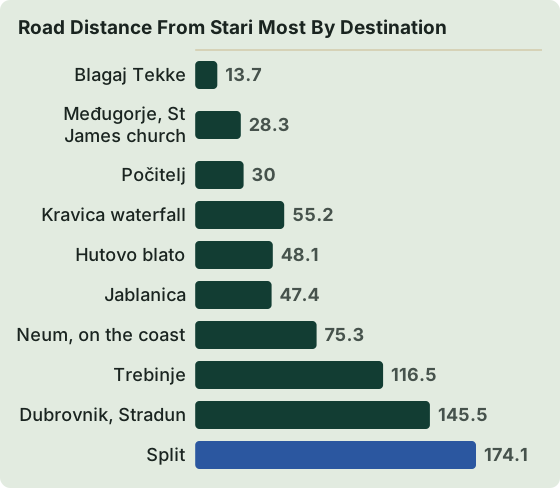
The summer day-trip loop from Mostar runs south through Blagaj Tekke at 13.7 km and about 19 minutes, Počitelj at 30.0 km and about 31 minutes, and Kravica waterfall at 55.2 km and about 54 minutes, with Međugorje at 28.3 km as a fourth stop. Cross-border options are Dubrovnik at 145.5 km and about 150 minutes of driving plus border checks, and Split at 174.1 km and about 131 minutes free-flow.
The Herzegovina triangle of Blagaj, Počitelj and Kravica waterfall is the classic hot-weather loop because it ends in water. Blagaj's tekke, the dervish lodge at the Buna spring, sits at the foot of a cliff with reported hours of 08:00 to 22:00 from April to October and an entry of about 10 KM, with shoulders and knees covered, wraps provided at the entrance. Počitelj is a free-to-wander fortified village stacked up a hillside. Kravica is the swim. Done in that order, the day hits the shade of the cliff, the climb of the fortress before the heat peaks, and the falls in the late afternoon when the park is calmer and its summer hours run to 22:00.
Two practical warnings shape cross-border trips. The Croatian land border is a Schengen external border with full checks since 1 January 2023, and Bosnia and Herzegovina is neither in the EU nor in Schengen, so passports come out at the line. Queues are reported up to about 30 minutes at the main crossings, longer at summer peaks. The Croatia to Bosnia border crossing guide covers the crossings near Mostar in detail, and the route pages for Dubrovnik to Mostar, Split to Mostar and Sarajevo to Mostar handle the long legs.
| Destination | Road distance from Stari Most | Free-flow drive time |
|---|---|---|
| Blagaj Tekke | 13.7 km | about 19 min |
| Međugorje, St James church | 28.3 km | about 40 min |
| Počitelj | 30.0 km | about 31 min |
| Kravica waterfall | 55.2 km | about 54 min |
| Hutovo blato | 48.1 km | about 62 min |
| Jablanica | 47.4 km | about 57 min |
| Neum, on the coast | 75.3 km | about 82 min |
| Trebinje | 116.5 km | about 142 min |
| Dubrovnik, Stradun | 145.5 km | about 150 min |
| Split | 174.1 km | about 131 min |
Times exclude border queues and summer traffic. A guided day trip covers the triangle without the parking hunt, and the links below compare the main options departing from Mostar itself.
What Should You Pack And Know For A Mostar Summer?
Pack for heat with three additions most lists miss: a refillable water bottle because tap water in Mostar is generally treated and safe, modest cover-ups for mosque and monastery visits because shoulders and knees must be covered, and cash in convertible marks because the currency is the KM, pegged at 1 EUR = 1.95583 KM, with cards accepted at hotels and larger venues but cash preferred at small vendors. A tourist tax reported at 3 KM per person per night applies in the canton, so confirm it at booking.
The currency point catches out arrivals who assume euro country means euro cash. Bosnia and Herzegovina uses the convertible mark, and the peg is fixed at 1 EUR to 1.95583 KM, which makes mental math simple: one euro is worth just under two marks. Euro cash is often accepted in tourist areas at a rounded rate of about 1 to 2, but confirm the rate before handing anything over, and expect the better deal in KM. The full breakdown, including card acceptance and ATM practice, is in Mostar money.
Dress follows the day's shape. Light, loose clothing for the heat, a layer for air-conditioned buses, and something that covers shoulders and knees for the tekke at Blagaj and any mosque interior, including Koski Mehmed-pašina džamija, where wraps are provided at Blagaj but bringing your own is simpler. Sun protection matters more than visitors expect: the July sunshine average in the station record is high, and the stone of the Old Town reflects it upward. Water is the other quiet essential. The Neretva valley heat dehydrates people who would never notice it in a coastal climate.
| Item | Why it matters in a Mostar summer |
|---|---|
| Water bottle | Tap water generally treated and safe; heat demands steady drinking |
| KM cash | Small vendors, mosque entries and market stalls prefer or require it |
| Shoulder and knee cover | Required for the Blagaj Tekke and mosque interiors |
| Hat and sunscreen | Strong July and August sun off pale limestone |
| Sturdy sandals or shoes | Cobbled Old Town streets and waterfall paths |
| Light layer | Air-conditioned buses and evening river breezes |
Safety in summer is mostly heat sense plus one rural rule. In the city, the ordinary precautions of any busy tourist street apply. In the countryside around Mostar, stay on marked paths and roads because of suspected mine areas from the war; the BHMAC authority maintains suspected-area data and a dedicated app. The general emergency number is 112. The broader context, including night walking and border logistics, is in Bosnia and Herzegovina travel tips.
Where Should You Eat And Stay In A Hot Mostar Summer?
In summer, Mostar eating shifts to the pattern the heat dictates: a slow shaded lunch, cold drinks through the afternoon, and dinner tables filling after 20:00, with Herzegovina's own dishes, cevapi, burek, Bosnian coffee and local wine, doing the heavy lifting. For sleeping, a room with air conditioning is not a luxury in a city whose August mean daily high is modelled at 30.5 C, and riverside or Old Town bases put the evening life on your doorstep.
The food of Herzegovina suits the season better than a first glance suggests. Cevapi, small grilled minced-meat rolls with raw onion and flatbread, come off charcoal grills that only make sense in the evening. Burek, the rolled filled pastry, is a morning food sold by weight, best before the ovens heat the shops further. Bosnian coffee, served in a džezva with a glass of water, is an all-day ritual that turns any shaded table into a rest stop. Herzegovina's wine country lies just south, around Čitluk and Ljubuški, and the [Herzegovina wine] and Bosnian food pages trace the dishes and pours; the cevapi guide takes the signature grill dish in depth.
An indoor cooking class is one of the few activities that improves in the midday heat, and the one below turns the dead hours between lunch and evening into the best part of the day: rolling burek, sitting down to what you made, and walking back out into a cooler city.
For sleeping, the neighbourhood choice matters more in summer than in any other season. The Old Town side puts the evening waterfront a minute away but keeps you inside the warmest stone. West Mostar and the Bulevar have more trees, more space and easier parking, at the cost of a walk or a short, inexpensive taxi ride to the bridge. The where to stay in Mostar guide breaks the districts down, and getting there in the first place is covered in how to get to Mostar.
Common Questions About Mostar In Summer
Is Mostar too hot in July and August?
The ERA5 reanalysis for 1991 to 2020 models July mean daily highs at 29.9 C and August at 30.5 C, and the FHMZ 1961 to 1990 station record puts the absolute maximum at 41.2 C. The heat is real but manageable with early mornings, midday water or shade, and evening activity.
Can you swim in Mostar in summer?
Yes, in the right places. The designated pool below Kravica waterfall is the main swim, open to 22:00 from June to September with 20 KM adult entry all year. The Neretva stays cold even in August and should be entered only where locals enter, never from the bridge.
What is the weather like in Mostar in summer?
Hot and mostly dry. July averages 42.9 mm of rain against November's 200.0 mm in the FHMZ station record, with about five rainy days in an average July. Rain, when it comes, is usually heavy and brief.
What should I wear in Mostar in summer?
Light, loose clothing for the heat, plus shoulder and knee cover for mosque interiors and the Blagaj Tekke, where wraps are provided at the entrance. Bring a hat, sunscreen and comfortable shoes for cobbled streets.
What happens at the Old Bridge in summer?
Members of the Mostari diving club jump from Stari Most through the summer, with reported peak activity between 11:00 and 15:00. The 460th traditional competition ran on 26 July in 2026, and the Red Bull Cliff Diving round ran 30 July to 1 August.
Is Kravica waterfall open in summer?
Yes. The park is open all year, and from June to September its hours are 07:00 to 22:00. Adult entry is 20 KM all year, with 10 KM for residents of Bosnia and Herzegovina and free entry for children under 7.
Mostar in summer asks for one thing above all: respect the middle of the day and it gives you the rest of it. Mornings on the bridge, afternoons under a waterfall, evenings on the riverbank with the divers and the festival crowds, that is the shape of a Herzegovina July done well, and the pages linked above fill in each piece.
