Mostar Weather Month By Month
Mostar sits in a deep karst valley of the Neretva river, and that valley produces one of the warmest and driest summer climates in Bosnia and Herzegovina, with a sharp winter rain maximum. Here is what the measured record says, month by month.
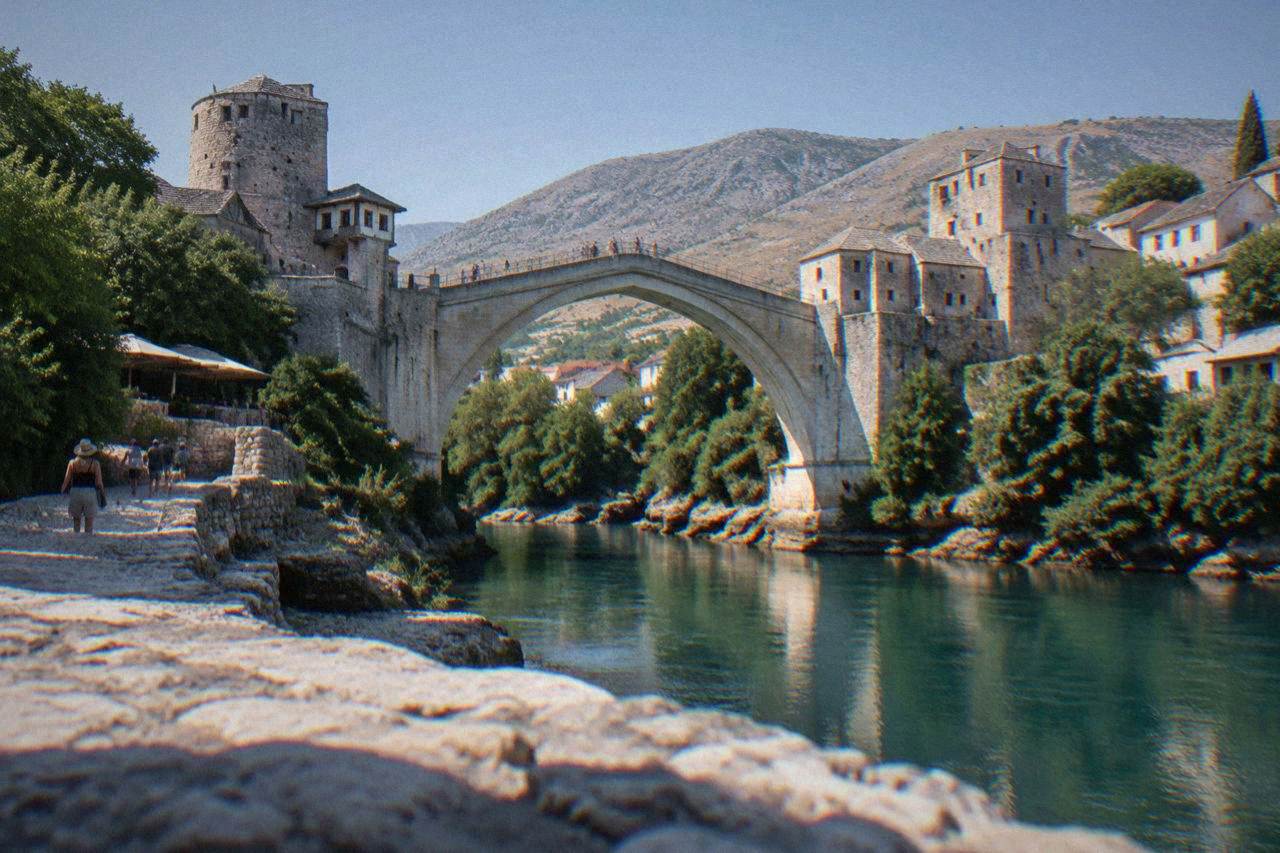
Mostar's station record (FHMZ, 1961 to 1990) shows a July mean of 24.7 C and a January mean of 4.8 C, with 1,515.4 mm of rain a year falling mostly between October and March. Modelled daily highs (ERA5 reanalysis, 1991 to 2020) reach 30.5 C in August.
Mostar, the main city of Herzegovina in Bosnia and Herzegovina, lies inland on the Neretva river at the bottom of a broad karst valley, and that geography drives one of the most distinctive climates in the country: long, dry, hot summers and mild but genuinely wet winters. The Federal Hydrometeorological Institute's station record for Mostar (FHMZ, 1961 to 1990) puts the yearly mean at 14.6 C with 1,515.4 mm of precipitation, and almost five times as much rain in November (200.0 mm) as in July (42.9 mm). This page lays that record out month by month, adds the modelled daily highs and lows from the ERA5 reanalysis for 1991 to 2020, and translates both into practical packing and planning decisions for a city built around walking, stone and river views.
The two datasets answer different questions, and keeping them apart matters. The FHMZ table is a measured station record: monthly means, absolute extremes and rainfall totals from 1961 to 1990. The ERA5 figures are modelled reanalysis values on a grid cell near Stari Most for 1991 to 2020: they give the mean daily high and low that the station table does not. Wherever a figure below is modelled, it says so. Neither table promises anything about a specific week; use them to pick a season, then check a live forecast before you lock in a bridge-view dinner or a waterfall swim.
What Kind Of Climate Does Mostar Actually Have?
Mostar has a humid subtropical climate with a strong summer-dry, winter-wet pattern: the FHMZ station record shows a July mean of 24.7 C against a January mean of 4.8 C, an absolute maximum of 41.2 C also in July, and annual precipitation of 1,515.4 mm concentrated from October to March, with November at 200.0 mm and July at 42.9 mm. The valley floor stores heat in summer and funnels cold, wet air down the Neretva in winter, so the city's weather differs noticeably from the mountains a short drive away.
That contrast is the single most useful thing to understand about Mostar weather. Kravica waterfall, Blagaj and Počitelj all sit within an hour's drive, but they share the valley's heat, while Konjic and the routes toward Sarajevo climb into genuinely cooler country. Snow cover at the Mostar station itself is modest: the FHMZ record shows a maximum snow depth of 37 cm in March across the whole 1961 to 1990 series, and zero snow cover on average from April through October.
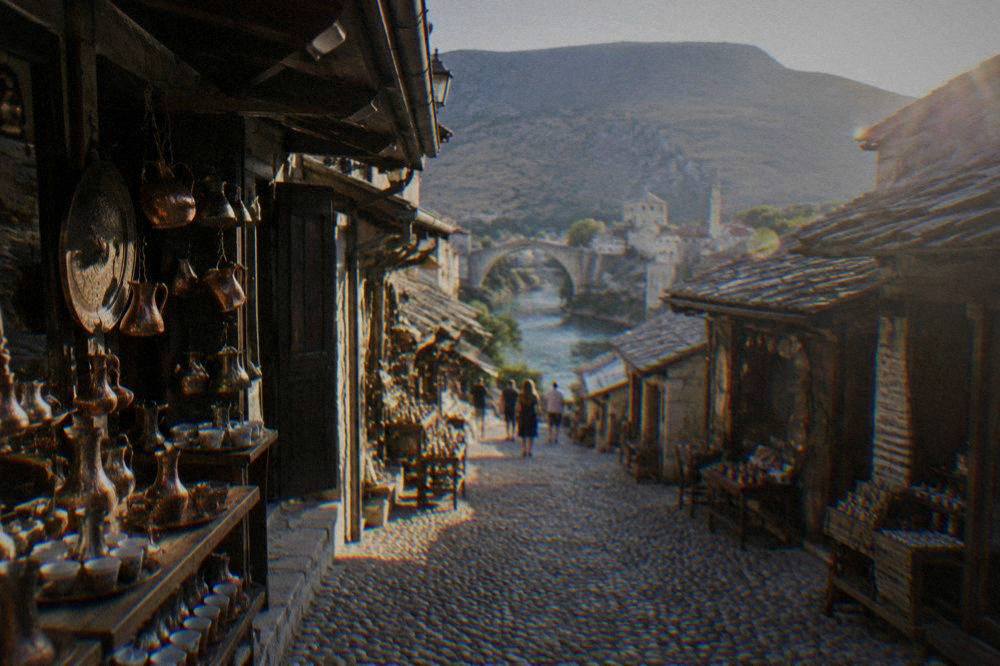
Rain in the cold half of the year tends to arrive in sustained wet spells rather than short showers. The station record counts 106 days a year with more than 1 mm of rain, and 11 of those fall in each of January, November and December, against only 5 in July. If you visit in summer you can plan outdoor days with real confidence; if you visit between October and March you should build indoor alternatives into each day.
Practical planning is easier with the seasonal questions framed plainly, and pairing a weather window with the right activity is exactly what the guides on when to go and what to do in the city cover in depth.
How Hot Does Mostar Get In Summer?
Modelled mean daily highs from the ERA5 reanalysis (1991 to 2020) reach 29.9 C in July and 30.5 C in August, with mean overnight lows of 17.7 C and 18.1 C, while the measured station record puts the absolute maximum at 41.2 C in July, and real afternoons on the valley floor frequently run hotter than the modelled grid suggests. In other words: plan for serious heat, not for warmth.
The gap between model and felt experience deserves a plain word. ERA5 values come from a grid cell at about 45 m elevation covering the whole river valley, and they smooth out the way stone streets and the river gorge concentrate afternoon heat. Take the 29.9 C and 30.5 C figures as a floor for what a sunny July or August afternoon feels like in Kujundžiluk, and plan around them: sightsee early, rest at midday, and shift the heaviest walking toward the evening when the mean lows are still near 18 C.
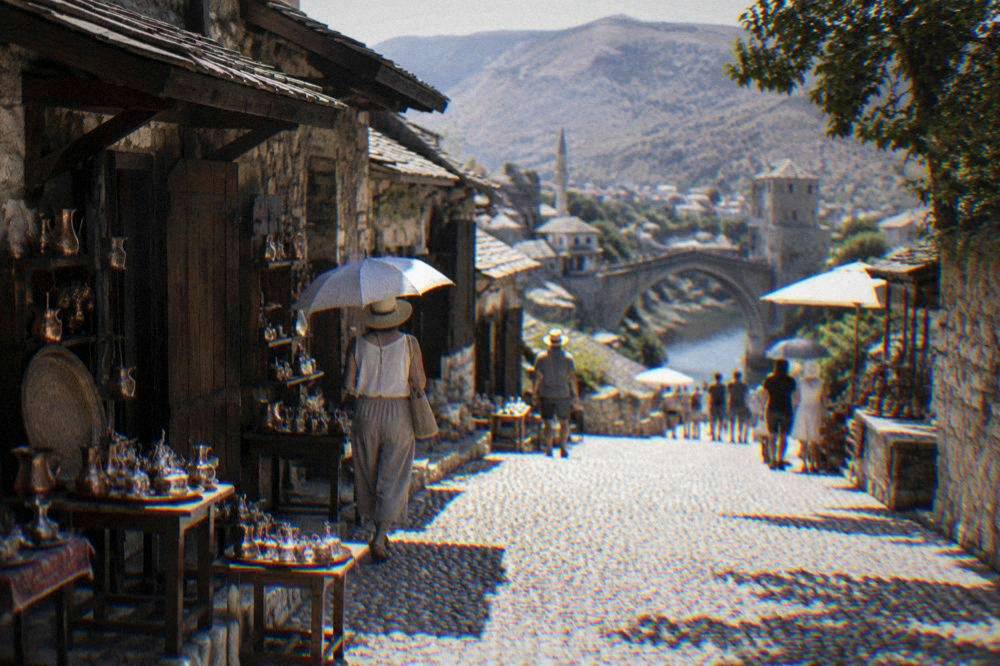
Summer is also the dry season. July averages only 42.9 mm of rain over about 5 days with measurable fall, and August 73.7 mm over about 6, so a full week without rain is normal rather than lucky. That reliability is why the diving competition from Stari Most and the open-air festival calendar sit in late July: the 460th traditional bridge diving competition ran on 26 July in 2026, and the Red Bull Cliff Diving round ran from 30 July to 1 August 2026.
Two practical consequences of summer heat are worth deciding in advance. First, hydration and shade are not optional; the absolute record of 41.2 C in July sits in the measured table, and even an ordinary August day pushes sightseeing into morning and evening blocks. Second, the Neretva stays cold even in August, fed by karst springs, so a river activity is a legitimate way to cool down, and the paddling options in the Neretva river guide are built around exactly that contrast.
If a hot afternoon makes a stone street unappealing, an indoor class is the natural swap. The Bosnian cooking class with burek, lunch and drinks runs in a kitchen rather than on the pavement, and it pairs with the dish background in the burek guide. Check availability and move it to your warmest afternoon slot.
How Cold And Wet Is Mostar In Winter?
Winter in Mostar is mild on the thermometer but wet in the sky: the FHMZ station record gives January a mean of 4.8 C with 164.7 mm of rain across about 11 days, December 178.7 mm and November 200.0 mm, while the ERA5 reanalysis (1991 to 2020) puts mean daily highs at 8.4 C in January with lows around 0.2 C, and snow lies on the ground only briefly. Rain gear matters more than heavy thermal gear.
November is the rain outlier of the whole year at 200.0 mm, more than four times July's total, and October and December both sit near or above 150 mm. The wettest spells come with mild Mediterranean air pushing up the Neretva valley, which is why winter days can swing from bright and 15 C to grey and 8 C within a single week. Snow does fall: the station's maximum measured snow depth in the 1961 to 1990 series was 31 cm in January, 28 cm in February and 37 cm in March, but it rarely stays long on the valley floor.
Winter also changes the day-trip calculus. Kravica waterfall stays open all year (07:00 to 17:00 in January, February, November and December) and entry remains 20 KM for an adult, but swimming in the pool below the falls belongs to the summer designated area, so a winter visit is about the falls at full winter flow rather than a swim. Blagaj Tekke keeps winter hours, and the stone interiors of Mostar's Ottoman houses and museums carry a wet afternoon comfortably. The mostar in the rain and mostar in winter guides list indoor-heavy plans for exactly these weeks.
What Does The Mostar Weather Table Look Like Month By Month?
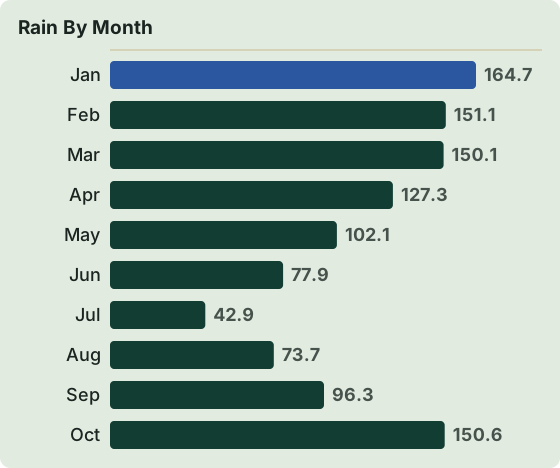
The station record (FHMZ, 1961 to 1990) for Mostar reads as follows: mean temperatures run from 4.8 C in January to 24.7 C in July, monthly rainfall runs from 42.9 mm in July to 200.0 mm in November, and the absolute maximum of the whole series, 41.2 C, was recorded in July. The full monthly table is below, and it is the backbone of every seasonal judgement on this page.
| Month | Mean temp C | Absolute max C | Absolute min C | Rain mm | Days over 1 mm |
|---|---|---|---|---|---|
| Jan | 4.8 | 18.2 | -10.9 | 164.7 | 11 |
| Feb | 6.6 | 25.0 | -8.6 | 151.1 | 10 |
| Mar | 9.6 | 27.6 | -6.5 | 150.1 | 10 |
| Apr | 13.3 | 30.8 | 0.4 | 127.3 | 11 |
| May | 17.9 | 34.8 | 4.0 | 102.1 | 9 |
| Jun | 21.5 | 38.4 | 8.2 | 77.9 | 8 |
| Jul | 24.7 | 41.2 | 8.4 | 42.9 | 5 |
| Aug | 24.2 | 40.8 | 10.2 | 73.7 | 6 |
| Sep | 20.4 | 38.8 | 6.4 | 96.3 | 6 |
| Oct | 15.3 | 32.5 | -0.1 | 150.6 | 8 |
| Nov | 10.1 | 23.8 | -4.8 | 200.0 | 11 |
| Dec | 6.2 | 19.3 | -7.2 | 178.7 | 11 |
| Year | 14.6 | 41.2 | -10.9 | 1515.4 | 106 |
Read the extremes column with care: those are absolute records across 30 years, not typical values. A March day at 27.6 C happened once in the record, and so did a December night at -7.2 C. The means and the rainfall totals are the columns to plan around.
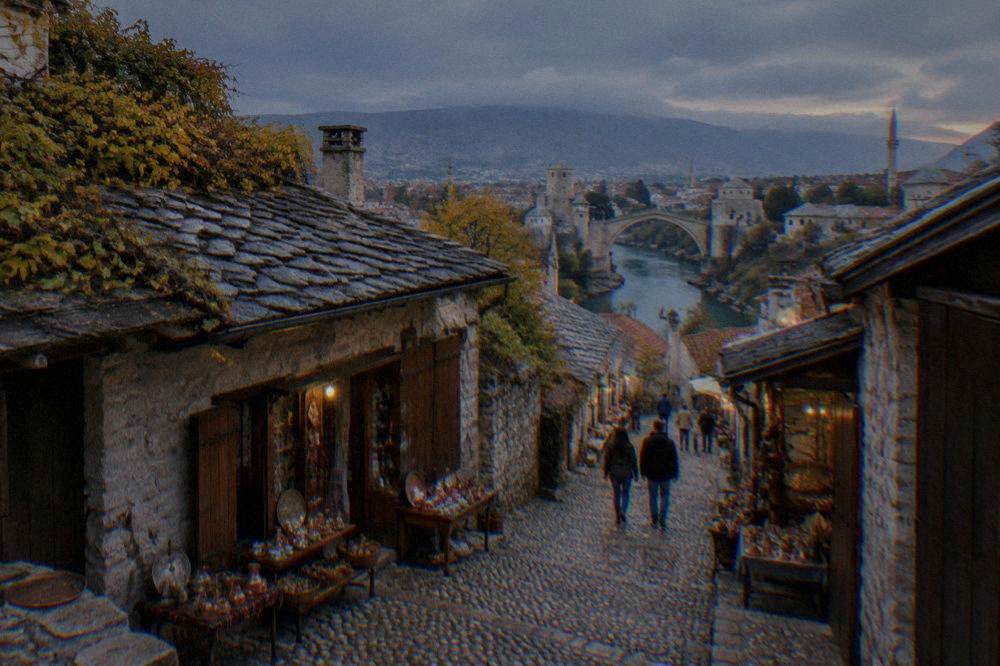
The companion table, modelled rather than measured, answers the question the station table cannot: what a normal day feels like. These are ERA5 reanalysis values, 1991 to 2020, for a grid cell near Stari Most, so treat them as smoothed daily ranges rather than street-level readings.
| Month | Mean daily high C (ERA5) | Mean daily low C (ERA5) | Rain mm (ERA5) |
|---|---|---|---|
| Jan | 8.4 | 0.2 | 142.8 |
| Feb | 9.7 | 0.3 | 143.5 |
| Mar | 13.4 | 3.3 | 142.9 |
| Apr | 17.7 | 7.0 | 150.9 |
| May | 22.3 | 11.4 | 116.1 |
| Jun | 26.8 | 15.3 | 72.4 |
| Jul | 29.9 | 17.7 | 45.4 |
| Aug | 30.5 | 18.1 | 52.6 |
| Sep | 24.5 | 14.0 | 142.0 |
| Oct | 19.5 | 9.8 | 186.8 |
| Nov | 14.1 | 5.7 | 235.8 |
| Dec | 9.3 | 1.4 | 200.0 |
The two tables agree on the shape of the year even though they cover different periods and methods: a dry, hot core from June to August, and a wet shoulder from September, when the ERA5 rain figure jumps to 142.0 mm, through March. September's modelled rainfall is the quiet trap in the calendar: the air still feels like summer at a 24.5 C mean high, but the first autumn downpours arrive.
Which Month Should You Visit Mostar For Good Weather?
For the best balance of warm, dry and comfortable, May and June stand out: the ERA5 reanalysis gives May a mean high of 22.3 C with 116.1 mm of rain and June 26.8 C with 72.4 mm, while September still averages a 24.5 C high but carries 142.0 mm of modelled rain, and the peak-heat months of July and August trade near-guaranteed dryness against highs near or above 30 C.
Each choice trades something. July and August are the driest and warmest months, ideal if heat does not slow you down and if you want the waterfall swimming season at Kravica, which runs in the designated summer area. May and June deliver green hills, full rivers and walkable afternoons, with a real but manageable chance of a shower. October is a genuine shoulder-season pick at a 19.5 C modelled high, but the rain total climbs toward the winter maximum. From November to February the city belongs to the umbrella: mild enough to walk, wet enough to plan around.
| Period | Modelled high C | Character | Best suited to |
|---|---|---|---|
| Apr to mid-Jun | 17.7 to 26.8 | Warm, green, occasional showers | Walking, day trips, photography |
| Late Jun to Aug | 26.8 to 30.5 | Hot and dry | Early starts, river activities, Kravica swimming |
| Sep to Oct | 24.5 to 19.5 | Warm but increasingly wet | City sightseeing with indoor backups |
| Nov to Feb | 8.4 to 14.1 (ERA5 Nov high) | Mild, wet, short days | Museums, Ottoman houses, low crowds |
The best time to visit Mostar guide works through the same calendar against prices and crowds rather than temperatures alone, and the seasonal deep dives in the mostar in summer pages carry activity-level detail.
What Should You Pack For Mostar's Weather?
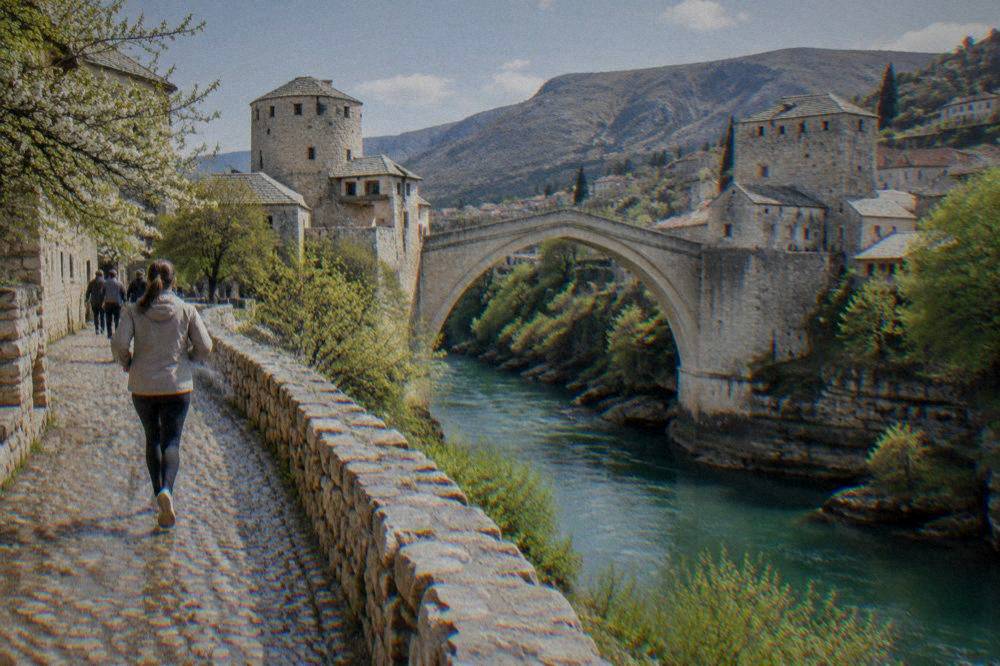
Pack for heat and sun from June to August, when modelled mean highs run 26.8 C to 30.5 C and the measured absolute maximum is 41.2 C; pack for rain above all from October to March, when monthly rainfall runs between roughly 150 and 200 mm; and pack layers for the shoulders, because April can still touch freezing at night while May days reach 22.3 C. One suitcase strategy does not cover both halves of the year.
| Season | Clothing that earns its place | Weather logic |
|---|---|---|
| Summer | Sun hat, sunglasses, refillable bottle, light layers, swimwear | Mean highs near or above 30 C, July rain just 42.9 mm |
| Late spring | Light layers, one warm evening layer, compact rain shell | 22.3 to 26.8 C highs, showers still possible |
| Autumn | Waterproof jacket, umbrella, water-resistant shoes | Rain climbs to 186.8 mm (ERA5 Oct) and 235.8 mm (Nov) |
| Winter | Warm layers, proper rain gear, grippy shoes | 4.8 C January mean, 164.7 to 178.7 mm rain, brief snow |
Two Mostar-specific packing notes. First, the stone paving of Kujundžiluk and the stairs of Počitelj punish smooth-soled shoes when wet, so the autumn and winter shoe choice matters more here than in a typical city. Second, if you plan to enter mosques or the Blagaj Tekke, shoulders and knees covered is the rule at the Tekke (wraps are provided at its entrance), and modest layers double as sun protection in summer anyway; the mostar mosques guide covers visiting etiquette in detail.
Sun protection deserves its own sentence even in the packing table's shadow: with 323 hours of sunshine in the station's July average and 296 in August (FHMZ, 1961 to 1990), the sun in the dry season is a daily planning factor, not an occasional one. Those averages describe the season's character rather than promising any particular week.
Does It Ever Snow In Mostar?
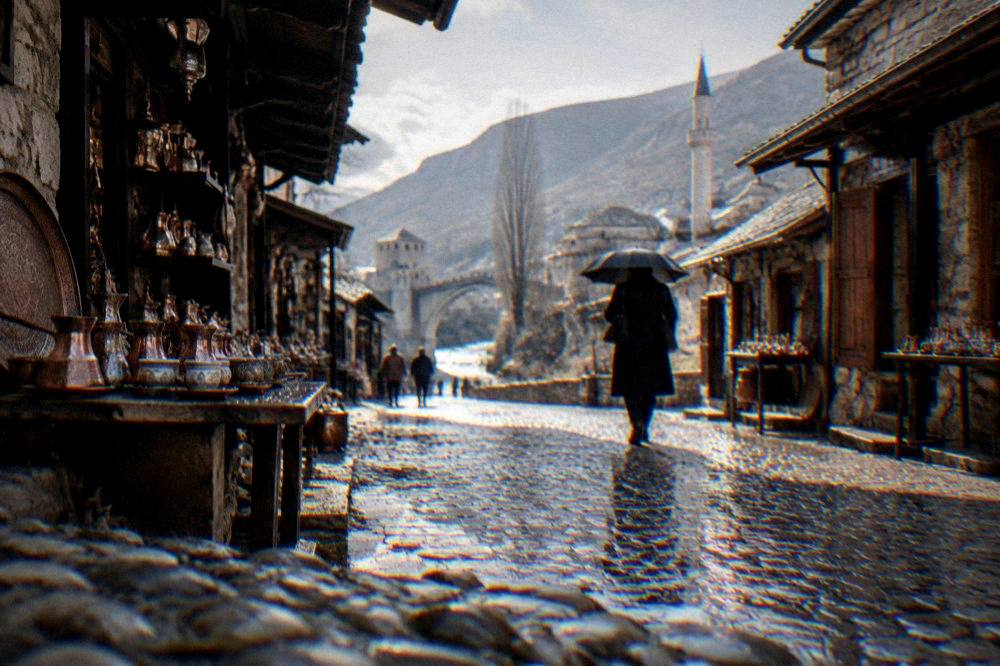
Yes, but modestly and briefly: the FHMZ station record for 1961 to 1990 shows a maximum snow depth of 31 cm in January, 28 cm in February and 37 cm in March, with 21 cm possible even in December and 5 cm in November, and zero snow cover on the valley floor from April through October, because winter precipitation usually arrives as rain in this valley climate.
When snow does settle on Stari Most and Hum hill, it transforms photographs, but it rarely lasts, and the city does not build its winter life around it. The practical winter problem in Mostar is rain and the slickness it leaves on stone, not snow removal. If you do catch a snowy morning, the viewpoints above the valley, covered in the mostar viewpoints guide, are the places to be before the melt.
Cold snaps are real but short. The absolute minimum of the whole station series is -10.9 C in January, and February and March have recorded -8.6 C and -6.5 C respectively, yet the same months have also recorded 25.0 C and 27.6 C at least once. A winter wardrobe for Mostar should therefore be layered for swings, not built for sustained deep cold.
How Does Mostar's Weather Affect Day Trips Around Herzegovina?
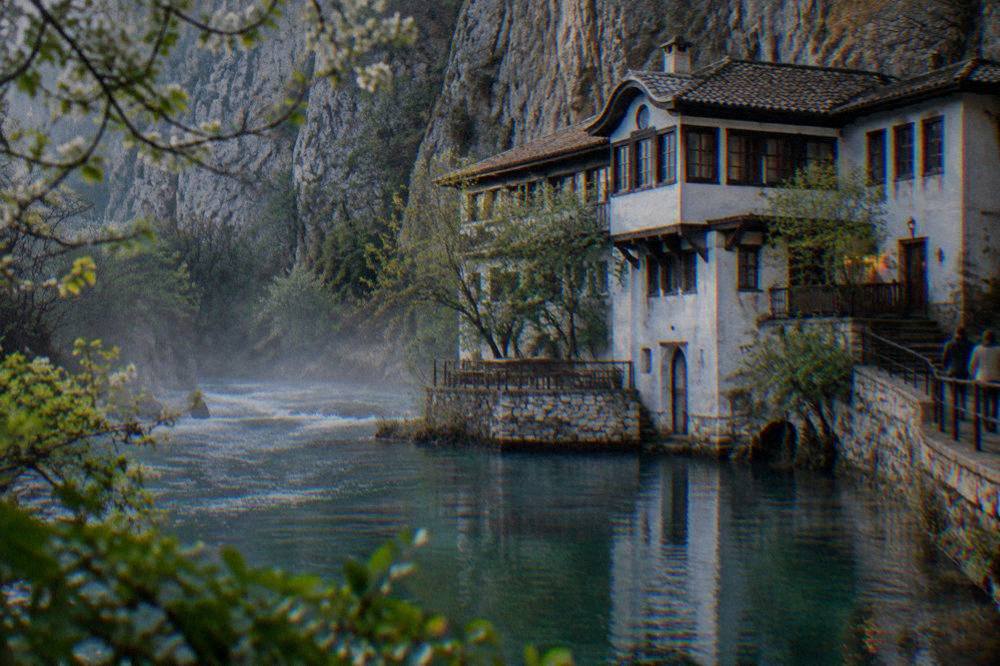
The valley heat that makes Mostar hot in summer applies to its closest day trips too: Blagaj sits about 19 minutes away by road and Počitelj about 31 minutes, both on the same valley floor, while Kravica waterfall, 55.2 km and about 54 minutes away by road free-flow, offers designated-area summer swimming precisely when the modelled highs in town reach 29.9 C to 30.5 C.
Rain changes the day-trip map differently than heat does. In the wet months the outdoor stops (Počitelj's fortress slopes, the Buna spring path at Blagaj, the falls viewing decks) are still open but slippery, so tours that mix indoor anchors with outdoor stops travel better than purely outdoor itineraries. In high summer the reverse applies: midday is the wrong window for the unshaded fortress climb at Počitelj, and the falls are at their busiest exactly when swimming is at its best.
| Day trip from Stari Most | Road km | About minutes | Weather consideration |
|---|---|---|---|
| Blagaj Tekke | 13.7 | 19 | River gorge stays cool; shade at the Tekke |
| Počitelj | 30.0 | 31 | Unshaded fortress climb; avoid midday heat |
| Međugorje | 28.3 | 40 | Open hills; sun exposure on Apparition Hill |
| Kravica waterfall | 55.2 | 54 | Summer swimming season in the designated area; full flow in winter |
| Jablanica | 47.4 | 57 | Cooler mountain air by the lake |
| Konjic | 69.0 | 80 | Noticeably cooler than the Mostar valley |
Two seasonal anchors are worth building a trip around. The Kravica summer swimming window aligns with the June to September opening hours of 07:00 to 22:00, and the entry price of 20 KM for an adult applies all year. And if heat is your reason to escape rather than embrace, the climb toward Konjic and Boračko jezero trades the valley's 30 C afternoons for mountain air within a couple of hours, as laid out in the herzegovina road trip guide.
For a half-day option that leaves the afternoon free for the heat of the city, the half-day Kravica trip above is the natural pick in the swimming season, and the timing logic behind these choices is expanded in getting around Mostar, which covers buses and road travel out of the city.
What Weather Should You Expect At Mostar's Events And Festivals?
The late-July festival cluster in Mostar sits inside the driest and warmest window of the year: the station record gives July 42.9 mm of rain over about 5 days and a mean of 24.7 C, and in 2026 the traditional bridge diving competition ran on 26 July, the Mostar Blues And Rock Festival on 24 and 25 July, and the Red Bull Cliff Diving round from 30 July to 1 August.
That concentration is not accidental. Open-air stages, a river amphitheatre around Stari Most and a diving tradition that depends on calm, warm conditions all push the calendar into the dry core of summer. Mostarsko ljeto ran from 25 June to 7 August in 2026, Mostar Summer Fest on 2 to 4 July, and the Mostar Jazz Fest on 23 to 25 August, each edition using the reliable evening warmth that comes with mean July lows near 18 C in the ERA5 modelled table.
Spectating has one weather rule of its own: shade and water. Bridge-side viewing for the diving events means standing on sun-baked stone through an afternoon, and the absolute July record of 41.2 C is a reminder of what the valley can produce. Evening events are kinder; by the time the Jazz Fest evenings run in late August, modelled highs have eased to around 24.5 C for the month. The mostar events guide carries the festival detail, and the mostar bridge diving page explains the diving tradition itself, performed by members of the Mostari diving club rather than by visitors.
How Should You Read A Mostar Forecast Before You Go?
Read a Mostar forecast against the monthly tables above rather than in isolation: if a summer forecast shows highs around 30 C that is a normal day, not a heatwave; if an October or November forecast shows rain on four days out of seven that is also normal, because October carries 186.8 mm and November 235.8 mm of modelled rain; and any forecast is worth rechecking two or three days out, because valley weather changes faster than monthly averages imply.
A few translation rules make the forecast more useful. A summer day forecast at 35 C or above should move your Stari Most and Kujundžiluk walking to before 10:00 and after 17:00, with the middle of the day given to museums, the Ottoman houses or a cooking class. A winter rain morning is a museum morning by design, and the afternoon often clears. Wind is the wildcard the tables do not capture: the bura can push cold, clear air down the valley in winter and make a 10 C day feel sharp on the exposed bridge.
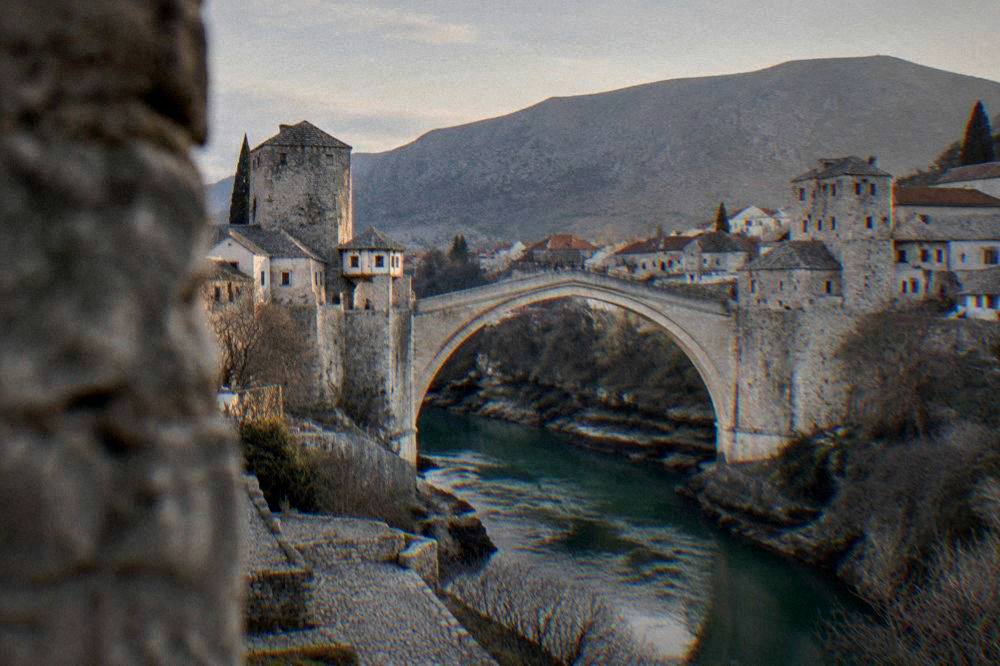
Build your first day around the forecast, not the guidebook order. A clear first morning belongs to the outdoor icons while the weather holds; a wet first morning belongs to the Museum of the Old Bridge tower, Bišćević House and the covered bazaar lanes, with the one day in Mostar itinerary as the reorderable template. Whichever month you choose, the tables above tell you what normal looks like, and the rest of the planning site, starting with Mostar Travel Guide, tells you what to do with it.
Common Questions About Mostar Weather
Is Mostar too hot in August?
August is one of the warmest months: the ERA5 reanalysis (1991 to 2020) gives a modelled mean daily high of 30.5 C, and the station record's absolute August maximum is 40.8 C. It is manageable with early-morning sightseeing, midday shade and evening walking, and the Neretva stays cold even in August.
What is the rainiest month in Mostar?
November, with 200.0 mm in the FHMZ station record (1961 to 1990) and 235.8 mm in the ERA5 modelled table (1991 to 2020). October and December follow closely, so the wettest stretch of the year runs from October through December.
Does it snow in Mostar in winter?
Sometimes, and briefly. The station record shows maximum snow depths of 31 cm in January, 28 cm in February and 37 cm in March across the 1961 to 1990 series, but winter precipitation usually falls as rain in the valley and snow rarely lies for long.
When is the best weather in Mostar?
For warm and dry together, late June through August is the most reliable window, with July rainfall at just 42.9 mm in the station record. For comfortable walking temperatures with green surroundings, May and June, with modelled highs of 22.3 C and 26.8 C, suit many travellers better than peak heat.
Is Mostar's weather different from Sarajevo's?
Yes. Mostar sits lower in a sheltered river valley with a hotter, drier summer: a July mean of 24.7 C at the Mostar station. Sarajevo lies at higher elevation in the Dinaric Alps with cooler summers and snowier winters, which is why the drive between the two cities takes about two hours by road yet crosses a real climate boundary.
Can you swim at Kravica waterfall in summer?
Swimming in the pool below the falls is allowed in summer in the designated area, with no lifeguard reported, and the park is open from 07:00 to 22:00 from June to September. Check the park's rules on arrival; entry is 20 KM for an adult all year.
