Bišćević House: An Ottoman Home On The Neretva
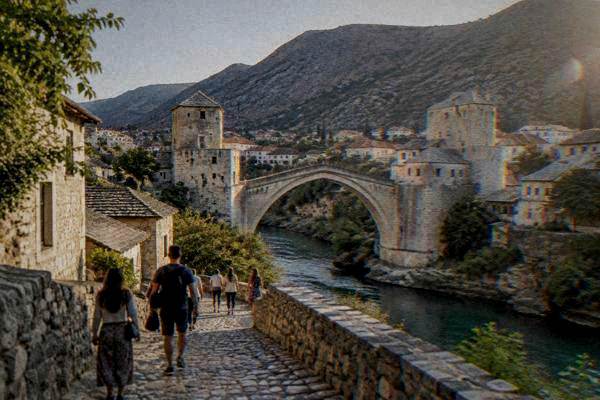
Bišćević House is one of the few Ottoman-era courtyard homes in Mostar still open to walk through, sitting on the Neretva bank a few minutes below the Old Bridge. This guide covers the reported entry fee, what is inside, and how to plan the visit.
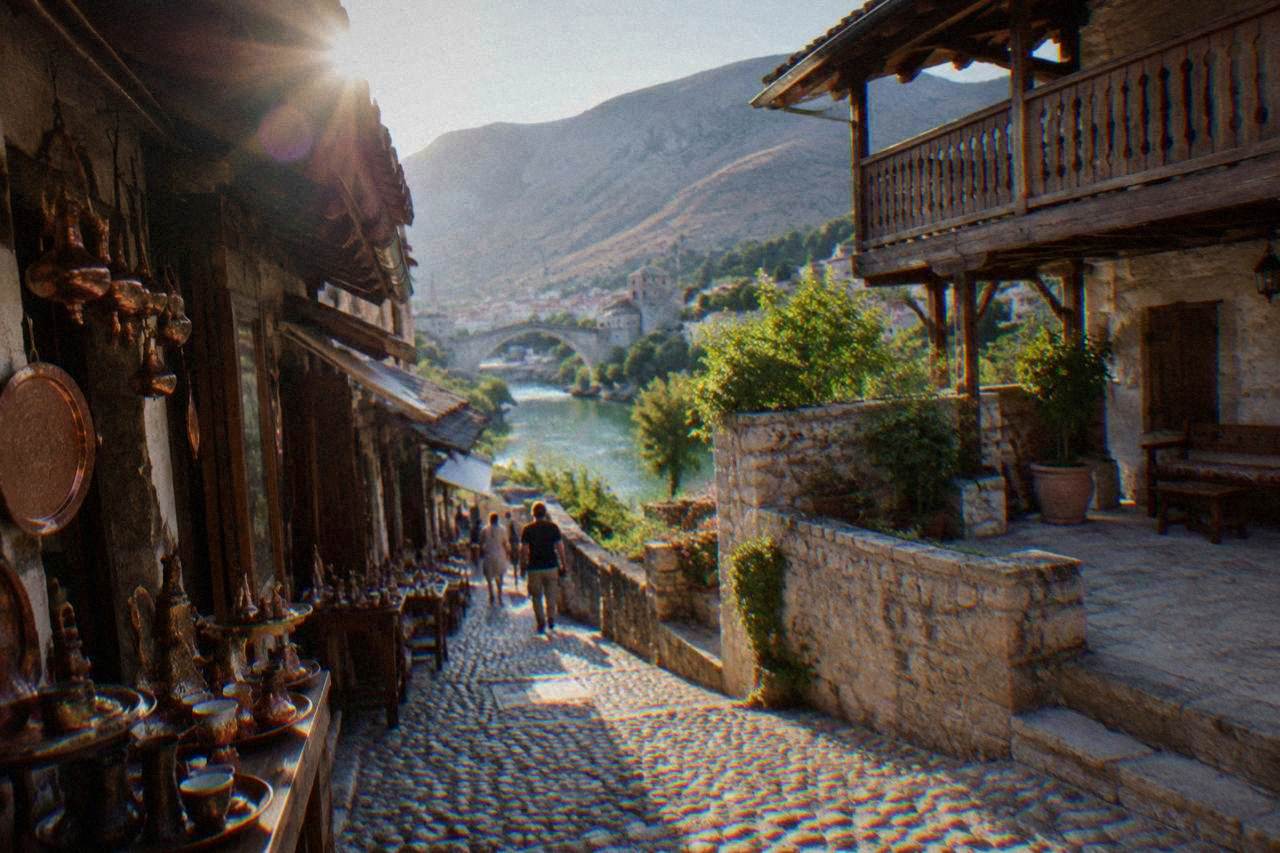
Bišćević House is a preserved Ottoman-era residence on the Neretva riverbank in Mostar, about a 4 KM reported entry fee, a short walk from Stari Most across the Kujundžiluk bazaar side of the Old Town.
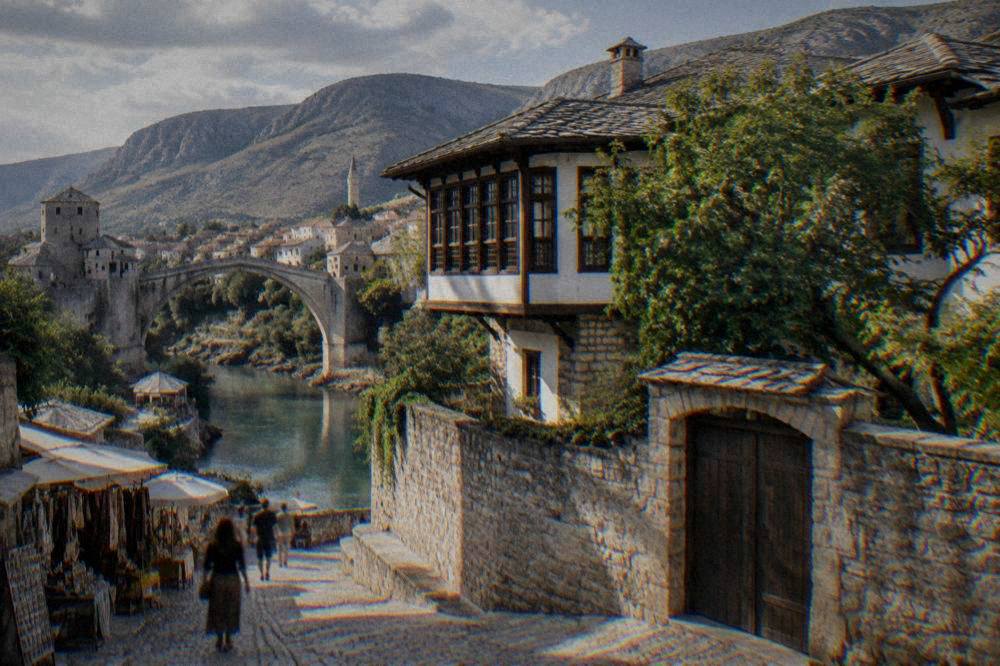
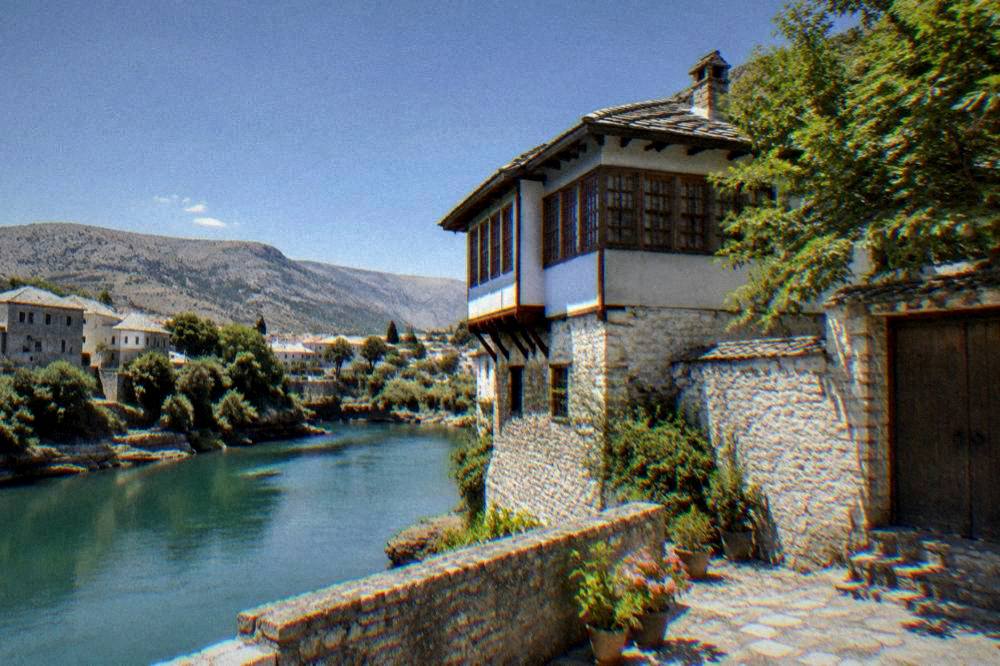
Bišćević House is a preserved Ottoman-era courtyard home standing on the right bank of the Neretva in Mostar, in Herzegovina, Bosnia and Herzegovina, a few minutes on foot from Stari Most. It is one of a handful of old residential houses in the city that still open their rooms to the public, and its reported entry fee of about 4 KM makes it one of the least expensive paid sights in the Old Town area. The house shows the domestic side of the Ottoman city that the bridges and mosques do not: carved ceilings, low divans around the walls, a stone courtyard open to the river, and a glass-walled lounge cantilevered over the water where the family once sat in winter.
The building is known locally as Bišćevića kuća, and it belongs to the same family of merchant houses that shaped the riverbank streets of old Mostar. Where the Old Bridge and the bazaar of Kujundžiluk tell the public story of the city, this house tells the private one. The rooms are arranged around a courtyard that slopes down to the Neretva, and the river itself runs directly beneath the rear of the building, which is why the water-facing rooms feel cool even at the height of a Herzegovina summer. The Old Bridge Area of the Old City of Mostar has been a UNESCO World Heritage property since 2005, and Bišćević House sits inside the wider fabric of that old city, just off the bazaar lanes.
What Is Bišćević House In Mostar?
Bišćević House is a historic Ottoman-style family residence in Mostar, built with its living rooms raised above a walled courtyard that opens directly onto the Neretva riverbank. It operates as a small house museum with a café terrace, and its reported entry fee is about 4 KM per person. The interior preserves divan-lined reception rooms, carved wooden ceilings and a glazed winter room projecting over the river, arranged exactly as a well-off Mostar household would have used them.
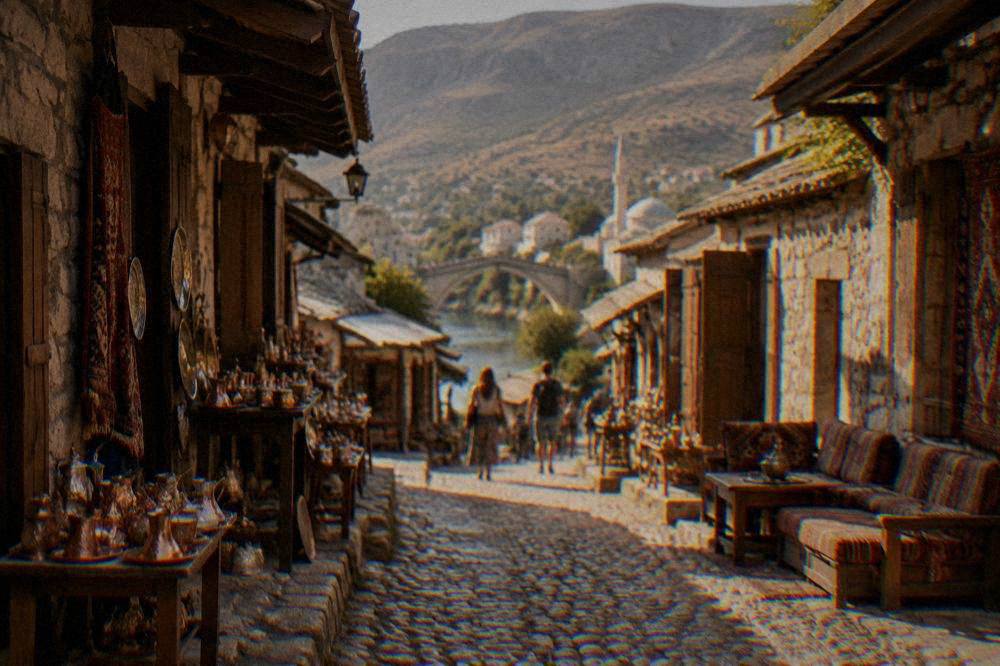
The house is a product of the same building culture that produced Stari Most, completed in 1566 under Suleiman the Magnificent by the architect mimar Hajruddin. Domestic architecture in Ottoman Mostar followed a strict logic: the street side is closed and plain, with high walls and a modest gate, while the rooms inside open onto the courtyard and, on the river side, onto the water itself. Privacy faced the street, and openness faced the family's own space. Bišćević House follows that pattern closely, which is a large part of its interest, because it lets a visitor read the plan of an Ottoman home in a single walk through it.
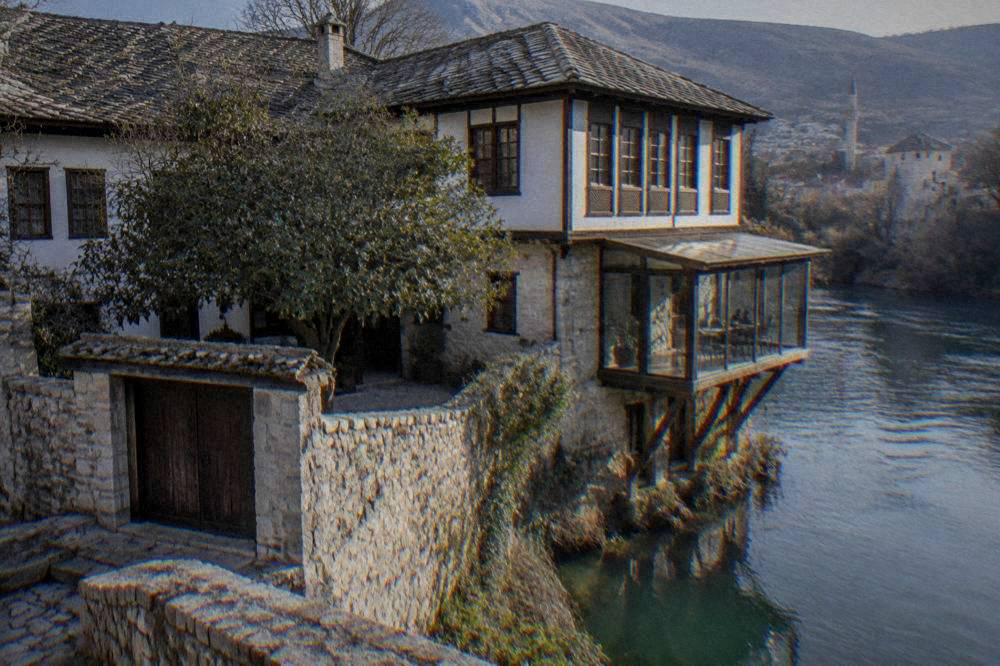
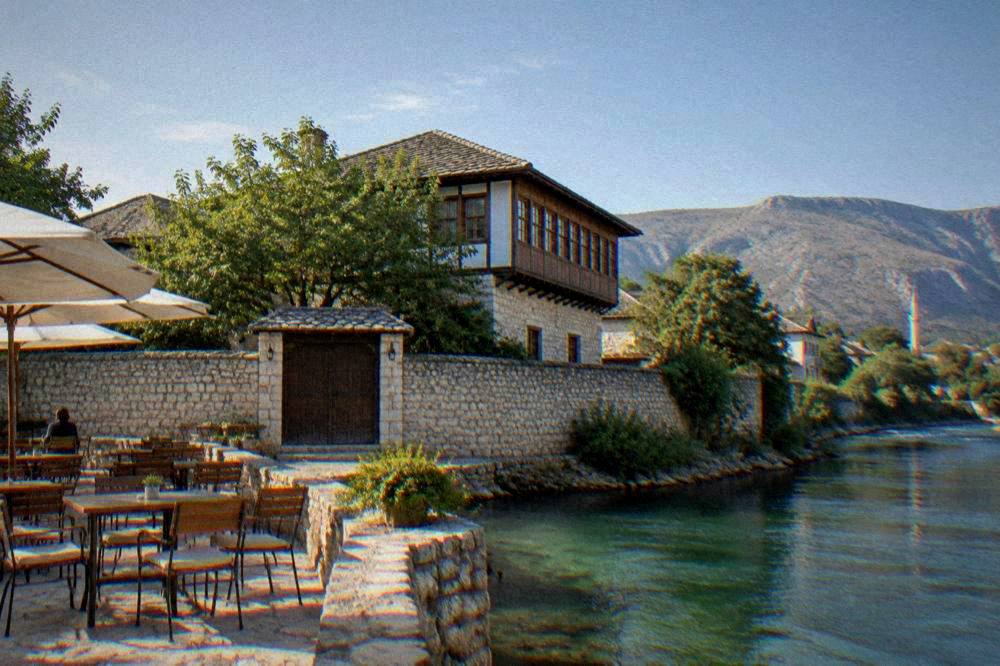
The riverside rooms are the reason the house is photographed so often. One of them, a glazed lounge with windows on three sides, hangs over the Neretva on wooden supports. In the summer months the lower terrace by the water serves as a café, and the stone jetty beside it is one of the quieter places on this stretch of the riverbank, away from the traffic of the bazaar streets. The Neretva runs cold here even in August, fed by karst springs upstream, and the temperature difference is noticeable on the terrace within minutes of sitting down. For more on the river itself, see the Neretva river guide.
How Much Does Bišćević House Cost, And What Are The Opening Hours?
Entry to Bišćević House is reported at about 4 KM per adult, making it cheaper than the Muslibegović House at about 8 KM and the Old Bridge Museum at about 10 KM. No fixed opening hours are published in a reliable, official listing, so the practical rule is to treat it as a daytime sight and confirm the hours on arrival or at the tourist information point in the Old Town before walking over.
That fee figure comes from visitor guides rather than an official ticket page, so treat it as approximate and carry cash in marks. Small sights of this kind in Mostar rarely take cards, and the convertible mark, not the euro, is the legal currency of Bosnia and Herzegovina. The peg is exact, 1 EUR = 1.95583 KM, but euro cash handed over at the door is usually converted at a rounded rate, so marks are the better choice. A cash machine is never far in the Old Town, and the walk from the bazaar to the house takes only a few minutes.
| Sight in central Mostar | Reported entry fee | Notes |
|---|---|---|
| Bišćević House | about 4 KM | Courtyard, riverside rooms, café terrace |
| Muslibegović House | about 8 KM | Larger house museum with a wider collection |
| Old Bridge Museum, Tara tower | about 10 KM | 08:00 to 16:00 daily, 1 April to 1 November |
| Koski Mehmed-pašina džamija | about 10 KM, about 18 KM with minaret | Small cash fee, more with the minaret climb |
| Stari Most, the bridge itself | free | Public crossing, open around the clock |
For visitors fitting the house into a wider circuit of the Old Town, a small-group guided walk covers the bazaar, the bridge and the riverside lanes in one loop, and the house sits right on that route. Check availability for the Mostar Old Town guided tour if a guide-led circuit appeals, and read on for how to reach the house under your own steam.
Where Is Bišćević House, And How Do You Get There From The Old Bridge?
Bišćević House stands on the right bank of the Neretva a short walk downhill from Stari Most, on the same side of the river as the Kujundžiluk bazaar, reached by following the riverside lane past the mill and the café terraces below the bridge. No transport is needed: the walk from the bridge is a few minutes on level ground, and the whole Old Town core is compact enough to cover entirely on foot.
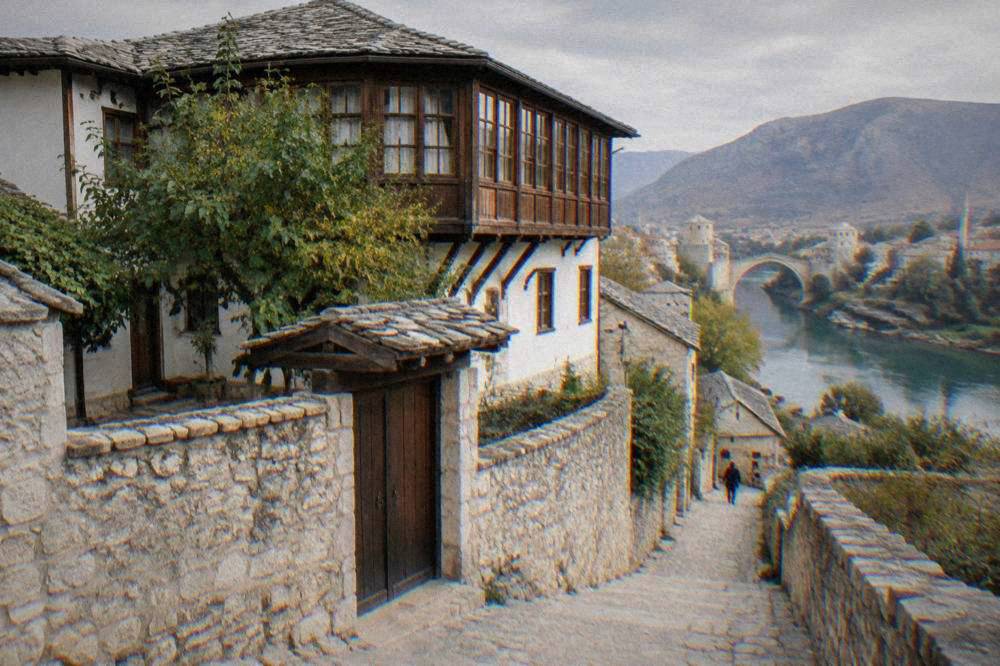
Coming off the bridge, keep the bazaar stalls on your right and walk away from the mosque, then take the first lane that turns down toward the water. The house's high stone wall gives little away from the street, which is authentic to the building type; the entrance gate is marked, and the courtyard opens suddenly once you are through it. This is the quiet half of the Old Town, and it connects onward to the Crooked Bridge, Kriva ćuprija, and the residential lanes that climb toward the Bisće polje side of the valley. Give the riverside stretch twenty minutes even without entering the house, because the terrace level is one of the few places in the centre where the Neretva can be watched at water level without a crowd.
If you are staying outside the centre, taxis in Mostar are a short, inexpensive way in, and the bus and train stations both lie within a short drive of the Old Town. Arriving from Sarajevo, the train runs twice a day each way on the Sarajevo to Čapljina line via Mostar, a journey of about two hours, with service having resumed on 15 October 2026 after a suspension that began on 8 September 2026 following a fire along the corridor. The full schedule detail sits in the Sarajevo to Mostar guide.
What Will You See Inside Bišćević House?
Inside Bišćević House you will find a stone courtyard with a shaded seating platform, a pair of reception rooms furnished with low divans, carpets and carved wooden ceilings, a display of traditional dress and household objects, and the glass-walled winter room suspended over the Neretva, which is the single most striking space in the building. The visit is short, typically twenty to forty minutes at an unhurried pace.
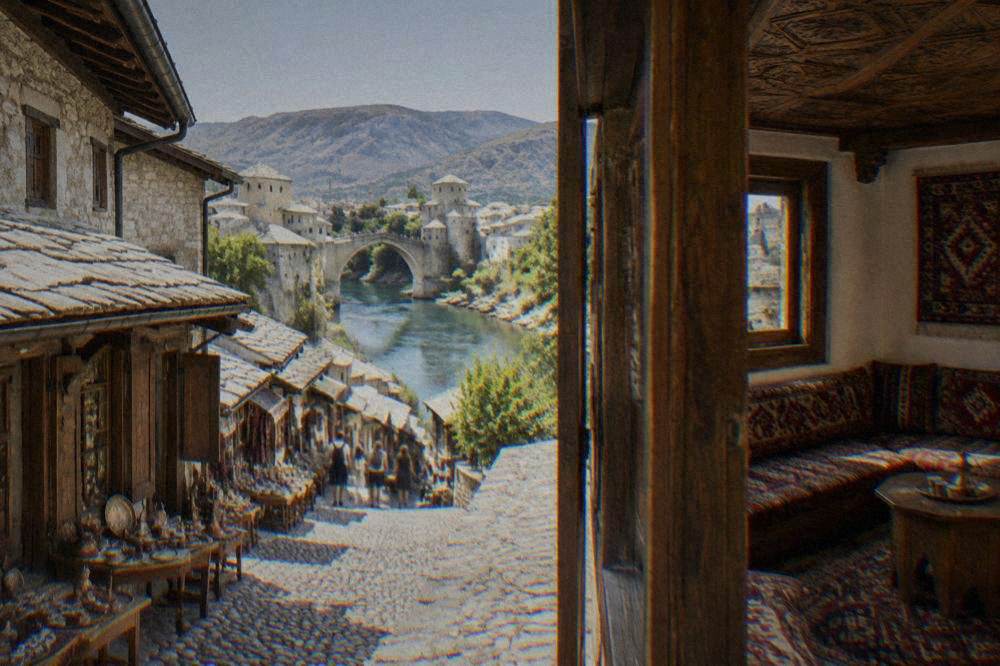
The rooms are deliberately left in a lived-in arrangement rather than behind rope barriers. Shoes come off at the threshold of the main salon, in keeping with the house's original use, and the divans that line the walls are the same low seating that Ottoman households used for guests, meals and sleep, one piece of furniture doing the work of three. Look up: the ceilings are the craft centrepiece, with geometric carving in local wood, and the depth of that carving was one of the standard ways a family signalled its standing. Heritage craft of this kind runs through the whole old city, and the Mostar history guide places it against the city's longer arc from its first written mention in 1474 through the bridge completion of 1566.
The glazed winter room over the river needs a moment of explanation, because it looks odd at first: a box of windows hanging above the water on timber beams. It was a cold-season solution, catching the low southern light across the river while staying out of the wind, and it worked together with the thick stone of the lower floor as insulation. In summer the family moved to the courtyard and the riverside terrace instead. That seasonal rhythm, winter room above, courtyard below, is the logic of the whole house, and once you see it the plan stops feeling random.
How Does Bišćević House Compare With The Other Ottoman Houses In Mostar?
Bišćević House is the riverside, intimate option among Mostar's open Ottoman houses, cheaper at about 4 KM reported than the Muslibegović House at about 8 KM, and easier to fold into an Old Bridge walk because of its position at the bottom of the bazaar. The Muslibegović House holds the larger and grander collection, while Kajtaz House is smaller and quieter again, and at least one of the three is enough for a short visit unless Ottoman domestic architecture is a specific interest.
| Ottoman house in Mostar | Reported fee | Character | Best for |
|---|---|---|---|
| Bišćević House | about 4 KM | Riverside courtyard, glazed winter room, café terrace | A short visit combined with the Old Bridge |
| Muslibegović House | about 8 KM | Larger collection, richer furnishings | Visitors with more time and interest |
| Kajtaz House | fee not printed here | Small, quiet, family-scale rooms | A second stop for enthusiasts |
The comparison matters because the three houses can blur together in a short trip. A reasonable rule: if you are in Mostar for a day, Bišćević wins on location and price, and its terrace alone justifies the stop. If you have two days or more, add the Muslibegović House for the deeper collection, and treat the others as optional. The Karadjoz Bey Mosque and the Mostar hammam heritage sites round out the Ottoman layer of the city for anyone building a themed day around it.
One honest caution about the category: these are old buildings, and the visiting experience is correspondingly informal. Rooms may be closed for an event, the café may be the only part open in the off-season, and opening hours at all of the houses shift with staffing. Confirm at the tourist information point or at the door, and keep the itinerary loose enough that a closed room costs you twenty minutes rather than a morning. Other pages covering the same trip are gathered on Mostar Travel Guide.
When Is The Best Time Of Year To Visit Bišćević House In Mostar?
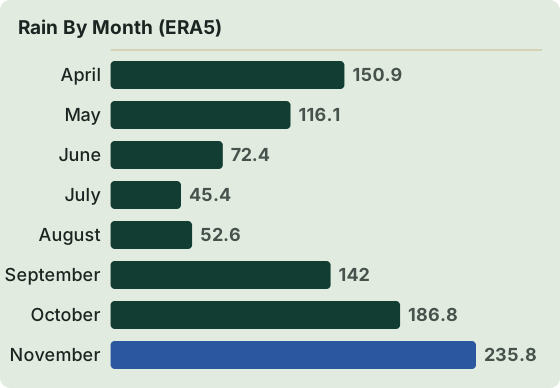
The comfortable months to visit Bišćević House and the rest of Mostar are May, June, September and early October, when daytime highs sit between about 22 and 27 C on the ERA5 reanalysis 1991 to 2020 normals and rainfall is lower than the winter peak.
July and August bring modelled highs near 30 C and the largest crowds on the riverside lanes, while November is the month with the heaviest rain in the station record, 200.0 mm against July's 42.9 mm on the FHMZ 1961 to 1990 series.
| Month | Modelled daily high (ERA5 1991-2020) | Modelled daily low | Rain (ERA5) | Station rain (FHMZ 1961-1990) |
|---|---|---|---|---|
| April | 17.7 C | 7.0 C | 150.9 mm | 127.3 mm |
| May | 22.3 C | 11.4 C | 116.1 mm | 102.1 mm |
| June | 26.8 C | 15.3 C | 72.4 mm | 77.9 mm |
| July | 29.9 C | 17.7 C | 45.4 mm | 42.9 mm |
| August | 30.5 C | 18.1 C | 52.6 mm | 73.7 mm |
| September | 24.5 C | 14.0 C | 142.0 mm | 96.3 mm |
| October | 19.5 C | 9.8 C | 186.8 mm | 150.6 mm |
| November | 14.1 C | 5.7 C | 235.8 mm | 200.0 mm |
The house itself is a hot-weather ally, ironically, because its thick stone and riverside position keep the interior noticeably cooler than the bazaar lanes, and the terrace catches whatever breeze moves along the Neretva valley. A summer visit at midday works better here than almost anywhere else in the Old Town. What summer does not spare you is the crush on the approach lanes: the weeks around the bridge diving season, with the traditional competition on 26 July in 2026 and the Red Bull Cliff Diving round from 30 July to 1 August 2026, put tens of thousands of spectators into the Old Town core. Early morning is the answer, and the house opens into a daytime rhythm that rewards the first hours after the lanes fill with light.
Winter visits are perfectly possible and often atmospheric, with the valley at its quietest and the station record showing mean January temperatures of 4.8 C, though the absolute minimum in the 1961 to 1990 series reached -10.9 C. The glazed winter room over the river was built precisely for this season, and a cold, drizzly day is arguably when the house's design makes most sense. The trade-off is shorter opening certainty and a bazaar in its low-season state, so pair the visit with the indoor options, the Old Bridge Museum among them, rather than expecting a full terrace day.
What Can You Combine With Bišćević House On The Same Day?
Bišćević House combines naturally with everything inside the Old Town core, the bridge, the bazaar, the Koski Mehmed-pašina džamija with its minaret view and the Crooked Bridge, all within a few minutes' walk of one another, and with a half-day or full-day trip into Herzegovina from Mostar to Blagaj, Počitelj and Kravica waterfall, which lie between about 14 and 55 km from the centre by road.
A workable single day splits cleanly in two. Give the morning to the Old Town circuit: cross Stari Most, walk the length of Kujundžiluk, descend to Bišćević House as the lanes angle toward the river, then climb to the Koski Mehmed Pasha Mosque minaret for the elevated view over the whole riverside. Afternoon options then branch. In town, the Old Bridge Museum in the Tara tower and the quieter lanes toward the Crooked Bridge fill a second half-day without any transport. Out of town, the Herzegovina classics start close: Blagaj Tekke sits 13.7 km and about 19 minutes by road from Stari Most, Počitelj 30.0 km and about 31 minutes, and Kravica waterfall 55.2 km and about 54 minutes free-flow.
| Combined sight | Road distance from Stari Most | Free-flow drive time | Reported entry |
|---|---|---|---|
| Blagaj Tekke at the Buna spring | 13.7 km | about 19 min | 10 KM |
| Počitelj fortified village | 30.0 km | about 31 min | free, small optional fees |
| Radimlja necropolis near Stolac | 33.5 km | about 42 min | 8 KM individual |
| Kravica waterfall | 55.2 km | about 54 min | 20 KM adult, all year |
Doing that countryside loop with a tour rather than a hire car has two advantages: the drivers know the border-free back roads, and entry logistics are handled. One is a half-day trip focused on Kravica waterfall alone, paired naturally with a morning in the Old Town. Check availability for the half-day Kravica trip if the waterfall is the priority.
The other is the full-day loop with a guided visit to the dervish tekke at Blagaj, the walled village of Počitelj and the falls, a route that covers the whole table above in one departure. Check availability for the Blagaj, Pocitelj and Kravice day tour if a single day has to hold all of Herzegovina's headline sights.
Is Bišćević House Worth The Entry Fee?
For the reported fee of about 4 KM, Bišćević House is worth entering for anyone with even a passing interest in how Mostar looked beyond its monuments, because it is the cheapest and most centrally placed of the city's open Ottoman houses and the riverside rooms deliver something the free streets outside cannot: the interior logic of an Ottoman household, the carved ceilings, the divan rooms and the glass winter room hung over the Neretva. Skip it only on a genuinely rushed stop of a few hours.
Think of the fee in local terms: it is a fifth of the Kravica waterfall ticket and two-fifths of the Muslibegović House fee, and what it buys is a change of register. Every other stop in the Old Town is a public building, a bridge, a mosque, a bazaar, and the house is the one place that answers the domestic question: where did people sleep, eat, sit out the winter and watch the river? That question sounds minor until you have walked a whole Old Town of magnificent public stone and realised you have seen no private life at all.
The honest limitations are two. The visit is short, and the presentation is old-fashioned, more family house than curated museum, with labels kept to a minimum. Neither point changes the recommendation, because the authenticity is the product, but a visitor expecting a fully interpreted museum should calibrate before paying. Between the two house museums, Bišćević for the river rooms and location, Muslibegović for the collection, covers the ground well, and anyone choosing just one on a short visit should let their available hour decide: bazaar-side convenience points here.
Common Questions About Bišćević House In Mostar
How much does Bišćević House in Mostar cost to visit?
Entry is reported at about 4 KM per person, cheaper than the Muslibegović House at about 8 KM or the Old Bridge Museum at about 10 KM. The figure comes from visitor guides rather than an official ticket page, so carry cash in marks and confirm the current price at the door.
How far is Bišćević House from the Old Bridge?
The house stands on the same side of the Neretva as the Kujundžiluk bazaar, a few minutes' walk downhill from Stari Most. No transport is needed; the whole route from the bridge through the bazaar to the house is on level, cobbled ground.
Can you drink coffee at Bišćević House?
Yes, the riverside terrace by the courtyard operates as a café in the season, and the stone jetty beside it is one of the quieter water-level spots on this stretch of the Neretva. Terrace service is seasonal, so expect the café side to scale back in the off-season months.
Is Bišćević House or Muslibegović House better?
They serve different visits. Bišćević House wins on price, at about 4 KM reported against about 8 KM, and on location beside the bazaar, with its glazed room over the river. The Muslibegović House holds the larger and more richly furnished collection. On a short stay, choose Bišćević; with two days or more, see both.
What are the opening hours of Bišćević House?
No fixed hours are published in a reliable listing, so treat it as a daytime sight and confirm locally on the day, at the door or at the tourist information point in the Old Town. Hours at small house museums in Mostar shift with the season and staffing.
Is Bišćević House suitable for children?
The courtyard and terrace are open, safe spaces for children, and the visit is short enough to hold a young attention span. The furnished rooms ask for care, with shoes off at the salon threshold and divans that are historic rather than play equipment, so the usual supervision applies indoors.
The house earns its place on a Mostar itinerary precisely because it is small. An hour covers it slowly, with coffee, and it leaves the rest of the day for the bridge, the bazaar and the Herzegovina countryside beyond the valley, all of which sit within reach of its riverside gate.