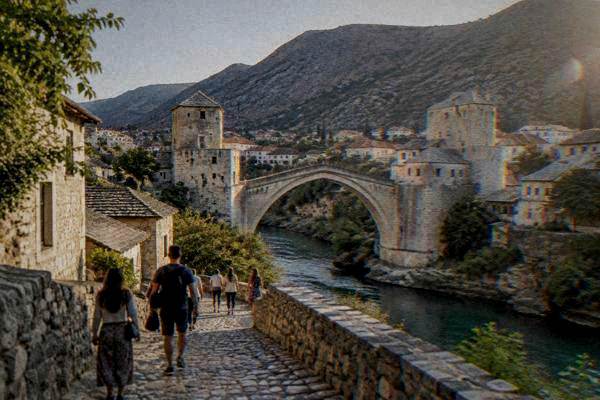
Hammam Museum: The Restored Ottoman Bathhouse
The Mostar hammam is a restored Ottoman bathhouse in the Old Town, steps from the Old Bridge, and it explains a side of the city's Ottoman daily life that the shops and bridges only hint at.
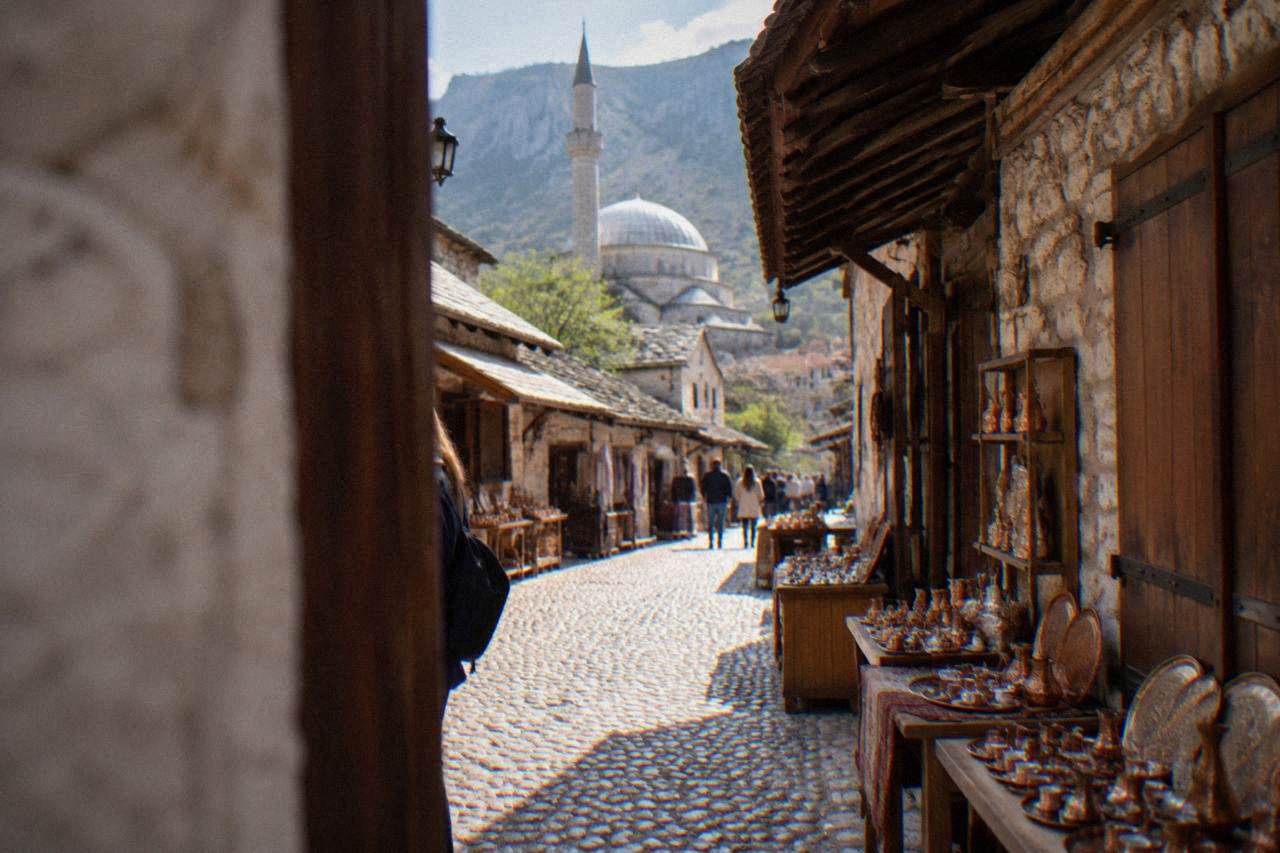
The Mostar hammam is a restored Ottoman bathhouse in the Old Town of Mostar, Herzegovina. Crossing the city's Ottoman core costs nothing, and the hammam sits within a short walk of Stari Most, Kujundžiluk and the Koski Mehmed-pašina džamija, making it an easy add-on to any Old Town circuit.
The Mostar hammam, a restored Ottoman bathhouse in the Old Town of Mostar, in Herzegovina, Bosnia and Herzegovina, preserves the one civic building type almost every Ottoman town had and almost no visitor plans for: the public bath. The city is inland, built on the Neretva river, and its Ottoman core is a UNESCO World Heritage property centred on Stari Most, the Old Bridge completed in 1566. While the bridge and the bazaar carry the postcard fame, the hammam answers a quieter question: how did the people who built that world actually wash, socialise and structure their week? The building sits within the walkable Old Town, minutes on foot from the bridge, and pairs naturally with the mosques, Ottoman houses and market streets around it, as covered in the wider things to do in Mostar roundup.
What Is The Mostar Hammam And Where Does It Sit?
The Mostar hammam is a restored Ottoman bathhouse standing in the Old Town of Mostar, a few minutes' level walk from Stari Most and the Kujundžiluk bazaar. It is one of the civic buildings of the city's Ottoman centuries, when settlement grew around the river crossing, and it now survives as the only bathhouse of its kind a visitor can see in the city centre. Opening hours and any admission fee are not published in a fixed form, so confirm on site before planning a timed visit.
Mostar's name first appears in a written document of 1474, and the name itself comes from "mostari", the bridge keepers who guarded the earlier wooden crossing on the Neretva. The stone bridge that made the city famous was completed in 1566 under Suleiman the Magnificent, designed by mimar Hajruddin following the design tradition of his master Sinan, as the UNESCO listing for the Old Bridge Area records. A town of that era was not only bridges and mosques. It typically included a bazaar, caravanserais, Ottoman courtyard houses and at least one hammam, the public bath where washing was both a ritual and a social institution.
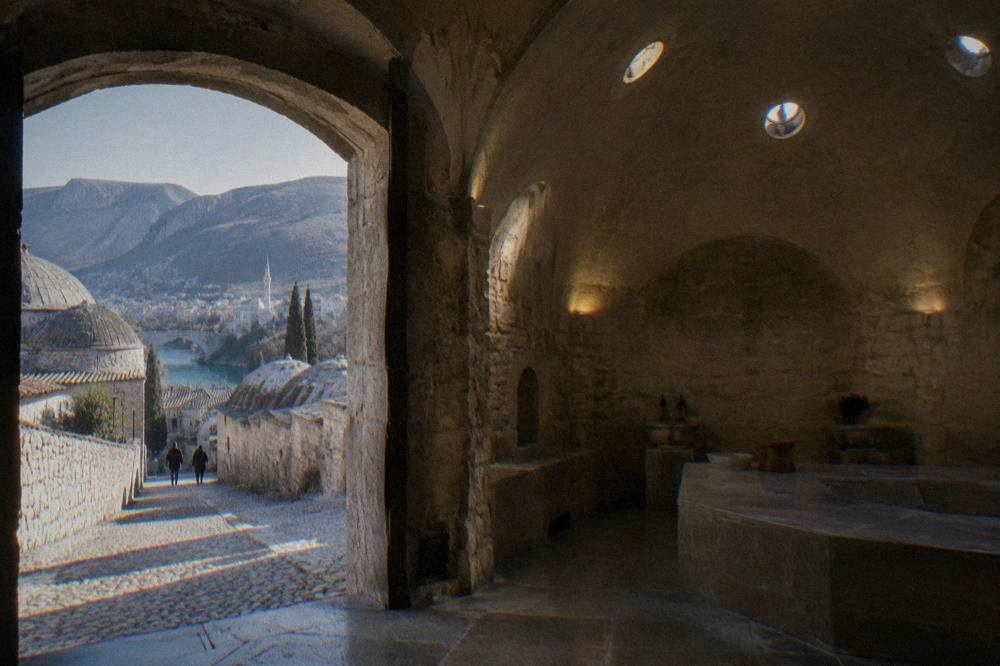
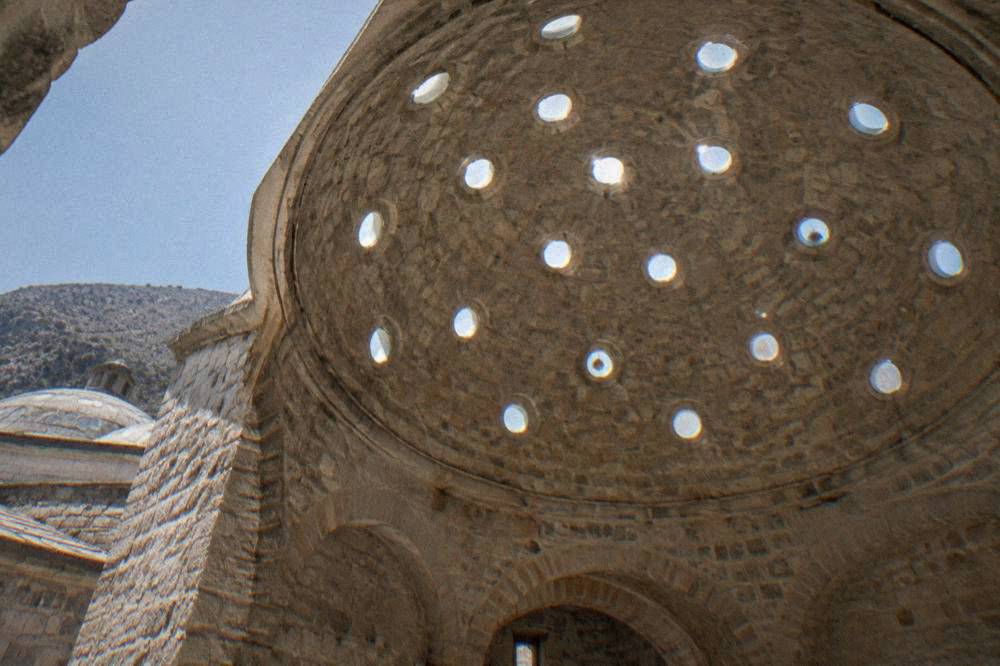
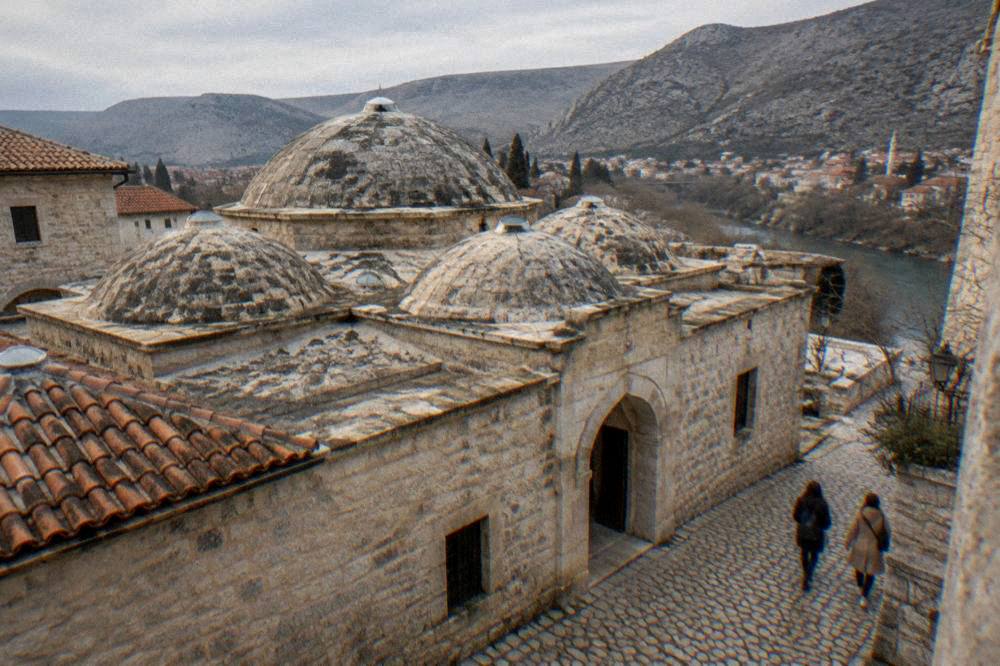
That is the context the restored bathhouse sits in. The building belongs to the same architectural family as the domed baths found across the Ottoman Balkans: thick stone walls, a sequence of warm and hot rooms, and a ceiling pierced with small glass eyes that drop beams of light onto the steam below. Restoration returned the structure to a condition where those features can be read, which is what makes it worth the short detour from the bridge. The Old Town area guide maps how the pieces fit together.
What Can You See Inside The Restored Ottoman Bathhouse In Mostar?
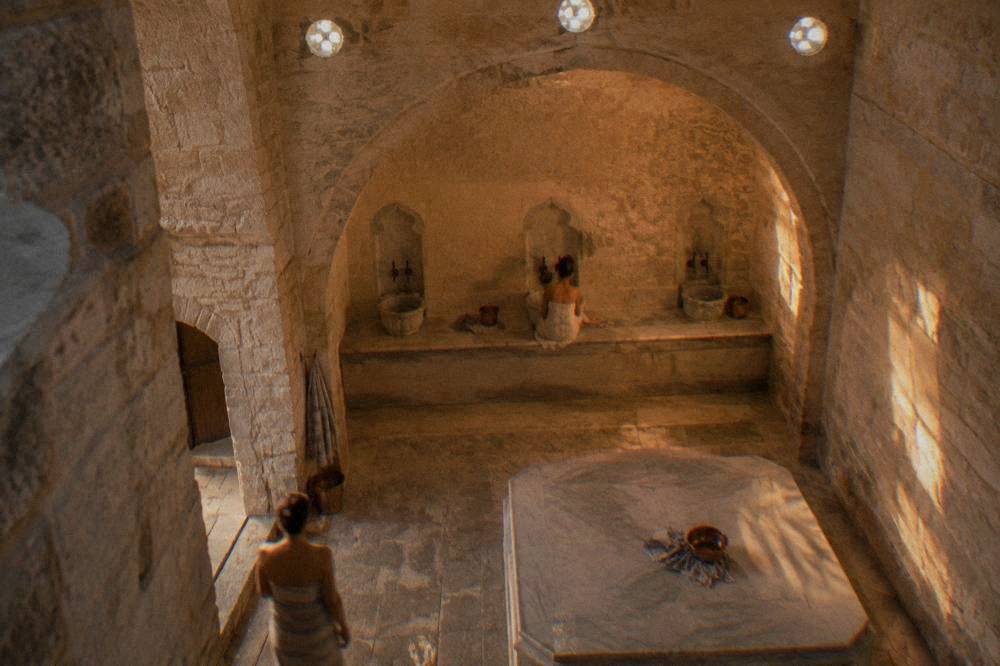
Inside, the visitor trail of a restored Ottoman hammam typically follows the bath's original sequence: the disrobing hall, the warm intermediate room, the hot domed chamber over the heating system, and the smaller private washing alcoves, all built of local stone and lit through ceiling skylights. In the Mostar building the restoration highlights the masonry vaults, the flues that channelled heat under the floors, and the water channels of the original system. What is open on a given day is best confirmed at the entrance.
The point of walking through is understanding a machine. An Ottoman bath heated one end of the building with a wood fire, and the hot air travelled under the raised floors and inside the walls before escaping through the chimney, so the rooms graded from cool to hot without any single space ever being directly heated. Bathers moved through that gradient slowly: undressing in the cool hall, sweating in the warm room, scrubbing and rinsing in the heat, then resting and drinking coffee back where they started. The stone, once warm, holds its heat for hours, which is why the walls are so thick and the windows so few.
The light is the second thing to look for. Because the baths had few or no side windows, the domes were pierced with small round openings, each glazed, each dropping a coin of daylight onto the floor or the steam. In the restored rooms of the Mostar hammam these skylights are the strongest visual signature of the building, and they photograph well at midday when the sun is high and the beams are shortest and sharpest.
Interpretation on site leans on the social history. The hammam was one of the few public buildings Ottoman cities ran for women as much as for men, often on separate days or separate sessions, and it functioned as a meeting place, a matchmaking venue and a place to mark births and weddings. Reading the building with that in mind turns a set of empty stone rooms into a picture of daily life that the bridge, for all its fame, does not give you. For the wider story of the city's growth, the Mostar history guide carries the timeline.
A guided walk puts the bathhouse in context faster than a self-guided wander. The Old Bridge, the bazaar and the mosque terraces each explain one layer of Ottoman Mostar, and a guide connects the bath to the water rituals of the mosque and the courtyard pools of the great houses. The small-group Old Town guided tour is the natural pairing, with Check availability for live dates.
How Does An Ottoman Hammam Actually Work?
An Ottoman hammam works as a heated sequence: a wood fire burns at one end, hot air travels under the raised stone floors and through channels in the walls, and the rooms grade from a cool undressing hall through a warm room to a hot washing chamber, with the chimney pulling the spent air away. Bathers moved from cool to hot and back, scrubbing, rinsing and resting, often for hours. The design needs no windows, so the domes are pierced with small glazed skylights.
The heating principle is the part worth slowing down for, because it explains everything about the architecture. The fire did not heat the air of the rooms directly. It warmed the stone itself, from below, and the masonry then radiated that warmth steadily for a whole session. This is why the floors of the hot rooms sit above empty channels, why the benches are stone rather than wood, and why the whole building is sunk into the ground at the fire end: the deeper chambers sit closer to the heat source.
Water came second. Ottoman baths did not fill pools like Roman baths. Water was heated in copper vessels over the same fire system and carried to the washing slabs, where bathers poured it over themselves from basins, hot and cold mixed to taste. Soap, a rough cloth mitt for scrubbing and an attendant's massage were the standard service. The ritual was thorough rather than luxurious by modern spa standards, closer to a full wash and a sweat than a soak.
The social layer came third and mattered as much as the plumbing. Sessions ran for hours. People arrived with food, arranged marriages, closed business and exchanged news, and the bath keeper kept order and the fire. In a city like Ottoman Mostar, where the bath stood near the bazaar and the mosque, it was simply another room of public life. That public-life thread continues through the bazaar today, and the Kujundžiluk guide describes what the street itself holds.
What Are The Opening Hours And Ticket Prices At The Mostar Hammam?
No fixed opening hours or admission price for the Mostar hammam are published in a stable form, so the working answer is to confirm both at the entrance or through the city's tourist information point before you build a timed itinerary around it.
Nearby comparable sights give a planning frame: the Old Bridge Museum is reported at about 10 KM adult and open 08:00 to 16:00 daily from 1 April to 1 November, and Koski Mehmed-pašina džamija charges a small cash fee, more with the minaret.
That is not an evasion, it is how sightseeing in the Old Town actually behaves. Several of Mostar's smaller monuments run seasonal or informal schedules, and reported figures for other attractions shift between seasons. The reliable approach is a morning visit: the Old Town sights that do publish hours generally open around 08:00 in the warmer half of the year, and mornings are also when the bazaar lanes are quietest.
For budgeting, use the KM, the convertible mark, pegged at 1 EUR = 1.95583 KM. Euro cash is often accepted in the tourist streets, usually at a rounded 2 KM to 1 EUR, but that is a convenience rather than a rule, so confirm the rate before paying. Reported entry figures for nearby monuments, all to be confirmed on the day, look like this:
| Sight | Reported entry | Notes |
|---|---|---|
| Old Bridge Museum (Tara tower) | about 10 KM | reported 08:00 to 16:00 daily, 1 April to 1 November |
| Koski Mehmed-pašina džamija | about 10 KM, about 18 KM with the minaret | reports vary from 14 to 18 KM with the minaret, cash |
| Muslibegović House | about 8 KM | Ottoman house museum |
| Bišćević House | about 4 KM | Ottoman house museum |
| Kravica waterfall | 20 KM adult, all year | 10 KM for BiH residents, children under 7 free |
One more line for the budget: a tourist tax of 3 KM per person per night is reported in the Herzegovina-Neretva Canton from 1 January 2026, charged through accommodation, so confirm the line on your booking rather than expecting it at the door of any sight.
How Does The Hammam Compare With Mostar's Ottoman Houses?
The hammam shows the civic, working side of Ottoman Mostar, while the house museums show the domestic side, and together they give the fullest picture of how the city's Ottoman society actually lived. Muslibegović House, reported at about 8 KM, and Bišćević House, reported at about 4 KM, preserve courtyards, divan rooms and separate family quarters, in contrast to the hammam's bare heated stone. Visiting one house plus the bathhouse is a strong half-day pairing.
The houses are about privacy and hierarchy. A well-off Ottoman household in Mostar turned inward: a walled courtyard, a fountain, reception rooms for male guests, screened galleries for the family, and thick walls against the summer heat, which in the Neretva valley is real, with ERA5 reanalysis for 1991 to 2020 putting modelled August highs at 30.5 C and July at 29.9 C. The hammam, by contrast, is a public building with no private quarter except the washing alcoves, built for function and steam rather than display.
Water links the two. The houses channelled it through courtyard fountains; the bath heated it in volume; and the mosque, a minute away, uses it for ablution before prayer. The Koski Mehmed-pašina džamija sits practically beside the river below the bridge, and its terrace is one of the best places in the city to look back at Stari Most. Read together, mosque, house and bath describe a complete water culture: ritual washing, domestic cleanliness and public bathing, all within a few hundred metres.
If time is short, pick the hammam plus one house. If time is generous, add the Bišćević House and the Muslibegović House, then finish on the bridge at dusk when the limestone arch carries the low sun. The Stari Most guide covers the bridge's own story: completed in 1566, destroyed on 9 November 1993 during the war, rebuilt and reopened in July 2004, and free to cross at any hour.
What Is The Weather Like In Mostar Across The Year?
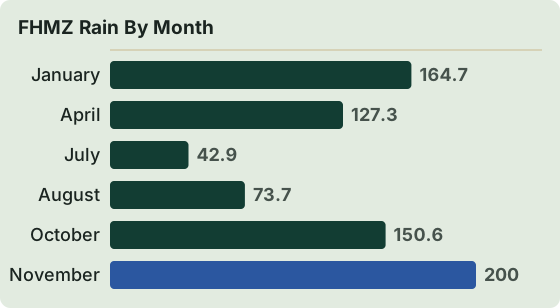
Mostar has a hot-summer Mediterranean climate with a winter rainfall maximum: the FHMZ Mostar station table for 1961 to 1990 gives a January mean of 4.8 C and a July mean of 24.7 C, with an absolute maximum of 41.2 C recorded in July and annual precipitation of 1,515.4 mm. November averages 200.0 mm of rain against July's 42.9 mm, so late autumn, not summer, is the rainy season.
Summer days are long and hot, winter days short and mild for the latitude.
For a bathhouse visit this matters less than for anything else in the city, which is an argument for it. The hammam is indoors, warm by design, and arguably at its best on a wet November afternoon or a chilly January morning when the skylights darken and the stone keeps its warmth. Summer is when the Old Town is fullest and the afternoons are heaviest, with ERA5 reanalysis for 1991 to 2020 putting modelled January highs at a mild 8.4 C against August's 30.5 C.
| Month | FHMZ mean temp C | FHMZ rain mm | ERA5 modelled high C | ERA5 modelled low C |
|---|---|---|---|---|
| January | 4.8 | 164.7 | 8.4 | 0.2 |
| April | 13.3 | 127.3 | 17.7 | 7.0 |
| July | 24.7 | 42.9 | 29.9 | 17.7 |
| August | 24.2 | 73.7 | 30.5 | 18.1 |
| October | 15.3 | 150.6 | 19.5 | 9.8 |
| November | 10.1 | 200.0 | 14.1 | 5.7 |
The Neretva, for all the valley heat, stays cold even in August, fed by karst springs. Swimmers at Kravica waterfall and kayakers on the Neretva know this quickly, and it is one reason the region's bathhouse tradition made sense: river water in Herzegovina is snowmelt-cold for much of the year, and heated water was a genuine luxury.
Summer also brings the city's event calendar. The 460th traditional Old Bridge diving competition ran on 26 July 2026, and the Red Bull Cliff Diving World Series stop ran 30 July to 1 August 2026, jumping from added platforms at 21 m for women and 27 m for men. Jumps from the bridge itself are made by members of the Mostari diving club, who train for years before a solo jump; there is no visitor jump option. If your trip lands on a competition weekend, the Old Town is busy from mid-morning, another reason the hammam's cool stone rooms earn their place in a summer plan.
Which Other Ottoman Sights Pair Well With The Mostar Hammam?
The strongest pairings with the hammam are the sights within a short walk of it: Stari Most, Kujundžiluk, the Koski Mehmed-pašina džamija, the Kriva ćuprija (Crooked Bridge) and the Ottoman house museums, all inside the Old Town core. A half-day circuit covering the bathhouse, one mosque and one house museum is realistic on foot, and a full day adds the viewpoints on Hum hill or Fortica above the city. Beyond the city, Blagaj and Počitelj are the classic half-day extensions.
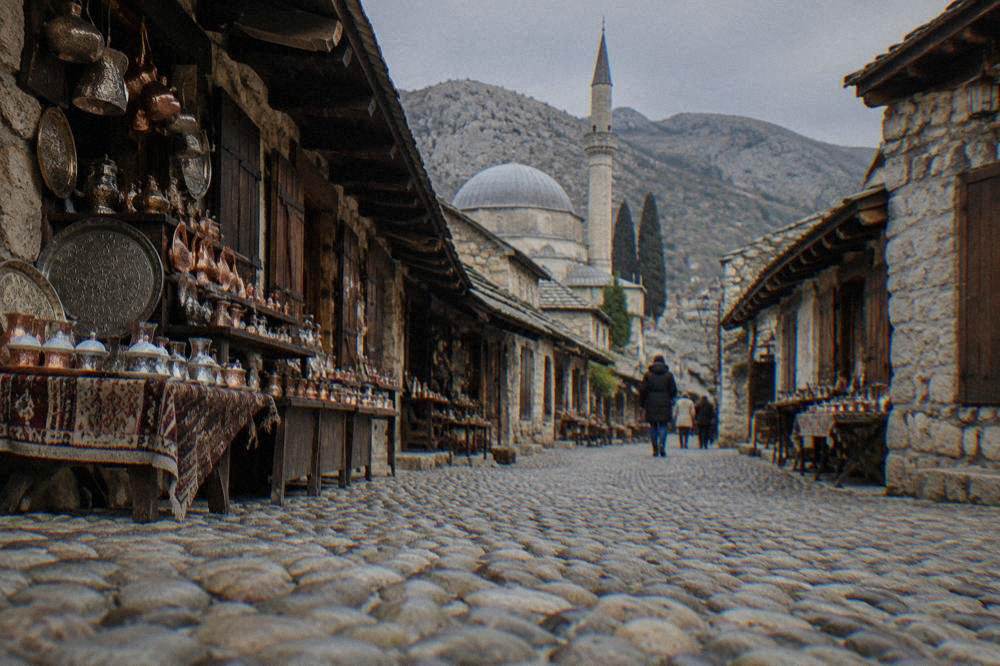
The Old Town works as a loop. Start on the bridge early, before the crowds, then drop into the bazaar lanes, visit the hammam while the morning is still cool, climb the Koski Mehmed-pašina džamija minaret if it is open, and finish with the quieter east bank around the Kriva ćuprija, the small single-arched bridge that prefigures the great one. Distances here are in hundreds of metres, not kilometres; everything in the list below is flat except the minaret stairs and the viewpoints.
| Sight | Position in a visit | Reported fee |
|---|---|---|
| Stari Most | First, early morning | free to cross, open around the clock |
| Kujundžiluk bazaar | Between bridge and hammam | public street, free |
| Mostar hammam | Mid-morning | confirm on site |
| Koski Mehmed-pašina džamija | After the hammam | about 10 KM, more with the minaret |
| Kriva ćuprija | East bank finish | public structure, free |
| Bišćević House | Optional house museum | about 4 KM |
| Muslibegović House | Optional house museum | about 8 KM |
Beyond the city, the Herzegovina countryside stacks neatly. Blagaj Tekke, the dervish lodge at the Buna spring, is 13.7 km and about 19 minutes by road from Stari Most, reported at 10 KM entry with shoulders and knees covered. Počitelj, the stone fortified village above the Neretva, is 30.0 km and about 31 minutes, free to wander, and the Počitelj day trip guide covers it in full. Kravica waterfall, 55.2 km and about 54 minutes by road, charges 20 KM for an adult all year and is open all year with hours that run from 07:00 to 17:00 in January and February to 07:00 to 22:00 from June to September.
How Do You Fit The Hammam Into A Day In Mostar?
A realistic Mostar day puts the bridge first at dawn, the hammam and the Old Town monuments mid-morning while the air is still cool, lunch in the bazaar lanes, an afternoon extension to Blagaj or Kravica waterfall, and the bridge again at dusk for the final photographs. The hammam needs only a short slot and no booking commitment in most seasons, so it slots into the mid-morning gap better than any ticketed sight in the city. Walking times inside the Old Town are measured in minutes, not hours.
| Time | Stop | Notes |
|---|---|---|
| Early morning | Stari Most and the east bank | free crossing, light at its softest |
| Mid-morning | Hammam, Koski Mehmed-pašina džamija, bazaar | confirm hammam hours on site |
| Midday | Lunch in Kujundžiluk | cash in KM useful for small vendors |
| Afternoon | Blagaj Tekke | 13.7 km, about 19 minutes by road |
| Late afternoon | Kravica waterfall | 55.2 km, about 54 minutes, 20 KM entry |
| Evening | Return for the bridge at dusk | free, open around the clock |
Travellers arriving without a car have two good options. Day tours from Mostar cover the Herzegovina loop of Blagaj, Počitelj and Kravica as a single booking, which removes the need to time buses. Independent travellers can use the local bus network, which runs suburban lines to Blagaj, and the train line north, where two trains a day each way connect Sarajevo and Čapljina via Mostar, a service that resumed on 15 October 2026 after a suspension that began on 8 September 2026 following a fire along the corridor. Confirm times locally, since seasonal adjustments apply.
For a trip built around the countryside rather than the city, a private circuit that strings Kravica, Blagaj, Počitelj and the Buna channel together in one vehicle makes sense; check availability for current departures.
Is The Mostar Hammam Worth Visiting With Limited Time?
For a traveller with half a day in Mostar, the hammam ranks behind the bridge, the bazaar and the mosque terrace, but ahead of the second and third souvenir stops, because it is the only place in the city where Ottoman engineering can be read from the inside. For a traveller with a full day or more, it belongs in the plan without argument, especially paired with a house museum on the same circuit.
It is short, central and, on a hot afternoon or a wet one, the most comfortable sight in the Old Town.
The honest ranking inside the Old Town is roughly this. The bridge is non-negotiable and free. The bazaar is unavoidable in the pleasant sense, since you walk it to reach everything. The mosque terrace gives the classic bridge photograph. The hammam gives depth, and depth is what separates a visit that remembers Mostar from one that photographs it. The house museums sit between the two, with the Muslibegović House the more complete of the pair.
There is also a practical case. The building is small, so the visit is short. It is indoors, so it rescues a rain-affected itinerary, and Mostar's rain is heavily seasonal: the FHMZ 1961 to 1990 table gives November 200.0 mm against July's 42.9 mm, so a November trip has a real chance of needing indoor options. And it is central, so it costs no travel time at all. Few sights in any city can say all three.
What Should You Know Before Visiting The Mostar Hammam?
Bring cash in KM, expect a short self-guided visit measured in tens of minutes rather than hours, confirm hours and any fee at the entrance or the tourist information point, and wear shoes you can slip off if the interior requires it, as some restored bathhouses do. Photography is generally possible in the main halls, but flash and tripods may not be, and the floor surfaces are stone, sometimes damp, so flat shoes beat sandals on the vaulted steps.
A few practical notes for the wider Old Town visit, since the hammam sits inside it. The currency is the convertible mark, pegged at 1 EUR = 1.95583 KM; cards are fine at hotels and larger shops, but cash in KM is what small vendors and some monument desks prefer. Bosnia and Herzegovina is not in the EU and not in Schengen, and the Croatian land border is a Schengen external border with full checks, so cross-border day trips to Dubrovnik need a passport and patience, with waits reported up to about 30 minutes and longer at summer peaks. The emergency number is 112. Tap water in the city is treated and generally safe.
Accessibility inside historic bathhouses is limited by design: sunken hot rooms, steps and narrow passages are original features. Anyone with mobility constraints should check at the entrance what part of the circuit is step-free, and pair the day accordingly with the outdoor sights, which are. In rural Herzegovina beyond the city, stay on marked paths because of suspected mine areas, a standing advisory maintained by BHMAC; inside the Old Town this is not a concern.
Finally, timing. The FHMZ station table gives a year mean of 14.6 C, but the modelled ERA5 highs for 1991 to 2020 reach 30.5 C in August, and the valley floor often runs hotter still. In July and August, do the bridge and the outdoor lanes before 10:00, give the afternoon to the hammam and the house museums, and return outside after 17:00. That single adjustment makes a summer day in Mostar feel half as heavy.
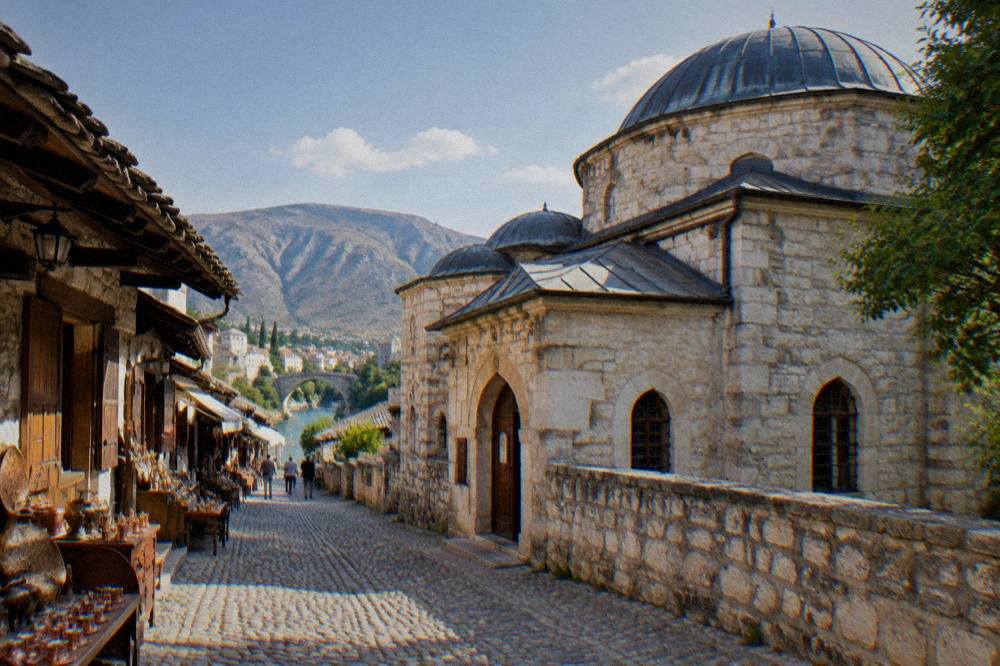
Common Questions About The Mostar Hammam
Is the Mostar hammam a working bath you can bathe in?
No. It is a restored Ottoman bathhouse presented as a visitor sight rather than a functioning spa. Sessions, opening hours and any admission fee are not published in a fixed form, so confirm at the entrance or the tourist information point before planning a timed visit.
How far is the Mostar hammam from the Old Bridge?
The bathhouse stands in the Old Town, a few minutes on foot from Stari Most and the Kujundžiluk bazaar. Everything in the core circuit, including the Koski Mehmed-pašina džamija and the Kriva ćuprija, is within a level walk measured in minutes.
What does the Mostar hammam cost to visit?
No fixed admission figure is published. For planning, nearby comparable sights are reported at about 4 to 10 KM, the Old Bridge Museum among them at about 10 KM, with the Koski Mehmed-pašina džamija at about 10 KM and about 18 KM with the minaret. Confirm at the entrance.
Can you visit the hammam in winter?
Yes, and winter suits it. The FHMZ 1961 to 1990 table gives a January mean of 4.8 C, and the building is warm, indoors and central, which makes it a strong option on the wet and cool days that November, with 200.0 mm of rain on average, brings to the valley.
Is the hammam suitable for children?
The building is small and the visit is short, so it works for families with a brief attention budget. Floors are stone and can be damp, and some restored interiors ask for shoes off. Check at the entrance what the current arrangement is.
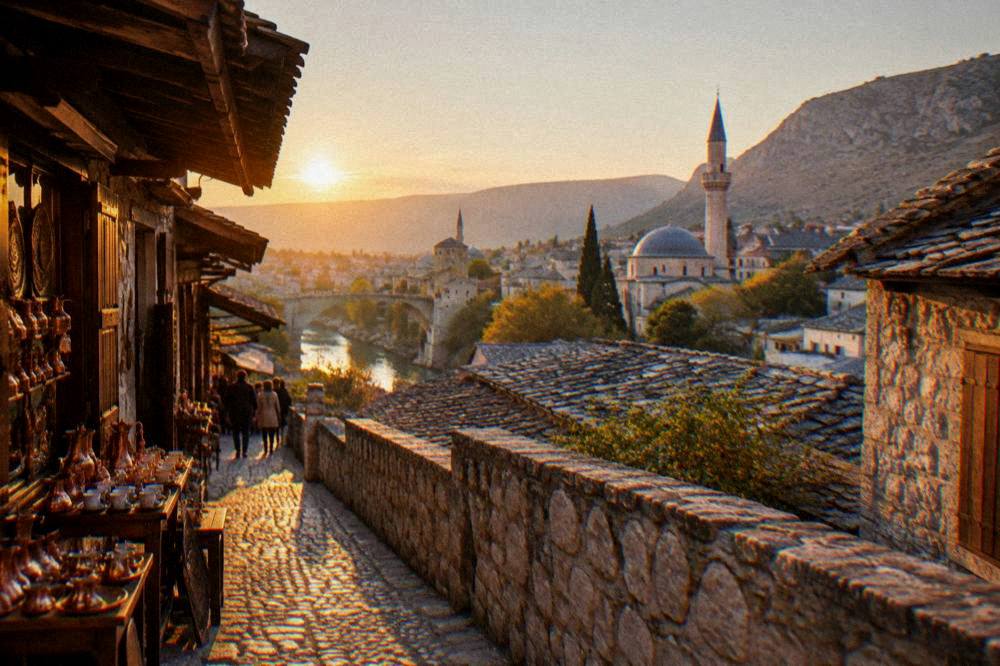
A last planning note: the hammam is the kind of sight that rewards a slow circuit, and Mostar rewards two rhythms, one for the bridge at dawn and dusk, and one for the cool stone interiors in between. Fit the bathhouse into the second rhythm and the city opens up, from the Mostar Travel Guide homepage down through the bazaar to the river, one heated room at a time.