Karađoz-Bey Mosque: Mostar's Largest Ottoman Mosque
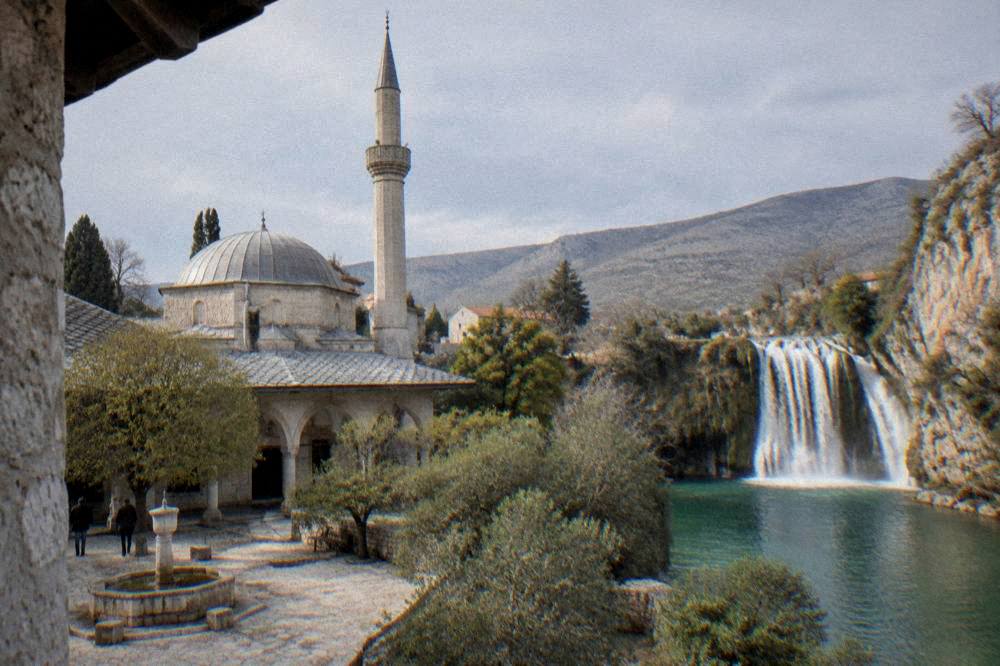
The Karađoz-Bey Mosque stands a few streets back from the Neretva in Mostar, one of the grand Ottoman mosques of the Old Town and a quiet counterpoint to the crowds on Stari Most.
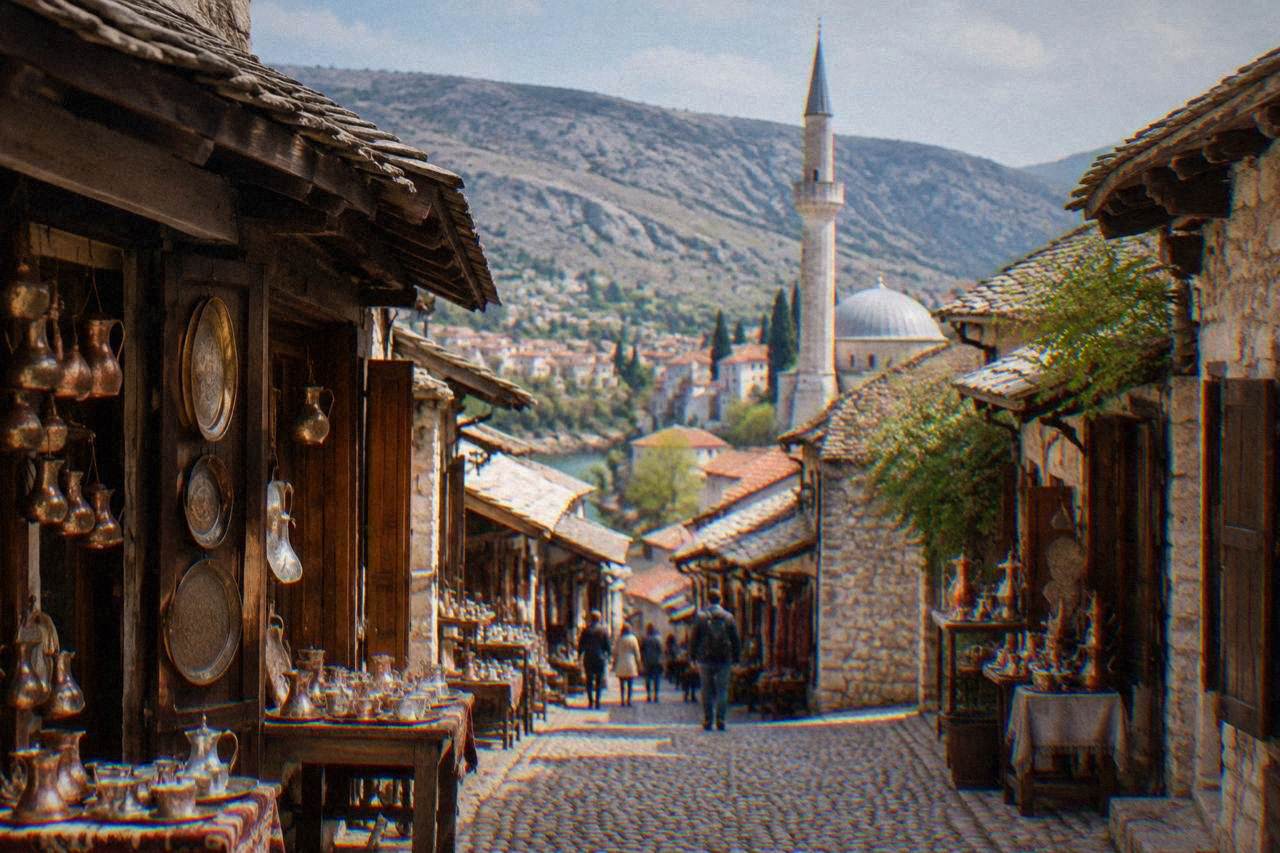
The Karađoz-Bey Mosque is one of the principal Ottoman-era mosques of Mostar's Old Town, a short walk from Stari Most, open as a working place of worship with no entry figure to confirm in advance.
Mostar, an inland city on the Neretva river in Herzegovina, Bosnia and Herzegovina, is famous for one bridge, but the Old Town around that bridge holds a whole layer of Ottoman building, and the Karađoz-Bey Mosque is one of its anchors. The mosque sits within the Old Bridge Area of the Old City of Mostar, the UNESCO World Heritage property inscribed in 2005, and it belongs to the same family of monuments as Stari Most itself, the Kujundžiluk bazaar and the Koski Mehmed-pašina džamija by the river. This page lays out what the mosque is, where it stands, what a visit involves, and how to plan the streets around it, in plain reporting from the editorial desk of Mostar Travel Guide.
What Is The Karađoz-Bey Mosque In Mostar?
The Karađoz-Bey Mosque is one of the principal Ottoman-era mosques of Mostar's Old Town, a working place of worship that forms part of the historic core around Stari Most, and it is best understood as a companion piece to the bridge and the bazaar rather than a standalone sight. The name follows the site's own spelling, Karađoz-begova džamija, and the building belongs to the Ottoman layer of the city that also produced Stari Most, completed in 1566 under Suleiman the Magnificent by mimar Hajruddin, and the Koski Mehmed-pašina džamija on the riverbank below the bridge.
The Old Bridge Area of the Old City of Mostar was inscribed on the World Heritage List in 2005, under criterion (vi), as a symbol of multicultural coexistence. UNESCO's listing text records settlement in the area from the 15th century and a name derived from the "mostari", the keepers of an earlier wooden bridge. The first written mention of the name Mostar dates to 1474, and the stone bridge followed a century later. The Karađoz-Bey Mosque belongs to that same flowering of Ottoman Mostar, when the city grew around the river crossing and the bazaar streets that climb away from it.
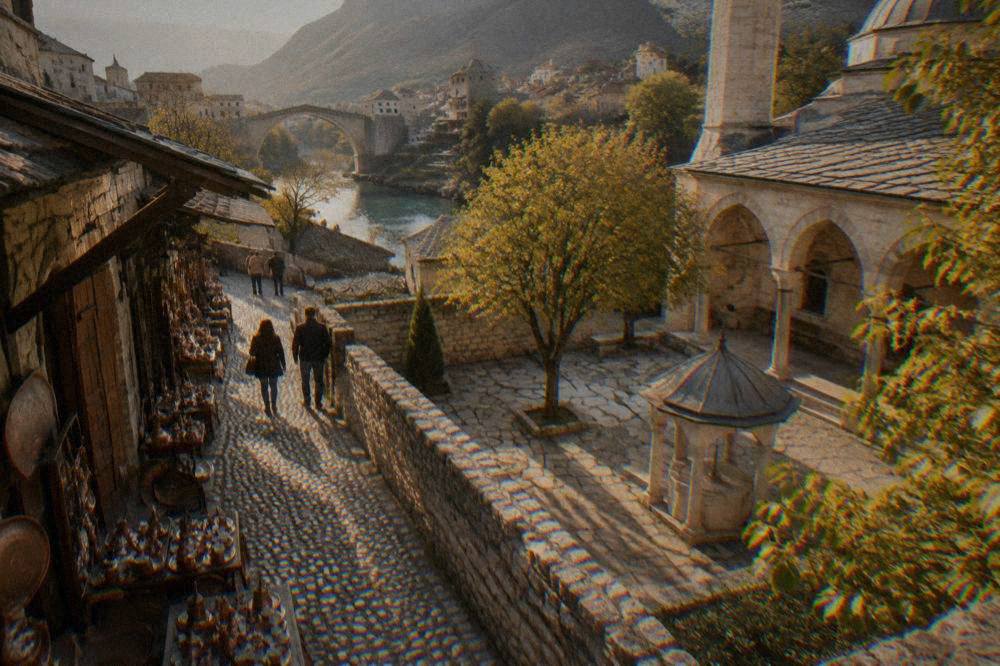
For orientation, the practical picture is simple. The mosque sits in the streets east of the river, a few minutes' level walk from Stari Most through the lanes of Kujundžiluk, the Old Bazaar. Read more about the whole area in the Old Town area guide and the Stari Most attraction page, and for the wider religious architecture of the city see the guide to Mostar's mosques.
The quick facts for the city around the mosque:
| Fact | Detail |
|---|---|
| Country | Bosnia and Herzegovina |
| Region | Herzegovina, Herzegovina-Neretva Canton |
| Currency | Convertible mark (KM, BAM), pegged at 1 EUR = 1.95583 KM |
| EU / Schengen | Bosnia and Herzegovina is in neither |
| Languages | Bosnian, Croatian and Serbian |
| City population | About 105,000 (2013 census) |
| UNESCO property | Old Bridge Area of the Old City of Mostar, inscribed 2005 |
| Emergency number | 112 |
Where Is The Karađoz-Bey Mosque, And How Far Is It From Stari Most?
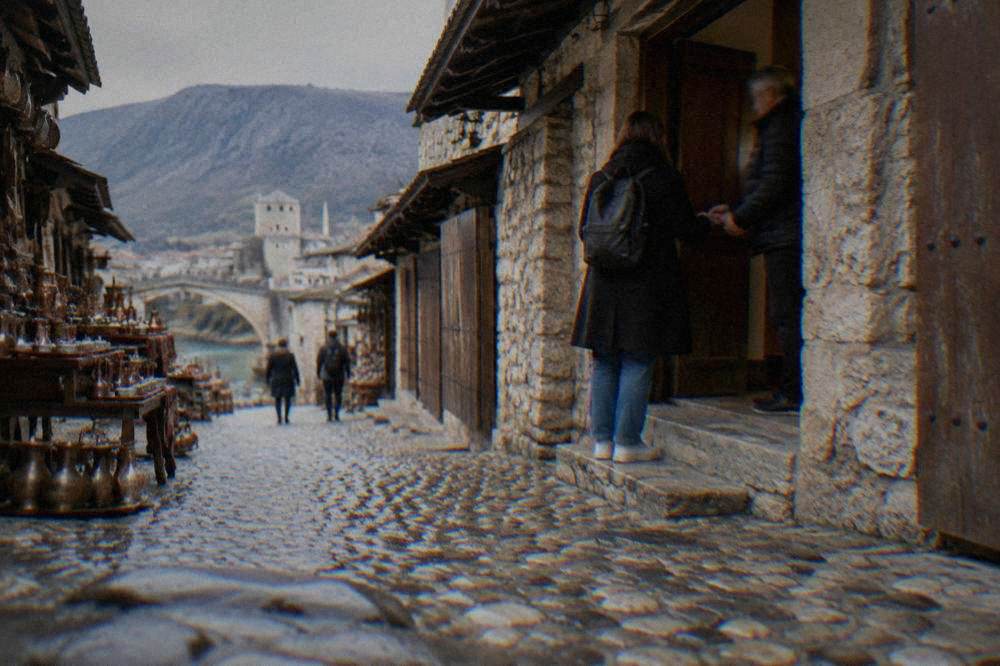
The Karađoz-Bey Mosque sits in the Old Town core east of the Neretva, a few streets back from Kujundžiluk, the bazaar lane that runs up from Stari Most, so it belongs naturally at the start or the end of an Old Bridge walk. The Old Town is compact and pedestrian: everything in this section of the city is within a short walk of everything else, and the mosque, the bazaar, the riverbank terrace of the Koski Mehmed-pašina džamija and the Crooked Bridge, Kriva ćuprija, all sit in one walkable bowl of streets.
The natural loop starts on Stari Most, which is free to cross and open around the clock, then climbs through Kujundžiluk's shops and coppersmiths to the mosque, and returns downhill past the Crooked Bridge to the riverbank. Walking times inside the Old Town are a matter of minutes rather than journeys, and the only real climbing is the gentle slope from the river up to the bazaar streets. Comfortable shoes on smooth stone flagstones are the whole of the preparation.
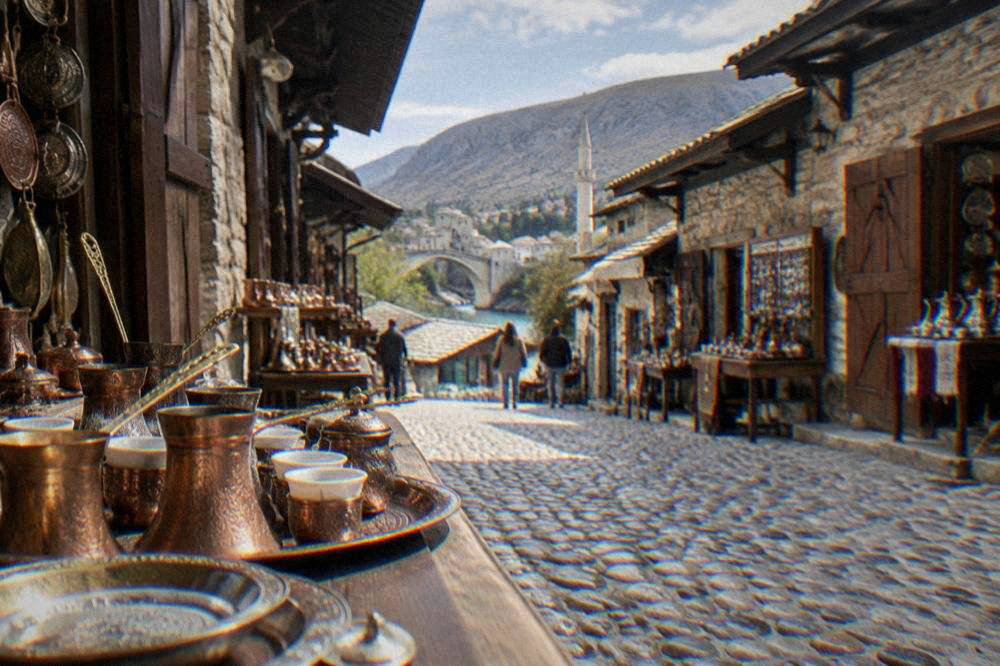
Beyond the Old Town, distances are worth knowing before you plan, because Herzegovina's headline sights ring the city in a tight radius. All road figures below are from Stari Most, free-flow, with border queues excluded where a crossing is involved.
| Place | Road distance | About (free-flow) |
|---|---|---|
| Blagaj Tekke | 13.7 km | 19 min |
| Počitelj | 30.0 km | 31 min |
| Stolac | 36.8 km | 47 min |
| Kravica waterfall | 55.2 km | 54 min |
| Konjic | 69.0 km | 80 min |
| Trebinje | 116.5 km | 142 min |
| Sarajevo (Baščaršija) | 127.1 km | 134 min |
| Dubrovnik (Stradun) | 145.5 km | 150 min |
A guided walk is the efficient way to absorb the Old Town's layers if your time is short. The Mostar Private Walking Tour covers the Old Town's principal monuments with a guide, and you can Check availability before you commit to a day.
How Much Does It Cost To Visit The Karađoz-Bey Mosque In Mostar?
No entry fee or opening hours for the Karađoz-Bey Mosque are published in a form this desk can state, so treat it as a working mosque you confirm on arrival, while the sights around it carry small reported cash fees, typically a few convertible marks, payable at the door. The currency is the convertible mark (KM), pegged to the euro at 1 EUR = 1.95583 KM, and euro cash is often accepted in tourist areas at a rounded rate, but confirm the rate and keep some KM for small sight entries. Cards are common in hotels and larger restaurants and less reliable at small sights.
For the neighbouring monuments, here is what is reported, with the caveat that none of these is an official online price list and all may shift between seasons, so confirm at the door.
| Sight | Reported entry | Note |
|---|---|---|
| Stari Most | Free | Public pedestrian route, open 24/7 |
| Kujundžiluk bazaar | Free | Open street |
| Old Bridge Museum (Tara tower) | About 10 KM | Reported, 08:00-16:00 daily 1 April to 1 November |
| Koski Mehmed-pašina džamija | About 10 KM, about 18 KM with the minaret | Reported, cash |
| Muslibegović House | About 8 KM | Reported |
| Bišćević House | About 4 KM | Reported |
| Blagaj Tekke | About 10 KM | Reported, 08:00-22:00 April to October |
The pattern is consistent: nothing in the Ottoman core is expensive, everything is paid in small cash amounts, and the two buildings with no figure attached anywhere, the Karađoz-Bey Mosque among them, simply ask you to check on the spot. The same caution applies to the tourist tax, reported at 3 KM per person per night in the canton from 1 January 2026: it is usually folded into a hotel bill, but confirm at booking.
How Does The Karađoz-Bey Mosque Compare With Mostar's Other Mosques?
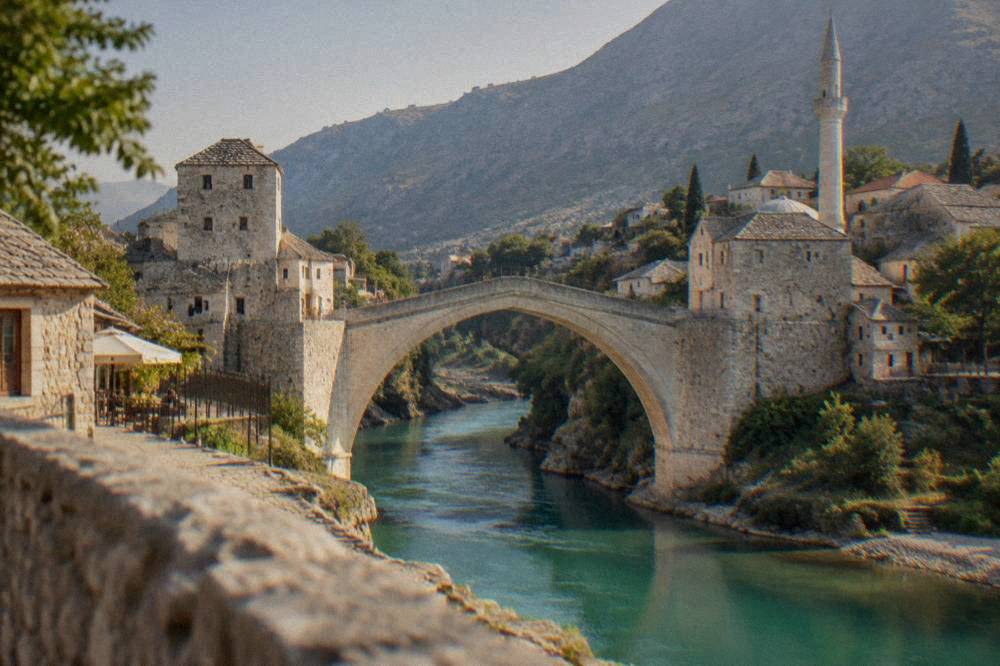
Mostar's Old Town holds two grand Ottoman mosques that matter to visitors: the Karađoz-Bey Mosque in the bazaar streets above the river, and the Koski Mehmed-pašina džamija on the Neretva bank directly below Stari Most, and the practical difference for a visitor is position, since the Koski mosque offers a minaret terrace over the river while the Karađoz-Bey Mosque anchors the bazaar quarter itself. Both are working places of worship, both sit inside the UNESCO property, and both reward a quiet, unhurried visit rather than a checklist stop.
The Koski Mehmed-pašina džamija is the easier of the two to fold into a first visit, purely because of its terrace: the view down the Neretva to Stari Most is one of the defining images of the city. Its reported fee is about 10 KM for the mosque and about 18 KM with the minaret, with reports ranging between 14 and 18 KM for the combined ticket, so treat those figures as approximate and cash-based. The Karađoz-Bey Mosque, by contrast, is the building you reach by walking the bazaar properly, pausing at the coppersmiths and the shops of Kujundžiluk rather than beelining for the bridge.
Beyond the two headline mosques, the religious architecture of the Old Town spreads across confessions, Orthodox, Catholic and Muslim, inside a few hundred metres, which is the substance of the UNESCO inscription's language about coexistence. For the wider story of the city, read the Mostar history guide, and for the museum inside the bridge tower, see the Old Bridge Museum page.
If mosques are your thread through the city, a focused private walk pays for itself in context. Check availability for the private walking tour, which covers the Old Town's religious monuments in depth.
What Else Is Within Walking Distance Of The Karađoz-Bey Mosque?
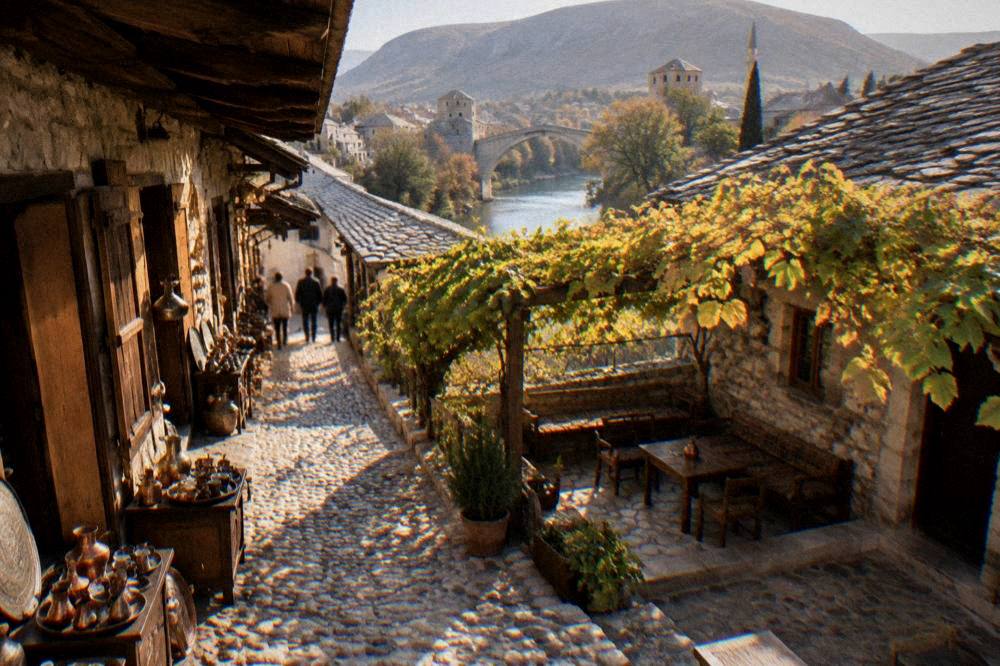
Everything in Mostar's Old Town core is within a few minutes of the Karađoz-Bey Mosque: Stari Most and the riverbank, the Koski Mehmed-pašina džamija terrace, the Crooked Bridge, the Ottoman houses on the far bank, and the museums and squares that carry the city's history since the bridge fell in 1993 and was rebuilt in 2004. The Old Town rewards aimlessness more than itinerary, but a rough order helps, and the list below keeps every stop in one walkable cluster.
Start at the bridge, cross it, and the Koski Mehmed Pasha Mosque terrace comes first on the right. Back over the bridge and up through the bazaar, the Karađoz-Bey Mosque sits mid-slope. Continuing up brings you to Spanish Square and the modern city; dropping back down the far side brings the Bišćević House and the Muslibegović House, Ottoman courtyard houses open as museums with reported fees of about 4 KM and about 8 KM respectively. The Partisan Memorial Cemetery, a stark hillside monument by Bogdan Bogdanović inaugurated in 1965 and now on Europa Nostra's list of endangered heritage after more than 700 of its stone markers were destroyed in 2022, is a longer uphill walk and worth the detour for anyone with an interest in the city's layers.
The one number to hold onto for the bridge itself: its height above the Neretva is about 21 to 24 metres depending on the river, and the span is about 29 m. Jumps from it are made by members of the Mostari diving club, who train for years before diving solo; there is no pay-to-jump option for visitors, and the water of the Neretva stays cold even in August. The 460th traditional diving competition ran on 26 July in 2026, and the Red Bull Cliff Diving round followed from 30 July to 1 August 2026, with platforms at 21 m for the women and 27 m for the men.
When Should You Visit The Karađoz-Bey Mosque And Mostar's Old Town?
The practical answer is spring or early autumn: Mostar's summers are seriously hot, with modelled mean daily highs of 29.9 C in July and 30.5 C in August (ERA5 reanalysis, 1991 to 2020) and an absolute recorded maximum of 41.2 C (FHMZ 1961 to 1990), while May, June and September combine warm days with far less stress on stone streets. A working mosque is also best visited outside prayer times, early in the morning or later in the afternoon, both because it is a place of worship first and because those hours dodge the bazaar's peak.
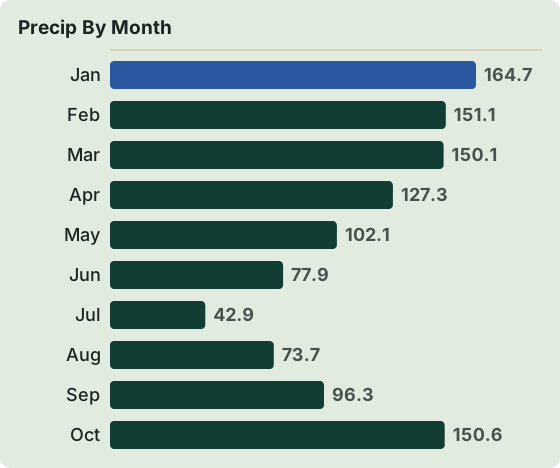
The station record tells the story of the year in numbers. Mostar averages 14.6 C across the year, with January at 4.8 C and July at 24.7 C, and its rain has a clear winter maximum: November averages 200.0 mm against July's 42.9 mm (FHMZ Mostar station, 1961 to 1990). Total annual precipitation is 1,515.4 mm, and snow is rare and thin in the city bowl itself.
| Month | Mean temp C | Precip mm | Days over 1 mm |
|---|---|---|---|
| Jan | 4.8 | 164.7 | 11 |
| Feb | 6.6 | 151.1 | 10 |
| Mar | 9.6 | 150.1 | 10 |
| Apr | 13.3 | 127.3 | 11 |
| May | 17.9 | 102.1 | 9 |
| Jun | 21.5 | 77.9 | 8 |
| Jul | 24.7 | 42.9 | 5 |
| Aug | 24.2 | 73.7 | 6 |
| Sep | 20.4 | 96.3 | 6 |
| Oct | 15.3 | 150.6 | 8 |
| Nov | 10.1 | 200.0 | 11 |
| Dec | 6.2 | 178.7 | 11 |
If summer is when you come, structure the day around the heat: the mosque and the bazaar in the first hours of the morning, a long midday break, and the bridge and riverbank after the light softens. Winter brings its own rewards, thin crowds, low light on the limestone, and the mosque's stone courtyard at its quietest, though some Old Town sights trim their hours between November and March, so confirm anything specific before setting out.
What Should You Know Before Visiting A Working Mosque In Mostar?
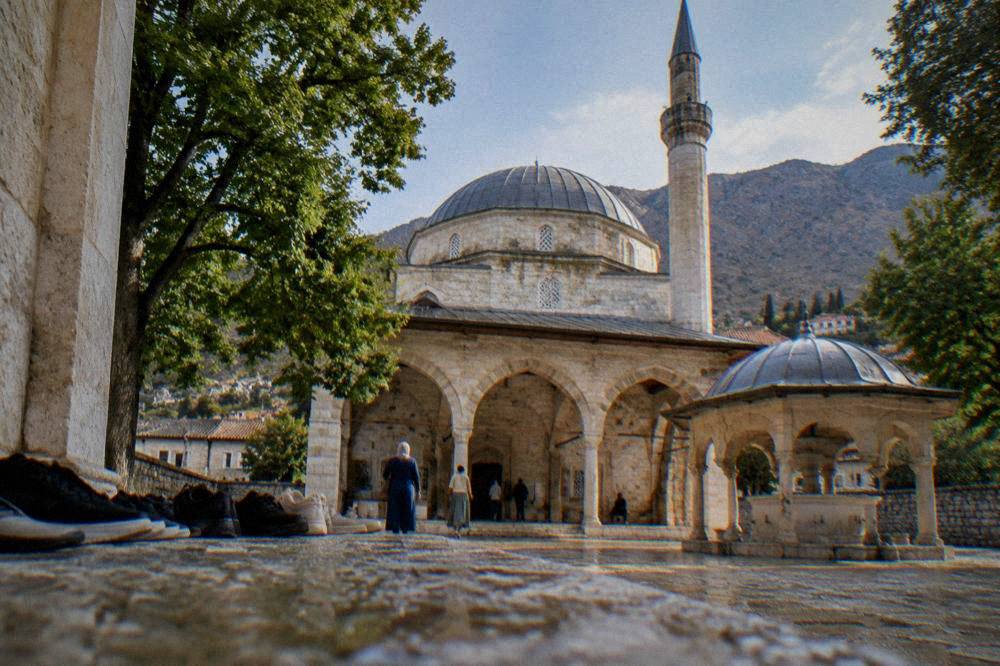
A mosque visit in Mostar asks for the same courtesies as anywhere in the region: modest dress covering shoulders and knees, shoes off before carpeted areas, silence inside, and a check on arrival about whether the prayer hall is open to visitors at that moment, since worship takes precedence over sightseeing. The Karađoz-Bey Mosque is a functioning congregation, not a museum, and the standard practice is to arrive outside prayer times, keep photography discreet and ask before photographing people at worship.
A few practical points round out the visit. There is no ticket desk culture here as there is at the riverbank mosque, so carry small KM notes for any contribution box and for the neighbouring sights. The bazaar streets are stone-paved and can be slippery when wet, and November, averaging 200.0 mm of rain, is the month to expect showers. Bosnia and Herzegovina is not in the European Union, so roaming, insurance and border rules differ from neighbouring Croatia, whose land border has carried full checks since 1 January 2023. Visa-exempt visitors may stay up to 90 days in a six-month period from first entry.
For food after the walk, the bazaar and the streets around it hold the classic Bosnian kitchen, and the site's ćevapi guide covers the city's signature grilled dish in detail. Coffee culture here is its own institution, and pastry shops near the bazaar open early for the morning trade.
How Do You Combine The Mosque With A Day Trip From Mostar?
The Karađoz-Bey Mosque and the whole Old Town core take a half-day at a relaxed pace, which leaves the afternoon or the next full day for Herzegovina's ring of sights: Blagaj at 13.7 km, Počitelj at 30.0 km and Kravica waterfall at 55.2 km, all within an hour's free-flow drive of Stari Most. This is the standard Mostar rhythm, and it is why the city rewards at least two nights: one for the Old Town and one for the countryside.
Blagaj pairs the Buna spring and the Blagaj Tekke, a dervish lodge at the mouth of a cliff cave with a reported entry of about 10 KM and a dress code of covered shoulders and knees, with wraps provided at the entrance. Počitelj is a stone fortified village on a hillside, free to wander. Kravica waterfall charges 20 KM for an adult all year, 10 KM for residents of Bosnia and Herzegovina, with children under 7 free, and opens on hours that shift by month: 07:00 to 22:00 from June to September, 07:00 to 17:00 in the depth of winter. Swimming in the pool below the falls is allowed in summer in the designated area, with no lifeguard reported, so check the park's rules on arrival.
Organised day tours bundle these into a single loop with a guide and transport, which matters if you would rather not drive mountain roads yourself. Read the Počitelj day-trip page and the Konjic day-trip page for the individual stops, and see the things to do in Mostar page for the full picture of the city and its surroundings.
Common Questions About The Karađoz-Bey Mosque
Is the Karađoz-Bey Mosque in Mostar open to visitors?
It is a working mosque and visitors are generally welcome outside prayer times, but no fixed visiting hours or entry fee are published in a form this desk can state. Confirm on arrival, dress modestly with shoulders and knees covered, and be prepared to wait if a prayer service is under way.
How much does it cost to enter the Karađoz-Bey Mosque?
Neighbouring Old Town sights carry small reported cash fees, from about 4 KM at Bišćević House to about 10 KM at the Koski Mehmed-pašina džamija and the Old Bridge Museum, so carry small convertible mark notes and confirm any contribution on the spot.
How far is the Karađoz-Bey Mosque from Stari Most?
The mosque sits in the bazaar streets just uphill from the bridge, a walk of a few minutes through Kujundžiluk. The whole Old Town cluster, bridge, bazaar, mosque, riverbank and Crooked Bridge, is compact enough to cover comfortably in a half-day.
What is the currency used at Mostar's sights?
The convertible mark (KM, BAM), pegged at 1 EUR = 1.95583 KM. Euro cash is often accepted in tourist areas at a rounded rate, but confirm the rate, and keep KM for small sight entries, buses and market purchases.
Can you visit the mosque during Ramadan or prayer times?
Prayer takes precedence at any working mosque, and during Ramadan the building is at its busiest in the evenings. Visit outside prayer times, keep noise low, and ask at the door whether the interior is open to visitors at that moment.
Is the Karađoz-Bey Mosque inside the UNESCO area?
Yes. The mosque lies within the Old Bridge Area of the Old City of Mostar, the World Heritage property inscribed in 2005 under criterion (vi) as a symbol of multicultural coexistence.
