Mostar Car Rental: When You Need One And Where To Pick Up
Mostar rewards drivers who want Blagaj, Počitelj and Kravica waterfall on their own clock, but the Old Town itself is a walker's city. This guide sets out when a Mostar car rental is worth it, where to pick a car up, and what changes at the Croatian border.
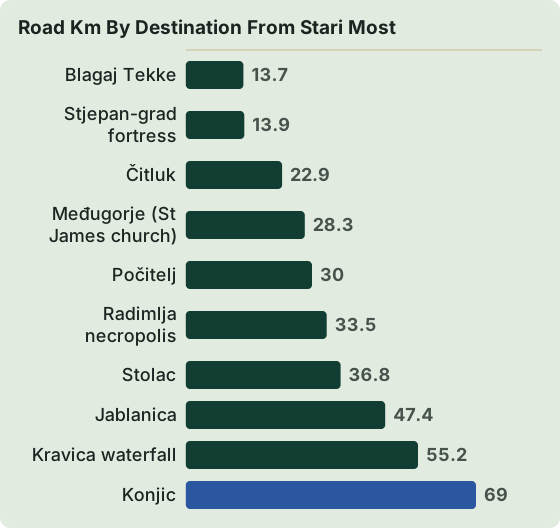
Rent a car in Mostar if you plan to reach Blagaj (13.7 km), Počitelj (30.0 km) or Kravica waterfall (55.2 km, about 54 minutes free-flow) on your own schedule; skip it if you are staying inside the Old Town, where everything is walkable and organised day tours cover the same roads.
Mostar sits at the centre of a Herzegovina road network that puts a dozen worthwhile places within an hour or two of the Old Bridge, and a car is the only way to reach several of them on your own timetable. It is also a city whose historic core, Kujundžiluk and Stari Most, is compact, pedestrian and completely walkable, so whether a rental earns its cost depends almost entirely on what lies beyond the city limits. This page lays out the decision plainly, then covers pickup points, the cross-border paperwork for Croatia, and the driving times that matter. The currency throughout is the convertible mark (KM, BAM), pegged at 1 EUR = 1.95583 KM.
Do You Need A Car In Mostar?
You do not need a car for Mostar itself, because the Old Town, the Old Bridge, Kujundžiluk and Spanish Square are all within a short walk of each other, but a car is the most flexible way to reach Blagaj at 13.7 km, Počitelj at 30.0 km and Kravica waterfall at 55.2 km, about 54 minutes away by road. Trains and buses cover Sarajevo, but Herzegovina's smaller villages depend on sparse local lines.
Inside the city, distance stops being the question almost immediately. The Old Bridge Area of the Old City of Mostar is a UNESCO World Heritage property, inscribed in 2005, and its lanes were built for foot traffic and donkeys long before cars. The practical guide is really about everything outside the city.
The arithmetic changes with your itinerary. A visitor staying two nights and wanting only Stari Most, Koski Mehmed-pašina džamija and a riverside walk can skip the rental entirely and follow a one day in Mostar plan on foot. A visitor who wants Blagaj, Kravica waterfall, Počitelj and possibly Međugorje or Stolac in a tight window gets real value from four wheels, because the cluster of Herzegovina day trips spreads across 55 km of road in three directions.
There is a third option worth naming early: an organised day tour. A guided Herzegovina day tour from Mostar covers Blagaj, Počitelj and Kravica waterfall with a live guide in a private car, which removes parking, navigation and entrance logistics in one move, and for a solo traveller it usually costs less than a solo rental day. The Mostar Travel Guide day-trip pages compare the options place by place.
| Destination from Stari Most | Road km | Free-flow minutes |
|---|---|---|
| Blagaj Tekke | 13.7 | 19 |
| Stjepan-grad fortress | 13.9 | 20 |
| Čitluk | 22.9 | 31 |
| Međugorje (St James church) | 28.3 | 40 |
| Počitelj | 30.0 | 31 |
| Radimlja necropolis | 33.5 | 42 |
| Stolac | 36.8 | 47 |
| Jablanica | 47.4 | 57 |
| Kravica waterfall | 55.2 | 54 |
| Konjic | 69.0 | 80 |
| Trebinje | 116.5 | 142 |
All times are computed free-flow road figures without border queues or road works. Road works are reported on the Mostar south bypass and the Corridor Vc motorway section between Mostar North and Mostar South, so allow extra time on those corridors.
Where Do You Pick Up A Rental Car In Mostar?
Pickup points cluster around Mostar's road and air gateways: rental desks and local agencies serve Mostar International Airport (OMO), 8.2 km and about 12 minutes by road from Stari Most, and offices in the city itself, so you can collect a car on arrival or in town the morning you need it.
Mostar's own airport is small, with a reported route list of Zagreb (Croatia Airlines) and Stuttgart (Eurowings), the Stuttgart link extended through the 2026/27 winter, plus seasonal Düsseldorf flights. Arriving there puts a very short transfer between the terminal and the city. The Mostar airport guide covers the transfer options in detail, and a taxi from the airport into the centre is a short, inexpensive ride.
Far more visitors arrive by other gateways and pick the car up in Mostar afterwards. The Dubrovnik to Mostar and Split to Mostar corridors both bring coach and transfer traffic into the city daily, and the train from Sarajevo runs twice a day each way, a journey of about two hours, having resumed regular service on 15 October 2026 after a suspension that began around 8 September 2026 following a fire along the corridor. If you arrive by train or bus and rent in the city, you pay for the car only on the days you drive it, which matters for a two-night stay.
One practical note on timing: agencies in smaller Bosnian cities often keep short office hours and close entirely on Sundays and public holidays. Book ahead, confirm the pickup window in writing, and check whether the desk is staffed or keyless. If your arrival is late or on a Sunday, airport pickup at Sarajevo or Dubrovnik with a one-way rental is sometimes the only workable shape, though cross-border one-way fees apply and not every company permits them.
Can You Take A Rental Car From Mostar Into Croatia?
Yes, if the rental company authorises it in advance: Bosnia and Herzegovina is not in the EU or Schengen, so the Croatian land border is a Schengen external border with full passport checks since 1 January 2023, and you will typically need written cross-border permission and a Green Card from the rental company, sometimes for a fee.
The permission is the part that catches people out. A standard rental contract often restricts the car to Bosnia and Herzegovina by default, and taking it across without authorisation can void the insurance entirely. Ask before you sign, get the authorisation printed on the contract, and confirm the Green Card insurance is valid for Croatia. Crossing points near Mostar include Doljani-Metković and Bijača-Nova Sela, with waits reported up to about 30 minutes and longer at summer peaks, so check live queues before setting out.
The border itself is straightforward for visa-exempt travellers, who may stay up to 90 days in a six-month period from first entry. ETIAS is not in operation, so no travel authorisation application exists to make yet. The full paperwork detail, including what the Entry/Exit System means for biometric recording at the Croatian line, is covered in the Croatia-Bosnia border crossing guide.
The classic cross-border drive from Mostar is to Dubrovnik, 145.5 km and about 150 minutes free-flow, plus border time. The Pelješac Bridge, opened in 2022, lets traffic route via Croatia and bypass the Neum corridor, the short Bosnian coast around Neum, 75.3 km and about 82 minutes from Mostar if you do want a swim stop on the Adriatic. Full route notes are in the how to get to Mostar guide.
What Are The Roads Like Around Mostar?
The main roads out of Mostar are paved two-lane highways in decent condition, with the M17 following the Neretva valley north towards Jablanica and Konjic and south towards Čapljina, but they are winding, unlit at night, and shared with trucks, so the free-flow times in any table assume daylight and dry conditions.
Herzegovina's landscape is karst limestone, and the roads follow the valleys. The route to Blagaj is short and easy. The route to Kravica waterfall runs through Čitluk and Ljubuški country that climbs and turns. The road north along the Neretva to Jablanica and Konjic is one of the most scenic drives in the country, hugging the river between cliffs, and it is the same corridor the railway uses. Fuel stations sit along all the main routes, but fill up before the smaller by-roads towards Stolac or Vjetrenica, where stations thin out.
Two road-work situations are reported. The Mostar south bypass is under construction with tunnel and viaduct works, and the Corridor Vc motorway section between Mostar North and Mostar South was rerouted in September 2026 towards a new Livač tunnel, so expect heavy vehicles, temporary signals and occasional blasting notices on those corridors. Neither closes the existing roads, but both add minutes.
One safety note that applies to all rural Herzegovina, not just drivers: suspected mine areas remain from the war, and the official advice is to stay on marked roads and paths. Do not wander off road edges for photographs, and use the BHMAC suspected-area data if you plan to hike. The Bosnia and Herzegovina travel tips page covers this in full.
How Long Does It Take To Drive From Mostar To The Main Sights?
Driving times from Stari Most run about 19 minutes to Blagaj Tekke, 31 minutes to Počitelj, 40 minutes to Međugorje, 47 minutes to Stolac, 54 minutes to Kravica waterfall and 57 minutes to Jablanica, all computed free-flow road figures that exclude border queues and any road works.
Those numbers are the real argument for a rental, because the Herzegovina cluster is tight. A single day can take in Blagaj's Buna spring, the fortress village of Počitelj and Kravica waterfall with comfortable margins, and a second day can push north to Jablanica's Bridge on the Neretva or east to Stolac and the Radimlja stećci necropolis, part of a UNESCO serial property inscribed in 2016. Kravica waterfall charges 20 KM for an adult all year, 10 KM for residents of Bosnia and Herzegovina, with children under 7 free, and it opens all year with hours by month, 07:00 to 22:00 from June to September.
The longer drives change the picture. Konjic, with the ARK D-0 bunker requiring a booked guided tour, is 69.0 km and about 80 minutes. Vjetrenica cave is 77.2 km and about 104 minutes. Trebinje, in the far southeast, is 116.5 km and about 142 minutes, a genuine half-day each way. Sarajevo is 127.1 km and about 134 minutes free-flow to Baščaršija, but the train, about two hours twice a day, makes the capital an easy car-free trip, and the Sarajevo to Mostar guide compares them.
For the tighter cluster, a guided alternative exists that covers the same three flagship stops without the wheel. The Herzegovina day tour from Mostar runs with a live guide in a private car to Blagaj, Počitelj and Kravica waterfall, and Check availability shows the current dates and price. It is the same road you would drive yourself, minus the parking decisions at each stop.
| Drive from Stari Most | Road km | Free-flow minutes | Border crossing on route |
|---|---|---|---|
| Kravica waterfall | 55.2 | 54 | none |
| Neum (Adriatic coast) | 75.3 | 82 | 2 (BiH-Croatia each way) |
| Makarska | 126.9 | 105 | 1 (Croatia) |
| Dubrovnik (Stradun) | 145.5 | 150 | 1 (BiH-Croatia) |
| Dubrovnik airport | 163.4 | 172 | 1 (BiH-Croatia) |
| Split | 174.1 | 131 | 1 (BiH-Croatia) |
Cross-border figures exclude queue time at the border; waits are reported up to about 30 minutes and longer at summer peaks.
What Should You Know About Parking And Driving In Mostar Itself?
Driving inside Mostar is manageable, and traffic density is low outside rush hour, but parking near the Old Town is limited because the streets around Kujundžiluk and Stari Most are pedestrian in practice, cobbled and narrow, so the working plan is to park at your accommodation, walk into the Old Town, and reserve the car for the day trips beyond the city.
The Old Town streets around Kujundžiluk and Stari Most are pedestrian in practice, cobbled and narrow, and the approach roads fill quickly in summer. The where to stay in Mostar guide flags which areas put you within walking distance of the bridge, which is the single biggest car-avoidance decision you can make.
Beyond parking, Bosnian driving is conventionally European: headlights on at all times, a valid licence and passport carried, and the emergency number 112 if you need police (122), fire (123) or an ambulance (124). Speed limits are posted in km/h. Fuel is sold in KM. Tap water in Mostar is generally treated, plugs are type C and F at 230 V, and card acceptance is good at hotels and larger venues while small vendors want cash, all covered in the Mostar money guide.
The drive up to Fortica or the Hum side for the Mostar viewpoints is short. The one driving habit to expect is impatience on the valley roads, where locals who know every bend will follow closely until the next straight. Pull in and let them pass; it costs a minute.
Is A Car Or A Day Tour Better For Herzegovina Day Trips?
A car wins on flexibility and price for two or more people exploring over multiple days, while an organised day tour wins on convenience, local knowledge and the entrance logistics at Kravica waterfall, the Blagaj Tekke and Počitelj, especially for solo travellers and anyone unhappy driving mountain roads.
The honest comparison is per person per day. A rental's daily cost splits across the car, fuel and parking, and it only pays off when the car is full and moving. A guided tour bundles the driving, the guiding and often the entrance handling into one per-person price, and on the flagship Herzegovina loop it removes every decision. The Kravica, Blagaj and Počitelj in one day itinerary shows what a self-drive version of that loop looks like hour by hour, so you can cost both shapes against each other.
There is also a middle path for the city itself: leave the car parked and take a walking tour of Mostar's history, which needs no vehicle at all. The Mostar war history pages explain what the guided siege-history walks cover, and the bridge diving tradition, with the Mostari diving club's 460th traditional competition held on 26 July 2026 and the Red Bull Cliff Diving round from 30 July to 1 August 2026, happens metres from the Old Town's lanes.
When Is The Best Season For A Mostar Road Trip?
Late April to mid-June and September to mid-October give the best mix of dry roads, daylight and manageable heat, because the FHMZ 1961-1990 station series shows Mostar averaging 24.7 C in July against 13.3 C in April and 15.3 C in October, with November the rain-heavier month at 200.0 mm against July's 42.9 mm.
Summer is the season the rental desks are busiest and the valley is at its most demanding. The ERA5 reanalysis, 1991-2020, models mean daily highs of 29.9 C in July and 30.5 C in August, and the station record puts the absolute maximum at 41.2 C, so a car without air conditioning is a poor choice between June and August, and asphalt-side stops need water. The counterweight is that summer is when the bridge-diving season peaks and when the events calendar fills, covered in the best time to visit Mostar and the Mostar weather pages.
Winter driving is quieter but has its own constraints. January averages 4.8 C and the absolute minimum on record is -10.9 C, with a maximum snow cover of 31 cm in the station series. The valley roads are kept clear, but the climbs towards Stolac, Vjetrenica or Konjic can ice overnight, and Kravica waterfall, open all year at 07:00 to 17:00 from November, is a different, colder sight in January. For the full cold-season picture see the seasonal notes in the getting around Mostar guide.
| Month | Mean temp C (FHMZ 1961-1990) | Precipitation mm (FHMZ 1961-1990) | Modelled mean daily high C (ERA5 1991-2020) |
|---|---|---|---|
| January | 4.8 | 164.7 | 8.4 |
| April | 13.3 | 127.3 | 17.7 |
| July | 24.7 | 42.9 | 29.9 |
| August | 24.2 | 73.7 | 30.5 |
| October | 15.3 | 150.6 | 19.5 |
| November | 10.1 | 200.0 | 14.1 |
What Does A Self-Drive Herzegovina Loop Look Like?
A one-day loop of Blagaj, Počitelj and Kravica waterfall is the drive the guided tours repeat daily, because the three stops sit on one clean southbound axis with driving legs of about 19, 31 and 54 minutes each way, and the total time behind the wheel stays modest enough to leave room for a long stop at every place.
Start early and head for Blagaj, 13.7 km and about 19 minutes, where the Buna spring emerges from the cliff below Stjepan-grad fortress, 13.9 km and 20 minutes if you climb to the ruins. The Blagaj Tekke at the spring charges a reported 10 KM entry, open 08:00 to 22:00 from April to October and 09:00 to 17:00 from November to March, with shoulders and knees covered inside, wraps provided. Continue south past Čitluk to Počitelj, 30.0 km and 31 minutes total from Mostar, a walled Ottoman village where the streets themselves are free and the fortress climb is the point.
From Počitelj the road swings west towards Ljubuški and Kravica waterfall, 55.2 km and about 54 minutes from Mostar, where a karst river widens into a tufa amphitheatre. Adult entry is 20 KM all year, children under 7 are free, and swimming is allowed in summer in the designated pool area, with no lifeguard reported, so check the park's rules on arrival. The return to Mostar retraces about an hour. It is a full but unhurried day, and it is precisely the loop the guided options run, so if any leg puts you off, the tour is the fallback.
What Are The Alternatives If You Decide Against A Car?
You can cover Herzegovina without driving by using the twice-daily Sarajevo train, the intercity buses towards Dubrovnik and Split, local bus lines to Blagaj, and organised day tours for the Kravica waterfall cluster, so a car-free trip to Mostar loses flexibility rather than access.
The train is the strongest single alternative on the network: two services a day each way between Sarajevo and Čapljina via Mostar, about two hours end to end from Sarajevo, resumed on 15 October 2026 after the autumn suspension. Buses run several times daily to Sarajevo and on towards Dubrovnik and Split, and local lines reach Blagaj and the airport. The gaps are Počitelj and Kravica waterfall, which sit off the rail line and on thin bus schedules, and that is exactly the gap the day tours fill.
For city days, nothing with wheels beats walking. The Old Bridge, the Old Bridge Museum in the Tara tower (a reported 10 KM, open 08:00 to 16:00 daily from 1 April to 1 November), Koski Mehmed-pašina džamija beside the river and the Crooked Bridge at Kriva ćuprija all sit within a few minutes' stroll, and the things to do in Mostar page maps them. Food needs no car either: the Bosnian food, ćevapi and burek pages list what to eat inside the walkable core, and the best restaurants in Mostar cluster nearby.
Common Questions About Mostar Car Rental
Do You Need A Car To Visit Mostar?
No. The Old Town, Stari Most, Kujundžiluk and the riverside sights are all walkable, and buses and trains reach Sarajevo, Dubrovnik and Split. A car only becomes useful for the Herzegovina day-trip cluster such as Kravica waterfall, Počitelj and Stolac.
Can You Rent A Car In Mostar And Drive To Dubrovnik?
Often yes, but only with the rental company's written cross-border authorisation and Green Card insurance, sometimes for a fee. Bosnia and Herzegovina is not in the EU or Schengen, so the Croatian border carries full passport checks, with waits reported up to about 30 minutes and longer in summer.
How Far Is Kravica Waterfall From Mostar By Car?
Kravica waterfall is 55.2 km by road from Stari Most, about 54 minutes free-flow. Entry is 20 KM for an adult all year, 10 KM for residents of Bosnia and Herzegovina, with children under 7 free.
Is Parking Difficult In Mostar's Old Town?
Park at your accommodation and walk in, or choose lodging within walking distance of the bridge.
What Side Of The Road Do You Drive On In Bosnia And Herzegovina?
The right, as across most of continental Europe. Headlights are required at all times, and the emergency number is 112.
Is It Safe To Drive In Herzegovina?
Main roads are paved and in decent condition, and the valley routes are well signed. Stay on marked roads in rural areas because of suspected mine zones remaining from the war, and allow extra time around the reported bypass and Corridor Vc road works.