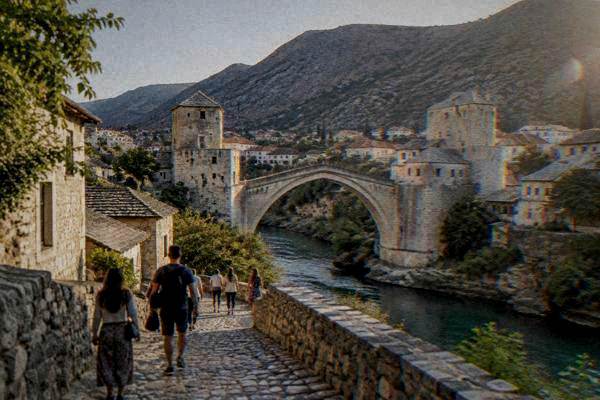
Donja Mahala And The Neretva Banks South Of The Bridge
Donja Mahala is the low riverside quarter of Mostar stretching along the Neretva south of the Old Bridge, a side of the city where the tour groups thin out and the riverbanks carry the walk.
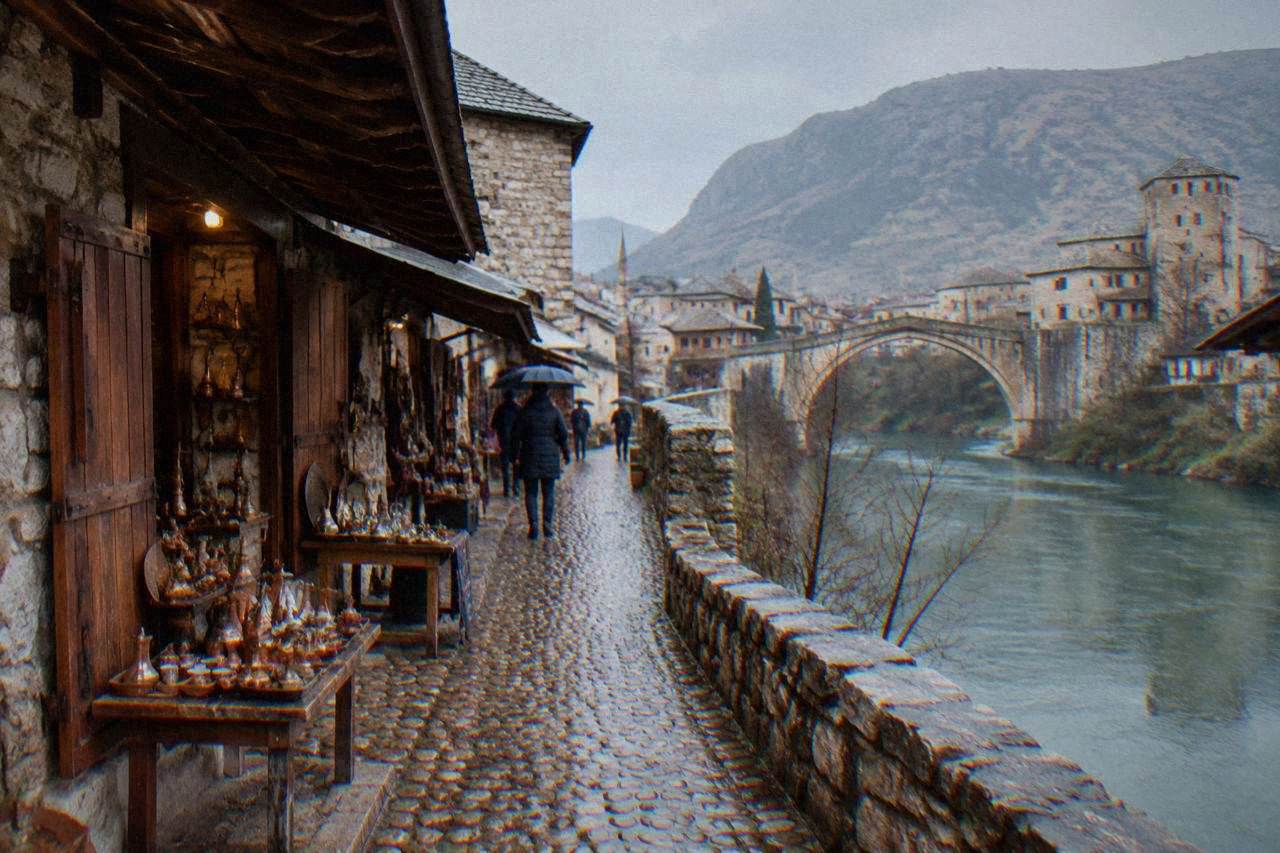
Donja Mahala is the riverbank district of Mostar on the east side of the Neretva, running downstream from Stari Most. It pairs a short walking loop with views back at the Old Bridge, and it sits within easy reach of Blagaj, Počitelj and Kravica waterfall.
Donja Mahala is the low riverbank quarter of Mostar, the inland city on the Neretva river in Herzegovina, Bosnia and Herzegovina, and it stretches along the water south of Stari Most, the Old Bridge. Where the lanes around Kujundžiluk fill and empty with day trips, this side keeps a slower pace: stone walls, garden courtyards, the river running fast and cold below, and the tower of the Old Bridge appearing between rooftops each time a street turns toward the bank. This guide sets out what the quarter is, how to walk it, what to see on this side of the Neretva, and where it leads next.
What Is Donja Mahala In Mostar?
Donja Mahala is the historic riverside quarter on the east side of the Neretva in Mostar, lying downstream and south of Stari Most, and its name simply marks the lower neighbourhood of the old city. It is part of the wider Old Town fabric that grew around the bridge, on the bank opposite the bazaar streets, and today it carries houses, small guesthouses, cafes and the riverside path that follows the water. The name follows the Ottoman pattern of dividing old cities into mahalas, residential neighbourhoods clustered around a mosque, and the eastern bank of Mostar carries several of them. What the visitor meets today is a lived-in quarter rather than a museum street: laundry on lines, cats on warm stone, the Neretva a few steps below. The Old Bridge Area of the Old City of Mostar has been a UNESCO World Heritage property since 2005, and the bridge, completed in 1566, stands at the northern end of this bank's river walk.
The quarter's character comes from being residential first. The bazaar side, Kujundžiluk, was built for trade, copper workshops and shops; the mahalas were built for living. That division still reads in the street pattern, with the east bank running in narrower lanes that climb away from the water toward the hillside. Walking it takes an unhurried hour or two, longer with a stop at the water's edge, and the loop links naturally with the sights around the bridge itself, covered in the site's Mostar overview page.
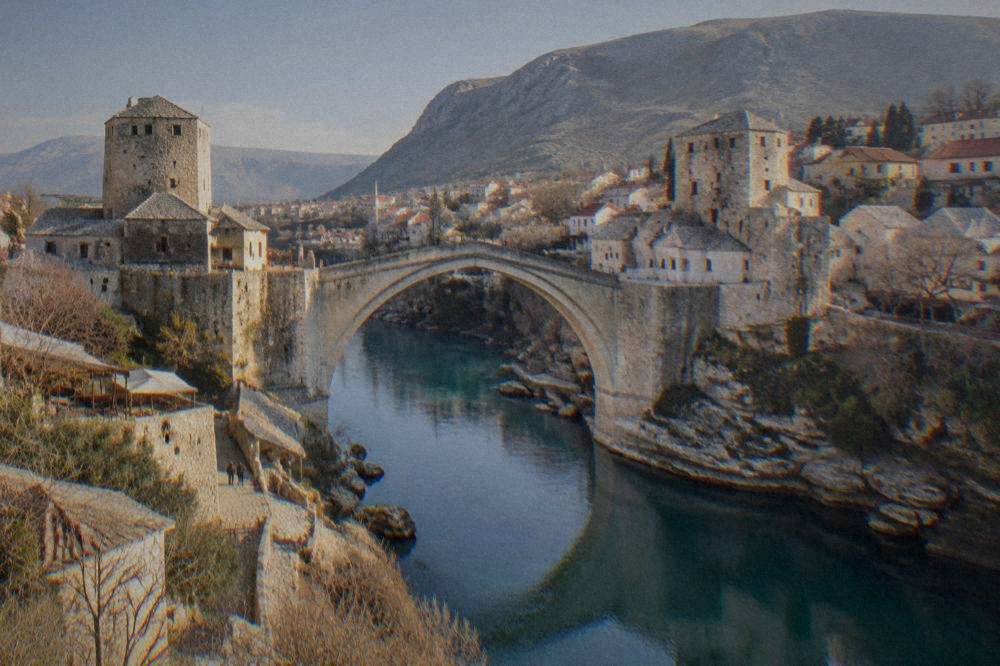
The river is the constant. The Neretva is cold even in August, fed by karst springs, and the banks on this side give long, straight views up and down the channel. At the upstream end, Stari Most itself rises about 21 to 24 metres depending on the river, its single stone arch spanning roughly 29 metres, and from the mahala bank the bridge photographs across open water rather than across rooftops, which is why photographers drift here in the late afternoon.
Where Exactly Does Donja Mahala Sit Against The Neretva In Mostar?
Donja Mahala occupies the east bank of the Neretva immediately south of Stari Most, running downstream along the river away from the bridge, with lanes climbing from the bank toward the hillside above, and the whole walkable core sits within a few hundred metres of the Old Bridge itself. Downstream means south: the Neretva flows south through Mostar, so the quarter lies below the bridge on the river's journey. Cross the bridge from the bazaar side, turn right along the water, and the walk has begun. Kriva ćuprija, the Crooked Bridge, a small single-arch stone bridge over a side channel, sits a short stroll upstream on the Radobolja, and the two bridges bracket the old city's water crossings neatly.
The geography is simple to hold in mind. The west bank carries the bazaar, the shopping streets and the climb to the fortifications; the east bank carries the mahalas, the mosque gardens and the quieter water margins. Hum hill stands over the western side of the city, and the lanes of Donja Mahala rise gently toward it before the town gives way to slopes. Anyone planning a fuller visit can fit this bank into a two-day plan without strain, as the site's two days in Mostar itinerary shows.
A short distances table helps frame the quarter against the day trips that follow, all measured by road from Stari Most:
| Place | Road distance | Free-flow time |
|---|---|---|
| Kriva ćuprija (Crooked Bridge) | within the Old Town | a short walk |
| Blagaj Tekke | 13.7 km | about 19 min |
| Stjepan-grad fortress, Blagaj | 13.9 km | about 20 min |
| Počitelj | 30.0 km | about 31 min |
| Kravica waterfall | 55.2 km | about 54 min |
| Konjic | 69.0 km | about 80 min |
Border queues and town traffic are excluded from those times; they are open-road figures. The takeaway for planning is that the east bank of Mostar is not a detour from anywhere: it is minutes from the bridge, and it sits on the natural driving line toward Blagaj, Počitelj and the waterfall country of western Herzegovina.
What Sights Sit On The Donja Mahala Side Of Mostar?
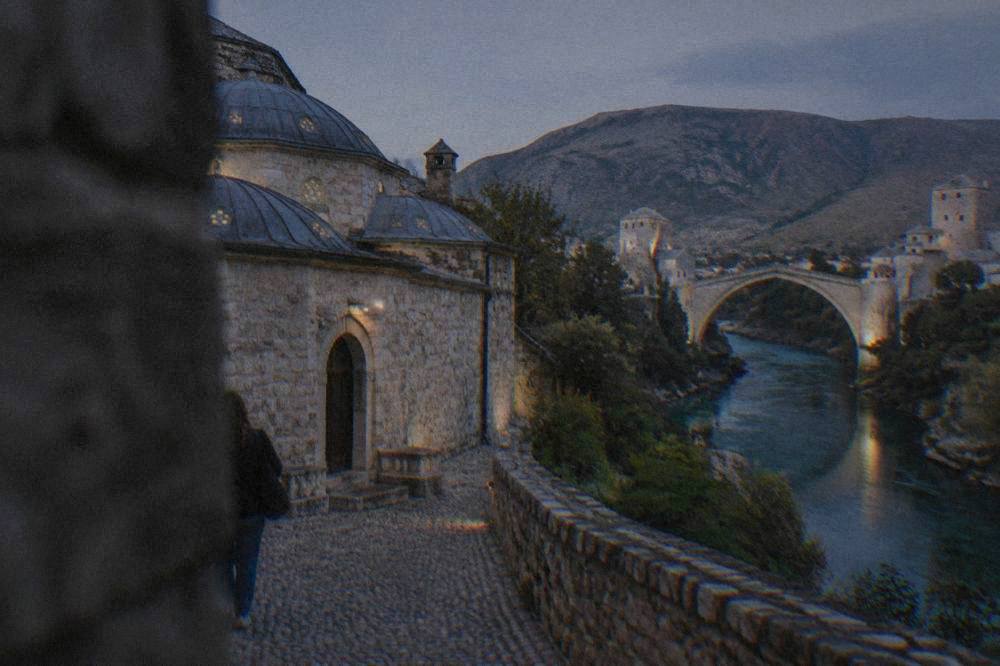
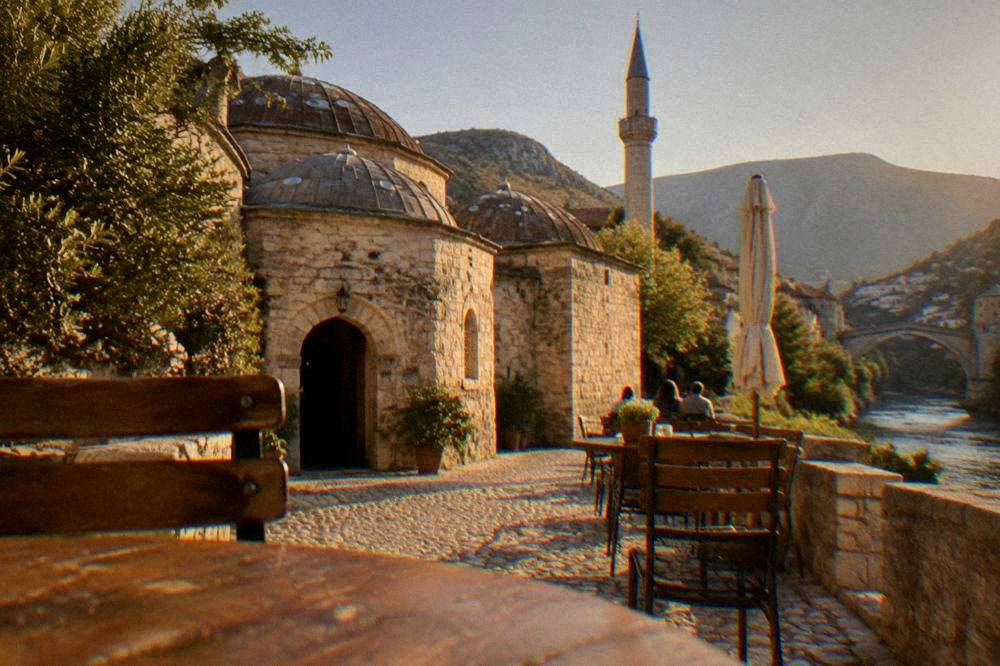
The east bank walk south of the bridge delivers Koski Mehmed-pašina džamija with its riverside garden and minaret views, long bankside terraces looking straight at Stari Most, the lane architecture of the mahala itself, and the continuation upstream to Kriva ćuprija, the Crooked Bridge. Koski Mehmed-pašina džamija, the mosque that stands almost opposite the bridge on this side, is the quarter's landmark: a small cash fee covers the mosque interior, with a higher combined fee reported for the mosque plus minaret, and the minaret platform gives one of the classic views over the arch of Stari Most. The mosque remains a working place of worship, so access pauses at prayer times.
From the mosque garden the walk bends downstream. The bank here carries terraces and platforms built out over the water, and the river runs clear and fast a metre or two below the railings. Small Ottoman-era houses line the lanes behind, and at least two of them, Bišćević House and Muslibegović House, open as house museums a little further along the bank; Bišćević House charges a reported small cash fee in the low single figures in KM. Both show the domestic side of the old city: divan rooms, courtyards and river-facing windows built for the climate.
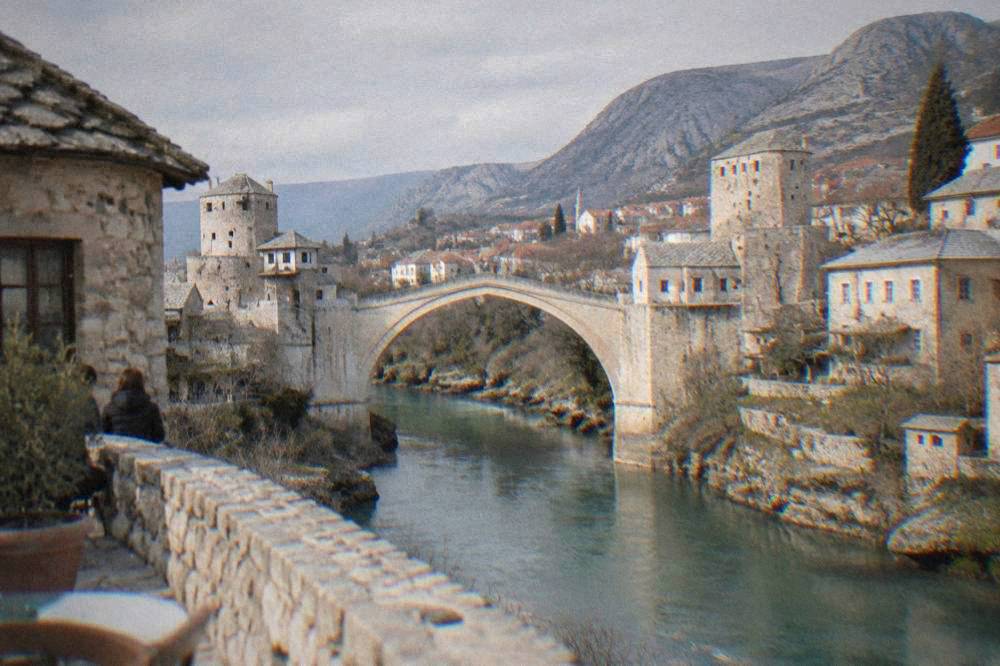
The bridge itself needs no ticket and never has: crossing Stari Most is free and open around the clock. The story of the Old Bridge, completed in 1566 under Suleiman the Magnificent by mimar Hajruddin, destroyed on 9 November 1993 and reopened in July 2004, is told on the site's dedicated pages, including why the bridge was destroyed and how it was rebuilt. On this side, the practical sight is the museum in Tara tower by the bridge, the Old Bridge Museum, reported at 10 KM for an adult with daily opening through the April-to-November season. Reported figures can move, so confirm fees on arrival.
A compact fee table for the east-bank cluster:
| Sight | Entry | Note |
|---|---|---|
| Stari Most (the bridge) | free | public crossing, open at all hours |
| Koski Mehmed-pašina džamija | reported small cash fee | more with the minaret climb |
| Old Bridge Museum, Tara tower | reported 10 KM adult | seasonal daily hours |
| Bišćević House | reported small cash fee | house museum, courtyard |
| Kriva ćuprija | free | public stone footbridge |
Walking the full set, bridge to Crooked Bridge with the mosque and one house museum, fills a relaxed half day. Anyone wanting the viewpoints above the river can extend upward; the site's guide to Mostar viewpoints covers the climbs on both banks, including the hill that stands directly over this side.
How Does The Donja Mahala Walk Connect To The Bridge Diving Tradition In Mostar?
The east bank terraces are one of the two classic places to watch the divers of the Mostari club jump from Stari Most, since the platform over the water on this side faces the traditional take-off point on the bridge's downstream rail, and club members jump through the warmer months with the peak of activity from May to October. The jumps are made by trained members of the diving club, who prepare for years before diving solo from the arch; there is no pay-to-jump arrangement for visitors, and none should be expected. Spectating costs nothing. The club's traditional summer competition reached its 460th edition on 26 July in 2026, and the Red Bull Cliff Diving World Series stopped in Mostar from 30 July to 1 August in 2026, the city's tenth time hosting, with the men diving from 27-metre platforms and the women from 21 metres, added platforms distinct from the bridge itself.
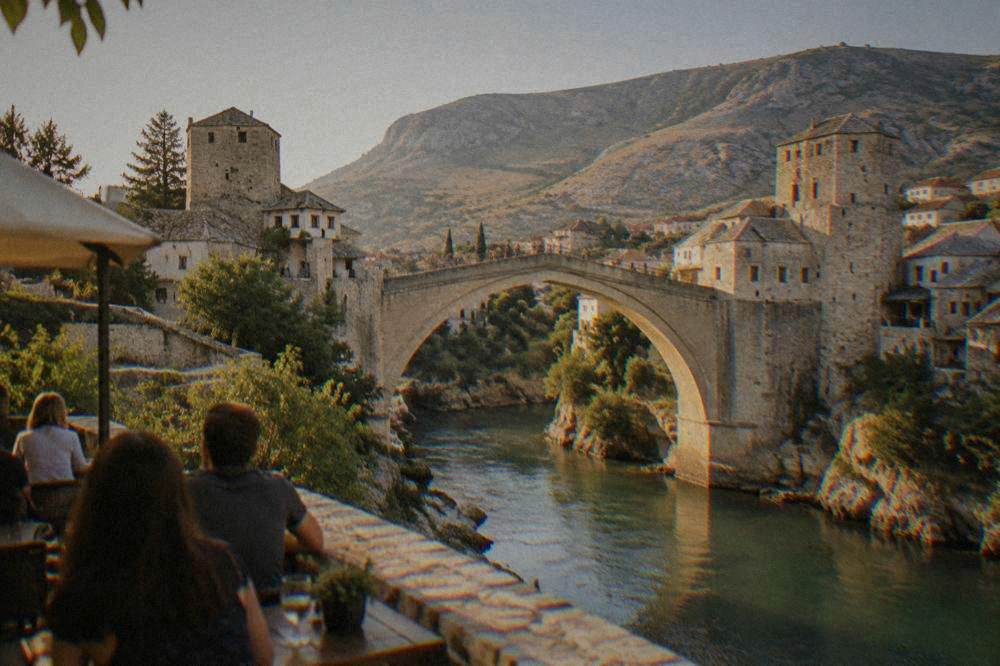
The diving calendar matters for planning a visit to this bank, because the terraces fill on jump days and the river walk takes on a festival air. The site's page on bridge diving in Mostar sets out the tradition, the training and the competition in full. Between events the bank returns to its usual quiet, with the divers appearing when the water and the weather suit, typically around the middle of the day in the warm season.
Two rules of the river are worth repeating here. The Neretva is cold even in August, cold enough to matter within seconds, and the current under the bridge is strong. Swimming from this bank is not part of the local routine, and the diving you watch is done by people who have trained for exactly those conditions. The site's article on swimming in the river at Mostar covers where people do and do not get into the water.
What Do Guided Tours Cover On The Donja Mahala Side Of Mostar?
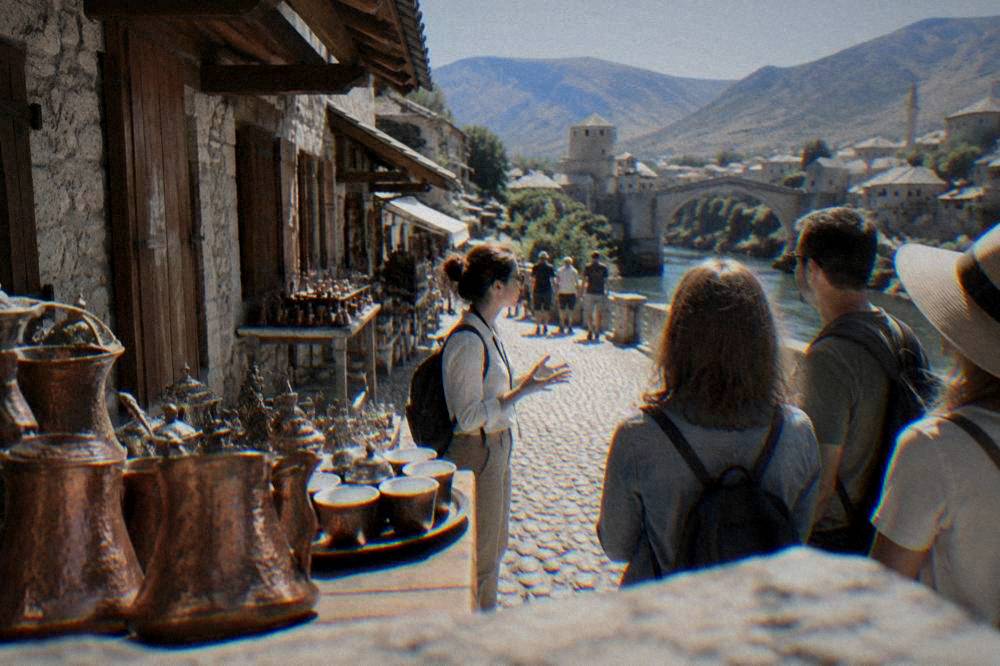
A guided walk of the old city normally crosses Stari Most and takes in the east bank as part of the same circuit, covering the bridge, Kujundžiluk, the riverside mosques and the mahala lanes, and private group tours can weight the route toward whichever side the group wants to linger on. The private group city tour of Mostar and the Old Bridge is built exactly for this: a private format, an Old Bridge focus, and a route that can hold the east bank as long as the group likes. Check availability if that format suits your party.
Beyond the city walk, the tours that suit this bank best are the ones that pair it with the Herzegovina hinterland, since the east bank sits on the natural line south. A private Herzegovina circuit covering Kravica waterfall, Blagaj and Počitelj turns a morning on the riverbank into a full day across the region. The private Herzegovina tour runs that pattern. Check availability for your dates.
For travellers who want height as well as river, the hill above this side offers a different lens: a tour combining the Fortica skywalk with the street art scattered across the city's walls, including the walls of the east side. Check availability on the skywalk and street art tour.
Where Does Donja Mahala Lead Beyond Mostar?
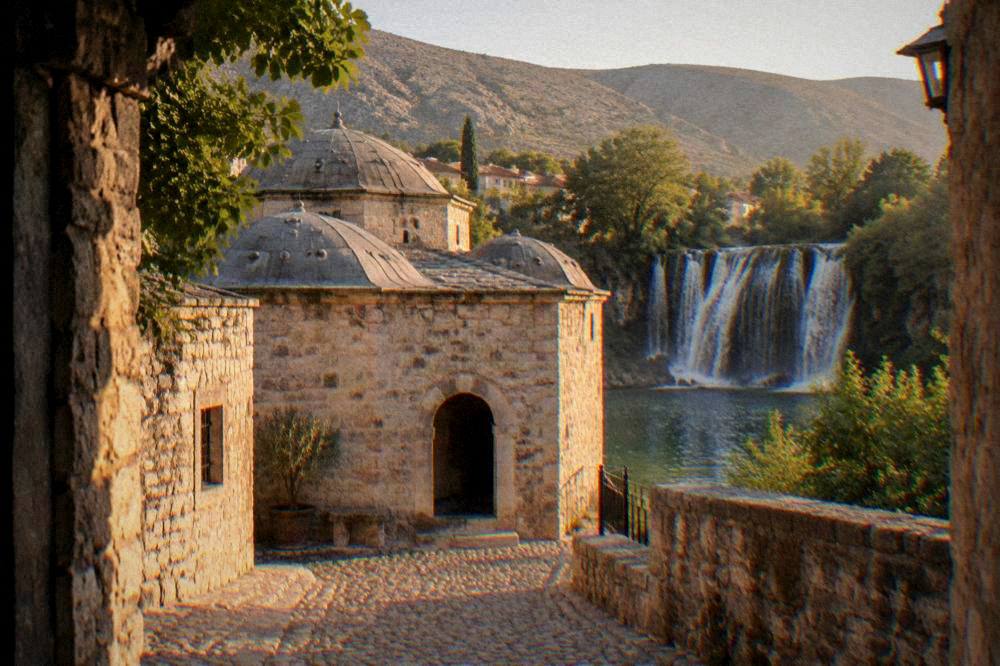
The east bank sits on the road line toward Blagaj, Počitelj, Kravica waterfall and the wider Herzegovina day-trip circuit, with Blagaj Tekke 13.7 km and about 19 minutes by road, Počitelj 30 km and about 31 minutes, and Kravica waterfall 55.2 km and about 54 minutes free-flow from Stari Most. Those figures come from computed road routing with no border or traffic queues, and they make the point that this bank is not a dead end: it is the quiet beginning of the region's best driving day. Blagaj, where the Buna river bursts from a cliff and the Blagaj Tekke stands at the spring, is close enough for a half-day. Počitelj, the stone fortified village above the Neretva, is a stop on almost every route south, and the site's Počitelj guide covers it fully.
Kravica waterfall is the headline. Entry is 20 KM for an adult all year, 10 KM for residents of Bosnia and Herzegovina, free for children under 7, and the park opens every month of the year with hours that stretch to 22:00 through the June-to-September stretch and shorten to 17:00 in the depth of winter. Swimming in the pool below the falls is allowed in summer in the designated area, with no lifeguard reported, so check the park's rules on arrival. The site's fuller treatment of the Kravica waterfall region sits inside the Herzegovina day-trip pages.
North and east of the city, the same logic applies in the other direction. Konjic, with the ARK D-0 bunker tours by advance booking, is 69 km and about 80 minutes; the Konjic guide has the detail. Trebinje, far to the southeast, is 116.5 km and about two and a half hours, a full day out through the karst. The site's Bosnia and Herzegovina itinerary shows how the pieces combine across a week.
When Is The Best Time To Walk The Donja Mahala Banks In Mostar?
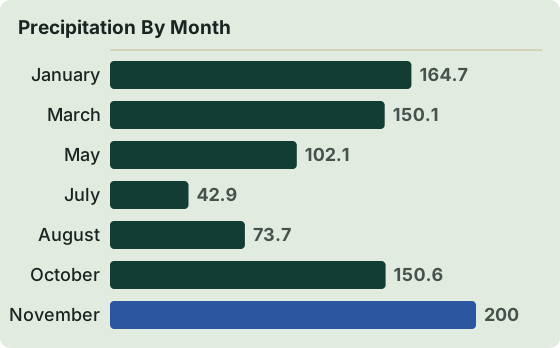
Midsummer brings the heat: the ERA5 reanalysis, 1991-2020, puts the mean daily high at 29.9 C in July and 30.5 C in August for Mostar, with the FHMZ 1961-1990 station record showing an absolute maximum of 41.2 C in July, so the riverbank walks are best made before late morning or after the light turns in the late afternoon. Rain, not heat, is the winter question: the FHMZ Mostar station table, 1961 to 1990, averages 200.0 mm of precipitation in November against 42.9 mm in July, a winter maximum that makes late autumn the rainier stretch for a riverside stroll. Spring sits between the two, with May averaging 102.1 mm and warming steadily.
| Month | Mean temp C (FHMZ 1961-1990) | Precipitation mm (FHMZ 1961-1990) | Mean daily high C (ERA5 1991-2020) |
|---|---|---|---|
| January | 4.8 | 164.7 | 8.4 |
| March | 9.6 | 150.1 | 13.4 |
| May | 17.9 | 102.1 | 22.3 |
| July | 24.7 | 42.9 | 29.9 |
| August | 24.2 | 73.7 | 30.5 |
| October | 15.3 | 150.6 | 19.5 |
| November | 10.1 | 200.0 | 14.1 |
The riverbank itself is walkable in any month; the lane surfaces are stone and the path stays close to the water, which keeps it usable in the cold half of the year when the hill climbs lose their appeal. The one seasonal note that matters on this bank is the light: the bridge faces roughly west when seen from the east bank terraces, which favours the afternoon and early evening for the classic photograph, and in high summer the evening is also the humane hour to be out. For a full seasonal breakdown, the site's page on the best time to visit Mostar is the companion read.
What Practical Facts Should A Visitor Know For The Donja Mahala Side Of Mostar?
The currency is the convertible mark (KM, BAM), pegged at 1 EUR to 1.95583 KM, euro cash is often accepted in the tourist streets at a rounded rate you should confirm, and Bosnia and Herzegovina is not in the EU or Schengen, so crossing into Croatia means full border checks at the crossings near the city. Those three facts cover the mistakes that catch visitors out. The border point matters for anyone combining this bank with a Dubrovnik or Split departure: the Croatian land border has carried full checks since 1 January 2023, and waits of up to about 30 minutes are reported, longer at summer peaks. ETIAS is not in operation.
Practicalities on the bank itself are few because the quarter is small and central. The emergency number is 112, with 122 police and 124 ambulance. Plugs are type C and F at 230 V. A tourist tax reported at 3 KM per person per night applies in the canton from 1 January 2026; confirm it at booking rather than at checkout. In the rural hills beyond the city, stay on marked paths because of suspected mine areas, a standing precaution across rural Herzegovina maintained by the national mine-action centre.
| Practical item | Detail |
|---|---|
| Currency | convertible mark (KM, BAM), pegged 1 EUR = 1.95583 KM |
| Euro cash | often accepted in tourist areas, confirm the rate |
| EU / Schengen | Bosnia and Herzegovina is in neither |
| Croatia border | full checks, reported waits up to about 30 minutes |
| Visa-exempt stay | up to 90 days in a six-month period |
| Emergency number | 112 |
Getting to the bank could hardly be simpler. Travellers commonly reach Mostar via Sarajevo or Dubrovnik; the city's own airport is 8.2 km and about 12 minutes by road from Stari Most, with a reported route list centred on Zagreb and Stuttgart. The train from Sarajevo runs twice a day each way and resumed its regular service on 15 October in 2026 after a suspension that began in September of that year. From the bus and train stations the bank is a short, inexpensive taxi ride, and from anywhere in the Old Town it is a walk of a few minutes across the bridge.
Common Questions About Donja Mahala In Mostar
Is Donja Mahala in Mostar walkable from the Old Bridge?
Yes. The quarter begins on the east bank immediately south of Stari Most, and the riverside walk starts the moment you cross the bridge and turn downstream. The core lanes sit within a few hundred metres of the arch.
Does it cost anything to walk the Donja Mahala riverbank?
No. The bank, the lanes and the bridge crossing are public and free at all hours. Only the interiors carry fees: the mosque, the Old Bridge Museum and the house museums charge reported small amounts in KM.
Can you swim from the banks of Donja Mahala?
The Neretva is cold even in August and the current is strong, and swimming from the old city banks is not part of the local routine. The diving you watch from the terraces is performed by trained club members. For actual swimming, head to designated spots such as the pool at Kravica waterfall in summer.
How long does a visit to Donja Mahala take?
A leisurely circuit of the bank, the mosque exterior and the lanes, ending at Kriva ćuprija, fills an hour or two. Add the mosque minaret, a house museum and a terrace stop and it becomes a relaxed half day.
What is the best time of day to photograph Stari Most from Donja Mahala?
The bridge lies to the north and west of the east-bank terraces, so the afternoon and early evening light suits the classic shot. In July and August, when the ERA5 reanalysis 1991-2020 puts the mean daily high near 30 C, the evening is also the comfortable hour to be out.
The east bank of Mostar rewards the visitor who crosses the bridge and keeps walking, and Mostar Travel Guide carries the rest of the region from there.