War Photo Exhibition: Photojournalism Of The 1990s
The War Photo Exhibition in Mostar shows photojournalism from the war of the 1990s in Bosnia and Herzegovina, inside the Old Town within walking distance of Stari Most. This page sets out what is known about it, what surrounds it and how to plan a visit.
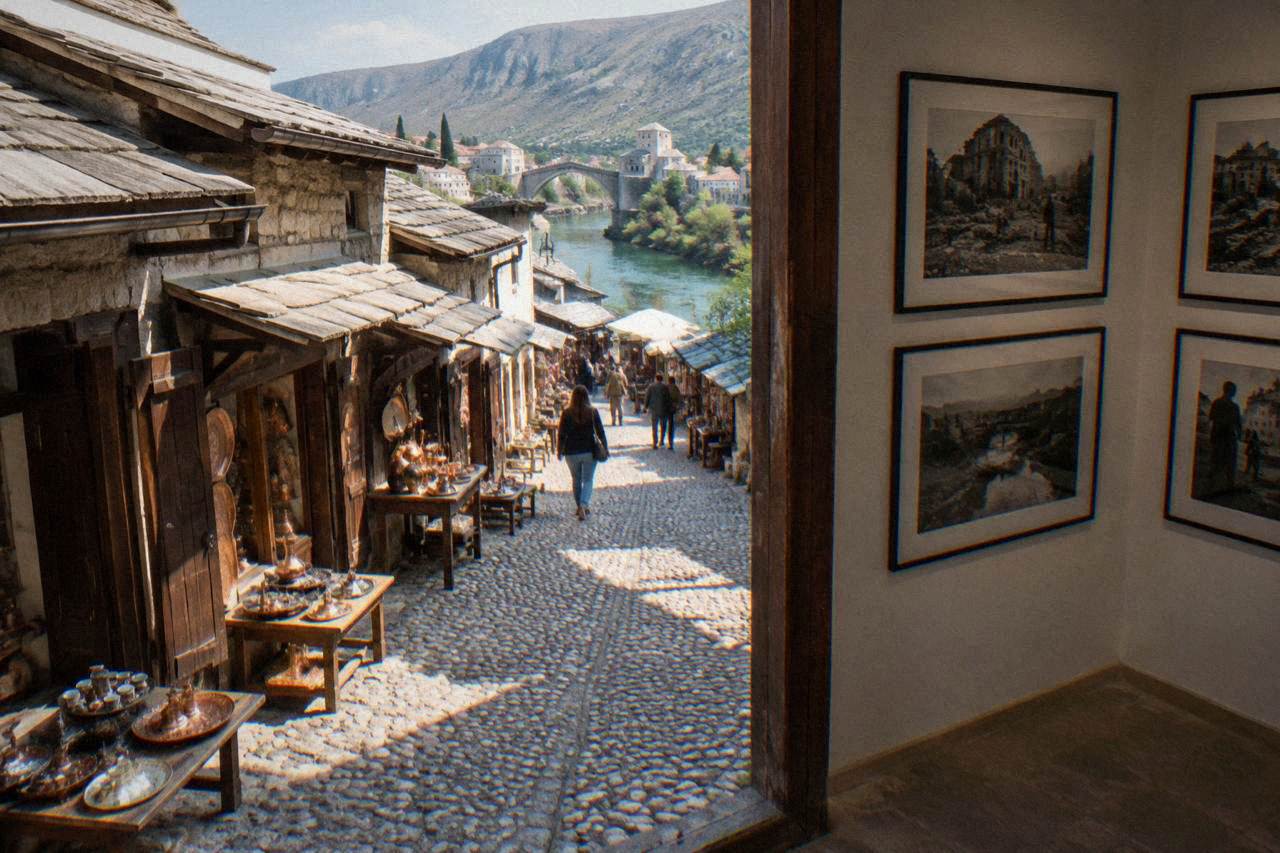
The War Photo Exhibition in Mostar is a small photography gallery in the Old Town dedicated to photojournalism from the war of the 1990s. Confirm the current entry fee and opening hours on arrival, as no official figures are published online.
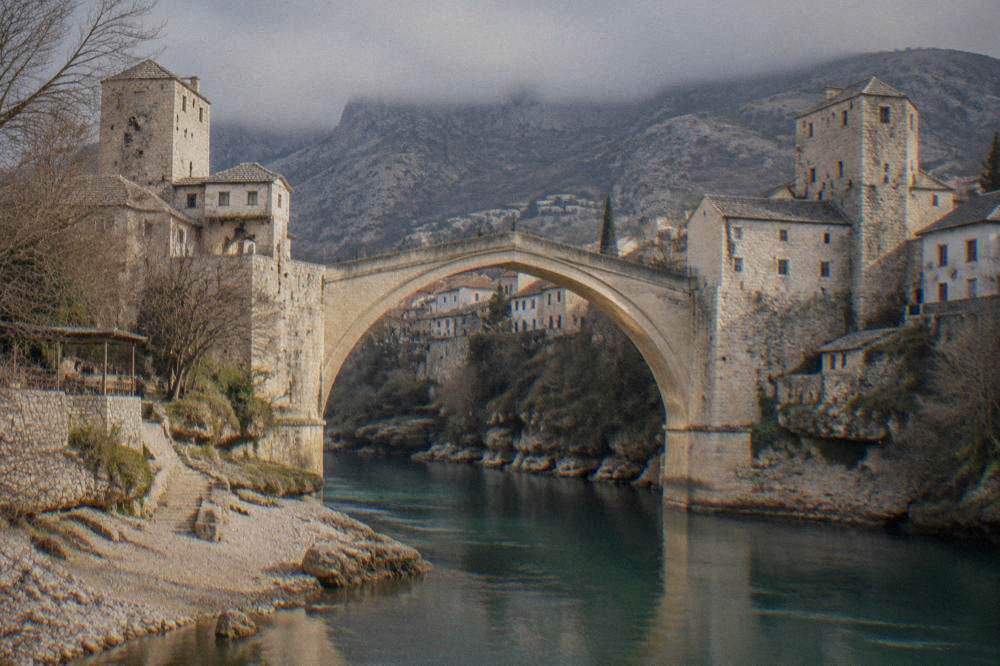
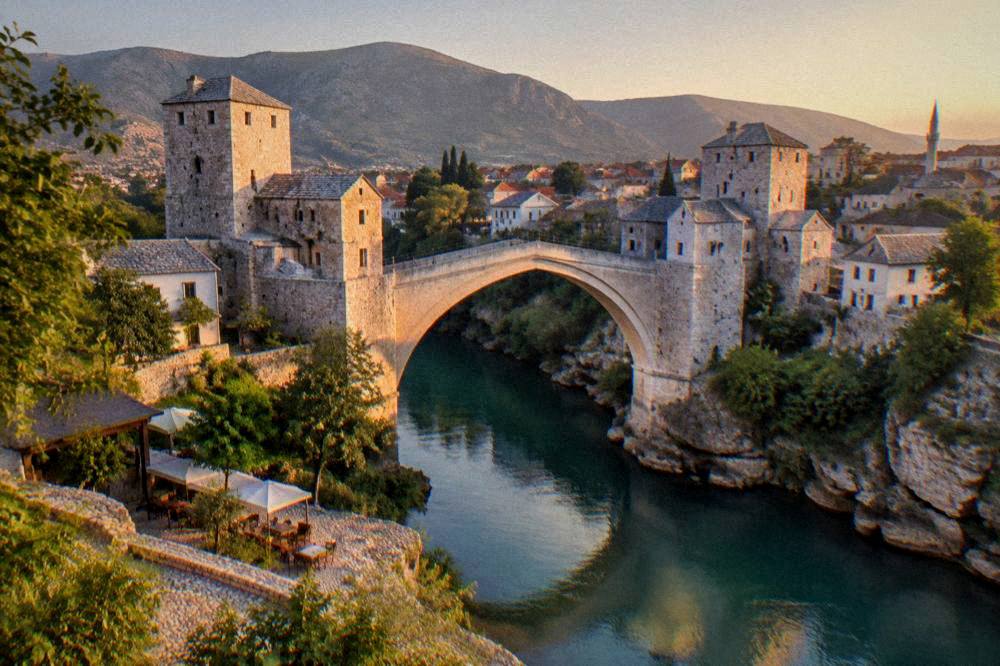
Mostar, an inland city on the Neretva river in Herzegovina, Bosnia and Herzegovina, carries its recent past in plain sight: Stari Most, the Old Bridge, was destroyed on 9 November 1993 and rebuilt and reopened in July 2004, and the Old Bridge Area of the Old City was inscribed as a UNESCO World Heritage property in 2005. Against that backdrop, the War Photo Exhibition presents photojournalism from the war of the 1990s in a small gallery space in the Old Town. It is a quiet, indoor stop, a few minutes on foot from the bridge itself, and it pairs naturally with the city's other memory sites, from the Old Bridge Museum to the Partisan Memorial Cemetery. This page from the Mostar Travel Guide editorial desk sets out what the exhibition is, how to reach it, what a visit involves and what to combine it with.
What Is The War Photo Exhibition In Mostar?
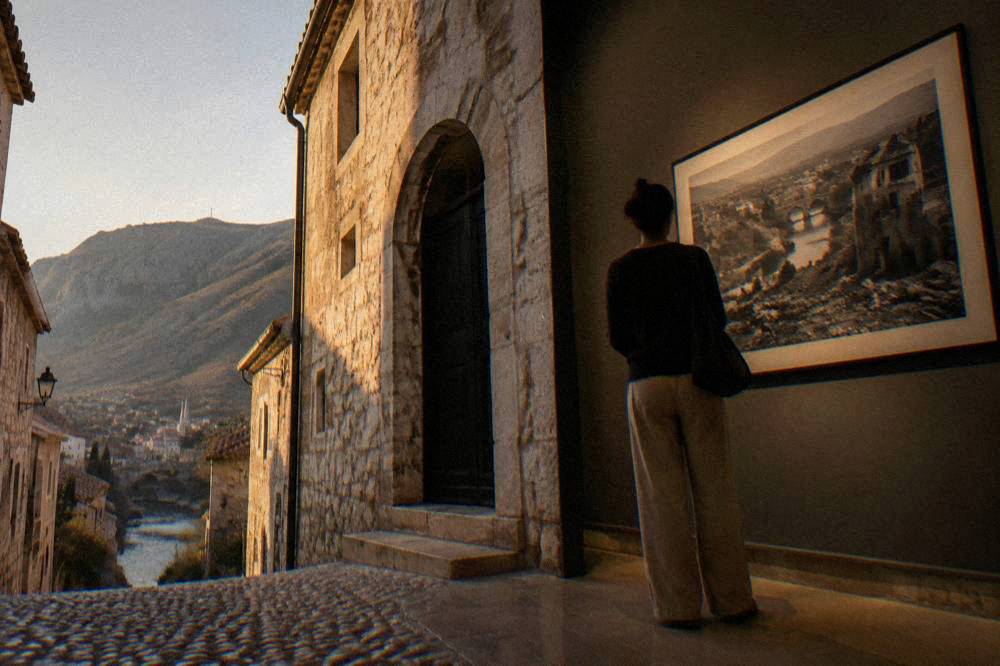
The War Photo Exhibition is a small, privately run photography gallery in Mostar's Old Town that displays photojournalistic work from the war of the 1990s in Bosnia and Herzegovina. It is an indoor, walk-in attraction a short distance from Stari Most, and it treats the war years through the work of the photographers who documented them. No official price list or timetable is published online, so confirm the entry fee and hours at the door.
The exhibition belongs to a category of small, independent galleries found across the Balkans: a compact room or two of framed prints, usually black and white, usually the work of photojournalists who covered the conflict. The displays change over time, and the gallery is not part of a state museum system. That independence is part of its character, and it is also the reason practical details such as exact fees shift from season to season.
For context, the war ended in 1995 and the reconstruction of the Old Bridge, funded with international support including UNESCO and World Bank partners, finished in 2004. The photographs on the walls sit within that arc: destruction, endurance and rebuilding. The register is documentary rather than sensational, and the gallery asks for the same restraint from visitors that a memorial site would.
Visitors should treat the exhibition as a complement to, not a replacement for, the city's permanent institutions. The Museum of War and Genocide Victims and the Old Bridge Museum each carry parts of the story in different ways, and a half day in Mostar can comfortably hold two or three of them.
Where Is The War Photo Exhibition In Mostar And How Do You Reach It?
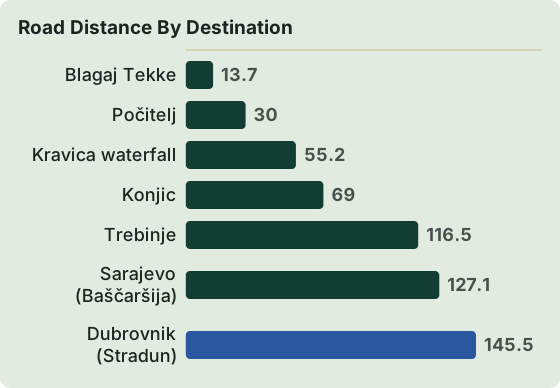
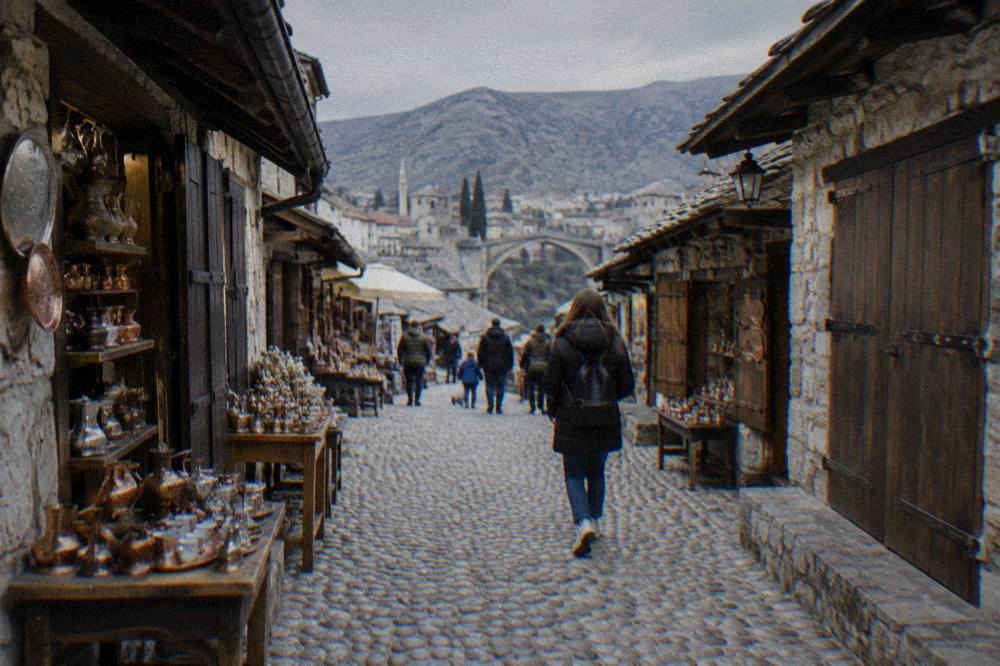
The exhibition sits inside Mostar's Old Town core, within a short walk of Stari Most, the Kujundžiluk bazaar street and the Crooked Bridge. The Old Town is entirely pedestrian and walkable at any hour, and the whole historic core, from Spanish Square to the bridge, takes only minutes to cross on foot, so no transport is needed to reach the gallery.
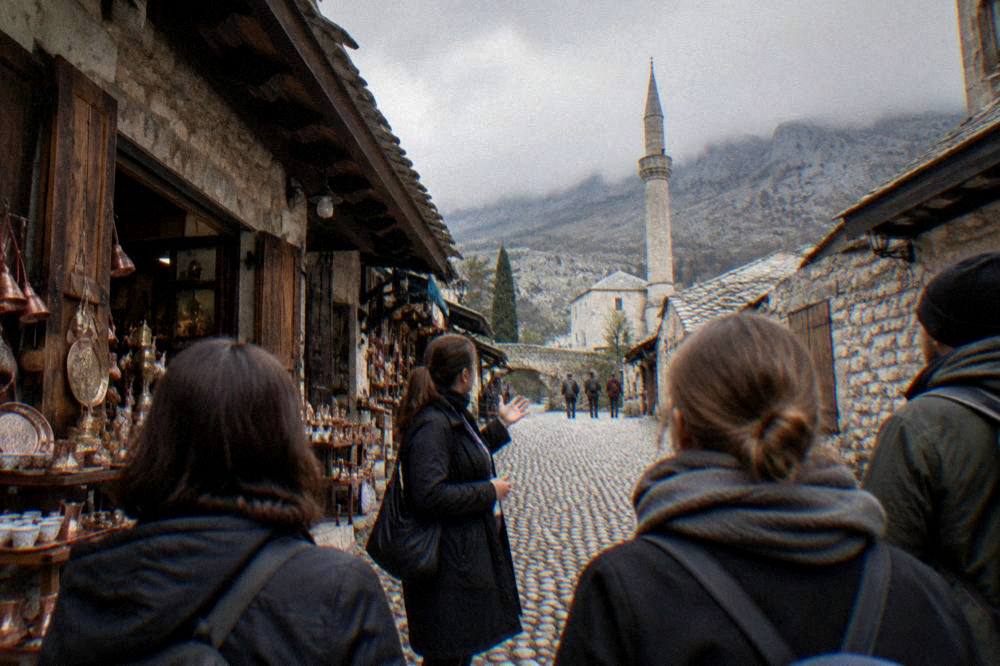
Mostar's Old Town is compact. The pedestrian lanes of Kujundžiluk run along the Neretva below the bridge, and the small lanes behind them hold Ottoman houses, mosque courtyards and small museums. The exhibition is signed from the main bazaar street, and the walk from the bridge passes shops, coppersmiths and cafe terraces. Comfortable shoes and a water bottle matter more in July, when the ERA5 reanalysis 1991 to 2020 puts the mean daily high at 29.9 C, than in January, when the same modelled series gives 8.4 C.
Arriving from farther out, the city is small by regional standards, with about 105,000 residents at the 2013 census. A taxi from the bus station or the railway station is a short, inexpensive ride, and city bus lines run along the Bulevar corridor. Drivers should park outside the pedestrian zone and walk in; parking charges near the Old Town are best confirmed on the spot.
Before planning the rest of the day, it helps to see which guided options fit around a gallery visit:
What Can You See At The War Photo Exhibition In Mostar?
The gallery shows framed war photojournalism from the 1990s: images of the front lines, of civilians under shelling, of the destroyed Old Bridge and of the reconstruction that followed. Displays are typically organised by photographer or by theme, with captions in English as well as local languages, and the whole space is small enough that a visit is measured in minutes rather than hours.
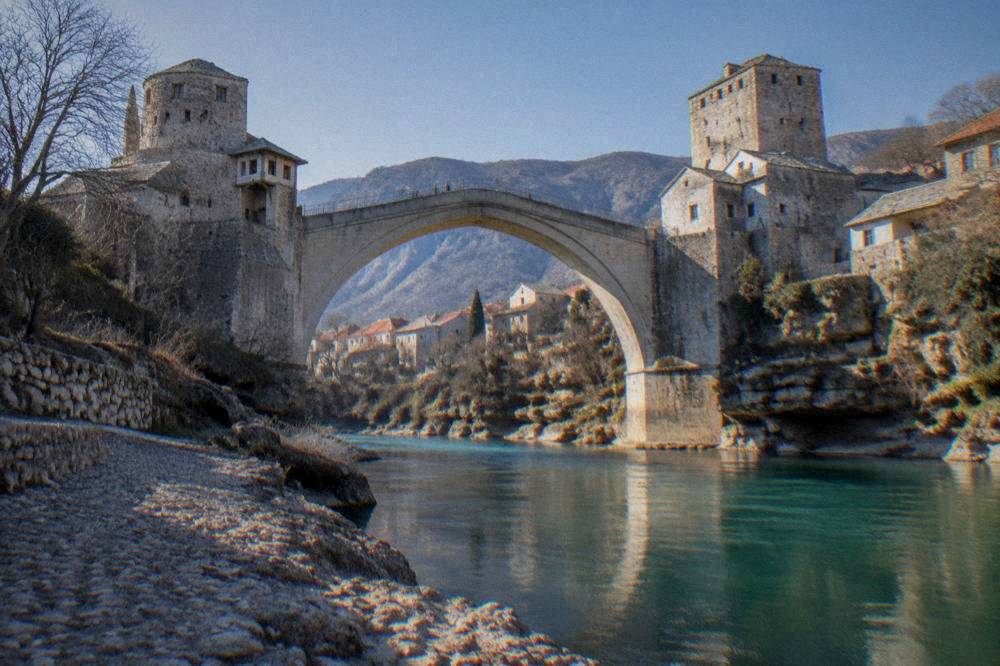
The strongest thread for most readers is the bridge. Stari Most, completed in 1566 under Suleiman the Magnificent and attributed to the architect Mimar Hayruddin, stood for over four centuries before its destruction on 9 November 1993. Photographs of the damaged arch and of the 2004 reopening, when the rebuilt bridge was unveiled using original techniques and salvaged stone, anchor the exhibition's narrative of loss and repair. The bridge's height above the Neretva is about 21 to 24 metres depending on the river, a physical fact the photographs make vivid.
Around that core, the collection widens to the human story: streetscapes, portraits and the daily mechanics of survival in a besieged city. The captions stick to date and place, which is the same register this site uses. Visitors sensitive to images of conflict should know that the material is unflinching by design; families with young children may prefer the Old Bridge Museum next door, which tells the architectural story.
The gallery does not publish a collection catalogue online, so what is hanging in any given month is best discovered on arrival. Photography inside is usually permitted without flash, but confirm the house rule at the desk. A small shop table sometimes sells monographs and prints.
How Does The War Photo Exhibition Fit Mostar's Wider Memory Landscape?
Mostar holds its recent history across several distinct sites: the exhibition for photojournalism, the Old Bridge Museum for the bridge's architecture and rebuilding, the Partisan Memorial Cemetery for a monumentscape now on heritage danger lists, and guided war history walks that tie the city's buildings to the events of 1993 and after. Reading two or three of these together gives a far fuller picture than any single stop.
| Date | Event |
|---|---|
| 1474 | First written mention of the name Mostar |
| 1566 | Original stone bridge completed under Suleiman the Magnificent |
| 9 November 1993 | Stari Most destroyed during the war |
| July 2004 | Rebuilt bridge reopened, reconstruction supported by UNESCO and World Bank partners |
| 2005 | Old Bridge Area of the Old City of Mostar inscribed as UNESCO World Heritage property 946 |
| 2022 | Over 700 stone memorial markers destroyed at the Partisan Memorial Cemetery |
Beyond the gallery door, the war history guide maps the city's principal memory sites. The Partisan Memorial Cemetery, designed by Bogdan Bogdanović and inaugurated in 1965, stands neglected above the city; Europa Nostra listed it among Europe's most endangered heritage sites and reported in 2026 that over 700 of its stone markers were destroyed in 2022. The site has no ticket and no staffed hours, and its condition is part of what it communicates.
The Sniper Tower, a former bank building on the front line, is a frequent complement to the exhibition because it is the physical relic the photographs depict. Any visit to ruin sites should stick to safe, accessible areas; in rural Herzegovina more broadly, suspected mine areas remain, and travellers should stay on marked paths, following BHMAC guidance.
For readers who want the story told aloud, a dedicated walking tour is the natural pairing with an hour among the prints:
How Much Time And Money Should You Budget For The War Photo Exhibition In Mostar?
Plan on a short visit, typically well under an hour for the gallery itself, plus whatever you spend in the surrounding Old Town. The exhibition charges a modest cash entry fee, but it publishes no price list or timetable online, so the working plan is simple: carry some convertible marks, confirm the fee and hours at the door, and treat the gallery as one stop inside a half day in the Old Town rather than a destination on its own.
Money in Bosnia and Herzegovina is the convertible mark (KM, BAM), pegged at 1 EUR = 1.95583 KM under a currency board arrangement. Euro cash is often accepted in tourist areas, usually at a rounded rate, but paying in marks is straightforward: ATMs are widespread around the Old Town, and cards work at hotels and larger restaurants while smaller vendors prefer cash. The country is not in the EU and not in Schengen, facts worth knowing before any cross-border day trip to Croatia, whose land border has carried full checks since 1 January 2023.
A second cost that quietly enters hotel bills is the tourist tax in Herzegovina-Neretva Canton, reported at 3 KM per person per night from 1 January 2026; confirm at booking how your accommodation handles it. For the exhibition itself, the general rule of thumb for the whole Old Town holds: carry a little cash, confirm prices on the spot, and expect small museums to close earlier in the winter months.
The practical basics for any Mostar visit:
| Item | Detail |
|---|---|
| Currency | Convertible mark (KM, BAM), 1 EUR = 1.95583 KM |
| EU / Schengen status | Bosnia and Herzegovina is in neither |
| Visa-free stay | Up to 90 days within six months of first entry for visa-exempt nationals |
| Emergency numbers | 112 general, 122 police, 123 fire, 124 ambulance |
| Plugs and power | Type C and F, 230 V |
What Else Should You See Around The War Photo Exhibition In Mostar?
Within a few minutes' walk of the gallery you can reach Stari Most, the Kujundžiluk bazaar, the Koski Mehmed-pašina džamija with its minaret view over the Neretva, the Crooked Bridge and a cluster of Ottoman house museums including Bišćević House and Muslibegović House. The Old Town packs an unusually dense set of sights into a small pedestrian area, so a single unhurried loop covers a great deal.
The mosque terraces give the classic view down the river to the bridge, and the Ottoman houses show the domestic architecture of the same era the bridge was built. Fees at these small sights are modest and vary; the Koski Mehmed-pašina džamija charges a small cash fee, more with the minaret climb, and the house museums each set their own entry. The Old Bridge Museum in the Tara tower covers the bridge's engineering and rebuilding.
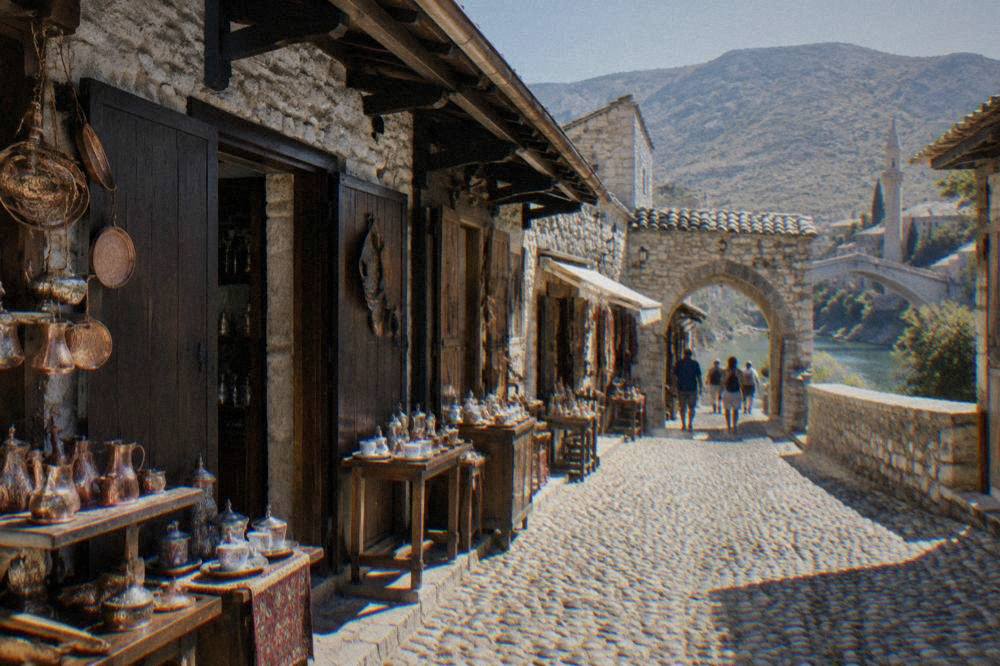
Walking times between Old Town sights are trivial, but the wider region needs a car, a bus or a tour.
| Destination | Road distance | Driving time |
|---|---|---|
| Blagaj Tekke | 13.7 km | about 19 min |
| Počitelj | 30.0 km | about 31 min |
| Kravica waterfall | 55.2 km | about 54 min |
| Konjic | 69.0 km | about 80 min |
| Trebinje | 116.5 km | about 142 min |
| Sarajevo (Baščaršija) | 127.1 km | about 134 min |
| Dubrovnik (Stradun) | 145.5 km | about 150 min |
Border queue time is excluded from those driving times, and the Croatian border can add waits of up to about 30 minutes, longer at summer peaks. Kravica waterfall charges 20 KM for an adult all year, with children under 7 free, and is open year-round with hours that shift by month. A countryside day trip pairs oddly but well with a war photography morning: the photographs give the city's story, the drive gives its landscape.
When Is The Best Time To Visit The War Photo Exhibition In Mostar?
The gallery is an indoor stop, so it works in every season and suits both a rainy afternoon and a scorching midday in Mostar. The FHMZ station record for 1961 to 1990 gives a July mean of 24.7 C and a January mean of 4.8 C, and summer visits split best between cool mornings outdoors and indoor hours at midday.
Rain in Mostar peaks in winter: November averages 200.0 mm against July's 42.9 mm in the FHMZ 1961 to 1990 series. An exhibition visit slots neatly into a wet November morning, and the Old Town's covered shopfronts make the walk in tolerable. In high summer, the same logic applies to the midday heat rather than the rain. The absolute maximum on the station record is 41.2 C, reached in July, and the ERA5 reanalysis 1991 to 2020 models mean daily highs of 30.5 C in August, so plan the gallery for the warmest hours and the riverside for early morning and evening.
Late July brings the city's diving tradition to the bridge, with the 460th traditional competition held on 26 July 2026 and the Red Bull Cliff Diving round following from 30 July to 1 August 2026, when the added platforms stand at 21 m for women and 27 m for men. Crowds gather riverside then, and the gallery offers a quieter hour between the spectacle sessions.
| Season | Station record, FHMZ 1961-1990 | Modelled highs, ERA5 1991-2020 |
|---|---|---|
| January | Mean 4.8 C, rain 164.7 mm | 8.4 C |
| July | Mean 24.7 C, rain 42.9 mm | 29.9 C |
| August | Mean 24.2 C, rain 73.7 mm | 30.5 C |
| November | Mean 10.1 C, rain 200.0 mm | 14.1 C |
Can A Guided Tour Replace Or Improve A War Photo Exhibition Visit In Mostar?
A guided walking tour does not replace the gallery, it frames it: the photographs show moments, while a guide walks you through the streets where those moments happened, from the Bulevar front line to the rebuilt bridge. Booking a war history walk before or after your gallery hour is the single easiest way to turn a collection of images into an understandable account of the city between 1992 and 1995 and of the reconstruction after 2004.
Two history walks in the city's roster cover this ground with different emphases. The first, featured throughout this page, follows the siege years through bunkers and ruins; the second takes a broader arc across the break-up of Yugoslavia:
For visitors who prefer a slower, more personal pace, a private history walk allows the route to follow your questions rather than a fixed script:
One pairing to avoid is compression. Reading the exhibition properly, then walking the front line, then crossing the bridge at dusk is a full half day, and squeezing it alongside a Kravica waterfall trip in the same day flattens both. Travellers short on time should pick one memory-focused block and one countryside block, on separate days.
Is The War Photo Exhibition In Mostar Suitable For Families And School-Age Visitors?
The exhibition is generally better suited to teenagers and adults than to young children, because the photojournalism of the 1990s includes images of shelling, destruction and displaced civilians. There is no age limit, but parents should expect unflinching documentary content and preview the room first if in doubt; for younger visitors the Old Bridge Museum and the bridge divers along the Neretva are easier stops on the same walk.
The bridge divers are members of the Mostari diving club, who jump from about 21 to 24 metres above the river, and there is no pay-to-jump option for visitors, so the spectacle is watched rather than joined. That makes the riverside a natural family counterweight to the gallery's heavier material. The things to do in Mostar overview lists family-friendly options across the city.
School groups studying the events of the war years are, in fact, a natural audience for the exhibition, and the war history walks work well for older students for the same reason. The neutral register matters: dates and physical facts, presented without commentary on blame, which is how this site and, in the main, the gallery present the material.
What Should You Read Or See Next About Mostar's War History?
After the exhibition, the natural next steps are the Old Bridge Museum for the rebuilding story, the Partisan Memorial Cemetery for heritage endangerment, the Sniper Tower as a standing relic, and a longer read through the city's general history from its first written mention in 1474 to the UNESCO inscription in 2005. Each adds a different layer, and together they turn a one-hour gallery visit into a rounded understanding of the city.
For trips built around this theme, the final picks below cover the history walk featured on this page, a full Herzegovina day trip from Mostar that reaches Kravica waterfall, Blagaj and Počitelj, and a burek-making workshop for a lighter evening:
Whatever the mix, keep one practical habit from this whole page: confirm small museums' hours and fees locally on the day. The War Photo Exhibition, like the city's other independent galleries, sets its own schedule, and the door is where the current answer lives.
Common Questions About The War Photo Exhibition In Mostar
What is the War Photo Exhibition in Mostar?
It is a small, privately run gallery in Mostar's Old Town showing photojournalism from the war of the 1990s in Bosnia and Herzegovina, much of it tied to the city itself, including the destruction of Stari Most on 9 November 1993 and its reopening in July 2004.
How much does the War Photo Exhibition in Mostar cost?
The gallery publishes no official price list online. Expect a modest cash entry fee, carry some convertible marks, and confirm the current price and hours at the door when you arrive.
Where is the War Photo Exhibition in Mostar located?
It sits within the pedestrian Old Town, a short walk from Stari Most and the Kujundžiluk bazaar street. No transport is needed inside the Old Town; taxis and city buses serve the wider city.
How long does a visit to the War Photo Exhibition take?
The space is small, and a typical visit runs well under an hour. Pair it with the Old Bridge Museum and a war history walking tour for a fuller half day.
Is the War Photo Exhibition suitable for children?
The content is documentary war photography and can be distressing for young children. Teenagers studying history cope well; families with small children may prefer the Old Bridge Museum and the riverside divers.
Can you photograph inside the War Photo Exhibition?
Photography without flash is usually tolerated, but the gallery sets its own rules and they can change. Ask at the desk before shooting.