Sniper Tower: The Ruined Bank Building On The Former Front Line
The Sniper Tower in Mostar is a ruined high-rise bank building standing on the Bulevar, the avenue that marked the frontline during the war. This guide covers what the building is, how to find it, what is officially open to visitors, and what to combine it with.
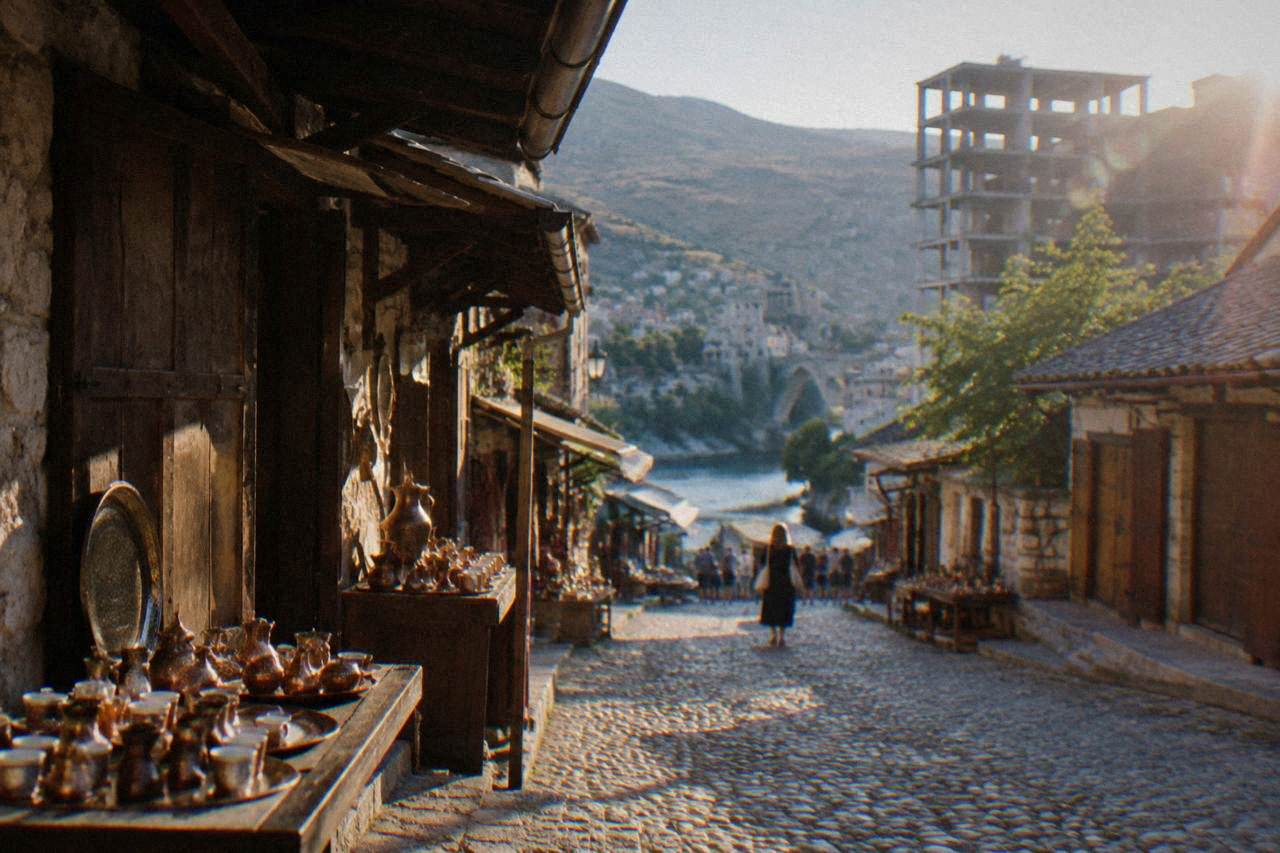
The Sniper Tower in Mostar is the gutted shell of a former bank tower on the Bulevar, the avenue that ran along the frontline during the war. It is not a staffed attraction: there is no ticket, no published hours and no confirmed public access. It is best treated as a streetside landmark to look at and photograph, with access confirmed locally before any visit.
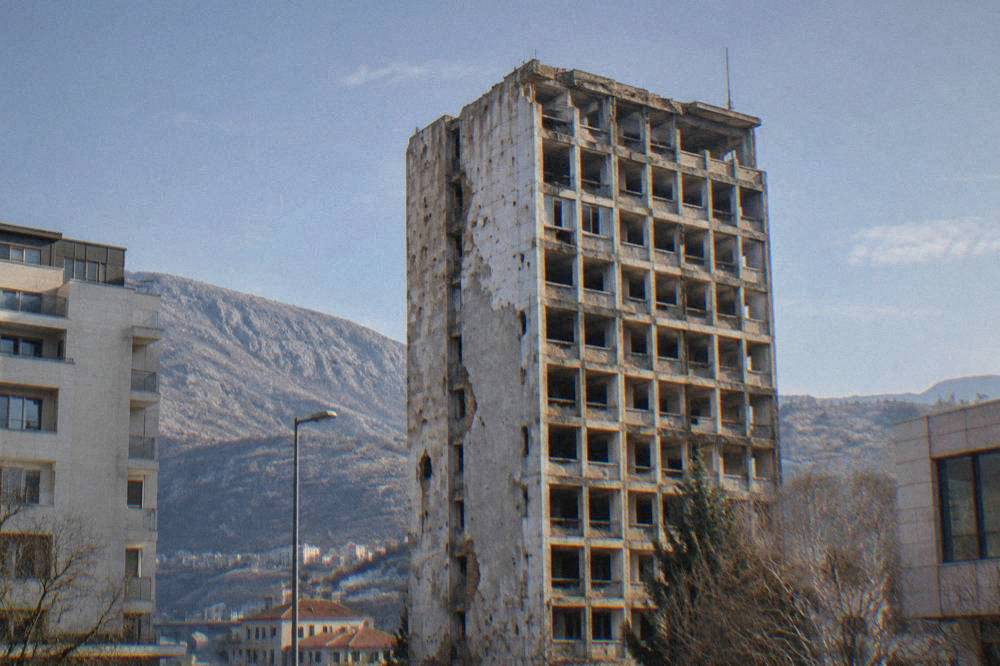
The Sniper Tower in Mostar is the gutted concrete shell of a former bank building standing beside the Bulevar, the wide avenue that ran along the frontline during the war in 1993. The building survives as an empty frame of columns and window openings, scrawled with decades of graffiti, and it has become one of the most photographed ruins in Herzegovina. It is not a museum and not a staffed attraction, and nothing about it is officially ticketed, so this guide treats it the way a planner should: as a streetside landmark on a route that also takes in the Old Bridge, the Kujundžiluk bazaar streets and the city's memorial sites.
What Is The Sniper Tower In Mostar?
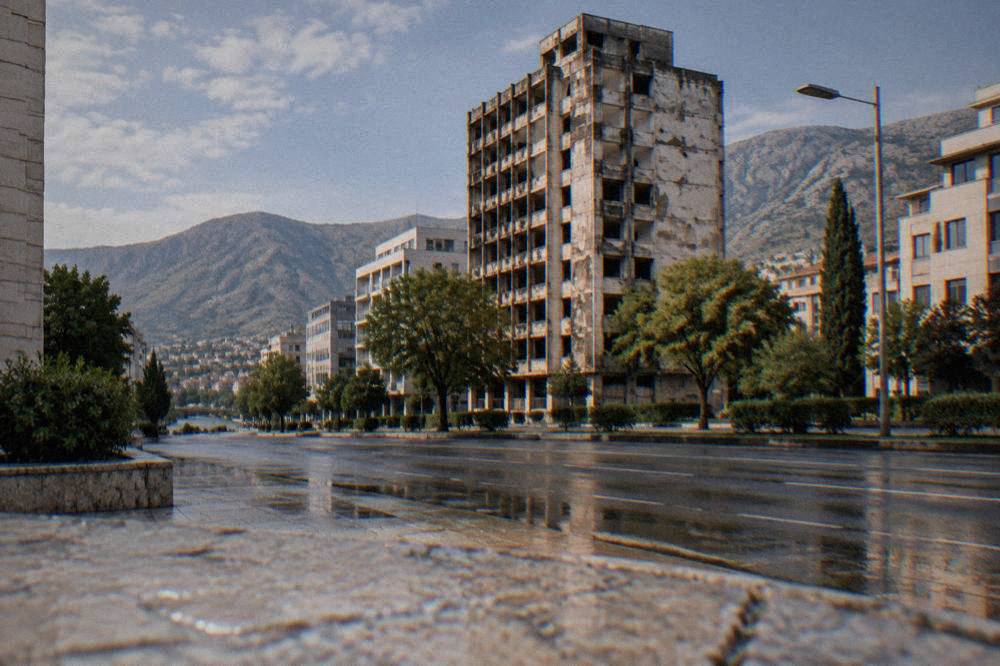
The Sniper Tower in Mostar is the ruined concrete shell of a former bank high-rise on the Bulevar, the avenue that marked the frontline during the war in 1993. It stands empty and unreconstructed, a block of bare columns and open window frames covered in graffiti, and it has no museum function, no ticket desk and no published visiting arrangement.
The building's identity is tied to its address rather than to any exhibit inside it. The Bulevar is the broad north-south avenue that cuts through central Mostar, and during the war in 1993 the fighting positions ran along it. The bank tower, standing exposed on that line, took heavy damage and was never rebuilt afterwards. What remains is the skeleton: a slab-like tower punched through with empty windows, streaked with rust and paint, and visible from many points in the city centre.
The name itself deserves a note. "Sniper Tower" is a label used by travellers and by international media over the years, not an official title, and the building was a bank before the war. Locally the structure is more often just called the ruined bank building. The romanticised name should not be mistaken for an official designation, and it says more about how the ruin was described to passing visitors than about any formal status the building holds today.
What the tower does offer, plainly, is scale and silence. It is one of the tallest ruin objects in the city, it sits within level walking distance of the Old Town, and unlike reconstructed landmarks it shows, without interpretation panels or rope lines, exactly what a modern concrete building looks like when a war inside a city ends and reconstruction money goes elsewhere first. That directness is why photographers keep coming back to it, and why it features so often in coverage of Mostar alongside the rebuilt Stari Most.
For context on how the city rebuilt what it chose to rebuild, the Old Bridge history guide covers the reconstruction of the bridge destroyed on 9 November 1993 and reopened in July 2004, and the wider story sits in the Mostar war history overview.
Where Is The Sniper Tower In Mostar And How Do You Find It?
The Sniper Tower stands on the Bulevar, Mostar's central avenue, a short level walk west of the Old Town core around Stari Most and Kujundžiluk. No ticket, no gate and no signposted trail leads to it: you simply walk the avenue, and the tower's blank concrete frame is visible from several blocks away.
The practical approach is straightforward. From the Old Bridge, walk north through the bazaar streets toward the Spanish Square end of the city centre, and the Bulevar opens out beyond it as a wide, tree-lined avenue. The tower stands beside that avenue, set back among other buildings, and its height makes it a natural landmark: at street level you will recognise it by the sheer concrete faces, the empty rectangular windows and the layer of graffiti that covers almost every reachable surface.
A few orientation notes help:
- The walk from the Old Bridge to the Bulevar is flat and short, through the pedestrian core of the Old Town.
- Spanish Square, with its gymnasium building, is the natural halfway marker between the Old Town and the avenue.
- The tower is a building on a public street, so viewing it from outside involves nothing more than standing on a public pavement.
- Taxis in Mostar are a short, inexpensive way to cover the distance if you are arriving from farther out; agree the drop-off point by naming the Bulevar.
For anyone mapping the day, the tower sits in a cluster of central sights that are all within walking range of one another. The table below pulls together the near neighbours and what each one offers.
| Sight | Direction from the Bulevar | Access |
|---|---|---|
| Stari Most (Old Bridge) | East, through the Old Town | Free, open around the clock |
| Kujundžiluk bazaar | East, along the Neretva | Public street, free |
| Spanish Square | Between Old Town and Bulevar | Public square, free |
| Partisan Memorial Cemetery | South side of the city | No ticket, no staffed hours |
| Koski Mehmed-pašina džamija | Old Town, by the river | Small cash fee reported, more with the minaret |
| Kriva ćuprija (Crooked Bridge) | Old Town, off the bazaar | Public bridge, free |
This is also the natural moment to book the interpretive side of the visit. A guided walk puts the avenue, the ruins and the rebuilt Old Town into one narrative, and the options below include the tailored private history walk this site features for the tower.
For readers who prefer a self-guided route, the Mostar walking tour itinerary strings the same central sights together, and the Old Town area guide covers the streets between the bridge and the avenue in detail.
Can You Go Inside The Sniper Tower In Mostar?
There is no official public access to the Sniper Tower in Mostar, no ticket, no published opening hours and no staffed entrance, and its current internal status is not something to assume from older photographs. Treat it as a structure to view from the street, and confirm any access question locally on the day rather than planning an interior visit around it.
The reason for caution is physical before it is administrative. The building is an unreconstructed ruin: bare concrete, open shafts, loose material and stairs that have stood exposed to weather since 1993. Ruins of this type are dangerous regardless of what any informal online post may once suggested, and the graffiti on the lower walls is evidence of people reaching the accessible surfaces, not of a managed interior.
Over the years the tower has appeared in international coverage as a symbol of the unfinished city, sometimes with images of graffiti exhibitions inside. Those were temporary, informal episodes, not a permanent arrangement, and none of them amounts to a visitor attraction with hours or an owner selling tickets. The dependable way to experience the tower is from outside: the full height reads best from a distance of a block or so, while the graffiti layers on the reachable walls are best seen up close from the pavement.
A respectful visit also means a quiet one. The Bulevar is a lived-in part of the city, with apartments, shops and traffic, not a memorial park. The war in Mostar ended with the destruction still standing in places, and residents pass these buildings daily. Photograph the structure, read it as a document, and extend the same courtesy you would on any street where a difficult history is also someone's neighbourhood.
If the interior question matters to your planning, ask at your accommodation or at the city's visitor information point on arrival: arrangements for individual ruin buildings in Mostar have changed before and can change again, and a local answer on the day beats any printed one. For a fuller picture of the city's wartime record presented in curated form, the Mostar war history tour guide and the Partisan Memorial Cemetery page cover the sites that are documented and interpreted.
How Does The Sniper Tower Fit Mostar's Wartime History?
The Sniper Tower stands on the Bulevar because the Bulevar was the frontline during the war in 1993, and the building, then a bank tower, stood directly on that line and was gutted in the fighting. It was never reconstructed afterwards, which is why it survives as a shell while the Old Bridge, destroyed on 9 November 1993, was rebuilt and reopened in July 2004.
The facts around the building are best kept to dates and physical outcomes, in line with how the city's own documented record presents them. Mostar's name first appears in a written document of 1474. The Old Bridge was completed in 1566 and stood until the war, when it was destroyed on 9 November 1993. Its reconstruction, supported by UNESCO and World Bank partners, finished with the reopening in July 2004, and the Old Bridge Area of the Old City of Mostar was inscribed on the World Heritage List in 2005 under criterion (vi). The Partisan Memorial Cemetery, designed by Bogdan Bogdanović, was inaugurated in 1965, and more than 700 of its stone memorial markers were destroyed in 2022.
Against that timeline, the bank tower is the counter-image: the structure the city did not rebuild. Reconstruction after the war concentrated on the Old Town, the bridge and the civic core, and the former frontline along the Bulevar kept its scars. The tower is the largest of them, but not the only one; smaller ruined and pocked buildings sit along the same axis, and the west Mostar pages place several of them in context.
| Year | Event |
|---|---|
| 1474 | First written mention of the name Mostar |
| 1566 | Completion of the Old Bridge, Stari Most |
| 1965 | Inauguration of the Partisan Memorial Cemetery |
| 9 November 1993 | Destruction of the Old Bridge during the war |
| July 2004 | Reopening of the reconstructed Old Bridge |
| 2005 | UNESCO inscription of the Old Bridge Area of the Old City of Mostar |
| 2022 | Destruction of over 700 stone markers at the Partisan Memorial Cemetery |
| May 2025 | Opening of the Museum of the Holy Trinity Orthodox Cathedral |
Reading the tower with that table in mind is what turns a graffiti ruin into a document. The bridge and the tower are two answers to the same event: one reconstructed to the last original technique, one left exactly as the war left it. Guides who work the city daily make exactly this pairing the spine of a history walk, and the tailored private tour below is built around that kind of depth.
Is The Sniper Tower Area Of Mostar Safe To Visit?
The Bulevar around the Sniper Tower is an ordinary, busy part of central Mostar with apartments, businesses and traffic, and viewing the tower from the public street raises no specific safety concern. The structure itself is an unreconstructed ruin, so the rule is simple: stay outside it, on the pavement, and treat the interior as off-limits.
Two practical points round that out. First, rural Herzegovina outside the city carries a standing warning about suspected mine areas: stay on marked paths and paved routes in the countryside, where the BHMAC suspected-area data applies. That warning concerns rural land, not central city streets, but it is the single most important safety instruction for day trips out of Mostar. Second, the emergency numbers are 112 for general emergencies, 122 for police, 123 for fire and 124 for ambulance.
Otherwise the area behaves like any city centre. Normal urban care with bags and valuables applies as it would anywhere. The avenue is lit and used at all hours, the walk to the Old Town is short, and the presence of cafes, shops and residents makes the street feel lived-in rather than abandoned. The ruin is the exception on the street, not the rule.
What Can You See Around The Sniper Tower In Mostar?
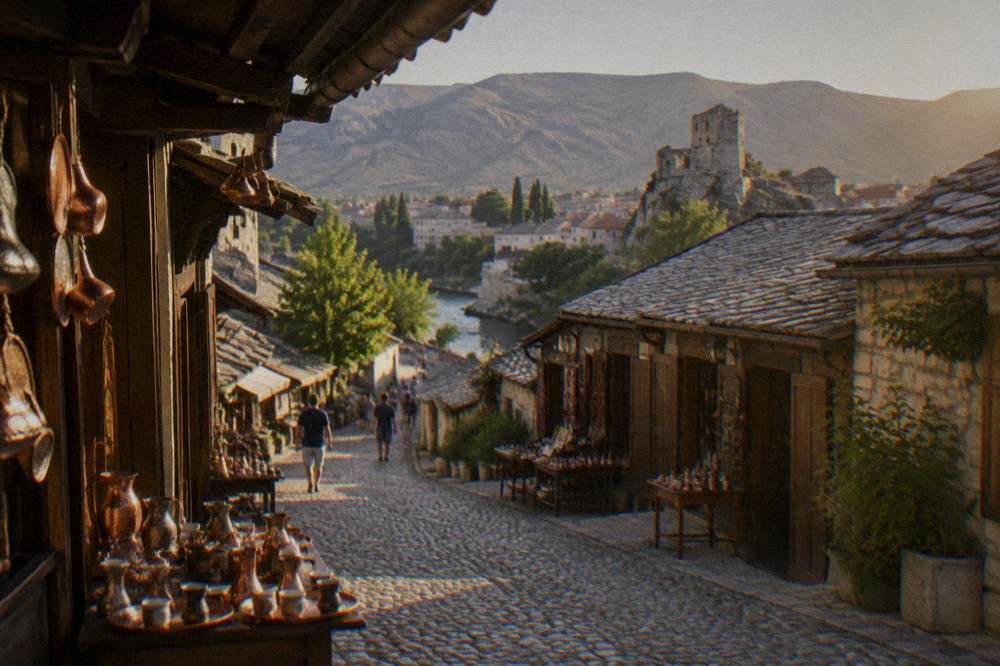
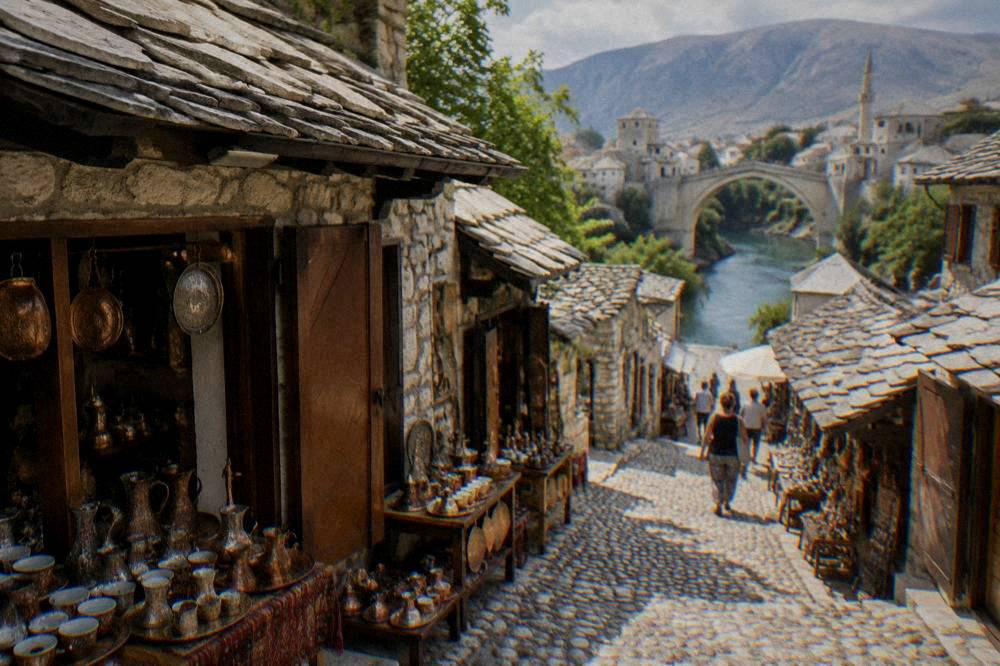
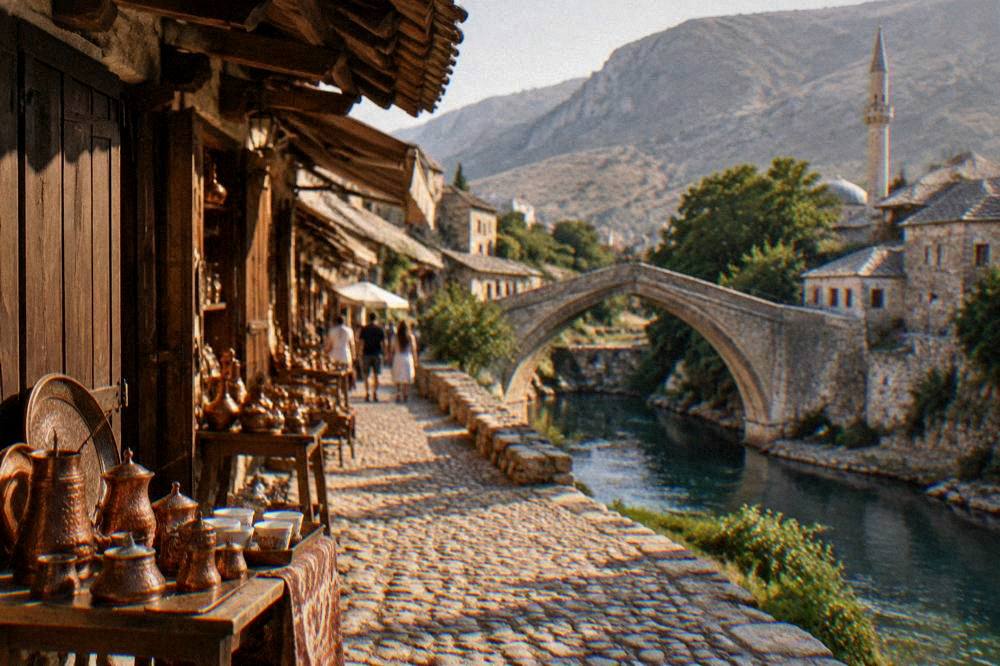
Around the Sniper Tower in Mostar you can reach Spanish Square, the Old Bridge and the Kujundžiluk bazaar on foot in minutes, plus the Koski Mehmed-pašina džamija, the Crooked Bridge and the Ottoman houses of the Old Town, all within one compact walking circuit that needs no transport at all.
The circuit works best as a loop. Start on the Bulevar for the tower, walk east to Spanish Square, continue into the pedestrian Old Town, cross Kriva ćuprija and the bazaar streets, finish on Stari Most at the Neretva, and return along the river. Every step of it is flat, public and free except for the small museum and mosque entries listed below.
| Sight | What it is | Entry |
|---|---|---|
| Stari Most | Stone bridge completed in 1566 and reconstructed in 2004, free to cross | Free |
| Kujundžiluk | Historic bazaar street along the Neretva | Free, public street |
| Koski Mehmed-pašina džamija | Ottoman mosque by the river with a minaret view | Small cash fee reported, more with the minaret |
| Kriva ćuprija | Small stone "crooked" bridge in the Old Town | Free |
| Bišćević House | Ottoman courtyard house open as a museum | About 4 KM reported |
| Muslibegović House | Ottoman house museum | About 8 KM reported |
| Old Bridge Museum | Tower exhibition on the bridge's history | About 10 KM reported, seasonal hours |
| Partisan Memorial Cemetery | Bogdanović's hillside monument, unstaffed | Free, no staffed hours |
Reported cash fees at the houses and museums shift between seasons, so carry some marks and confirm the current figure at the door. The two Ottoman houses sit a few minutes' walk apart in the Old Town, and the Bišćević House guide and the Muslibegović House page describe each in detail.
How To Plan A Day Around The Sniper Tower In Mostar
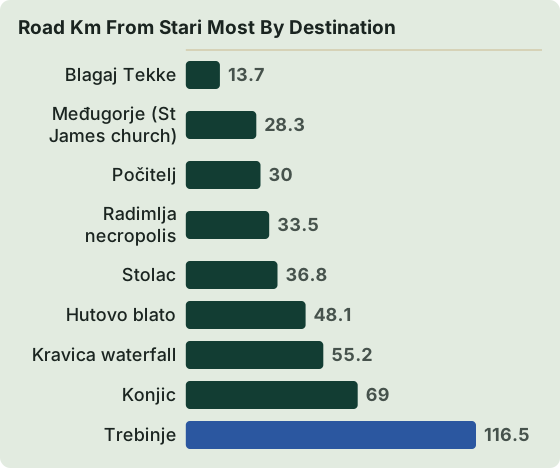
A full day around the Sniper Tower works best as a morning city circuit and an afternoon Herzegovina excursion: the tower, Spanish Square and the Old Town take the morning on foot, then Blagaj at 13.7 km, Počitelj at 30.0 km or Kravica waterfall at 55.2 km fill the afternoon by car or organised day trip, all inside a single day's drive times from Stari Most.
The morning needs no vehicle. Walk the Bulevar, read the tower from the street, cross to Spanish Square, and give the Old Town two unhurried hours: the bridge, the bazaar, a mosque courtyard, one of the Ottoman houses, and coffee on a terrace above the Neretva, whose water stays cold even in August. By early afternoon you are ready for the countryside.
The afternoon is where Herzegovina earns its reputation, and the distances are shorter than the list of famous names suggests. The table below gives road distances and free-flow driving times from Stari Most, computed without border queues.
| Destination | Road km from Stari Most | About (free-flow) |
|---|---|---|
| Blagaj Tekke | 13.7 | 19 min |
| Međugorje (St James church) | 28.3 | 40 min |
| Počitelj | 30.0 | 31 min |
| Radimlja necropolis | 33.5 | 42 min |
| Stolac | 36.8 | 47 min |
| Hutovo blato | 48.1 | 62 min |
| Kravica waterfall | 55.2 | 54 min |
| Konjic | 69.0 | 80 min |
| Trebinje | 116.5 | 142 min |
Kravica waterfall charges 20 KM for an adult all year, 10 KM for residents of Bosnia and Herzegovina, and nothing for children under 7, with swimming allowed in summer in the designated area of the pool below the falls and no lifeguard reported. Radimlja, the stećci necropolis inscribed on the World Heritage List in 2016 as part of the medieval tombstones property, charges 8 KM for an individual and 5 KM for groups and citizens, figures reported on its visitor information.
If driving yourself is not part of the plan, organised day trips cover the same triangle of Blagaj, Počitelj and Kravica from Mostar, and the pick below is one of the strongest of them for visitors basing themselves in the city.
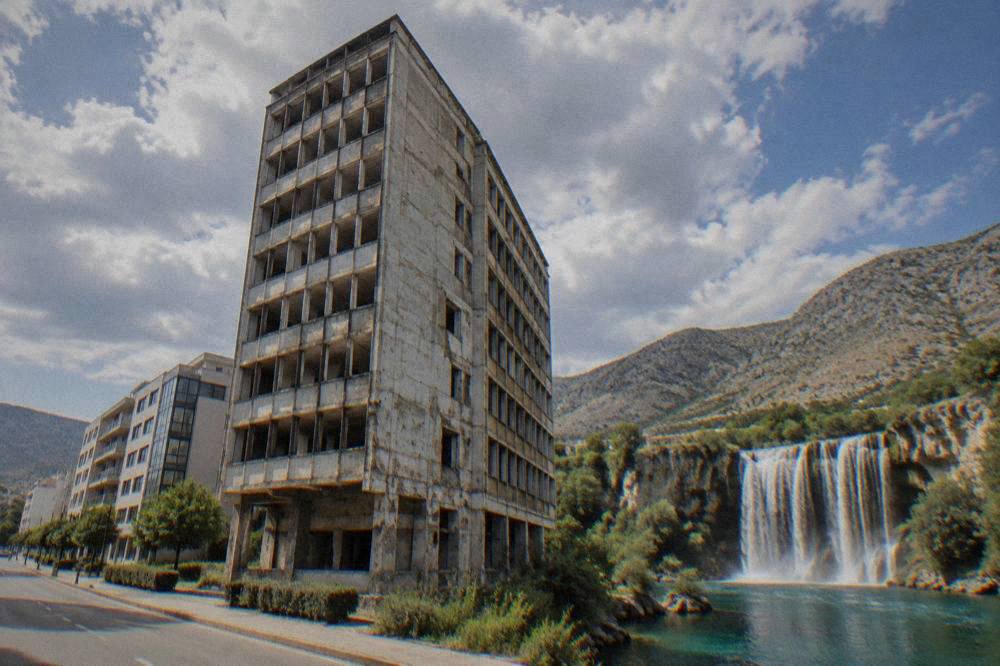
When Is The Best Time To See The Sniper Tower In Mostar?
The Sniper Tower reads best in the cooler months and the ends of the day, because Mostar's summer heat is intense, with modelled ERA5 1991-2020 data putting mean daily highs at 29.9 C in July and 30.5 C in August, and the FHMZ 1961-1990 station record showing an absolute maximum of 41.2 C. Walk the Bulevar in the morning, and use midday for the river and the shade of the Old Town.
The rain pattern matters less than the heat, but it is worth knowing. The FHMZ Mostar station record for 1961 to 1990 shows a winter rainfall maximum: November averages 200.0 mm against July's 42.9 mm, roughly 4.7 times as much. In practical terms, summer days are dry but fiercely hot on open avenues like the Bulevar, while November walks carry a real chance of rain and occasional snow cover, with the record showing a maximum snow depth of 37 cm across the year.
| Measure | Figure | Record |
|---|---|---|
| Mean temperature, July | 24.7 C | FHMZ Mostar station, 1961 to 1990 |
| Mean daily high, August | 30.5 C | ERA5 reanalysis, 1991 to 2020 |
| Absolute maximum temperature | 41.2 C (July) | FHMZ Mostar station, 1961 to 1990 |
| Rainfall, November | 200.0 mm | FHMZ Mostar station, 1961 to 1990 |
| Rainfall, July | 42.9 mm | FHMZ Mostar station, 1961 to 1990 |
| Mean daily low, January | 0.2 C | ERA5 reanalysis, 1991 to 2020 |
For photographers, the tower's bare concrete faces respond strongly to low sun: early morning and late afternoon give the graffiti and the window openings relief that flat midday light flattens out. In summer that also means walking the avenue before the heat builds, then descending to the Neretva, whose water stays cold even in August, a fact any swimmer at the riverside beaches will confirm quickly.
What Else To Do Near The Sniper Tower In Mostar?
Beyond the tower and the Old Town, central Mostar adds street art walks, fortified hill viewpoints, the Fortica ridge above the city and the bitter-sweet record of the Partisan Memorial Cemetery, while food experiences like a Bosnian cooking class or a burek masterclass turn an afternoon into something you eat.
The Fortica viewpoint page covers the ridge above the city with its panorama over the Neretva valley, and the Hum hill guide describes the hill that frames the city's skyline from the other side. Between them and the tower, Mostar's street art has grown into a documented scene of its own, and much of it clusters on the west side within reach of the Bulevar.
Food is the other half of the day. Bosnian coffee culture, burek and the Herzegovinian wine country begin inside the Old Town, and hands-on classes have become one of the more popular ways to spend a late afternoon after a morning of ruins and bridges. The pick below is the site's featured cooking class, with lunch and drinks built in.
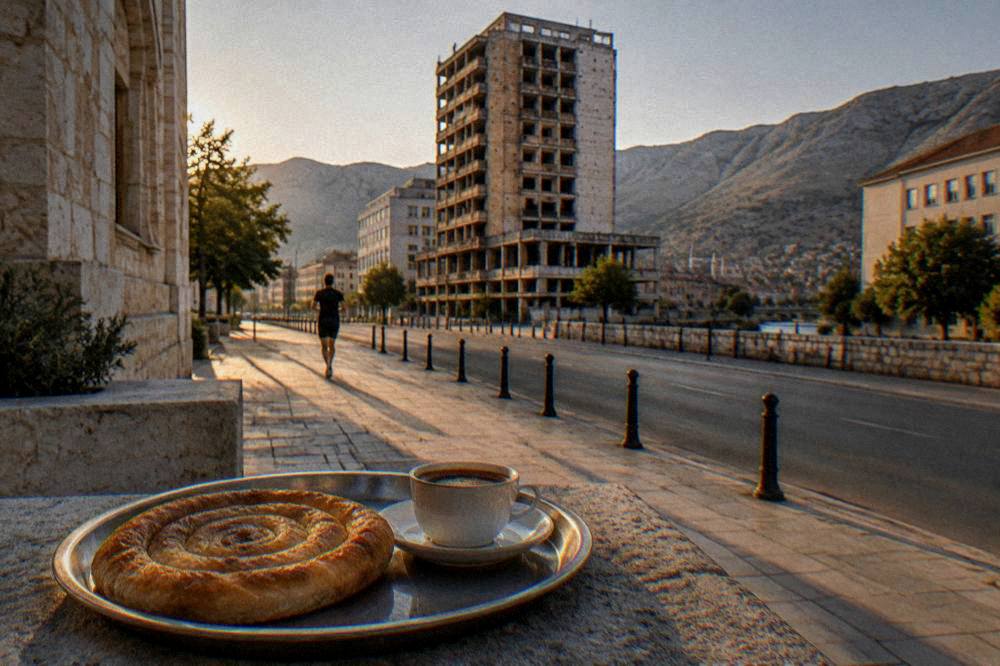
For visitors weighting the day toward history rather than food, the siege-history walk below is the strongest companion to a self-guided tower visit, covering the war years and the sites the Bulevar touches.
Planning Basics For A Sniper Tower Visit In Mostar
A visit to the Sniper Tower needs no ticket, no booking and no transport, just a walk down the Bulevar, some cash in convertible marks for the Old Town entries nearby, and an awareness that Bosnia and Herzegovina is not in the EU or Schengen, so the Croatian border, if you arrived that way, is a full external check.
The currency is the convertible mark (KM, BAM), pegged at exactly 1 EUR = 1.95583 KM. Euro cash is often accepted in tourist areas, usually at a rounded rate, but marks are the better deal everywhere, and cards are welcome at hotels and larger restaurants while small vendors prefer cash. Visa-exempt visitors may stay up to 90 days in a six-month period from first entry. Plugs are type C and F at 230 V.
If you are combining the tower with a day trip across to Croatia, remember that the Croatian land border has carried full Schengen checks since 1 January 2023, with waits reported up to about 30 minutes and longer at summer peaks. The Pelješac Bridge, opened in 2022, lets Dubrovnik traffic bypass the Neum corridor entirely.
| Basic | Figure |
|---|---|
| Currency | Convertible mark (KM, BAM), pegged 1 EUR = 1.95583 KM |
| Entry stay, visa-exempt | Up to 90 days in a six-month period |
| Border status | Croatia in Schengen since 1 January 2023, full checks |
| Plugs | Type C and F, 230 V |
| Emergency numbers | 112 general, 122 police, 123 fire, 124 ambulance |
| Reported tourist tax | 3 KM per person per night in the canton, confirm at booking |
This site, Mostar Travel Guide, carries the full companion pages for every stop on the circuit, from the bridge to the bazaar to the waterfalls.
Common Questions About The Sniper Tower In Mostar
What is the Sniper Tower in Mostar?
It is the gutted concrete shell of a former bank high-rise standing on the Bulevar, the avenue that ran along the frontline during the war in 1993. The name is an informal label used by travellers and media, not an official title, and the building has no museum function or ticket.
Can you go inside the Sniper Tower in Mostar?
There is no official public access, no ticket and no published hours, and the interior of an unreconstructed concrete ruin is dangerous. View the tower from the street and confirm any access question locally on the day rather than planning an interior visit.
Where is the Sniper Tower located?
It stands on the Bulevar in central Mostar, a short, flat walk west of the Old Town core around Stari Most, Kujundžiluk and Spanish Square. No transport is needed to reach it from the city centre.
Is the Sniper Tower area safe?
The avenue is an ordinary, busy part of central Mostar with apartments and businesses, and viewing the tower from the public pavement raises no specific concern. The standing mine warning applies to rural Herzegovina, where you should stay on marked paths, not to central city streets. The general emergency number is 112.
What is near the Sniper Tower?
Spanish Square, the Old Bridge, the Kujundžiluk bazaar, the Koski Mehmed-pašina džamija, Kriva ćuprija and the Ottoman house museums are all within one walking circuit, and Blagaj, Počitelj and Kravica waterfall fill an afternoon by car or day trip.
How much does it cost to see the Sniper Tower?
Nothing. The tower is a building on a public street with no ticket of any kind, so the only costs in the area are the small entry fees at nearby museums, mosques and Ottoman houses, which you pay in cash at the door.