Radimlja Necropolis: Medieval Stećci Near Stolac
Radimlja holds one of the densest collections of stećci, the carved medieval tombstones of Bosnia and Herzegovina, and it sits about 40 minutes by road from Mostar. This guide covers the drive, the reported entry fee, the carvings and the day-trip combinations.
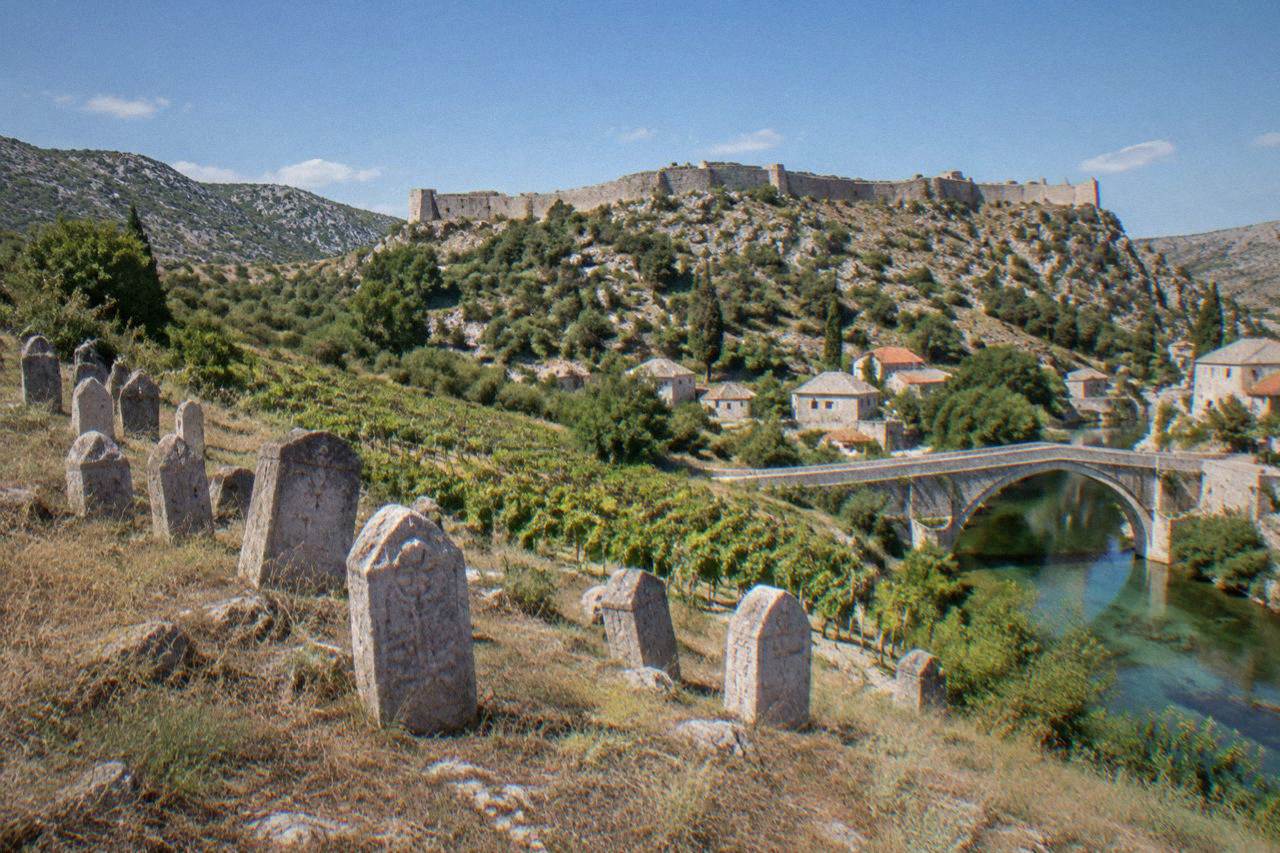
Radimlja is 33.5 km and about 42 minutes by road from Stari Most in Mostar, entry is reported at 8 KM, and the necropolis is part of the UNESCO stećci inscription of 2016.
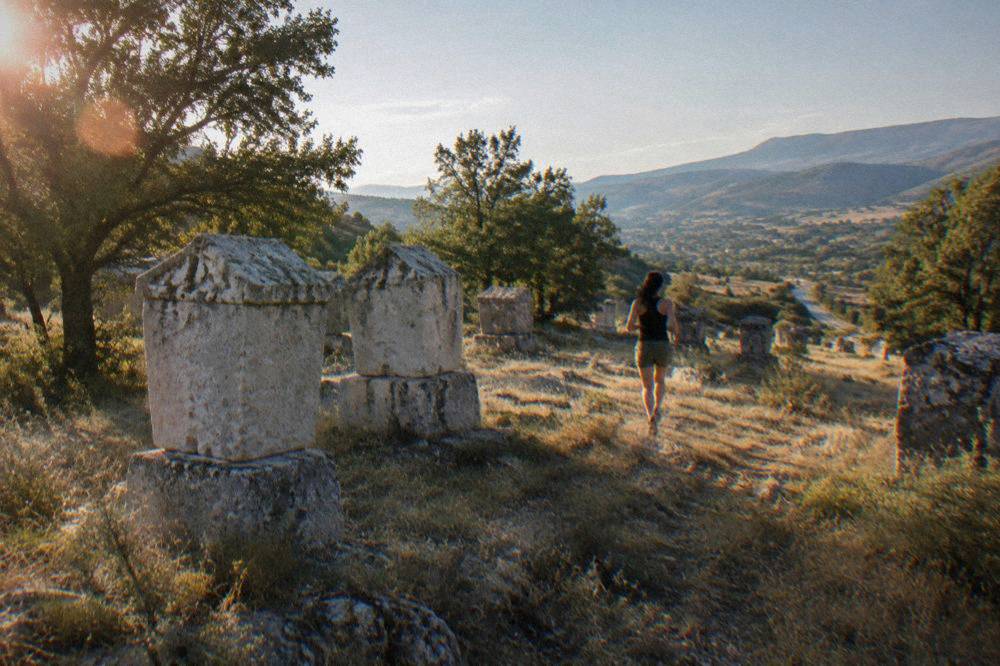
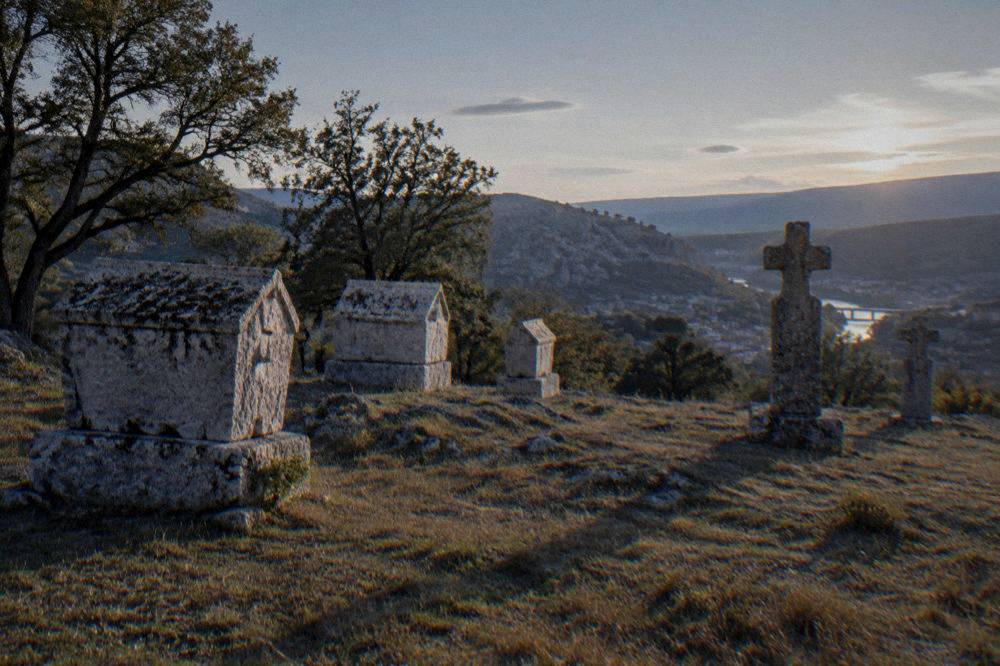
Radimlja, a necropolis of medieval carved tombstones called stećci, stands on a hillside above the Bregava valley just outside Stolac, about 42 minutes by road south of Mostar in Herzegovina, Bosnia and Herzegovina. It is one of the places where the medieval stone-cutting tradition of this region is at its most visible: coffins, chest tombs and standing crosses carved with crosses, spirals, rosettes, hunters and dancers, scattered across a short walk. The site is close enough to Mostar to fold into the same day as Stolac, and near enough to Blagaj and Počitelj that it appears on many Herzegovina itineraries alongside the better-known stops.
What Is The Radimlja Necropolis Near Mostar?
Radimlja is a medieval necropolis of stećci, the carved stone tombstones found across Bosnia and Herzegovina and neighbouring countries, located at Radimlja near Stolac, 33.5 km and about 42 minutes by road from Stari Most in Mostar. The necropolis was inscribed in 2016 as part of the serial UNESCO World Heritage property Stećci Medieval Tombstone Graveyards, site 1504, which spans four countries.
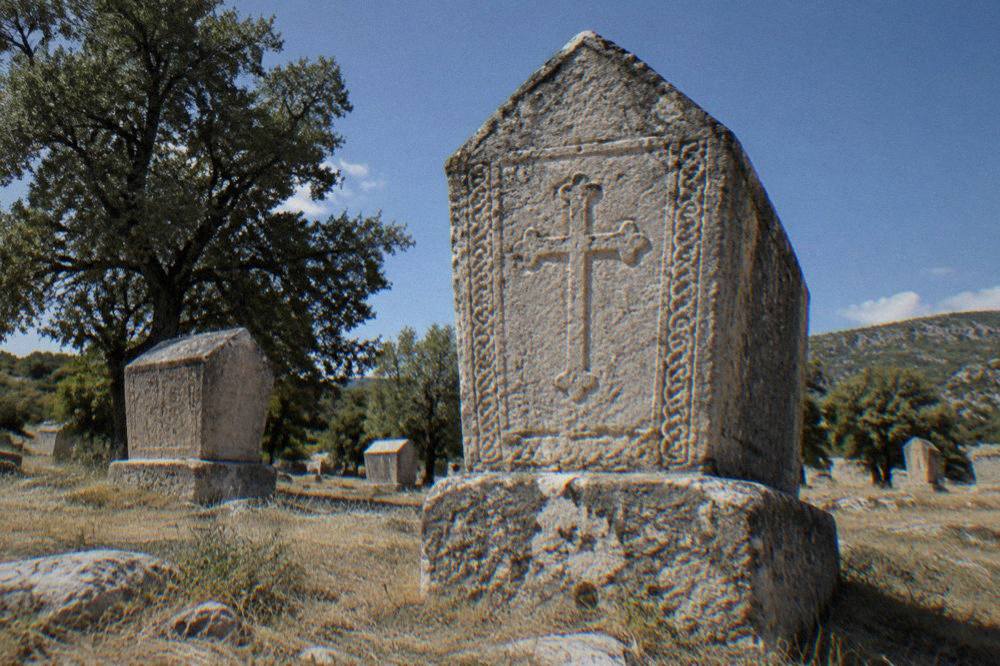
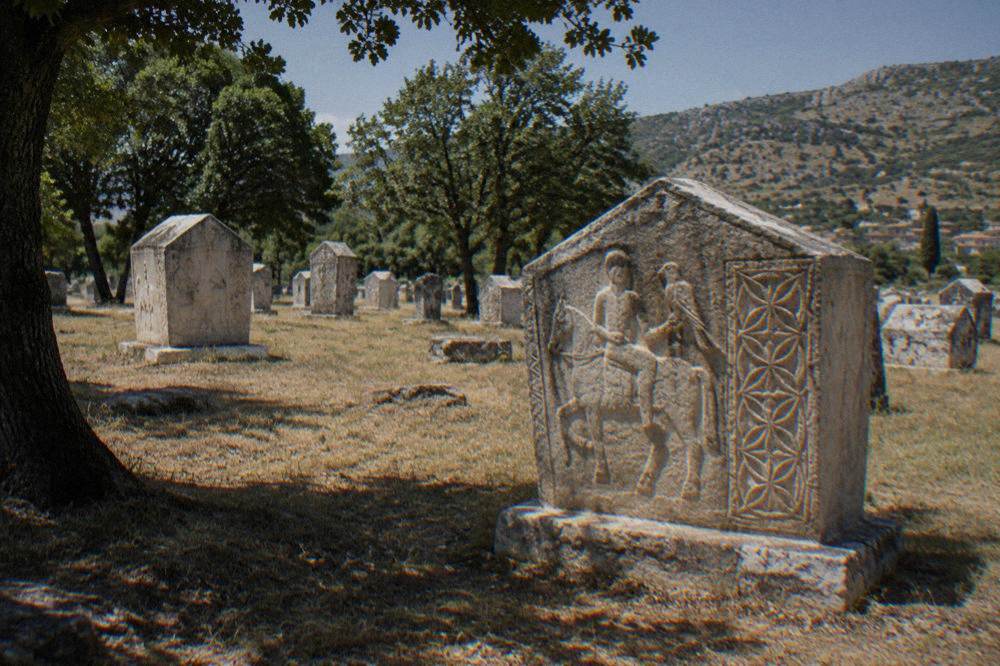
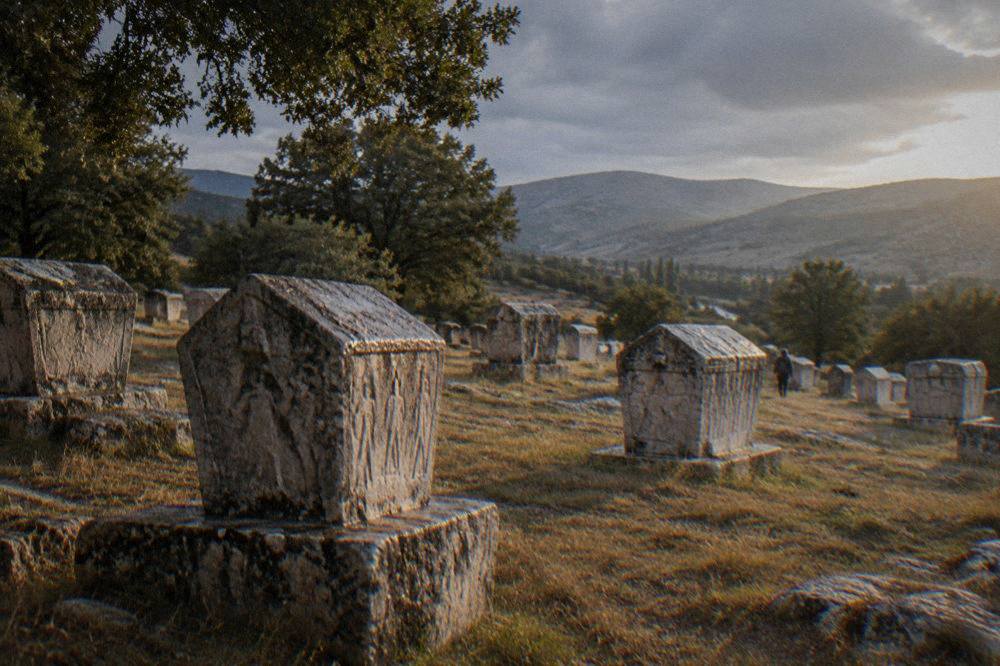
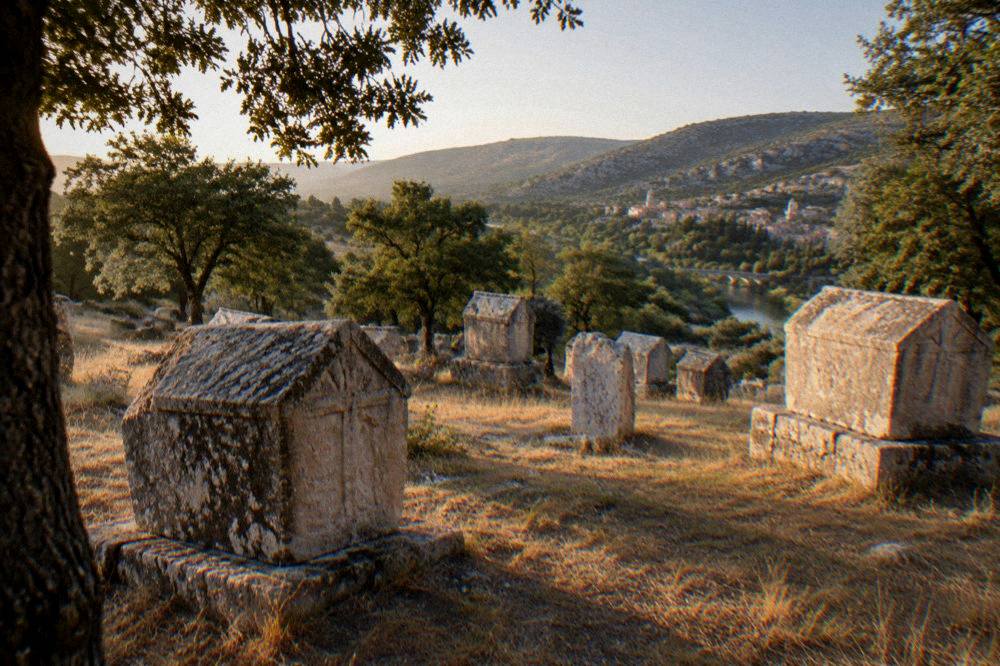
Stećci (the singular is stećak) are monolithic tombstones carved between the medieval period and the Ottoman conquest, and they appear in Christian and non-Christian burial grounds alike. Radimlja's collection is unusual for the range of shapes in one place: slab-shaped coffins, gabled chest tombs that look like small houses, tall crosses and pillars. The decoration is what draws visitors. Some stones carry simple crosses, others full figural scenes: a man on horseback with a falcon, a hunter with a bow, dancers with arms linked, a hand raised in blessing. A few carry inscriptions in Bosnian Cyrillic, including one naming a local stone-cutting family, the masons who are believed to have worked the quarry nearby.
The site itself is compact. A loop on foot among the stones takes a short time, and the ground slopes gently above the road. The setting is part of the appeal: the stones sit among low vegetation with the Bregava valley and the hills above Stolac behind them, and the light in the late afternoon brings the shallow carvings out sharply. Stolac itself, 36.8 km and about 47 minutes from Mostar, is covered in its own Stolac day trip guide, which describes the old town, the fortress and the river.
How Do You Get From Mostar To Radimlja?
Radimlja is 33.5 km from Stari Most in Mostar by road, about 42 minutes of free-flow driving, on the route south through or past Stolac. There is no rail link; the Sarajevo to Čapljina line reopened on 15 October 2026 but does not serve Stolac, so the trip from Mostar is by road: a rented car, a taxi or an organised day tour.
The drive leaves Mostar on the M17 towards Čapljina, then turns east towards Stolac on the regional road up the Bregava valley. The route passes within a short distance of several other stops: Blagaj Tekke is 13.7 km and about 19 minutes from Stari Most, Počitelj 30.0 km and about 31 minutes, and Međugorje 28.3 km and about 40 minutes. That clustering is why so many Herzegovina itineraries cover Blagaj, Počitelj, Stolac and Radimlja in one loop, sometimes with Kravica waterfall added, at 55.2 km and about 54 minutes from Stari Most on its own leg.
| Stop from Stari Most | Road km | Approximate minutes (free-flow) |
|---|---|---|
| Blagaj Tekke | 13.7 | 19 |
| Međugorje (St James church) | 28.3 | 40 |
| Počitelj | 30.0 | 31 |
| Radimlja necropolis | 33.5 | 42 |
| Stolac | 36.8 | 47 |
| Hutovo blato | 48.1 | 62 |
| Kravica waterfall | 55.2 | 54 |
| Vjetrenica cave | 77.2 | 104 |
Driving in Herzegovina is straightforward on these roads, but rural landmine warning signs still matter in this region: stay on marked paths and roads, as the mine-suspected areas mapped by BHMAC extend across parts of rural Herzegovina. The emergency number is 112. A car also opens the cross-border option, though Bosnia and Herzegovina is not in the EU or Schengen, and the Croatian land border has carried full checks since 1 January 2023, with waits reported up to about 30 minutes and longer at summer peaks.
If you would rather not drive, a guided day tour is the simplest way to reach the same cluster of places. One popular option runs from Mostar through Blagaj, Počitelj and Kravica waterfall:
What Do The Radimlja Stećci Look Like Up Close?
The necropolis holds all the classic stećak forms: flat coffin slabs, chest tombs with and without pedestals, gabled roof stones shaped like sarcophagi, and tall crosses and pillars. The carved decoration includes crosses in several variants, rosettes, spirals, cable borders, and figural scenes of a hunter with a bow, a rider with a falcon, a joust and a ring dance, plus Bosnian Cyrillic inscriptions naming the local stone-cutting family.
The figural stones are the ones to look for. A hunter draws a bow at a deer. A rider sits a horse with a bird of prey on his fist. Dancers link arms in a circle of the kind still danced at weddings in the region.
Two features make the stones easier to read here than at many other sites. First, the necropolis is on open ground with short vegetation, so the shapes and the orientation of each stone are visible in one sweep. Second, several of the finest carvings sit on the stones near the centre of the group, so a slow loop catches the best of them without hunting. Weathering is real, as it is everywhere with limestone in the open, but the deep relief scenes still hold their outlines. The Mostar Travel Guide overview of the region places Radimlja in the wider context of Herzegovina's medieval heritage alongside the fortified towns of Počitelj and Stolac.
How Much Does Radimlja Cost To Visit From Mostar?
Entry to the Radimlja necropolis is reported at 8 KM for an individual visitor, with 5 KM reported for groups and for citizens of Bosnia and Herzegovina with ID, and reduced rates reported for students and children. The currency everywhere in the country is the convertible mark (KM, BAM), pegged at 1 EUR = 1.95583 KM, not the euro.
The fee figures are reported by visitor-facing sources rather than printed on an official page reachable now, so treat them as a planning range and confirm at the gate. Cash is the safe assumption at small heritage sites in Herzegovina; euro notes are often accepted in tourist areas at a rounded rate of about 1 to 2, but that is a convenience, not an official rule, and the mark gives the fairer exchange. A tourist tax of 3 KM per person per night is reported in the Herzegovina-Neretva Canton from 1 January 2026 for overnight stays; confirm it on your booking, as it does not apply to day visitors in the same way.
| Item | Reported figure | Notes |
|---|---|---|
| Radimlja individual entry | 8 KM | Reported, confirm on arrival |
| Radimlja groups and BiH citizens | 5 KM | Reported, ID for residents |
| Students and children | Reduced | Reported, check at the gate |
| Blagaj Tekke entry | about 10 KM | Shoulders and knees covered |
| Kravica waterfall adult entry | 20 KM | All year, park's own visitor page |
| Currency peg | 1 EUR = 1.95583 KM | Currency board, fixed |
Compared with the other paid stops in the region, Radimlja is a small, single-figure outlay. Kravica waterfall, the area's biggest paid attraction, is 20 KM for an adult all year, with the park open every month of the year and hours that run to 22:00 from June to September. Blagaj Tekke charges about 10 KM with a dress code of covered shoulders and knees. Počitelj village and the Međugorje sites are free to walk. Budget a day of entries in marks, carry some cash, and the whole Stolac and Radimlja loop stays modest.
Why Are The Stećci A UNESCO World Heritage Site?
The stećci of Bosnia and Herzegovina, Croatia, Montenegro and Serbia were inscribed jointly in 2016 as Stećci Medieval Tombstone Graveyards, UNESCO property 1504, with Radimlja among the component sites chosen to represent the tradition. The same country also holds the Old Bridge Area of the Old City of Mostar, inscribed in 2005 under criterion (vi), so a Mostar-based trip can cover two separate World Heritage properties in one day.
The UNESCO inscription is serial: it lists a selection of necropolises across the four countries rather than a single site, and Radimlja was picked because it shows the full range of forms and, unusually, the workshop that produced the stones. The tombstones belong to a shared medieval burial culture that cut across the region's religious communities, which is part of why the selection was made jointly. The carvings mix Christian crosses with symbols that predate them and with scenes from daily life, hunting, riding, dancing and feasting, and the inscriptions name ordinary local families.
The Bosnian Cyrillic script on the Radimlja stones is a tangible record of the medieval Bosnian state and church, and the named masons give the site a documentary value most necropolises lack. For visitors coming from Mostar, the practical point is simple: Radimlja is the easiest of the stećci component sites to reach from the city, and it pairs naturally with the Old Bridge, 33.5 km north, for a two-property day. The stećci are also found further afield; the region around Stolac and Trebinje holds several other necropolises described in the Trebinje day trip guide.
What Can You Combine With Radimlja On A Day Trip From Mostar?
The natural loop from Mostar runs Stolac and Radimlja with Blagaj and Počitelj, roughly a full day by car: Blagaj Tekke at 13.7 km, Počitelj at 30.0 km, Radimlja at 33.5 km and Stolac at 36.8 km from Stari Most, all within about 47 minutes of the city. Adding Kravica waterfall, 55.2 km out, turns it into the classic Herzegovina day trip that many guided tours run.
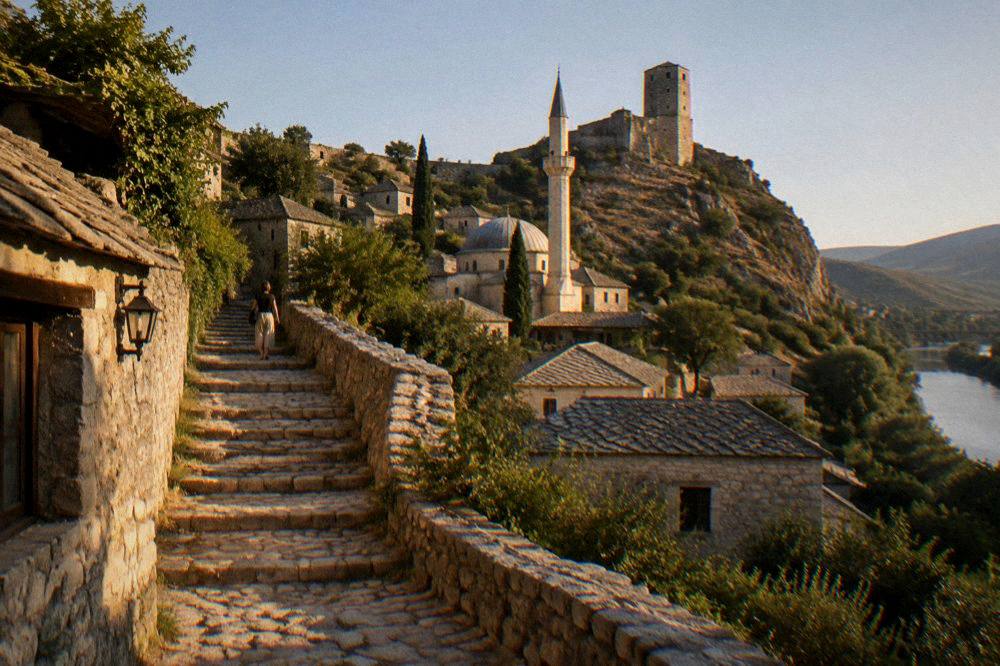
Stolac deserves more than a drive-through. Its old town climbs a hillside along the Bregava river below the fortress of Stjepan-grad, itself 13.9 km and about 20 minutes from Stari Most as a separate pin. Blagaj pairs the dervish lodge at the Blagaj Tekke with the Buna spring, where the river bursts from a cliff face, and Počitelj is a walled Ottoman hill village with a fortress above and stone houses below. Međugorje, the pilgrimage site, sits 28.3 km out and is free to visit, with modest dress expected at the church. The combinations below keep drive times realistic for a single day.
| Day trip shape from Mostar | Stops | Rough total driving |
|---|---|---|
| Medieval Herzegovina | Stolac, Radimlja, Počitelj | Under 2 hours |
| River and stone | Blagaj, Stolac, Radimlja | Under 2 hours |
| Classic full loop | Blagaj, Počitelj, Radimlja, Kravica waterfall | About 2.5 hours |
| North instead | Jablanica, Konjic, ARK D-0 | About 3 hours |
| Two-country long day | Radimlja, Trebinje, Dubrovnik area | Border queues extra |
If you would rather not self-drive, guided tours from Mostar cover the classic loop with a driver and commentary, and trips from Dubrovnik and Sarajevo reach Mostar and the waterfall country on longer itineraries. The featured option on this page is a full-day trip from Mostar:
Neighbouring guides on this site cover each stop in depth: Blagaj, Počitelj, Kravica waterfall, Međugorje and Konjic. A walking orientation of the city before you head out is covered in the Mostar walking tour guide, and the anchor sight of them all, Stari Most, is free to cross at any hour.
When Is The Best Time Of Day And Year To See Radimlja From Mostar?
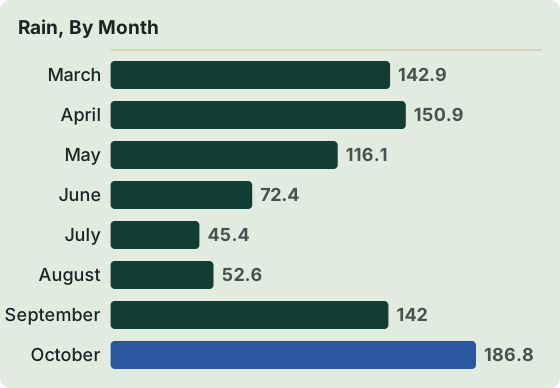
Late afternoon is the time that suits the stones, because the low sun throws the shallow relief carvings into shadow and makes the figural scenes far easier to read than at midday. On climate, the FHMZ Mostar station table for 1961 to 1990 shows July means of 24.7 C with absolute maximums reaching 41.2 C, and November as the rainiest month at 200.0 mm against 42.9 mm in July, so spring and autumn are the comfortable seasons for a valley-and-hillside day trip.
| Month | ERA5 mean daily high, C | ERA5 mean daily low, C | Rain, mm |
|---|---|---|---|
| March | 13.4 | 3.3 | 142.9 |
| April | 17.7 | 7.0 | 150.9 |
| May | 22.3 | 11.4 | 116.1 |
| June | 26.8 | 15.3 | 72.4 |
| July | 29.9 | 17.7 | 45.4 |
| August | 30.5 | 18.1 | 52.6 |
| September | 24.5 | 14.0 | 142.0 |
| October | 19.5 | 9.8 | 186.8 |
Those monthly values are ERA5 reanalysis for 1991 to 2020, a modelled series for the grid cell near Mostar, and they describe a valley that gets hot: modelled highs reach 30.5 C in August, and the station record puts the absolute maximum at 41.2 C in July. If you travel in summer, do the open hillside stops such as Radimlja and the Stolac fortress early or late, keep the midday for the shade of Blagaj's river gorge or a long lunch, and carry water. Rain falls on about 11 days a month in the November to January stretch against 5 in July, on the FHMZ 1961 to 1990 counts, so an autumn visit trades heat for occasional wet roads.
Photographically the necropolis faces the same logic as any low-relief carving: hard overhead light flattens it, raking light reveals it. A visit two or three hours before sunset also puts the drive back to Mostar in golden light along the Bregava, and in July the evening stays light long enough for a relaxed dinner stop. The full seasonal picture for the city is in the best time to visit Mostar and Mostar weather guides.
What Should You Know Before You Go To Radimlja?
Bring cash in marks, wear shoes that grip on sloping limestone, and expect an unstaffed rural site rather than a museum: entry is a few marks, opening access follows daylight hours, and services are in Stolac rather than at the stones. Bosnia and Herzegovina is not in the EU or Schengen, the currency is the KM, and visa-exempt visitors may stay up to 90 days in a six-month period from first entry.
A few practicalities make the visit smoother. The stones are protected heritage: do not climb on them, rub the carvings or move loose fragments, as the surfaces are soft limestone and the relief survives only because hands have stayed off it. The ground around the necropolis is uneven, with grass and exposed rock, so ankle-supporting shoes beat sandals. In rural Herzegovina, stay on marked paths and roads because of suspected mine areas, and respect any warning signage; the necropolis itself is a maintained, visited site. There is no sea near Mostar, so do not plan a beach stop on this route: the nearest coast is at Neum, 75.3 km and about 82 minutes away, on a separate leg.
| Practical item | Detail |
|---|---|
| Currency | Convertible mark (KM, BAM), pegged 1 EUR = 1.95583 KM |
| Cash or card | Carry cash for entry fees and small purchases |
| Emergency numbers | 112 general, 122 police, 123 fire, 124 ambulance |
| Dress | Sturdy shoes; modest dress if continuing to Blagaj Tekke or Međugorje |
| Rural safety | Stay on marked paths, mind mine warning signs |
| Stay rules | Visa-exempt visitors: up to 90 days in six months |
Timing your day against opening access matters less here than at staffed sights, since the necropolis is open ground, but the neighbouring paid sites keep seasonal hours: Blagaj Tekke is reported open 08:00 to 22:00 from April to October and 09:00 to 17:00 from November to March. If the medieval thread grabs you, two further stops extend the theme: Vjetrenica cave, 77.2 km out with guided visits and an entry of about 20 to 25 KM reported, and the prehistoric and medieval layers of Hutovo blato, 48.1 km away, both covered in the Hutovo blato and Vjetrenica cave guides.
Common Questions About The Radimlja Necropolis
How far is Radimlja from Mostar?
Radimlja is 33.5 km by road from Stari Most in Mostar, about 42 minutes of free-flow driving, on the route towards Stolac. The town of Stolac itself is 36.8 km and about 47 minutes from the bridge.
How much does it cost to visit the Radimlja necropolis?
Entry is reported at 8 KM for an individual, 5 KM for groups and citizens of Bosnia and Herzegovina with ID, and less for students and children. Confirm the current figure at the gate, and carry cash in marks.
Is Radimlja a UNESCO World Heritage Site?
Yes, as a component of the serial property Stećci Medieval Tombstone Graveyards, inscribed in 2016 as UNESCO property 1504 across Bosnia and Herzegovina, Croatia, Montenegro and Serbia. Radimlja was chosen for its full range of stećak forms and its named workshop of stone-cutters.
Can you visit Radimlja and Blagaj in one day from Mostar?
Yes. Blagaj Tekke is 13.7 km and about 19 minutes from Stari Most, and Radimlja is 33.5 km and about 42 minutes, so both fit comfortably in one day, with Stolac and often Počitelj added to the same loop.
What do the carvings on the Radimlja stećci show?
They show crosses, rosettes, spirals and cable borders, plus figural scenes of a hunter with a bow, a rider with a falcon, a joust and a ring dance, and Bosnian Cyrillic inscriptions naming a local family of masons.
When is the best time of day to photograph the Radimlja stones?
Late afternoon. Low, raking light throws the shallow relief into shadow and makes the figural carvings readable, while hard midday sun flattens them. Summer evenings stay light long after the heat drops.
Radimlja is the quiet half of a Herzegovina day trip, the half without queues or platform crowds, and it explains in carved limestone why this small valley between Stolac and Mostar carries a UNESCO listing of its own.