Is Mostar Worth Visiting?
Is Mostar worth visiting? A plain answer on the Old Bridge, the Old Bazaar, day trips, costs and crowds in Mostar, Herzegovina's main city on the Neretva river.
Mostar, the main city of Herzegovina in Bosnia and Herzegovina, is an inland city on the Neretva river built around one extraordinary stone arch: the Old Bridge, Stari Most, at the heart of a UNESCO World Heritage property inscribed in 2005. The name first appears in a written document in 1474, derived from "mostari", the bridge keepers who guarded the earlier wooden crossing on the same spot. For anyone weighing a stop between Sarajevo and Dubrovnik, this page on Mostar Travel Guide gives the short answer first and then the figures that back it up: entry costs, distances to the famous day trips, and what the climate actually does month by month.
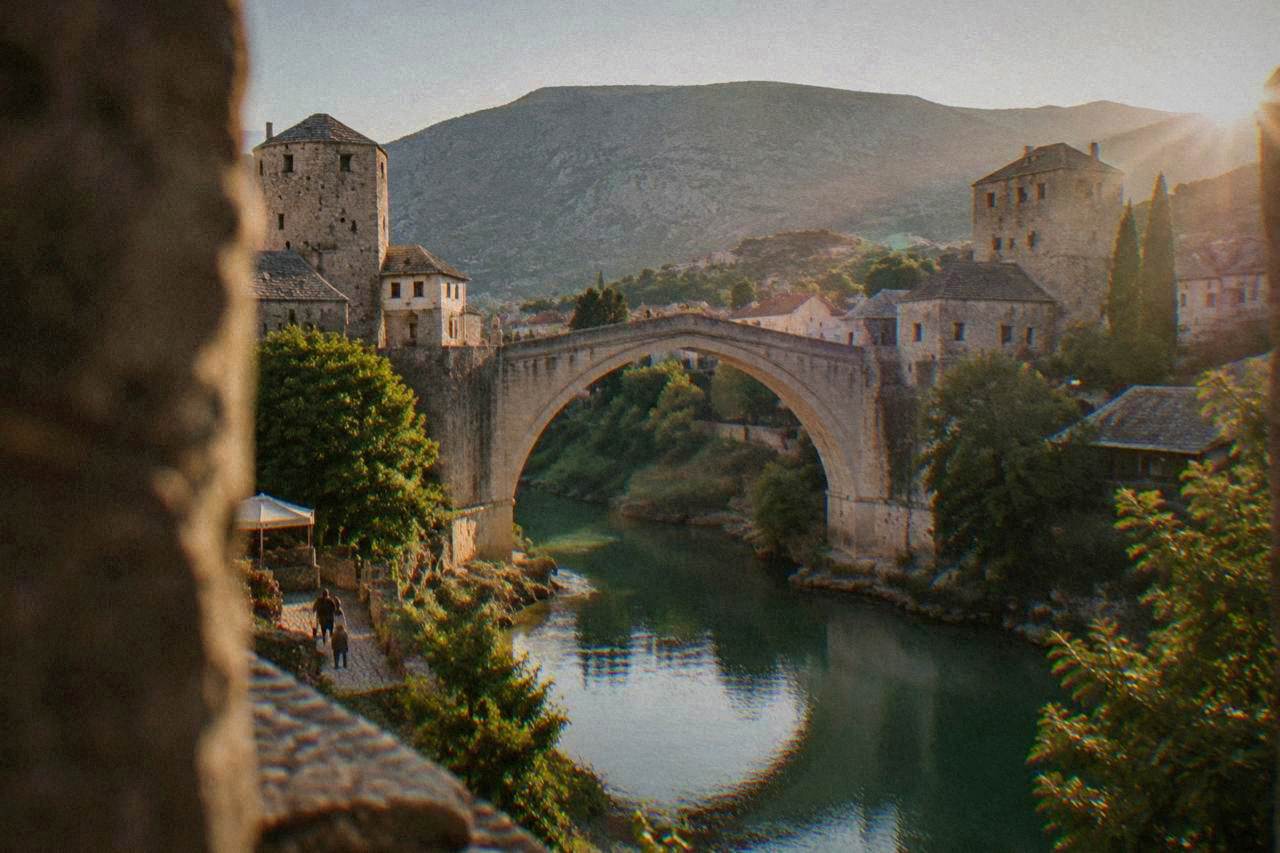
Yes, Mostar is worth visiting, and one full day is enough to see why. The Old Bridge Area of the Old City is a UNESCO World Heritage property, the bridge itself is free to cross at any hour, and the Old Bazaar, Kujundžiluk, runs straight off it. Entry to Kravica waterfall is 20 KM, and the waterfall sits 55.2 km away by road, about 54 minutes free-flow.
The core of the argument is density. Stari Most, Kujundžiluk, Kriva ćuprija (the Crooked Bridge), Koski Mehmed-pašina džamija and the Ottoman courtyard houses sit within a few minutes' walk of one another on both banks of the Neretva. The bridge was completed in 1566 under Suleiman the Magnificent, to the design tradition of the architect mimar Sinan's school, and its single stone arch spans about 29 m. It was destroyed on 9 November 1993 during the war, and rebuilt and reopened in July 2004 using original materials and techniques. Walking across it costs nothing and requires no ticket, at any hour of the day.
Beyond the Old Town, Herzegovina's headline sights sit on a tight radius: Blagaj and its tekke at the Buna spring, the fortified village of Počitelj, Kravica waterfall, Međugorje and, further out, Stolac, Konjic and Trebinje. That concentration is the practical reason the city works as a base rather than only a lunch stop, a case made in more detail in what makes Mostar special. The UNESCO inscription in 2005 covers 7.60 hectares of the old core plus a 48 hectare buffer zone, so the protected area is genuinely small and walkable end to end.
Skeptics usually raise two objections: heat and crowds. Both are real but manageable. The ERA5 reanalysis, 1991 to 2020, puts the mean daily high at 30.5 C in August, and the FHMZ 1961 to 1990 station table records an absolute maximum of 41.2 C in July. Early morning and evening solve that problem, as laid out in is Mostar too hot in August. Crowds thin the same way: the bridge at seven in the morning and the same bridge at midday are two different experiences, and the second one is the one everybody photographs anyway.
How Many Days In Mostar Is Enough?
Two days is the comfortable answer, and one day covers the essentials. Day one takes Stari Most, Kujundžiluk, the Crooked Bridge and a riverside viewpoint; day two adds a Herzegovina day trip to Blagaj, Počitelj and Kravica waterfall, all reachable inside a combined loop of under two hours of driving each way. A longer stay only pays off with second-ring trips.
The arithmetic supports the two-day plan. Blagaj Tekke is 13.7 km and about 19 minutes from Stari Most; Počitelj is 30.0 km and about 31 minutes; Kravica waterfall is 55.2 km and about 54 minutes, all free-flow road times without border or traffic queues. A single organised day tour covers all three, and the train to Sarajevo, about two hours each way with two departures a day, makes a three-night stay with a Sarajevo day trip viable if the timetable fits. Kravica opens all year with hours that shift by month, 07:00 to 22:00 from June to September and 07:00 to 17:00 in January, February, November and December, so the waterfall stop works in any season.
| Place from Stari Most | Road km | About minutes |
|---|---|---|
| Blagaj Tekke | 13.7 | 19 |
| Međugorje (St James church) | 28.3 | 40 |
| Počitelj | 30.0 | 31 |
| Radimlja necropolis | 33.5 | 42 |
| Stolac | 36.8 | 47 |
| Kravica waterfall | 55.2 | 54 |
| Konjic | 69.0 | 80 |
| Trebinje | 116.5 | 142 |
The fuller version of this calculation, including overnight arguments, sits in how many days in Mostar is enough and whether staying the night in Mostar is worth it. The short version: day-trippers from the coast arrive in late morning and leave in late afternoon, so an overnight stay gives you the old core in the quiet hours that a day trip structurally cannot.
What Does It Cost To Visit Mostar?
The sights themselves are cheap: crossing Stari Most is free, Kujundžiluk is a public street, and Kravica waterfall charges 20 KM for an adult all year, with 10 KM for residents of Bosnia and Herzegovina and free entry for children under 7. The currency is the convertible mark (KM), pegged at 1 EUR = 1.95583 KM, not the euro.
A tourist tax is reported at 3 KM per person per night in Herzegovina-Neretva Canton from 1 January 2026, so confirm the amount at booking. Euro cash is often accepted in tourist areas at a rounded rate, but that is a custom rather than a rule, so check the rate before paying. Cards work at hotels and larger restaurants; small vendors in the bazaar prefer cash. At cash machines, choose to be charged in KM rather than euro to avoid unfavourable conversion.
The big line item is usually the journey, not the city. Bosnia and Herzegovina is not in the EU or Schengen, and the Croatian land border carries full checks; waits run up to about 30 minutes, longer at summer peaks. Mostar International Airport is 8.2 km and about 12 minutes from Stari Most, but its route list is short, with reported Zagreb and Stuttgart flights plus seasonal additions, and the main gateways for arrivals are Sarajevo airport, 120.4 km away, and Dubrovnik airport, 163.4 km away. A fuller cost breakdown is in is Mostar expensive. If a day trip to the coast appeals in reverse, Neum, the country's only outlet to the sea, is 75.3 km and about 82 minutes from Stari Most.
What Is The Best Time Of Year To Visit Mostar?
May, June and September are the sensible windows. The ERA5 reanalysis, 1991 to 2020, puts mean daily highs at 22.3 C in May, 26.8 C in June and 24.5 C in September, against 30.5 C in August, and the FHMZ 1961 to 1990 table shows rain falling to 42.9 mm in July from 200.0 mm in November.
The rain pattern matters as much as the temperature. Mostar's precipitation has a winter maximum: November averages 200.0 mm and December 178.7 mm, against 42.9 mm in July, per the FHMZ station table. The year totals 1,515.4 mm. Day trips to Kravica, Blagaj and Počitelj are outdoor affairs, so a dry month improves them sharply, and the November figures argue firmly against a late-autumn visit built around the countryside rather than the museums.
| Month | Mean daily high, ERA5 1991-2020 | Rain mm, FHMZ 1961-1990 |
|---|---|---|
| January | 8.4 C | 164.7 |
| April | 17.7 C | 127.3 |
| May | 22.3 C | 102.1 |
| July | 29.9 C | 42.9 |
| August | 30.5 C | 73.7 |
| September | 24.5 C | 96.3 |
| November | 14.1 C | 200.0 |
Late July brings two bridge events worth planning around: the 460th traditional Old Bridge diving competition ran on 26 July 2026, and the Red Bull Cliff Diving World Series round ran 30 July to 1 August 2026, diving from platforms at 21 m for women and 27 m for men. The jumps themselves belong to members of the Mostari diving club; there is no pay-to-jump option for visitors. The bridge stands about 21 to 24 metres above the river depending on the water level, and the club members who leap from it train for years before their first solo dive.
What Can You See Around Mostar Beyond The Old Bridge?
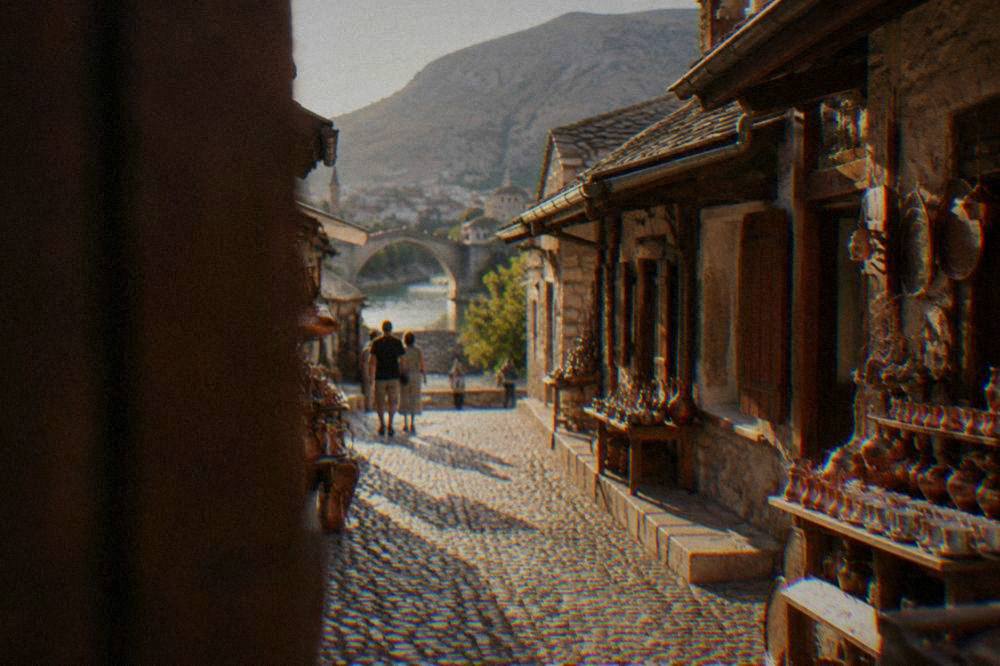
Blagaj Tekke, Počitelj and Kravica waterfall form the standard second-day loop, and each is a short drive: the tekke at the Buna spring is about 19 minutes out, the fortified village of Počitelj about 31, and the waterfall about 54. Entry to the tekke is reported at 10 KM, Počitelj's village streets are free, and Kravica charges 20 KM for an adult.
Blagaj sits where the Buna river bursts from a cliff, and the tekke, a Dervish monastery built against the rock face, is the draw; dress with shoulders and knees covered, wraps are provided at the entrance. The reported summer hours run 08:00 to 22:00 from April to October and 09:00 to 17:00 in the winter months, so confirm on arrival. Above the village, the Stjepan-grad fortress ruins are 13.9 km and about 20 minutes from Stari Most for anyone who wants the panorama instead of the valley floor.
The second ring rewards a longer stay. Radimlja, the medieval stećci necropolis near Stolac and part of a UNESCO property inscribed in 2016, is 33.5 km and about 42 minutes away, with entry reported at 8 KM. Konjic, 69.0 km north, is the gateway to the ARK D-0 bunker and to white-water rafting on the upper Neretva. Trebinje, at 116.5 km and about 142 minutes, is a full day of its own. None of these requires a second visit to the city, but they are the reason three days beats two for travellers with a car.
Is Mostar Easy To Reach And Walk Around?
Yes on both counts. The city centre is compact and walkable, with the Old Town closed to through traffic and every headline sight on foot of the bridge, and the rail line to Sarajevo runs two trains a day each way after service resumed on 15 October 2026. Buses link the city to Sarajevo, Dubrovnik and Split daily.
The walking question has a dedicated answer in is Mostar a walkable city, and the safety question in walking around Mostar at night. The practical summary: the Old Town is public and open at any hour, the emergency number is 112, and in rural Herzegovina, on hikes around the city, stay on marked paths because of suspected mine areas. A taxi from the airport into the centre is a short, inexpensive ride.
One caveat on arrival planning: the drive to Dubrovnik is 145.5 km and about 150 minutes free-flow, but it crosses the border, so real times run longer in summer. The Pelješac Bridge, opened in 2022, lets Dubrovnik-bound traffic bypass the Neum corridor entirely. Split is further still, 174.1 km and about 131 minutes before the border.
For the city itself, a guided walk adds context the bridge cannot: the street art and murals tour, linked below, covers the newer faces of a city whose story did not end in 2004, and the food experiences in the cards above turn a bazaar lunch into the day's main event. Check availability
Common Questions About Visiting Mostar
Is Mostar Worth Visiting?
Yes. The Old Bridge Area is a UNESCO World Heritage property, the bridge is free to cross, the Old Bazaar sits beside it, and Kravica waterfall, Blagaj and Počitelj sit within an hour's drive. One day covers the city; two days add the Herzegovina loop.
Is Mostar worth visiting as a day trip from Dubrovnik or Split?
Yes, though it is a long day: Dubrovnik is 145.5 km and about 150 minutes free-flow from Stari Most, Split 174.1 km and about 131 minutes, before border checks on the Croatian line. Day tours from both cities exist in the roster.
Can you swim near Mostar?
Swimming in the Neretva at Mostar is not the norm; the water stays cold even in August. At Kravica waterfall, swimming is allowed in the designated pool area in summer, with no lifeguard reported, so check the park's rules on arrival.
Is Mostar safe?
The Old Town is a public, walkable area, and the emergency number is 112. In rural Herzegovina, stay on marked paths because of suspected mine areas. No safety statistics are printed here beyond that official advice.
What currency does Mostar use?
The convertible mark (KM, BAM), pegged at 1 EUR = 1.95583 KM. Euros are often accepted in tourist areas at a rounded rate; confirm the rate before paying.
Does Mostar work as a winter destination?
Partly. Kravica waterfall stays open all year, 07:00 to 17:00 in the winter months, and the bridge and bazaar cost nothing. But rain averages 200.0 mm in November and 178.7 mm in December, and the mean daily high drops to 8.4 C in January, so the outdoor day trips lose much of their appeal.
