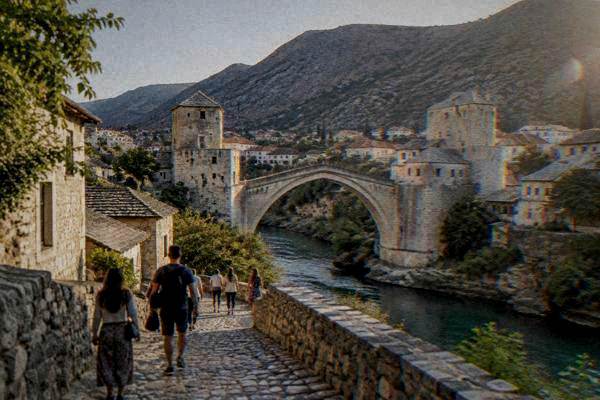
Is Mostar Or Sarajevo Better?
A plain comparison of Mostar and Sarajevo on distance, transport, sights and day trips, using road and rail figures for Herzegovina and Bosnia.
Neither city wins on a scoreboard, because the two are not competing for the same job. Mostar is a city of about 105,000 people (2013 census) in Herzegovina, in the south of Bosnia and Herzegovina, an inland place on the Neretva river whose Old Bridge Area has been a UNESCO World Heritage property since 2005. Sarajevo is the national capital, roughly 127 km north by road. Mostar suits a short, intense stay centred on one walkable old quarter and a ring of famous day trips; Sarajevo suits a longer city visit. This page sets out what the two places offer on the figures that exist, and where each one plainly does the job better than the other, without pretending there is a single winner.
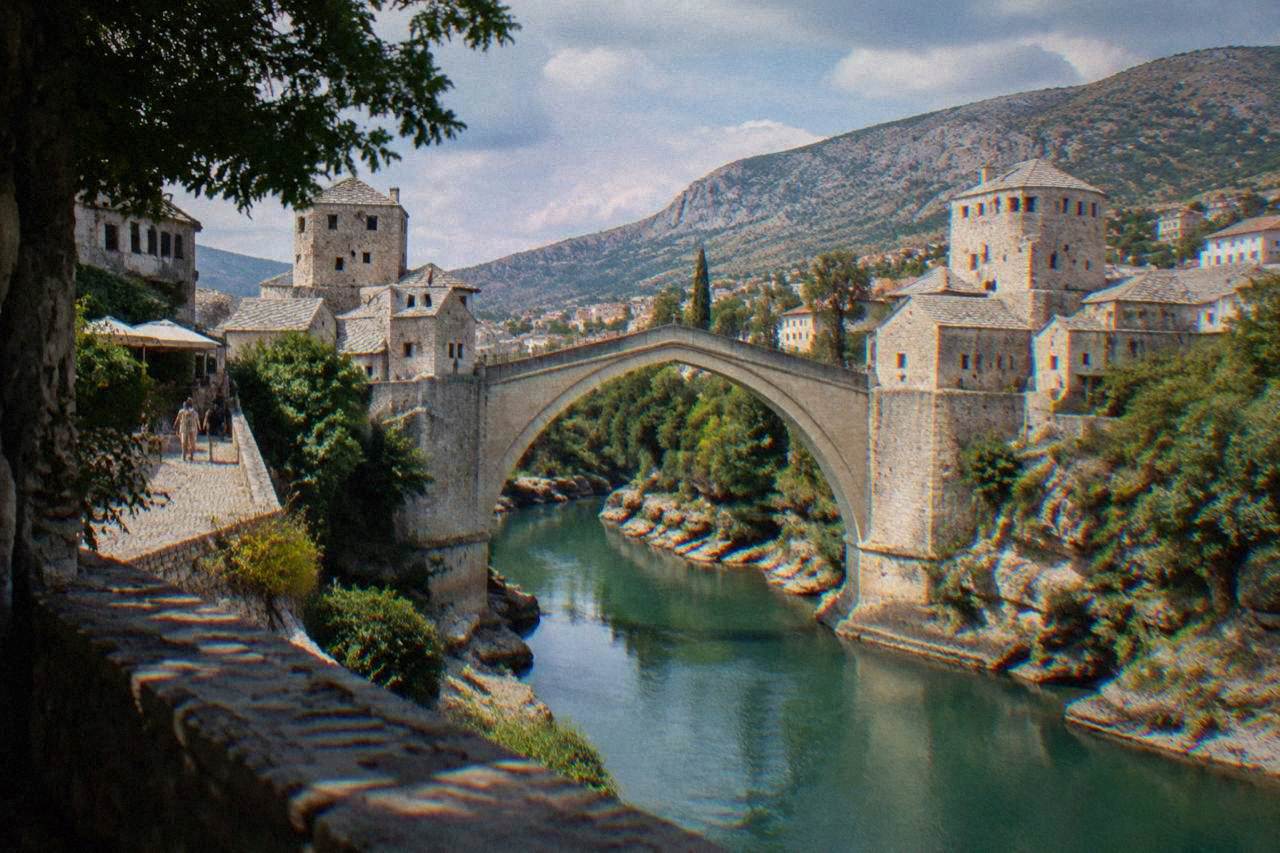
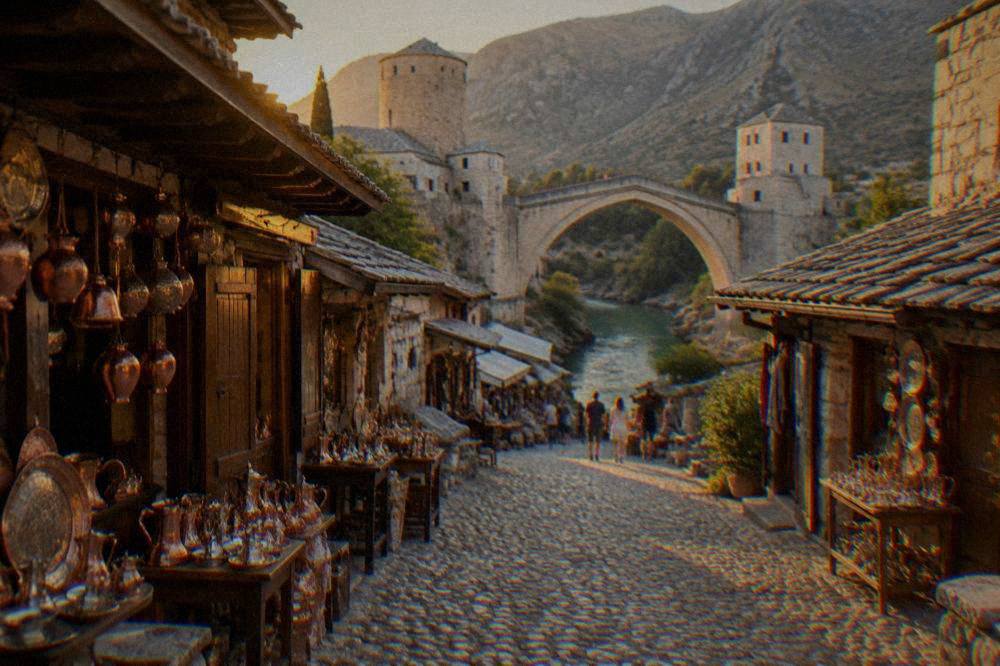
For a short stay built around one landmark and easy day trips, Mostar is the stronger base, and for a multi-day city trip with museums, cafés and layered history, Sarajevo is the stronger choice. The two are about 127 km apart by road, close enough that the honest answer for many travellers is both, not either. Nothing about the two cities' relative merits can be scored as a fact. What can be stated is structural: Mostar is small and walkable around Stari Most and the Kujundžiluk bazaar, and the headline sights of Herzegovina, Blagaj, Počitelj and Kravica waterfall, all sit within an hour's drive of it.
The comparison that actually matters is logistical. Both cities sit on the same rail line, the same road corridor and, for anyone flying in, the same pair of practical gateways. A traveller who lands in Sarajevo can be in Mostar about two hours later by train, and the two cities share a border, a currency and a language set, so switching between them costs less effort than almost any other two-city pairing in the region.
For orientation on the Mostar side, start with the things to do in Mostar overview and the Sarajevo to Mostar connection guide; the rest of this page is about which base fits which kind of trip.
How Far Apart Are Mostar And Sarajevo, And How Do You Travel Between Them?
The road distance from Stari Most in Mostar to Baščaršija in Sarajevo is 127.1 km, about 134 minutes of free-flow driving, and the train covers the corridor in about two hours with two departures a day each way. Regular passenger trains between Sarajevo and Čapljina via Mostar resumed on 15 October 2026, after service had been suspended from about 8 September 2026 following a fire along the corridor. The reported one-way fare is about 14 KM, worth confirming at the station before travel. Buses also run the route several times a day, and the corridor is the same one the day tours use.
The table below holds the computed road figures from Stari Most, free-flow, with no border queues involved since the whole route stays inside Bosnia and Herzegovina:
| Route from Stari Most | Road distance | Free-flow time |
|---|---|---|
| Sarajevo (Baščaršija) | 127.1 km | about 134 min |
| Sarajevo airport | 120.4 km | about 125 min |
| Konjic (halfway point) | 69.0 km | about 80 min |
| Jablanica | 47.4 km | about 57 min |
That geography is the real answer to the either-or question. Konjic and Jablanica sit between the two cities, so the transfer day between them can double as a sightseeing day if it is driven rather than taken by rail. The Bosnia and Herzegovina itinerary page lays out exactly that kind of routing.
For anyone who wants the corridor without driving it, there is a tour built for it:
Which City Is Better As A Base For Day Trips?
Mostar is the better base for day trips, on the plain arithmetic of distance: Blagaj is 13.7 km away, Počitelj 30.0 km, Međugorje 28.3 km and Kravica waterfall 55.2 km, while Sarajevo sits at the northern end of the corridor and adds roughly two hours of driving to every one of those. Herzegovina's headline destinations cluster around Mostar, not around the capital. A visitor sleeping in Mostar can reach Blagaj in about 19 minutes, Počitelj in about 31, and still be back for dinner. The same trips from Sarajevo become long full-day outings.
The costs on the ground are modest and known. Blagaj Tekke charges about 10 KM for entry and asks that shoulders and knees be covered, with wraps provided. Počitelj village is free to walk. Međugorje's sites are free. Kravica waterfall charges 20 KM for an adult all year, with children under 7 free. The Radimlja stećci necropolis near Stolac, a site on a UNESCO listing of 2016, charges about 8 KM. Farther afield, ARK D-0 near Konjic costs about 40 KM for foreign visitors and requires advance booking, closed Monday.
| Day trip from Mostar | Road distance | Free-flow time | Entry figure |
|---|---|---|---|
| Blagaj Tekke | 13.7 km | about 19 min | about 10 KM |
| Međugorje (St James church) | 28.3 km | about 40 min | free |
| Počitelj | 30.0 km | about 31 min | village free |
| Radimlja necropolis | 33.5 km | about 42 min | about 8 KM |
| Kravica waterfall | 55.2 km | about 54 min | 20 KM adult |
| Trebinje | 116.5 km | about 142 min | varies |
Sarajevo's own day-trip card is different rather than worse: its natural reach includes the mountains around the capital and, going south, the same Herzegovina list at greater driving cost. The Sarajevo day-trips page covers that side. For depth on one stop, the Blagaj guide and Kravica waterfall guide carry the full hour-by-month and price detail.
Which City Suits A Short Stay Better?
Mostar is the better fit for a short stay of one or two nights, because its core sights, Stari Most, Kujundžiluk, Kriva ćuprija and the riverside mosques, sit inside a single walkable district, while Sarajevo rewards a longer visit across several distinct quarters. In Mostar the essential walk is short: the Old Bridge itself is free to cross and open around the clock, the bazaar streets around it are public, and the whole UNESCO-listed old core fits between the river and the ridge without transport. The question how many days in Mostar is enough has a short answer precisely because the city core is compact.
Sarajevo cannot be compressed the same way, and that is not a criticism. A capital with a layered Ottoman, Austro-Hungarian and socialist-era fabric simply has more ground to cover. A traveller with three nights or fewer who wants bridges, river scenery and a quick dive into Herzegovina's countryside will spend less of that time in transit by basing in Mostar. A traveller with four or more nights, or one whose interest is the capital's history and street life, gets more from staying north.
One honest caveat in Mostar's summer column: it gets genuinely hot. The ERA5 reanalysis for 1991 to 2020 puts the mean daily high at 29.9 C in July and 30.5 C in August, and the FHMZ station table for 1961 to 1990 records an absolute maximum of 41.2 C. The August heat question goes through this in detail.
Can You Visit Both Mostar And Sarajevo On One Trip?
Yes, comfortably, and the two-city route is a common shape for a Bosnia and Herzegovina trip: the train links them in about two hours twice a day each way, the road takes about 134 minutes free-flow, and the corridor between them carries Konjic, Jablanica and the Neretva canyon. There is no border to cross between the two cities, the currency is the convertible mark throughout, pegged at 1 EUR = 1.95583 KM, and the main languages are Bosnian, Croatian and Serbian on both ends. A week split between the capital and Herzegovina's bridge city is enough to see both without rushing.
The practical split that works well on paper is nights-first-in-Sarajevo, then south. Arrive through Sarajevo airport, spend the city days there, then take the morning train or a transfer south with stops in Konjic and Jablanica, and finish in Mostar within reach of Blagaj, Počitelj and Kravica. Reversed, it works just as well for anyone flying home from Sarajevo. The Balkans itinerary extends the same logic onward to Croatia and Montenegro, since Dubrovnik is 145.5 km and about 150 minutes of free-flow driving from Stari Most, before any border queue.
For the southbound leg done properly, this is the tour that covers the corridor in one pass:
If Mostar ends up as the base, the surrounding countryside is well served by organised days out, and the choice below widens that list.
Common Questions About Comparing Mostar And Sarajevo
Is Mostar Or Sarajevo Better?
Neither is better outright. Mostar is the stronger base for a short stay and for Herzegovina day trips, with Blagaj, Počitelj and Kravica waterfall all within about an hour's drive. Sarajevo is the stronger choice for a longer city visit. The two are about 127 km apart, linked by road in roughly two and a quarter hours and by train in about two hours, so a single trip can hold both.
Is Mostar worth visiting if I only have one day?
Yes. The Old Bridge is free to cross at any hour, the Kujundžiluk bazaar and Kriva ćuprija are public streets, and the compact old core means a single day covers the essentials. The trade-off is depth; a second day opens Blagaj and the Herzegovina countryside, as the one-day and two-day itineraries on this site set out.
How many days should I split between Mostar and Sarajevo?
On the geography alone, one or two nights in Mostar plus two or three in Sarajevo is a workable week. Mostar's core is compact and its day trips sit within an hour's drive, while Sarajevo spreads across several quarters that take longer to absorb. The train takes about two hours between them, so the transfer itself costs little of the day.
Is the train between Sarajevo and Mostar running?
Yes. Regular passenger service between Sarajevo and Čapljina via Mostar resumed on 15 October 2026, after a suspension that began on about 8 September 2026 following a fire along the corridor. Two trains run each way daily, and the reported one-way fare is about 14 KM; confirm times and fares before travel.
Which city is hotter in summer?
Mostar sits in a low valley on the Neretva and is reliably hot: the ERA5 reanalysis for 1991 to 2020 shows mean daily highs of 29.9 C in July and 30.5 C in August, and the FHMZ station record for 1961 to 1990 includes an absolute maximum of 41.2 C.
Can I fly into one city and out of the other?
Yes, with planning. Mostar International Airport is 8.2 km and about 12 minutes by road from Stari Most and serves a small route list, including Zagreb and Stuttgart, while the main gateways for long-haul arrivals are Sarajevo airport, 120.4 km from Stari Most, and Dubrovnik airport across the border in Croatia, 163.4 km away. Open-jaw tickets through Sarajevo and Dubrovnik pair naturally with a Mostar stay.
The plain summary from the Mostar Travel Guide editorial desk: pick Sarajevo for the capital and the nights, pick Mostar for the bridge, the river and the Herzegovina ring around it, and if the calendar allows, take the two-hour train and refuse the choice altogether.