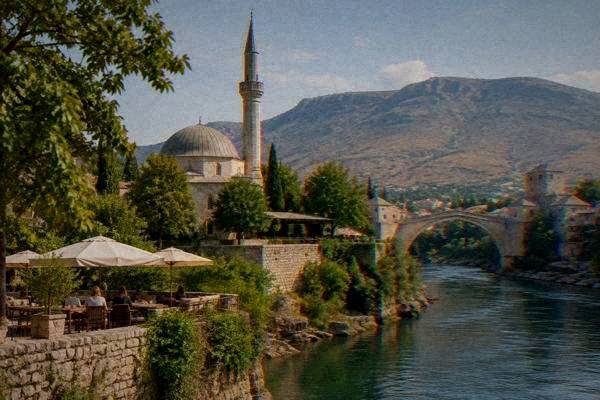
Can You Drink Alcohol In Mostar?
Yes, alcohol is freely sold and served in Mostar, in bars, restaurants, shops and hotels across the city, with a few local customs worth knowing before you order.
Yes, you can drink alcohol in Mostar, openly and without restriction. Mostar is the main city of Herzegovina, in Bosnia and Herzegovina, an inland city on the Neretva river, and alcohol is sold in its shops, served in its restaurants and poured in its bars every day of the week. The country has no prohibition law, no dry municipalities and no special rules for tourists. Beer, wine and rakija, the local fruit brandy, sit on supermarket shelves beside the soft drinks.
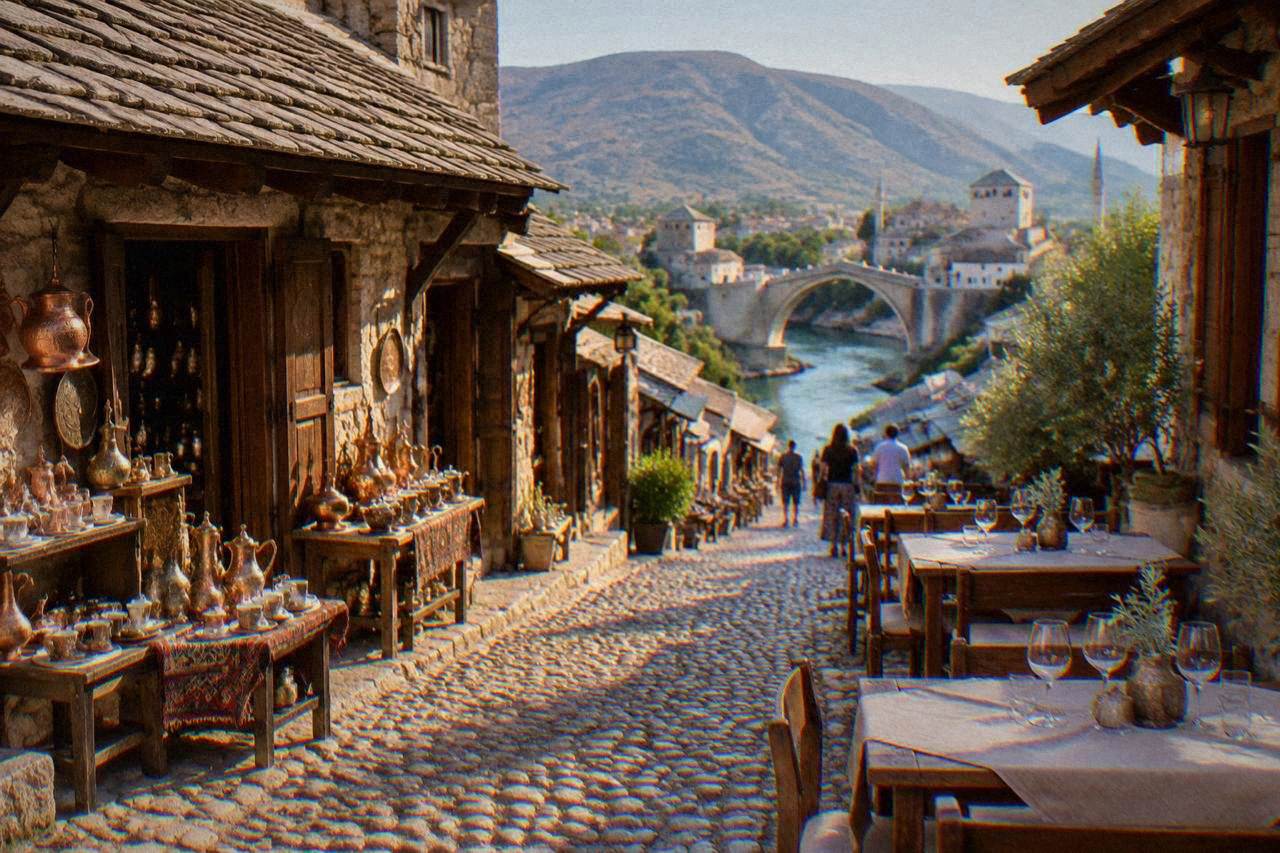
That simple answer still leaves practical questions. What is actually on the menu, what does it cost relative to the convertible mark, where should you not bring a bottle? This page answers them plainly. The one thing to hold onto first: nobody will look twice at a beer in your hand in Mostar.
Yes, alcohol is legal, sold and openly consumed throughout Mostar. Bars, restaurants, cafés, hotels and supermarkets in the city serve beer, wine and spirits without restriction, and there is no law, local rule or visitor taboo that stops you from drinking. Bosnia and Herzegovina has no prohibition of any kind, and Mostar's evening café scene runs late, with drinks served outdoors along the Neretva and around the Old Town.
The confusion usually comes from elsewhere. Several majority-Muslim countries restrict alcohol, and visitors sometimes assume Bosnia and Herzegovina works the same way. It does not. The country is secular in law, alcohol is regulated like any ordinary consumer good, and Mostar's own Herzegovina region is a historic wine country: vineyards around Čitluk, Ljubuški and Stolac have produced wine for generations, and a Herzegovinian wine list is a normal feature of Mostar restaurants. Rakija, distilled from grapes, plums or other fruit, is a traditional welcome drink poured for guests.
The city's identity sits on the Neretva, around Stari Most, the Old Bridge, and the Kujundžiluk bazaar. The Old Bridge Area of the Old City of Mostar has been a UNESCO World Heritage property since 2005, and the streets around it are full of terraces serving drinks from morning to midnight in season. If you want the fuller picture of the city before planning evenings around it, the guide to what is special about Mostar covers the ground.
Where Can You Buy And Drink Alcohol In Mostar?
Practically everywhere in the city that serves adults: restaurants, bars, café terraces, hotel lounges, konoba-style grill houses, and every supermarket and convenience shop, all sell or serve alcohol legally. There is no licensing hour that shuts bars early in the way some countries do, and no state monopoly store. Off-licence buying happens in ordinary shops, and the price of a domestic beer in a shop is a small fraction of the convertible mark figure on a menu, so both budgets work.
Shops are the cheapest route. Supermarkets and small neighbourhood stores stock domestic lagers, imported beer, Herzegovinian wine and spirits at ordinary retail prices, and there is no purchase restriction beyond the standard adult age. Bars and restaurants carry the markup you would expect, though by Western European standards the count in KM stays modest; the currency is the convertible mark (KM, BAM), pegged at 1 EUR = 1.95583 KM, and euro cash is often accepted in tourist areas at a rounded rate, so confirm before paying. Other pages covering the same trip are gathered on Mostar Travel Guide.
A few norms worth knowing. Café culture in Mostar is strong and coffee-centred, and not every café serves alcohol, but nobody objects if you simply order a coffee instead. Around mosques and in religious settings, discretion is ordinary courtesy rather than law. During Ramadan, some Muslim-owned eateries adjust hours or service, but alcohol remains on sale citywide. Drinking in the street is not a local habit, and the police emergency number is 112 if you ever need it.
| Where | Alcohol served? | What to expect |
|---|---|---|
| Restaurants and grill houses | Yes, standard | Domestic and regional wines, beer, rakija |
| Café terraces | Some, not all | Coffee-first venues; many add beer and wine |
| Hotel bars | Yes | Full bar service, late hours in season |
| Supermarkets and shops | Yes, off-licence | Cheapest beer, wine and spirits |
| Mosque grounds and religious sites | No | Respect the setting; visit soberly and quietly |
What Should You Drink In Mostar?
Start with three things: rakija, Herzegovinian wine and domestic lager. Rakija is the traditional fruit brandy, often homemade and offered as a gesture of welcome, and in Herzegovina the grape version, lozovača, is the regional signature. Wine from the Žilavka and Blatina grapes grows around Čitluk and Ljubuški, roughly 23 to 55 km from Mostar by road. Domestic lager is the everyday pour in every bar.
The wine story is the surprise for many visitors. Herzegovina's limestone hills and hot, dry summers produce the local Žilavka white and Blatina red, and Mostar restaurant lists usually carry both, alongside wines from nearby Croatia and further afield. The region's viticulture is old and ordinary here, not a tourist invention, and a glass of local white with river fish from the Neretva is a standard Mostar order. The site's Herzegovina wine guide goes deeper into the grapes and where they grow.
Rakija deserves its own paragraph. It is a hospitality ritual as much as a drink: poured in small glasses, often before or after a meal, sometimes with a companion plate of meze. Declining politely is accepted; knocking it back in one is not required, and sipping is normal. For travellers who want to understand the food culture the drink belongs to, the site's pages on Bosnian food and Bosnian coffee cover the table around it.
Beer is the volume drink. Domestic Bosnian lagers dominate taps and fridges, imported brands are everywhere, and the prices in KM remain gentle. If you are building a day around food rather than just a drink, the Burek Masterclass in Mostar pairs naturally with the city's café and bakery culture, rolling and baking the savoury pastry that anchors any Mostar breakfast. Check availability
Are There Any Rules, Taxes Or Customs To Know About?
The rules are ordinary European ones: buy at adult age, drink in bars and homes rather than in the street, and never drink and drive, since the limits are low and enforced. One cost is the tourist tax, reported at 3 KM per person per night in the Herzegovina-Neretva Canton from 1 January 2026, which is added to accommodation rather than to drinks, and which you should confirm at booking. Beyond that, no alcohol-specific rule touches visitors.
Age and drink-driving law work as in most of Europe. The emergency number is 112, with police at 122, and the ordinary advice about evenings applies anywhere: the page on walking around Mostar at night covers the wider picture. The customs side is subtler. Mostar is a mixed city of Bosniak, Croat and Serb communities, and attitudes to alcohol vary by household rather than by district. A Muslim family may not drink at all; a neighbouring Croat family may make its own wine. Reading the room is the whole skill.
There is also a seasonal rhythm. Herzegovina summers are hot: the FHMZ 1961-1990 station series for Mostar shows a July mean of 24.7 C with an absolute maximum of 41.2 C, and the ERA5 reanalysis 1991-2020 puts the modelled July daily high at 29.9 C and August at 30.5 C. Locals respond by shifting the day: long morning coffees, shade through the afternoon, and drinks on terraces once the heat breaks. The Neretva river stays cold even in August, which is why the question of swimming in the river at Mostar is a separate and popular one.
| Topic | The rule or norm in Mostar |
|---|---|
| Legal status | Alcohol fully legal, no prohibition |
| Buying age | Standard adult age, enforced at shops |
| Street drinking | Not a local custom; drink on terraces and at home |
| Tourist tax | Reported 3 KM per person per night from 1 January 2026, confirm at booking |
| Ramadan | Alcohol still sold citywide; some venues adjust hours |
| Driving | Low limits, enforced; do not drink and drive |
Can You Visit Wineries Or Drink On Tours Around Mostar?
Yes. Herzegovina's wine country starts about 23 km from Stari Most at Čitluk, with Međugorje at 28.3 km and Ljubuški, near Kravica waterfall at 55.2 km, all within an easy half-day loop, and day tours from Mostar regularly combine Blagaj, Počitelj and the waterfalls with wine stops. Tasting fees at family cellars are usually modest; check the price at the cellar before you sit down.
The classic route runs through the region's three headline sights. Blagaj Tekke sits at the Buna spring, 13.7 km and about 19 minutes by road from Stari Most. Počitelj, the stone fortified village, is 30.0 km away. Kravica waterfall, where the Trebižat river drops into a swimmable pool in summer, is 55.2 km and about 54 minutes free-flow. Wine country and waterfall country overlap, which is why a single day tour can cover a morning swim, a village walk and an afternoon tasting.
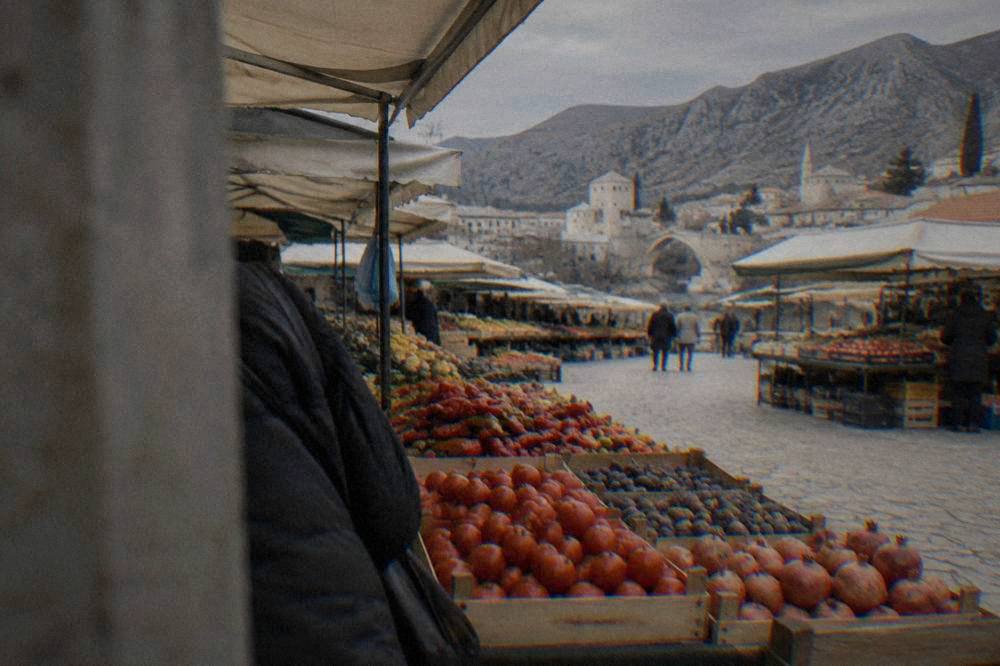
Booked trips handle the driving question neatly. A private Herzegovina tour to Kravica, Blagaj and Počitelj removes any need to nominate a driver, and the site's Herzegovina road trip guide and the one-day Kravice, Blagaj and Počitelj itinerary help anyone planning it independently. One local caution for rural walking: stay on marked paths in the Herzegovina countryside because of suspected mine areas, a standing advisory for the whole country.
Common Questions About Alcohol In Mostar
Can you drink alcohol in public in Mostar?
There is no law banning it outright, but street drinking is not a local habit, and the police number is 112. Drinking happens on café and bar terraces, in restaurants and at home. Carrying an unopened bottle from a shop is of course entirely normal.
Is alcohol expensive in Mostar?
By Western European standards, no. The currency is the convertible mark (KM, BAM), pegged at 1 EUR = 1.95583 KM, and shop prices are a fraction of terrace prices. For the full cost picture, see the site's answer on whether Mostar is expensive.
Do restaurants in Mostar serve alcohol during Ramadan?
Alcohol remains on sale citywide during Ramadan, though some Muslim-owned venues adjust their hours or menus for the month. Restaurants around the Old Town and on the boulevards continue serving as usual.
What is rakija?
A fruit brandy, traditional across the Balkans. In Herzegovina the grape version is the regional staple, served in small glasses as a welcome or a digestif. It is strong, sipped rather than shot, and declining a glass politely is accepted.
Can you buy alcohol on Sunday in Mostar?
Yes. Shops trade on Sundays, subject to each store's own hours, and bars and restaurants serve seven days a week. There is no Sunday restriction on alcohol sales.
Can you drink the tap water in Mostar?
The municipal supply is treated and generally safe. Between beers, coffee is the other local constant, brewed Bosnian style and served everywhere, as the site's Bosnian coffee page explains.
One last framing thought. Visitors asking about alcohol in Mostar are usually really asking whether a mixed, majority-Muslim city will feel restrictive. It does not. The bar is open, the wine is local, the rakija is offered in friendship, and the same evening that pours a beer beside the Neretva pours a coffee two tables away, with nobody perturbed by either.