What Language Do They Speak In Mostar?
Bosnian, Croatian and Serbian are all spoken in Mostar, and one shared standard covers all three. A plain explanation of the city's languages, English in tourist areas and useful phrases.
Mostar, the main city of Herzegovina on the Neretva river in Bosnia and Herzegovina, is a city where the question of language is more interesting than the usual answer. The country has three official languages, Bosnian, Croatian and Serbian, and all three are in daily use in Mostar. In practice they share a single spoken standard that almost everyone in the city understands, so a visitor who learns a handful of words will be understood everywhere, from the Kujundžiluk bazaar to the bus station. English, plus other languages picked up from decades of tourism and from family abroad, covers the spaces in between.
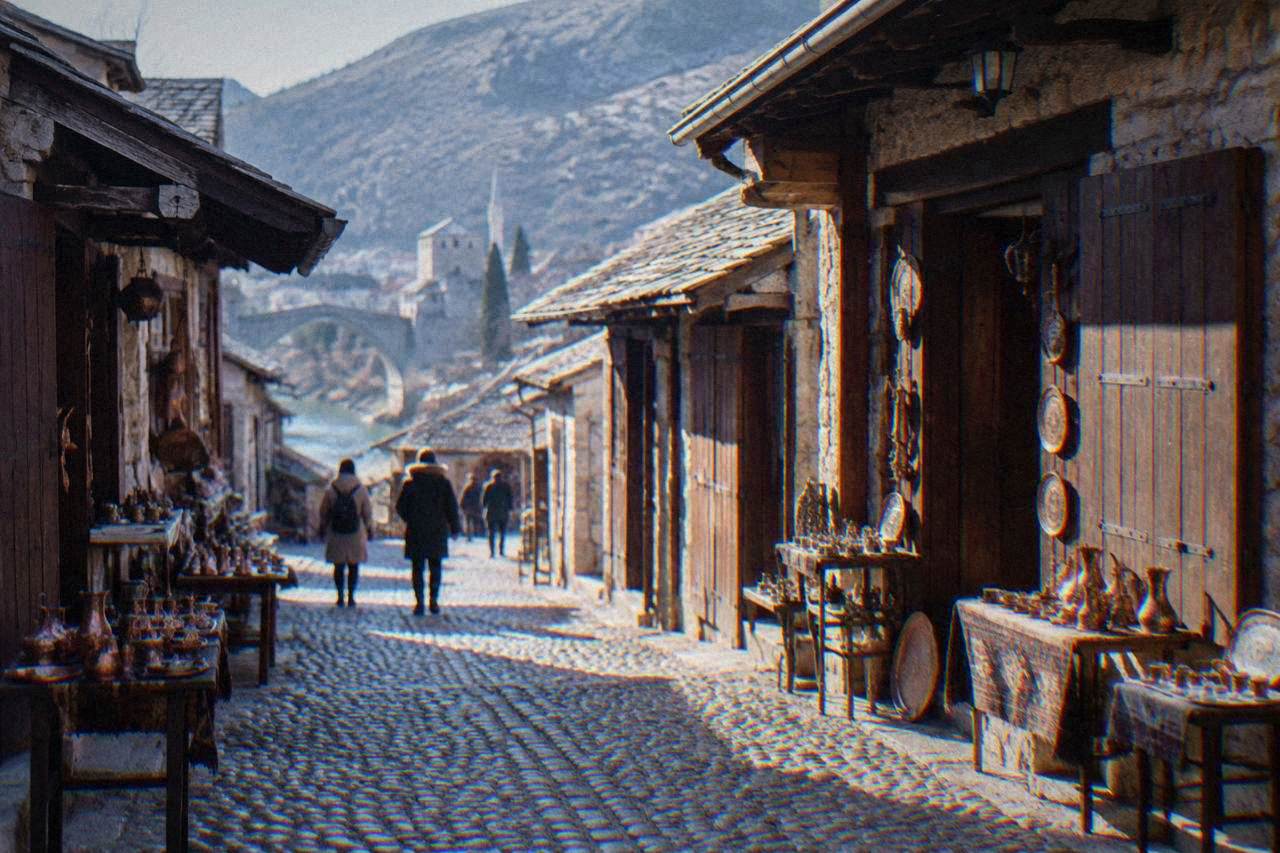
The official languages of Mostar are Bosnian, Croatian and Serbian, all three of them official across Bosnia and Herzegovina and all three spoken in the city every day. They are mutually intelligible, which means a conversation can flow with one speaker using one name for the language and the reply coming in another. English is widely used in hotels, restaurants and tour settings, and the currency is the convertible mark (KM).
The three-language arrangement is not a regional quirk of Mostar alone; it is the structure of the whole country. Bosnia and Herzegovina recognises Bosnian, Croatian and Serbian as official languages, and each corresponds to one of the country's three constituent peoples. In a city like Mostar, where those communities live side by side, you will hear all of them within a few hundred metres of Stari Most. A shopkeeper, a waiter and a taxi driver may each give a different one-word answer if you ask what language they speak, and all three answers are correct.
What this means for a visitor is simpler than it sounds. The differences between the three are small enough that locals converse across them without noticing. Vocabulary shifts a little, certain sounds differ, and the written form can appear in either the Latin or the Cyrillic alphabet, but the spoken standard is shared. If you say "hvala" (thank you) or "dobar dan" (good day), you have covered all three languages at once.
| Language | Status in Mostar | Everyday reality |
|---|---|---|
| Bosnian | Official language of Bosnia and Herzegovina | Widely spoken in the city |
| Croatian | Official language of Bosnia and Herzegovina | Widely spoken in the city |
| Serbian | Official language of Bosnia and Herzegovina | Widely spoken, often in the Cyrillic script |
| English | No official status | Common in tourism, hotels and guided tours |
For background on how the city fits together beyond language, see what is special about Mostar, and for the story behind the city's most famous structure, why the Mostar bridge is so famous.
Are Bosnian, Croatian And Serbian Actually Different Languages?
Linguists describe Bosnian, Croatian and Serbian as one spoken standard with three official names rather than three separate languages, because speakers of each understand the others without a translator. The differences are real but modest: some vocabulary, some pronunciation habits and the alphabet, with Serbian commonly written in Cyrillic and the other two in Latin script. A sentence spoken in Mostar is understood in Zagreb, Belgrade and Sarajevo alike.
The practical consequences for a traveller are few. Menus, street signs and museum labels in Mostar appear mostly in the Latin alphabet, sometimes in Cyrillic, and frequently with an English translation underneath. Any phrase you learn from a Bosnian phrasebook works when the reply comes back in Croatian or Serbian, because the grammar and core vocabulary are shared. Numbers, greetings, ordering food and asking directions all transfer directly.
The naming carries weight locally, so it is polite simply to follow the lead of the person you are speaking with rather than debate the label. Nobody expects a visitor to keep track of which community runs which cafe. If you are curious how the city's identity questions play out more broadly, is Mostar Croatian or Bosnian covers that separately.
A guided walk is one of the easiest ways to hear the city's languages in context, because a local guide moves between them naturally while explaining the sights. The Mostar city Tour runs through the Old Town with a guide who interprets the layers of the city, and you can Check availability before you arrive.
Can You Get By With English In Mostar?
Yes, English is enough for a typical visit to Mostar, especially in the Old Town, the hotels, the restaurants and anything connected with tours or transport. Staff at sights around Stari Most deal with international guests constantly, and younger residents generally speak English comfortably. Away from the centre, in local shops and on suburban buses, a few words of Bosnian, Croatian or Serbian help, but even there people find a way to communicate.
Tourism has shaped this. Mostar welcomes day trippers arriving overland from Dubrovnik, Split and Sarajevo as well as overnight guests, and English is the working bridge language of that traffic. Museum signage, walking tours and restaurant menus in the tourist zone routinely include English. German is also heard, reflecting long-standing travel patterns between Herzegovina and Germany, and some Italian, thanks to the Adriatic coast being a couple of hours away.
Do not let the language question shape your plans. The city is compact and walkable, the main sights sit within a few minutes of one another, and help is never far away. If you are weighing the practicalities of a trip, is Mostar worth visiting and how many days in Mostar is enough answer the two questions that usually come next.
Which Alphabet Is Used On Signs In Mostar?
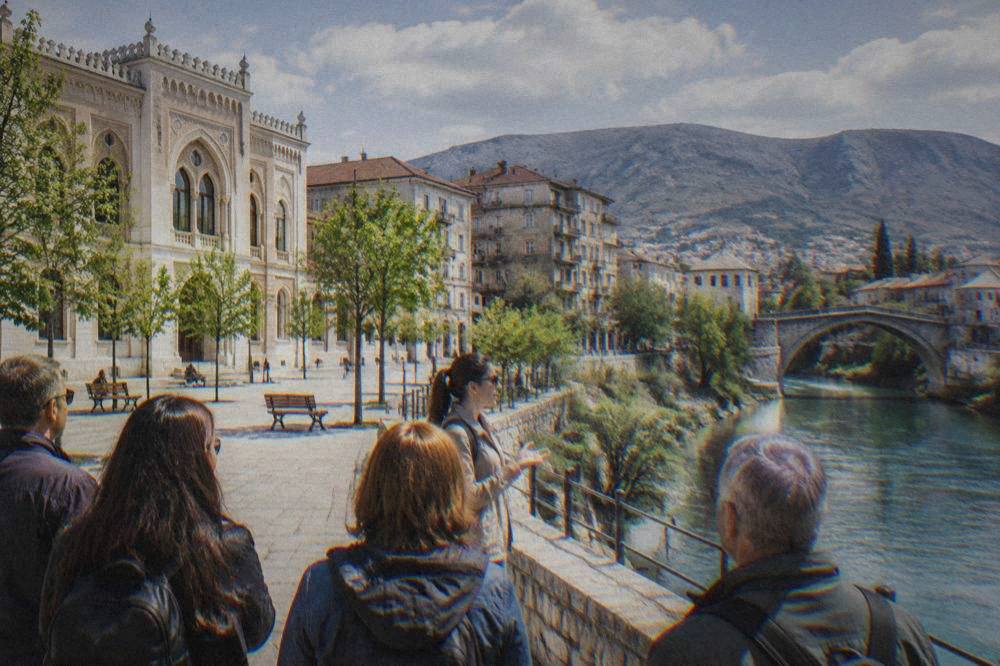
Both the Latin and the Cyrillic alphabet appear in Mostar, with the Latin script dominating the city's public signage, shop fronts and menus. Bosnian and Croatian are written in Latin script, while Serbian is written in either Cyrillic or Latin, so a visitor who reads the Latin alphabet can decode most of what is written in the city. Official institutions may use both scripts side by side.
For a reader of English, the local Latin alphabet is almost transparent. It adds a few letters with diacritics, such as č, ć, š, ž and đ, each standing for a specific sound, and once you know those, street names like Kujundžiluk or Brankovac stop being intimidating. Reading Cyrillic is a bonus rather than a requirement in Mostar. Train and bus departure boards, road signs on the main routes and product labels in supermarkets lean Latin.
This dual-script heritage is part of the wider story of the city's names and words. The name Mostar itself comes from "mostari", the bridge keepers who guarded the wooden crossing that preceded Stari Most, a detail explored in what does Mostar mean in English.
Useful Words To Learn Before Visiting Mostar
A short list of shared words covers all three official languages at once, because greetings, thanks and polite forms are identical or near-identical across Bosnian, Croatian and Serbian. Learning about ten words will serve you in shops, taxis and cafes throughout Mostar and Herzegovina, and locals consistently appreciate the effort even when their English is better than your ten words.
| English | Local word | Where to use it |
|---|---|---|
| Good day | Dobar dan | Universal greeting, any time of day |
| Thank you | Hvala | Shops, restaurants, taxis |
| Please / you're welcome | Molim | Handing over money, requesting |
| Yes / No | Da / Ne | Anywhere |
| Goodbye | Doviđenja | Leaving a shop or restaurant |
| How much is it? | Koliko košta? | Markets, taxis |
| The bill, please | Račun, molim | Cafes and restaurants |
| Bread | Kruh / hleb | Bakeries; both words are understood |
| Coffee | Kafa | Order like a local; see Bosnian coffee |
| Water | Voda | Anywhere |
Coffee deserves a special mention, because ordering it is a small ritual rather than a transaction. Bosnian coffee is served in a long-handled pot with a small cup, and unhurried drinking is the point. The page on Bosnian coffee and the one on a Bosnian breakfast go deeper into the table culture, which is one of the easiest places for a visitor to connect with the language as it is actually spoken.
One of the friendliest ways to practise is in a kitchen rather than a classroom. A cooking class run in the city gives you the names of the dishes, the ingredients and the customs around the table while something bakes, and the Bosnian cooking class with burek, lunch and drinks is exactly that kind of session.
Do People In Mostar Speak Other Languages Too?
Beyond the three official languages and English, people in Mostar commonly speak German, a legacy of decades of labour migration between Herzegovina and Germany, and you will also hear Italian and Turkish around the tourist trade. Families across the region have relatives in Austria, Switzerland, Sweden and across the ocean, so languages surface in conversation that have nothing to do with the school system. None of this is required knowledge for a visitor.
For day trips out of the city the same English-friendly pattern holds. Guides running the classic Herzegovina circuit to Blagaj, Počitelj and Kravica waterfall operate in English as standard, and the same goes for walks focused on the city's Ottoman houses and mosques. The Kravice Waterfalls day tour from Mostar is one such route, with commentary in English throughout the countryside.
As this Mostar Travel Guide page has set out, the honest summary of language in the city is a reassuring one: three official names, one shared spoken standard, and English across everything a visitor touches. Bring ten words and a willingness to say them, and the language question answers itself.
Common Questions About Language In Mostar
What Language Do They Speak In Mostar?
Bosnian, Croatian and Serbian are all official and all spoken in Mostar. They are mutually intelligible, so one shared standard covers everyday speech, and English is common in the tourist areas, hotels and on guided tours.
Is Bosnian Hard To Learn For English Speakers?
The pronunciation is highly regular and the alphabet is phonetic once you learn the extra letters, which makes spoken basics easier than in many languages. Grammar, especially the case system, takes longer. For a short visit, a handful of greetings goes a long way.
Can I Use Croatian Phrases In Mostar?
Yes. Because Bosnian, Croatian and Serbian share a spoken standard, a phrase learned from any of the three is understood everywhere in the city. Follow the lead of the person you are speaking with on the label if it comes up.
Is Cyrillic Needed To Read Signs In Mostar?
No. Public signage, menus and shop fronts in Mostar are mostly in the Latin alphabet, with Cyrillic appearing on some official and institutional signage. A reader of the Latin alphabet can manage almost everything in the city.
Will Menus In Mostar Be In English?
In the Old Town and the tourist areas, menus commonly include English, and staff deal with international guests daily. Further from the centre you may find menus in local languages only, though the shared words for coffee, bread and the bill will carry you through.
