Is Mostar Croatian Or Bosnian?
Mostar is a city in Bosnia and Herzegovina, in the Herzegovina region, on the Neretva river. Here is what that means for borders, language, currency and travel.
Mostar is a Bosnian city, in every sense that matters to a traveller: it sits inland on the Neretva river, in the Herzegovina region of Bosnia and Herzegovina, and it is the administrative centre of the Herzegovina-Neretva Canton. It is not in Croatia, it has no sea coast, and it never has been part of modern Croatia. The confusion is understandable. Mostar sits close to the Croatian border, the road to Dubrovnik takes under three hours, Croatian is one of the three official languages spoken in the city, and the shared Yugoslav past means the two countries' histories overlap at every turn. But on every map, in every legal sense and at every border crossing, Mostar is in Bosnia and Herzegovina.
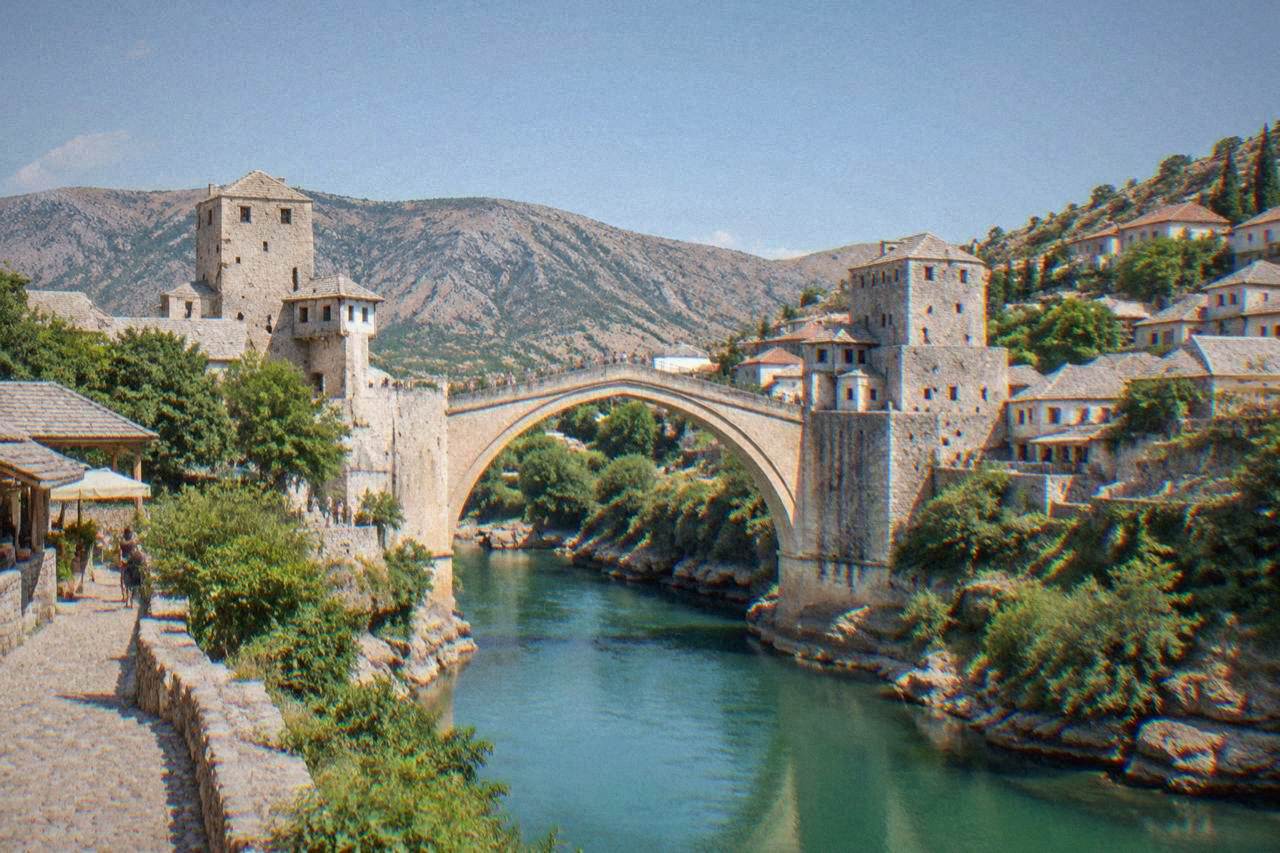
The question still deserves a proper answer rather than a one-liner, because it touches borders, identity, language and the war years. This page sets out the plain facts, then covers what the answer means in practice: which country stamps your passport, which money you pay with, and which language you will hear in the Old Bazaar. For the wider picture of the city itself, see what is so special about Mostar.
Mostar is a Bosnian city: it lies in Bosnia and Herzegovina, specifically in the southern region called Herzegovina, and it is the seat of the Herzegovina-Neretva Canton, one of the cantons of the Federation of Bosnia and Herzegovina entity. It is not now, and has not been since 1992, part of any Croatian state. The name of the country is Bosnia and Herzegovina, a single sovereign state, and Herzegovina is the name of its southern half rather than a separate country. Mostar is the main city of that southern half, which is exactly why the Croatian-or-Bosnian question comes up so often: the city sits in the part of the country closest to Croatia, on the road everyone drives from Dubrovnik or Split.
Three official languages are spoken in Bosnia and Herzegovina: Bosnian, Croatian and Serbian. In Mostar you will hear all three, and in daily speech they are close enough that a single conversation can mix them without anyone noticing. Croatian flags and imagery do appear in parts of the city, reflecting the fact that Croats are one of the three constituent peoples of the country, but a flag on a balcony does not move a border. Politically, the city is one municipality: the City of Mostar, with a single 35-member city council, and local elections were held again in 2020 after a twelve-year gap. The city counted about 105,000 residents at the 2013 census.
The identity question has a deep history, and a guided walk is the clearest way into it. The Break-up of Yugoslavia & The War in Mostar tour covers the siege years and the buildings that still carry the marks, led by a guide who explains how the city's story fits the country's. The site's own Mostar war history guide covers the same ground for independent walkers.
Why Do People Confuse Mostar With Croatia?
People confuse Mostar with Croatia for four concrete reasons: the city is close to the Croatian border, the drive to Dubrovnik takes about two and a half hours free-flow, Croatian is an official language spoken there, and hundreds of thousands of visitors arrive on day trips that start and end in Dubrovnik or Split. The border itself is unambiguous. Bosnia and Herzegovina is not in the European Union and not in Schengen, while Croatia has been in both, so the crossing between the two countries has carried full passport checks since 1 January 2023. Every day trip from Dubrovnik stops at that line.
The geography does the confusing before anything else. Mostar is 145.5 km by road from Dubrovnik's Stradun, about 150 minutes of driving before border queues, and 174.1 km from Split. Day-trip coaches from both cities roll into Mostar every morning, pause for the Old Bridge and lunch, and roll back out, so a visitor can spend a whole day in Bosnia and Herzegovina while mentally filing it under Croatia. Herzegovina itself compounds the mix-up: people hear "Herzegovina", see how close it is, and assume a Croatian identity.
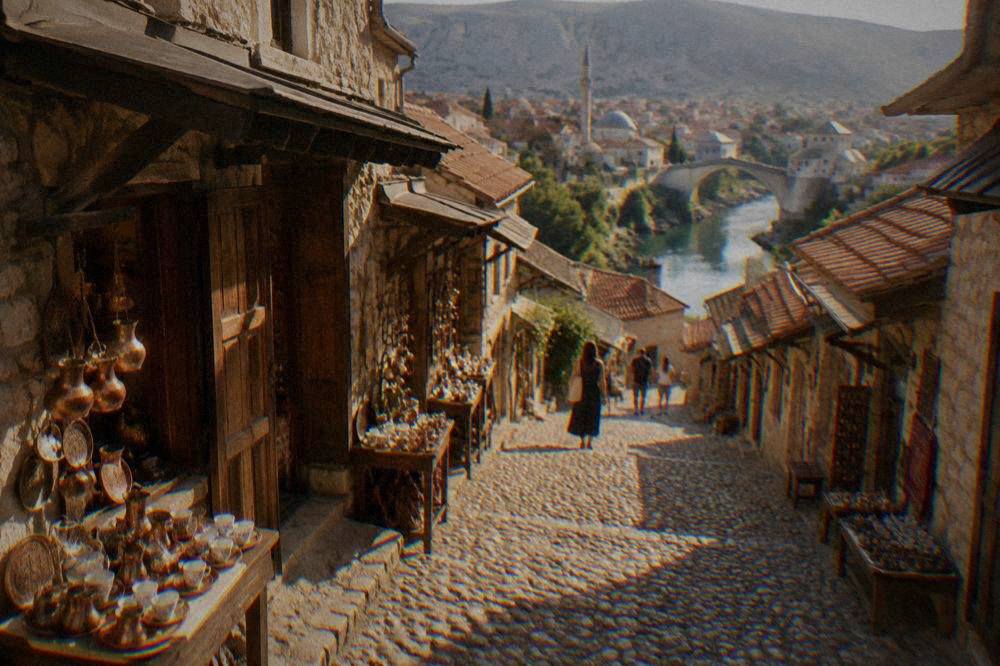
The shared past is the third reason. Mostar, Dubrovnik and Split were all part of Yugoslavia, and before that of overlapping Ottoman and Austro-Hungarian worlds, so the architecture, the food and the street sounds cross the modern border freely. The first written mention of the name Mostar, in 1474, belongs to that older world of bridge keepers and trade roads, long before either modern state existed. If you are planning that crossing yourself, the Croatia-Bosnia border crossing guide covers the checkpoints, the wait patterns and the paperwork, and how to get to Mostar covers every route in.
Is Herzegovina A Separate Country From Bosnia?
No: Herzegovina is the southern region of Bosnia and Herzegovina, not a country, and there is no border between "Bosnia" and "Herzegovina" anywhere on the ground, no checkpoint, no sign and no separate administration. The distinction is cultural and geographic rather than political. Mostar is the main city of Herzegovina, and the Herzegovina-Neretva Canton is one of the cantons of the Federation of Bosnia and Herzegovina entity. The country's full name simply stitches both historical regions together, the way a country name might join two old provinces. Mostar is the main city of Herzegovina, and the Herzegovina-Neretva Canton, with Mostar as its seat, is one of the cantons of the Federation of Bosnia and Herzegovina entity. Drive from Sarajevo to Mostar and nothing marks the line except the scenery.
Herzegovina is the rough, karst country of the south: the Neretva valley, Blagaj, Počitelj, Kravica waterfall, Trebinje and the wine hills near Čitluk and Međugorje. The Old Bridge Area of the Old City of Mostar, inscribed on the UNESCO World Heritage List in 2005, sits at the centre of it. Weather-wise the south runs warm and dry: FHMZ station data for 1961 to 1990 puts Mostar's July mean at 24.7 C with an absolute maximum of 41.2 C, while July averages only 42.9 mm of rain against November's 200.0 mm. The wider set of guides lives on Mostar Travel Guide.
This table separates the three names that get tangled together:
| Name | What it is | Notes for travellers |
|---|---|---|
| Bosnia and Herzegovina | The sovereign country | Currency: convertible mark (KM, BAM); not in the EU or Schengen |
| Herzegovina | The southern region of that country | No border, no separate administration; Mostar is its main city |
| Herzegovina-Neretva Canton | An administrative canton with its seat in Mostar | Sets local rules, including the reported 3 KM per night tourist tax |
If the region tempts you beyond the city, the Herzegovina road trip guide strings Blagaj, Počitelj, Kravica and further stops into one route.
What Country Do You Cross Into When You Visit Mostar?
You cross into Bosnia and Herzegovina, and since 1 January 2023 that border has been a full Schengen external border with passport checks in both directions, because Croatia joined Schengen while Bosnia and Herzegovina stayed outside the EU entirely. ETIAS is not in operation, so no electronic travel authorisation is needed; a passport is, and visa-exempt visitors may stay up to 90 days within any six-month period. The main crossings near Mostar are Doljani-Metković and Bijača-Nova Sela, with reported waits up to about 30 minutes and longer at summer peaks. Visa-exempt visitors may stay up to 90 days within any six-month period from first entry.
Three practical differences hit on arrival, and the table below lists them:
| Question | In Croatia | In Mostar |
|---|---|---|
| Currency | Euro | Convertible mark (KM), pegged at 1 EUR = 1.95583 KM |
| EU member | Yes | No |
| Schengen | Yes | No, passport checks apply |
Euro cash is often accepted in Mostar's tourist areas, usually at a rounded rate, but the official currency is the mark and paying in KM is the cleaner option. Cards work in hotels and larger restaurants; small vendors in the Kujundžiluk bazaar prefer cash. The Mostar money guide covers exchange, ATMs and the peg in detail.
Getting there is straightforward despite the border. The train line from Sarajevo resumed regular service on 15 October 2026 after a suspension, with two trains a day each way to Čapljina via Mostar, and buses connect Mostar with Dubrovnik, Split and Sarajevo daily. Travelers can fly into Sarajevo or Dubrovnik airports; Mostar's own airport is 8.2 km from Stari Most and serves Zagreb and Stuttgart.
Does The Language Change When You Cross Into Mostar?
The street language shifts from Croatian to a closely related blend, because Bosnia and Herzegovina recognises three official languages, Bosnian, Croatian and Serbian, and in Mostar all three are spoken daily, written on official forms and understood across the city with no practical difficulty. A phrasebook Croatian learned for Dubrovnik works in Mostar almost unchanged. Menus, signs and museum labels in the tourist core frequently add English anyway, and in the Old Bazaar a few words of any of the three, plus a smile, carry a transaction.
The differences are small and mostly vocabulary-level, a few words here and there rather than a wall. Asking "koliko košta" (how much) works everywhere; the answer comes back in whichever language the speaker prefers, and the number is the number. Greetings shift by community and neighbourhood, which is part of what makes the city's texture. For a fuller walk through it, see what language they speak in Mostar.
The deeper story of how one city holds several identities at once is easier to absorb on foot with someone who knows the streets.
Common Questions About Mostar's Country
Is Mostar Croatian Or Bosnian?
Mostar is Bosnian: it is a city in Bosnia and Herzegovina, in the Herzegovina region, and the seat of the Herzegovina-Neretva Canton. It is not part of Croatia.
Is Herzegovina the same as Bosnia?
Herzegovina is the southern region of the single country Bosnia and Herzegovina. There is no border between the two regions, only a historical line on maps.
Do you need a passport to visit Mostar from Croatia?
Yes. The Croatia-Bosnia and Herzegovina border has carried full passport checks since 1 January 2023, because Bosnia and Herzegovina is not in the Schengen area.
Can you pay with euros in Mostar?
The official currency is the convertible mark, pegged at 1 EUR = 1.95583 KM. Euro cash is often accepted in tourist areas at a rounded rate, but confirm before paying.
Do they speak Croatian in Mostar?
Yes. Bosnian, Croatian and Serbian are all official languages of Bosnia and Herzegovina, and all three are spoken in Mostar, alongside English in the tourist core.
The short version of this whole page: Mostar is in Bosnia and Herzegovina, in Herzegovina, on the Neretva, and everything a traveller needs, from the passport in their pocket to the marks in their wallet, follows from that single plain fact.