Lukomir: The Highest Village In Bosnia
Lukomir is described as the highest village in Bosnia and Herzegovina, a remote mountain settlement reached from Mostar through Konjic, and it makes one of the most distinctive day trips in the region.
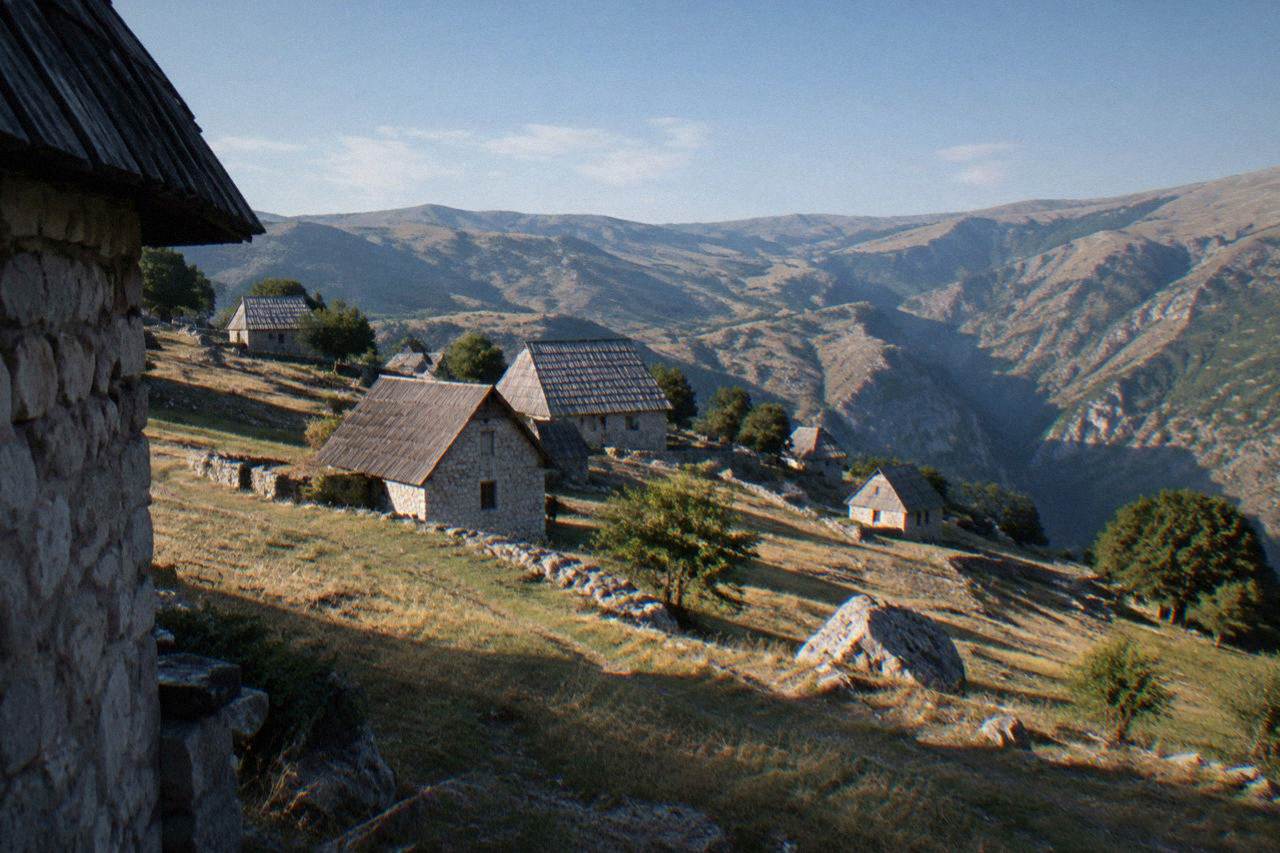
Lukomir is a remote mountain village in the Bjelašnica highlands, reached from Mostar by road through Konjic. There is no train and no confirmed public bus link, so a day trip runs on a rental car, a private transfer or an organised tour, with the driving done in the mountains rather than in the city.
Lukomir sits high in the Bjelašnica highlands of Bosnia and Herzegovina, far above the Neretva valley where Mostar lies, and it is described as the highest village in the country. It is a place of stone houses, wooden roof shingles and short summers, and reaching it from Mostar is a full day's undertaking that says as much about Herzegovina's vertical geography as any single sight in the region. This page from Mostar Travel Guide sets out what the village is, how the journey from Mostar works, what you can realistically see and do there, and how to fold it into a wider Herzegovina itinerary.
What Is Lukomir And Why Do Travellers From Mostar Go There?
Lukomir is a small mountain village in the Bjelašnica highlands, described as the highest village in Bosnia and Herzegovina, and it draws travellers from Mostar for its stone architecture, its alpine setting and its distance from everything the city stands for. Where Mostar's Old Bridge Area was inscribed by UNESCO in 2005 as a World Heritage property of river-stone streets and river crossings, Lukomir belongs to a completely different Herzegovina: thin air, sheep pasture, and houses built for winters that the Neretva valley never sees.
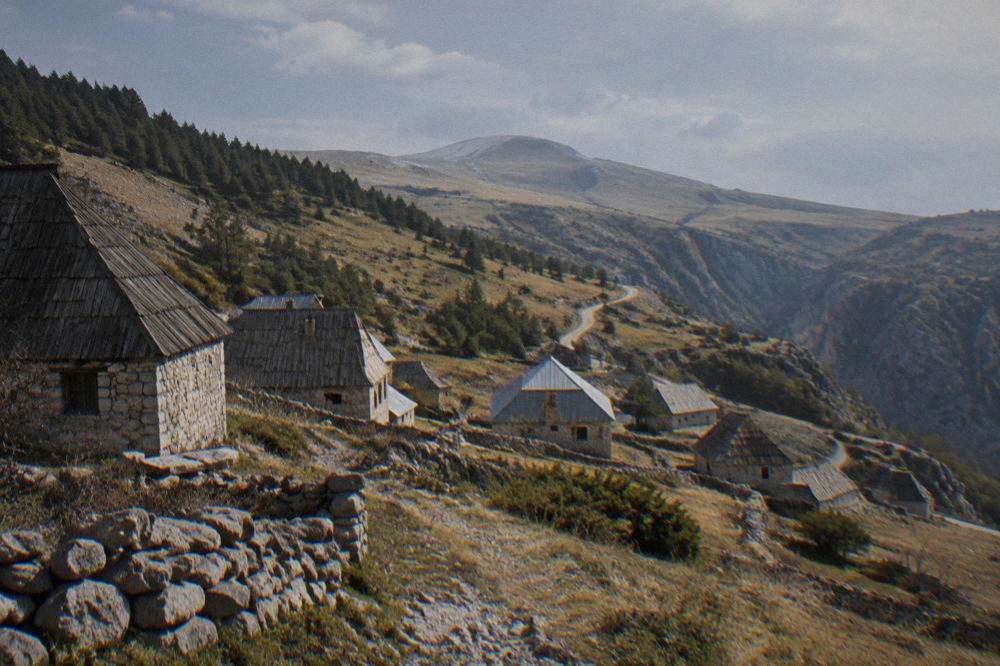
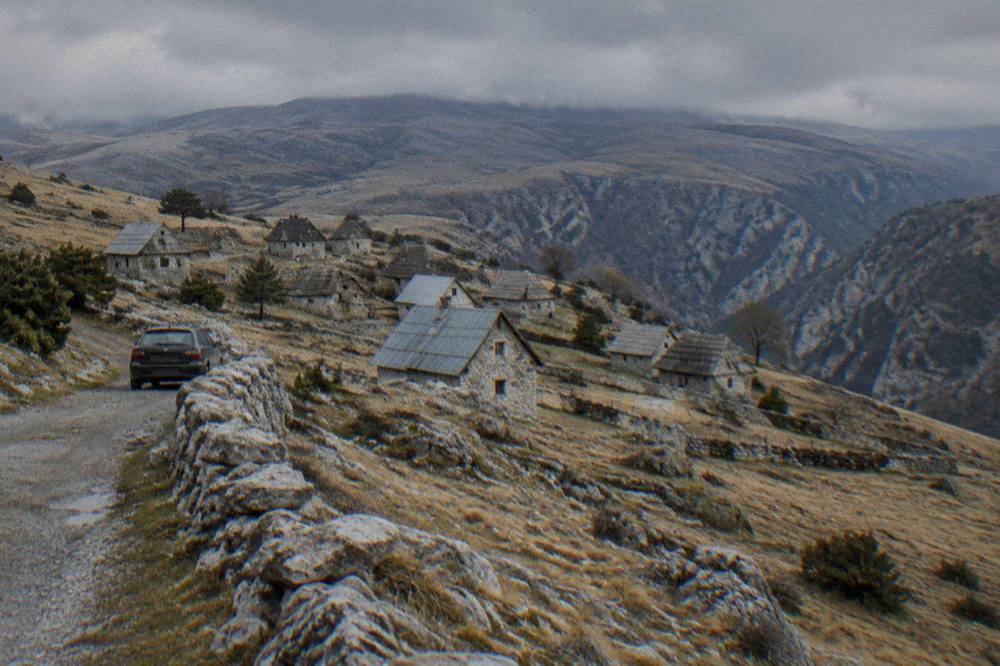
The village is a living settlement rather than a museum. Its houses are built of local stone and roofed with wooden shingles, a building tradition of the mountain zone that has otherwise largely disappeared from Bosnia and Herzegovina. There is no ticket office, no gate and no staffed monument. What you visit is the village itself, its lanes, its viewpoints and its way of occupying a landscape that modern life has mostly passed by.
For a traveller based in Mostar, the appeal is partly the contrast. Mostar sits low on the Neretva, an inland city with no sea coast, built around a bridge completed in 1566 and rebuilt after its destruction on 9 November 1993, with the reopening in July 2004. Lukomir answers with something the city cannot offer: silence, altitude and a horizon of ridgelines. The FHMZ station table for Mostar records a January mean of 4.8 C against a July mean of 24.7 C in the valley, and the mountains above run colder in both directions, so the village belongs to a different climate regime altogether.
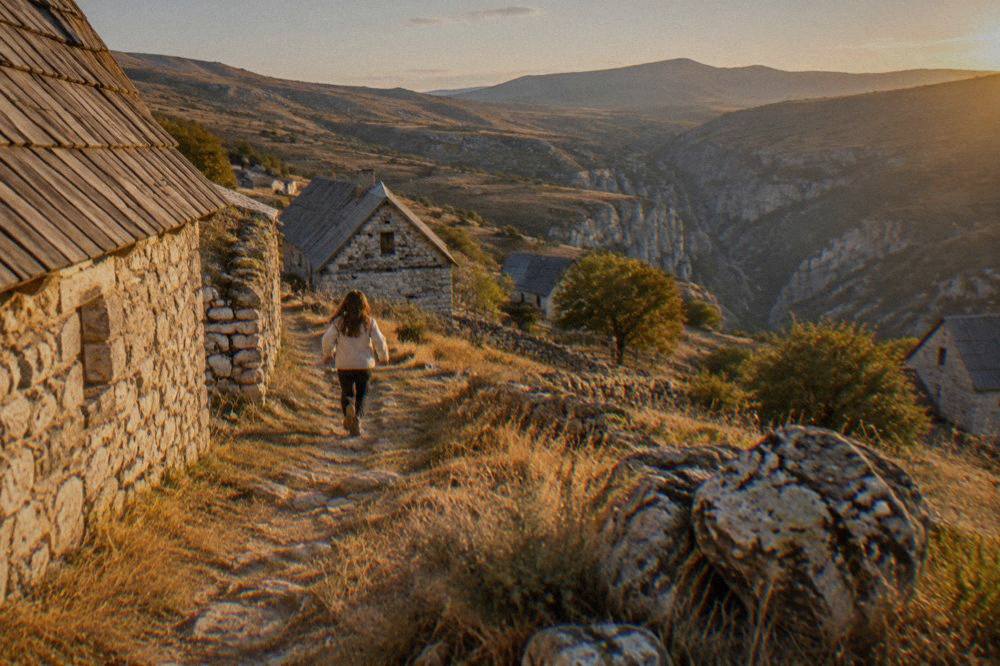
A word on expectations. Lukomir is remote, and remoteness is the point, but it means services are thin. The drive is a real part of the experience, and the sections above Konjic are as memorable as the arrival.
How Do You Get From Mostar To Lukomir?
There is no rail link to Lukomir and no confirmed scheduled bus from Mostar, so the realistic options are a rental car, a private transfer or an organised day tour, with the route running north from Mostar to Konjic and then climbing into the Bjelašnica highlands. Konjic, the usual gateway, is 69.0 km from Stari Most by road, about 80 minutes free-flow, and from there the road climbs toward the highland plateau on narrower mountain stretches that ask for patient driving.
The train does not help here. The Sarajevo to Čapljina line via Mostar carries two trains a day each way, and it resumed regular service on 15 October 2026 after a suspension that began on about 8 September 2026 following a fire along the corridor, but Konjic's station sits north of the mountain turnoffs you need, and no connection to the village exists at the far end in any case. The railway is an option for reaching Konjic as a destination, not for reaching Lukomir.
If you drive, plan the day around the mountains rather than the highway. The M17 corridor north from Mostar is straightforward, but the final highland stretch is narrow, unsuited to rushing, and weather-dependent. In the colder months snow can close or degrade the upper road; conditions change fast at altitude, so check locally before setting out and be ready to change plans. Fuel up in Konjic or earlier, since nothing in the highlands should be assumed.
A practical alternative is to bolt the village onto a tour-based day. Operators running Herzegovina circuits from Mostar generally focus on the southern sights, Blagaj, Počitelj and Kravica waterfall, but some products include mountain and Fortica content. The related trip below is a strong example of a countryside day from Mostar that pairs well with a separate self-drive Lukomir day.
For context, here is where the main staging points sit relative to Stari Most, computed as free-flow road times with no border or mountain-condition delays added:
| Staging point | Road km from Stari Most | Free-flow minutes |
|---|---|---|
| Konjic | 69.0 | 80 |
| Boračko jezero | 89.9 | 113 |
| Jablanica | 47.4 | 57 |
| Sarajevo (Baščaršija) | 127.1 | 134 |
| Sarajevo airport | 120.4 | 125 |
Note what the table does and does not say. Build your timing around the gateway distances and add generous slack for the mountain section.
What Can You See And Do In Lukomir On A Day Trip From Mostar?
The visit itself is low-tech: walk the village lanes among the stone houses, take in the highland viewpoints, eat a simple mountain meal where one is offered, and hike the paths that leave the settlement into the surrounding pasture and ridge country. There is no admission fee, no ticketed site and no fixed circuit. The village is the attraction, and half a day on site is enough for a first visit with time for a short walk.
Photography is the quiet main event. The shingled roofs, the dry-stone walls and the scale of the surrounding landscape make for images that look nothing like the river-stone frames of Mostar's Old Town. Morning and late-afternoon light do the heavy lifting, and the light changes quickly at altitude, so it is worth lingering rather than rushing back down.
Walking is the second draw. Paths around the village run through open ground, and rural Herzegovina carries one standing safety rule: stay on marked paths because of suspected mine areas, a caution that applies across the countryside and is maintained by BHMAC, the national mine-action centre. That rule is not a reason to skip the area, only a reason to keep to established tracks rather than cutting cross-country.
Food, where offered, is mountain fare rather than city cuisine. Confirm on the day what is running; opening status in a village this size is informal and seasonal. The same goes for any handicrafts or homemade products on sale. Treat them as possibilities, not promises.
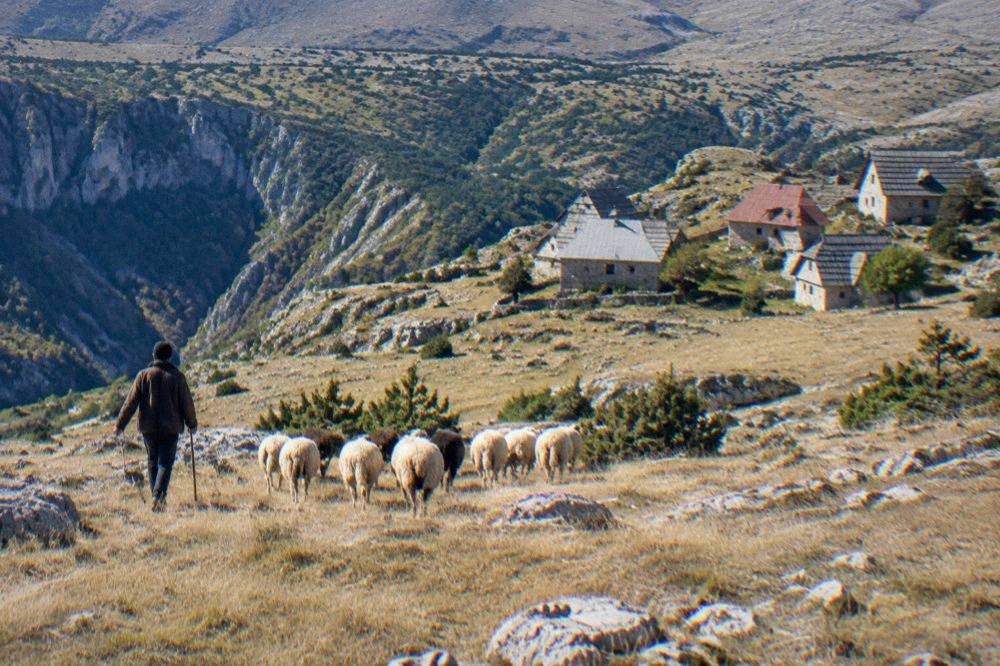
Because the village's appeal is environmental, the weather matters more here than in the city. The valley floor around Mostar runs hot in summer: ERA5 reanalysis, 1991 to 2020, puts mean daily highs at 30.5 C in August and 29.9 C in July, while the FHMZ Mostar station, 1961 to 1990, records an absolute maximum of 41.2 C. The highlands are cooler, which is precisely why a Lukomir day works well in the months when Mostar in summer heat drives people uphill, and why shoulder-season days can turn sharp up top.
If you would rather hand the logistics to someone else, a guided countryside day from Mostar is the low-friction option, and the tour description spells out the route before you book:
When Is The Best Time Of Year To Visit Lukomir From Mostar?
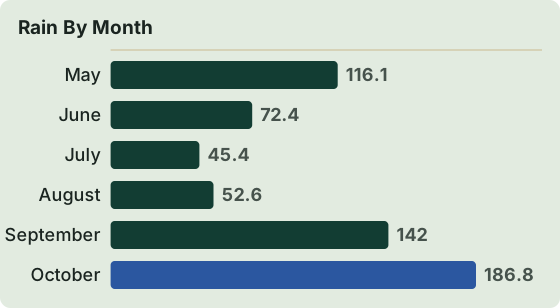
Late spring through early autumn is the workable window, with June to September the safest planning band, because the highland road and the village's informal services both depend on snow-free conditions while the valley below is at its most comfortable. The FHMZ Mostar station, 1961 to 1990, shows the valley's rain loading toward winter, with November averaging 200.0 mm against July's 42.9 mm, and the highlands carry that winter precipitation as snow rather than rain.
The logic runs opposite to the coast. In the valley you dodge August heat; up here you dodge winter closure. A July or August day can pair a 30 C afternoon in Mostar with a genuinely cool evening in the village, so carry a layer even in high summer. Spring and autumn are quieter and can be beautiful, but the upper road's condition at the shoulders of the season is the one thing to confirm locally before committing the day.
For contrast, here are the modelled monthly normals for the Mostar valley, labelled ERA5 reanalysis, 1991 to 2020, which frame the season you are escaping or leaning into:
| Month | Mean daily high C | Mean daily low C | Rain mm |
|---|---|---|---|
| May | 22.3 | 11.4 | 116.1 |
| June | 26.8 | 15.3 | 72.4 |
| July | 29.9 | 17.7 | 45.4 |
| August | 30.5 | 18.1 | 52.6 |
| September | 24.5 | 14.0 | 142.0 |
| October | 19.5 | 9.8 | 186.8 |
Whatever the calendar says, check road conditions on the day; a wet valley morning is a nuisance in Mostar and a decision point on a highland road.
How Does A Lukomir Day Compare With Mostar's Other Day Trips?
Lukomir is the mountain day in a region otherwise defined by river and stone-canyon trips: Blagaj and its tekke at 13.7 km, Počitelj at 30.0 km, Kravica waterfall at 55.2 km and Konjic at 69.0 km, so it trades swimming and Ottoman towns for altitude, silence and driving. None of the southern sights asks more than an hour behind the wheel, while Lukomir commits you to the mountains for the day.
The comparison is worth making honestly. A first-time visitor to Mostar with two or three days will usually do the Blagaj, Počitelj and Kravica waterfall circuit before anything else, and rightly so. Lukomir is the fourth-or-later trip, the one you take when the classics are done or when mountain landscapes matter more to you than river ones. Here is how the main options stack up by road distance from Stari Most:
| Day trip | Road km | Free-flow minutes | Character |
|---|---|---|---|
| Blagaj Tekke | 13.7 | 19 | River spring and dervish house |
| Počitelj | 30.0 | 31 | Fortified stone town |
| Kravica waterfall | 55.2 | 54 | Swimming and waterfall |
| Jablanica | 47.4 | 57 | Neretva history and lake |
| Konjic | 69.0 | 80 | Old town and rafting gateway |
| Boračko jezero | 89.9 | 113 | Mountain lake |
Kravica waterfall charges 20 KM for an adult all year, with 10 KM for residents of Bosnia and Herzegovina and free entry for children under 7, per the park's own visitor page. The Blagaj Tekke is reported at 10 KM, and Radimlja near Stolac at 8 KM individual, both reported figures worth confirming before you go. Lukomir charges nothing, because there is nothing to charge for; your costs are transport, food and time.
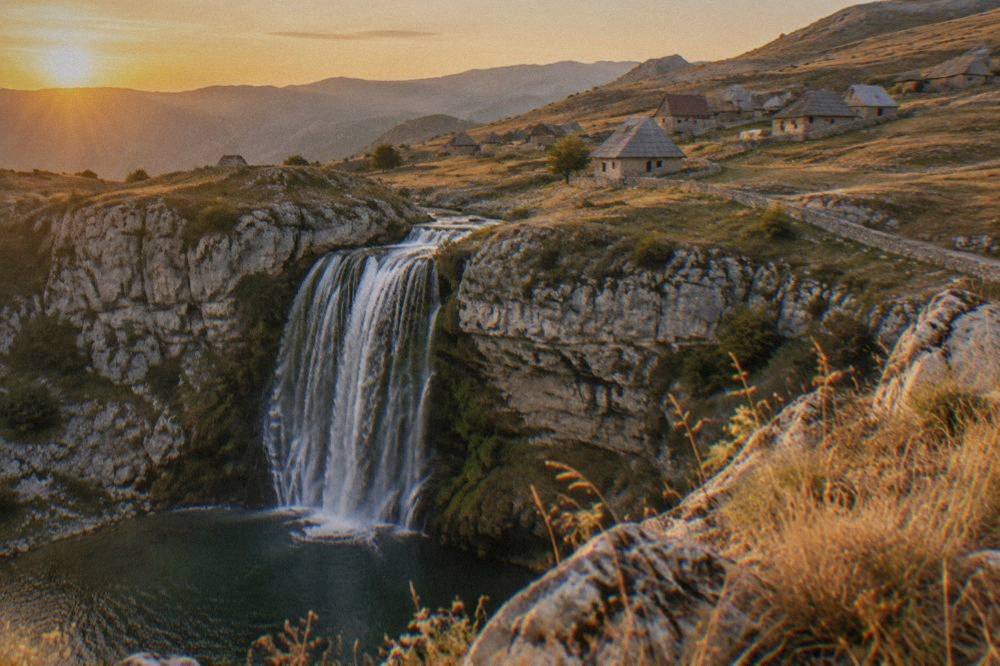
One sensible pattern is to split the week by geography: a southern day covering Blagaj, Počitelj and Kravica, and a northern mountain day through Konjic toward Lukomir, possibly with a stop at Boračko jezero on the way back. Guided southern days are plentiful from Mostar, and the one below is a strong example with the route fixed in advance:
Check availability
Can You Combine Lukomir With Konjic, Jablanica Or Boračko Jezero From Mostar?
Yes, and combining is the efficient way to do it: the northern route from Mostar passes Jablanica at 47.4 km and Konjic at 69.0 km, with Boračko jezero a further step at 89.9 km, so a one-way chain of stops is entirely practical on a long day with an early start. The free-flow driving to Konjic alone is about 80 minutes, and everything beyond it stacks onto that base.
Konjic is the natural first or last stop. Its old town sits on the Neretva, the river that defines Mostar 69 km downstream, and the town is also the gateway for white-water trips covered in the site's Neretva rafting material. North of Konjic sits ARK D-0, the Cold War-era bunker, at 77.0 km and about 93 minutes from Stari Most; entry is reported at 40 KM for foreign visitors and 20 KM for citizens of Bosnia and Herzegovina, with guided tours by advance booking and closure on Mondays, all reported figures to confirm at booking.
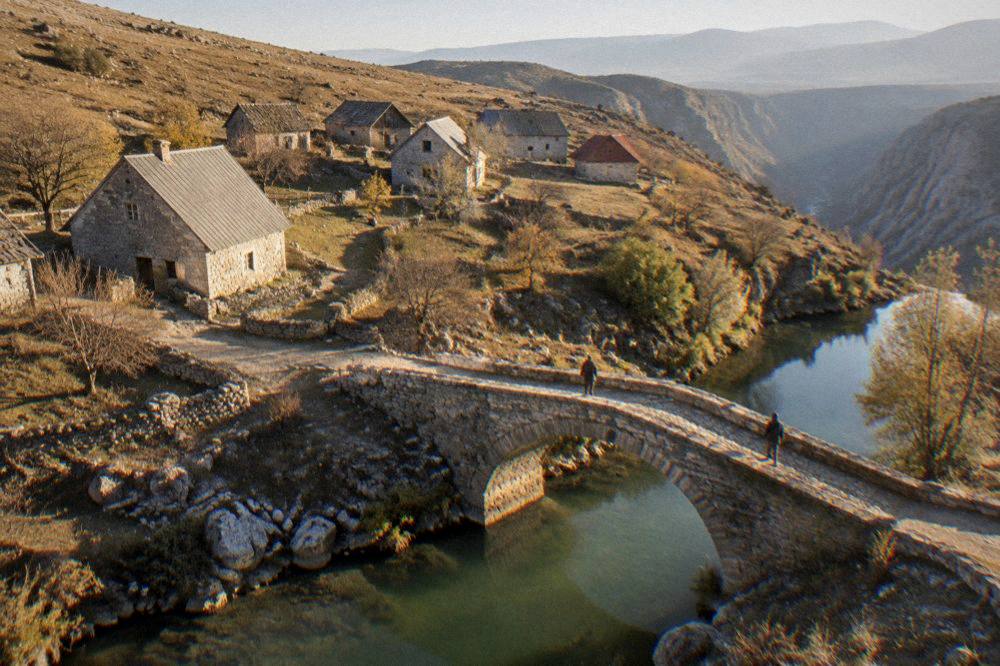
Jablanica, on the way north, holds the Bridge on the Neretva ruins and the Museum Battle for the Wounded, whose official page prints inconsistent price lists; call it a few KM and confirm on arrival. Hours reported for the museum run 08:00 to 18:00 daily in the April to October season. The ruins themselves are outdoors and free.
Boračko jezero, at 89.9 km and about 113 minutes from Stari Most, is a mountain lake that pairs naturally with the highland theme of the day. Whether you stop depends on time and appetite; the lake is a place to sit rather than a place to tour, and after hours of mountain road that may be exactly right.
A combined northern day, then, looks like this in planning terms:
| Stop | Road km from Stari Most | Free-flow minutes | Reported entry |
|---|---|---|---|
| Jablanica museum | 47.4 | 57 | A few KM, confirm on site |
| Konjic old town | 69.0 | 80 | Free to walk |
| ARK D-0 (Tito's bunker) | 77.0 | 93 | 40 KM reported |
| Boračko jezero | 89.9 | 113 | Confirm locally |
| Lukomir village | Not computed in pack | Not computed in pack | Free |
Do not read that table as a schedule. Free-flow minutes exclude mountain conditions, stops and the return leg, and a chain of four stops plus the village is a full, long day. Pick two stops plus Lukomir, or three without it, and keep dinner plans in Mostar flexible.
What Should You Pack And Know Before Driving To Lukomir From Mostar?
Pack for two climates in one day: valley heat that ERA5 reanalysis, 1991 to 2020, puts at mean daily highs of 29.9 C in July and 30.5 C in August, and highland air that can feel autumnal in the same afternoon, plus sturdy shoes, cash in KM and a full tank taken on in Konjic. Layers, not wardrobe, are the answer.
Cash matters more here than in the city. Cards are common in Mostar's hotels and larger venues, but small vendors and informal services in the mountains work in cash, and the convertible mark, not the euro, is the currency of Bosnia and Herzegovina, pegged at 1 EUR = 1.95583 KM. Euro notes are often accepted in tourist areas at a rounded rate, but that is a courtesy rather than a rule, so confirm before handing anything over.
Two standing safety points apply. First, stay on marked paths in rural Herzegovina because of suspected mine areas; the national mine-action centre BHMAC maintains the affected-area record. Second, the emergency number is 112, with 122 police and 124 ambulance alongside it. Neither point should colour the day, both belong in the plan.
Practical packing list, kept honest:
| Item | Why |
|---|---|
| Warm layer | Highland air runs far cooler than the Mostar valley |
| Sturdy shoes | Stone lanes and unpaved walking tracks |
| Cash in KM | Informal food and craft vendors |
| Water and snacks | Thin services above Konjic |
| Full tank before the climb | No fuelling assumed in the highlands |
| Offline map | Mountain signal is unreliable |
Border rules do not touch this route, since Lukomir lies wholly inside Bosnia and Herzegovina, but the country context is worth one line anyway: it is not in the EU and not in Schengen, and the Croatian land border, which you would cross only on a Dubrovnik or coastal day, has carried full checks since 1 January 2023. On a Lukomir day none of that applies. You simply drive north.
Is A Lukomir Day Trip From Mostar Worth It?
For a traveller with four or more days in Mostar, or anyone who values mountain landscape over another river sight, yes: Lukomir offers the single strongest contrast to the city in the whole day-trip radius, and it costs nothing at the gate. For a first visit of two or three days, the southern classics and the Old Town come first, and the village is a return-trip reason rather than a priority.
The honest trade is time against uniqueness. Nothing else within reach of Mostar looks like Lukomir or feels like the drive to it, but nothing about the day is quick or flexible: it is a commitment of a full day to roads, altitude and weather. Split the difference if you must by building the village into a wider northern loop with Konjic and Boračko jezero, which spreads the driving across real destinations rather than empty kilometres.
Guided options still earn their place if you would rather not drive the mountains. Alongside the featured Fortica day earlier on this page, the pick below is a compact waterfall-focused alternative that leaves the northern mountains free for your own car day:
Check availability
And for anyone arriving from the coast rather than the city, the Sarajevo-based circuit below is the mirror-image option, folding Mostar and the southern sights into a single guided day:
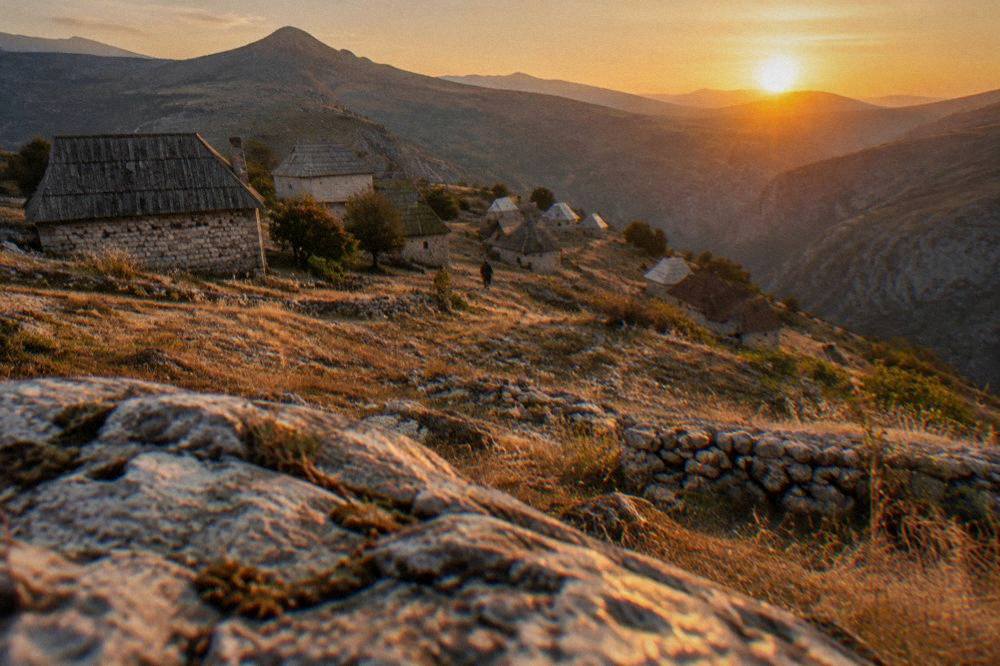
Plan the village for a clear-weather day, keep the alternative of a Konjic-and-lake day in reserve, and Lukomir will do what it does: show you the Herzegovina that exists above and behind the postcard, an hour and a half of mountains away from the bridge crowds of the Neretva valley.
Common Questions About Lukomir From Mostar
How far is Lukomir from Mostar?
The route runs through Konjic, which is 69.0 km and about 80 free-flow minutes by road from Stari Most, followed by a further highland climb for which no computed road figure is carried here. Plan a full day door to door, with mountain conditions deciding the final timing.
Can you reach Lukomir by public transport from Mostar?
No. There is no rail link and no confirmed scheduled bus to the village. The train from Mostar runs on the Sarajevo to Čapljina line and does not serve the village, so the realistic options are a rental car, a private transfer or an organised tour.
Is there an entry fee for Lukomir?
No. The village is a living settlement with no gate, ticket or staffed monument. Your costs are transport, food and time; anything sold in the village is informal and seasonal, so carry cash in convertible marks.
When can you drive to Lukomir?
Late spring through early autumn is the safe planning window, with June to September the core band. Snow affects the upper road in winter and can degrade it at the shoulders of the season, so check conditions locally on the day before committing.
Is Lukomir worth visiting compared with Blagaj and Kravica waterfall?
They are different products. Blagaj, Počitelj and Kravica waterfall sit within an hour's drive south and form the classic first circuit from Mostar; Lukomir is the mountain contrast trip, best for a second or later day when the classics are done.
What should you wear for a Lukomir day trip?
Layers and sturdy shoes. The Mostar valley runs hot, with ERA5 reanalysis for 1991 to 2020 putting mean daily highs above 29 C in July and August, while the highlands can feel autumnal on the same afternoon. Sun protection matters on the exposed plateau.