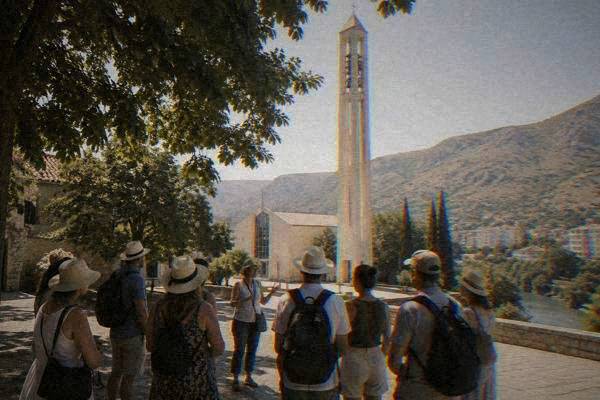
How Do You Say "Hi" In Bosnia?
How to say hi in Bosnia and Herzegovina: the greetings used in Mostar, which languages locals speak, day-part greetings, and how far English carries you in Herzegovina.
Mostar sits inland on the Neretva river in Herzegovina, the southern region of Bosnia and Herzegovina, and the first word exchanged with you on Kujundžiluk, the old bazaar street, will almost certainly be "dobar dan". The question of how you say "hi" in Bosnia has a simple answer, "zdravo", but the greeting habits around it shift with the time of day, the setting and the age of the person in front of you. Bosnia and Herzegovina has three official languages, Bosnian, Croatian and Serbian, and in Mostar all three live side by side, which means the same basic hello arrives in slightly different clothing depending on who is speaking. A handful of words, said warmly, open doors across the old town, the market stalls and the villages of Herzegovina alike.
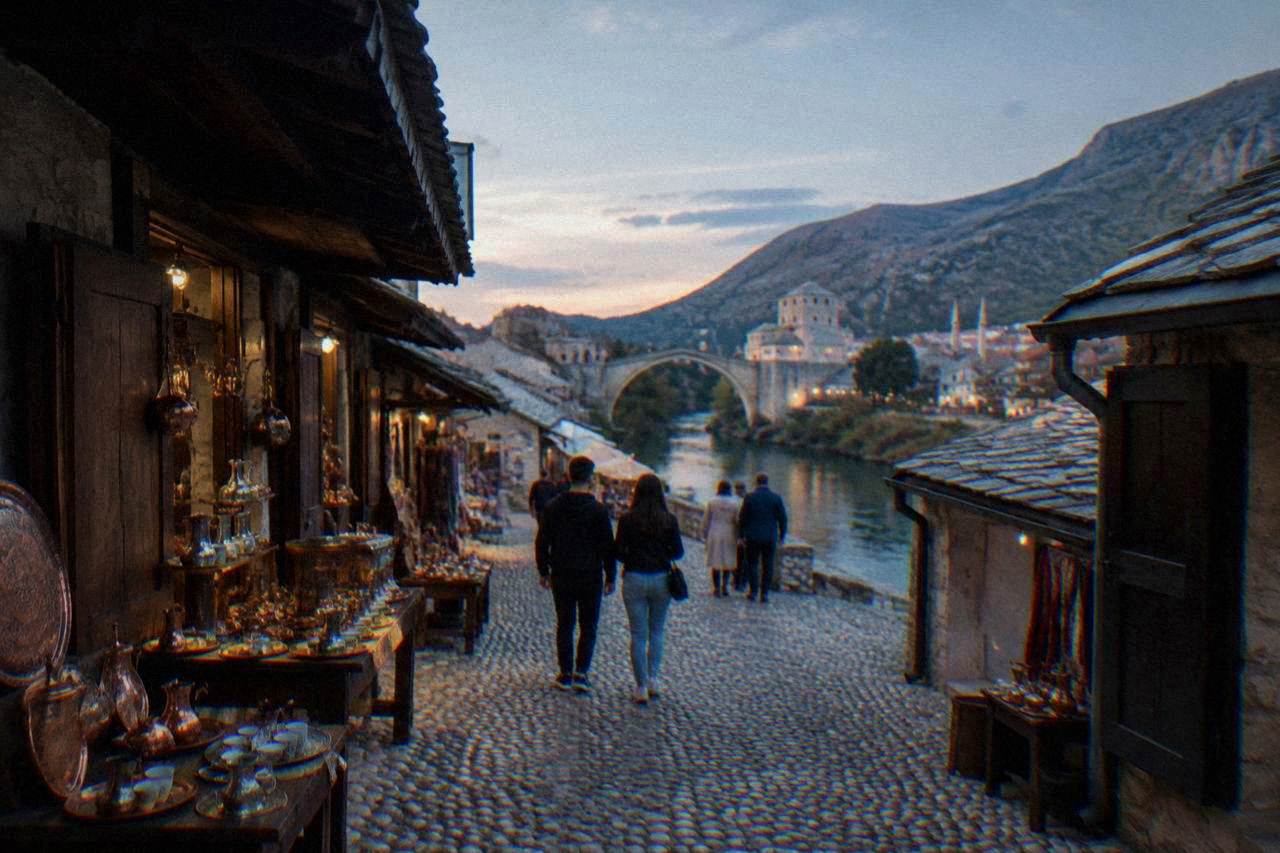
You say "zdravo" for a friendly, informal hi in Bosnia and Herzegovina, and "dobar dan" for the everyday daytime greeting that works with anyone, anywhere in Mostar. "Zdravo" literally means "healthy" and lands as a casual hello between equals and younger people, while "dobar dan", good day, is the safe default in shops, cafes and the Kujundžiluk bazaar from morning until late afternoon.
Between those two poles sit a few more greetings that locals in Mostar actually use. "Bog" is a short, traditional hello used informally, and you will hear "merhaba", a greeting with Turkish roots, in parts of the city where Bosnian carries Turkish loanwords from the Ottoman centuries. The old town grew under Ottoman rule, and the bridge keepers who gave the city its name, first written down in 1474, spoke the local language that later became Bosnian, Croatian and Serbian in their modern standard forms. None of this grammar matters to a visitor. What matters is that a greeting in the local language, any greeting, is met with a smile on Kujundžiluk before a word of English is needed.
One habit worth copying: match the greeting to the clock. Locals rarely say "dobar dan" after dark, switching to "dobro veče", good evening, instead. Getting that small switch right marks you as someone paying attention, and it costs nothing to learn.
If you want the full background on the city's languages, the companion page on what language people speak in Mostar covers the three-official-language situation in detail, and what the name Mostar means explains the bridge-keeper origin behind it.
Which Languages Do People Speak In Mostar?
Mostar's languages are Bosnian, Croatian and Serbian, all three official in Bosnia and Herzegovina, and all three mutually understandable, spoken as one everyday speech by locals. The differences between them, in alphabet, a few words and some pronunciation, are modest, and a greeting learned in one form is understood by everyone in the city. English is common in the old town, hotels and tour settings.
The three-name, one-language situation surprises visitors more than anything else about communication here. A stallholder on Kujundžiluk, a waiter on the Bulevar and a guide at the Old Bridge may each describe their language differently, but the sentence they use to welcome you sounds the same. Standard Bosnian, Croatian and Serbian all descend from the same speech of the region, and in Herzegovina the local dialect blurs the lines further. The practical consequence for a traveller is a happy one: learn one greeting list and it works citywide, from Spanish Square to the east bank, and on into Blagaj, Počitelj and the rest of Herzegovina.
The script question answers itself in Mostar. Bosnian and Croatian use the Latin alphabet, Serbian can use Cyrillic, and in this city Latin script dominates street signs, menus and shop fronts, so reading is rarely a struggle for anyone comfortable with the Latin alphabet. Pronunciation is friendlier than English: letters are read as written, stress is predictable, and greetings are short. "Zdravo" is two syllables, ZDRA-vo. "Dobar dan" is DO-bar DAN. Say them with confidence and the job is done.
Language sits close to identity here, as it does across the Balkans, and Mostar's recent history made that closeness sharp at times. Keep greetings light, warm and free of politics, exactly as locals do, and conversation flows. For the background to the city's story, the page on why the Mostar bridge is so famous and the guide to things to do in Mostar both cover the ground without needing a word of Bosnian from you.
Which Greetings Fit Which Part Of The Day In Mostar?
"Dobro jutro" is good morning, used until roughly midday, "dobar dan" covers the afternoon and early evening, and "dobro veče" is good evening once the light goes. "Laku noć", good night, closes the day, and "ćao", like ciao, is the quick informal bye or hi among younger locals in Mostar. Locals switch greetings with the clock, and copying the switch is noticed and appreciated.
The full kit of polite phrases around the greeting costs five minutes to learn and repays itself for the length of a stay. "Hvala" is thank you, "molim" covers please and you're welcome, "izvinite" is excuse me, and "govorite li engleski?" asks whether someone speaks English. Hand over cash at a bakery, say "hvala" as you take the bag, and the exchange warms by several degrees. These are not decorative words. Herzegovina is a place where form is honoured, where an older man on a bench gets his "dobar dan" from passers-by whether they know him or not, and a visitor joining that habit is quietly welcomed into it.
| Phrase | Meaning | When And Where To Use It In Mostar |
|---|---|---|
| Zdravo | Hi, hello (informal) | With peers, younger people, anyone your own age |
| Dobar dan | Good day | The default greeting in shops, cafes and the bazaar, morning to early evening |
| Dobro jutro | Good morning | Until about midday |
| Dobro veče | Good evening | After dark, at dinner, on an evening stroll |
| Bog | Hello or goodbye (informal) | A short traditional greeting, casual settings |
| Merhaba | Hello | Heard in parts of Mostar, a greeting with Turkish roots |
| Ćao | Hi / bye (informal) | Quick and friendly, among younger locals |
| Hvala | Thank you | Everywhere, always |
| Molim | Please / you're welcome | Polite requests and replies to hvala |
| Laku noć | Good night | Closing the day |
A second, smaller table helps with what comes after the hello, because greetings in Bosnia and Herzegovina often roll straight into courtesy questions. "Kako ste?", how are you, is the standard polite follow-up, and the answer, "dobro, hvala", good, thanks, comes with a return question, "a vi?", and you? Nobody expects a real report on your health. The ritual is the point.
| Follow-Up Phrase | Meaning | Expected Reply |
|---|---|---|
| Kako ste? | How are you? (polite) | Dobro, hvala. A vi? |
| Kako si? | How are you? (informal) | Dobro, hvala. A ti? |
| Dobro došli | Welcome | No reply needed, a smile works |
| Vidimo se | See you | Vidimo se, same back |
| Priyatno | Enjoy, cheerfully | Said as a friendly parting |
Master even half of this list and you will out-greet the average visitor to Mostar by a wide margin. A cooking class or food experience is one setting where these words get used fast, because food in Bosnia and Herzegovina is served with words attached, and the greetings flow around the table before the first plate lands.
How Far Does English Go In Mostar?
English carries you comfortably through Mostar's old town, hotels, restaurants and tour settings, where staff who work with international visitors switch into it without prompting, and it works reasonably on the Bulevar and among younger locals generally. Away from the centre, in outlying neighbourhoods and rural Herzegovina, English thins out, and the handful of local greetings in the tables above become genuinely useful rather than decorative.
The pattern is the one you would expect of a small city whose old town lives from tourism. On Kujundžiluk, around Stari Most, and anywhere menus hang outside, English is routine, and so is the patience that comes with it. Guides, drivers and hotel desks work in English all day. Step off that grid, into a neighbourhood bakery, a suburban bus or a village outside Blagaj, and phrases like "dobar dan", "hvala" and a pointing finger do the work that fluent English cannot. Herzegovina's towns are close together, Blagaj under twenty minutes down the road, Počitelj about half an hour, so the jump from English-comfortable to English-scarce can happen within a single afternoon of sightseeing. More of these guides are collected on Mostar Travel Guide.
None of this is a barrier, and framing it as one would be wrong. The city is compact and walkable, a point covered in detail on whether Mostar is a walkable city, and walking it puts you face to face with exactly the low-stakes situations where a greeting in Bosnian or Croatian lands best. There is no wrong pronunciation of "zdravo" that a shopkeeper has not already heard, and the correction, when it comes, comes laughing.
Two habits make the language gap disappear almost entirely. Greet first, in the local language, before switching to English, and thank in the local language on the way out. The greeting is the handshake; the request can be in whatever language works.
Do You Need Bosnian For Day Trips Around Herzegovina?
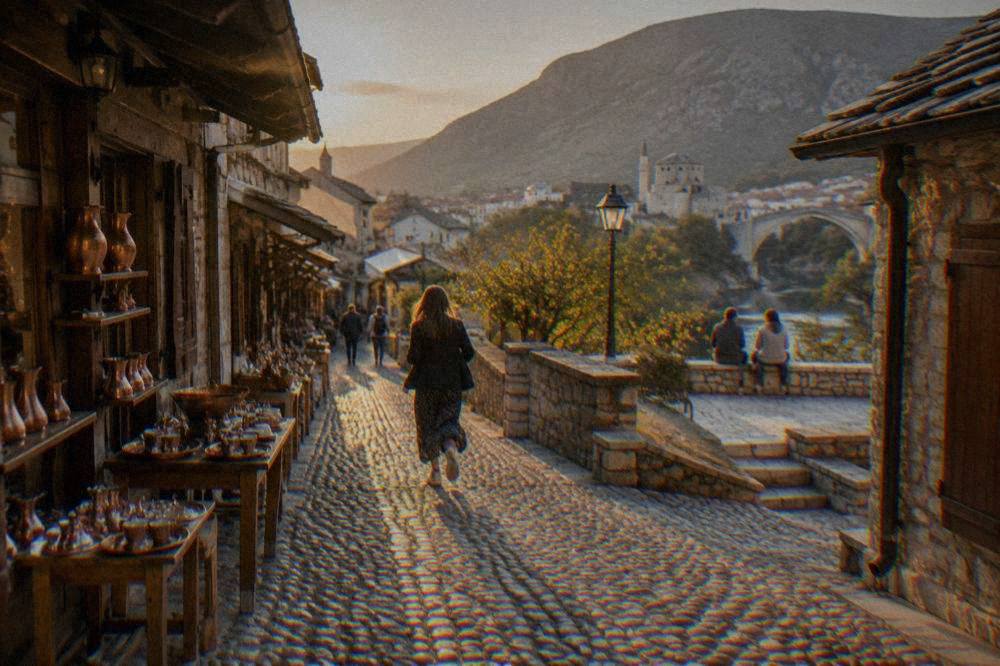
For day trips around Herzegovina you do not need Bosnian in any practical sense, since Blagaj, Počitelj, Kravica waterfall, Međugorje and Stolac all see international visitors and handle them without shared language, but greetings and thanks in the local language change the tone of every stop. A driver, a market seller and a tekke attendant all respond visibly to "dobar dan" and "hvala", and nothing more is required.
The geography of the region works in the visitor's favour here. Herzegovina's headline sights sit in a tight ring around Mostar, Blagaj Tekke under twenty minutes from Stari Most by road, Počitelj about half an hour, Kravica waterfall about fifty-four minutes, so a single day touches several towns and dozens of brief exchanges. Each of those exchanges is short: a ticket, a coffee, a souvenir, a photo permission. A greeting, a smile and "hvala" cover every one of them. Rural Herzegovina carries one genuinely serious safety note that outranks all language talk: suspected mine areas remain from the war, and visitors should stay on marked paths, following the guidance of the national mine-action centre, rather than wandering off roads and trails.
Guided day trips solve the language question completely, because the guide translates at every stop and adds the context no phrasebook holds. A private format lets the itinerary flex around what interests you, whether that is the dervish house at the Buna spring in Blagaj, the stone lanes of Počitelj or the swim in the pool below Kravica waterfall in summer. For travellers who like their history delivered rather than dug out of placards, the tailored private history walk of Mostar itself, with a guide working in English at your pace, is the city version of the same idea, and you can Check availability alongside the full tour page here.
Does Anyone Mind If You Just Speak English In Mostar?
Nobody in Mostar minds if you speak English, and in the old town the switch into English often happens before you have decided which language to attempt, but a greeting in Bosnian or Croatian first is read as respect and met with noticeably more warmth. The courtesy runs one way only: effort in the local language is always credited, never mocked, and mistakes with "zdravo" or "hvala" draw help rather than correction.
That generosity has a plain explanation. Bosnia and Herzegovina is a country of many languages living in a small space, Bosnian, Croatian and Serbian officially, with Turkish-rooted words woven through everyday speech in cities like Mostar, so locals spend their whole lives hearing their own language spoken differently. One more accent, one more hesitant "dobar dan", changes nothing. What does register is the greeting itself, because local culture holds formal courtesy in high regard. Entering a shop silently, a normal move in some countries, reads here as abrupt. Entering with "dobar dan" reads as correct, whatever comes after.
A few settings reward the local language more than others. The morning bakery queue, the neighbourhood cafe where pensioners hold the best tables, the ticket desk at lesser-visited sights, and any village stop on a Herzegovina day trip, all are places where "dobar dan" and "hvala" do real work. In the tourist core, English is simply the operating language. Both things are true at once, and moving between them as the day moves you from old town to back street is exactly how the city works.
Money is one place where language and practice meet. The currency is the convertible mark, KM, pegged to the euro, and euro cash is often accepted in tourist areas, though the rate should be confirmed, points covered in full on the site's money guide. A "hvala" at the till is the same in both currencies.
Common Questions About Greetings In Mostar
How do you say "hi" in Bosnia?
Say "zdravo" for an informal hi, or "dobar dan" for the standard daytime greeting used everywhere in Mostar and Herzegovina. In the evening, switch to "dobro veče".
Is "zdravo" or "dobar dan" better in Mostar?
"Dobar dan" is the safer default with anyone you do not know, in shops, cafes and the bazaar. "Zdravo" is friendly and informal, best with peers and younger people.
Do people in Mostar speak English?
Yes, widely in the old town, hotels, restaurants and tour settings, and reasonably on the Bulevar and among younger locals. In outlying neighbourhoods and rural Herzegovina, English thins out and a few local greetings help.
What is the difference between Bosnian, Croatian and Serbian in Mostar?
All three are official in Bosnia and Herzegovina and are spoken in Mostar as one everyday, mutually understandable speech, with modest differences in alphabet, vocabulary and pronunciation. A greeting learned in one form is understood by everyone.
What does "hvala" mean?
"Hvala" means thank you, and "molim" covers please and you're welcome. Together with "dobar dan", these three words handle the great majority of a visitor's daily exchanges in Mostar.
Is "merhaba" used in Mostar?
Yes, "merhaba", a greeting with Turkish roots, is heard in parts of Mostar where Bosnian carries Turkish loanwords from the Ottoman centuries. It is a warm, informal hello, though "zdravo" and "dobar dan" remain the everyday defaults.
A greeting is the smallest unit of travel there is, and in Mostar it is also the most repaid one. Learn "dobar dan", "hvala" and the evening switch to "dobro veče", deploy them in the bazaar and beyond, and the city answers in kind, in whatever language the moment requires.