Is It Safe To Drive In Bosnia As A Tourist?
Driving in Bosnia and Herzegovina around Mostar: road conditions, border crossings from Croatia, winter weather, parking and practical safety advice for tourists.
Mostar, the main city of Herzegovina in Bosnia and Herzegovina, sits inland on the Neretva river, and the roads that reach it wind through karst hills, river canyons and villages that a bus timetable will never quite cover. Driving gives you Blagaj in twenty minutes, Počitelj in half an hour and Kravica waterfall in under an hour, all without depending on anyone else's schedule. It is a practical way to see the region, and the honest answer to whether it is safe is yes, with a handful of specific caveats about mountain roads, winter rain and the border with Croatia.
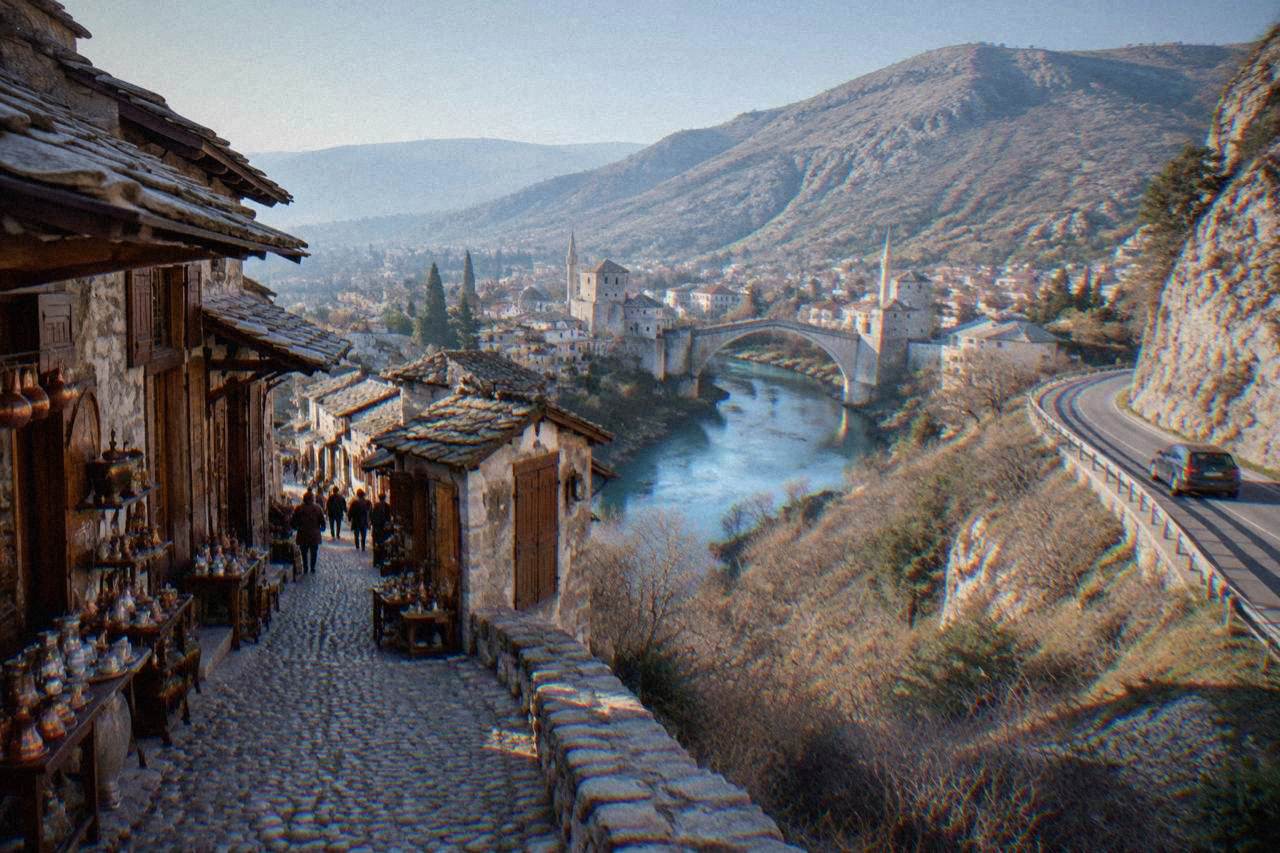
Yes, driving in Bosnia and Herzegovina as a tourist is generally safe, and the roads around Mostar are mostly two-lane routes in fair condition, but the terrain is mountainous, the weather can change quickly and winter rain is heavy, so the safety picture depends more on how and when you drive than on where. An international driving permit alongside your licence is the usual requirement, and the emergency number 112 works nationwide.
The driving itself is not exotic. Bosnia and Herzegovina uses standard European road signs, drives on the right, and its main corridors, including the route that carries traffic from Sarajevo down to Mostar and on towards the Croatian border, are paved and signposted in Latin script. Locally registered cars, buses and freight share narrower secondary roads, and overtaking happens on single carriageways, which is where your patience matters more than your confidence.
Two things genuinely shape the experience around Mostar. First, the terrain: Herzegovina is limestone hills and river valleys, so even short drives involve curves, climbs and the occasional unlit tunnel. Second, the works: the Mostar bypass and the Corridor Vc motorway section around the city have reported ongoing construction, so allow more time than a map app suggests and expect temporary signage or delays near the works.
For a fuller picture of personal safety in the country, read the Bosnia safety guide for travellers, and for evening plans in the city itself see is it safe to walk around Mostar at night. Driving and walking share the same basic answer: ordinary care is enough.
What Are The Roads Like Around Mostar?
The roads around Mostar are two-lane main routes and narrower local roads, generally paved and in fair condition, with free-flow drive times from Stari Most of about 19 minutes to Blagaj Tekke, 31 minutes to Počitelj and about 54 minutes to Kravica waterfall, a road distance of 55.2 km. These are free-flow figures that exclude border queues and roadworks.
What that means in practice: the classic Herzegovina loop, Blagaj, Počitelj and Kravica waterfall, is entirely doable in a day by car, and the distances are shorter than they look on a map of the Balkans. The table below gives the computed free-flow figures from Stari Most for the drives a visitor actually makes.
| Destination from Stari Most | Road km | About (free-flow) |
|---|---|---|
| Blagaj Tekke | 13.7 | 19 min |
| Stjepan-grad fortress | 13.9 | 20 min |
| Počitelj | 30.0 | 31 min |
| Međugorje (St James church) | 28.3 | 40 min |
| Kravica waterfall | 55.2 | 54 min |
| Jablanica | 47.4 | 57 min |
| Hutovo blato | 48.1 | 62 min |
| Konjic | 69.0 | 80 min |
| Trebinje | 116.5 | 142 min |
Three habits make these roads easy. Slow before blind crests, because a tractor or a flock can appear on the other side. Expect pedestrians on the verge on rural stretches, especially between villages. And treat any journey time you read, including the ones above, as a free-flow estimate: roadworks on the Mostar bypass and the Corridor Vc section can add real minutes, and fuel or coffee stops add more.
One safety note that applies once you park: in rural Herzegovina, stay on marked paths and roads, because suspected mined areas from the war still exist and the demining authority BHMAC maintains data on them. This is not a driving hazard on paved roads, but it matters if you park at a viewpoint and walk off the road. Do not wander into unkempt ground, and keep to used paths.
Do You Need A Car In Mostar At All?
No, a car is not necessary for seeing Mostar itself, because the Old Bridge, Kujundžiluk, Koski Mehmed-pašina džamija and the museums are all within walking distance of each other, but a car, or a seat on a day tour, earns its keep for Herzegovina's spread-out sights: Blagaj, Počitelj, Kravica waterfall and Međugorje are 13 to 55 km away with limited public transport links between them.
The honest framing is distance, not danger. Inside Mostar you will park once and forget the car. The old town free walk and every headline sight sits on foot. Outside the city, public buses reach Blagaj and Međugorje, but stitching together Blagaj, Počitelj and Kravica waterfall by bus in one day is awkward, which is exactly why the guided day tours are popular.
If you would rather leave the mountain roads to someone who drives them weekly, the Herzegovina day tour from Mostar to Blagaj, Počitelj and Kravica runs with a private car and a live guide, and it is the related pick for this page: Check availability.
What About The Border With Croatia?
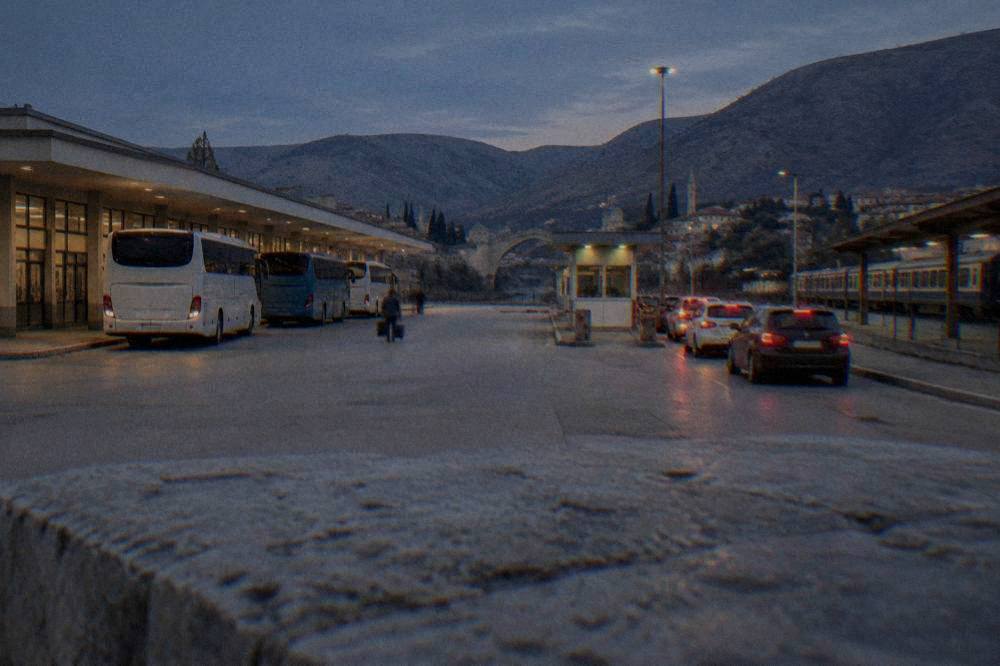
Bosnia and Herzegovina is not in the EU or Schengen, so the Croatian land border is an external Schengen border with full passport checks, and the main crossings near Mostar are Doljani-Metković and Bijača-Nova Sela, with reported waits of up to about 30 minutes and longer at summer peaks, so build buffer time into any drive to or through Croatia.
This is the single biggest planning item if your trip mixes Mostar with Dubrovnik or Split. Croatia has applied full Schengen checks at its land borders since 1 January 2023, and every crossing means a passport check, sometimes a document check for the car. The Pelješac Bridge, open since 2022, lets traffic between Split and Dubrovnik bypass the Bosnian Neum corridor entirely, so you can drive Croatia coast to coast without a border at all, but reaching Mostar always means entering Bosnia and Herzegovina properly. The full index of guides sits on Mostar Travel Guide.
A few practical points worth knowing before you drive to the border. The currency changes at the line: Bosnia and Herzegovina uses the convertible mark (KM), pegged at 1 EUR = 1.95583 KM, not the euro, so settle any tolls, parking or small purchases on the Bosnian side in marks where you can. Rental cars crossing between the two countries need the rental company's permission in advance and typically a Green Card, so confirm both in writing before you collect the car. And check live queue information for the Doljani and Bijača crossings on peak summer days, when reported waits stretch well past the usual half hour.
For the country-level context, including how Bosnia and Herzegovina's entry rules work for foreign nationals, see is Bosnia safe for Americans right now.
How Bad Is Winter Or Summer Weather For Driving?
Winter around Mostar is wet rather than constantly snowy, with FHMZ 1961-1990 data showing November averaging 200.0 mm of rain against 42.9 mm in July, and modelled ERA5 1991-2020 normals putting January mean daily highs at 8.4 C with lows around 0.2 C, so the real hazards are rain-slicked limestone roads, fog in the valleys and occasional snow on higher passes.
Mostar's valley climate is mild for the Balkans. The same station record shows a July mean of 24.7 C with an absolute maximum of 41.2 C, and modelled August highs of 30.5 C, so summer driving is mostly a matter of a working air conditioner, water in the car and not underestimating how hot a parked cabin becomes. The Neretva runs cold even in August, but the roads above it are what get hot.
| Season | What the data shows | Driving consequence |
|---|---|---|
| Winter (Nov-Feb) | Nov 200.0 mm, Dec 178.7 mm rain; Jan mean 4.8 C, absolute min -10.9 C | Wet roads, possible ice above the valley, short daylight |
| Spring (Mar-May) | Mar-Apr around 150 mm rain each; mean temps rising 9.6 to 17.9 C | Showers, occasional morning fog in valleys |
| Summer (Jun-Aug) | Jul 42.9 mm rain; Jul mean 24.7 C, absolute max 41.2 C | Heat, busy roads near Kravica and the coast routes |
| Autumn (Sep-Oct) | Oct 150.6 mm, Sep 96.3 mm rain | First cold nights, wet leaves on rural roads |
If you drive in the colder half of the year, carry more caution than equipment. Watch for shaded bends where frost lingers after sunrise, keep speeds down on wet descents, and check conditions before crossing the higher ground towards Sarajevo or Trebinje, where winter weather arrives earlier than in the Mostar valley itself.
What About Parking, Fuel And Local Driving Habits In Mostar?
Parking near Mostar's Old Town is limited and no reliable price list or zone map is available to quote, so the practical advice is to arrive early, use a recognised paid lot and keep some convertible marks in cash, while on the road expect assertive local overtaking, cars parked half on pavements and narrow one-way streets around Kujundžiluk that are better seen on foot than driven.
None of this is dangerous, it is just different from a motorway commute. A few specifics help. The streets immediately around the Old Bridge and the bazaar are pedestrian-heavy and often restricted, so park on the edges of the centre and walk in; the city is compact enough that this costs you ten minutes. Fuel stations are present on the main routes, and small vendors and some car parks prefer cash in KM, though cards work at larger stations and hotels.
The emergency numbers are worth having in the car before you need them: 112 is the general emergency line, with 122 for police, 123 for fire and 124 for ambulance. Save them in your phone and keep them on paper too, since mountain valleys are not always generous with signal.
Beyond driving, ordinary travel common sense covers the rest: keep valuables out of sight in the parked car, take the rental agreement and Green Card if you cross into Croatia, and confirm any roadworks advisory for the Mostar bypass before a long drive day. And if your interest is less about driving and more about what the city itself holds, start with what is so special about Mostar and is Mostar worth visiting.
Common Questions About Driving In Bosnia And Herzegovina
Is it safe to drive in Bosnia as a tourist?
Yes. The roads around Mostar are paved and in fair condition, distances to the main sights are short, and standard European driving rules apply. The cautions are terrain, weather and the Croatian border, not crime or chaos: allow extra time for curves and roadworks, slow down in rain, and budget for passport checks at the Schengen external border.
Do I need an international driving permit in Bosnia and Herzegovina?
An international driving permit alongside your national licence is the usual requirement for foreign drivers, and rental companies will expect one at pickup. Confirm the requirement with your rental company before you travel, since conditions vary by country of issue.
Can I take a rental car from Croatia into Bosnia and Herzegovina?
Usually yes, but only with the rental company's advance permission and typically a Green Card for insurance, sometimes for a fee. Confirm both in writing before collecting the car, and remember the border carries full passport checks because Bosnia and Herzegovina is outside the EU and Schengen.
What is the speed of the border crossing near Mostar?
The main crossings are Doljani-Metković and Bijača-Nova Sela. Reported waits run up to about 30 minutes, with longer queues at summer peaks, so check live border information and plan buffer time on both sides of the line.
Is winter driving difficult around Mostar?
Moderately. The valley itself is mild, but November averages 200.0 mm of rain and January lows sit near freezing, so expect wet roads, fog and occasional ice on higher ground towards Sarajevo or Trebinje. Winter tyres or chains are wise if you are driving between December and February.
Can I drive to Kravica waterfall from Mostar?
Yes. It is 55.2 km and about 54 minutes by road free-flow from Stari Most, on a route that passes Ljubuški. The park is open all year with entry at 20 KM for an adult, and the last stretch involves local roads, so allow more time than the estimate in bad weather.
Driving in Bosnia and Herzegovina rewards a calm right foot and a loose schedule, and around Mostar it unlocks the whole of Herzegovina, from the Buna spring at Blagaj to the falls at Kravica, within an hour of the Old Bridge.