Bosnia Travel Safety: Landmines, Driving And Everyday Risks
Mostar, in Herzegovina, is an inland city on the Neretva river, and the everyday safety questions travellers ask about it have ordinary answers: walk the city freely, drive the main roads with normal care, and stay on marked paths in the countryside because suspected mined areas remain.
Yes, for the kind of trip a visitor to Mostar actually takes: the Old Bridge, Kujundžiluk and the day-trip towns are ordinary, walkable places. The one rule with no exceptions is rural: stay on marked paths and paved roads in Herzegovina, because suspected mined areas remain, and the mine-action centre advises exactly that.
Mostar sits inland on the Neretva river in Herzegovina, the southern region of Bosnia and Herzegovina, and the safety questions travellers ask about the country cluster around a few concrete topics: landmines left from the war, mountain roads, walking at night, and the ordinary business of money, water and emergencies. The short version is that the city itself, the Old Bridge Area that UNESCO inscribed in 2005, and the established day-trip circuit of Blagaj, Počitelj, Kravica waterfall and Međugorje function as normal visitor destinations, while the countryside carries one rule that has no exceptions: stay on marked paths. This guide from Mostar Travel Guide sets out what is known, plainly, topic by topic.
Is Bosnia Safe For Travellers Visiting Mostar?
For a trip built around Mostar, Blagaj, Počitelj and Kravica waterfall, Bosnia and Herzegovina is an ordinary European destination with one specific rural hazard. The cities and the established sightseeing routes are walkable and functioning places, visited year-round. The single non-negotiable rule concerns the countryside: suspected mined areas remain in rural Herzegovina, and the national mine-action centre advises staying on marked paths.
The distinction that matters is urban versus rural. In Mostar itself, the questions are the everyday ones of any mid-sized European city: watch your belongings in the crowded lanes of Kujundžiluk, cross the river on the stone steps of Stari Most with care when they are wet, and expect heat in summer. The FHMZ station table for Mostar records a July mean temperature of 24.7 C and an absolute maximum of 41.2 C, so a summer afternoon is a real factor in how the day feels.
Outside the city, the war left a legacy that is managed, not erased. Bosnia and Herzegovina's mine-action centre, BHMAC, maintains records of suspected hazardous areas, and its standing advice to anyone walking in rural terrain is simple: use marked paths, paved roads and established trails, and never wander onto unused farmland, riverbanks or forest tracks. The main sights visitors actually target are all on that safe list, because they are paved, signed and travelled daily.
A sensible base plan looks like this: spend your days in Mostar's Old Town and the streets around Spanish Square, take established day trips on main roads, and treat any impulse to hike cross-country as a reason to hire a local guide rather than strike out alone. The Mostar travel tips guide covers the practical basics of a first trip, and the things to do in Mostar page lists the sights that make up a standard visit.
| Topic | The Rule In Mostar And Herzegovina |
|---|---|
| City streets | Ordinary city precautions apply; no area of central Mostar is off limits to visitors |
| Rural paths | Stay on marked paths, paved roads and established trails; suspected mined areas remain |
| Riverbanks | Treat undeveloped Neretva banks outside towns as unmarked terrain |
| Abandoned buildings | Do not enter ruins, former front-line structures or derelict buildings anywhere |
| Summer heat | July mean 24.7 C, absolute maximum 41.2 C (FHMZ 1961-1990); carry water |
Are Landmines Still A Risk Around Mostar?
Yes, in rural terrain, and only there: suspected mined areas remain in Bosnia and Herzegovina, including parts of rural Herzegovina, and BHMAC, the national mine-action centre, advises staying on marked paths, paved roads and established trails. Every sight on the standard Mostar circuit, the Old Bridge, Blagaj Tekke, Počitelj, Kravica waterfall, Međugorje, is a signed, paved, heavily visited site where this does not arise.
The hazard is real but precisely bounded. Decades of clearance work have removed the known dangers from the places people go, and what remains is concentrated in farmland, forest and riverbank that no visitor has any reason to enter. The failure mode is not a site visit, it is improvisation: cutting cross-country to a viewpoint, scrambling down an untracked riverbank for a photo, or exploring a derelict building on a walk between towns. None of those are worth it anywhere in the country.
Practical habits are enough. Walk where there is a path, drive where there is a road, swim where swimming is established, and if a hillside, meadow or ruin looks interesting, ask locally before walking onto it. Rural hosts, guesthouse owners and guides know their ground. The warning signs themselves, where they stand, mean exactly what they say.
This is also why guided day trips earn their place in Herzegovina beyond convenience. A tour that runs Mostar to Blagaj, Počitelj and Kravica waterfall keeps you on the driven routes the whole day, and the history-focused walks in the city explain the war years, the bridge destroyed on 9 November 1993 and reopened in July 2004, without ever needing to leave safe ground. For planning, the Mostar war history guide covers what happened in the city and how to read its memorials today.
The guided option is worth weighing if the countryside is new to you. The private Kravica, Blagaj and Počitelj tour is the related trip for this page, and Check availability before committing to self-driving the same route.
Is It Safe To Walk Around Mostar At Night?
Central Mostar, the Old Town, the Rondo and Spanish Square end of the city, and the streets between them, are normal evening walking ground, lit and busy through the tourist season. The practical answer is that evening strolls to see Stari Most illuminated are a standard part of a visit, with ordinary city caution about dark side streets and personal belongings.
Evening is when the Old Bridge shows a different face, floodlit above the black Neretva, and the restaurants and cafes around Kujundžiluk stay busy. The terrain is the main thing to mind: the cobbles and the bridge steps are polished stone, and in rain or after dark they deserve slow feet. The river below stays cold even in August, and the banks outside the maintained promenade sections are not a place for night wandering, which returns to the marked-path rule.
The ordinary rules travel well. Keep a phone with you, walk the lit streets between the Old Town and your accommodation, and take a taxi rather than a long dark walk at the end of the night, which is a short, inexpensive ride in Mostar. If your question is really about the city after dark in depth, the dedicated page on walking Mostar at night goes into the details of districts, lighting and late transport.
Is Driving In Bosnia Safe Around Mostar?
Driving the main routes around Mostar, the M17 corridor, the roads to Blagaj, Počitelj, Kravica waterfall and Međugorje, is normal European driving on decent roads, with mountain terrain, summer heat and occasional roadworks as the real variables. Reported works continue on the Mostar south bypass and the Corridor Vc motorway section, and all drive times in this guide are free-flow figures that exclude border queues.
The roads themselves are the easy part. The M17 follows the Neretva valley south towards Čapljina and the Croatian border, and the regional roads to the Herzegovina sights are paved and signed. What deserves respect is the terrain: routes climb and curve, local drivers can be quick, and in July and August both the traffic and the temperature rise. The ERA5 reanalysis for 1991 to 2020 puts the August mean daily high at 30.5 C in Mostar's grid cell, and the valley floor runs hotter still, so a car without functioning air conditioning is a misery on a long day.
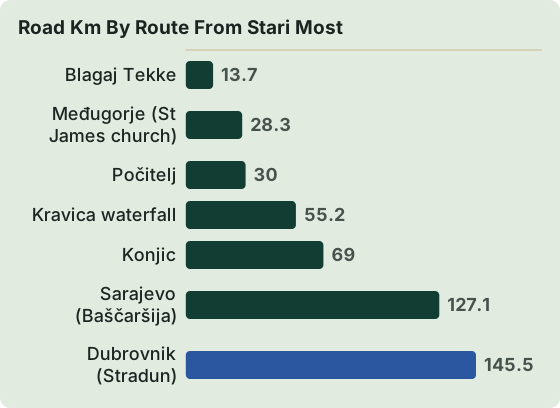
Two specifics matter around Mostar. First, the roadworks: the Mostar south bypass and the Mostar North to Mostar South motorway section are active construction projects, with a route change recorded in September 2026 towards a new Livač tunnel, so expect cones, delays and changed layouts near the city. Second, the border: crossing into Croatia means leaving Bosnia and Herzegovina, which is in neither the EU nor Schengen, so full passport checks apply, with waits reported up to about 30 minutes and longer at summer peaks. The driving in Bosnia page and the border crossing guide cover both in detail.
| Route From Stari Most | Road Km | Free-Flow Minutes |
|---|---|---|
| Blagaj Tekke | 13.7 | 19 |
| Međugorje (St James church) | 28.3 | 40 |
| Počitelj | 30.0 | 31 |
| Kravica waterfall | 55.2 | 54 |
| Konjic | 69.0 | 80 |
| Sarajevo (Baščaršija) | 127.1 | 134 |
| Dubrovnik (Stradun) | 145.5 | 150 |
Those are computed free-flow times without border formalities, and the Dubrovnik row adds a Schengen external border crossing on top. For anyone who would rather not drive it, the car rental guide and the getting around guide compare self-driving with buses, trains and tours; the Sarajevo to Mostar train, two departures a day each way since service resumed on 15 October 2026, removes the mountain road from the equation entirely.
Is Mostar Safe For Families And American Visitors?
Yes, in the everyday sense that the sights families target, the Old Bridge, the riverside promenades, Blagaj and the Kravica pool in summer, are managed visitor sites, and that visa-exempt visitors, including United States citizens, may stay up to 90 days in a six-month period from first entry. No crime statistic belongs on this page; the practical risks around children are water, heat, cobbles and traffic, in that order.
The Neretva is the one to treat seriously with children. The water is cold even in August, fed by karst springs, the current below Stari Most is not for swimming, and the established swimming on the day-trip circuit is the designated pool below Kravica waterfall in summer, where no lifeguard is reported, so supervision is entirely on the adults in the group. Heat comes next: pack water, plan the Old Town for morning, and use the shade of Kujundžiluk's lanes at midday. Cobbled streets and the bridge steps reward held hands, and the pavement scene around Spanish Square has the usual kerbed traffic of a Balkan city.
For American visitors the entry picture is straightforward. Bosnia and Herzegovina is not in the European Union and not in Schengen, so the Croatia land border carries full checks, but visa-exempt entry for up to 90 days in a six-month period applies, and the ETIAS travel authorisation for Europe is not in operation. The dedicated page on Bosnia for Americans right now works through the specifics, and the broader question of whether the country suits a first trip is covered in is Mostar worth visiting.
| Family Risk Around Mostar | The Practical Fix |
|---|---|
| Cold, fast river water | No swimming in the Neretva at the bridge; swim only in the designated Kravica pool in summer |
| Summer heat | Morning sightseeing, water carried, midday shade; August mean daily high 30.5 C (ERA5 1991-2020) |
| Polished cobbles and bridge steps | Slow feet, held hands, grippy shoes, especially in rain |
| Roadworks near the bypass | Follow signed detours; expect cones and delays near the city |
| Unguided rural walks | Marked paths only; book a guide for anything off the standard circuit |
What Are The Emergency Numbers And Health Basics In Mostar?
The general emergency number in Bosnia and Herzegovina is 112, with 122 for police, 123 for fire and 124 for ambulance. Tap water in Mostar is generally treated, electricity runs at 230 volts on plug types C and F, and the European health insurance card arrangements that EU visitors rely on at home do not apply here, so travel insurance that covers medical care is the standing advice for every visitor.
Save the numbers before you need them. Dialling 112 reaches the unified service from any phone, and the specific lines, 122, 123 and 124, connect directly to police, fire and ambulance. Pharmacists in Mostar are the first stop for minor complaints, as across the region, and pharmacy opening hours follow ordinary city rhythms, so stock basic supplies during the day rather than counting on a late-night run.
| Service | Number |
|---|---|
| All emergencies (general) | 112 |
| Police | 122 |
| Fire | 123 |
| Ambulance | 124 |
Water and power need one sentence each. The municipal supply in Mostar is treated, and some travellers still prefer bottled water, which is cheap and available everywhere; either choice is reasonable. Sockets are the two-pin European C and F types at 230 volts, so travellers from the UK, the US and Ireland need adapters, and the travel tips guide rounds up the packing implications.
The mine-safety habit deserves its own table, because it is the one rule in this guide that is genuinely local:
| Situation | Do |
|---|---|
| Marked trail or paved road in rural Herzegovina | Walk it normally |
| Unsigned meadow, forest track or riverbank | Stay out; keep to the marked route |
| Red warning sign with a skull symbol | Obey it absolutely; report the location if relevant |
| Derelict building or ruin | Never enter, anywhere in the country |
| A guide offers a cross-country route | Use a licensed local guide who knows the ground |
Are Money, Taxis And Scams A Concern In Mostar?
Everyday risks in Mostar are small and ordinary: the currency is the convertible mark (KM), pegged at exactly 1 EUR to 1.95583 KM, euro cash is often accepted in tourist areas at a rounded rate you should confirm first, and card payment is common at hotels and larger venues while small vendors prefer cash. Pickpocket-grade risk in crowded lanes is the main thing to manage, with normal city habits.
The money mistakes visitors make are predictable. One is paying in euro cash without checking the rate, which shops often round in their favour on small amounts; the fixed peg is printed by the central bank, so any rounded shop rate can be checked against it in a second. Another is assuming cards work everywhere: they generally do at hotels, bigger restaurants and museums, while market stalls, small cafes and some taxis want cash, and KM cash is the answer. Withdraw in KM from bank ATMs, and skip any machine that offers to charge you in euro. The full picture, including the reported 3 KM per person per night tourist tax in the canton from 1 January 2026, which you should confirm at booking, sits on the Mostar money guide.
Taxis and tour pricing are unspectacular if you hold two habits. Agree or check the meter before a ride starts, which keeps airport and station trips to a short, inexpensive fare, and buy tours from listings that state what the from-price covers, which is exactly what the cards on this site do. Street-level hassle in Mostar is low-key: restaurant touts by the bridge are persistent but polite, and a no thanks ends it. No statistic is needed, and none exists to quote.
How Does The Weather Change Safety Around Mostar?
Mostar's climate raises the safety bar in summer and in the wet months: July averages 24.7 C with an absolute maximum of 41.2 C recorded (FHMZ 1961-1990), while November averages 200.0 mm of rain against July's 42.9 mm, making autumn the season when riverbanks, cobbles and rural tracks demand the most respect. Heat and water, not crime, are the recurring themes.
Summer planning is water-and-shade planning. The modelled normals, ERA5 reanalysis 1991-2020, put the July mean daily high at 29.9 C and August at 30.5 C in Mostar's grid cell, and the station record shows the air can go far beyond that. Old Town sightseeing before noon, a long lunch, and the bridge and viewpoints in the late afternoon is the standard local rhythm for good reason. For anyone wondering whether August is too much, is Mostar too hot in August answers it directly, and snow, rare but real, is covered in does it ever snow in Mostar.
| Month | Mean Temp C (FHMZ 1961-1990) | Precipitation Mm (FHMZ 1961-1990) | Mean Daily High C (ERA5 1991-2020) |
|---|---|---|---|
| January | 4.8 | 164.7 | 8.4 |
| April | 13.3 | 127.3 | 17.7 |
| July | 24.7 | 42.9 | 29.9 |
| August | 24.2 | 73.7 | 30.5 |
| November | 10.1 | 200.0 | 14.1 |
The rain column explains the rest. November is far rainier than July, 200.0 mm against 42.9 mm, and wet months mean slick stone on the bridge steps, swollen riverbanks to stay off, and muddy rural tracks that reinforce the marked-path rule. Spring and autumn are the seasons when a waterproof layer earns its space, and the weather guide and the best time to visit guide build the year out month by month.
Common Questions About Mostar Safety
Is Bosnia safe for tourists?
For a visit built around Mostar and the standard Herzegovina circuit, yes, in the ordinary European sense. The one rule with no exceptions is rural: stay on marked paths, paved roads and established trails, because suspected mined areas remain in rural terrain, per the standing advice of the national mine-action centre.
Are there landmines near Mostar's Old Bridge?
No. The Old Bridge Area of the Old City of Mostar is a UNESCO World Heritage property, inscribed in 2005, and the city's sights, plus Blagaj, Počitelj, Kravica waterfall and Međugorje, are paved, signed, visited sites. The landmine concern applies only to unmarked rural land, abandoned buildings and undeveloped riverbanks.
Is it safe to walk around Mostar at night?
Central Mostar between the Old Town, Spanish Square and Rondo is normal, lit evening walking ground in season. Take the usual city precautions, mind polished cobbles and the bridge steps after dark, and take a taxi, a short, inexpensive ride, rather than a long unlit walk at night's end.
Is the tap water safe to drink in Mostar?
The municipal supply is generally treated. Some travellers still prefer bottled water, which is widely available and inexpensive; either choice is reasonable. Carry extra water in July and August, when the station record shows air temperatures can reach 41.2 C.
Is it safe to drive from Dubrovnik to Mostar?
The route, about 145.5 km and 150 free-flow minutes from Stari Most to Dubrovnik's Stradun, is normal driving, but it crosses the Croatian border, a Schengen external border with full checks since 1 January 2023, with reported waits up to about 30 minutes and longer at summer peaks. Bosnia and Herzegovina is in neither the EU nor Schengen, so carry a passport.
What is the emergency number in Bosnia and Herzegovina?
Dial 112 for all emergencies. The direct lines are 122 for police, 123 for fire and 124 for ambulance.
The countryside rule is the whole of the local knowledge you need beyond ordinary city sense: marked paths, paved roads, established sites, and a guide for anything wilder. Everything else about a Mostar trip, from the bridge at midnight to the Kravica pool in July, is simply a matter of going.
