What Is The Prettiest City In Bosnia?
The prettiest city in Bosnia question answered plainly: Mostar, its UNESCO Old Bridge, river setting and stone Old Town, with comparisons and planning facts.
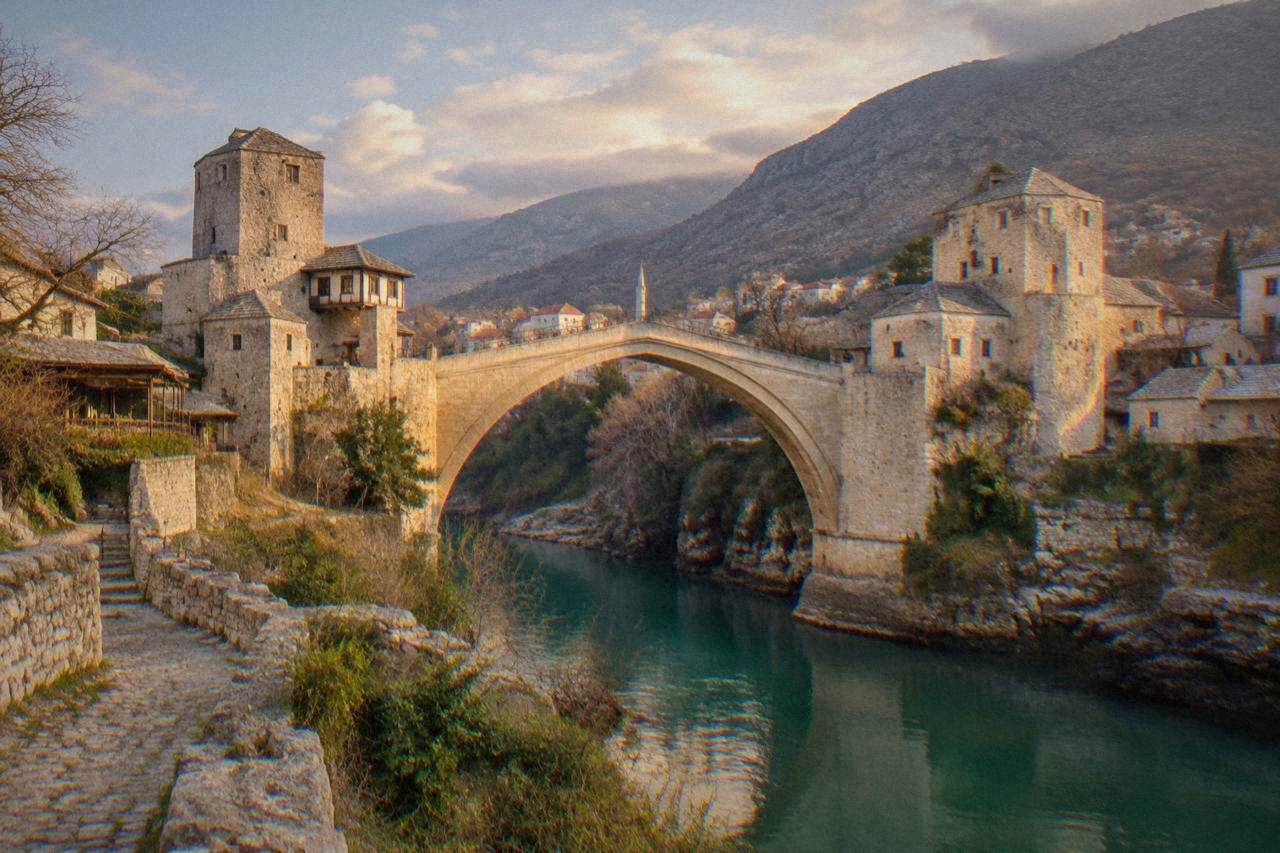
Beauty contests between cities are unwinnable, but the question has one answer that the evidence supports: Mostar, in Herzegovina, the southern region of Bosnia and Herzegovina, an inland city on the Neretva river. No other city in the country combines a single-arch Ottoman stone bridge, a UNESCO World Heritage citation for its Old Town, and a bazaar street of coppersmith shops pressed against a cold green river. The Old Bridge Area of the Old City of Mostar was inscribed on the World Heritage List in 2005, the only city core in Bosnia and Herzegovina with that distinction, and that is the strongest objective claim any Bosnian city can make to being the prettiest.
Sarajevo argues back with scale and history, Trebinje with its southern light and plane-shaded square, and Jajce with a waterfall in the middle of town. This page lays out what each contender actually offers, in figures rather than adjectives, so the judgement is yours.
Mostar is the prettiest city in Bosnia by the objective measures available: it holds the country's only UNESCO World Heritage urban core, the Old Bridge Area of the Old City of Mostar, inscribed in 2005, and its single stone arch of 1566, its turquoise Neretva river and the Kujundžiluk bazaar together form a compact landscape no other Bosnian city matches.
The bridge itself is the anchor. Built to a design attributed to the architect Hajruddin under Suleiman the Magnificent, with a span of about 29 metres, it stands about 21 to 24 metres above the river depending on the water level. It was destroyed on 9 November 1993 during the war and rebuilt and reopened in July 2004, using original techniques and much original stone recovered from the riverbed. The reconstruction is part of why the site carries UNESCO status under criterion (vi): the inscription recognises the bridge as a symbol of coexistence and international cooperation, not just an aesthetic object.
Around the bridge sits the rest of the picture: Kujundžiluk, the cobbled bazaar street running along the left bank, the Crooked Bridge (Kriva ćuprija), a small single-arch footbridge that reads as a rehearsal for the great one, and the minaret of Koski Mehmed-pašina džamija rising directly over the water a hundred metres downstream. All of it fits in a walk of twenty minutes end to end. For readers planning a visit, what is so special about Mostar unpacks the same question in more depth, and is Mostar worth visiting answers the follow-up most people ask next.
Why Mostar's Old Town Carries The Country's Only UNESCO Listing
The Old Bridge Area of the Old City of Mostar was inscribed on the World Heritage List in 2005 as property 946, under cultural criterion (vi), covering 7.60 hectares with a 48-hectare buffer zone; no other city in Bosnia and Herzegovina has a listed urban core, which is why Mostar's claim to be the prettiest rests on a citation rather than an opinion.
The UNESCO decision language is careful: it credits the settlement's growth from the 15th century, the name derived from the "mostari", the bridge keepers, and the reconstruction of the bridge in 2004 after its destruction in 1993. The first written mention of the name Mostar dates to 1474, in a Dubrovnik document. So the city you photograph today is genuinely old in plan, genuinely new in its centrepiece, and officially recognised as exceptional.
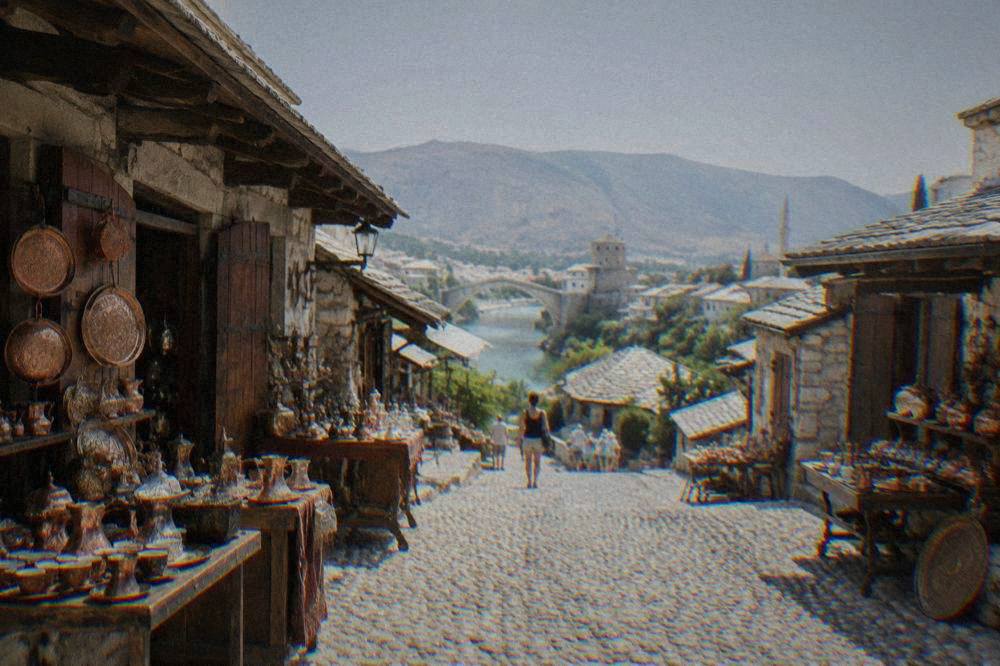
What that means on the ground is a dense, walkable quarter where everything worth seeing sits within a few hundred metres of the river. The Old Bridge is free to cross at any hour, Kujundžiluk is a public street, and Kriva ćuprija crosses a small side channel a short walk upstream. A small-group guided walk of the Old Town adds the stories behind the stones; you can Check availability on the operator's live listing. If the bridge itself is what draws you, why the Mostar bridge is so famous covers that single monument in full.
| Mostar old town fact | Figure |
|---|---|
| UNESCO property | Old Bridge Area of the Old City of Mostar, 946 |
| Year inscribed | 2005 |
| Criterion | (vi) |
| Bridge completed | 1566 |
| Bridge span | about 29 metres |
| Height above the Neretva | about 21 to 24 metres |
| Destroyed / reopened | 9 November 1993 / July 2004 |
| Protected area | 7.60 hectares, 48-hectare buffer |
How To Compare Mostar With Other Cities In Bosnia And Herzegovina
Sarajevo is the capital and the largest city, Trebinje lies 116.5 km and about two hours and twenty minutes by road from Mostar, and Jajce, Konjic and Počitelj each hold one striking feature, so the comparison comes down to what you want to photograph: a capital's layers, a riverside town of stone, or a single arch over green water, and only Mostar's setting combines river, bridge and bazaar in one frame.
Sarajevo's answer is depth: a Baščaršija old quarter of its own, an Ottoman and Austro-Hungarian streetscape, and a place in modern history that no other city in the country shares. By road it is 127.1 km and about two hours and fifteen minutes from Mostar, and the train between the two cities runs twice a day each way, a journey of about two hours. Trebinje, near the Montenegrin border, offers an old town, an arched bridge and a hilltop monastery, all within a compact walk. Konjic, 69.0 km north of Mostar, sits on its own stretch of the Neretva with a stone bridge of its own and the ARK D-0 bunker nearby. Počitelj, 30.0 km south, is technically a village rather than a city, a walled heap of stone under a fortress tower that appears in almost every photograph essay on the country. Everything else covered here is indexed on Mostar Travel Guide.
None of that detracts from Mostar; it frames the choice. If your idea of the prettiest city is a skyline, Mostar wins on the river-and-bridge frame. If it is atmosphere and café life, Sarajevo competes seriously. The Mostar or Sarajevo comparison page works through the trade-offs in detail.
| City | Road distance from Mostar | Free-flow drive time | Signature feature |
|---|---|---|---|
| Sarajevo (Baščaršija) | 127.1 km | about 134 min | Ottoman bazaar capital |
| Trebinje | 116.5 km | about 142 min | Old town on the Trebišnjica |
| Konjic | 69.0 km | about 80 min | Stone bridge over the Neretva |
| Počitelj | 30.0 km | about 31 min | Walled village and fortress |
| Jajce | not in the distance table | not stated | Waterfall in the town centre |
What The Herzegovina Backdrop Adds To Mostar's Looks
Mostar's beauty does not stop at the Old Town boundary: Blagaj sits 13.7 km away where the Buna river bursts from a cliff below a dervish lodge, Počitelj's fortress looks over the Neretva valley 30.0 km south, and Kravica waterfall drops into a swimming pool of green water 55.2 km away, so the city works as a base for the prettiest scenery in the country as well as its prettiest core.
That hinterland matters for the prettiest-city argument, because few Bosnian cities sit inside a ring of day trips this photogenic. Blagaj Tekke, the dervish house at the Buna spring, is about 19 minutes by road. Stjepan-grad, the fortress ruin above Blagaj, is 13.9 km out. Međugorje, the pilgrimage town, is 28.3 km away, and the stećci medieval tombstones at Radimlja near Stolac, part of a UNESCO listing of 2016, are 33.5 km from the Old Bridge. A Herzegovina day tour from Mostar strings Blagaj, Počitelj and Kravica waterfall together in one loop, which is the usual way to see all three without a car.
The scenery is also seasonal in ways worth planning around. The FHMZ station table for Mostar (1961 to 1990) shows July averaging just 42.9 mm of rain against November's 200.0 mm, and the ERA5 reanalysis for 1991 to 2020 puts the July mean daily high at 29.9 C and August's at 30.5 C. The Neretva, fed by karst springs, stays cold even in August. Is Mostar too hot in August takes the summer heat question in full, and does it ever snow in Mostar covers the other end of the year.
How Many Days You Need To Judge Mostar For Yourself
Two full days is the honest minimum for forming your own verdict: one for the Old Town, the bridge at both midday and dusk, and the viewpoints from Hum and Fortica, and a second for the Herzegovina loop of Blagaj, Počitelj and Kravica waterfall, since the question of the prettiest city in Bosnia cannot be settled from a four-hour bus-stop visit between Dubrovnik and Sarajevo.
The one-day version squeezes the Old Town into a morning and adds Blagaj in the afternoon, and it works, but the bridge rewards two visits at different hours and the bazaar changes character once the day-trippers leave. Staying the night is its own argument, covered in is it worth staying the night in Mostar, and the how many days in Mostar is enough page runs the arithmetic for one, two and three day plans.
Practicalities are simple. The currency is the convertible mark (KM), pegged at 1 EUR to 1.95583 KM, and euro cash is often accepted in the tourist streets at a rounded rate, though it pays to confirm before handing it over. Bosnia and Herzegovina is not in the EU and not in Schengen, so the land border to Croatia carries full passport checks. The whole Old Town is compact and flat around the river, a point the is Mostar a walkable city page develops.
| Herzegovina stop from Mostar | Road distance | Free-flow time | Entry figure |
|---|---|---|---|
| Blagaj Tekke | 13.7 km | about 19 min | 10 KM reported |
| Počitelj village | 30.0 km | about 31 min | free |
| Kravica waterfall | 55.2 km | about 54 min | 20 KM adult, all year |
| Radimlja necropolis | 33.5 km | about 42 min | 8 KM individual |
Common Questions About The Prettiest City In Bosnia
What Is The Prettiest City In Bosnia?
By the objective measures, Mostar: it holds the country's only UNESCO World Heritage urban core, the Old Bridge Area of the Old City of Mostar, inscribed in 2005, and its stone bridge, green Neretva river and Kujundžiluk bazaar form a single compact frame that no other Bosnian city matches.
Is Mostar or Sarajevo more beautiful?
Mostar wins on the concentrated river-and-bridge view; Sarajevo answers with a larger Ottoman quarter and a layered history. They are 127.1 km apart, about two hours and fifteen minutes by road, and the train between them runs twice a day each way, so you can judge both on one trip.
What is the most beautiful town near Mostar?
Počitelj, 30.0 km and about 31 minutes south, is a walled stone village under a fortress tower above the Neretva valley, and entry to the village itself is free. Blagaj, 13.7 km away, where the Buna river springs from a cliff beneath a dervish lodge, runs it close.
Can you see the best of Mostar in one day?
You can see the Old Bridge, Kujundžiluk, Kriva ćuprija and a viewpoint in a single day, but a second day for Blagaj, Počitelj and Kravica waterfall is what turns a quick verdict into a fair one.
Is the Old Bridge in Mostar the original?
The bridge you cross today was rebuilt with original techniques and much recovered stone and reopened in July 2004, after the 1566 original was destroyed on 9 November 1993 during the war. Its UNESCO inscription covers the whole Old Bridge Area, listed in 2005.
Whatever verdict you reach, the case is best made on the ground: cross the bridge early before the crowds, walk down to the bank below Koski Mehmed-pašina džamija for the arch in full profile, and let Mostar's river do the arguing.
