Kotor From Mostar: A Long Day Or A Night Away?
Kotor sits across two international borders from Mostar, deep in the bay of the same name in Montenegro, and the question for anyone based in Herzegovina is not whether it is worth seeing but whether the drive back the same night makes sense.
Kotor is reachable from Mostar as a very long day trip, but the run home after dark on winding roads argues for at least one night away. The road out runs through Trebinje, about 116.5 km and two hours plus from Stari Most, before the border country begins.
Mostar is an inland city on the Neretva river, and Kotor is its opposite number: a walled town on a drowned river mouth in Montenegro, ringed by mountains that drop straight into the water. Getting between them means crossing Bosnia and Herzegovina's own border at least once, and on the usual road twice, because Bosnia and Herzegovina is not in the EU and not in Schengen. That single fact shapes every plan on this page. The detailed route briefing lives in the dedicated Mostar to Kotor route guide, and this page handles the decision that comes first: how long to give it, and what a realistic day or two looks like.
Is Kotor From Mostar Doable In One Day?
Yes, but it is a long day and the arithmetic is unforgiving: the first leg alone, Mostar to Trebinje, is about 116.5 km and roughly 142 minutes of free-flow driving, and the border country only begins there. Add the onward road, border checks and time in the town itself, and a one-day return means leaving before dawn and driving home after dark. A night away is the calmer plan.
The honest framing is that Kotor is the far end of Mostar's day-trip range, beyond even Trebinje, which is itself the longest single run in the Herzegovina day-trip table. Everything closer than Trebinje, from Blagaj at 13.7 km to Kravica waterfall at 55.2 km, fits comfortably inside a morning departure and a dinner back in the Old Bazaar. Kotor does not.
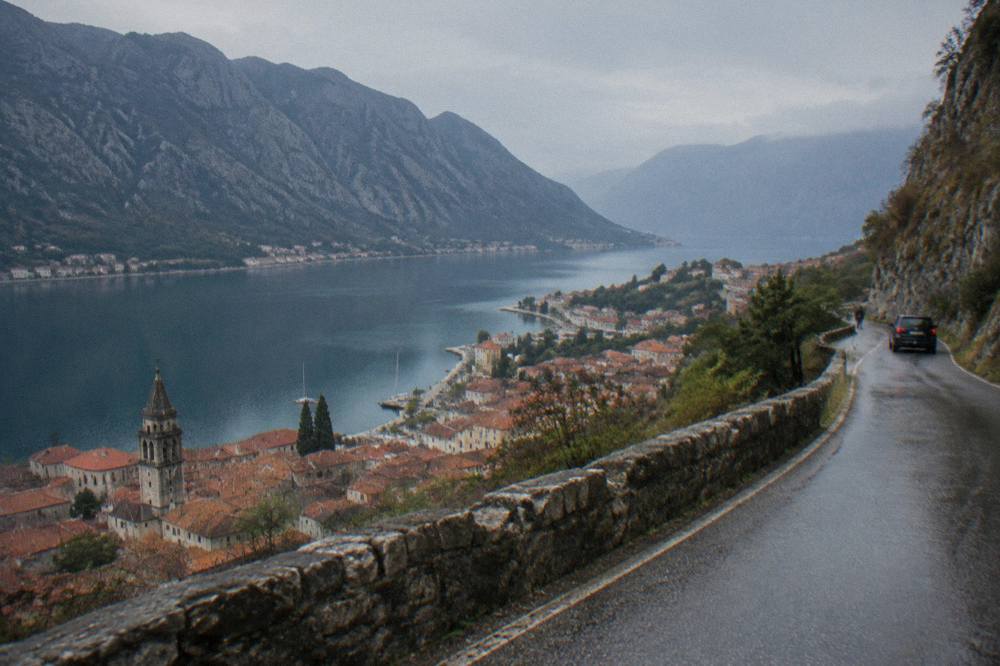
The case for the one-day version is real, though. If you have a hire car, a full tank and an early alarm, you can be on the road while Herzegovina is still cool, spend the middle of the day on the bay, and roll back into Mostar late. The case against it is the last hour: rural Herzegovina roads after dark, with the kind of switchbacks that the daytime drive makes obvious enough. Anyone who has already read is it worth staying the night in Mostar knows the logic cuts both ways, and the same reasoning applied to Kotor usually lands on staying over.
What Is The Route From Mostar To Kotor?
The standard line runs Mostar to Trebinje on the M6, about 116.5 km and roughly 142 minutes without stops, then south out of Trebinje toward Montenegro, with the border country beginning within the hour. Some routings dip through Croatia around the Dubrovnik hinterland instead, which adds a second set of passport checks. Either way the drive is mountain road almost end to end, not motorway.
Trebinje is the natural anchor of the outbound leg and the last town in Bosnia and Herzegovina with fuel, cash machines and a proper old core to stretch legs in. It deserves more than a petrol stop: its old town and riverine monasteries are free to wander, and the Trebinje day-trip guide covers them properly. Coming back, it is also the sensible dinner stop before the final push over the hills to Mostar.
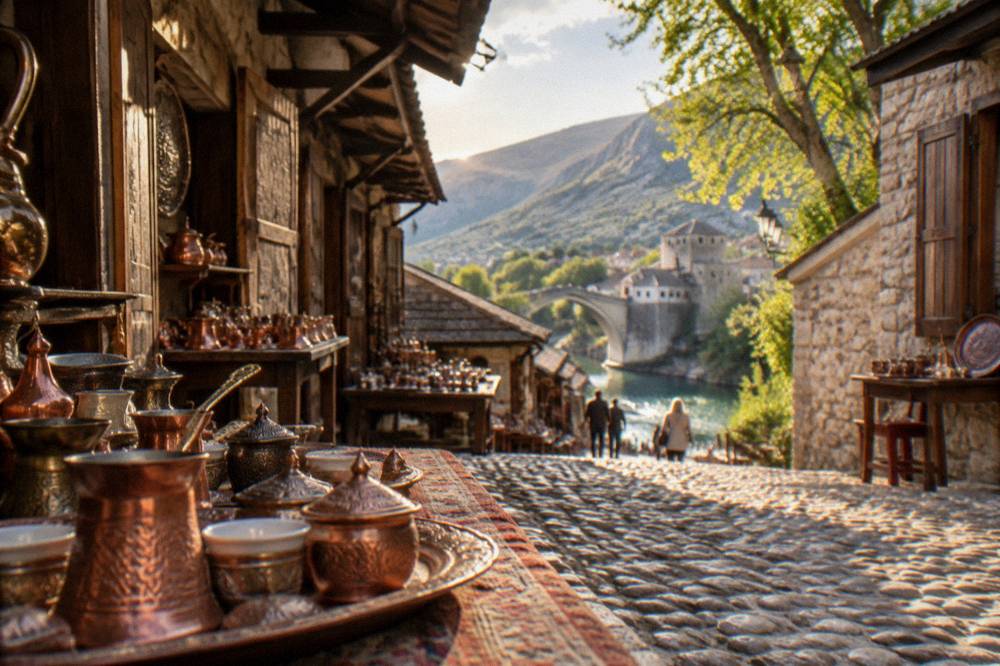
For scale, here is where Kotor's outbound run sits inside Mostar's day-trip table. The figures are free-flow road times from Stari Most, with no border queues counted, and the table makes plain that everything after Trebinje is bonus distance:
| Leg from Stari Most | Road km | Free-flow minutes |
|---|---|---|
| Blagaj Tekke | 13.7 | 19 |
| Počitelj | 30.0 | 31 |
| Kravica waterfall | 55.2 | 54 |
| Hutovo blato | 48.1 | 62 |
| Stolac | 36.8 | 47 |
| Trebinje (last BiH town on the Kotor run) | 116.5 | 142 |
Note what the table does not say: it stops at Trebinje because that is the last figure the road table carries on this corridor. The Trebinje-to-Kotor stretch is cross-border mountain road, and any total you see quoted for the full run should be checked against a live mapping service on the day, because border queues are not in anyone's free-flow number. In summer the crossings between Bosnia and Herzegovina, Croatia and Montenegro can each add a wait, and two of them in one day compounds.
Do You Need A Passport To Go From Mostar To Kotor?
Yes, a passport is non-negotiable: Bosnia and Herzegovina is not in the EU and not in Schengen, Montenegro is outside both as well, and Croatia's land border, which some routings cross, has carried full checks since 1 January 2023. Visa-exempt visitors may stay up to 90 days in a six-month period from first entry in Bosnia and Herzegovina, but that rule does not follow you across the line.
Bring the document, not a national ID card unless you know your own regime allows it. The practical packing list for this drive is short and worth sticking to:
| Item | Why It Matters On The Kotor Run |
|---|---|
| Passport | Two or three external border checks, depending on routing |
| Green Card or insurer's cross-border cover | Rental and private cars need permission to leave Bosnia and Herzegovina, arranged in advance |
| Cash in KM and euro | Cash still rules at small vendors on both sides of the border |
| Confirm rental cross-border permission in the contract | Not every hire agreement permits Montenegro |
| Emergency number 112 | Works in Bosnia and Herzegovina; police 122, ambulance 124 |
The currency point trips people up in both directions. Bosnia and Herzegovina uses the convertible mark, KM, pegged at 1 EUR to 1.95583 KM, and euro cash is often accepted in tourist areas at a rounded rate, so confirm before handing notes over. Montenegro, by contrast, transacts in euro, so a wallet holding both makes the day simpler. Cards work at hotels and larger restaurants but cash remains the safe assumption at market stalls, border-adjacent cafes and small operators. The Mostar money guide pages and this site's practical coverage carry the fuller version.
If the paperwork around two borders and a hire-car clause reads like more admin than a holiday needs, the honest alternative is to let an operator carry it. Trips that cross borders with a driver who handles the documents are a different experience from a self-driven mountain run, and the selection above spans both a Dubrovnik-based crossing into Herzegovina and days that stay inside the country.
What Makes Kotor Worth The Long Ride From Mostar?
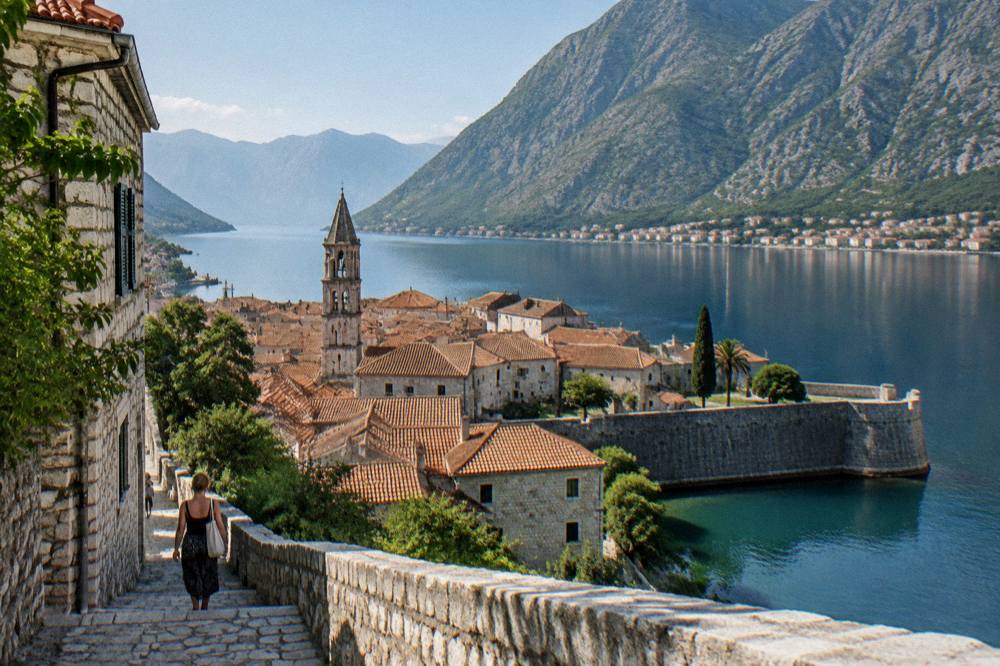
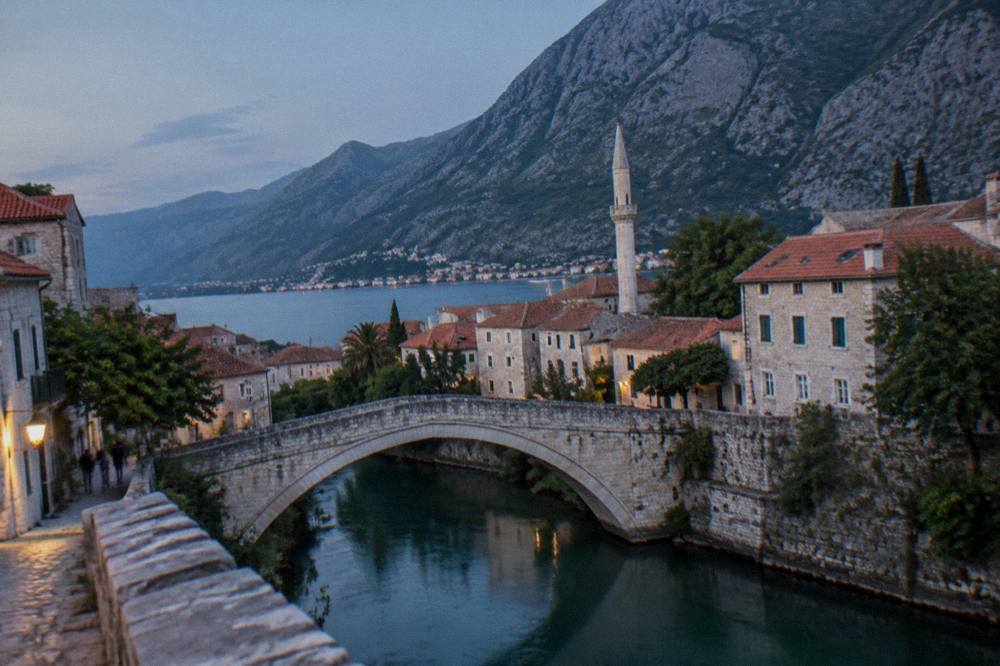
Kotor's draw is the setting rather than any single sight: a compact walled old town of lanes and squares at the head of a deep bay, with fortifications climbing the cliff behind it and the water of the Adriatic in front. From Mostar, which has its own UNESCO-inscribed Old Bridge Area but no sea, the contrast is the whole point: river karst landscape in the morning, fjord-like bay by early afternoon.
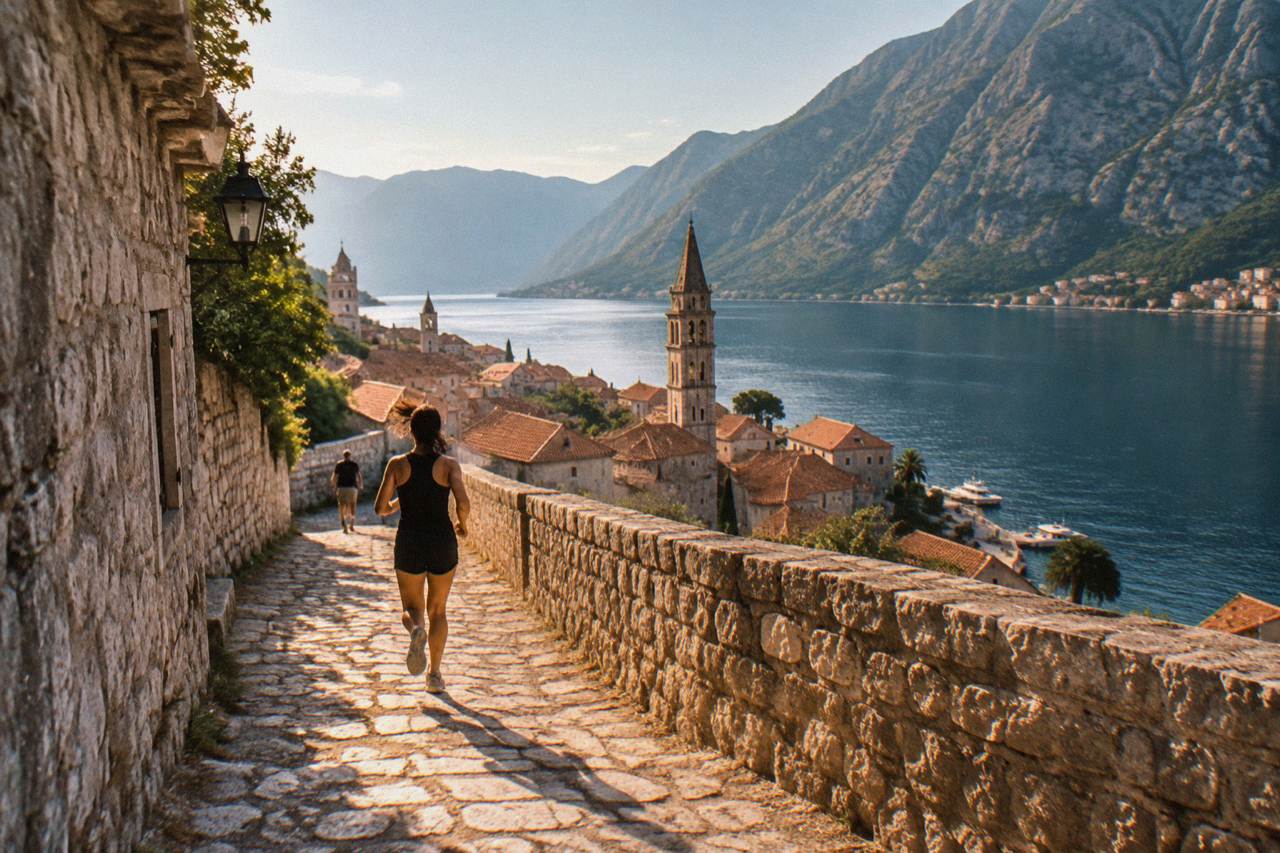
The old town itself is walkable in a slow loop, and the town walls climb steeply uphill with the bay widening below at each turn. Give the climb respect: it is a genuine ascent in summer heat, and Mostar's own summer numbers explain why. The FHMZ Mostar station, 1961 to 1990, puts the July mean at 24.7 C with an absolute maximum of 41.2 C, and modelled ERA5 reanalysis for 1991 to 2020 shows a mean daily high of 29.9 C in July and 30.5 C in August. Bay towns on the same latitude run similar afternoons, so the wall climb belongs to the morning.
Planning to be on the walls by nine and off them by noon is the single best scheduling decision of the day. The related option above, a Mostar and Kravice waterfall day tour from Dubrovnik, is the mirror image of this trip: it starts on the coast and crosses into Herzegovina to see Stari Most and the waterfalls. Anyone stitching a bigger regional plan can read the Balkans itinerary page for how Mostar, Dubrovnik and Kotor chain together, and the Dubrovnik day-trip page for the coastal stop that sits between them.
Should You Stay The Night In Kotor Or Day-Trip Back To Mostar?
One night in Kotor is the recommendation that fits the road realities: the return leg ends with about 142 minutes of driving from Trebinje alone, and after a full day on the bay that final stretch over Herzegovina's hills is the part plans underestimate. Staying also converts the drive from a race into a two-country mini-trip, with Trebinje as an evening stop on the way out or back.
The night-away version also protects the part of Kotor a day-tripper loses: the late-afternoon calm once the excursion crowds have rolled out, and the morning on the walls before the heat. The day-trip version protects budget and schedule, and it is the only version if Mostar is a fixed base, say a two-night stay already paid for. Readers squeezing Mostar itself into a tight frame should start with one day in Mostar before signing up for a cross-border detour.
Money-wise, a night away carries the same reported tourist tax as anywhere in Herzegovina-Neretva Canton, 3 KM per person per night from 1 January 2026, a reported figure worth confirming at booking. Once across the border, different rates apply and the accommodation will state theirs. Neither number is large; both are the kind of line item that shows up on the final bill.
When Is The Best Time Of Year To Drive From Mostar To Kotor?
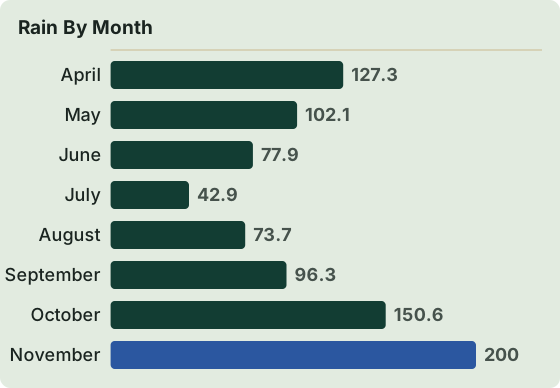
Late spring to early autumn is the workable window, with June and September as the comfortable picks: the FHMZ Mostar station, 1961 to 1990, records July rainfall at just 42.9 mm against November's 200.0 mm, and ERA5 reanalysis for 1991 to 2020 shows mean daily highs of 22.3 C in May and 24.5 C in September against 30.5 C in August. Winter is possible but short-day driving on mountain roads is a different proposition.
| Month | Mean temp C (FHMZ 1961-1990) | Rain mm (FHMZ 1961-1990) | Mean daily high C (ERA5 1991-2020) |
|---|---|---|---|
| April | 13.3 | 127.3 | 17.7 |
| May | 17.9 | 102.1 | 22.3 |
| June | 21.5 | 77.9 | 26.8 |
| July | 24.7 | 42.9 | 29.9 |
| August | 24.2 | 73.7 | 30.5 |
| September | 20.4 | 96.3 | 24.5 |
| October | 15.3 | 150.6 | 19.5 |
| November | 10.1 | 200.0 | 14.1 |
Read the columns together. August is the month with the highest modelled daily high and a rainfall total still low at 73.7 mm, but it is also peak season on the bay and at the crossings, so the border waits stretch. June gives nearly the same warmth with fewer queues. October's 150.6 mm and November's 200.0 mm mark the turn toward Mostar's winter rainfall maximum, when the high passes and the Kravica area, 55.2 km from Mostar and open all year, look altogether greener and quieter. Anyone planning shoulder-season days in the city itself can pick up seasonal notes on the Mostar in the rain page.
What Else Can You Pair With Kotor On The Way From Mostar?
Trebinje is the pairing that costs nothing extra, sitting directly on the route at about 116.5 km and roughly 142 minutes out, with free old-town wandering and monasteries on the river. Beyond it, Dubrovnik makes a natural second stop on routings that swing through Croatia, and the Herzegovina sights you pass on the outbound leg, Blagaj and Počitelj above all, can be saved for a separate, shorter day.
The geography actually argues for two trips rather than one overstuffed one. Kotor and Dubrovnik belong together, both coastal, both walled, both out beyond Trebinje. Blagaj, Počitelj, Kravica waterfall and Međugorje belong to the compact Herzegovina cluster within 55 km of Stari Most, best done on a dedicated loop such as Kravice, Blagaj and Počitelj in one day. Trying to fold both clusters into a single Kotor day is how itineraries break.
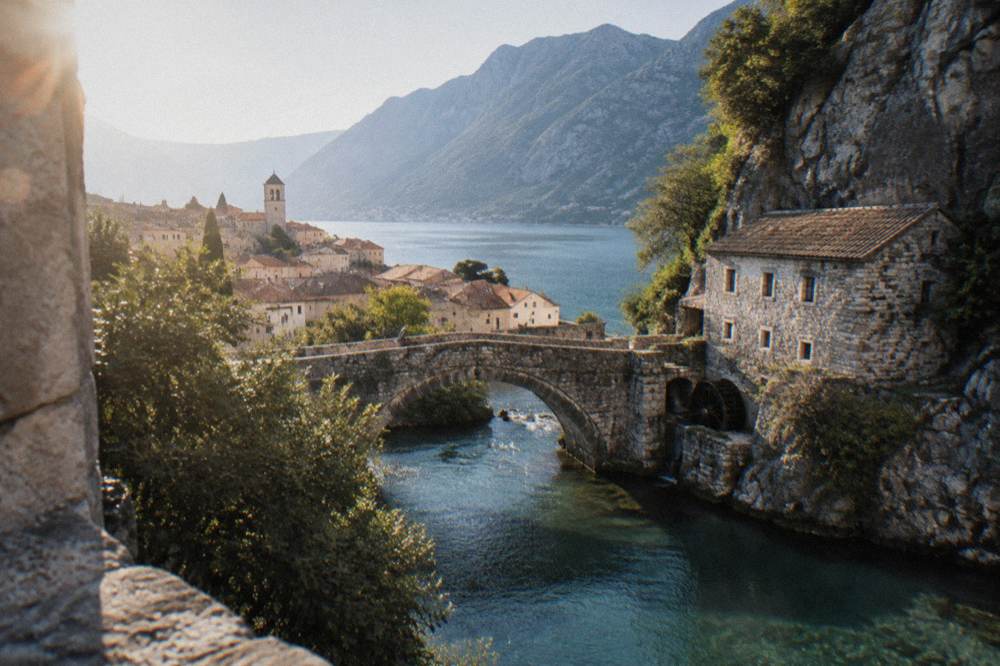
For the Kotor-adjacent day itself, the split looks like this:
| Cluster | Example Stops | Distance From Stari Most | Character |
|---|---|---|---|
| Herzegovina loop | Blagaj Tekke, Počitelj, Kravica waterfall | 13.7 to 55.2 km | River, cliff and waterfall country, single-country driving |
| Eastern run | Trebinje, then the Montenegro border | 116.5 km to Trebinje | Wine hills, old town, cross-border mountains |
| Coastal swing | Dubrovnik via Trebinje or via Čapljina | 145.5 km to the Stradun | Two borders, city walls and the sea |
One caution that applies across rural Herzegovina on every one of these drives: stay on marked paths and roads, because suspected mine areas remain in the countryside and the national authority BHMAC maintains the mapped data behind the warnings. It is a rural-edge precaution, not a city one, and it costs nothing to respect. For nights spent back in Mostar instead, is it safe to walk around Mostar at night covers the city end of the question.
The pattern in those cards is deliberate: a coast-to-Mostar crossing, a Herzegovina loop from a Mostar base, and a city walk to hold the fort on the day you recover from the drive. A Kotor plan slots around that trio rather than replacing it.
What Should A Realistic Kotor Day From Mostar Look Like?
A realistic plan leaves Mostar around 06:30, reaches Trebinje after about 142 minutes of driving for a coffee and a walk, clears the border country by late morning, and gives Kotor the middle of the day before retracing the route with an evening stop in Trebinje and a Mostar arrival close to midnight. Cut anything from that skeleton and the day starts failing at its edges, which is the honest argument for the overnight version.
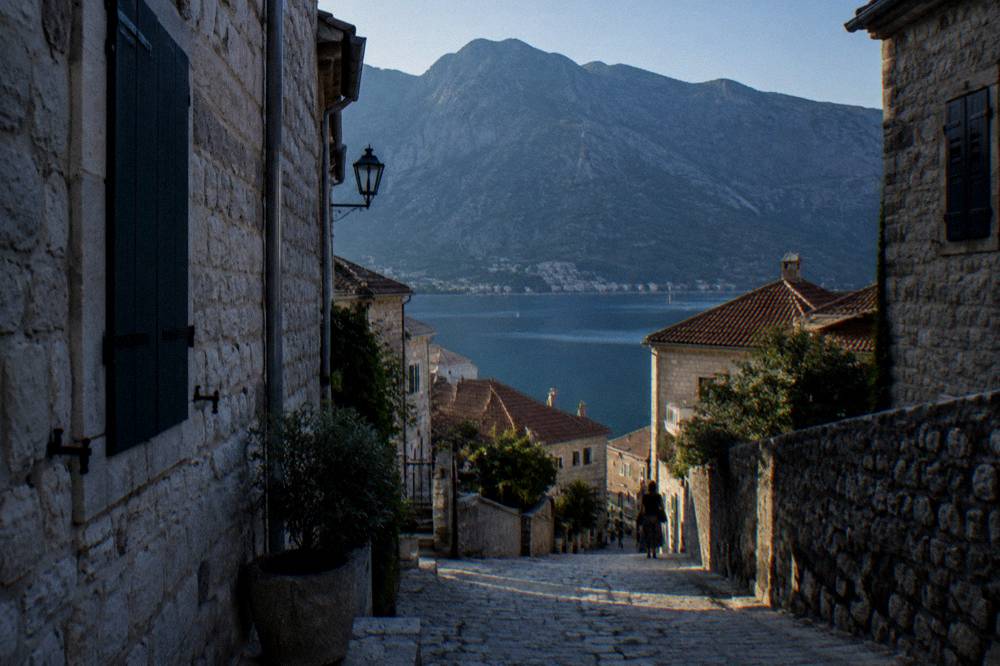
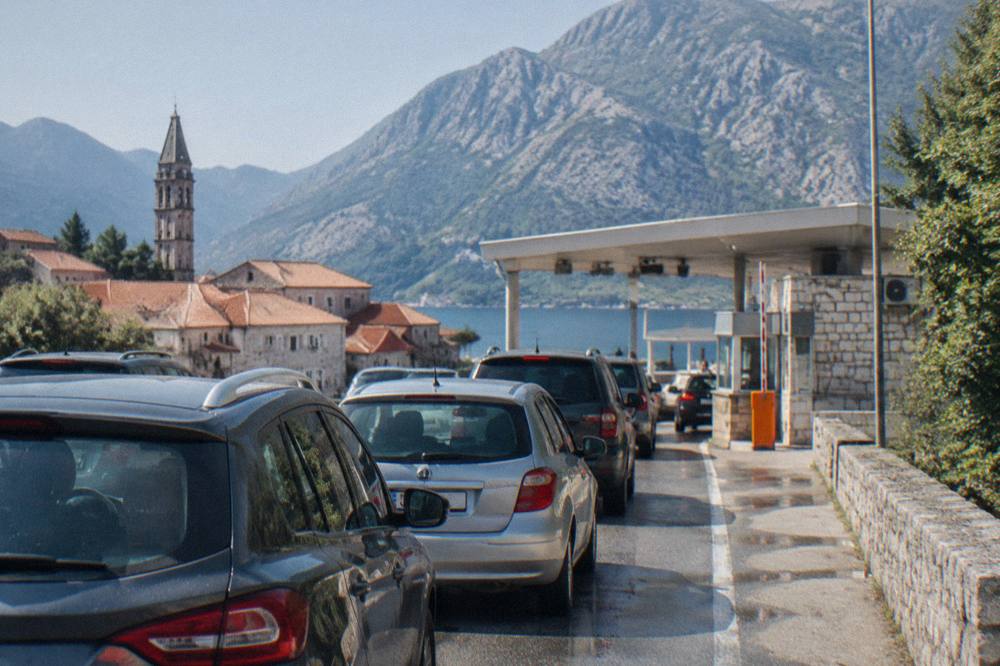
The timing has a physical logic too. Summer light serves you at both ends: day length in this latitude runs to about 15.3 hours in June against about 9.0 hours in December, so a June day trip has daylight to spare and a November one does not. Plan the border crossings for mid-morning rather than mid-afternoon, when excursion traffic from the coast thickens, and treat the reported waits of up to about 30 minutes at BiH's crossings as a floor, not a ceiling, in peak weeks.
What you sacrifice on the Kotor day is Mostar itself, and that trade deserves a sentence of caution: Stari Most, the Kujundžiluk bazaar, Koski Mehmed-pašina džamija and the viewpoints over the Neretva fill a full day without any driving at all, as the Mostar walking tour guide lays out. A Kotor run only earns its place if Mostar has already had its day, or will get one after.
Common Questions About Kotor From Mostar
How far is Kotor from Mostar?
Beyond Trebinje the run continues into border country, so check a live mapping service for the full total on the day, and add border time on top.
Can you do Kotor as a day trip from Mostar?
Yes, as a very long day with an early start and a late return, ideally in the June or September window rather than peak August. Most plans run better with one night in Kotor, because the final leg home ends with about two hours of driving from Trebinje after a full day out.
Do you cross borders between Mostar and Kotor?
Yes. Bosnia and Herzegovina is not in the EU or Schengen, Montenegro is outside both, and routings through Croatia add its border, which has carried full checks since 1 January 2023. Carry a passport and check that your rental car is permitted to cross, in writing, before you drive.
What currency do you need for a Kotor trip from Mostar?
The convertible mark, KM, in Bosnia and Herzegovina, pegged at 1 EUR to 1.95583 KM, and euro once you are in Montenegro. Euro cash is often accepted in Mostar's tourist areas at a rounded rate, so confirm the rate before paying.
Is Trebinje worth stopping at on the way to Kotor?
Yes: it sits directly on the route at about 116.5 km from Stari Most, its old town and riverside are free to explore, and it doubles as the practical fuel, cash and dinner stop on the return leg.
When is the best month for the drive?
June and September balance warmth against crowds: FHMZ 1961-1990 data for Mostar shows July rainfall of just 42.9 mm but ERA5 1991-2020 modelled highs of 29.9 C in July and 30.5 C in August, while May sits at a mean of 17.9 C. Avoid the November peak of 200.0 mm unless you like mountain rain.
The closing trade-off is simple. Kotor from Mostar is a border-hopping, mountain-road commitment that rewards a night away and punishes a rushed turn-around. Trebinje makes the long drive feel like two trips in one, and Herzegovina's near cluster, Blagaj and Počitelj and Kravica waterfall, waits for a shorter day whenever you are back on Mostar Travel Guide territory.