Mostar To Kotor: Bus And Driving Routes
Mostar, an inland city on the Neretva river in Herzegovina, sits well over a hundred road kilometres from Kotor's bay in Montenegro, and every route between them crosses at least two international borders. Here is how the journey works by car and by bus, where to stop, and what documents and money each country expects.
There is no train and no direct coastal road from Mostar to Kotor. The usual plan is to drive or ride east through Trebinje to the Montenegro border, or to loop south via Dubrovnik in Croatia. Both routes cross two borders, both need a passport, and the free-flow road figures exclude border queues.
Mostar is an inland city on the Neretva river in Herzegovina, Bosnia and Herzegovina, with no sea coast of its own, while Kotor sits at the head of its fjord-like bay in Montenegro, a long mountain road away if you loop through Croatia, or roughly half that if you cut east through Trebinje. Neither country offers a train between them, so the journey is by road, and every practical version of it crosses at least two international borders: Bosnia and Herzegovina out, then either Croatia or Montenegro in. This page lays out the driving routes, the bus reality, the stopovers that justify breaking the trip, and the documents and money each of the three countries expects. The road figures quoted throughout are free-flow estimates that exclude border queues, which in summer can add a great deal of time.
How Do You Get From Mostar To Kotor?
The journey from Mostar to Kotor is made by road, either east through Trebinje and into Montenegro, or south through Croatia's Neum corridor or around it via the Pelješac Bridge and on to the Bay of Kotor. There is no train on any part of this route: the rail network that reaches Mostar runs north towards Sarajevo and Čapljina, two trains a day each way per the ZFBH timetable. Driving figures here are free-flow road estimates, and border queues are not included.
The eastern route is the shorter concept: leave Mostar on the road to Trebinje, which the computed road network puts at 116.5 km and about 142 minutes from Stari Most without stops, then continue from Trebinje south into Montenegro towards the bay. The western route hugs Croatia instead: Mostar to Dubrovnik's Stradun is 145.5 km and about 150 minutes free-flow, and Dubrovnik airport is 163.4 km and about 172 minutes, from which Kotor is a further drive along the Croatian coast and into Montenegro near Debeli Brijeg. A third spine through BiH territory exists via Neum, Bosnia's short coastline, at 75.3 km and about 82 minutes from Mostar, but Neum still leaves you crossing back into Croatia before Montenegro.
Which spine you pick changes the trip's character. The Trebinje road is inland karst, thin traffic and long climbs. The Dubrovnik road is the busy tourist artery, and in July and August its border posts, notably the crossings near Metković and Nova Sela, carry the queues. Reported waits run up to about 30 minutes normally and stretch longer at summer peaks, so build the margin in.
| Route stage from Mostar | Road km | Free-flow minutes |
|---|---|---|
| Neum (BiH coast) | 75.3 | 82 |
| Trebinje | 116.5 | 142 |
| Dubrovnik (Stradun) | 145.5 | 150 |
| Dubrovnik airport | 163.4 | 172 |
| Split (Croatia) | 174.1 | 131 |
The table shows only stages the road network computes from Stari Most. The legs inside Montenegro, Trebinje to Kotor and Dubrovnik to Kotor, are not part of the computed set, so treat any single-figure quote for the whole Mostar to Kotor run with care and check a live map before committing to a schedule.
Before leaving Herzegovina it is worth spending the first hours of any route on the region itself. Blagaj Tekke sits 13.7 km and about 19 minutes from Stari Most, Počitelj is 30.0 km and about 31 minutes, and Kravica waterfall, 55.2 km and about 54 minutes away, charges 20 KM for an adult all year and is open all year with hours that shift by month. The Discover Herzegovina day tour is one tidy way to cover all three stops with a guide rather than a hire car, and the trio below includes it alongside options from Dubrovnik for anyone running the route in reverse.
Can You Drive From Mostar To Kotor, And Which Border Crossings Apply?
Yes, driving is the standard way to make this trip, and the route you choose decides which borders you hit: the eastern route leaves Bosnia and Herzegovina for Montenegro after Trebinje, one crossing, while the western route crosses into Croatia near Metković or Nova Sela and then from Croatia into Montenegro, two crossings plus a possible transit of the Neum corridor. Croatia has run full Schengen checks at these borders since 1 January 2023, and Montenegro is outside both the EU and Schengen as well.
Every crossing means a passport check for the car and everyone in it. Bosnia and Herzegovina is not in the EU and not in Schengen, Montenegro is not in the EU either, and Croatia, though an EU member since before 2023, only folded its land borders into Schengen on 1 January 2023, which is when the old quick crossings over the Neretva at Doljani-Metković and at Bijača-Nova Sela became full external-frontier posts. Reported waits at these posts run up to about 30 minutes in normal conditions and longer at summer peaks.
If you are in a hire car, one detail decides everything: permission. Rental agreements from Bosnia and Herzegovina or Croatia do not automatically allow the car into Montenegro, and taking it there without written consent can void the insurance. Arrange cross-border authorisation and the vehicle papers before you leave the pickup desk, and carry the green card if the firm issues one. The car rental guide covers the Bosnia side of this, and the border crossing guide covers the Croatia to Bosnia mechanics that the western route uses twice.
Roadworks are a live factor on the Mostar end. The Corridor Vc motorway section around Mostar was rerouted in September 2026 towards a new Livač tunnel, and the southern bypass works around the city are ongoing, with blasting notices issued by the city. Local delays around Mostar are therefore plausible even before you reach any border, and none of the free-flow minutes in this article account for them.
Is There A Direct Bus From Mostar To Kotor?
Direct buses between Mostar and Kotor do not appear in the timetable picture: the long-distance services from Mostar run to Sarajevo, about 2 h 20 to 2 h 40, and several daily to Dubrovnik and to Split, from where Montenegro is a further connection. That makes the usual bus plan a two-leg trip, Mostar to Dubrovnik first, then Dubrovnik towards Kotor, booked as separate tickets with a generous layover between them for the border.
The Dubrovnik leg is the well-trodden one. Several buses a day leave Mostar for Dubrovnik, and the same is true of Dubrovnik towards the Montenegro coast in season, when the Kotor road fills with coaches. The risk is the seam: if the Dubrovnik connection is missed because the Bosnia to Croatia border queue ran long, a separate ticket usually means a new one. Booking a layover of several hours, or breaking the journey in Dubrovnik overnight, turns the risk into an itinerary.
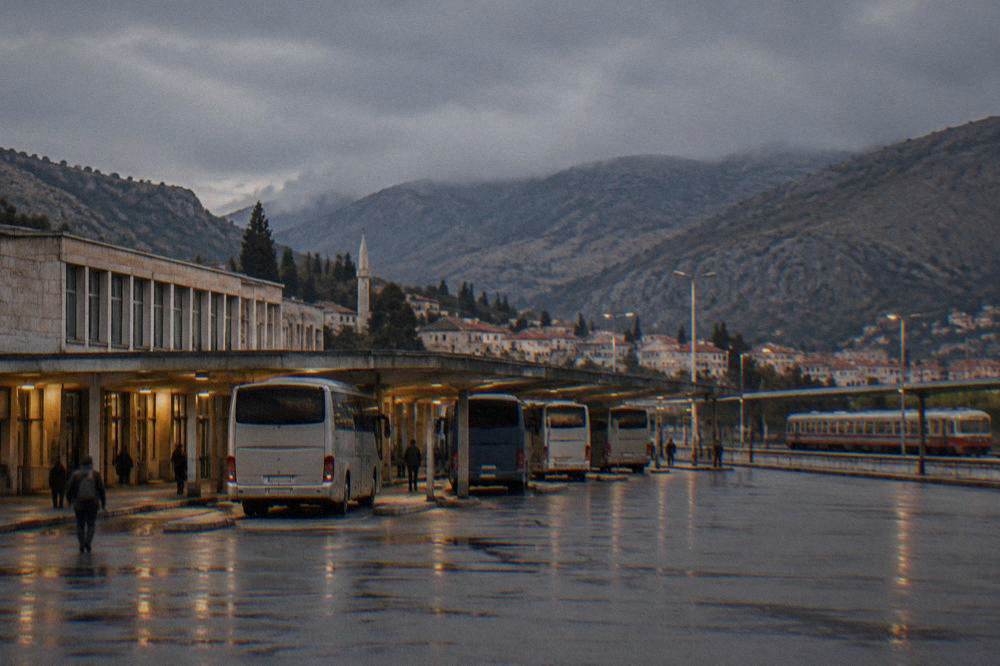
Buy tickets at the Mostar bus station or from the operators directly, and check current departures close to travel, because timetables across the Balkans shift between summer and winter schedules. The getting to Mostar guide has the fuller picture of arrivals into the city, including the airport option: Mostar International Airport sits 8.2 km and about 12 minutes by road from Stari Most, with reported routes to Zagreb and Stuttgart, though arrivals on this corridor also come via Sarajevo or Dubrovnik airports.
One planning note on trains: they help at neither end of this route. The two daily Sarajevo to Čapljina trains via Mostar, restored on 15 October 2026 after the September suspension, run northwest, not towards Montenegro or the Croatian coast, so the railway is only relevant if you are arriving in Mostar from Sarajevo in the first place.
Should You Stop In Trebinje On The Way To Kotor?
Trebinje is the natural overnight or lunch stop on the eastern route, 116.5 km and about 142 minutes by road from Stari Most, close enough to Mostar for a relaxed morning start and close enough to Kotor that the second day is short. Its old town, river bridges and hilltop monastery church are free or donation-based to visit, and the city's position 30 to 60 minutes from the Montenegro line makes it the last easy staging post inside Bosnia and Herzegovina.
Trebinje rewards the slow version of this trip. The old town walls and the Arslanagića bridge over the Trebišnjica can be walked in a morning, and the Hercegovačka Gračanica church on the hill above the town is one of the recognizable silhouettes of eastern Herzegovina. From Trebinje the road drops towards the Montenegro border and the bay beyond it.
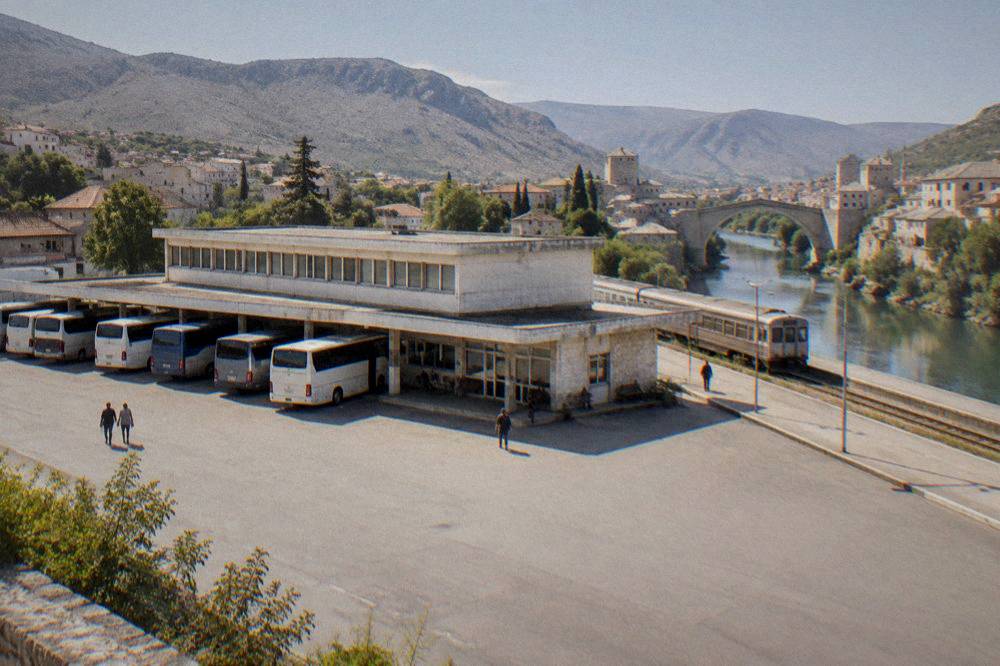
The western route has its own stopover logic. Neum, at 75.3 km and about 82 minutes, is Bosnia's only coastal town, with cheaper lodging than Croatia across the line, though staying there means two extra border crossings on any Dubrovnik or Kotor day trip unless you use the Pelješac Bridge to skip the corridor entirely. Dubrovnik, 145.5 km out, is the full stopover, old town walls and all, and the Dubrovnik to Mostar guide covers that city's side of the corridor in detail.
| Stopover from Mostar | Road km | Free-flow minutes | Border before it | What it offers |
|---|---|---|---|---|
| Neum | 75.3 | 82 | Croatia, or none via Neum corridor | BiH's short coast, seafront stay |
| Trebinje | 116.5 | 142 | None | Old town, bridges, monastery hill |
| Dubrovnik (Stradun) | 145.5 | 150 | Croatia at Doljani or Bijača | Walled old city, ferry links |
| Dubrovnik airport | 163.4 | 172 | Croatia at Doljani or Bijača | Croatia Airlines and Eurowings routes |
For anyone running the trip in the other direction, arriving in Dubrovnik and heading to Mostar, a semi-private Mostar and Kravica waterfall excursion is one of the established ways to make the crossing without a hire car, and the same listing covers the waterfall stop that the eastern route skips. The card below shows it.
What Documents, Currency And Rules Do The Three Countries Apply?
You need a valid passport for every border on this route, because Bosnia and Herzegovina, Croatia and Montenegro are three separate entry regimes: Croatia is EU and Schengen with full external checks, while Bosnia and Herzegovina and Montenegro are in neither, and visa-exempt visitors to Bosnia and Herzegovina may stay up to 90 days over a six-month period from first entry. Money changes twice too: the convertible mark, pegged at 1 EUR = 1.95583 KM, then the euro in both Croatia and Montenegro.
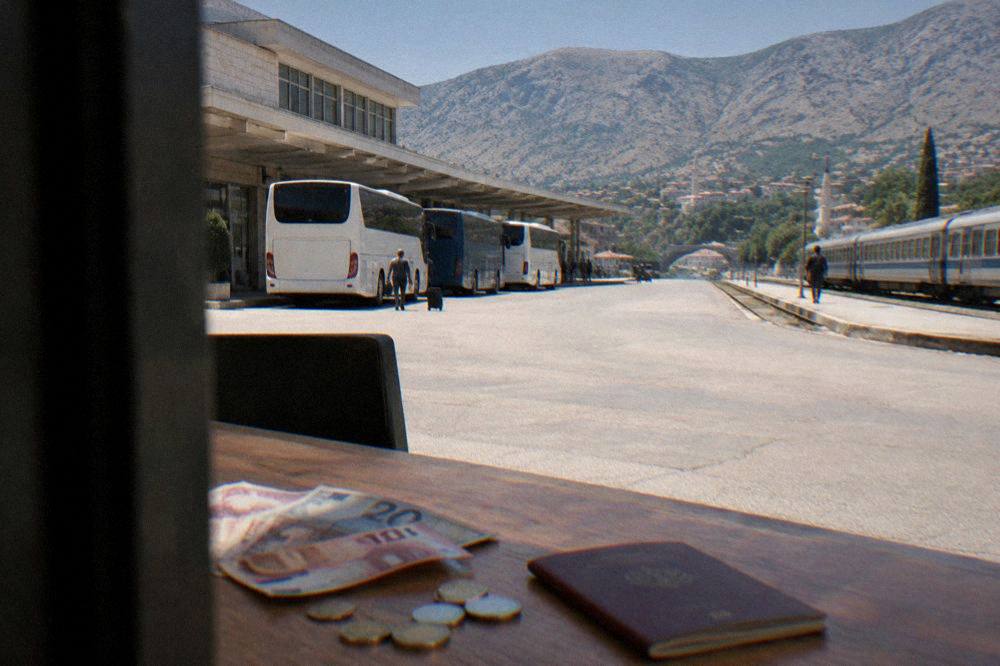
Carry the passport, not a national ID card if you are a non-EU visitor, and keep it accessible rather than buried in a boot bag, because the eastern route can mean two or three passport inspections in a single day. Identity checks aside, the three-country money split is the practical detail people forget: Bosnia and Herzegovina uses the KM, Croatia and Montenegro both use the euro, and the KM is pegged to the euro at exactly 1.95583, so mental arithmetic is easy. Euro cash is often accepted in Mostar's tourist areas at a rounded 1 to 2 rate, but confirm the rate before agreeing, and expect cards to work at hotels and larger venues while small vendors want cash.
| Country | Currency | EU / Schengen status | Passport check on this route |
|---|---|---|---|
| Bosnia and Herzegovina | Convertible mark (KM), 1 EUR = 1.95583 KM | Neither | On exit at every crossing |
| Croatia | Euro | EU and Schengen since 1 Jan 2023 | Full external-border checks at Doljani-Metković and Bijača-Nova Sela |
| Montenegro | Euro | Neither | Entry check from BiH or Croatia |
A few local rules round out the practicalities. A tourist tax reported at 3 KM per person per night applies in the Herzegovina-Neretva Canton from 1 January 2026, usually collected through accommodation, so confirm it at booking. Emergency numbers in Bosnia and Herzegovina are 112 general, 122 police, 123 fire and 124 ambulance. Plugs are type C and F at 230 V. And in rural Herzegovina, including around the eastern road, stay on marked paths because of suspected mine areas, the standing advice of the national mine-action centre. The safety guide and the wider travel tips page expand on all of this.
How Many Days Should The Mostar To Kotor Trip Take?
Two days is the comfortable minimum and three is better: day one for Mostar and the Herzegovina stops, an overnight in Trebinje or Dubrovnik, and day two for the border run and the Bay of Kotor. The computed road figures make the point, Trebinje is 142 free-flow minutes out and Dubrovnik 150, so a same-day through-run is possible but spends the whole day driving with border risk stacked on top.
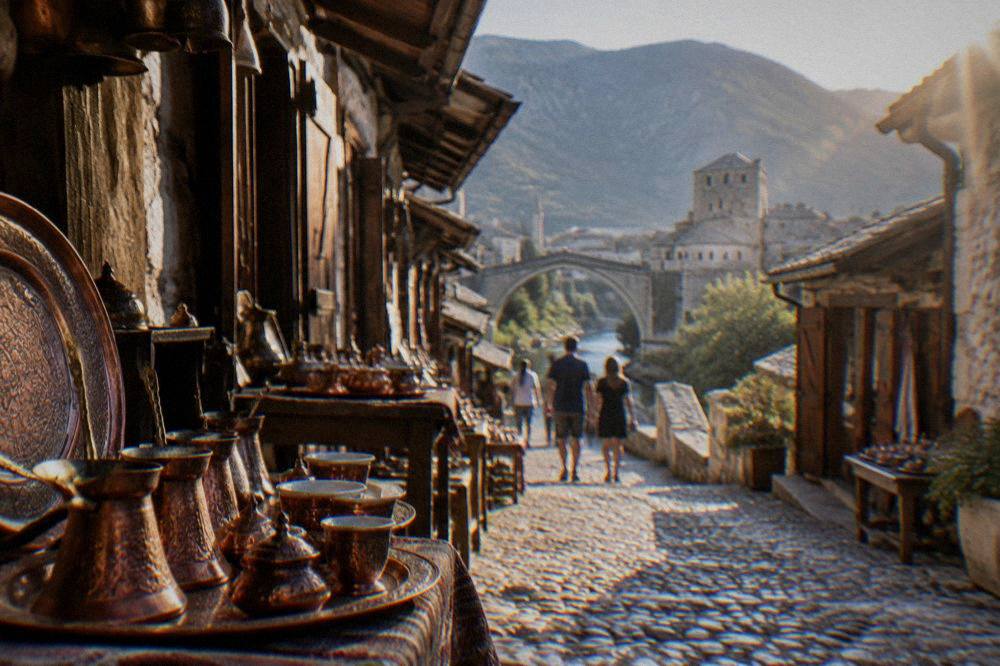
The two-day shape looks like this. Spend the first morning on Stari Most and the Kujundžiluk bazaar, both free and open around the clock, add the viewpoints or a walk, then drive east after lunch and reach Trebinje for the evening. The second morning belongs to Trebinje's old town, then the Montenegro border and the descent to the bay, arriving with daylight to spare. The three-day shape inserts either a Dubrovnik night on the western route or a full Kotor-side day for the town walls, Perast and the bay road.
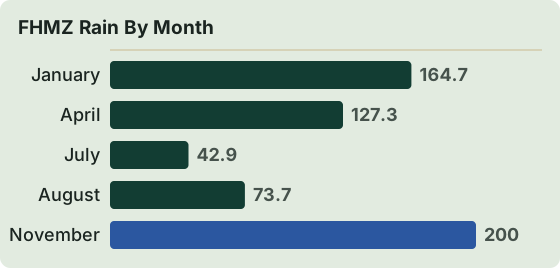
Timing the season matters as much as the day count. Mostar's climate is a story of extremes: the FHMZ 1961-1990 station series gives a July mean of 24.7 C against a January mean of 4.8 C, with an absolute maximum of 41.2 C, and the ERA5 reanalysis for 1991-2020 puts modelled mean daily highs at 30.5 C in August. Rain is a winter phenomenon here: November averages 200.0 mm against July's 42.9 mm on the FHMZ series. The weather guide and the best time to visit guide carry the detail, and the Balkans itinerary places this corridor inside a longer loop.
| Month | FHMZ mean temp C | FHMZ rain mm | ERA5 mean daily high C |
|---|---|---|---|
| January | 4.8 | 164.7 | 8.4 |
| April | 13.3 | 127.3 | 17.7 |
| July | 24.7 | 42.9 | 29.9 |
| August | 24.2 | 73.7 | 30.5 |
| November | 10.1 | 200.0 | 14.1 |
Border queues are the one variable no schedule absorbs. The reported baseline of up to about 30 minutes per crossing, longer at summer peaks, can double a day's driving time on the western route, so anyone locked to a ferry or a flight out of Dubrovnik should pad the return generously. Local buses and tours fill the gap for travellers without a car, and a private walking option below suits the Mostar morning of day one.
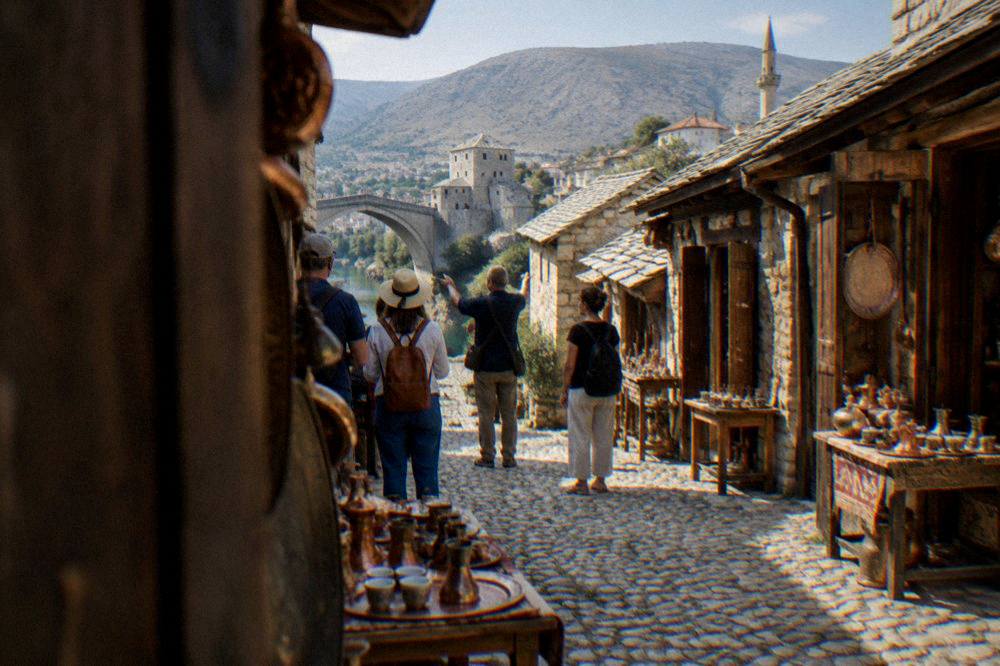
The Herzegovina stops themselves, Blagaj, Počitelj and Kravica waterfall, all sit west and south of Mostar, which is why pairing them with a Kotor departure works best as a first-day loop rather than an on-the-way detour: the eastern road to Trebinje does not pass them. A guided day tour covers the trio in one move and returns to Mostar for the evening drive, and the full-day option below is the established one.
For everything that precedes the drive, the things to do in Mostar roundup is the root page of this site, and the where to stay guide settles the night before departure. More route reading from the Mostar Travel Guide desk: Split to Mostar, Sarajevo to Mostar, getting around Mostar, the Mostar airport guide, and the Kotor day trip page.
Common Questions About Travel From Mostar To Kotor
How do you get from Mostar to Kotor?
By road, either east through Trebinje into Montenegro or west through Croatia via Dubrovnik or the Neum corridor. There is no train on the route, and buses usually mean a two-leg trip via Dubrovnik. Road figures in this guide are free-flow estimates that exclude border queues.
Is there a direct bus from Mostar to Kotor?
Check current departures close to travel, because timetables change between seasons.
Do you need a passport to travel from Mostar to Kotor?
Yes. Bosnia and Herzegovina, Croatia and Montenegro are three separate entry regimes, and Croatia has applied full Schengen external checks at its land borders since 1 January 2023. Keep the passport reachable for up to three checks in a day.
Which currency do you need between Mostar and Kotor?
Convertible marks in Bosnia and Herzegovina, euros in Croatia and Montenegro. The mark is pegged at 1 EUR = 1.95583 KM. Euro cash is often accepted in Mostar's tourist areas at a rounded rate, but confirm before paying.
Where should you stop between Mostar and Kotor?
Trebinje, 116.5 km and about 142 free-flow minutes from Stari Most, is the natural eastern stopover. On the western route, Neum at 75.3 km is the quick seafront break and Dubrovnik at 145.5 km is the full overnight.