Rakija In Herzegovina: Loza, Šljivovica And How It Is Served
Rakija is the fruit brandy poured across Herzegovina, and in Mostar it arrives in small glasses at almost every table. Here is what loza and šljivovica are, how they are served, and what to expect.
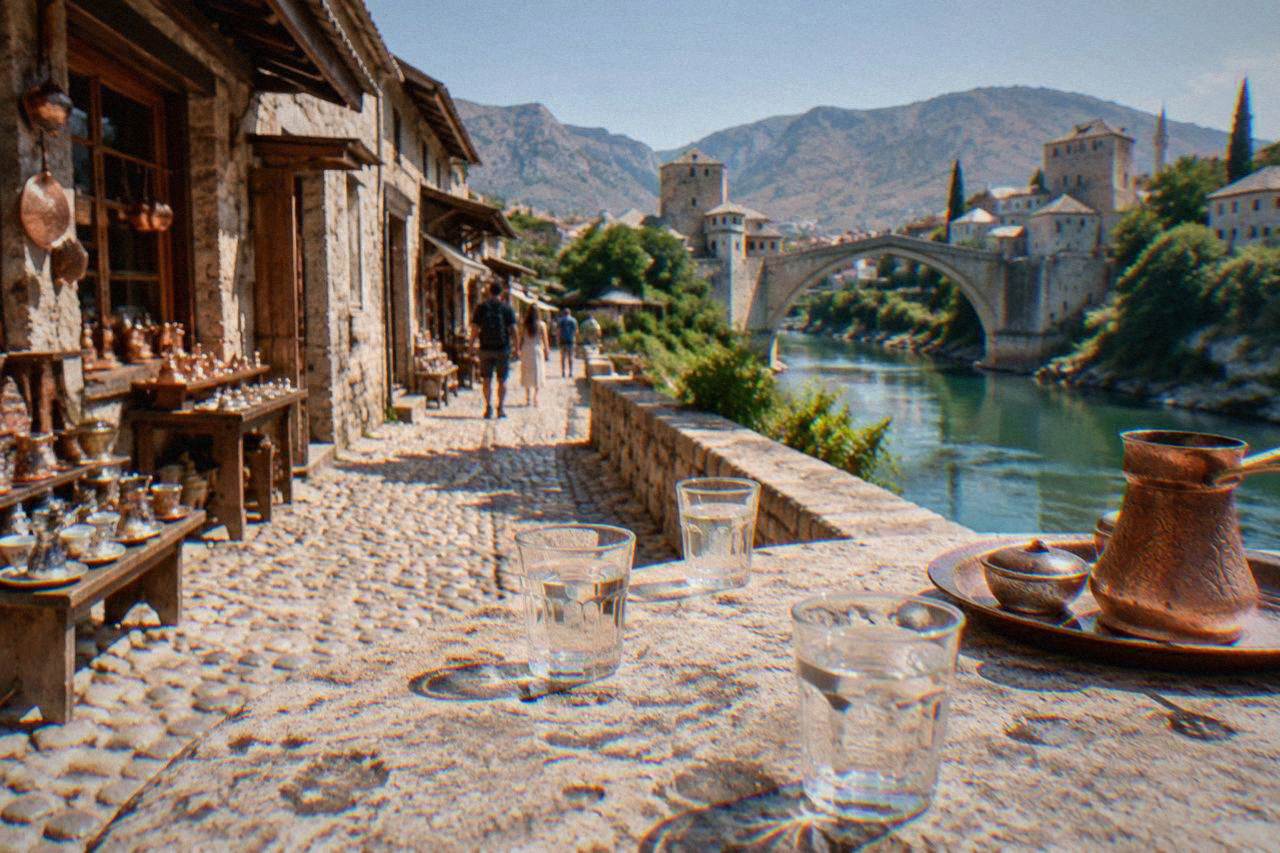
Rakija is a fruit brandy, and in Mostar the two styles you will meet are loza, distilled from the grapes of Herzegovina's vineyards, and šljivovica, distilled from plums. It is served in small glasses, often before a meal, and it is meant for slow sipping and toasting rather than quick drinking.
Rakija is the fruit brandy of the Balkans, and in Mostar, the inland city on the Neretva river in Herzegovina, it is less a drink than a custom. It appears in small glasses before meals, at celebrations, at funerals, at name days, and often for no reason beyond a guest sitting down. Herzegovina's dry limestone hills and long growing season give the region two signature styles: loza, distilled from grapes, and šljivovica, distilled from plums. Understanding what is in the glass, how it is offered, and how to answer the offer is one of the small keys to eating and drinking well in this city.
What Is Rakija, And Where Does It Fit In Mostar?
Rakija is a clear fruit brandy made by distilling fermented fruit, and in Mostar, the Herzegovina city on the Neretva, it is the default spirit of hospitality: offered to guests, poured in small glasses, and treated as a marker of welcome rather than a drink for quick consumption. Grape-based loza is the local speciality because Herzegovina grows grapes; plum-based šljivovica is the style more common across the wider region.
The word covers a whole family of drinks rather than one product. Whatever fruit ferments in the vat gives the rakija its name: loza from grapes, šljivovica from plums, kruškovaca from pears, jabukovača from apples, dunjevača from quince. In Herzegovina the grape is the natural centre of gravity. The landscape south and west of Mostar, around Čitluk, Ljubuški and the Međugorje basin, is a limestone plateau of small vineyards and family plots, and grape rakija is what those vineyards have always produced alongside wine.
What makes rakija distinct from the industrial spirits a visitor may know is that a great deal of it is still made at home or on small family stills. A household with vines will typically keep a stock for the year, bottle it without labels, and pour it for guests. Restaurant rakija, commercially produced and labelled, is a different register of the same tradition, and both are part of the culture of the table described in the Bosnian food guide.
The drink sits at the centre of the ritual of welcome. A host pours, the glass is small, and the toast comes before the first sip. Refusing outright is not customary; sipping slowly and warmly is.
Loza Versus Šljivovica: The Two Rakija Styles You Meet In Mostar
Loza is grape rakija and šljivovica is plum rakija, and that single difference in fruit defines the two styles you will be offered in Mostar. Loza is the Herzegovina speciality, made from the same vineyards that supply the region's wine, and it is often slightly rougher and more aromatic. Šljivovica, the plum style, carries the deeper amber colour and sweeter nose associated with the style across the Balkans.
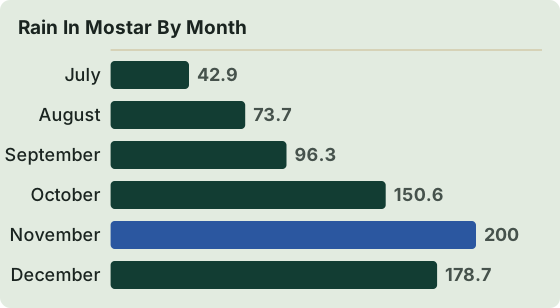
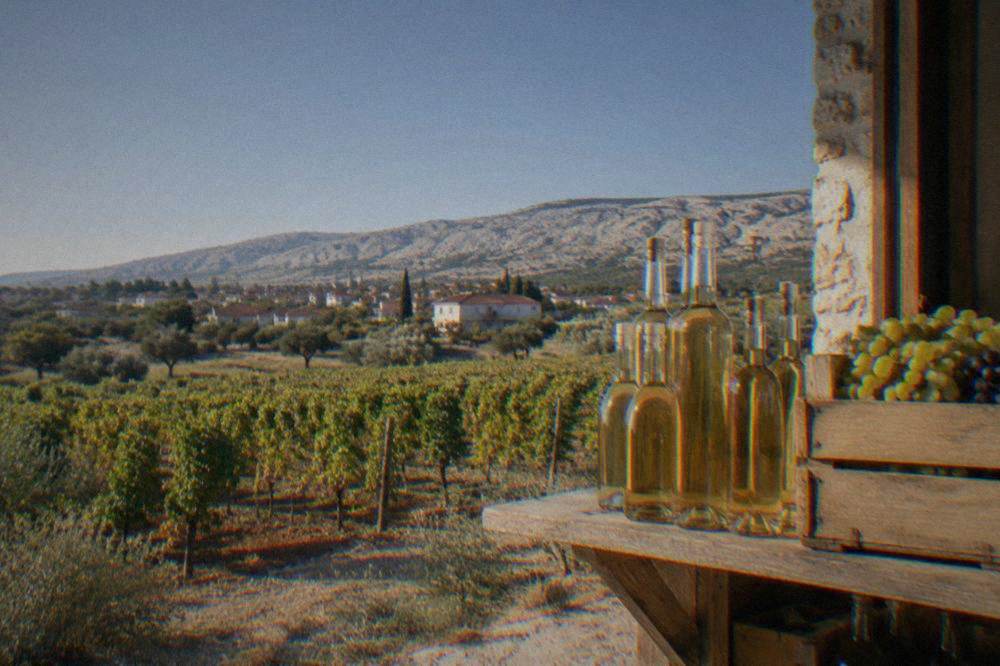
Loza deserves a particular note in this region. The strip of limestone country between Mostar, Čitluk and Ljubuški sits in one of the warmer corners of Bosnia and Herzegovina, and viticulture there is old and continuous. The FHMZ station table for Mostar, 1961 to 1990, records a July mean temperature of 24.7 C and a November rainfall of 200.0 mm against July's 42.9 mm, a pattern of hot, dry summers and wet winters that grape growers work with directly. Loza is in one sense the vineyard's second product: the grape harvest feeds the wine, and the pomace or surplus fruit feeds the still.
Šljivovica belongs more to the plum-growing belts further north and east, but it pours in Mostar too, and many families keep a bottle. Around the glass, the practical differences are simple: loza is usually clear and dry on the nose, while šljivovica, especially if aged in wood, can carry a gold colour and a rounder finish. A third style worth knowing by name is travarica, rakija infused with herbs, which some households make by steeping mountain herbs in a loza base.
| Style | Base fruit | Character | Where you meet it |
|---|---|---|---|
| Loza | Grapes | Clear, dry, aromatic, the Herzegovina style | Mostar and the vineyard belt south and west |
| Šljivovica | Plums | Clear to golden, softer and sweeter nose | Widespread across the Balkans, common in Mostar |
| Travarica | Grapes plus herbs | Herbal, often amber from steeping | Home production, some restaurants |
| Kruškovaca | Pears | Fragrant, gentle | Household bottles, occasional lists |
| Dunjevača | Quince | Aromatic, slightly sweet | Household bottles, seasonal |
A cooking class is the most direct route into this world for a visitor: the Bosnian cooking class with burek, lunch and drinks puts rakiya alongside the food it accompanies, with a local cook explaining the customs. Check availability.
How Is Rakija Served In Mostar?
Rakija in Mostar is served in small glasses, typically 30 millilitres or less, poured by the host rather than self-served, and almost always accompanied by a toast before the first sip: živjeli, meaning to life. It is served at room temperature, never chilled, and it is offered before a meal, alongside coffee, or at celebrations rather than as a casual sipping drink through the evening.
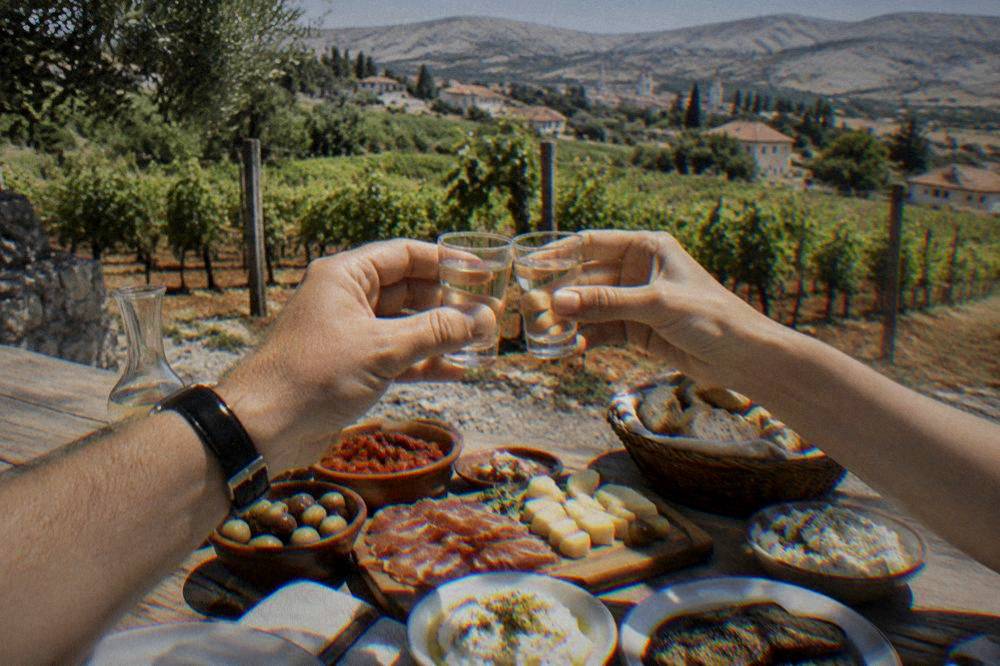
The glass matters more than it looks. Rakija glasses are tiny, sometimes stemmed, sometimes simple short tumblers, and the small volume is deliberate: the drink is strong, the pace is slow, and refills come from the host's bottle. Piling your own glass or drinking quickly sits against the custom. The pour before a meal is the classic moment, what local tradition calls an aperitif opening the appetite, and it often arrives with meze, small salty bites such as cheese or cured meat, without which the rakija is not really complete.
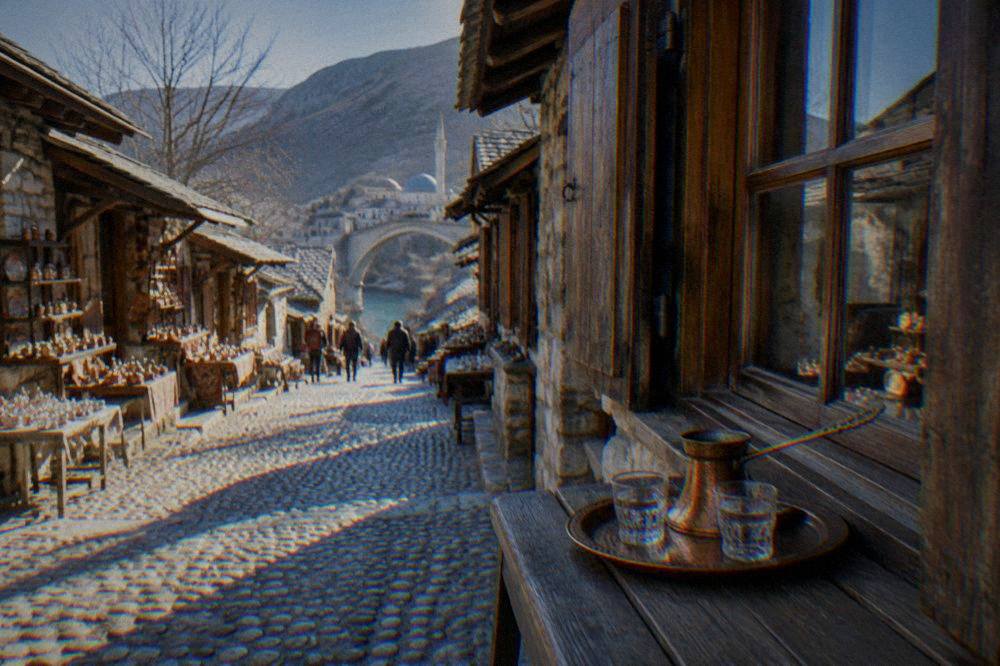
Coffee and rakija have a closer relationship in Mostar than a visitor might expect. Bosnian coffee, the unfiltered copper-pot coffee described in the Bosnian coffee guide, is the all-day drink, and a small rakija often appears beside it when guests visit or when a conversation stretches long. This pairing, one stimulating and one warming, is one of the most recognisable rituals of Herzegovina hospitality.
| Moment | What arrives | Custom |
|---|---|---|
| Arrival of guests | Rakija poured immediately | Toast, sip slowly, refuse nothing outright |
| Before a meal | Small rakija, sometimes with meze | Appetite opener, one glass is normal |
| With Bosnian coffee | Small rakija beside the coffee cup | Long conversation, refill offered |
| Celebrations | Bottles circulating, toasts repeated | Toast before every sip |
| Toasts | Everyone drinks together | Eye contact, živjeli |
When Is Rakija Drunk In Mostar: Coffee, Meals, And Celebrations
Rakija is drunk at the opening of a meal, alongside coffee, and at every kind of celebration or gathering in Mostar, from weddings and holidays to family visits and remembrance days. It is not typically a drink ordered alone at a bar counter; it appears when people sit together, and its role is social. The morning coffee with a small rakija remains a recognised Herzegovina habit, particularly among older men.
Weddings are the extreme case: rakija flows from before the ceremony to the end of the night, and toasts mark each stage. Religious holidays, both Muslim and Christian, bring their own rhythms, since Mostar is a mixed city where both traditions pour. Slava, the family feast day kept by Orthodox families, and the iftar evenings of Ramadan each have their own serving customs, and a guest invited into either will meet rakija or its respectful alternative.
Remembrance deserves a quiet note. Rakija is poured at funerals and memorial gatherings too, and visitors attending such an event should follow the host's lead entirely. The drink marks respect and shared memory in those settings, not festivity.
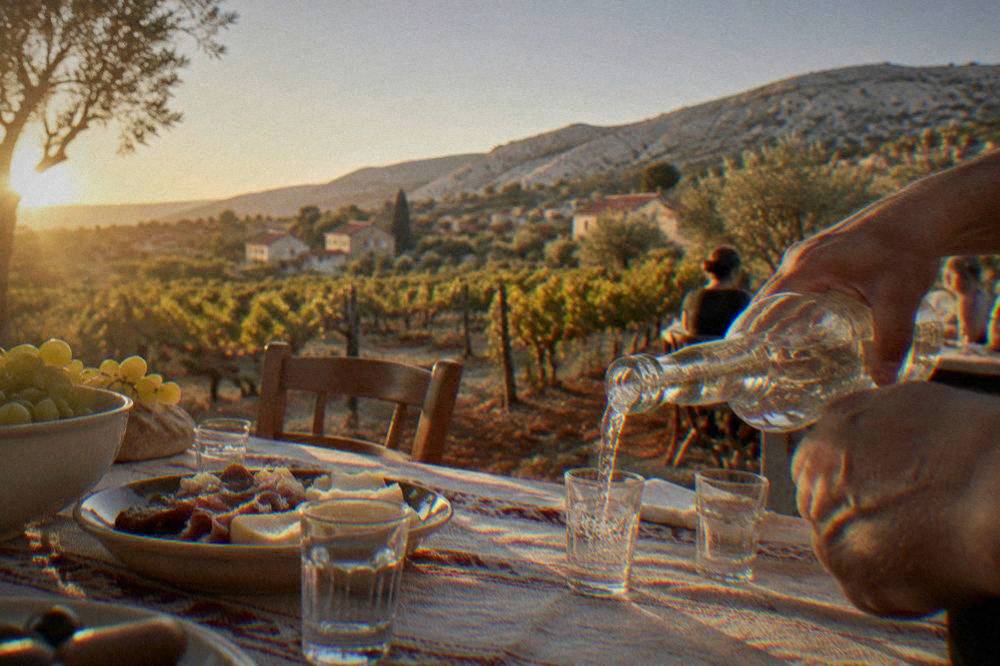
For everyday travel, the practical takeaway is simple: if you eat in a konoba-style restaurant in Mostar, a small rakija may arrive unasked at the start or end of the meal, on the house or offered for a small charge. Accepting is easy; sipping slowly is the polite register. The cevapi guide and the burek guide cover the dishes most likely to sit beside the glass.
Where To Taste Rakija In Mostar
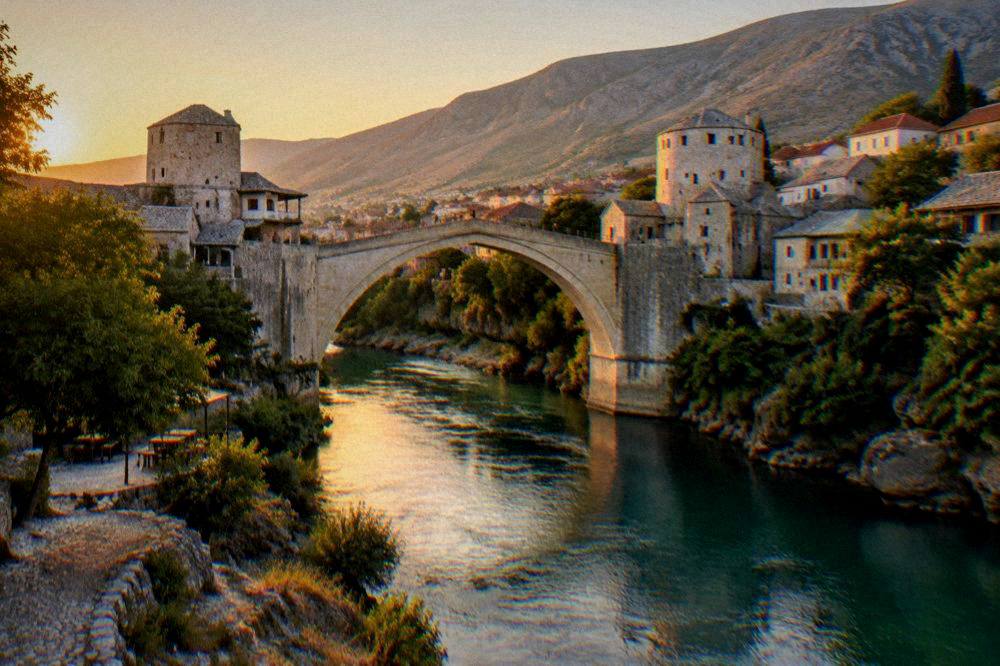
The easiest places to taste rakija in Mostar are the restaurants and cafes of the Old Bazaar, Kujundžiluk, and the streets around the Old Bridge, where house pours and labelled bottles both appear, and the cooking and food experiences that put the drink beside the food it belongs with. The vineyard belt around Čitluk and Ljubuški, under an hour from the city, is where loza is made, and several day tours from Mostar pass through it.
Kujundžiluk, the cobbled Ottoman bazaar street, is the natural starting point. Its restaurants serve grilled meat, burek and coffee, and rakija sits on every list. What varies is the register: some places pour a commercial labelled brandy, others a house bottle from a family still, and the unlabeled option is often the one worth trying.
Beyond the city, the vineyard country begins almost immediately. Čitluk is 22.9 km and about 31 minutes by road from Stari Most, Ljubuški sits on the road to Kravica waterfall, and the whole corridor grows the grapes behind both Herzegovina wine and loza. A day trip that strings Blagaj, Počitelj and Kravica waterfall together passes straight through this landscape, and the Herzegovina day tour from Mostar is the standard way to do it. Check availability.
| Rakija stop | Road distance from Stari Most | Free-flow drive time | What it offers |
|---|---|---|---|
| Kujundžiluk, Mostar | 0 km | On foot | Restaurant pours, house bottles |
| Čitluk vineyards | 22.9 km | About 31 min | Wine and loza country |
| Blagaj | 13.7 km | About 19 min | Riverside tables under the cliff |
| Ljubuški | On the route to Kravica | About 54 min to the falls | Loza heartland |
| Počitelj | 30.0 km | About 31 min | Fortress village, small pours |
Rakija And The Herzegovina Harvest Calendar
Rakija in Herzegovina follows the fruit, and the grape harvest that feeds loza runs in early autumn, with September and October as the working months around Mostar. The climate explains the timing: the FHMZ 1961-1990 station table for Mostar shows July and August as the dry months, 42.9 mm and 73.7 mm of rain, and September still comparatively dry at 96.3 mm, before November's 200.0 mm closes the season. Grapes ripen through the dry heat and come off the vine before the autumn rains.
The still follows the harvest by weeks. Fermented grape pomace or fruit sits in vat, then distillation runs through late autumn and into winter, and the household stock for the coming year is set by the cold months. Winter is when rakija is most drunk at home, and the pattern of the year, summer ripening, autumn harvest, winter distilling and drinking, repeats without any festival needing to announce it. The wider set of guides lives on Mostar Travel Guide.
| Month | Rain in Mostar (FHMZ 1961-1990, mm) | Mean temperature (C) | Rakija season |
|---|---|---|---|
| July | 42.9 | 24.7 | Vines in full summer growth |
| August | 73.7 | 24.2 | Grapes swell and ripen |
| September | 96.3 | 20.4 | Grape harvest begins |
| October | 150.6 | 15.3 | Harvest ends, fermentation |
| November | 200.0 | 10.1 | Distillation, first pours |
| December | 178.7 | 6.2 | Winter drinking season |
Plums for šljivovica run on a similar clock in the regions that grow them, and herb gathering for travarica belongs to the late spring and early summer walks in the hills, when the same limestone country that grows the vines is full of wild herbs.
Can You Buy Rakija To Take Home From Mostar?
Yes, rakija is easy to buy in Mostar: labelled commercial bottles are sold in shops, supermarkets and souvenir stalls, and some markets and wine outlets in the vineyard belt sell family-made loza in simple bottles. The decision is between a labelled bottle, which travels predictably, and an unlabeled household bottle, which is the more authentic object but carries no producer information.
For luggage, the practical points are the alcohol content, typically in the range of 40 to 50 percent by volume for both loza and šljivovica, and the rules of your route. Bosnia and Herzegovina is not in the European Union, so allowances for bringing spirits into the EU depend on your destination's rules for travellers arriving from outside it, and the Croatian land border, a Schengen external border with full checks since 1 January 2023, is where a Mostar departure by road will cross. The border crossing guide covers what to expect at the Doljani-Metković and Bijača-Nova Sela crossings.
Payment is in convertible marks, the KM, pegged at 1 EUR = 1.95583 KM. Euro cash is often accepted in tourist areas, usually at a rounded rate, so confirm before paying; the money guide covers cards, cash machines and the peg in detail.
Is Rakija Strong, And How Should A Visitor Approach It?
Rakija is a strong spirit, typically 40 to 50 percent alcohol by volume, and the correct approach in Mostar is small sips, a slower pace than beer or wine, and food alongside it whenever possible. One small glass before a meal is the customary dose; matching a host glass for glass across a long evening is the classic way visitors overreach. Water, coffee and meze all sit legitimately beside rakija in local practice.
A few habits travel well. Toast before the first sip, and look your host in the eye while doing it. Do not down the glass in one; rakija is sipped. If you have had enough, leave a little in the glass or say so warmly; hosts respect an honest boundary far more than an empty glass followed by a wobble. Nobody expects a visitor to drink at all if they prefer not to, and a clear, friendly refusal with coffee instead is entirely normal.
Drivers should treat rakija as off-limits entirely. Herzegovina's rural roads between Mostar, Blagaj, Počitelj and the vineyards are winding, and the legal and practical standard is zero tolerance in practice for anyone planning to drive. The getting around guide and the car rental guide cover the alternatives, and day tours with a driver solve the problem altogether.
Rakija Versus Herzegovina Wine: What To Drink When
In Herzegovina the choice is between rakija and wine, and the two answer different moments: rakija opens and punctuates, wine accompanies the meal. Loza and the region's white and red wines come from the same vineyards around Čitluk and Ljubuški, so both belong to the same landscape, but the pouring logic is distinct, with the small brandy glass reserved for toasts and the appetite, and the wine glass for the food itself.
Herzegovina's wine tradition is small but genuine, built on local varieties, and its home territory overlaps almost exactly with loza's. A long lunch in the region will often run both: a rakija to open, wine through the meat and vegetables, and perhaps a sweet style or another rakija to close. If your interest is the vineyard side of the country, the same day trips that serve rakija country serve wine country, and the Herzegovina loop from Mostar through Blagaj, Počitelj and Kravica waterfall is the standard circuit. Check availability.
For visitors who want the customs explained rather than just tasted, a guided walk through the Old Town adds the context: the private walking tour of Mostar covers the bazaar, the bridge and the food culture around them. Check availability.
Pairing Rakija With Bosnian Food In Mostar
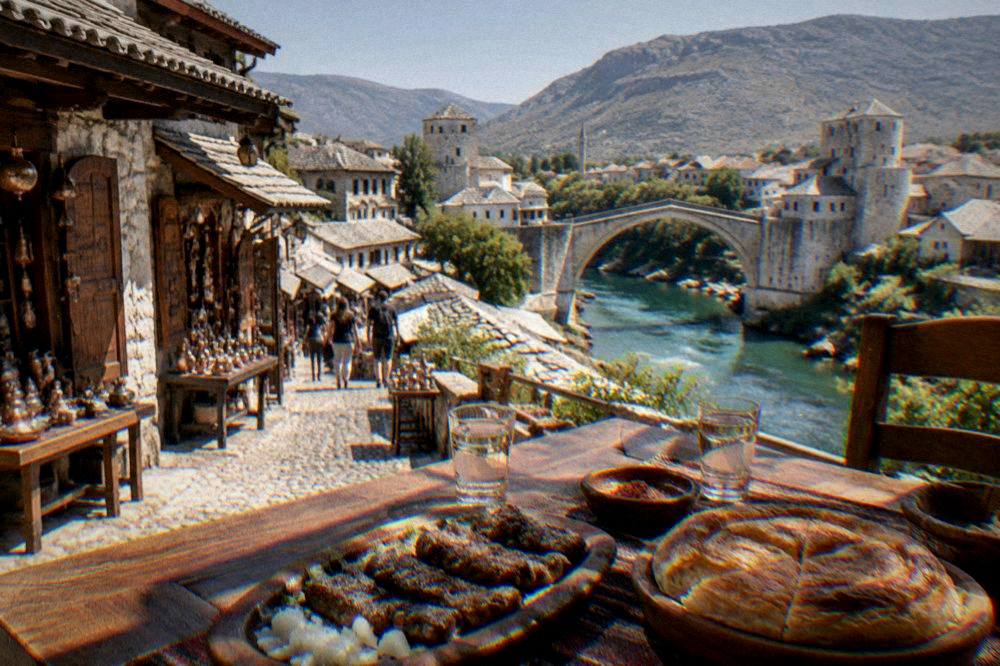
Rakija pairs with Bosnian food in two registers in Mostar: a small loza before the meal to open the appetite, and a fruit rakija, often šljivovica or dunjevača, at the end alongside coffee and sweets. The classic partners are grilled meat dishes such as cevapi, the savoury pies called burek, and the salty meze spreads of cheese and cured meat that appear between them.
The logic is simple and old. Strong spirit, salty food: the rakija cuts through fat and smoke, and the food slows the alcohol. Cevapi, the small grilled minced-meat rolls served in flatbread with raw onion, and burek, the rolled meat or cheese pie, are the two dishes a visitor to Mostar will meet first, and both sit naturally beside a small glass. Sweet endings flip the register: quince or pear rakija with Bosnian coffee and a piece of baklava or hurmašica is the traditional close of a long meal.
| Food | Style of rakija beside it | Why it works |
|---|---|---|
| Meze, cheese, cured meat | Loza, clear and dry | Salt and spirit open the appetite |
| Cevapi and grilled meat | Loza before, wine with | Cuts the fat and smoke |
| Burek and savoury pies | Small loza | Warmth against the rich pastry |
| Bosnian coffee and sweets | Dunjevača or šljivovica | Aromatic finish to the meal |
| Fruit and nuts | Šljivovica | Sweetness answered by sweetness |
The Bosnian cooking class with burek, lunch and drinks is built exactly around this kind of table, and it is the most reliable way to taste rakija in its proper setting, with the food it belongs to. Check availability.
A Short Rakija Vocabulary For Mostar
A handful of words carries the whole rakija ritual in Mostar: živjeli for the toast, loza and šljivovica for the two main styles, and travarica for the herbal version, with domaća, meaning homemade, being the word that signals a household bottle rather than a commercial one. Learning these few terms earns warm responses, since the language of the table matters in Herzegovina.
Mostar is a city where Bosnian, Croatian and Serbian are all spoken, and the rakija vocabulary overlaps almost entirely across all three. The phrases below are the working set.
| Phrase | Meaning | When to use it |
|---|---|---|
| Živjeli | To life, cheers | The toast before every sip |
| Loza | Grape rakija | Ordering or naming the local style |
| Šljivovica | Plum rakija | Naming the other classic |
| Travarica | Herbal rakija | Asking for the herb-infused style |
| Domaća rakija | Homemade rakija | Asking what the house pours |
| Malo, molim | A little, please | Keeping the pour small |
What To Remember About Rakija In Mostar
Rakija in Mostar is a custom before it is a drink: small glasses, a toast, a slower pace, and loza as the Herzegovina style poured from vineyards an hour or less from the Old Bridge. Treat it as the opening and punctuation of a meal rather than the meal's engine, keep to one glass when in doubt, and never drive after it. The rest, the refills, the toasts, the second coffee, follows from the host's hand.
The wider frame is worth keeping in mind too. Herzegovina's table customs, coffee, rakija, burek and grilled meat, belong to the same slow, social rhythm, and the city rewards visitors who sit down inside it rather than sampling from outside. The things to do in Mostar page lays out the rest of the city, from the Old Bridge to the bazaar, and the best time to visit guide explains why the harvest months of September and October, when loza begins its journey from vine to still, are among the kindest weeks to be in the city.
Common Questions About Rakija In Mostar
What is rakija?
Rakija is a fruit brandy made by distilling fermented fruit, typically 40 to 50 percent alcohol by volume. In Mostar and Herzegovina the common styles are loza, made from grapes, and šljivovica, made from plums, with herbal travarica and fruit versions such as dunjevača also poured.
What is the difference between loza and šljivovica?
Loza is distilled from grapes and is the style most tied to Herzegovina's vineyards around Čitluk and Ljubuški; it is usually clear and dry. Šljivovica is distilled from plums, is common across the wider Balkans, and often has a softer, sweeter nose, with a golden colour when aged in wood.
How is rakija served in Mostar?
In small glasses, at room temperature, poured by the host, with a toast, živjeli, before the first sip. It is sipped slowly, not downed, and it appears before meals, alongside Bosnian coffee, and at celebrations and gatherings.
Can you buy rakija in Mostar to take home?
Yes. Labelled commercial bottles are sold in shops and supermarkets, and family-made loza in simple bottles appears in markets and vineyard outlets. Remember that Bosnia and Herzegovina is outside the EU, so check your destination's allowance for spirits brought in, and expect full checks at the Croatian border.
Do you have to drink rakija when it is offered?
No. Accepting a pour is the courteous default, but a friendly refusal with coffee instead is entirely normal and respected. If you do drink, sipping slowly and keeping to one glass when in doubt matches local practice.
Is rakija the same as the wine of Herzegovina?
No. Both come from the same vineyards, but rakija is a distilled fruit brandy served in small glasses for toasts and as an appetite opener, while Herzegovina wine is the fermented drink poured through the meal itself.