Mostar War History Tours: What A Guided Walk Covers
A war history walk in Mostar, an inland city on the Neretva river in Herzegovina, Bosnia and Herzegovina, moves between two layers of the same streets: the Ottoman Old Town that was rebuilt, and the scarred blocks a few hundred metres away that were not.
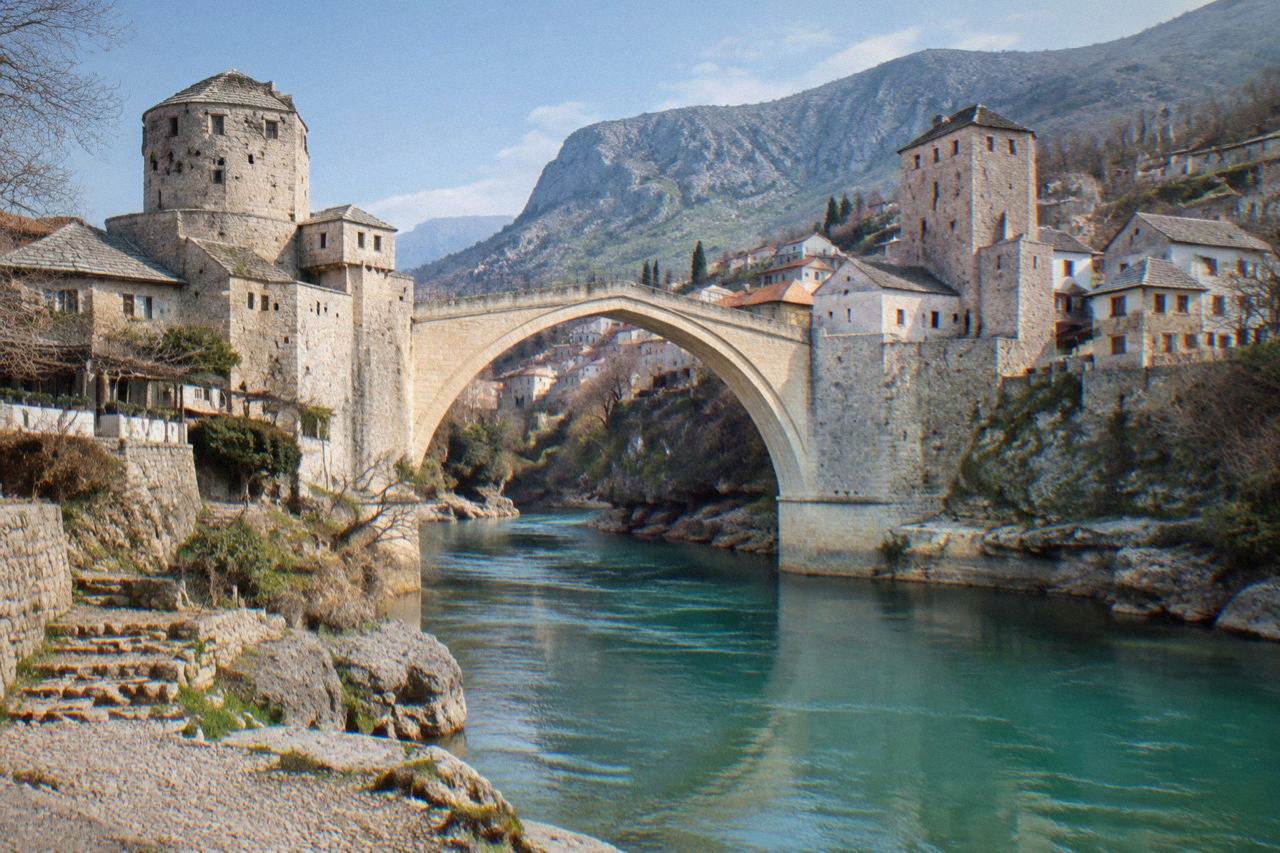
A Mostar war history tour is a guided walking route, usually around the Old Town and the former front line, covering the destruction of Stari Most on 9 November 1993, its 2004 reopening, and the buildings still standing damaged today. Two dedicated history walks lead the field, and both cost from around the price of a restaurant main.
A war history walk in Mostar, an inland city on the Neretva river in Herzegovina, Bosnia and Herzegovina, is the one tour in the city where the guide matters more than the sights. The route rarely leaves the centre: it runs from Stari Most along the Kujundžiluk bazaar, crosses into the western side, and stops in front of buildings that still carry shell damage from the war. The Old Bridge was destroyed on 9 November 1993 and rebuilt and reopened in July 2004, and that arc, destruction and reconstruction, is the spine of every serious history walk in the city. This page lays out what the walks cover, what they cost, what you will stand in front of, and how to choose between them.
What Does A Mostar War History Tour Actually Cover?
A Mostar war history tour is a guided walk of roughly two and a half hours that covers the siege of the city, the destruction of Stari Most on 9 November 1993, the front line that once ran close to the Old Bridge, and the reconstruction that followed, ending with the bridge's reopening in July 2004. Guides walk you past buildings that were never rebuilt, explain how the Ottoman Old Town was restored with international support, and connect the city you see today with the city as it stood during the war. The tours keep to dates and physical facts: what fell, when, and what was rebuilt by whom.
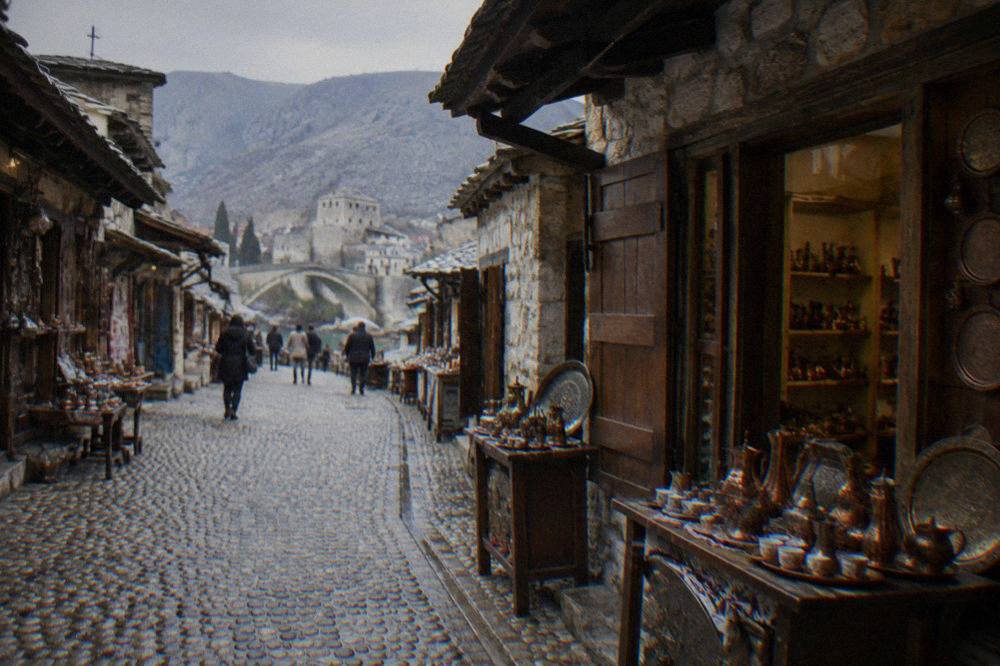
The standard route starts on the eastern, Ottoman side. From the bridge itself the walk drops into Kujundžiluk, the cobbled bazaar street whose stone shopfronts were rebuilt after the war, then climbs the stairs to Koski Mehmed-pašina džamija for the view over the river. From there most walks cross the bridge and head west along the Bulevar, the broad avenue that ran close to the front line, where apartment blocks and public buildings still show shell marks.
What distinguishes these walks from a general city tour is the commentary. A standard city walk tells you when the bridge was built, completed in 1566 under Suleiman the Magnificent by the architect mimar Hajruddin, whose design followed that of his master Sinan. A war history walk tells you what happened to the bridge and the streets around it between 1992 and 1995, and what the reconstruction, supported by UNESCO and World Bank partners, put back. Both stories belong to the same square kilometre.
The two dedicated walks that lead this category are the Break-up of Yugoslavia and the War in Mostar walk, which frames the city inside the wider collapse of the Yugoslav state, and the Death of Yugoslavia tour, which covers much of the same ground with the same siege focus. Both keep to what can be pointed at: streets, ruins, memorials and the bridge.
Which Sights And Streets Does A Mostar War Walk Visit?
The core stops are Stari Most itself, the Kujundžiluk bazaar, the Bulevar in western Mostar with its still-scarred buildings, the ruins near the former front line including towers and hotels, and viewpoints over the Neretva river, with some walks adding the Partisan Memorial Cemetery, which has no ticket and no staffed hours. Exactly which ruins a walk visits depends on the guide and the route, but the geography is compact: the front line ran close to the river, so the walk between the Old Town and the western blocks is short and flat.
The bridge is always the anchor. It stands about 21 to 24 metres above the river depending on the water level, with a span of about 29 metres, and crossing it is free and open around the clock. A war walk pauses here for the central facts: completed in 1566, destroyed on 9 November 1993, rebuilt using original materials and techniques, and reopened in July 2004. The surrounding Old Bridge Area was inscribed on the UNESCO World Heritage list in 2005.
From the bridge the route moves through the rebuilt bazaar and past Kriva ćuprija, the small single-arch stone bridge that survived the war, then over to the western side. There the walks pass the shells of large buildings left unrepaired since the war, the most photographed being the former bank tower known as the Sniper Tower. Its current internal status is not published, so treat it as something to view from the street rather than a museum to enter.
| Stop on a typical war walk | What you see | War history relevance |
|---|---|---|
| Stari Most | Stone arch completed in 1566, rebuilt in 2004 | Destroyed 9 November 1993, reopened July 2004 |
| Kujundžiluk bazaar | Rebuilt Ottoman shopfronts | Old Town restored after the war |
| Bulevar, western side | Scarred apartment and public buildings | Street ran close to the front line |
| Sniper Tower area | Unrepaired high-rise ruins | Among the war's most visible physical legacies |
| Partisan Memorial Cemetery | Bogdan Bogdanović hillside monument, inaugurated 1965 | Over 700 of its stone markers destroyed in 2022 |
The cemetery stop deserves a note. The Partisan Memorial Cemetery is a listed national monument, but it is unstaffed, unticketed and in poor condition, and Europa Nostra placed it on its list of endangered heritage sites, reporting that over 700 of its stone memorial markers were deliberately destroyed in 2022. Some walks include it, some describe it from a distance. It is a place for quiet looking, not for climbing on the stonework.
How Much Does A Mostar War History Tour Cost?
Dedicated war history walks in Mostar start from around the same level as any specialist guided walk in a Balkan city, with the two main siege-history tours priced from about the cost of a restaurant dinner per person, and a general city walk, which touches the war more briefly, available from less. Free, tip-based walks also run in the city and cover the bridge and the Old Town, though their treatment of the war years is shorter. Exact prices, ratings and durations render on each operator's live listing, so check them there before booking.
The reason to compare carefully is focus. A general Mostar walking tour gives you the bridge, the mosques, the Ottoman houses and a short passage on the war. A dedicated history walk spends its whole time on Yugoslavia, the siege, the destruction of the bridge, and the rebuilding. If the war years are the reason you came, the specialist walks earn their premium.
For visitors combining a history walk with a day trip, the pairing that works well is a morning Herzegovina excursion and an afternoon or evening city walk, since the war route itself stays central and flat. The crossover products that include Mostar on a route from Dubrovnik, taking in Kravica waterfall and Počitelj, deliver the countryside; the walking tours deliver the story.
Payment practicalities are straightforward. The currency of Bosnia and Herzegovina is the convertible mark (KM, BAM), pegged at 1 EUR = 1.95583 KM, and the country is not in the EU or Schengen. Euro cash is often accepted in tourist areas, usually at a rounded rate, but confirm the rate before paying. Tour bookings themselves are normally made online in advance, which sidesteps the cash question at the meeting point.
| Tour type | Typical focus | Bookable from |
|---|---|---|
| Dedicated war history walk | Siege, bridge destruction, front line ruins | Mostar, year round |
| General city walk | Old Town, bridge, mosques, brief war passage | Mostar, year round |
| Free tip-based walk | Bridge and Old Town orientation | Mostar, year round |
| Herzegovina day trip with Mostar stop | Kravica, Blagaj, Počitelj, plus bridge time | Dubrovnik, Split, Sarajevo, Mostar |
Is A War History Tour In Mostar Suitable For First-Time Visitors?
Yes, and for many first-time visitors it is the fastest way to understand the city, because the walk doubles as an orientation of the Old Town and the Bulevar while explaining why the two sides of the river look so different. The route is short and level, the stops are close together, and the bridge, the bazaar and the main squares all appear on the way. A visitor who takes a war walk on day one leaves with the geography sorted and the history attached to real streets.
The walks are equally workable if Mostar is a day-trip stop rather than a base. The Old Town is compact enough that a two-plus-hour walk fits comfortably inside a day-trip window, and the guided history products from the city run daily. If you are arriving on a Dubrovnik or Split excursion, the tour timetable is set by the excursion, so a separate history walk works better on a day you are based in the city, or on a second visit. Everything else covered here is indexed on Mostar Travel Guide.
Sensitivity is worth a sentence. The subject is recent and real, and the guides are mostly locals who lived through it as children or young adults. The tours keep to dates and physical facts, what was destroyed, when it was rebuilt, and who funded the reconstruction, without dramatising. Families with school-age children manage these walks fine; very young children will get more from the riverbank and the ice cream than from the Bulevar.
For travellers who want the war story at their own pace and in their own order, the city's permanent exhibits do some of the same work. The War Photo Exhibition and the Museum of War and Genocide Victims both present the period in images and artefacts, and the Herzegovina Museum carries the longer regional story. Fees and hours for some of these are not published online, so check at the door. Pairing one museum with one guided walk is a strong day.
What Do The Guides Say About The Old Bridge?
Guides present the bridge through its documented arc: completed in 1566 under Suleiman the Magnificent by mimar Hajruddin, whose design followed his master Sinan; destroyed on 9 November 1993; rebuilt with original materials and techniques with support from UNESCO and World Bank partners; reopened in July 2004; and inscribed with its Old Town on the UNESCO World Heritage list in 2005. The bridge stands about 21 to 24 metres above the Neretva depending on the river, with a span of about 29 metres, and crossing it is free at any hour.
The reconstruction is the part guides dwell on. Divers recovered original tenelija limestone blocks from the riverbed, and new stone was cut to the historical techniques so that the rebuilt arch follows the 1566 original. The reopening in July 2004 was the moment the city's post-war image turned, and the UNESCO inscription a year later, under criterion (vi), recognised the bridge as a symbol of reconciliation and international cooperation in the rebuilding.
The diving tradition is the living coda to the bridge story. Members of the Mostari diving club jump from the bridge, and the 460th traditional diving competition ran on 26 July 2026, while the Red Bull Cliff Diving World Series held its Mostar round from 30 July to 1 August 2026, using added platforms at 21 metres for women and 27 metres for men. Visitors do not jump: jumps are performed by trained club members, and no pay-to-jump option for tourists exists. Guides on history walks usually point out the diving platform spot as part of the bridge's modern story.
For the bridge's full biography beyond the war years, the site's Mostar history guide carries the Ottoman and later chapters, and the war history guide expands on the war in more depth than any single walk can.
How Do The Two Main War History Walks In Mostar Differ?
The two dedicated walks, the Break-up of Yugoslavia and the War in Mostar tour and the Death of Yugoslavia tour, cover substantially the same siege story and similar street routes, and the practical difference lies in group style, meeting arrangements and the framing each guide gives to Yugoslavia's collapse, so the choice comes down to schedule fit and listing details rather than subject matter. Both are specialist walks led by guides who focus on the period, and both concentrate on what is visible in the city centre.
The Break-up of Yugoslavia walk frames Mostar inside the wider disintegration of the Yugoslav federation: the politics of the federation's final years, the republics' split, and how the war reached Herzegovina. The Death of Yugoslavia tour takes the same premise and spends its street time on the siege itself, the front line geography, and the destruction and rebuilding of the bridge. In practice the routes overlap heavily, and either one delivers the core narrative.
| Walk | Main framing | Best for |
|---|---|---|
| Break-up of Yugoslavia & The War in Mostar | Yugoslavia's collapse, then the siege in the streets | Visitors who want the political context first |
| The Death of Yugoslavia Tour in Mostar | Siege narrative with the front line as the route | Visitors who want the street-level story first |
| General city walk | Old Town sights with a shorter war passage | Visitors splitting time between history and sightseeing |
If neither specialist slot fits your dates, a small-group Old Town guided tour still passes the bridge and the bazaar with commentary that touches the war, and the free, tip-based Mostar All in One walk on GuruWalk gives a free orientation with a shorter treatment of the war years. The free walks run on a pay-what-you-want basis and should never be presented as paid products.
When Is The Best Time Of Day For A War History Walk In Mostar?
The practical answer is early morning or late afternoon from June to September, because Mostar's summer heat is severe: the FHMZ 1961-1990 station series puts the July mean at 24.7 C with an absolute maximum of 41.2 C, and the ERA5 reanalysis 1991-2020 models mean daily highs of 29.9 C in July and 30.5 C in August. A two-and-a-half-hour outdoor walk in the midday sun of those months is genuinely hard work, so book the early slot or the evening one.
The rest of the year is kinder. October still averages a 15.3 C mean, and the November rain maximum, 200.0 mm in the FHMZ 1961-1990 series against July's 42.9 mm, makes late autumn the period to pack a rain layer for. Winter walks are quiet, cold in the mornings, with a January mean of 4.8 C, and the low-season Old Town has its own appeal for photography.
| Month | FHMZ mean C, 1961-1990 | ERA5 mean daily high C, 1991-2020 | Walk advice |
|---|---|---|---|
| January | 4.8 | 8.4 | Cold start, wrap up |
| April | 13.3 | 17.7 | Comfortable all day |
| July | 24.7 | 29.9 | Early or late slot only |
| August | 24.2 | 30.5 | Early or late slot only |
| October | 15.3 | 19.5 | Comfortable all day |
| November | 10.1 | 14.1 | Rain layer, 200.0 mm month |
One seasonal bonus is worth knowing: late July is the bridge's event window. The traditional diving competition ran on 26 July in 2026 and the Red Bull round followed from 30 July to 1 August, so a walk in that window may coincide with stands, crowds and diving practice. The trade is a buselier Old Town than any other week of summer.
Common Questions About Mostar War History Tours
Is a Mostar war history tour worth it?
For anyone whose interest in the city is its recent past, yes. The walks deliver a narrative and a street-level geography that signage and guidebooks do not, in a compact centre where an unrepaired ruin can stand a few minutes from a rebuilt UNESCO monument. Prices start around the level of any specialist guided walk in the region, and the two dedicated siege-history tours have strong ratings on their live listings.
Is the war history walk in Mostar safe?
The routes stay on central city streets, are walked daily, and the standard advice about nightlife safety is covered in the site's answer on walking around Mostar at night. One countryside rule matters more than any city one: in rural Herzegovina, stay on marked paths because of suspected mine areas. The city-centre walk route does not enter those areas. The general emergency number is 112.
How long does a war tour in Mostar last?
The dedicated walks run in the region of two and a half hours on foot, over flat and gently cobbled ground with frequent stops. Exact durations for each product render on its live listing rather than being quoted here, and free walks run shorter orientation routes. Wear decent shoes for the bazaar cobbles.
Do the tours enter the Sniper Tower?
No reliable published information exists on the tower's current internal status, so treat it as a street-level stop on the walk, not a building to enter. The guides use its facade and its position near the former front line to explain the fighting geography. Nothing on this page promises interior access.
Can children join a Mostar war history tour?
Yes. The tours keep to dates and physical facts, what was destroyed, when it was rebuilt, and by whom, without dramatising, and the walking distance is short. School-age children manage the content and the length comfortably; toddlers will be happier with the riverbank and the bridge viewpoints.
Should I take a war tour or a general city walk in Mostar?
Take a war tour if the war years are your reason for visiting, and a general walk if you want the whole Ottoman-to-modern sweep in one go. The two overlap on the bridge and the bazaar but diverge sharply in the commentary, and the general Mostar walking tour pages list what each covers. Travellers with two days in the city comfortably fit both.
The war history walk is the one tour in Mostar where every stop is evidence, and the city centre holds enough of it that no two guides tell quite the same story. Pick a slot away from the midday heat in summer, check each operator's live listing for the current price and start point, and let the bridge carry the narrative home: completed in 1566, destroyed on 9 November 1993, standing again since July 2004.