Kajtaz House: The Oldest Ottoman House In Mostar
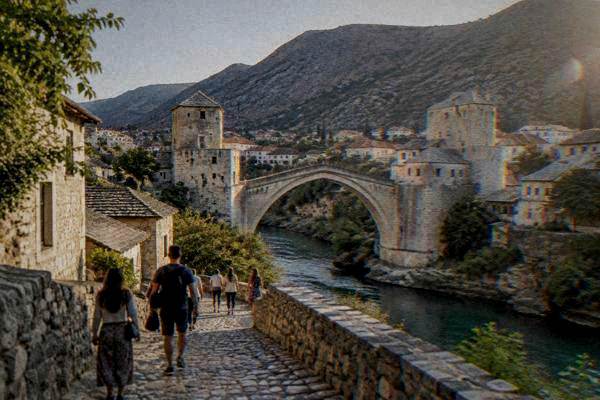
Kajtaz House is one of the Ottoman era courtyard houses that survive in Mostar's Old Town, a domestic counterpart to the minarets and the bridge that dominate the postcard view.
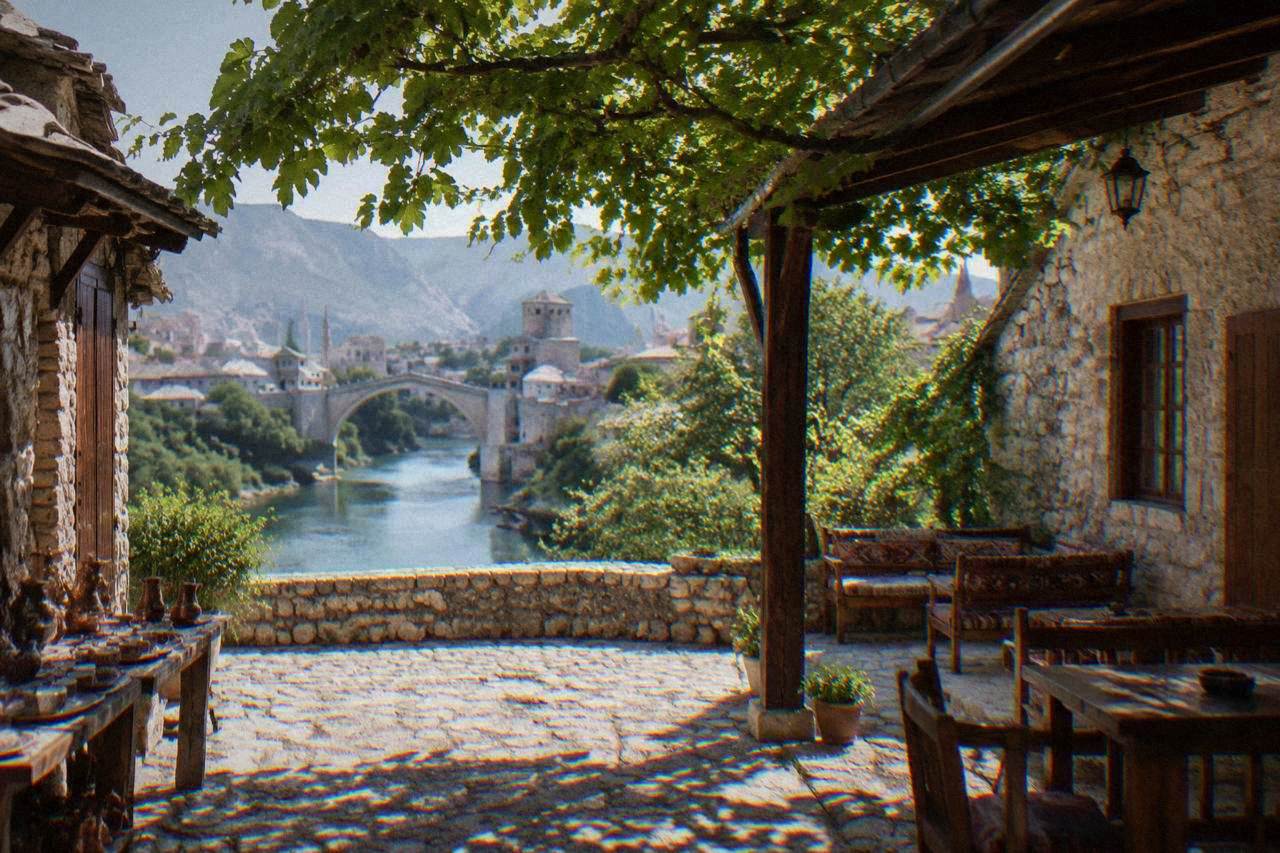
Kajtaz House is a traditional Ottoman family house in Mostar's Old Town, described as the city's oldest surviving domestic residence, with no published ticket price or hours, so confirm locally on arrival.
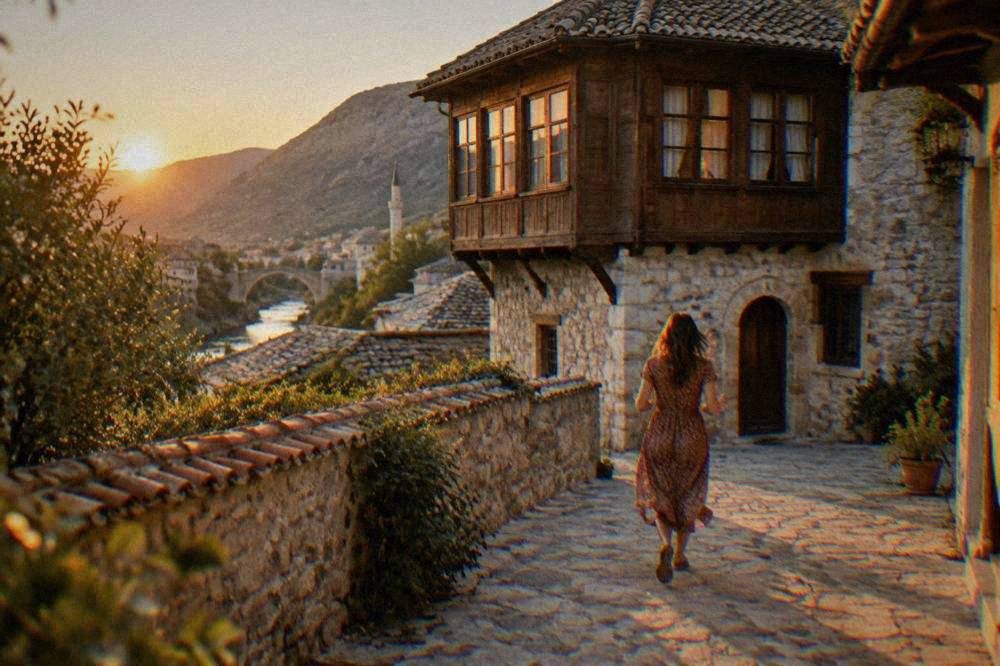
Kajtaz House stands in the lanes of Mostar's Old Town, a short walk from Stari Most, and it represents a side of the city the bridge view does not show: the domestic architecture of the Ottoman period, built around courtyards, shaded porches and rooms arranged for family life rather than display. Mostar, in Herzegovina in the south of Bosnia and Herzegovina, is an inland city on the Neretva river, and its Old Bridge Area has been a UNESCO World Heritage property since 2005. Within that heritage quarter, a handful of old houses survive alongside the mosques and the bazaar, and Kajtaz House is billed as the oldest of them. No ticket price or opening hours are published for it in any official listing, so the practical advice on this page is about what the house is, how it fits into a day in the Old Town, and what to confirm when you arrive.
What Is Kajtaz House In Mostar?
Kajtaz House is a traditional Ottoman era family house in the Old Town of Mostar, described as the oldest surviving domestic residence in the city, built of local stone and organised around an inner courtyard in the manner of Ottoman homes across Herzegovina, and it is privately run rather than part of a state museum network, which is why no official ticket price or fixed hours appear for it anywhere. The house belongs to the same family tradition as the better known Bišćević House and Muslibegović House on the west bank of the Neretva, but it sits deeper in the Old Town fabric, closer to the lanes around the bazaar street Kujundžiluk. The UNESCO inscription that covers the Old Bridge Area of the Old City of Mostar, property 946, inscribed in 2005 under criterion (vi), protects the whole historic townscape, not only the bridge, and the old houses are part of what that listing recognises: a built environment shaped between the settlement's Ottoman beginnings and the present.
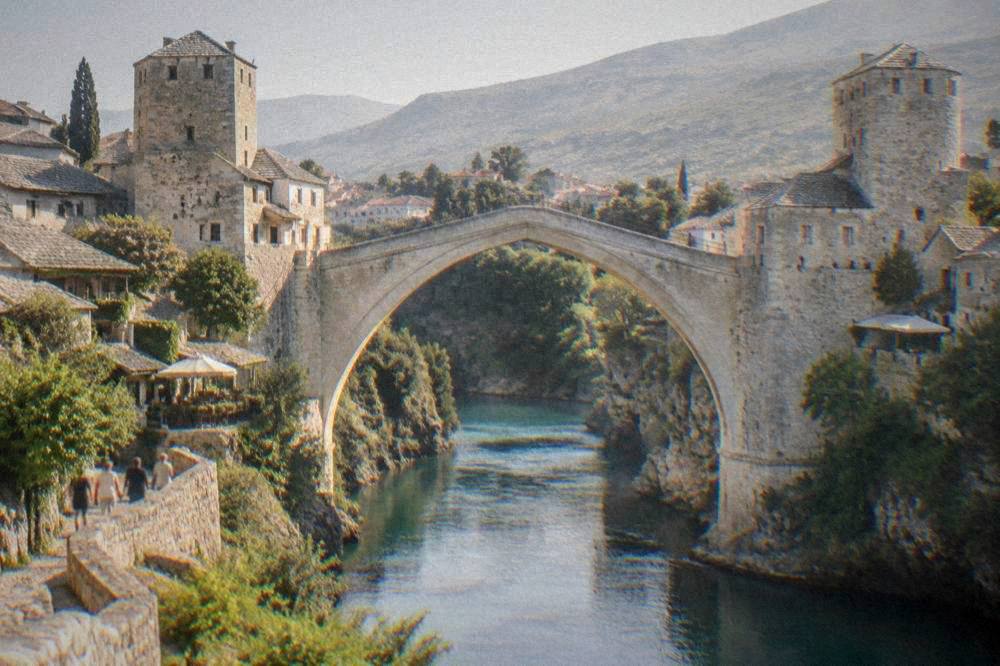
The name Mostar itself comes from the bridge keepers, the mostari, who guarded the wooden crossing that preceded the stone bridge completed in 1566 under Suleiman the Magnificent by the architect mimar Hajruddin. The first written mention of the name Mostar dates to 1474. Domestic houses like Kajtaz House belong to that same long Ottoman period, when the town grew around the bridge, the bazaar and the mosque of Koski Mehmed-pašina džamija near the water. A visit to one of these houses is the fastest way to understand how the town's merchant and artisan families actually lived, in rooms divided between winter and summer use, with the courtyard as the heart of the home.
Because the house is a small, privately operated site, the practical details shift from season to season. There is no fee on file from any official source, and none should be assumed. Treat Kajtaz House the way you would treat a family run museum: arrive expecting a modest cash entry in convertible mark, the local currency, and confirm at the door. For background on the wider story of the city, the Mostar history guide covers the Ottoman period and the bridge's reconstruction after it was destroyed on 9 November 1993 and reopened in July 2004.
Where Is Kajtaz House Located Within Mostar's Old Town?
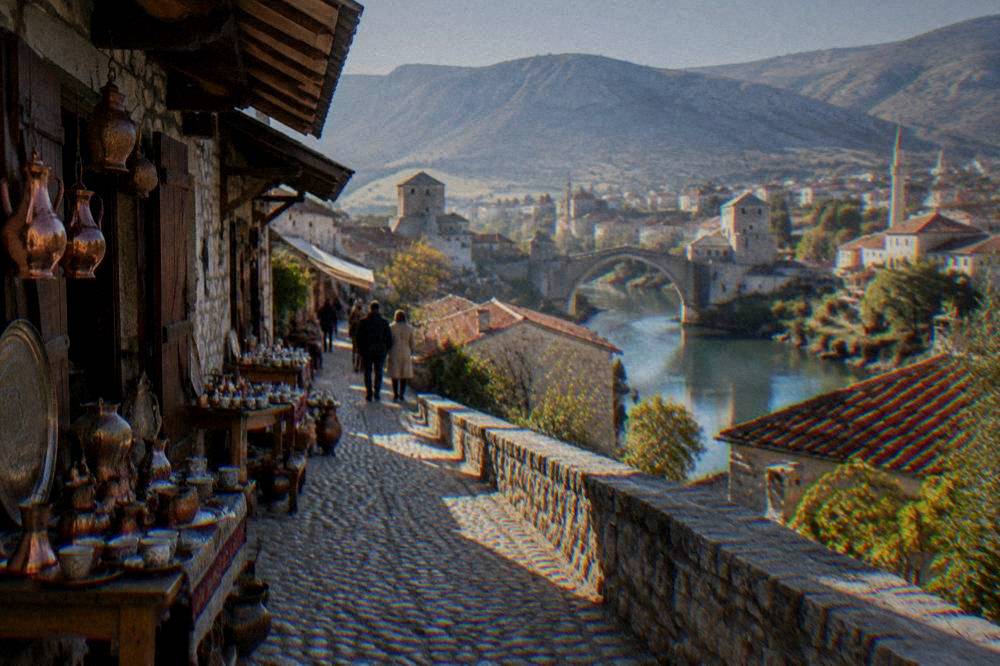
Kajtaz House sits in the Old Town quarter of Mostar, within walking distance of Stari Most, the Old Bridge, which is free to cross and open around the clock, and roughly equidistant on foot from the bazaar street Kujundžiluk on the east bank and the courtyard houses on the west bank, so it fits naturally into any walking route through the heritage area. The Old Town is compact. Everything a visitor comes to see, from the bridge to the Crooked Bridge, Kriva ćuprija, to Koski Mehmed-pašina džamija by the river, sits inside a few narrow lanes. The Old Town area guide maps the quarter street by street, and the Stari Most attraction page covers the bridge itself, which stands about 21 to 24 metres above the Neretva depending on the river level, with a span of about 29 metres.
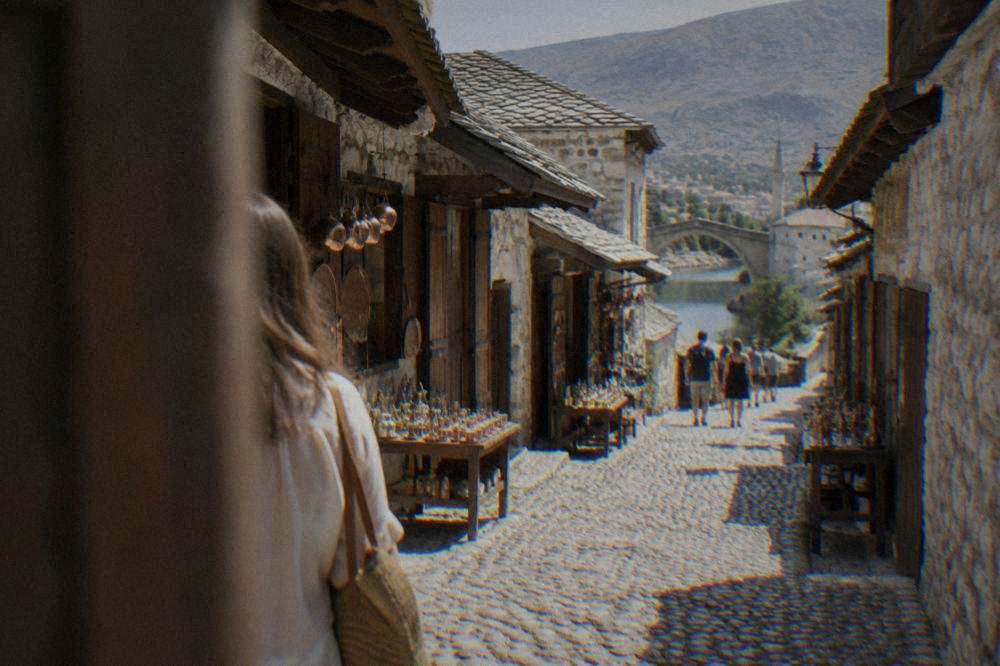
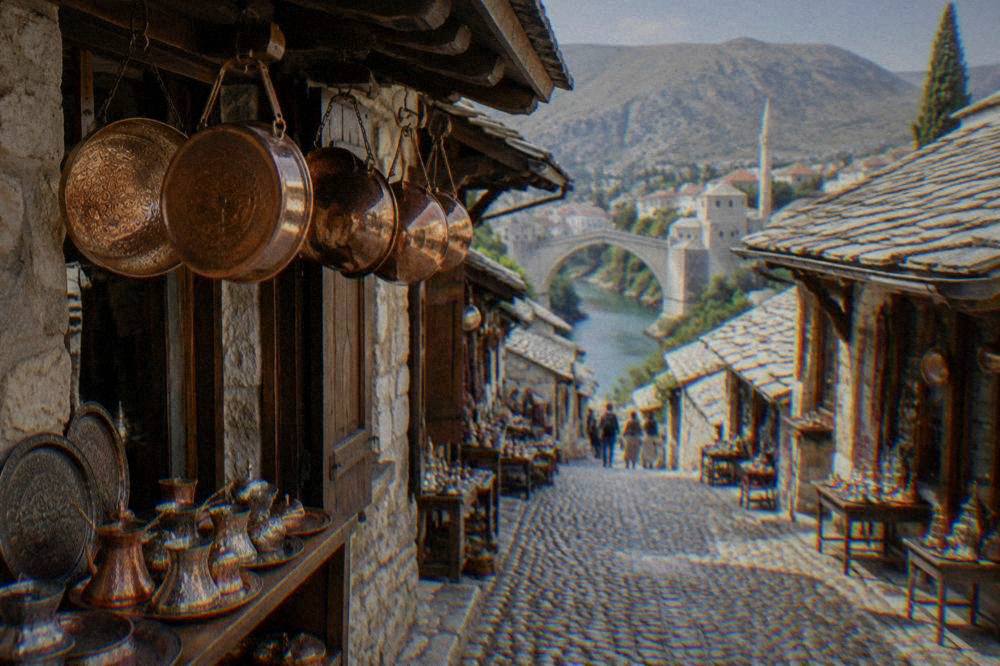
A sensible route runs like this: start at the bridge, walk into Kujundžiluk with its coppersmiths' shops, double back past Kriva ćuprija, and then loop to Kajtaz House before finishing at the river terrace of Koski Mehmed-pašina džamija, which charges a small cash fee, more if you climb the minaret. Doing the loop in one pass keeps the Old Town's geometry clear: the bridge at the centre, the bazaar clinging to the east slope, and the houses and mosques layered behind. There is no need for transport of any kind inside this quarter; the whole heritage area is pedestrian scale, and the lanes are stepped and cobbled, so wear shoes that grip.
If you want a guide to decode the lanes rather than walking them self guided, a small group walk is the efficient option.
How Does Kajtaz House Compare With Bišćević And Muslibegović Houses In Mostar?
Kajtaz House is one of three Ottoman courtyard houses in central Mostar regularly open to visitors, alongside Bišćević House, reported at about 4 KM entry, and Muslibegović House, reported at about 8 KM, and the three differ mainly in setting and scale: Bišćević sits directly on the Neretva's west bank with a river terrace, Muslibegović is a larger residence now doubling as guest accommodation, and Kajtaz is the more modest Old Town house described as the oldest of the group. All three figures are reported by visitor listings rather than official ticket pages, so confirm at the door. The comparison below covers what is on file for each.
| House | Reported entry | Setting | Distinctive feature |
|---|---|---|---|
| Kajtaz House | No figure on file, confirm on arrival | Old Town lanes, near the bazaar fabric | Described as the oldest surviving Ottoman house in the city |
| Bišćević House | About 4 KM | West bank of the Neretva | River terrace opening directly over the water |
| Muslibegović House | About 8 KM | West bank, uphill from the bridge | Grand residence that also operates as guest accommodation |
Which house you choose depends on what you want from the visit. If the interest is architecture and the oldest fabric, Kajtaz House carries that billing. If the interest is the romantic image of a house hanging over the cold green Neretva, whose water stays cold even in August, Bišćević House delivers that. If the interest is interiors, textiles and the fuller museum experience, Muslibegović House is the fuller visit, and it can be combined with an overnight stay. Time permitting, two of the three is a rich half day; all three is a full Old Town day with lunch in between.
There is also a practical argument for seeing at least one Ottoman house even on a short visit. The mosques show Mostar's public face, the bridge shows its engineering, but the houses show the private world that paid for both, with divans set along the walls, low tables, and the division between selamluk, the men's public rooms, and haremluk, the family's private quarters. That vocabulary unlocks every other Ottoman house you will meet in Herzegovina, from Blagaj to Počitelj.
The guided walk carded above is a good pairing with the houses: it covers the Old Town lanes and the city's layered recent past, and it leaves you free to enter the houses at your own pace afterwards, since house visits take minutes rather than hours.
What Can You See Inside A Traditional Ottoman House In Mostar?
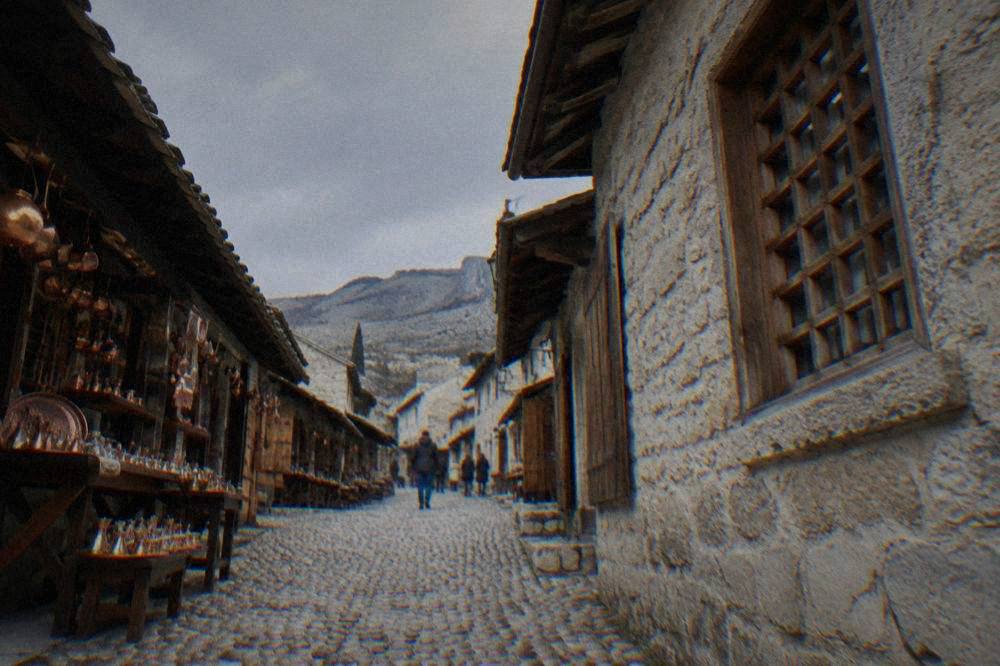
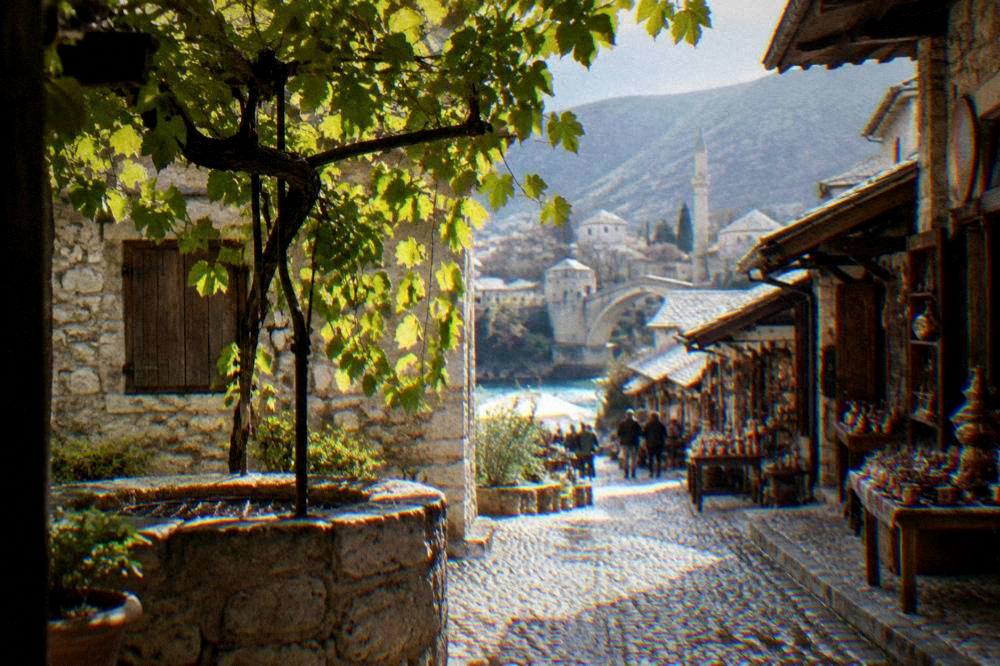
Inside a traditional Ottoman house in Mostar you see the courtyard first, usually paved in river stone and shaded by a vine trellis, then a sequence of rooms fitted with built in divans, low seating, woven textiles and carved wooden details, with windows placed for privacy rather than view, and thick stone walls that keep the rooms cool through Herzegovina's hot summers, when ERA5 reanalysis, 1991 to 2020, puts modelled July highs at 29.9 C and August at 30.5 C. The layout is the lesson. Ottoman domestic architecture in this region separates the public from the private, orients living spaces away from the street, and treats the courtyard as the true centre of the home. Houses like Kajtaz House preserve that arrangement in miniature.
The interiors you meet across Mostar's old houses share a vocabulary. Rooms are multifunctional, with bedding rolled out at night and cleared by day. Ceilings are often the decorative high point, with painted or carved wood. Storage is built into the walls. The hearth and the hamam corner, a private washroom alcove, served the household without leaving the building; the city's public bath tradition is covered separately on the Mostar hammam page. None of this is staged museum theatre; these houses were lived in for centuries, and in some rooms still are, which is why photography rules and access to upper floors vary and should be checked on arrival.
For visitors coming from the bridge, the contrast is the point. Stari Most is monumental, the work of a state, completed in 1566 and rebuilt in 2004 after its destruction on 9 November 1993. The houses are intimate, the work of families. Seeing both in the same afternoon gives you the two halves of Ottoman Mostar, the imperial and the domestic, within a few hundred metres of each other.
How Much Time Should You Set Aside For Kajtaz House In Mostar?
Plan on a short visit of roughly twenty to forty minutes for Kajtaz House itself, enough to see the courtyard and the main rooms at a normal museum pace, with the surrounding Old Town lanes, the bridge, the bazaar and a mosque terrace together filling a half day, and with the other two Ottoman houses added, a full day in central Mostar is comfortable without rushing. These are not large institutions. The charm of the Old Town's houses is their scale: you look closely at ceilings, textiles and stonework rather than walking galleries. A slow visitor spends longer in the courtyard with a coffee than inside the rooms.
A realistic division of a day looks like this:
| Block of the day | What it covers | Pace |
|---|---|---|
| Morning | Stari Most, Kujundžiluk bazaar, Kriva ćuprija | Slow walk, shopping stops |
| Midday | Kajtaz House, then lunch in the Old Town | House visit plus a long meal |
| Afternoon | Koski Mehmed-pašina džamija terrace, one west bank house | River views, interiors |
| Evening | Spanish Square and the west bank promenade at sunset | Flat, easy walking |
The one thing not to do is treat the houses as a checklist raced through before lunch. The Old Town rewards the opposite approach: fewer sights, longer looks. Visitors with only a few hours should pick the bridge, one mosque terrace and one house, in that order of priority, and save the rest for a return trip or fold them into a longer stay planned around the things to do in Mostar overview.
If your time in the city is short and you want Herzegovina beyond the Old Town as well, a day tour that leaves the logistics to an operator is the efficient route, and the walk below pairs well with a morning in the houses.
The street art and murals walk is the related pick for this page because the same lanes around Kajtaz House carry the city's newer visual layer: murals, memorials and traces of the recent past painted onto old stone. The two experiences, Ottoman domestic architecture and contemporary street art, sit within easy walking distance of each other and tell the same city's story from opposite ends.
How Do You Combine Kajtaz House With Other Mostar Old Town Sights?
The workable combination is a walking loop under two hours that links Kajtaz House with Stari Most, the Crooked Bridge, the bazaar of Kujundžiluk and the Koski Mehmed Pasha Mosque terrace, in that order or its reverse, all within the UNESCO inscribed Old Bridge Area, with the Museum of the Old Bridge in the Tara tower an optional add on reported at about 10 KM with hours of 08:00 to 16:00 daily from 1 April to 1 November. The loop has no wrong direction. Starting at the bridge gives you the famous view first; starting at the Spanish Square end lets you finish at the river in the late light, when the stone goes warm.
The sights on the loop, with what is on file for each:
| Sight | Entry on file | Notes |
|---|---|---|
| Stari Most | Free, open around the clock | About 21 to 24 m above the river, span about 29 m |
| Kujundžiluk | Free public street | The Old Bazaar, coppersmiths and shops |
| Kriva ćuprija | Free public bridge | The small "Crooked Bridge", a miniature of the Old Bridge |
| Koski Mehmed Pasha Mosque | A small cash fee, more with the minaret | Reports vary, confirm on site |
| Kajtaz House | No figure on file, confirm on arrival | Ottoman domestic architecture |
| Museum of the Old Bridge | About 10 KM, 08:00-16:00, 1 April to 1 November | Reported by visitor listings, confirm locally |
Two cautions make the loop better. First, the bridge and its lanes are steep and stepped; there is no step free route across Stari Most itself. Second, the divers who jump from the bridge are members of the Mostari diving club, trained for years; there is no jump option for visitors, so enjoy it as a spectacle only. The 460th traditional diving competition ran on 26 July 2026, and the Red Bull Cliff Diving World Series stop ran 30 July to 1 August 2026, both annual fixtures in the city's summer.
What Else To Do In Mostar Beyond The Old Houses?
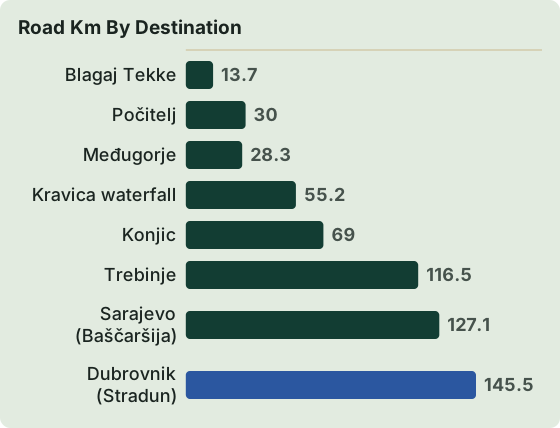
Beyond the old houses, Mostar's deeper rewards are the river and the Herzegovina hinterland: kayak trips on the cold Neretva, viewpoints from Hum hill and the Fortica ridge above the city, and day trips to Blagaj, Počitelj and Kravica waterfall, which lies 55.2 km and about 54 minutes by road from Stari Most and charges 20 KM for an adult all year, with children under 7 free. The houses anchor the Old Town, but the region around the city is what turns a weekend into a full trip. Blagaj Tekke at the Buna spring is 13.7 km away, reported at 10 KM entry with hours of 08:00 to 22:00 from April to October, and Počitelj, the fortified village, is 30.0 km and free to wander. The Počitelj day trip guide covers that stop in detail.
The day trip distances, all computed free flow road times from Stari Most:
| Destination | Road km | About minutes |
|---|---|---|
| Blagaj Tekke | 13.7 | 19 |
| Počitelj | 30.0 | 31 |
| Međugorje | 28.3 | 40 |
| Kravica waterfall | 55.2 | 54 |
| Konjic | 69.0 | 80 |
| Trebinje | 116.5 | 142 |
| Sarajevo (Baščaršija) | 127.1 | 134 |
| Dubrovnik (Stradun) | 145.5 | 150 |
Two ways to cover that hinterland suit two kinds of traveller. Independent travellers with a car can string Blagaj, Počitelj and Kravica into one long day on the roads above, though entry fees and parking are their own to manage. Visitors who prefer a guided day can join a Herzegovina circuit that bundles the same stops, and the operator's live listing carries the current price, rating and inclusions.
For a half day spent on the water instead, the Neretva is the city's other great presence: cold, green and fast, fed by karst springs. A kayak safari gives you the river at bank height, with the hills of Hum on one side and the city bridges overhead. Check availability with the operator below if that suits your dates.
Back in the city, the view from Hum hill and the Fortica ridge above the Old Town repay the climb at sunset, and the quieter sights, from the Partisan Memorial Cemetery designed by Bogdan Bogdanović and inaugurated in 1965, to the Spanish Square at the edge of the Old Town, give the visit a texture the postcard view cannot.
When Is The Best Time Of Year To Visit Mostar's Ottoman Houses?
The comfortable window for visiting Mostar's old houses runs from April to June and from September to October, when ERA5 reanalysis, 1991 to 2020, puts modelled daily highs between 13.4 C and 26.8 C, while July and August, with modelled highs of 29.9 C and 30.5 C, make midday walking in the unshaded lanes heavy work, and November, with 200.0 mm of rain on the FHMZ 1961-1990 station record, is the rainiest month against July's 42.9 mm. The houses themselves are a summer refuge by design: thick stone and shaded courtyards were built precisely for this climate, so an August visit works if you time the outdoor walking for morning and late afternoon.
The full monthly picture, with station and modelled figures labelled:
| Month | FHMZ mean temp C, 1961-1990 | ERA5 modelled high C, 1991-2020 | FHMZ rain mm |
|---|---|---|---|
| January | 4.8 | 8.4 | 164.7 |
| April | 13.3 | 17.7 | 127.3 |
| July | 24.7 | 29.9 | 42.9 |
| August | 24.2 | 30.5 | 73.7 |
| October | 15.3 | 19.5 | 150.6 |
| November | 10.1 | 14.1 | 200.0 |
Winter visits are entirely possible and often quieter, with January's station mean of 4.8 C hardly severe, but rain days rise to 11 a month in November through January on the FHMZ record, and some smaller private sites trim their hours or close rooms in the low season, which is one more reason to confirm locally. Whatever the month, carry cash in convertible mark: the currency is the KM, pegged at 1 EUR = 1.95583 KM, euro notes are often accepted in tourist areas at a rounded rate you should confirm first, and small house museums are the least card friendly places in the city.
Is Kajtaz House Worth Visiting Compared With Mostar's Bigger Sights?
Kajtaz House is worth visiting for travellers with a genuine interest in domestic architecture and Ottoman period interiors, and skippable for those with only a few hours, in which case Stari Most, one mosque terrace and one of the larger west bank houses with published entry figures, Bišćević at about 4 KM or Muslibegović at about 8 KM, deliver the same idea with more on display. The honest framing is that the house is small and intimate rather than spectacular. Its value is precisely its modesty: it shows how an ordinary prosperous family lived, which no minaret or bridge can.
For architecture lovers and slow travellers, the calculation flips. The Old Town's fabric rewards exactly this kind of quiet stop, and a house described as the city's oldest surviving residence is a primary document, not an attraction in the theme park sense. Photography minded visitors will find the courtyard, the stonework and the latticed windows more photogenic than any description suggests. Families with children will find it a short, contained stop that pairs well with an ice cream lap of Kujundžiluk. On the Mostar Travel Guide site, the Old Town pages exist to help you make exactly this kind of priority call with accurate figures rather than hype.
A reasonable priority list for a first visit: the bridge first, always; a mosque terrace for the river view second; one Ottoman house third, chosen by interest; the Museum of the Old Bridge fourth if the story of the 1566 bridge and its reconstruction grips you; everything else after that.
Common Questions About Kajtaz House In Mostar
Is Kajtaz House open every day?
No published hours exist for Kajtaz House in any official listing, so confirm on arrival or ask at your accommodation before walking over. Small private houses in the Old Town commonly adjust hours by season.
How much does Kajtaz House cost to visit?
No ticket figure is on file for Kajtaz House. Expect a modest cash fee in convertible mark and confirm at the door. For comparison, Bišćević House is reported at about 4 KM and Muslibegović House at about 8 KM.
How far is Kajtaz House from the Old Bridge?
Kajtaz House sits in the Old Town lanes a short walk from Stari Most. The whole UNESCO inscribed Old Bridge Area is compact and pedestrian scale, and no transport is needed inside it.
Is Kajtaz House the oldest house in Mostar?
It is described and billed as the oldest surviving Ottoman house in Mostar, and the city's tourism copy uses that billing. The Old Bridge itself was completed in 1566, and the name Mostar first appears in writing in 1474.
Can you visit Kajtaz House and Kravica waterfall on the same day?
Yes. Kravica waterfall is 55.2 km and about 54 minutes by road from Stari Most, open all year with entry of 20 KM for an adult, so a morning in the Old Town houses and an afternoon at the falls is a full but doable day.
However you build the day, keep Kajtaz House in the middle of it rather than at the edges: it is the one stop that slows you down, and the Old Town is best read at the pace of a courtyard, a coffee and a carved ceiling rather than at the pace of the bridge crowds.