What To Buy In Mostar: Copper, Carpets And Local Goods
Mostar's shopping runs through Kujundžiluk, the Old Bazaar street below Stari Most, where coppersmiths still hammer coffee sets by hand and the shelves carry Herzegovina wine, rakija, carpets and filigree. Here is what is actually made here, what is imported, and how to buy it well.
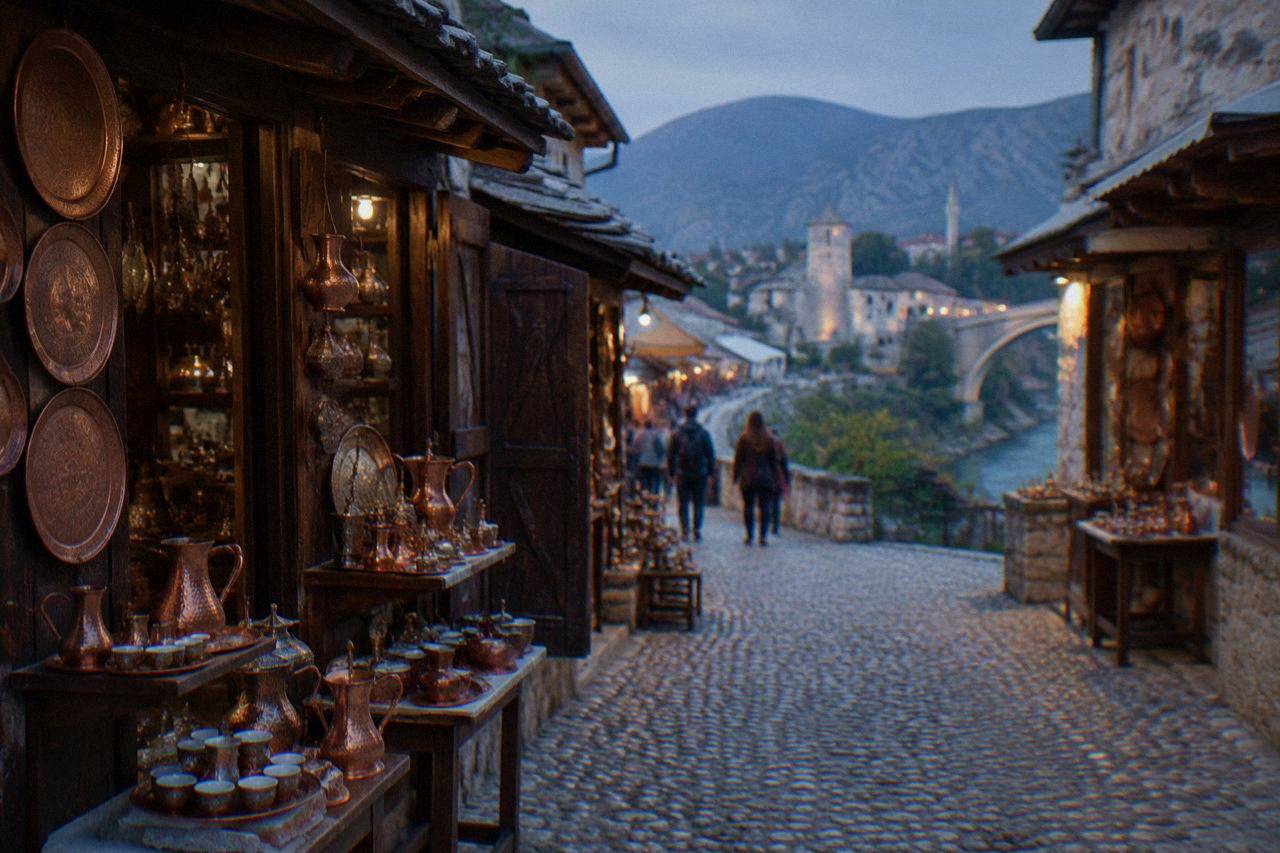
The signature Mostar purchase is hammered copper, especially a Bosnian coffee set bought on Kujundžiluk, the restored Old Bazaar that gives the city's craftsmen quarter its name. Herzegovina wine, rakija, wool carpets and honey from the surrounding hills round out the list. Prices are in convertible marks (KM), and quality varies widely between handmade and imported pieces.
Mostar, in Herzegovina in Bosnia and Herzegovina, is an inland city on the Neretva river, and its shopping identity is inseparable from one street: Kujundžiluk, the Old Bazaar that spills down the east bank toward Stari Most, the Old Bridge. The name of the bazaar comes from the word for the coppersmiths and goldsmiths who worked there when the bridge was new, and the trade has survived the same disasters the city has. Today the street is the city's main souvenir artery, and the honest question for a shopper is a simple one: what here is genuinely made in Herzegovina, and what is imported stock dressed in a Bosnian story? This guide, from the Mostar Travel Guide editorial desk, walks through the categories one by one, copper above all, then carpets, coffee, wine, rakija and food to carry home.
Where Do You Buy Mostar Souvenirs?
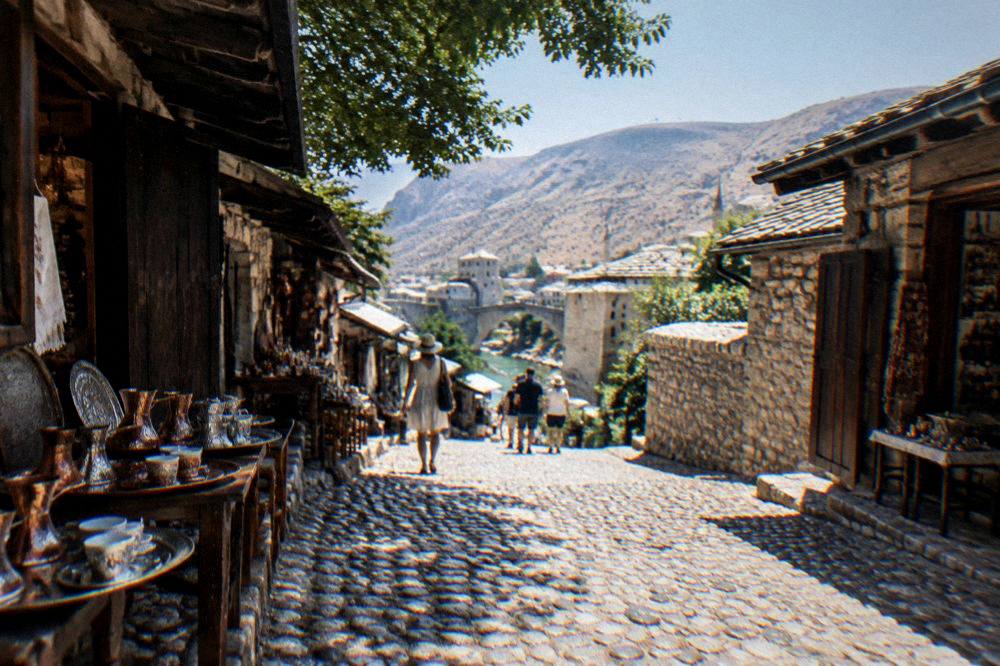
The centre of souvenir shopping in Mostar is Kujundžiluk, the Old Bazaar street that runs along the Neretva from the edge of the Old Town down to Stari Most itself, a stretch of a few hundred metres lined on both sides with small craft shops, and it is fully walkable and free to enter at any hour. The bazaar sits inside the Old Bridge Area of the Old City of Mostar, the UNESCO World Heritage property inscribed in 2005, so the shopping and the sightseeing happen in the same place. Rakija, carpets, copper, magnets and T-shirts all concentrate here, with spillover onto the streets just off the bazaar and around the bridge.
The street's name is a living link to its original trade. Kujundžiluk comes from the Ottoman-era word for the quarter of coppersmiths and goldsmiths, and the workshop tradition it names goes back to the city's earliest days as a bridge settlement: the name Mostar itself derives from the "mostari", the bridge keepers who guarded the earlier wooden crossing, and the first written mention of the name dates to 1474. The bazaar was badly damaged in the war and rebuilt afterwards, like the bridge at its end, which was destroyed on 9 November 1993 and rebuilt and reopened in July 2004.
For context before a shopping walk, the Mostar history guide covers the city's Ottoman and Austro-Hungarian layers, and the Kujundžiluk guide goes deeper into the bazaar street itself. A morning here pairs naturally with the surrounding Old Town; the old town guide maps the lanes either side of the bazaar.
What Is The Copper Worth Buying In Mostar?
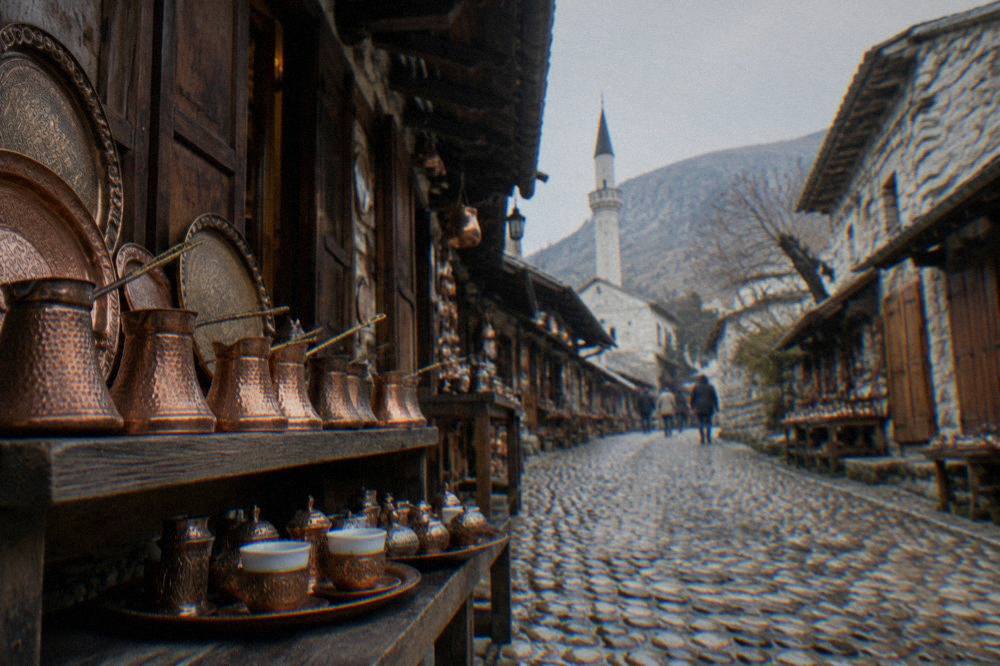
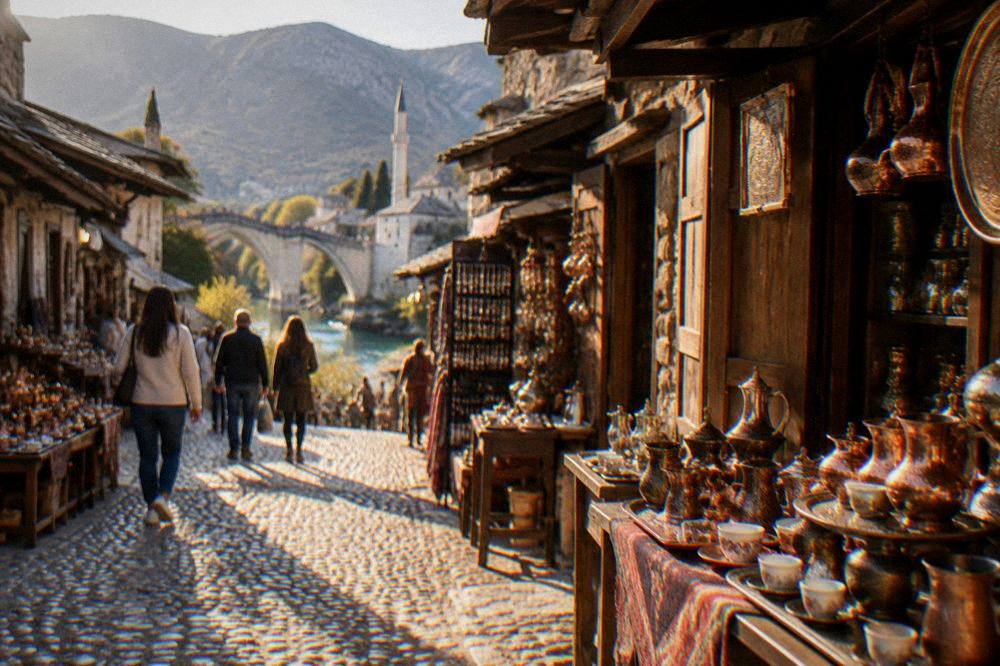
The signature Mostar purchase is a hammered copper Bosnian coffee set: a small pot (džezva), handleless cups and a tray, all hand-beaten by coppersmiths who still work in and around Kujundžiluk, and handmade pieces are recognisable by irregular hammer marks, a warm unvarnished surface and real weight, while machine-made and imported copper is lighter, uniform and often lacquered to a bright shine. Individual džezvas, copper trays, plates, bowls and engraved wall pieces sit alongside the sets, and the craft tradition behind them is the oldest shopping story in the city. Prices vary by size and weight, so compare several shops and ask what the price includes.
The honest test is a physical one. A coppersmith hammering by hand leaves a fine, slightly irregular dimple pattern; the inside of a genuine unlined pot will darken with use, and that patina is part of the object. Bright, perfectly uniform pieces, very thin walls and a lacquer coating are signs of factory production, much of it imported rather than made locally. Shops that let you handle the goods are generally the ones with nothing to hide. If a piece is described as handmade, it is fair to ask where it was made; a direct answer costs nothing.
Tin lining matters for anything you plan to actually cook or brew in. Traditional Bosnian coffee pots are used with the copper interior developing its own patina, but some drinkers prefer lined pots, and lining is a question to settle before paying rather than after. Size is the other practical decision: a single-cup džezva is the common souvenir, while family sets with four or six cups and a matching tray make a heavier, costlier purchase that is worth thinking through for luggage.
For readers whose trip leans toward food rather than objects, the coffee tradition has its own page: Bosnian coffee explains the brewing ritual a džezva belongs to, and burek and ćevapi cover the dishes you will have eaten before you ever reached the shops.
How Much Should Souvenirs Cost, And How Do You Pay?
Everything in Mostar is priced in convertible marks (KM, BAM), the national currency pegged to the euro at exactly 1 EUR = 1.95583 KM, and euro cash is often accepted in the bazaar, usually at a rounded two-marks-to-one rate that quietly costs you a little on every purchase, so paying in KM from an ATM is the sounder default, with cards accepted at larger shops but cash expected at market stalls and small craft sellers. Confirm the rate and the total before handing over euro notes, and check whether card payment is possible before choosing your pieces, not at the till.
The money mechanics are covered in full on the Mostar money guide, including the peg and where the rounded euro rate bites. Two practical notes belong here. First, Bosnia and Herzegovina is not in the eurozone and not in the European Union, so nothing about the euro is official here; the mark is the only legal currency. Second, keep small denominations when you head into the bazaar, since change for large notes is a real constraint at small stalls.
| Payment situation | What usually happens | What to do |
|---|---|---|
| Small craft stall on Kujundžiluk | Cash in KM expected | Withdraw KM beforehand |
| Larger bazaar shop | Cash in KM, sometimes card | Ask about the card before choosing |
| Euro cash offered | Often accepted at a rounded rate | Confirm the rate, expect a small loss |
| ATM withdrawal | Dispenses KM | Choose to be charged in KM, not euro |
Bargaining deserves a calm word. Haggling is not a fixed institution here the way it is in some larger bazaars, and there is no rule that prices are negotiable. Asking politely for a better price when buying several pieces is normal human behaviour everywhere; treating it as an expected ritual is not. A stated price on handmade copper generally reflects hours of hammering, and the fairest comparison shopping happens between two or three shops rather than across a negotiating table.
Are Carpets And Textiles A Good Mostar Buy?
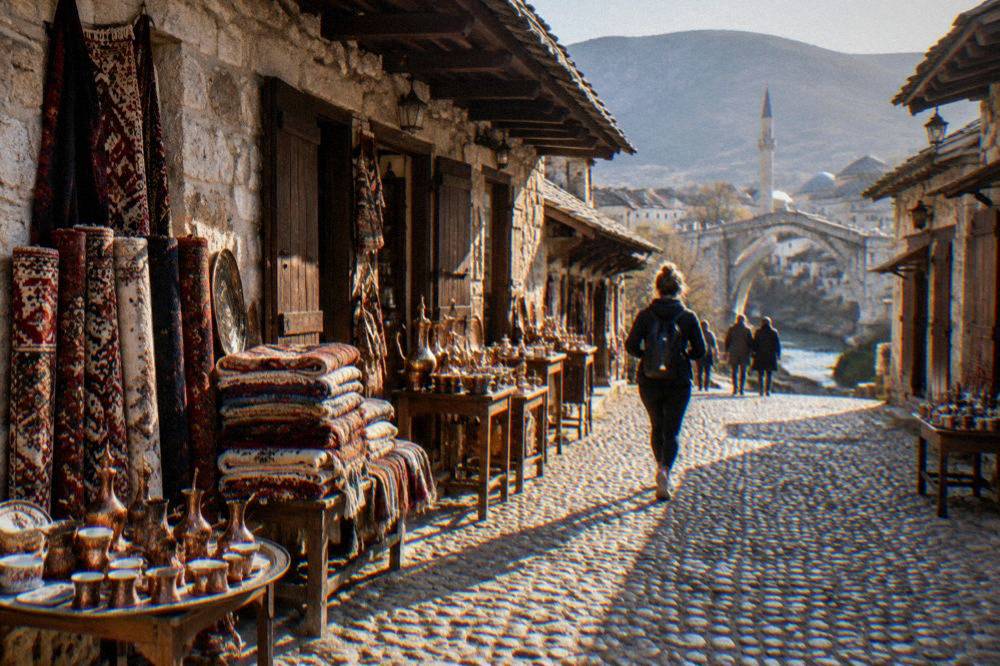
Hand-knotted wool carpets are the second great craft category in Mostar, sold on and around Kujundžiluk alongside woven bags, runners and cushions, and the same handmade-versus-imported test applies: a hand-knotted rug has slightly irregular knots visible on the back, fringe that is part of the weave rather than sewn on, and natural wool that sheds a little, while machine-made pieces have a uniform grid backing and perfectly even edges. Bosnia and Herzegovina sits within a broader Balkan weaving tradition, and vintage pieces circulate alongside new production, so age, material and origin are three separate questions worth asking before you pay.
Wool is the honest material here. Herzegovina is sheep country, the hills around the Neretva valley have supported wool weaving for as long as there has been a town here, and natural wool carries a lanolin smell, takes vegetable dyes unevenly and feels slightly oily rather than slick. Synthetic pieces are lighter, brighter and cheaper, and nothing is wrong with buying one knowingly; the failure is paying a handmade price for one unknowingly. Turn any rug over: the back tells you more than the front does.
Size and luggage drive the practical decision. A small kilim-style runner or a set of woven cushions travels easily; a full-size carpet does not, and shipping from Mostar is arranged shop by shop, so settle who pays for what, and what happens if the piece arrives damaged, before committing. Vintage rugs sold as old may be exactly that or may be artificially aged, and there is no laboratory test a traveller can run in a shop, so buy vintage for love, not for investment.
| Textile type | Handmade signs | Imported signs |
|---|---|---|
| Knotted carpet | Irregular knots on the reverse, integrated fringe | Uniform grid backing, sewn fringe |
| Flat-woven kilim | Slight weave variation, natural wool smell | Perfectly even surface, synthetic sheen |
| Cushions and bags | Hand-finished seams, wool tassels | Identical repeats, plastic-feeling fibre |
| Lace and embroidery | Irregular stitch rhythm | Machine-perfect, uniform thread |
What Food And Drink Should You Carry Home From Herzegovina?
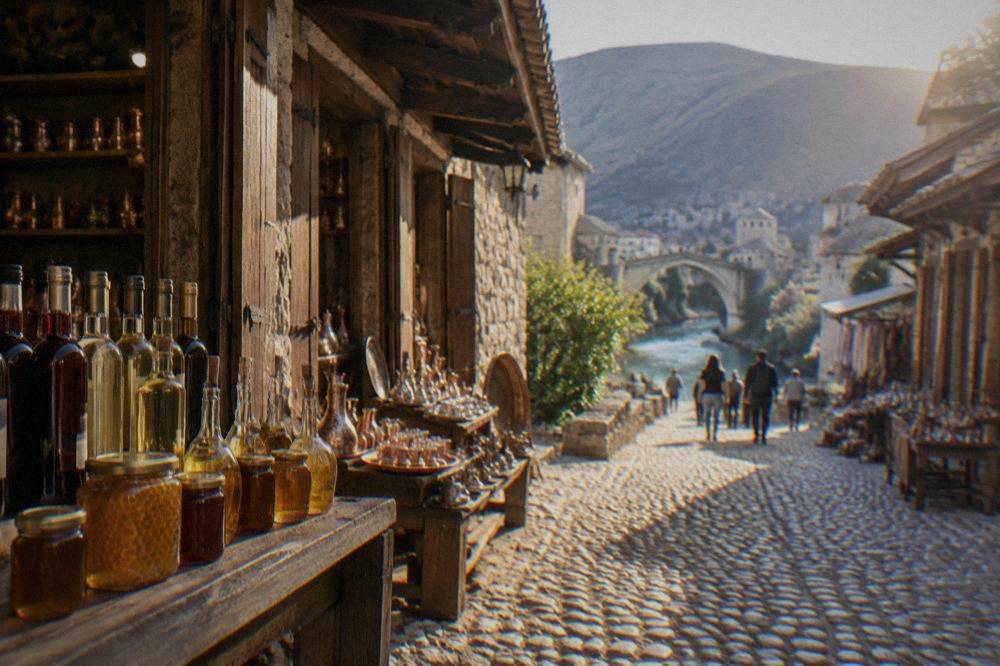
The edible souvenirs that actually come from Herzegovina are wine from the local vranac and žilavka grapes, rakija distilled from grapes, plums or quince, honey from the hills around the Neretva valley, and coffee meant for a džezva, ground finely for the Bosnian brewing method, and all four travel reasonably well, with wine and rakija subject to the duty-free allowance of your home country rather than any local restriction on purchase. Olive oil from the Adriatic side, dried herbs and sugared treats round out the shelves, but the four above are the regional core.
Herzegovina wine deserves more attention than it usually gets from people passing through on a day trip. The žilavka white and vranac red are the indigenous varieties the region is known for, and vineyards reach from the Blagaj and Čitluk area down toward Trebinje. Bottles are sold in shops around the Old Town, and the choice is genuinely local rather than a generic import story. The Herzegovina wine guide covers the varieties and where the wine country sits; the tasting side of a trip can also be folded into a countryside day out.
Rakija is the spirit of the Balkans, and Herzegovina's grape rakija, plus the plum and quince versions, appear in small bottles that make easy gifts. Honey from the karst hillsides is a quieter star: the same limestone landscape that feeds the Neretva's springs produces strong herb and chestnut honeys, sold in jars that need careful packing. Pomegranate and rose syrups, dried figs and the finely ground coffee for Bosnian-style brewing complete the edible list.
For travellers who want the food tradition rather than the jar, a cooking class is the other way to carry Herzegovina home. The Bosnian food guide lays out the cuisine, and a hands-on burek or cooking session turns the shopping day into something you can reproduce in your own kitchen.
Which Souvenirs Are Actually Made In Bosnia And Herzegovina?
Genuinely local products in Mostar are the hammered copper from surviving workshops, hand-knotted and hand-woven wool textiles, rakija and wine from Herzegovina's vineyards, honey and dried foods from the surrounding hills, and filigree jewellery in the regional silver tradition, while mass-produced magnets, printed T-shirts, plastic models of the bridge and much of the bright lacquered metalwork are imported stock that happens to be sold here, and no rule requires a shop to label the difference. The question "where was this made?" is the single most useful sentence in the bazaar.
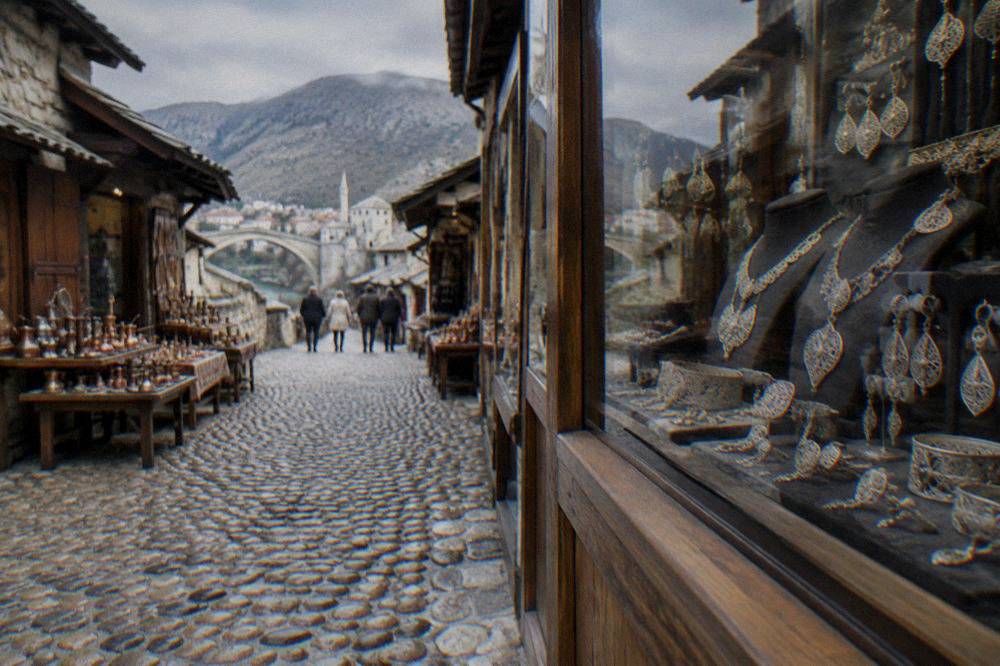
Filigree is worth a pause. The fine twisted-silver technique has a long history across the Balkans, and pieces made locally carry the irregular delicacy of handwork: no two identical earrings, slight asymmetry, real silver marking. Perfectly identical sets at very low prices are factory output, wherever they were made. The same logic extends to leather goods, painted icons and the rosewood-handled knives that appear in some windows; provenance is everything, and a shop that cannot answer a provenance question is answering it anyway.
One category deserves restraint rather than enthusiasm. Items made from war debris, shell casings and similar material circulate in post-conflict cities, and beyond the ethical question of where such material comes from, some of it is illegal to export or simply fake. There is no reason a souvenir needs that story attached. The city's real stories are better told by its history walks; the Mostar war history guide covers the years that shaped the modern city with the seriousness they deserve.
A history walk also puts the rebuilt city around the shops into words. The Death of Yugoslavia walking tour moves through the sites that explain the 1990s and the city you are shopping in, and it pairs well with a bazaar afternoon. Check availability if that is the layer of Mostar you want explained on foot.
| Souvenir category | Typically local | Often imported | Quick check |
|---|---|---|---|
| Copper coffee set | Hand-beaten džezva, tray | Bright lacquered sets | Hammer marks, weight |
| Carpet or kilim | Wool, knotted or hand-woven | Synthetic machine rugs | Reverse of the weave |
| Rakija and wine | Herzegovina producers | Rebranded bulk spirit | Label and producer |
| Honey | Herb, chestnut from the hills | Blended commercial jars | Origin on the label |
| Filigree silver | Hand-twisted, slightly irregular | Identical cast sets | No two pieces identical |
| Magnets, shirts, models | Occasionally made nearby | Usually imported | Material and price |
When Is The Best Time Of Year To Shop In Mostar?
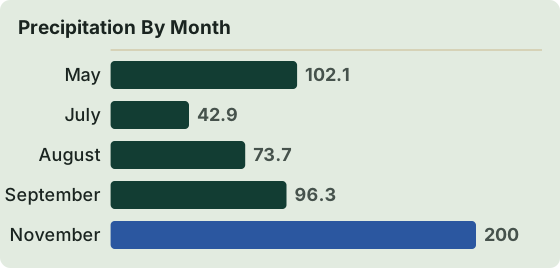
July and August are the months when the bazaar is at its fullest and the city at its busiest, with long opening hours and every stall stocked, while May, June, September and October bring easier browsing in cooler air, and the modelled ERA5 reanalysis for 1991 to 2020 puts average daily highs at 29.9 C in July and 30.5 C in August against 22.3 C in May, so a shopping walk that involves handling rugs and copper is simply more comfortable outside the two peak months. The station record for 1961 to 1990 shows July averaging 24.7 C overall with an absolute maximum of 41.2 C, which tells you how hot the valley can run.
Rain shapes the day more than the month. The same station record shows November as the month with the highest rainfall at 200.0 mm against July's 42.9 mm, so late autumn shopping means ducking between covered shopfronts rather than strolling. Winter brings its own atmosphere, and the question of season overall, including the best time to visit Mostar and the Mostar weather patterns, is covered in full on those pages. For shopping specifically, the practical calculus is heat versus choice.
Hours are a separate matter from seasons, and no reliable published opening-hour list for the bazaar's individual shops exists in the site's records, so treat any figure you read elsewhere, including a claim of uniform closing times, with caution and simply check on arrival. As a rule of thumb for the region, bazaar shops open mornings, close for part of the afternoon in the depth of summer and reopen into the evening, but that rhythm varies shop by shop and no promise is made here.
| Month | Mean temp C (FHMZ 1961-1990) | Precipitation mm (FHMZ 1961-1990) | Shopping character |
|---|---|---|---|
| May | 17.9 | 102.1 | Comfortable browsing, full stock |
| July | 24.7 | 42.9 | Peak season, heat, everything open |
| August | 24.2 | 73.7 | Busy and hot, long evenings |
| September | 20.4 | 96.3 | Quieter, still warm |
| November | 10.1 | 200.0 | Wet, covered shopfronts |
Can You Combine Shopping With Sightseeing In One Mostar Day?
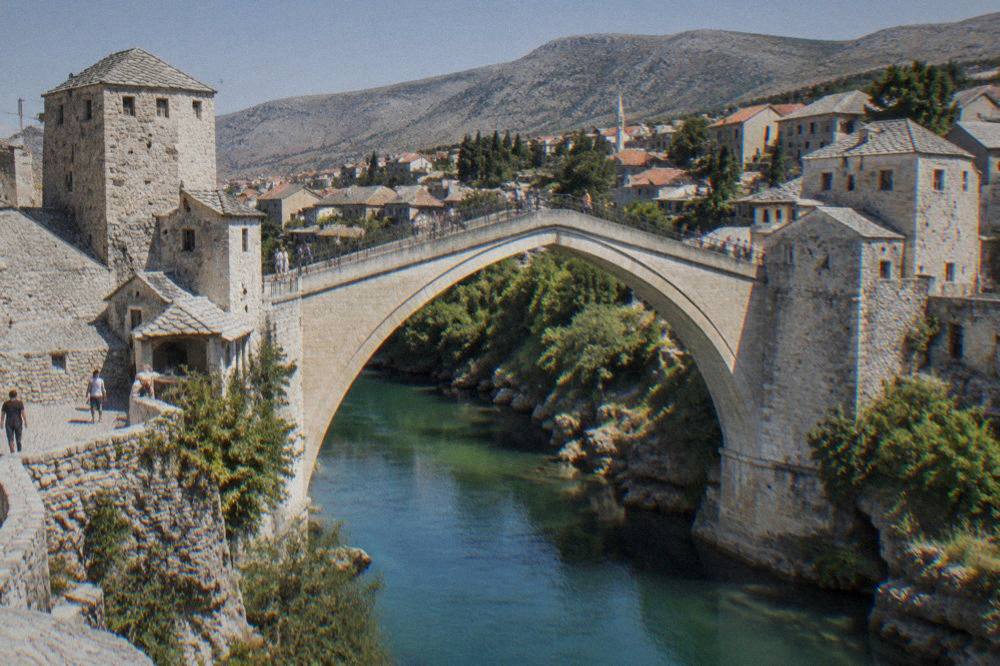
Yes, and it happens naturally, because the shopping street and the city's principal sights are the same few hundred metres: Kujundžiluk ends at Stari Most, which is free to cross at any hour, the Koski Mehmed-pašina džamija and the Kriva ćuprija, the Crooked Bridge, sit a short walk apart in the same quarter, and a slow loop of the bazaar, the bridge and the two mosques fills a half day without transport of any kind. The Old Bridge Area is compact, pedestrian and free to enter, which is why the city works so well for one-day visits.
The classic loop starts at the bridge itself, about 21 to 24 metres above the river depending on the water level, and works back up the bazaar. Jumps from the bridge are performed by members of the Mostari diving club, who train for years before diving solo; there is no visitor jump, so watch rather than wonder. The 460th traditional diving competition ran on 26 July 2026, and the Red Bull Cliff Diving round followed from 30 July to 1 August, so a late-July visit can put world-class diving between your shop stops.
Beyond the Old Town, the Herzegovina countryside is where much of what you buy actually comes from. A day tour to Blagaj, Počitelj and Kravica waterfall covers the Buna spring at Blagaj, the fortified village of Počitelj 30.0 km and about 31 minutes by road from Stari Most, and the waterfall itself, where entry is 20 KM for an adult all year, with children under 7 free. Kravica is 55.2 km and about 54 minutes from the Old Bridge by road. Those figures come from the park's own visitor page and the site's computed road distances.
The country pages cover the individual stops in depth: Blagaj, Počitelj and Kravica waterfall each have a full guide, and the one day in Mostar itinerary sequences a first visit. For a shopping-and-sightseeing plan, the honest advice is to buy nothing on the first pass through the bazaar, see the bridge and the mosques, then walk the street again in the late afternoon with your list settled.
What Should You Know Before Carrying Purchases Out Of The Country?
Bosnia and Herzegovina is not in the European Union and not in Schengen, so crossing from Mostar into Croatia is a full external border crossing with passport checks, and the practical consequences for shoppers are that alcohol and tobacco are limited by your destination's duty-free allowance, receipts matter for anything valuable like a carpet or silver, and the land border can add up to about 30 minutes, longer at summer peaks, to the journey. The two main crossings near Mostar are Doljani-Metković and Bijača-Nova Sela.
Wine and rakija are the items to think about. Croatia, as an EU member since the Schengen expansion that made this an external border on 1 January 2023, applies EU entry limits on alcohol brought from outside the union, and Bosnia and Herzegovina is outside it. A bottle or two is within every normal allowance; a case of žilavka may not be. Keep receipts for anything with real value, both for the border and for your own insurance, and photograph any carpet's reverse so its condition on purchase is documented.
Copper, textiles and ceramics carry no restriction anywhere, but they do carry luggage weight. A full coffee set with tray is heavier than it looks in the shop, and a hand-knotted carpet is heavier still. The packing advice writes itself: wrap copper in clothing inside your case, carry bottles in sealed bags, and consider a foldable duffel if you came with tight baggage. The Bosnia and Herzegovina travel tips and border crossing guides cover the paperwork side, including car-hire cross-border permission, in detail.
Common Questions About Shopping In Mostar
What souvenirs is Mostar known for?
Mostar is known for hammered copper, above all the Bosnian coffee set with its džezva pot, cups and tray, sold on Kujundžiluk, the Old Bazaar. Wool carpets and kilims, silver filigree jewellery, Herzegovina wine and rakija, and honey from the surrounding hills complete the list.
Is shopping in Mostar expensive?
Prices vary by shop and by whether a piece is handmade or imported, and no reliable price list for individual shops is published. Hand-beaten copper and hand-knotted wool cost real money anywhere; magnets and mass-produced items are cheap. Everything is priced in convertible marks (KM), pegged at 1 EUR = 1.95583 KM.
Can you pay with euro in the Mostar bazaar?
Euro cash is often accepted in the tourist areas around the Old Bridge, usually at a rounded two-marks-to-one rate, which costs you slightly against the official peg. Paying in KM from an ATM is the better default, and small stalls expect cash.
Is bargaining expected in Mostar shops?
There is no fixed bargaining custom here, and posted prices are generally real prices. Asking politely for a better price when buying several pieces is normal; sustained haggling over a single handmade item is not the local way.
What is Kujundžiluk?
Kujundžiluk is the Old Bazaar street of Mostar, running along the Neretva to Stari Most, named after the coppersmiths and goldsmiths who historically worked there. It sits inside the Old Bridge Area of the Old City of Mostar, a UNESCO World Heritage property since 2005, and is free to walk at any hour.
Can I bring Mostar wine and rakija into the EU?
Bosnia and Herzegovina is outside the EU, so the alcohol you carry into Croatia or another EU country falls under your duty-free allowance rather than free internal movement. A bottle or two is normally within allowance; larger quantities should be checked against your destination's current limits before you buy.
